-

SUBSCRIBE TO SHIPS IN SCALE TODAY!
The beloved Ships in Scale Magazine is back and charting a new course for 2026!
Discover new skills, new techniques, and new inspirations in every issue.
NOTE THAT OUR NEXT ISSUE WILL BE July/August 2026 -

Win a Free Custom Engraved Brass Coin!!!
As a way to introduce our brass coins to the community, we will raffle off a free coin during the month of August. Follow link ABOVE for instructions for entering.


You are using an out of date browser. It may not display this or other websites correctly.
You should upgrade or use an alternative browser.
You should upgrade or use an alternative browser.
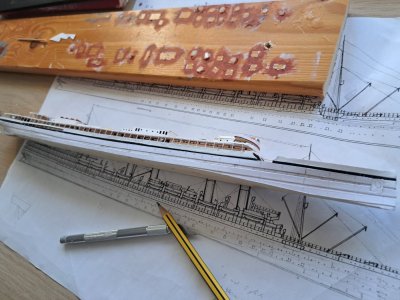
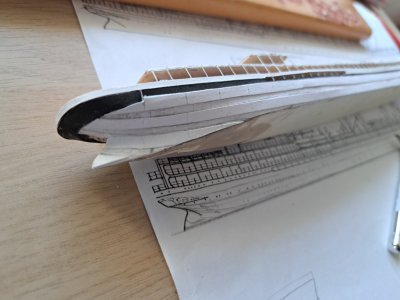
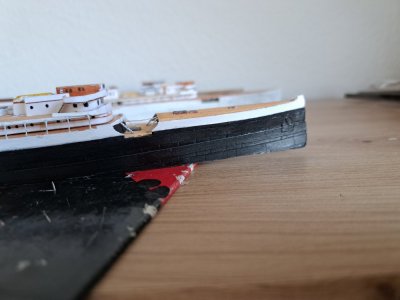
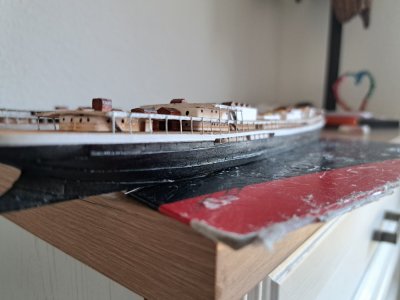
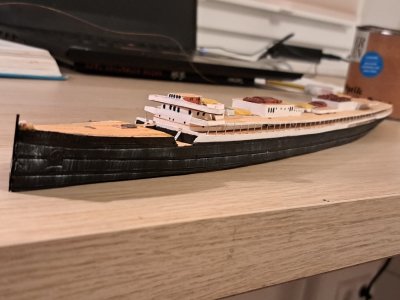
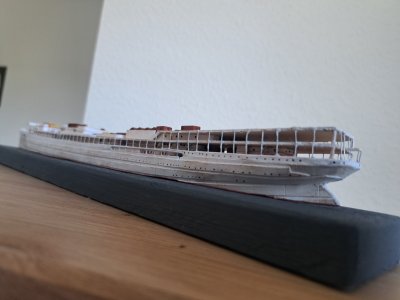
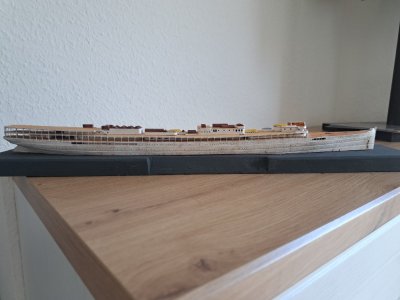
Deutschland / Victoria Luise / Hansa 1:500 waterline model from scratch

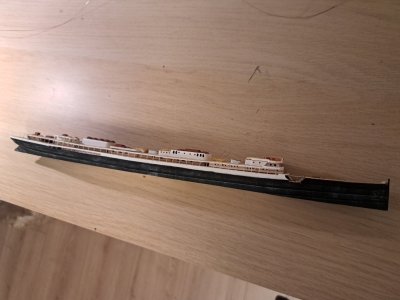
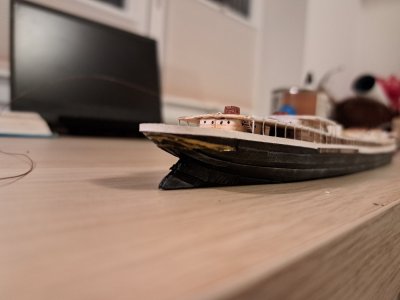


Hello MBJ,
very interesting model greatly done (I am still dreaming of DSSD KRONPRINZ WILHELM).
Several years ago in a phone call the specialist for German liners Arnold Kludas told me the preWWI colour of the funnels of the German liners of HAL and NDL was very a pale yellow-creme - no WhiteStar buff.
Hope this helps,
Chris
very interesting model greatly done (I am still dreaming of DSSD KRONPRINZ WILHELM).
Several years ago in a phone call the specialist for German liners Arnold Kludas told me the preWWI colour of the funnels of the German liners of HAL and NDL was very a pale yellow-creme - no WhiteStar buff.
Hope this helps,
Chris
Thanks for this info, Chris! Good to know. If Arnold Kludas says so, it must be trueHello MBJ,
very interesting model greatly done (I am still dreaming of DSSD KRONPRINZ WILHELM).
Several years ago in a phone call the specialist for German liners Arnold Kludas told me the preWWI colour of the funnels of the German liners of HAL and NDL was very a pale yellow-creme - no WhiteStar buff.
Hope this helps,
Chris

Following from this statement the funnels were darker after the war, which would apply to HANSA. Please let me know if you have further insights (or deckplans for HANSA...).
P.S.: What does DSSD stand for?
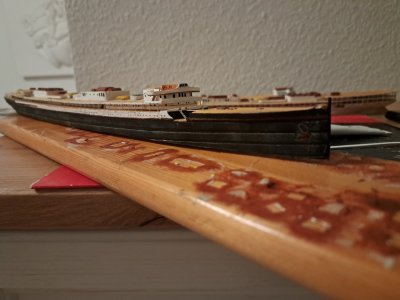
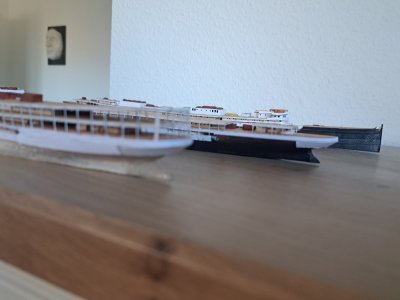
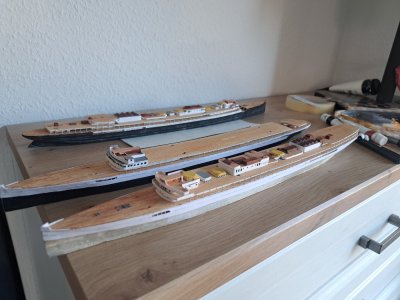
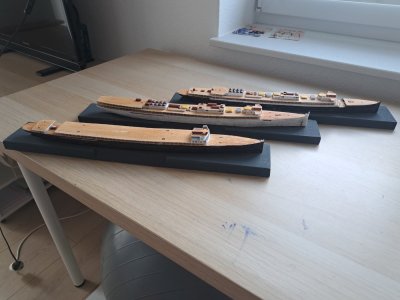
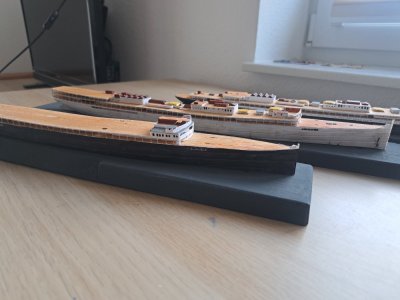
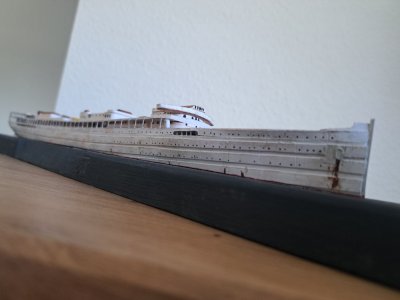
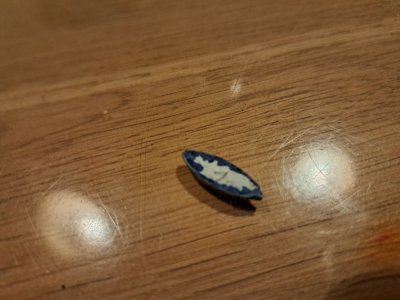
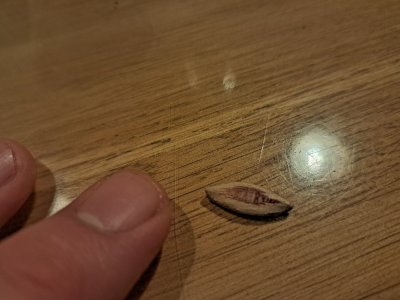
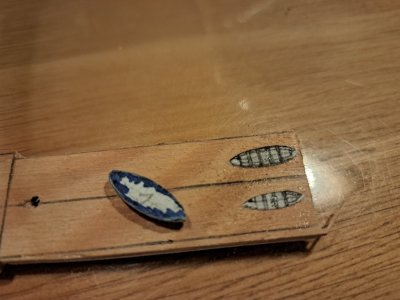
I started to carve the first lifeboat, 18 mm long. There are two even smaller sizes to be made. As I'll need plenty of boats for my three ships, I am planning to use one wooden lifeboat per size as a mould and "produce" boats from heated plastic sheets. Never tried this before, I hope it will work.
Last edited:
- Joined
- Jun 29, 2024
- Messages
- 2,169
- Points
- 488

Now that you have a mold, by making the boats from “heated plastic sheets” do you mean vacuum forming? It’s easy to do with a household tank type vacuum cleaner or better yet a shop vacuum. If you use the search function you should find a post from me showing my setup.
Roger
Roger
Yes, I guess vacuum forming is the english term I was lacking. I'll definitely check your post, Roger. Thanks for the hint!Now that you have a mold, by making the boats from “heated plastic sheets” do you mean vacuum forming? It’s easy to do with a household tank type vacuum cleaner or better yet a shop vacuum. If you use the search function you should find a post from me showing my setup.
Roger
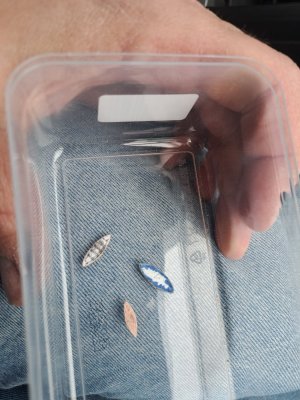
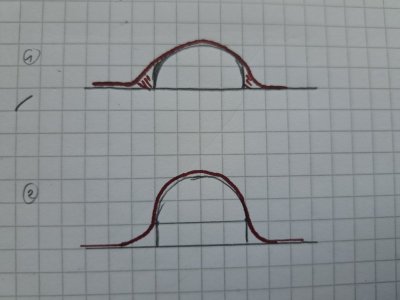
I have been struggling with vakuum forming the lifeboats. Attached is a sketch of the problem I face: There is a gap between the mold and the plastic I use, so that the final shape of the plastic is not perfect. In 1:500, a gap of one millimeter destroys everything. I will now attach another layer of wood and see if this helps pulling down the plastic far enough. Will keep you posted. As I will need 68 boats altogether, this should work out properly 
Last edited:
- Joined
- Jun 29, 2024
- Messages
- 2,169
- Points
- 488
I would form them in halves split longitudinally. If done properly you will end up with a flange on the bottom that serves two purposes; it is a surface to glue the halves together and it form’s the boat’s keel.
Off hand from your sketch I would suggest one of two problems insufficient heat or vacuum. When you heat the plastic it will sag. If you continue to heat it it should tighten up again. That’s when it’s hot enough to form.
Roger
Off hand from your sketch I would suggest one of two problems insufficient heat or vacuum. When you heat the plastic it will sag. If you continue to heat it it should tighten up again. That’s when it’s hot enough to form.
Roger
Thank you so much for your reply, Roger, I really appreciate it. I followed your advice and increased the temperature. In combination with my adjusted (thicker) mold, it now works a lot better. Still takes more time than I had expected, but getting there.I would form them in halves split longitudinally. If done properly you will end up with a flange on the bottom that serves two purposes; it is a surface to glue the halves together and it form’s the boat’s keel.
Off hand from your sketch I would suggest one of two problems insufficient heat or vacuum. When you heat the plastic it will sag. If you continue to heat it it should tighten up again. That’s when it’s hot enough to form.
Roger
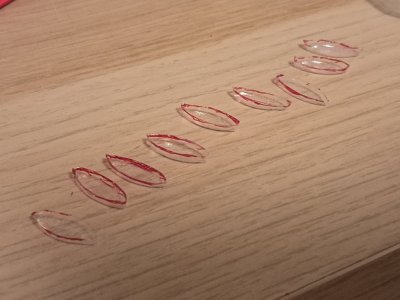
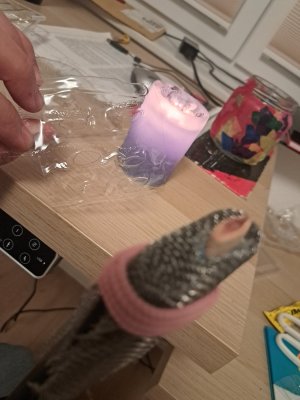
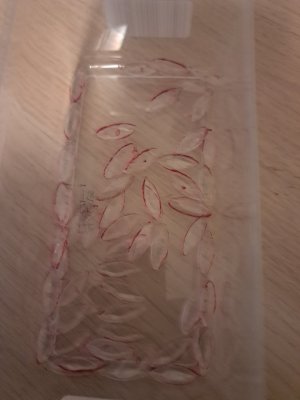
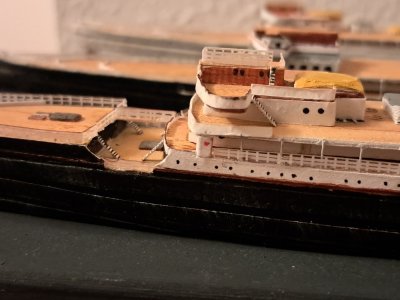
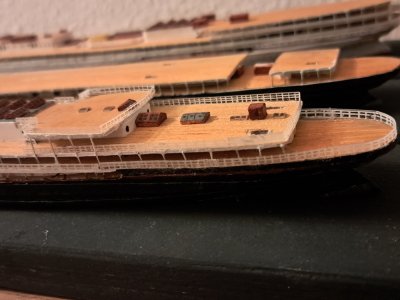
I attached lifeboats to the first ship, Deutschland. Will have to do some touch-ups or weathering, they are currently very white (and red in some places, which comes from the marker I used) Overall, I am quite happy with the result of my first shot at low-budget vacuum forming using a candle, a standard vacuum cleaner and old packaging.
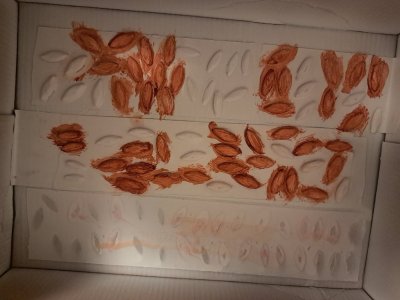
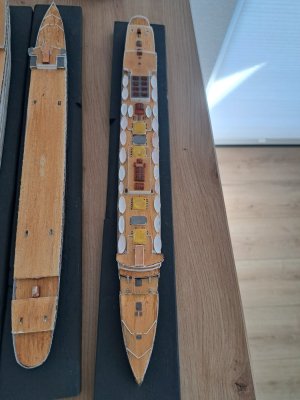
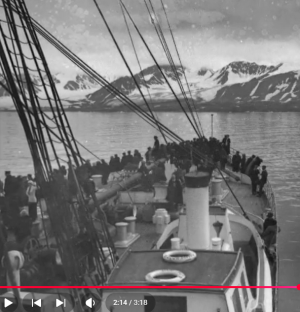
Overall, I am quite happy with the result of my first shot at low-budget vacuum forming using a candle, a standard vacuum cleaner and old packaging.As another brief update, there´s a little "project in the project": When "Deutschland" was re-named "Victoria Luise" and converted into a cruiseship, two tenders were placed on her forecastle. These were used to bring passengers ashore when the big ship anchored outside of her land destinations, often rural areas or small harbours. The tenders had steam engines and would take the regular lifeboats in tow.
Of course I want to include these tenders in my model. From the few pictures I found, it seems that the 2 tenders were not identical. I drew plans for both of them (25 mm in length) and prepared a mold again for vakuum forming, mainly to test out Roger´s suggestion to split the ship longitudinally. Below you see the progress: The mold is 2 mm thicker than one half of the tender will be in the end (to avoid the problem of having a space between the mold and the rim of the plastic, see my post above). I heated my plastic waste sheet with a candle (by now I have a decent feeling of the right temperature) and produced two starboard and two portside casts.
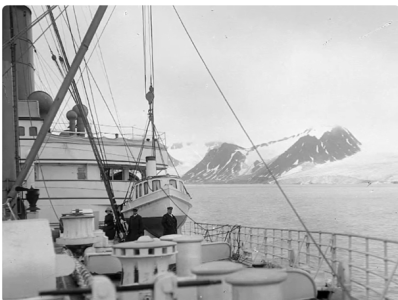
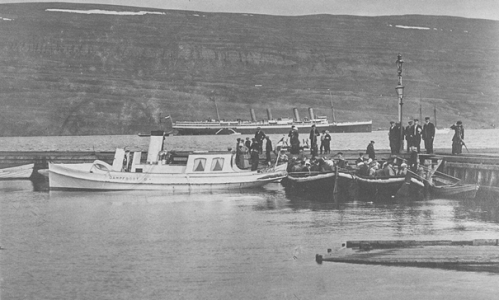
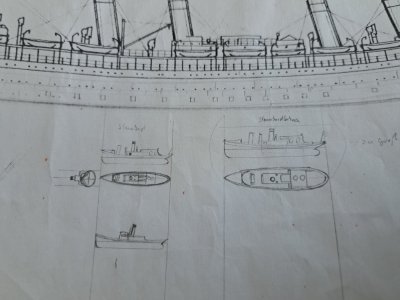
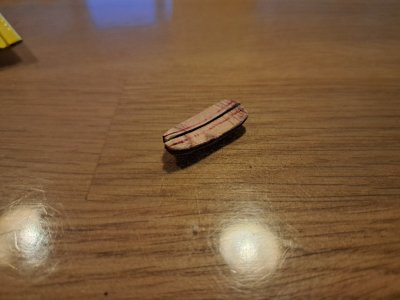
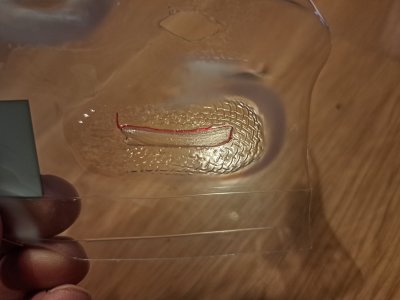
Of course I want to include these tenders in my model. From the few pictures I found, it seems that the 2 tenders were not identical. I drew plans for both of them (25 mm in length) and prepared a mold again for vakuum forming, mainly to test out Roger´s suggestion to split the ship longitudinally. Below you see the progress: The mold is 2 mm thicker than one half of the tender will be in the end (to avoid the problem of having a space between the mold and the rim of the plastic, see my post above). I heated my plastic waste sheet with a candle (by now I have a decent feeling of the right temperature) and produced two starboard and two portside casts.


Excellent work.