

• Ships of Scale has incorportated an extra level of security when you log In. Please follow on-screen prompts to acknowledge that you are not a robot via a "Check Box" or a "Pictorial Check Box Puzzle". This is needed due to higher level of AI Activity Security.
  • SUBSCRIBE TO SHIPS IN SCALE TODAY!

    The beloved Ships in Scale Magazine is back and charting a new course for 2026!
    Discover new skills, new techniques, and new inspirations in every issue.

    NOTE THAT OUR NEXT ISSUE WILL BE July/August 2026
  • Win a Free Custom Engraved Brass Coin!!!
    As a way to introduce our brass coins to the community, we will raffle off a free coin during the month of August. Follow link ABOVE for instructions for entering.

ENDURANCE (Occre kit)

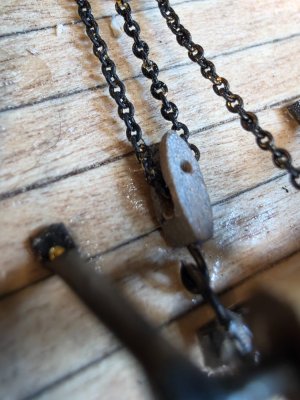
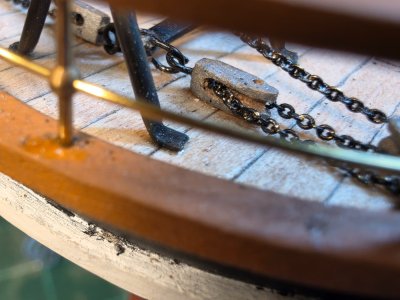
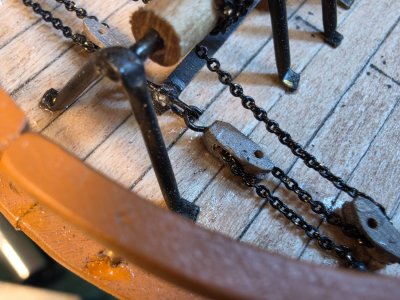
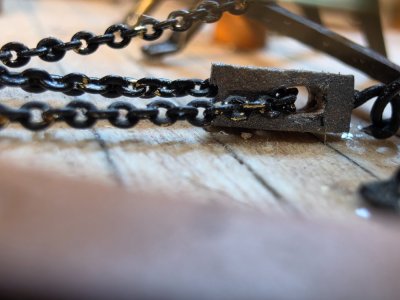
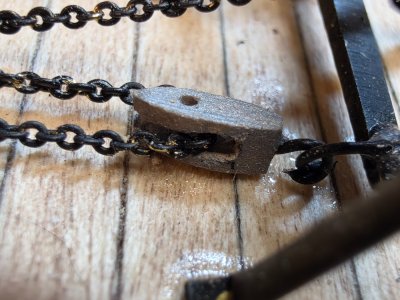
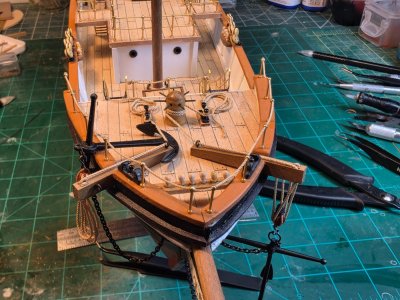
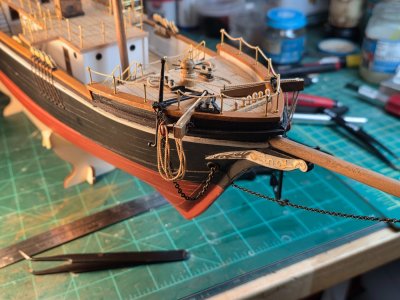
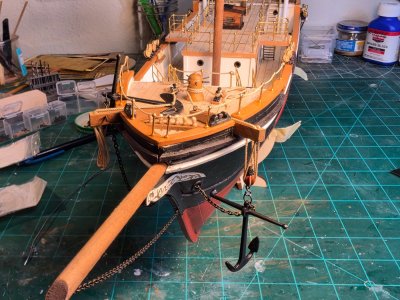
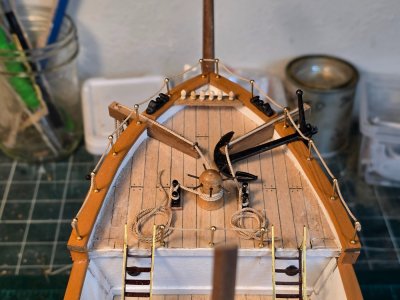
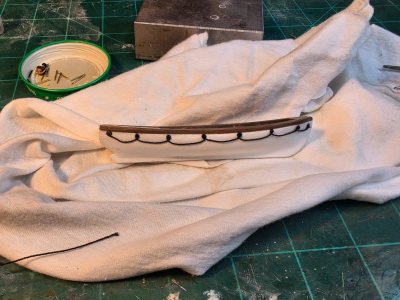
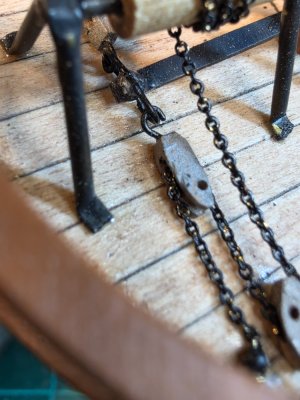
Guys, this posting is to answer a question I got on another built about the steering system blocks

I did the blocks. It was really very easy. If my memory is correct, I used 2x2 mm basswood strips. Driller the main hole for the chain and drilled a small perpendicular hole to fake the bolt that keeps the wheel. The wheel was shaped using a small file after shaping the block.

They are 5 mm long. I painted them gray. The hook is a very small blackened brass wire.

Some nearby images:

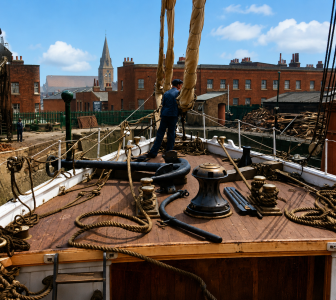
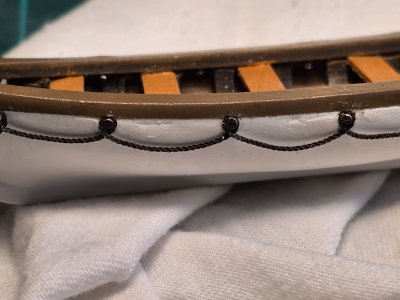
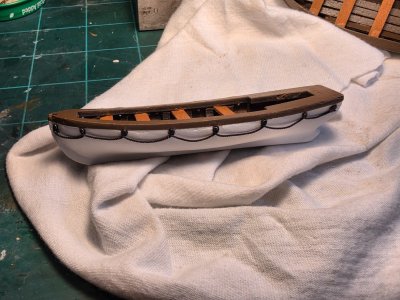
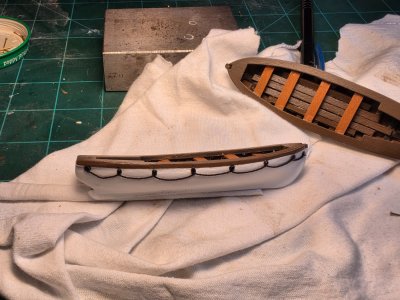
....20260928_155323.jpg20260928_155335.jpg20260928_155418.jpg20260928_155427.jpg20260928_155517.jpg20260928_155526.jpg
 
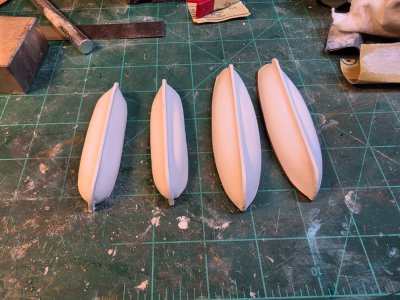
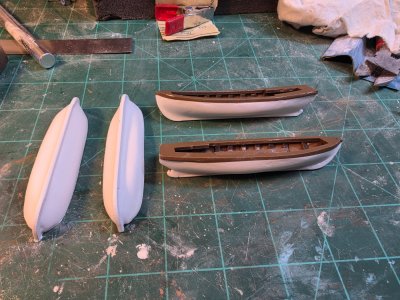
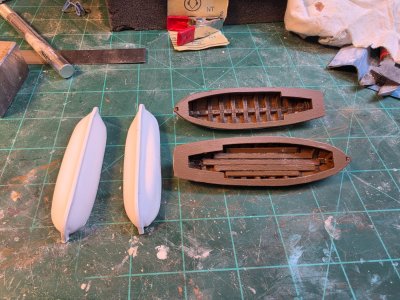
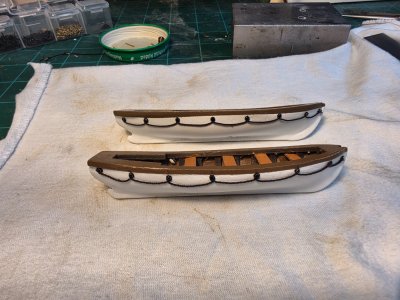
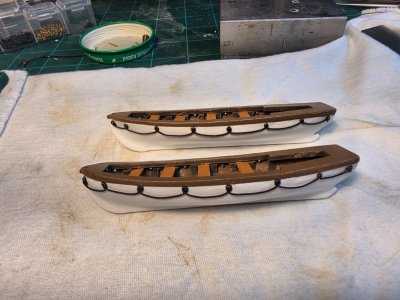
A question for the collective mind regarding the smal boats on Endurance. Shackleton mentions three boats - subsequently named James Caird , Stancome Wills and Dudley Docker. On all the pictures I have seen I have never seen more than three , although in various positions/ inboard/ outboard. Can anyone reliably confirm that Shackleton actually had four at any point?

BTW love the redesign of the steering gear!

David
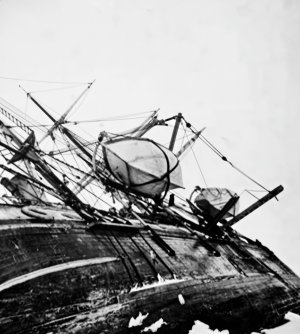
Preacher9, here is another image showing the 4 boats hanging on the sides.

file_00000000e88471f59a7d3fec13006b87.png

Best !
Daniel
 
Actually 5 boats, one hanging by the rat lines ????

Ok, I asked AI about the the Endurance boats and uploaded the below image.

file_00000000e88471f59a7d3fec13006b87.png


When historians, books, and documentaries state that the Endurance carried three lifeboats, they are referring specifically to the primary, heavy-duty lifeboats that were officially part of the ship's sea-survival equipment and later used to navigate the open ocean to Elephant Island (James Caird, Dudley Docker, and Stancomb Wills).


However, looking closely at the deck layout in this photograph by Frank Hurley:


  1. The Left and Right Davits: You can clearly see large ship's boats swung out or cradled on davits on both the port and starboard sides.
  2. The Extra Small Boat: Hanging up high near the mid-ship structure on the left (port side) is an additional, smaller utility dinghy or work skiff.

Why did they have extra boats?​


Like many polar exploration vessels and sturdy wooden ships of that era, the Endurance carried more than just its official life-saving quota. Ships routinely carried small work boats, dinghies, or skiffs used for everyday tasks while in port or near coastal waters—such as rowing ashore, sounding depths, or transporting small loads of gear and crew when dropping anchor.


When the ship was ultimately trapped and crushed by the pack ice, the crew focused their salvage efforts on the three largest, most seaworthy boats capable of carrying heavy loads of men through rough polar seas. The smaller utility skiff was too light or fragile for the grueling open-ocean voyage they eventually had to make, so it was left behind on the ice with the wreckage.
 
Update

See text below the images

20261003_171343.jpg20261003_171406.jpg

Steamship Chimney & Riging Mechanics

On traditional steam-powered vessels—ranging from historic polar exploration ships like Sir Ernest Shackleton's Endurance to classic river paddle steamers—tall iron funnels (chimneys) were subjected to extreme forces. Gale-force winds, heavy seas, and continuous engine vibration created immense structural stress that could easily shear or warp an unsupported stack.

Engineering Purpose: Guy wires (also known as standing rigging or stays) functioned as tensioned structural cables, radiating outward from high up on the metal stack to anchor points on the wooden or iron deck, locking the funnel rigidly in place.

The Upper Attachment: Collars & Bands
The upper anchor point needed to distribute tension evenly around the circumference of the metal stack without buckling the thin iron plates:

Collar / Band Assembly: A heavy, forged iron ring or strap was fitted tightly around the upper third of the funnel and bolted securely.

Rigging Lugs: Integrated eyelets or welded loops forged directly onto the outer band served as the primary
anchor points for the upper hooks of the stay wires.

The Geometry and Spread
To resist forces from any direction, stay wires were deployed symmetrically

Four-Way and Six-Way Spans: Wires typically ran forward toward the bow, aft toward the stern, and out to both port and starboard sides, forming a stable conical tension matrix.
 
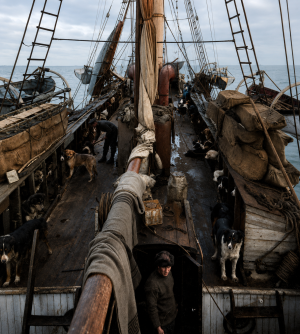
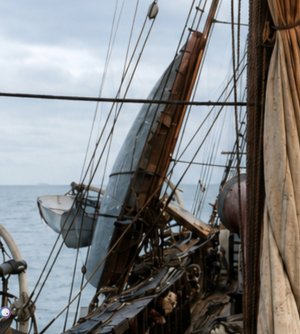
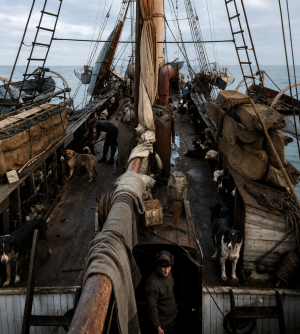
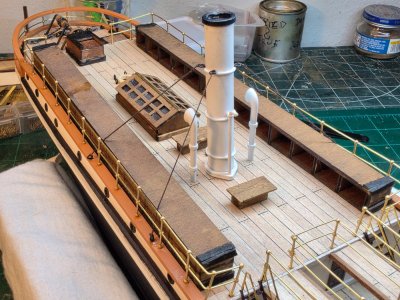
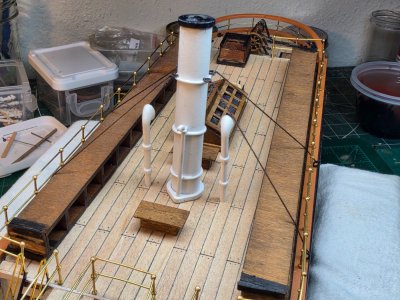
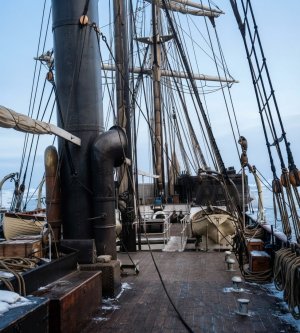
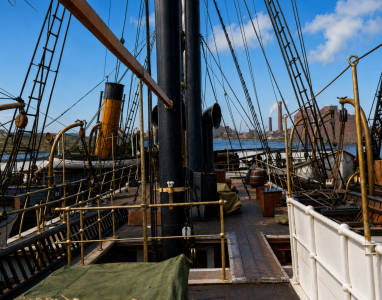
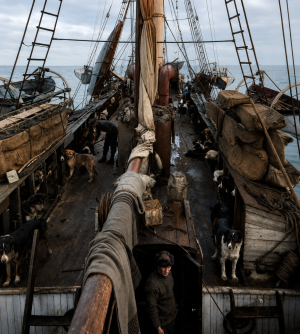
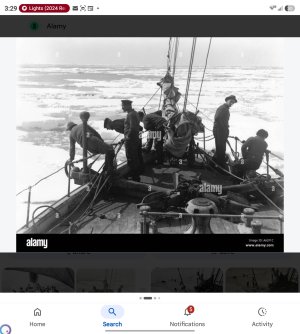
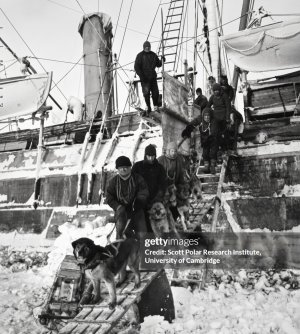
On the below original images you can see the chimney wires are attached to the side of the deck, as I did, and to the deck (see first 2 images on the right side). That is before the ship was modified for the expedition and dogs crates were added.

On the last image, the chimney wire attached to the deck is loose. I asume that was a consequence of a reduced deck space with the dogs, to make it easy to move arround and, probably, the sailors tension it on windy/stormy days.

1790966980614.jpgfile_00000000d64871fd81c9dcd366710288.pngfile_00000000e88471f59a7d3fec13006b87.png

Cheers
Daniel
 
Back
Top