It's not just paper Kurt, it is also card. You know how rigid a cardboard box can be.
The fact that everything is glued to everything makes the whole structure surprisingly sturdy. You should give it a try.
I know a very nice book that excessively details the whole proces, called 'Dutch 17th century ship models in paper' written by a very well know author.

)
Mr. Hoving (Ab) - I just purchased your "Dutch 17th Century Ship Models in Paper" book from Seawatch and I am looking forward to building the smalschip and Witsen's pinas using your card stock method and your designs.
I want to see if 2mm and 3mm chipboard sheets (cardboard used in creating book covers) would work well on my build of the smalschip (there is a good build log out there). I will also try 2mm and 3mm Foamcore sheets (Styrofoam with Kraft Paper veneer). Whichever material works better, I will use that on Witsen's pinace. I will also be using 80, 100 and 120 pound card stock for the thinner pieces.
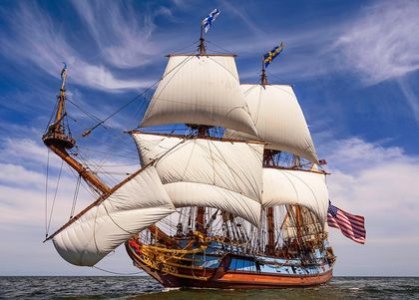
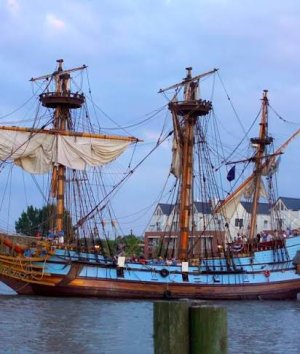
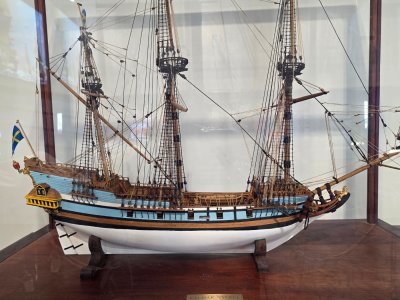
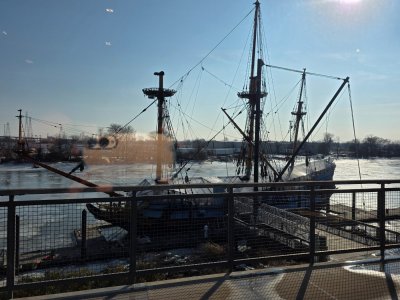
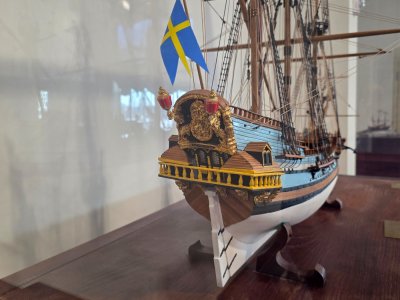
I have a special interest in the Kalmar Nyckel, a 17th century Dutch pinnace, which is berthed near where I live in Wilmington Delaware. It is the ship that brought Peter Minuit and the first Swedes to America, but it went down in the Battle of Buchan Ness against much larger British ships of the line. I usually see the Kalmar Nyckel 4 or 5 times each year...its is an amazing replica of the original.
I will also see the Kalmar Nyckel at Sail250 in Boston in July, along with other windjammers like the Star of India, the Gorch Fock, the Nippon Maru, the Juan Sebastian de Elcano, the Belem and others.
Previously, I abandoned 3 paper card builds because they were always so unforgiving...1 wrong fold or cut could ruin the finished model. I tried to build the Cyclon II ocean tugboat, the Centaur tugboat, and the Graf Goetzen armed freighter. All 3 went into the waste bin. That was when I started to make wooden ship models. I hope that using your method will help me get better results than buying a cheap paper kit on the internet.
After I build the Witsen's pinas from your excellent plans -- I plan to build the Papegojan 1624 from a Shipyard paper card kit with lasercut parts, which I'm sure I can supplement with chipboard or Foamcore and heavy paper card stock if needed.
I do not know whether the three vessels are related in any way -- Witsen's pinas, the Kalmar Nyckel and the Papegojan -- other than that they were all built by the Dutch in the first half of the 17th century. But I reckon that if I can build Witsen's pinas and the Papegojan then I might be able to scratch-build a paper cardstock model of the Kalmar Nyckel based on your Witsen's pinas plans.
Thank you for all you have done to advance the paper card modeling craft and for enlightening us all about Dutch ship building in the 17th century.
Ignatius
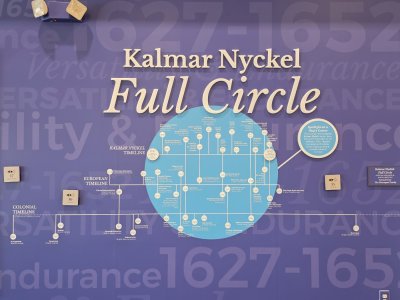
Note: "Kalmar Nyckel Full Circle" copyright the Kalmar Nyckel Foundation