
-

SUBSCRIBE TO SHIPS IN SCALE TODAY!
The beloved Ships in Scale Magazine is back and charting a new course for 2026!
Discover new skills, new techniques, and new inspirations in every issue.
NOTE THAT OUR NEXT ISSUE WILL BE MARCH/APRIL 2026 -

Win a Free Custom Engraved Brass Coin!!!
As a way to introduce our brass coins to the community, we will raffle off a free coin during the month of August. Follow link ABOVE for instructions for entering.
- Home
- Forums
- Welcome to Ships of Scale Forum
- Beginners Corner - How to Get Started
- Books and Reading Material for Reference
You are using an out of date browser. It may not display this or other websites correctly.
You should upgrade or use an alternative browser.
You should upgrade or use an alternative browser.

Are you talking about an 18th century sailing ship or a modern ship. I remember filling fuel tanks with water after each intermediate tank was emptied to maintain the same ballast. LONG story on that. The principals are the same whether using shingle or water but are you trying to determine how much to put in a model sailing ship or something else? In general more advanced calculations, based on the ship's displacement and the desired metacentric height (a measure of stability), were used by some shipwrights to determine ballast requirements.
For the old sailing ships, the following may be helpful
From the internet:
In the 1800s, determining the amount of ballast needed on a sailing ship involved considering factors such as the ship's design, cargo type, and anticipatd sea conditions with the primary goal of achieving sufficient stability by loading heavy materials like rocks, stones, or iron bars into the ship's hold, usually until the desired draft was reached, especially when carrying light cargo or sailing empty; essentially, enough ballast to ensure the ship didn't become too top-heavy and remained stable in rough seas, but not so much that it significantly impacted cargo capacity.
For the old sailing ships, the following may be helpful
From the internet:
In the 1800s, determining the amount of ballast needed on a sailing ship involved considering factors such as the ship's design, cargo type, and anticipatd sea conditions with the primary goal of achieving sufficient stability by loading heavy materials like rocks, stones, or iron bars into the ship's hold, usually until the desired draft was reached, especially when carrying light cargo or sailing empty; essentially, enough ballast to ensure the ship didn't become too top-heavy and remained stable in rough seas, but not so much that it significantly impacted cargo capacity.
Last edited:
- Joined
- Jun 29, 2024
- Messages
- 1,785
- Points
- 488

Simple answer is NO!
Determining the AMOUNT of ballast is a matter of balancing two forces; the vessel’s weight, a downward force, with its displacement, an upward force. The two must be equal.
Weight of the finished model without ballast is easily determined by weighing it. Displacement can be calculated but it’s not simple. It also varies according to the depth at which the model floats. Basically it is equal to the underwater volume of the hull x the density of water. (Fresh water-62.4#/ cu ft). The displacement at the desired waterline is calculated yielding the upward force floating the hull. The weight of the un-ballasted hull is subtracted from this. The difference is the ballast required.
TRIM refers to the location of the ballast to float the ship on an even keel fore and aft. Naval Architects are able to calculate this but calculations are again complex. I believe that RC modelers determine this by trial and error.
Roger
Determining the AMOUNT of ballast is a matter of balancing two forces; the vessel’s weight, a downward force, with its displacement, an upward force. The two must be equal.
Weight of the finished model without ballast is easily determined by weighing it. Displacement can be calculated but it’s not simple. It also varies according to the depth at which the model floats. Basically it is equal to the underwater volume of the hull x the density of water. (Fresh water-62.4#/ cu ft). The displacement at the desired waterline is calculated yielding the upward force floating the hull. The weight of the un-ballasted hull is subtracted from this. The difference is the ballast required.
TRIM refers to the location of the ballast to float the ship on an even keel fore and aft. Naval Architects are able to calculate this but calculations are again complex. I believe that RC modelers determine this by trial and error.
Roger

To be a bit pedantic, ballast is really more about ensuring the center of gravity remains sufficiently below the center of buoyancy such that should the ship list the vector sum of weight and bouyancy in a list can overcome whatever force is pushing the ship off an even keel, Weight and displacement will find equilibrium without ballast, since displacement varies in proportion to weight. It’s an important distinction because it’s the positioning of ballast that makes it effective. Simply adding weight on the deck would have an opposite effect than that intended
Last edited:
- Joined
- Jun 29, 2024
- Messages
- 1,785
- Points
- 488
Center of gravity must remain below better of buoyancy? Not Necessarily So! There are lots of seaworthy ships where the center of gravity is above the center of buoyancy.
Initial transverse stability is determined by Metacentric Height. The metacenter is the point where a vertical line from the center of buoyancy crosses the ship’s centerline which the vessel heeled at a small angle. The vertical distance between the metacenter and center of gravity is called the metacentric height also known by naval architects as GM. Metacentric Height is a measure of a vessel’s stiffness or resistance to heeling. Another way to think about is that when a vessel heels, the shape of the underwater part of the hull changes, moving the center of buoyancy. The more that this center of buoyancy shifts the stiffer the hull.
Roger
Initial transverse stability is determined by Metacentric Height. The metacenter is the point where a vertical line from the center of buoyancy crosses the ship’s centerline which the vessel heeled at a small angle. The vertical distance between the metacenter and center of gravity is called the metacentric height also known by naval architects as GM. Metacentric Height is a measure of a vessel’s stiffness or resistance to heeling. Another way to think about is that when a vessel heels, the shape of the underwater part of the hull changes, moving the center of buoyancy. The more that this center of buoyancy shifts the stiffer the hull.
Roger
Sounds like what I said, but with bigger words. 


I was confused about ballast before and now I'm totally out of the picture. I once built a model of a huge cabin cruiser to my own design. However I made the model too narrow for proper flotation. So I bought a bunch of lead fishing sinkers at an Ace Hardware store and put them in small plastic bags. I had established a water line for the model by eyeball engineering (If it looks good it probably is.) I started loading the hull with bags of lead evenly distributed along the hull until I reached the water line. By that time the hull was very heavy but it ran with RC and didn't turn turtle as it would have without the lead. I left the lead weights loose in their bags and could move them around as needed and remove them altogether when displaying the model on a shelf. I've used those bags of lead many times on different models and still have them twenty years later. I would not advise using ballast on any model unless it was made to actually go in the water. It just isn't necessary.
- Joined
- Jun 29, 2024
- Messages
- 1,785
- Points
- 488
RFitz’s original question did not say why he wanted to calculate ballast. I agree that there is no reason for ballasting a static model. If I were building a model to actually float in the water, I would us the trial and error method exactly as you did.
Roger
Roger


I wait till I'm just about finished my build, set her in water and then add BB's to make her sit right starboard to port and stern to the pointy end. Once I like the stance, mix up 2 part epoxy, pour it in and let her dry.
Bb's like used in a BB gun. Small, heavy easy to distribute and not overly expensive.
Bb's like used in a BB gun. Small, heavy easy to distribute and not overly expensive.
Hi Roger. The trial and error is not very scientific but then, neither am I. However it works and doesn't cost anything except for the lead. You can get a lot of that for free to if you look around a bit. The BB'swork well from cdnfurball up in Canada but I would think they are best for smaller boats because they are so little. I'd need a ton of them for the cabin cruiser i mentioned. And the epoxy adds some weight to the boat too. I like being able to remove the ballast and use it for other boats. Saves me a lot of money. I like that . Ha! Norgale
Just for kicks, ball bearings work great if you can find them. Can be pricey to buy.
Just for kicks, ball bearings work great if you can find them. Can be pricey to buy.

1. Not really. The answer you seek was not arrived at by coarse formulas.Is there a formula for determining ballast?
2. The main inputs of consequence were the captain and bos'n, mainly experience.
3. Even today, thousand foot vessels run aground, capsize, sink do to ballast problems, etc.
Bill
- Joined
- Jun 29, 2024
- Messages
- 1,785
- Points
- 488
Here on the Great Lakes, displacement and trim is the responsibility of the First Mate. This is particularly a problem with ships hauling iron ore, a heavy, dense cargo. The ships are long, narrow, and relatively shallow draft. If not loaded carefully, hull damage can result. Naval Architects sometimes prepare loading diagrams, but crews are accused of not following them. This summer the MV Michipotoctin suffered a hull fracture downbound with a cargo of ore on Lake Superior. There were initially rumors of poor loading practice but I suspect fatigue failure in an old ship.
One knowledgeable writer has blamed lack of a loading diagram as a contributing factor in the highly publicized sinking of the SS Edmund Fitzgerald in 1975.
Roger
One knowledgeable writer has blamed lack of a loading diagram as a contributing factor in the highly publicized sinking of the SS Edmund Fitzgerald in 1975.
Roger
Regarding the BB's, I found they were perfect between the ribs and dealing with the keel. Once set in place with the epoxy, I'm not messing about re balancing her every time she' about to get wet. My boat is plank on frame 36" long and 10" beam.
They we're easy to find in stores. Tire weights a wee less.
Enjoy your boating
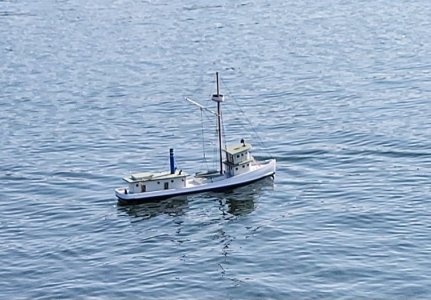
They we're easy to find in stores. Tire weights a wee less.
Enjoy your boating

- Joined
- Dec 15, 2024
- Messages
- 24
- Points
- 28

Yes, there is a general approach to determining the required ballast, but it's not a single universal formula, but a set of calculations. It's based on Archimedes' principle: a vessel must displace a volume of water equal to its weight. Ballast is calculated so that the center of gravity is below the center of buoyancy, ensuring stability. Typically, the vessel's mass (including cargo and equipment) is taken, compared with the estimated draft, and the missing weight is added as ballast, distributing it so that the hull doesn't list or trim.Reading a shipbuilding magazine, I finally found answers to questions that had been plaguing me for years: how to properly distribute ballast, why some hulls maintain stability better than others, and how the slightest miscalculations can change the fate of an entire vessel. There were diagrams, real-life examples, and expert commentary—it felt like I was actually attending a lecture at a maritime academy. It reminded me of how I once searched for a how to contact tv guide magazine and realized that, as in shipbuilding, the right source of information is crucial. In both cases, the key is access to knowledge, and then even complex problems become clear.
"There's a tool for that" department:
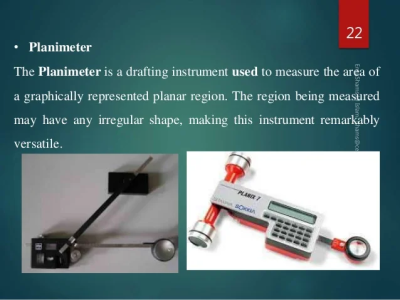
When modern naval architects want to calculate the volume of a hull accurately, they use a compensating polar planimeter, which is an instrument that measures the area of irregular flat planes. By measuring the area of the plane at each station and multiplying the area of each station plane shape by the distance between it and the next station plane, the cubic volume of the hull can be calculated.
Keuffel and Esser Compensating Polar Planimeter, Paragon line, through 1980's: https://www.ebay.com/itm/277399544304?_skw=planimeter&itmmeta=01K600FK4R82XQJ6HK1RQWN2R0&hash=item40964d21f0:g:6fQAAeSwzVpomMFY&itmprp=enc:AQAKAAAA0FkggFvd1GGDu0w3yXCmi1c/rX+3r3sRanEBah/SF9yPhWuHstzCRspx1eKV8Fqf2inJB+SgSr7iJ/V0aYBzo+t5qQnh8msgzuyvzW5LmiIR6sLiyfj1M42jW3AgT4TOXTcJOVpxkMQW0WLOm2NvM4LMHvu9SqhVHGGW6xJHvePDyJvFn3gztFYaIAOlAPAb6XUExUBOvs7xwev45mHEUUz0iDA/7PQGQQ84Pn9QtPHZ+vwazN7sZO7TkYF0x5MwZpzORNAckR1pdk24FOF/+RY=|tkp:Bk9SR-ayvoCwZg
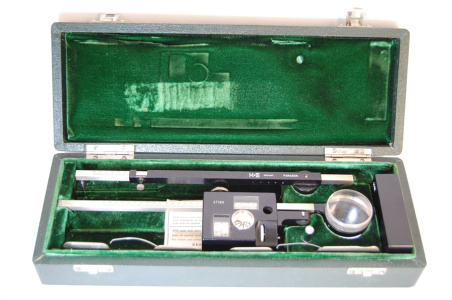
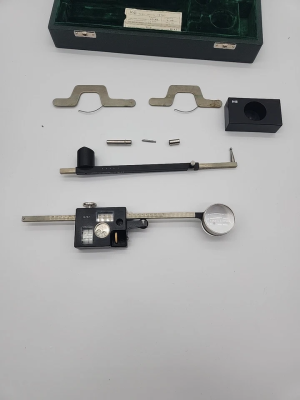
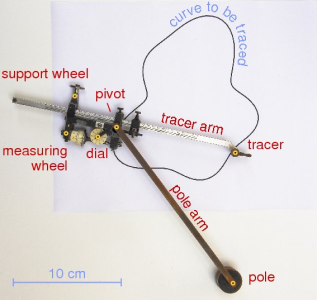
See: https://archive.org/details/KeuffelEsserCompensatingPolarPlanimeters1963/mode/2up for instructions for use.
The newer planimeters are electronic. There are a lot of the older style mechanical planimeters for sale on eBay for very reasonable prices. A top-of-the-line mechanical planimeter like the Keuffel and Esser Paragon model pictured above will go for around $80.00, but lesser examples can be had for around $20.00. They cost a lot more before electronic planimeters and CAD programs came along, but they are still attractive to collectors. The older brass ones make nice display pieces. They're fun to play with if you are a ship modeler or amateur cartologist.
When modern naval architects want to calculate the volume of a hull accurately, they use a compensating polar planimeter, which is an instrument that measures the area of irregular flat planes. By measuring the area of the plane at each station and multiplying the area of each station plane shape by the distance between it and the next station plane, the cubic volume of the hull can be calculated.
Keuffel and Esser Compensating Polar Planimeter, Paragon line, through 1980's: https://www.ebay.com/itm/277399544304?_skw=planimeter&itmmeta=01K600FK4R82XQJ6HK1RQWN2R0&hash=item40964d21f0:g:6fQAAeSwzVpomMFY&itmprp=enc:AQAKAAAA0FkggFvd1GGDu0w3yXCmi1c/rX+3r3sRanEBah/SF9yPhWuHstzCRspx1eKV8Fqf2inJB+SgSr7iJ/V0aYBzo+t5qQnh8msgzuyvzW5LmiIR6sLiyfj1M42jW3AgT4TOXTcJOVpxkMQW0WLOm2NvM4LMHvu9SqhVHGGW6xJHvePDyJvFn3gztFYaIAOlAPAb6XUExUBOvs7xwev45mHEUUz0iDA/7PQGQQ84Pn9QtPHZ+vwazN7sZO7TkYF0x5MwZpzORNAckR1pdk24FOF/+RY=|tkp:Bk9SR-ayvoCwZg
See: https://archive.org/details/KeuffelEsserCompensatingPolarPlanimeters1963/mode/2up for instructions for use.
The newer planimeters are electronic. There are a lot of the older style mechanical planimeters for sale on eBay for very reasonable prices. A top-of-the-line mechanical planimeter like the Keuffel and Esser Paragon model pictured above will go for around $80.00, but lesser examples can be had for around $20.00. They cost a lot more before electronic planimeters and CAD programs came along, but they are still attractive to collectors. The older brass ones make nice display pieces. They're fun to play with if you are a ship modeler or amateur cartologist.
Last edited:
Back in the seventies I was a "cut and fill" estimator for a large construction company. The planimeter was one of my tools of the trade and spent many hours using it. Very accurate and very easy once you get the hang of the math.
- Joined
- Jun 29, 2024
- Messages
- 1,785
- Points
- 488
in addition to using planimeters, Naval Architect commonly make what are called Form Calculations. As well as calculating displacement they also determine Metacentric height (a measure of transverse stability), and longitudinal trim. The theory behind these calculations involves integral calculus but since ship’s hulls are not described by mathematical functions, the equations cannot be solved analytically. Instead, they are approximated by numerical analysis.
Determining the hull’s underwater volume is done by tabulating offset dimensions for each station of a waterline, describing numerically the curve of the waterline. This is then integrated numerically to find the area under the curve. Each of these waterline areas are then tabulated and again integrated to yield the hull’s underwater volume. Multiplying this by the density of water yields displacement.
There are several methods for performing numerical integration. The most familiar one is probably the trapezoidal rule. Naval Architects usually use another, Simpson’s Rule. Today, these calculations are of course, computerized, connected to offsets from CAD drawn hull lines, but I believe that the computer pretty much follows the same procedure.
Roger
Determining the hull’s underwater volume is done by tabulating offset dimensions for each station of a waterline, describing numerically the curve of the waterline. This is then integrated numerically to find the area under the curve. Each of these waterline areas are then tabulated and again integrated to yield the hull’s underwater volume. Multiplying this by the density of water yields displacement.
There are several methods for performing numerical integration. The most familiar one is probably the trapezoidal rule. Naval Architects usually use another, Simpson’s Rule. Today, these calculations are of course, computerized, connected to offsets from CAD drawn hull lines, but I believe that the computer pretty much follows the same procedure.
Roger
That's a good demonstration video, but a professional level planimeter, properly adjusted, is a lot more accurate than he seems to demonstrate. He's using a Chavros brand planimeter. I'm not familiar with their planimeters, but the top end planimiters such as the Keuffel and Esser Paragon models (pictured in the post above) will have adjusting standards (the sort of omega-shaped flat metal pieces pictured) that permit adjustment so that the readings are always spot on. Chavros instruments were primarily marketed as "student instruments," i.e., for college students to buy for use in class. The far more expensive professional level instruments sold in the U.S. by Keuffel and Esser, Dietzgen, and Alteneder, and Richter, Kern, and others in Europe, were highly accurate. (The top end companies often also sold lesser quality lines, as well.) In fact, most quality manual drafting instruments were made by Swiss or German craftsmen in a handful of contract factories and labeled for retail sale by retailers such as Keuffel and Esser or Deitzgen. The good stuff will be made of German silver (a cupronickel alloy, actually) and was hand-fitted with matching serial numbers like a fine firearm. The top end planimeters will also produce readings in many different scales, metric and imperial, inches, feet, acres, etc., etc.