• Win a Free Custom Engraved Brass Coin!!!
    As a way to introduce our brass coins to the community, we will raffle off a free coin during the month of August. Follow link ABOVE for instructions for entering.
  • SUBSCRIBE TO SHIPS IN SCALE TODAY!

    The beloved Ships in Scale Magazine is back and charting a new course for 2026!
    Discover new skills, new techniques, and new inspirations in every issue.

    NOTE THAT OUR NEXT ISSUE WILL BE MARCH/APRIL 2026

Harold Hahn

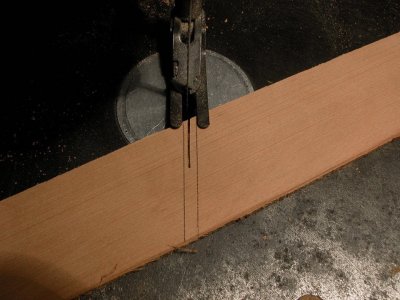
rather than use a table saw or the blank jig HMH used i cut the blanks apart with a band saw and no concern for accuracy

p5.jpg

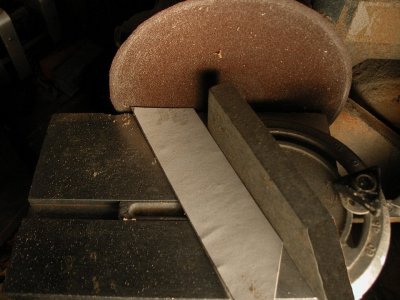
The accuracy is when the angle is sanded i set the miter to the angle using the cardboard pattern and sand the angle. This does involve an extra step as opposed to cutting the angle on a saw. I never cut blanks on a table saw because i do not have a large table saw just a 4 inch Jarmac and that did not work so well. and i do not know if you can get a smooth enough cut with a saw as apposed to sanding.

p6.jpg
 
The use of the jig for cutting the blank pieces is to hold the wood in place to get a straight cut every time. Cutting pieces freehand you do not have to worry about the stock being a consistent 1 inch wide.

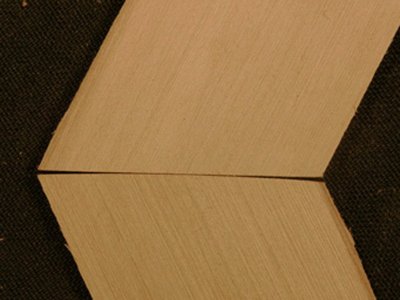
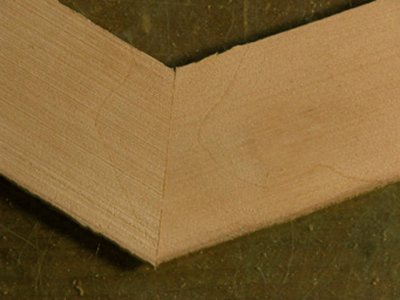
In this photo the bottom piece was sanded freehand. By not holding the piece absolutely steady and at the same angle the piece will rock causing a rounded edge
.

cut4.jpg

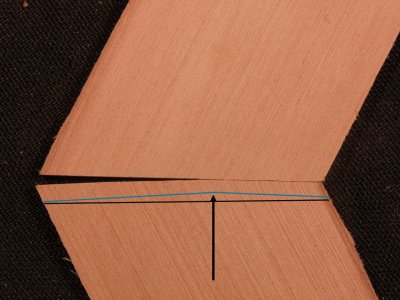
The black line is the angle line you want to sand to. if your piece is not exactly parallel to the sanding disk and you start sanding then shift the piece the slightest movement of your hand will cause a pivot point at the arrow. The blue line demonstrates the two different angles you end up with rather than one straight continuous edge.

p8A.jpg

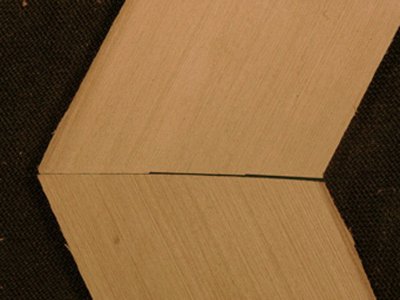
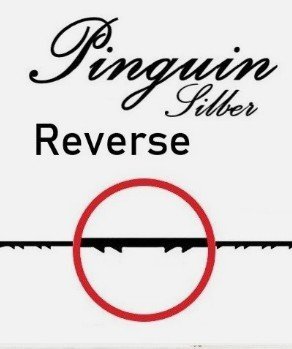
Another way is to use a table saw by setting the correct angle and slicing off each piece. Small hobby size table saws have thin blades that tend to move or wobble and it takes the slightest movement of your had to mess up the cut. So by using a table saw is not a sure fire way of getting a perfect cut edge. The pieces were cut on a small table saw. If the piece is not held tight against the miter guide the blade will either gouge or cut in a step pattern. Under powered mini table saws will chew through the wood leaving an uneven cut

cut3.jpg

one reason i guess why HMH used a full size table saw is to insure clean straight cuts for a perfect joint between pieces

cut5.jpg
 
Last edited:
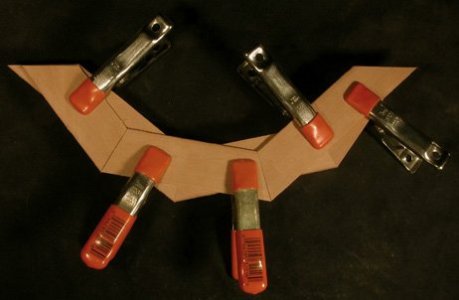
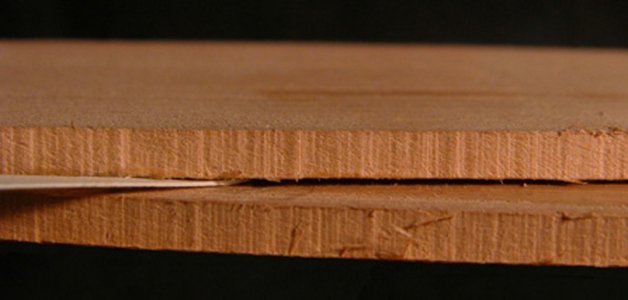
C clamps or spring clamps work the best for clamping the frame halves together. Putting the frame underweight does not work as well as clamping because it requires more weight than you would expect. Clamping a frame blank as shown here will result in a fit as shown in the next photo.

clamping1.jpg

seam line1.jpg
the outer edge is wide enough to slip a business card into the gap. When building frames with the blank the wood tends to warp side to side in a slight arc called cupping.
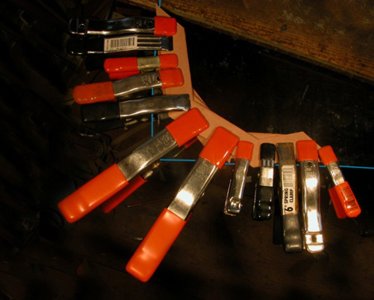
The next photo shows a frame blank clamped to the corner of a piece of plate glass. The number of clamps prevent the wood pieces from cupping and also by clamping the blank to the glass keeps it flat and free from any twisting.


clamping2.jpg

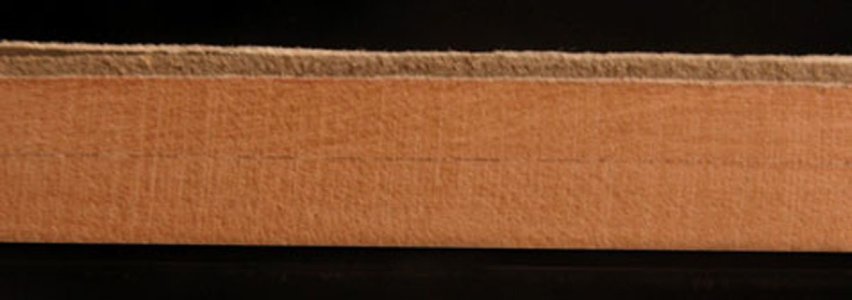
a properly clamped frame blank the seam is barely noticeable

seam line.jpg.
 
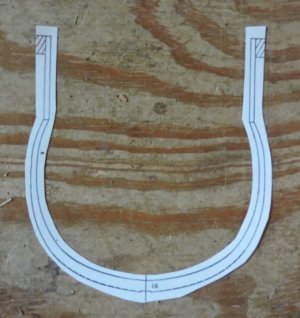
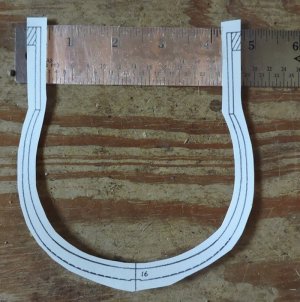
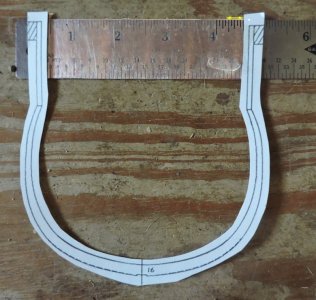
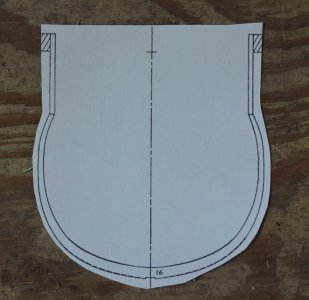
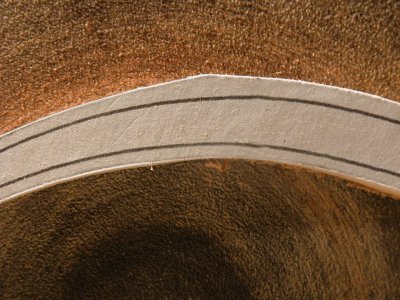
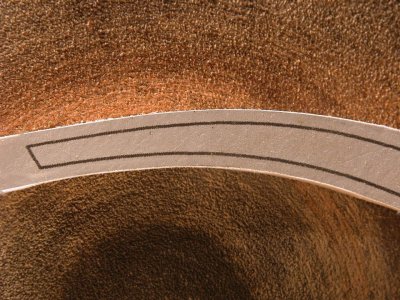
Using rubber cement the frame pattern is glued to the wood frame blank. It may not seem so but this step is important you get the patterns glued to the blank correctly. A common error is to cut the frame pattern like this. Actually, it is the logical way to go because you can see the inside and outside edge of the blank to position the pattern.

df1.jpg
The paper pattern is flimsy enough that if you look close in the upper right corner at the yellow arrow you can see the pattern can move as much as quarter inch unnoticed. This will throw off the shape of the hull

df2.jpgdf3.jpg

ideally you want to keep the inside of the drawing intact this maintains the shape with little to no distortion

df4.jpg
 
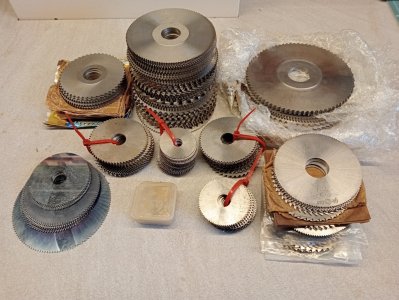
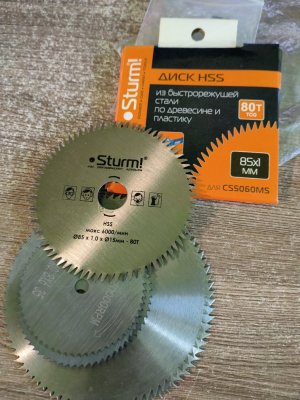
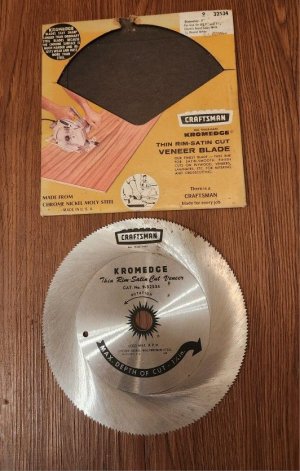
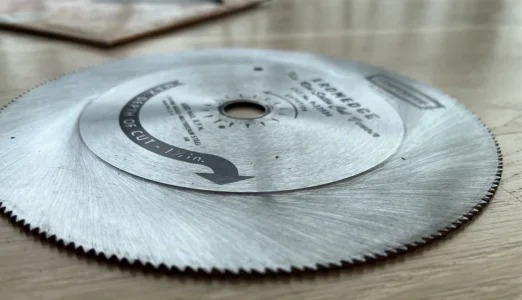
Back in the 1970’s the Sears Roebuck Company sold a saw blade that they called a “Kromedge Thin Rip Veneer blade.” This was a seven inch or so, fine toothed, hollow ground blade. The teeth were not “set” like an ordinary saw blade. It would make beautifully smooth cuts in hard woods. I still have one.

Harold Hahn specifically writes about using this particular blade to build his models and one is shown in the third photo of Post #99 that Dave posted above. Unfortunately, the specific blade is no longer available although they occasionally show up on EBay. When shopping for a saw blade to build a model using the Hahn method try to buy one with the same characteristics as the Kromedge blade that I described above.

Dave does not mention it specifically but many of Hahn’s models were built before the advent of the Byrnes saw. He used an ordinary 8” saw fitted with the blade that I described.

Roger
 
Back
Top