.
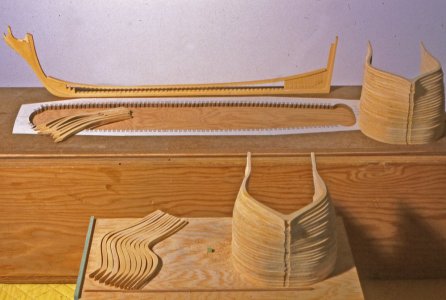
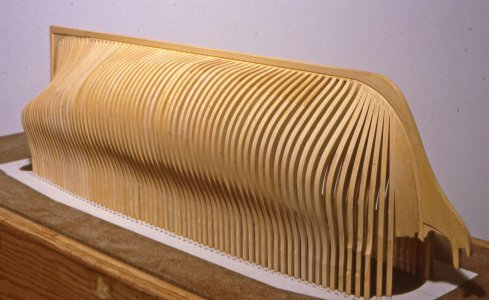
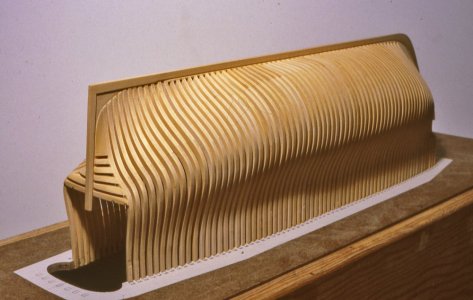
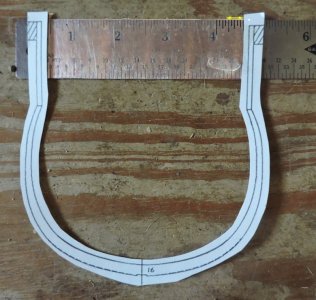
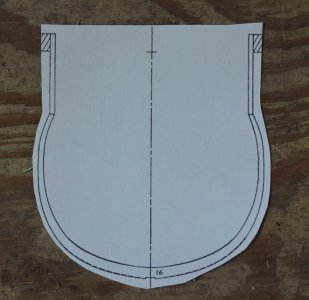
before moving on with the story of Harold Hahn lets drift into the pros and cons building a hull then shaping it or building a hull from refined finished frames. I think finishing the frames first is very difficult as opposed to rough shaped frames and shaping a hull. What is called "dubbing" How close from original draft to the mold loft to the patterns used and the final build in the yard how much was done to a hull while under construction?
To follow actual ship building practices in model building is not always practical. Is model building like electricity seeking the path of least resistance?
Similarly, in my opinion, following real-life practices in model construction is simply pointless in normal situations, unless it is an end in itself for some specific reasons.
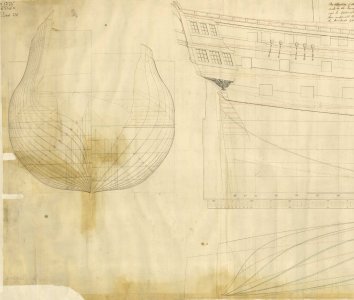
Nevertheless, I wanted to take this opportunity to show a fragment of a plan from the mid-18th century, which I should have shown earlier, but forgot about. It concerns the precision that was practically achievable at that time.
The designers of this ship decided to modify its shape still at the design stage. They started by raising the longitudinal design line by two inches (visible as a dashed line parallel to the continuous one on the side projection), which caused corresponding changes in the contours of the frames (visible on the body plan) and waterlines (visible on the top projection). I have taken some measurements on this plan, and it turned out that the resulting modifications to the contours of the frames are mostly within the range of only 1 to 2 inches (only in a very few places it reaches about 3 inches).
The point is that — since the designers worked with such high precision, it was not so that the loftsmen could later create their own design for this ship, by deviating from the designed lines by more than a fraction of an inch.
Admittedly, this is the reality in the English professional environment, but there is no reason to believe that professionals in other parts of the world followed any inferior standards.
The plan in question (British archives; J2656; ZAZ1341):
.








 .
.