• Win a Free Custom Engraved Brass Coin!!!
    As a way to introduce our brass coins to the community, we will raffle off a free coin during the month of August. Follow link ABOVE for instructions for entering.
  • SUBSCRIBE TO SHIPS IN SCALE TODAY!

    The beloved Ships in Scale Magazine is back and charting a new course for 2026!
    Discover new skills, new techniques, and new inspirations in every issue.

    NOTE THAT OUR NEXT ISSUE WILL BE MARCH/APRIL 2026

Help Identifying some standing rigging

Joined
Jul 19, 2023
Messages
42
Points
48

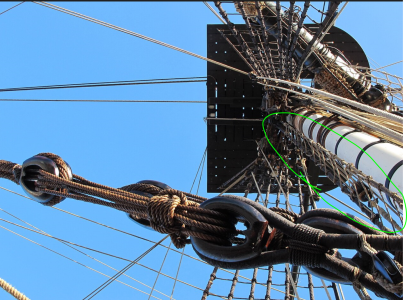
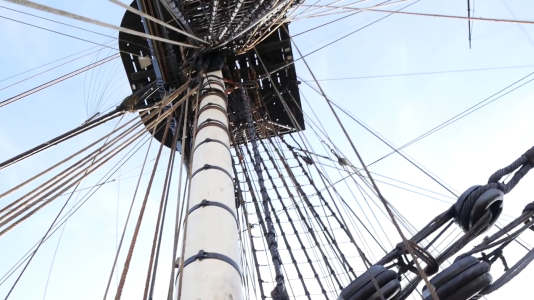
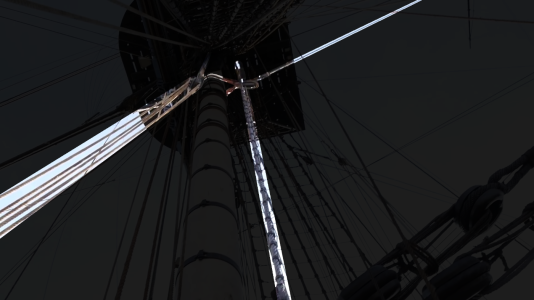
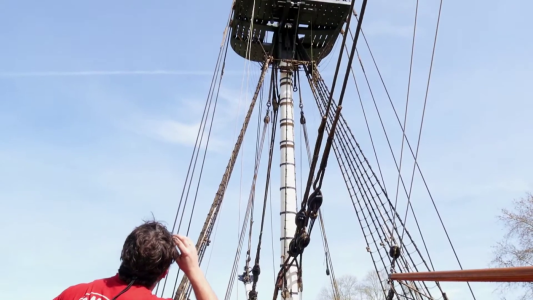
attached is a view of the foremast of L'Hermione, and the rigging in question are the two cords running parallel directly down the rear of the mast, which are lashed together (I hesitate to say Rattled down because I'm not certain that's the purpose of joining them). I'm fairly certain they are standing rigging.

I'm not sure but I think these are the Main-topmast stay and preventer stay? If anyone could help me confirm or deny that hunch I'd be obliged. and furthermore, If you know why they are joined in this fashion I'd also be curious to know that.

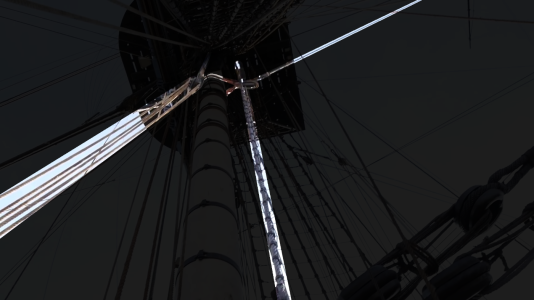
identifyStays.PNG
 
Just a guess but they don't look like stays, but the set looks almost like a rope ladder. Then again, with shrouds, what would be the purpose? If they are main topmast stay and main topmast preventer stay they would be secured on the fore side at the top of the main topmast and run down and forward to the aft side of the upper area of the foremast near the foretop. The set up there had variations from blocks to deadeyes. I am as curious as you, so hope someone has an answer.
Allan
 
attached is a view of the foremast of L'Hermione, and the rigging in question are the two cords running parallel directly down the rear of the mast, which are lashed together (I hesitate to say Rattled down because I'm not certain that's the purpose of joining them). I'm fairly certain they are standing rigging.

I'm not sure but I think these are the Main-topmast stay and preventer stay? If anyone could help me confirm or deny that hunch I'd be obliged. and furthermore, If you know why they are joined in this fashion I'd also be curious to know that.

View attachment 584559
Good morning, since this is a fake replica of the ship, that ladder made of ropes is nothing more than a fake. Frank
 
I agree with Frank. The Iron Men that sailed the wooden ships of the past are far and few between today. Plus, replicas must meet safety laws that did not exist when the original ships sailed. Therefore they must include details to accommodate modern times.

I’m not an expert on Eighteenth Century rigging and especially not French rigging, but what you show is a rope ladder that I suspect did not exist on the original vessel.

I am of the opinion that when you come across a detail that you’re unsure of it’s better to leave it off of the model than to include it.

Roger
 
Alright, I've just finished a marathon of studying images of the ship being constructed, and compared observations with some written sources (Primarily Jean Boudriot's 74 gun ship treatise) and these ropes are in fact the Maintop stay and its preventer. they both reeve through blocks (the preventer stay to one secured below the hounds of the mast, just under the fighting top. the primary stay to one above the fighting top) and then proceed down the aft of the mast and attach to hooks in the deck. they are not tied together in every image I have, especially during the initial rigging of the ship their identity is far clearer

to be clear I never suspected this was a ladder, I was just trying to suss out if I was right about which pieces of rigging these were, since there are a number of belays at the base of the foremast and I have a few contradictory diagrams about which is which (the ANCRE monogram for ship suggests there were guidelines and common practice but they were adhered to very unevenly by different crews). the first clue is that the two vertical components are different gauges of rope which would make no sense (even if one were making a random ladder for no reason) however it is exactly consistent with this being a stay and preventer. and the second being that the "rattling" (not the appropriate term) isn't executed the way it is one the shrouds, but is a series of hitches that are done in two's one each side and alternate back and forth to form the "steps", meaning the entire system is a continuous cord from top to bottom.

there is disagreement on why exactly the stays are connected thus, but the likely explanation is that it prevents a loose cord from snaring itself in the other rigging in the event that either stay breaks. in that event it'd be held in place by it's counterpart. I cannot recall where I first read that explanation, if anyone else has read something similar i'd be interested to hear about it.
 
Back
Top