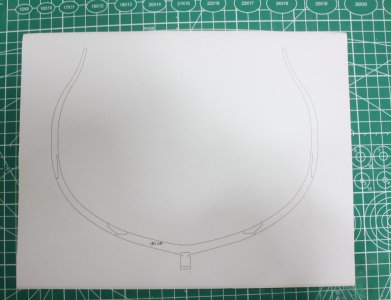
Alcohol-based dye might penetrate Castello a little, but I image that even light sanding would remove it. If it were re-dyed, then any areas that survived the sanding would be darker? Needs to be tested.

 |
The beloved Ships in Scale Magazine is back and charting a new course for 2026! Discover new skills, new techniques, and new inspirations in every issue. NOTE THAT OUR NEXT ISSUE WILL BE July/August 2026 |
|
 |
As a way to introduce our brass coins to the community, we will raffle off a free coin during the month of August. Follow link ABOVE for instructions for entering. |
|

Think old t-shirts or worn out 300 count bed sheets as applicator - just charged enough to leave a wet trail on the surface.Water or alcohol, I worry about debonding the glue depending on much it penetrates
Fowey was rated as a 44. But it was not anything like a frigate. It was a ship-of-the-line. It had two full gundecks.The Shipbuilder's Repository 1788 gives a thickness of 6 inches and Steel gives a thickness of 8" for a 44.
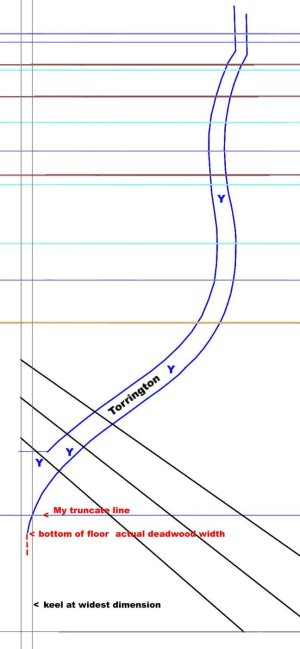


So many clever deductions in just a few lines. Thanks Allan!Fowey was rated as a 44. But it was not anything like a frigate. It was a ship-of-the-line. It had two full gundecks.
SR may have been published in 1788, but it had probably existed as a manuscript for maybe 10 years before it was published.
The 44 in it was a ship-of-the-line.
It was a fat runt when compared to a frigate. That is it was too high sided and too short.
How I read the subject:
The French probably launched the first 44 gun frigate in 1794 - Forte. Even if they said it was a 50.
I do not believe in coincidence. Humphries' design for President, Constitution, United States class is very close to having the same lines. I smell some spycraft being involved.
The ink on the Steele manuscript for 1805 was probably still wet because from 1800 on - a 44 was a frigate.
Long - sleek - one full gundeck with a lot of useless junk arty on the Qdeck and foredeck. The scantlings were close to those of a 74. The 44 gun frigates were essentially a 74 with one less full gundeck.
If they had armed them with long barrel 42 or 48lb cannon a 44 probably could have shot a first or second rate to pieces and stayed out of range of the target. The total number of guns would have been lower because of the weight. A ship armed with carronade might as well surrender before the first shot.