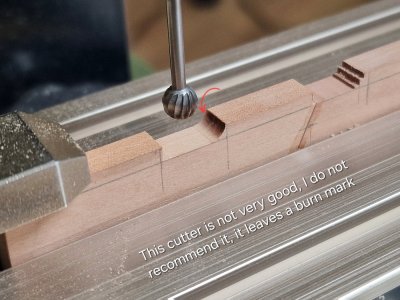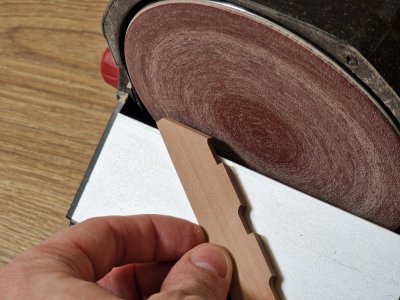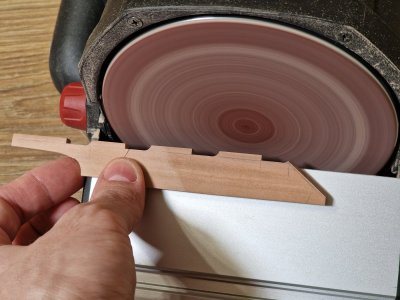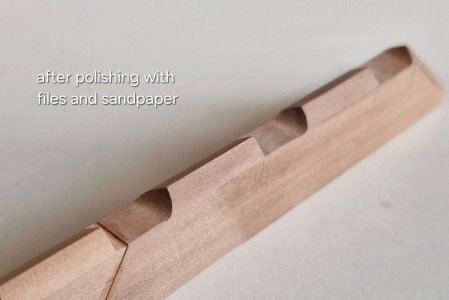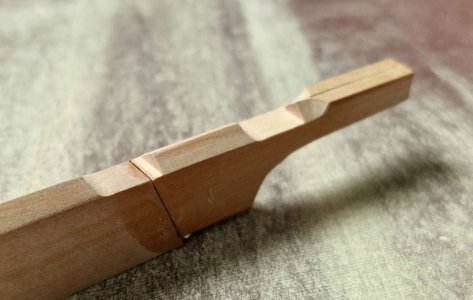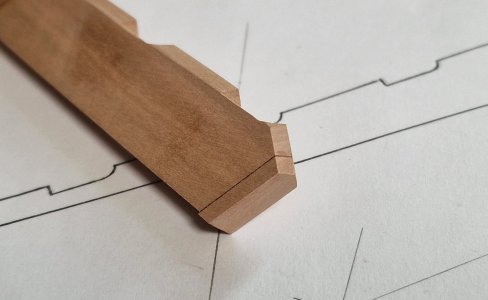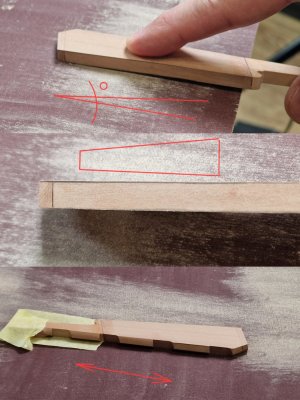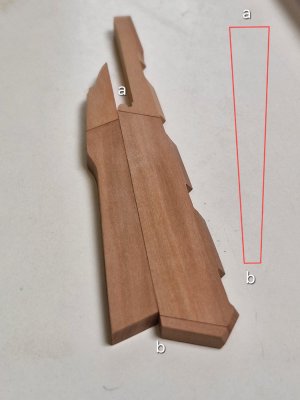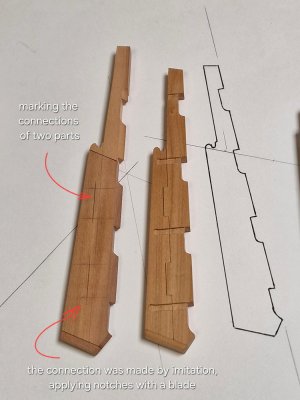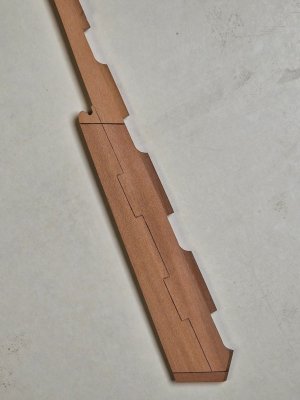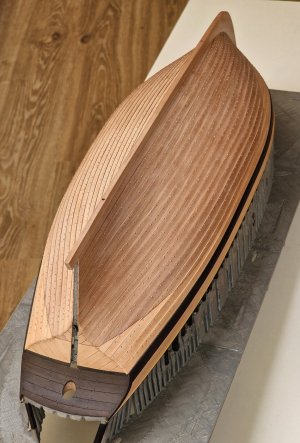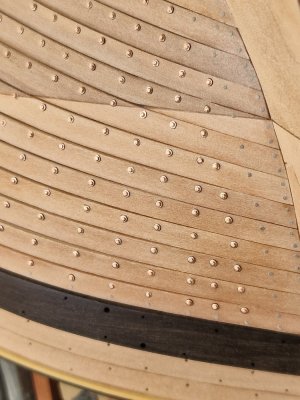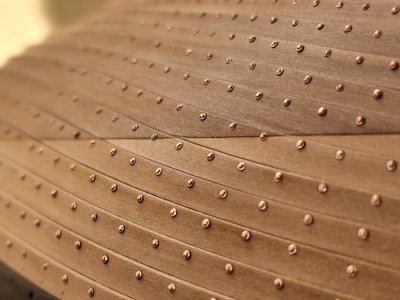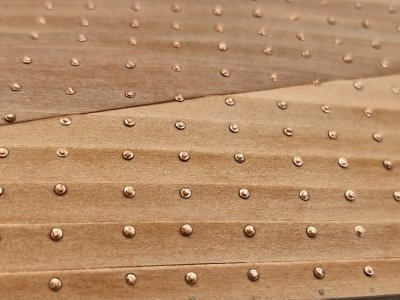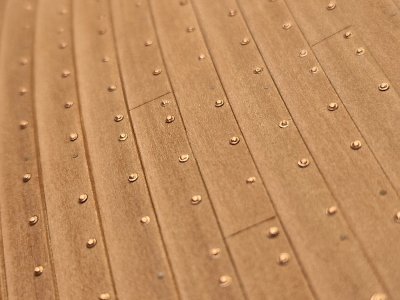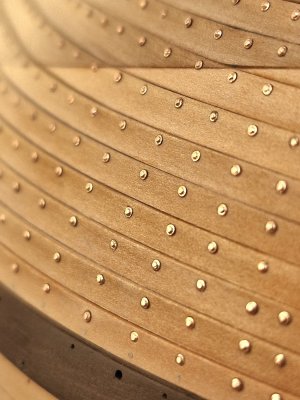





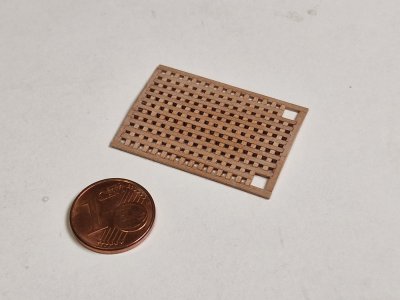
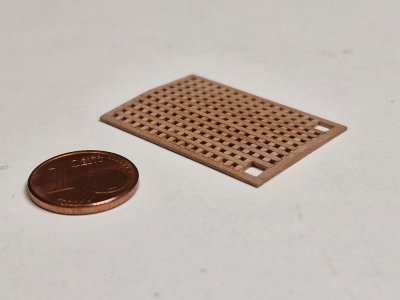
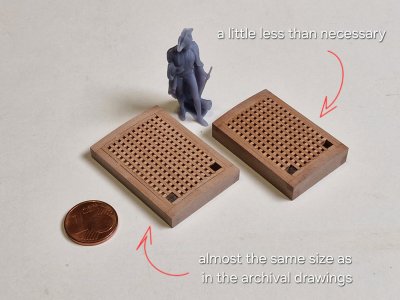
According to the anatomy drawings, the hold grating has a specific number of combs. By calculating them with a pitch and a size of 1 mm (precisely the right number), my grate ended up slightly smaller. I didn't mind, since the ship is already small. I thought there would be more space on the deck, but... it wasn't the case. Once I'd finished it, both in terms of the entire deck and the size of the sailor (figurine), I realized it was still a bit small...
I had to add another comb to both the width and the length (for proportion) and redesign the grating.
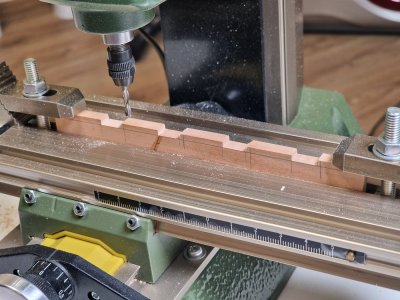
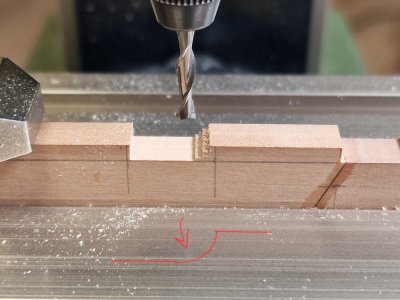
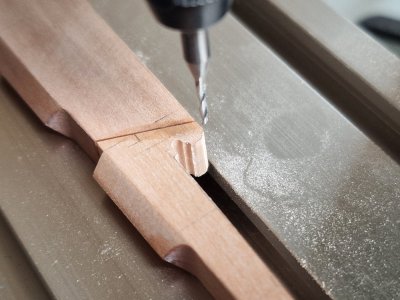
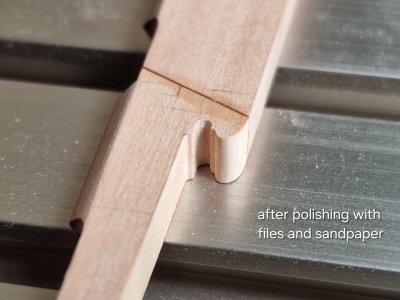
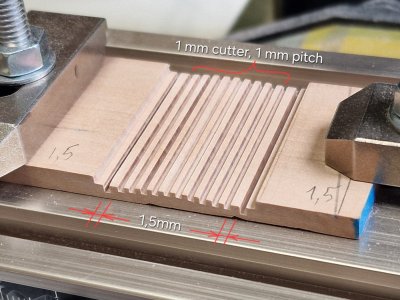
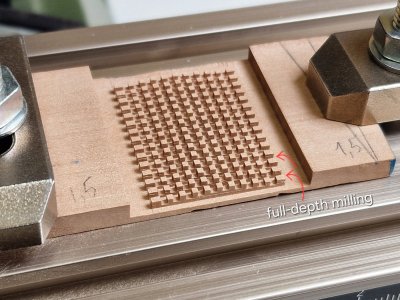
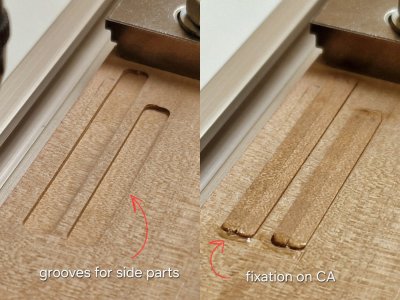
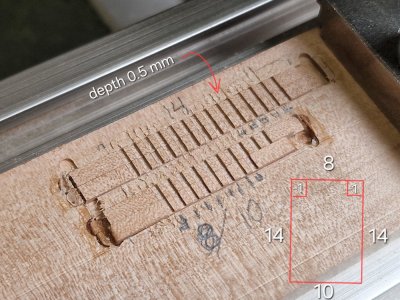
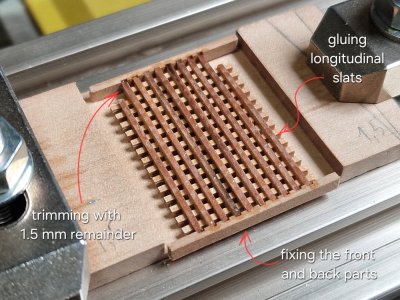
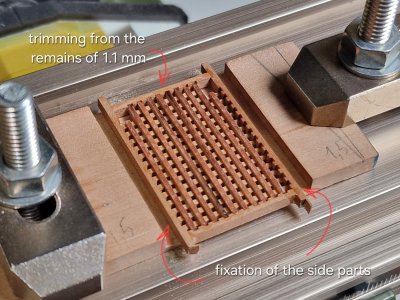
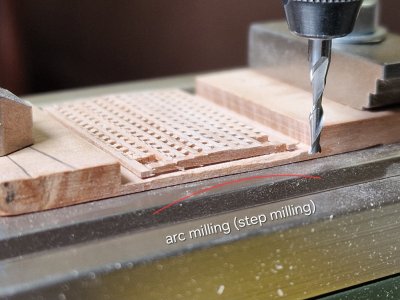
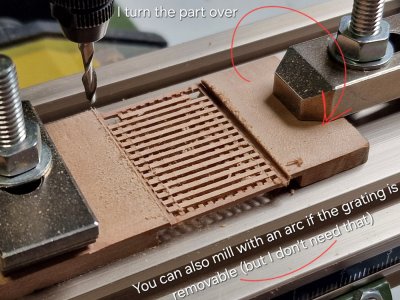
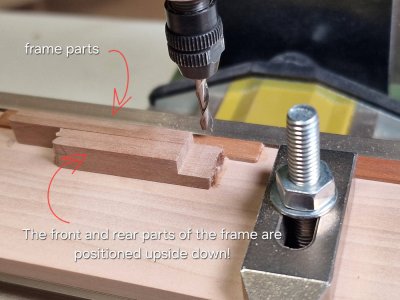
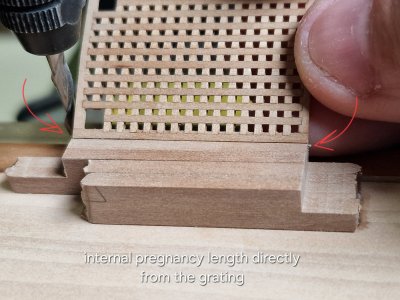
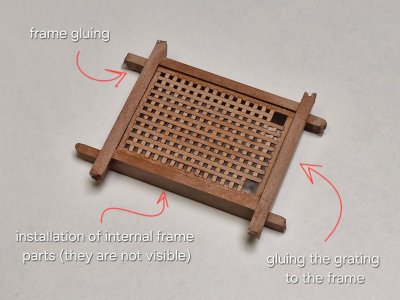
All the manipulations are practically the same as before, but I changed a few things to speed things up and simplify things... In particular, I defined the shape of the arch right away and then milled around it.
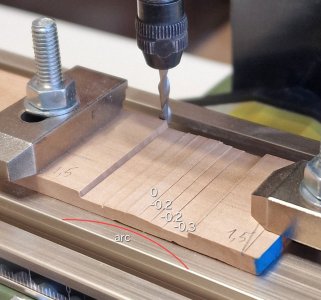
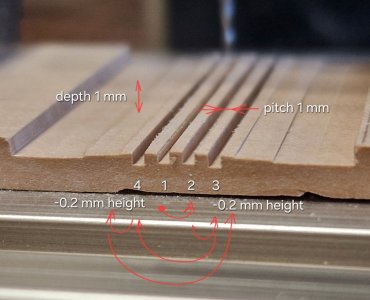
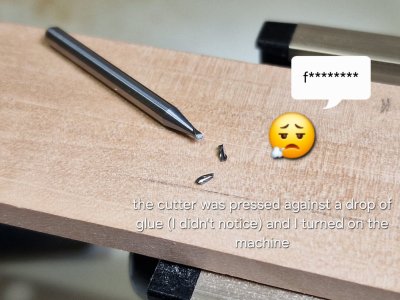
Due to constant power outages (war, shelling of our power plants...), I didn't notice that the cutter was pressed against a drop of glue and accidentally turned on the router... -8 euros...
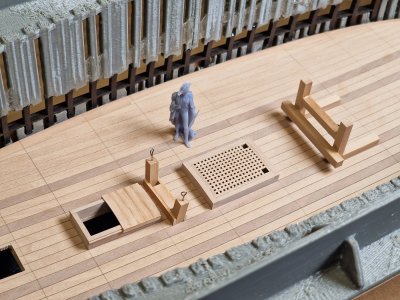
I will move the beam line a little back, and the rear support for the boat will be a little further from the mast, and will be more symmetrical, as it should have been originally.
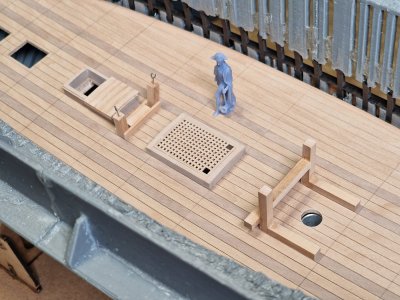
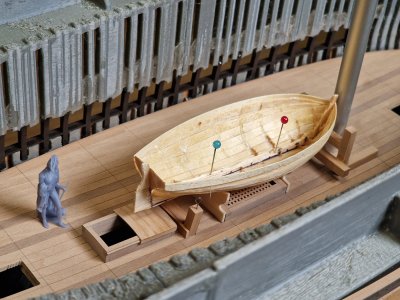
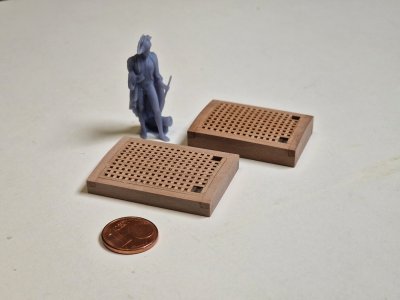
And even though the grate will be barely visible under the boat and behind the supports, I'm still glad I redesigned it.
And the smaller one I made earlier will be used in the installation for the first skeletal hull.
The idea is this: the skeletal hull will be on a stand with frames and minimal planking. The deck will be laid out without planks. On it will be the frames without grates and windlasses, but without the gun carriages and cannons. And on the base plate of the storage box, I'll place the stove as a separate element, the gun carriage (maybe all 12, or at least one or two), and the anchors. Ropes will extend from the anchors and lead to this grate... and the ropes will dive into the rope holes. That's the idea. To show the hull as transparently as possible, but also to show what was inside it, but nearby on the plate...
I had to add another comb to both the width and the length (for proportion) and redesign the grating.
All the manipulations are practically the same as before, but I changed a few things to speed things up and simplify things... In particular, I defined the shape of the arch right away and then milled around it.
Due to constant power outages (war, shelling of our power plants...), I didn't notice that the cutter was pressed against a drop of glue and accidentally turned on the router... -8 euros...
I will move the beam line a little back, and the rear support for the boat will be a little further from the mast, and will be more symmetrical, as it should have been originally.
And even though the grate will be barely visible under the boat and behind the supports, I'm still glad I redesigned it.
And the smaller one I made earlier will be used in the installation for the first skeletal hull.
The idea is this: the skeletal hull will be on a stand with frames and minimal planking. The deck will be laid out without planks. On it will be the frames without grates and windlasses, but without the gun carriages and cannons. And on the base plate of the storage box, I'll place the stove as a separate element, the gun carriage (maybe all 12, or at least one or two), and the anchors. Ropes will extend from the anchors and lead to this grate... and the ropes will dive into the rope holes. That's the idea. To show the hull as transparently as possible, but also to show what was inside it, but nearby on the plate...