• Win a Free Custom Engraved Brass Coin!!!
    As a way to introduce our brass coins to the community, we will raffle off a free coin during the month of August. Follow link ABOVE for instructions for entering.
  • PRE-ORDER SHIPS IN SCALE TODAY!

    The beloved Ships in Scale Magazine is back and charting a new course for 2026!
    Discover new skills, new techniques, and new inspirations in every issue.

    NOTE THAT OUR FIRST ISSUE WILL BE JAN/FEB 2026

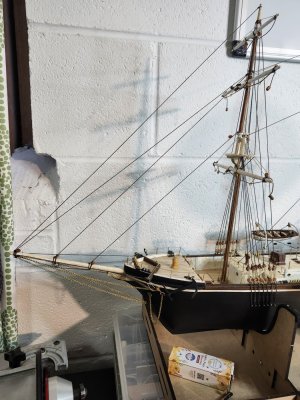
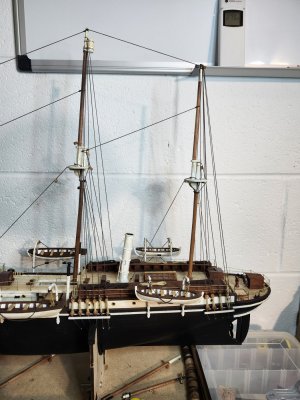
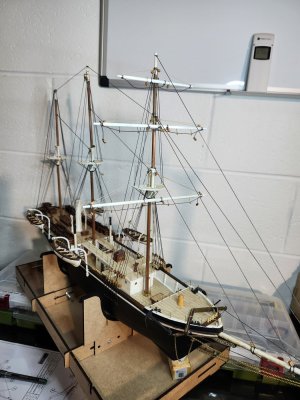
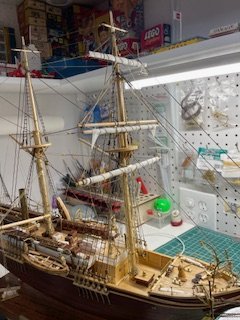
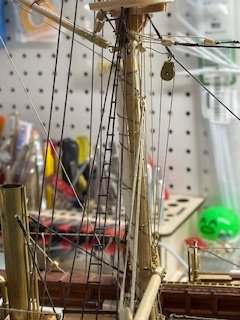
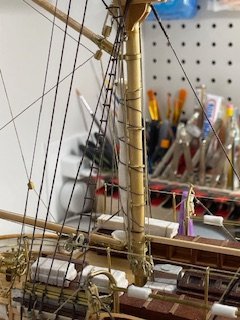
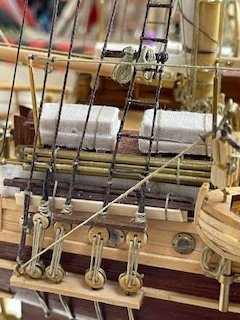
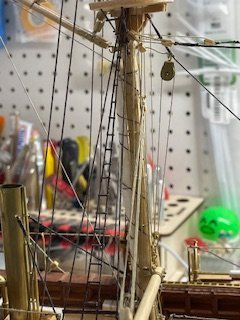
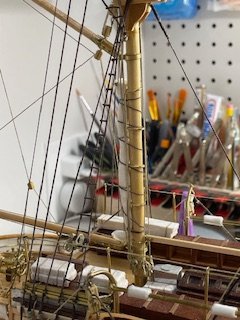
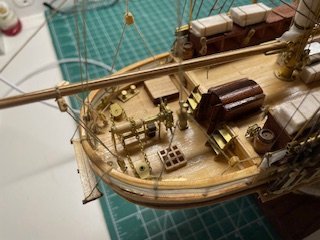
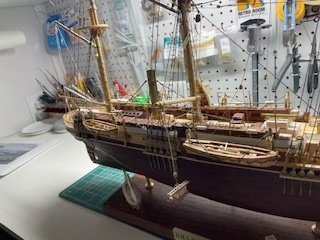
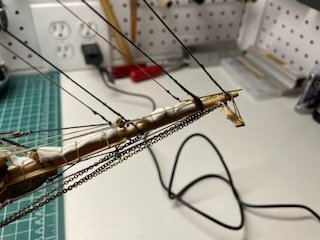
HMS Endurance Build . . .

  • Thread starter Thread starter Rebus
  • Start date Start date
  • Watchers Watchers 15
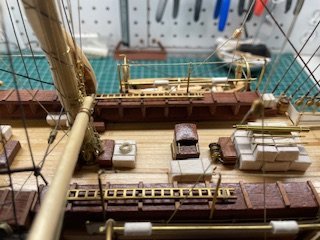
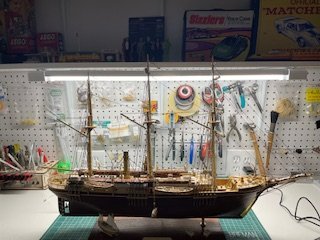
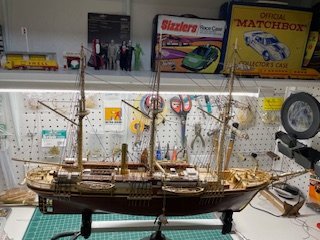
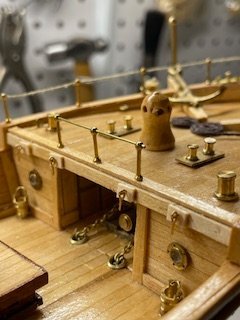
Beautiful!!! Awesome work.

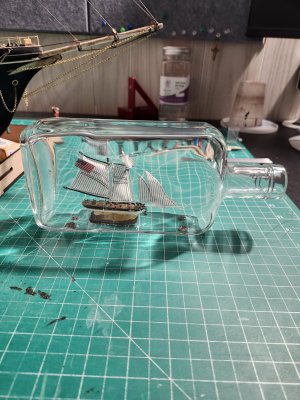
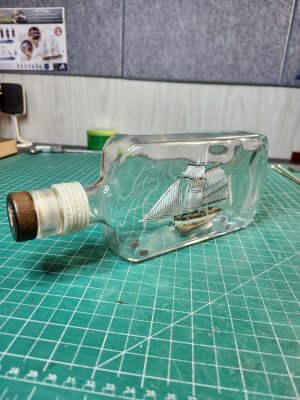
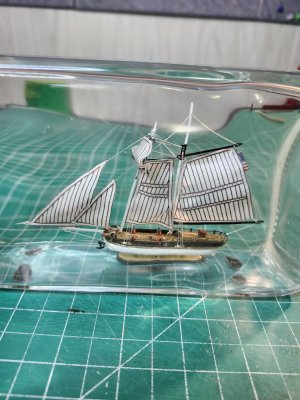
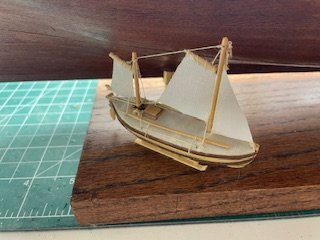
Big question remains...how did the grandson react to the ship in a bottle (and did he participate in raising it or did you present it "in the bottle")?
Thanks!!!

I don't get the see the grandson until January. Started the process today to put it in the bottle because it is about a three day process in order to let glue set up.

Only going to be visiting for two days so I will need to have it done before I go.
 
Last edited:
It's looking great @Rebus.
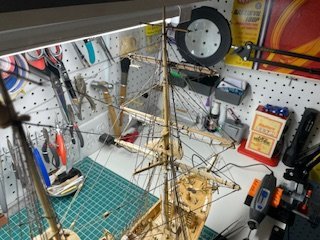
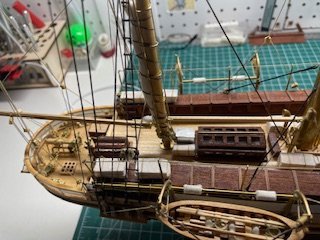
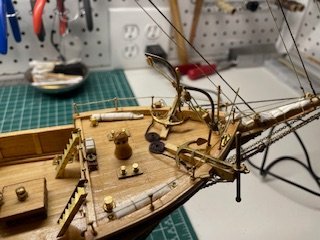
I have a question: what is that white cylinder strapped to the top of the main mast?
Thanks!

Here is the answer I found on the Web:
The Endurance was a three-masted barquentine (square-rigged on the foremast, fore-and-aft on the main and mizzen) built in 1912. The very top of a traditional sailing ship's mast features a masthead fitting, which usually culminated in a piece of wood called a truck.
This part of the mast typically had sheaves (pulleys) for halyards (ropes used to hoist sails and flags) and attachment points for the standing rigging (fixed wires/ropes that supported the mast). It would not have been a white cylinder.

Some one else might know a better answer.
 
Last edited:
Thanks!

Here is the answer I found on the Web:
The Endurance was a three-masted barquentine (square-rigged on the foremast, fore-and-aft on the main and mizzen) built in 1912. The very top of a traditional sailing ship's mast features a masthead fitting, which usually culminated in a piece of wood called a truck.
This part of the mast typically had sheaves (pulleys) for halyards (ropes used to hoist sails and flags) and attachment points for the standing rigging (fixed wires/ropes that supported the mast). It would not have been a white cylinder.

Some one else might know a better answer.
Thank you, @Rebus, for your well-explained reply.
The only reason I thought it was a cylinder was what I saw from the overhead view photo in post #99
 
It's looking great @Rebus.
I have a question: what is that white cylinder strapped to the top of the main mast?
I have no references with which to back this up, but I think it may have been a lookout station, intended to provide some protection from the wind for whomever was standing watch. In the photos I have seen, it looks a bit bigger.

Edit: Haha! I see Swabbie found the answer while I was typing.
 
Back
Top