
• Win a Free Custom Engraved Brass Coin!!!
    As a way to introduce our brass coins to the community, we will raffle off a free coin during the month of August. Follow link ABOVE for instructions for entering.
  • PRE-ORDER SHIPS IN SCALE TODAY!

    The beloved Ships in Scale Magazine is back and charting a new course for 2026!
    Discover new skills, new techniques, and new inspirations in every issue.

    NOTE THAT OUR FIRST ISSUE WILL BE JAN/FEB 2026

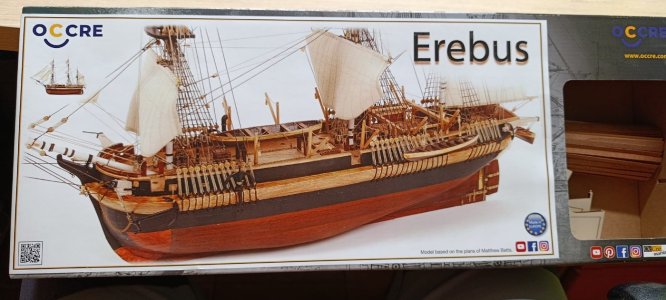
HMS Erebus de Ocre

Joined
May 1, 2024
Messages
29
Points
48

Location
Jaca, Huesca, Aragón, España
Well, to keep up the good work lately, while I continue with the San Juan Nepomuceno, I'll start the Erebus de Ocre, with the idea of making the Terror as well, since they're the same ships with minor differences. There's a lot of information about them, so I hope to get a model that's as realistic as possible. Since it also seems to have enough space to work on it, I'll combine the running rigging of the Nepomuceno—I still have a lot of work to do on the yards I've already made—with this one, which I think will make things more relaxed.

Besides, there aren't many threads in this ship's section, and that's tempted me. I'll also post it on Facebook, on Ocre's page.

The Erebus and Terror Expedition, also known as the Ross Expedition, was the most important British expedition to Antarctica in the 19th century. Led between 1839 and 1843 by James Clark Ross, the mission aimed at exploration and scientific research—particularly on magnetism—in an unexplored region that would later become the Ross Dependency.

This expedition is named after the expedition's ships, HMS Erebus and HMS Terror. These two ships had reinforced bows to withstand the twisting forces of the ice floes and were powered by steam engines. Around 1845, the Erebus and Terror attempted to find the Northwest Passage during John Franklin's expedition. The two ships departed London on May 19, 1845, bound for the Arctic. They set sail with 135 men, all of whom perished. Some died from lead poisoning, others from starvation due to spoiled food, and still others from pneumonia, dysentery, or botulism, which causes vomiting, fever, fatigue, and other symptoms, and was found in improperly prepared canned vegetables.

Numerous locations were discovered and named, such as McMurdo Sound, the Ross Ice Shelf, the Ross Sea, and Ross Island.

I'm sorry I have to use Google Translate, my English is very basic.

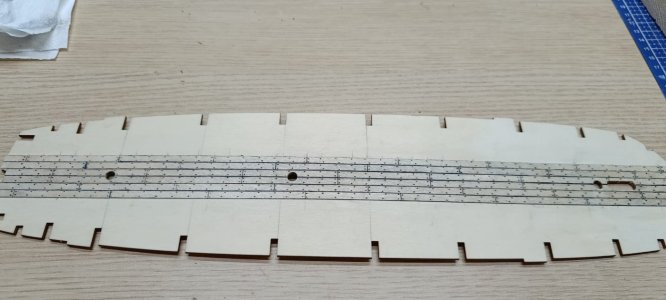
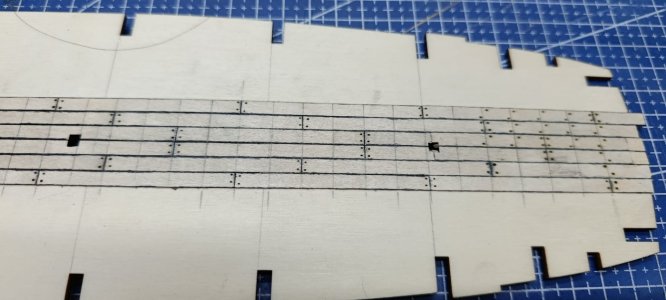
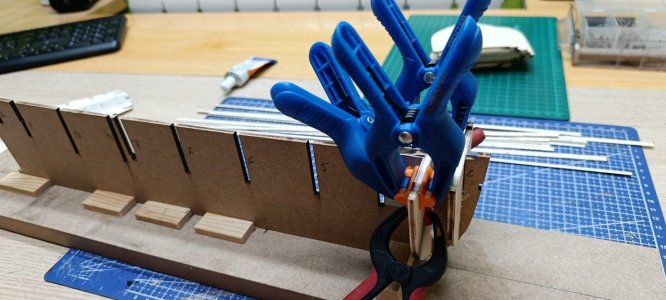
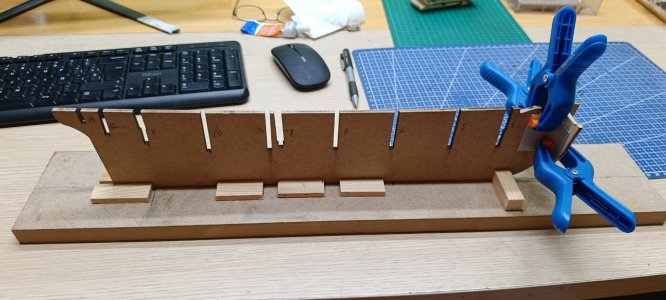
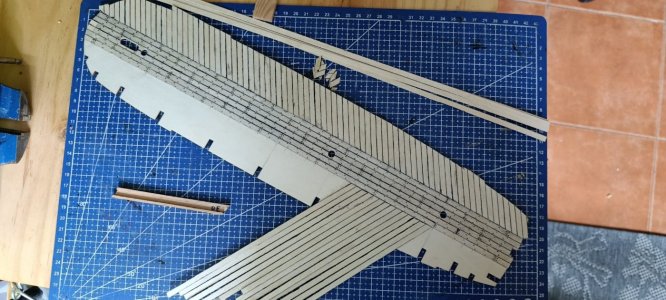
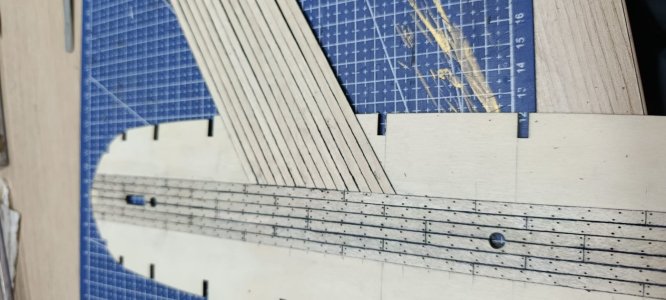
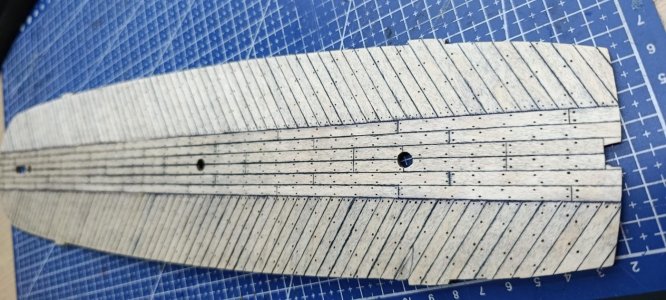
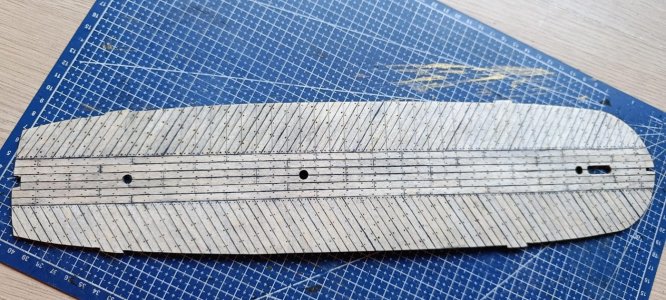
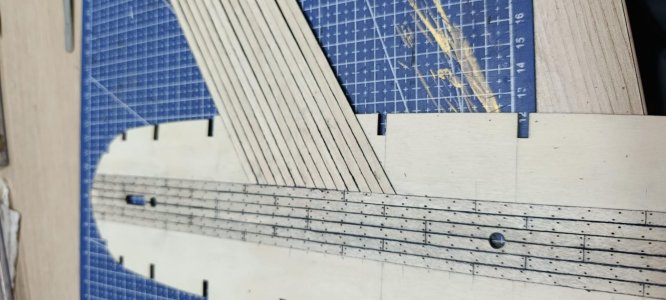
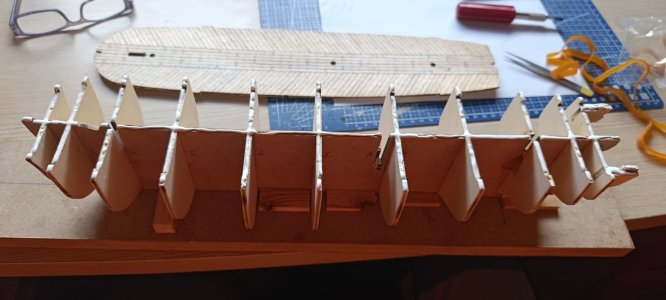
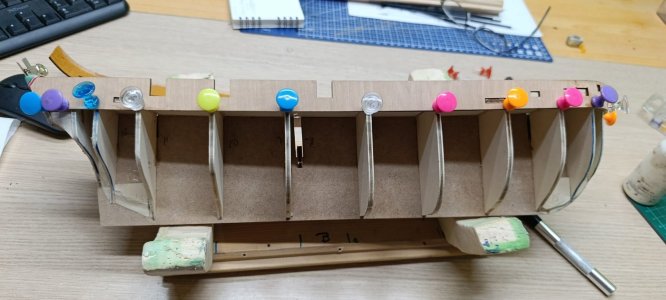
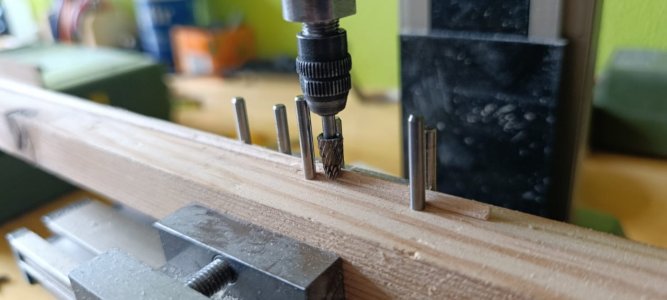
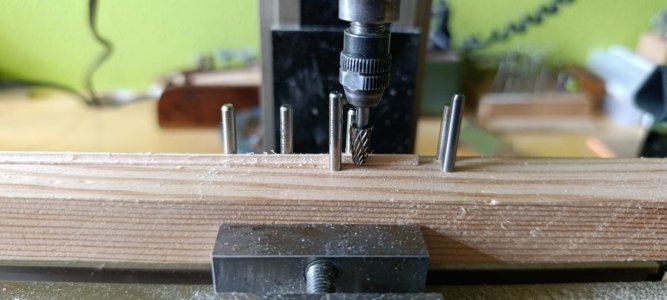
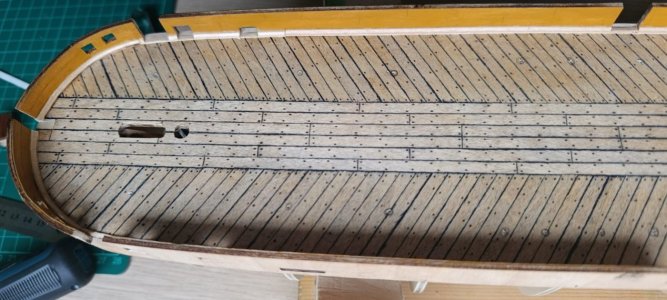
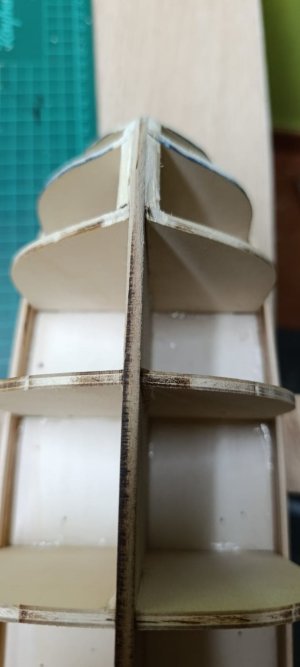
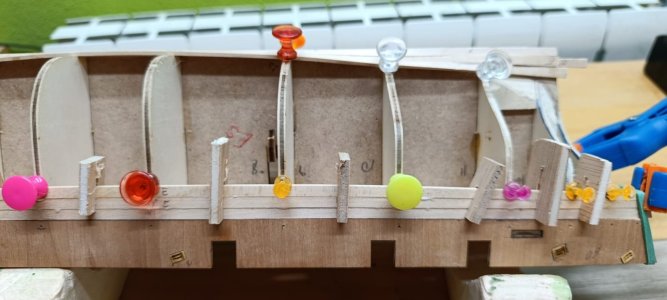
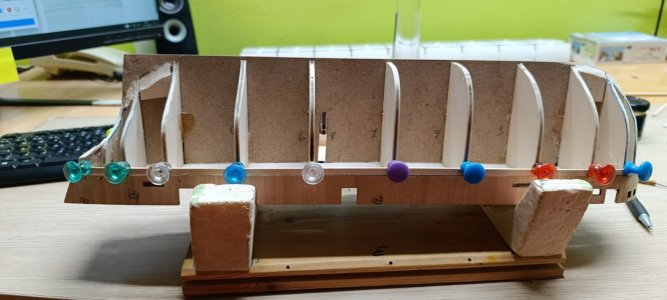
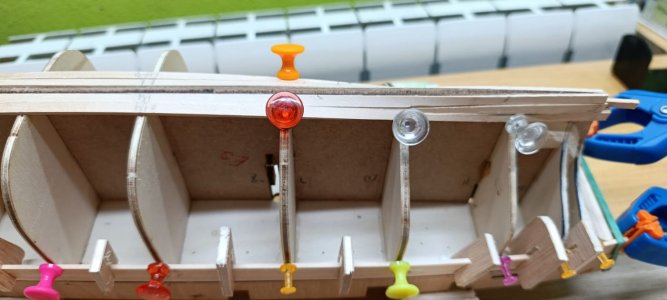
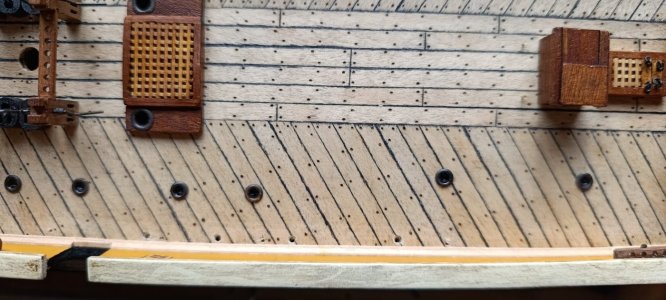
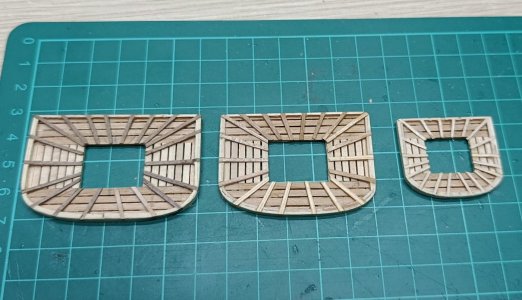
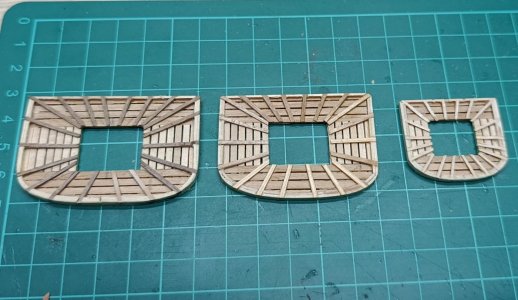
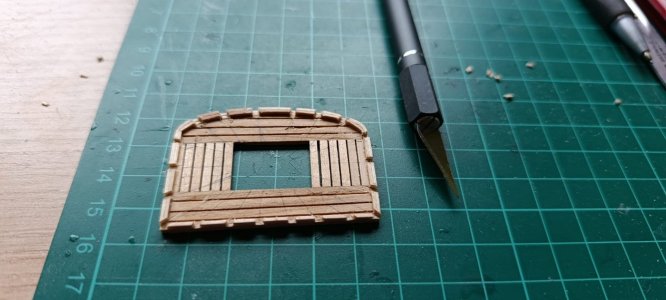
As always, I start by checking the box, the manual, and the plans. I prepare the base so we can work on it. On a piece of MDF, I've placed perfectly aligned wooden blocks so the frames fit inside and I can position them without the false keel warping. All the edges need to be sanded to remove the burn marks from the laser cut. Once that's done, I place the first frame, glue it in place from the inside using a mortise and tenon joint, and position it. I hold the freshly glued frame in place with two 90° aluminum angle brackets and clamps, and let it set. That will be the routine for all of them. While I'm putting on the six rows of deck planks, I make the divisions to adjust what would be the actual frames, cut them, and do the nailing. In reality, what you see are wooden plugs, as the nails are protected by them. I do it with a woodburning tool and a very fine tip. I hope you like it.Imagen de WhatsApp 2025-11-26 a las 12.02.21_242537ca.jpgImagen de WhatsApp 2025-12-01 a las 21.06.32_a1b232c0.jpgImagen de WhatsApp 2025-12-02 a las 00.01.23_c495a836.jpgImagen de WhatsApp 2025-12-02 a las 00.01.24_3cef21ef.jpgImagen de WhatsApp 2025-12-02 a las 00.01.24_36c0e9a9.jpgImagen de WhatsApp 2025-12-02 a las 00.01.24_c2728ffa.jpgImagen de WhatsApp 2025-12-02 a las 00.01.24_eb5bf3c7.jpgImagen de WhatsApp 2025-12-04 a las 12.00.23_ddceb974.jpgImagen de WhatsApp 2025-12-04 a las 13.01.58_5a23a2b3.jpgImagen de WhatsApp 2025-12-06 a las 17.50.23_33cba1f9.jpg
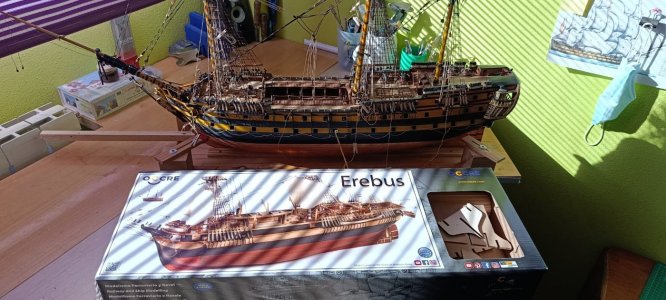
 
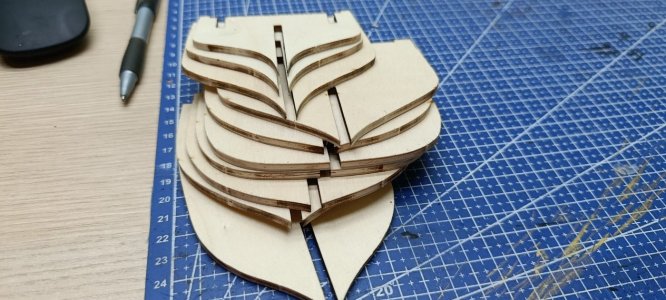
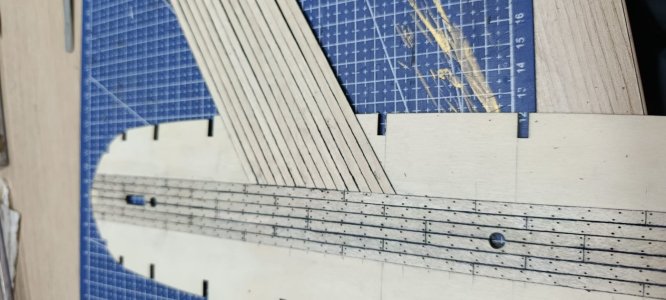
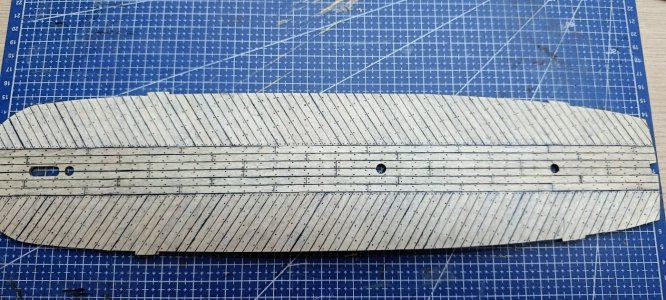
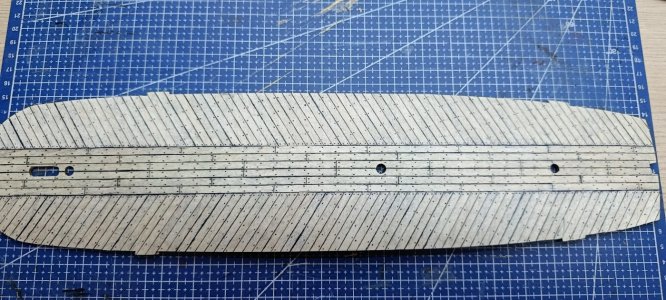
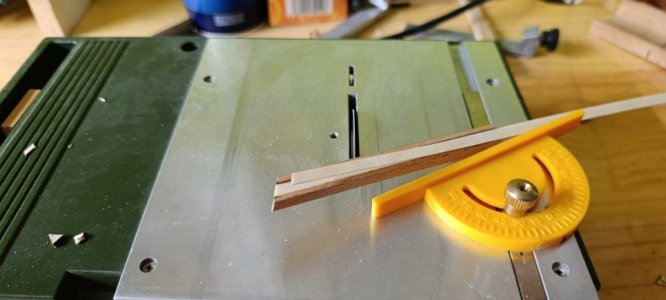
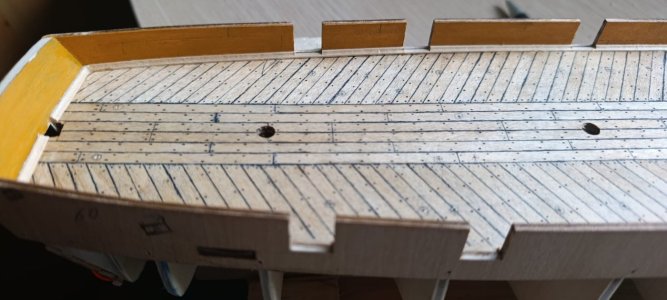
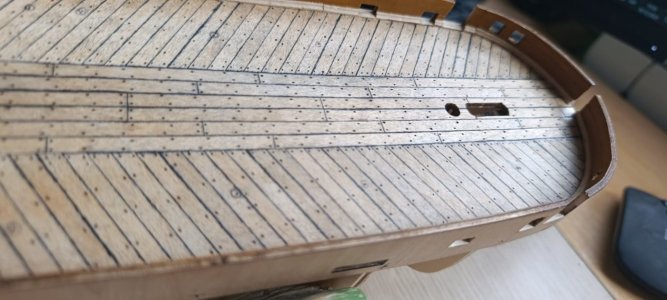
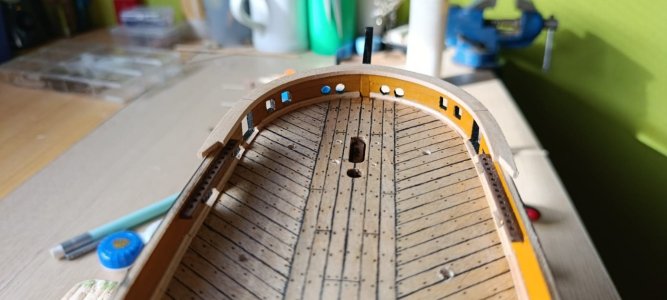
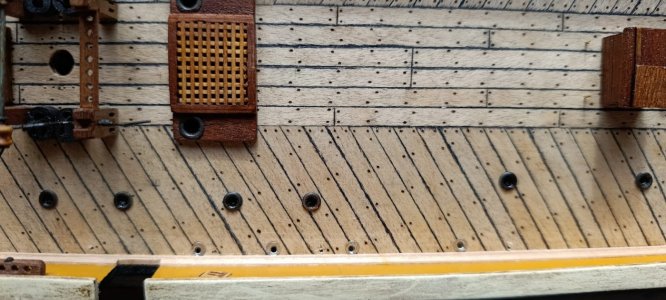
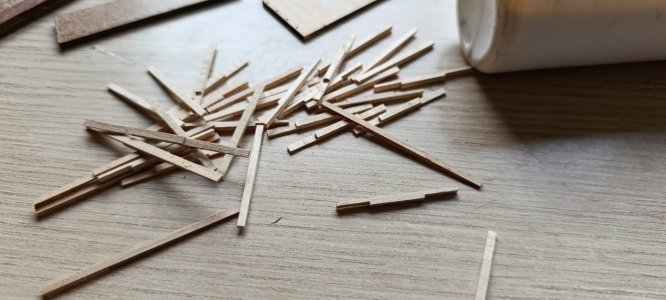
I continued gluing the frames, taking my time, while I planked the deck. Now I'm making a "bed" to fit five planks into and put them on the saw at a 30-degree angle so they all end up at the exact angle. I have to say that this time I tried using a black marker for caulking, and I didn't like it very much; depending on the wood, the ink runs. I still prefer graphite. Once all the planks were glued, and after a good sanding, I applied a coat of nitrocellulose sealer, a coat of steel wool, cleaned it well, and then marked the planking lines to simulate the nailing I reproduce with the woodburning tool as before. Onward... Best regards.Imagen de WhatsApp 2025-12-04 a las 12.00.23_4d698004.jpgImagen de WhatsApp 2025-12-04 a las 12.00.23_ddceb974.jpgImagen de WhatsApp 2025-12-04 a las 13.01.58_5a23a2b3.jpgImagen de WhatsApp 2025-12-04 a las 13.01.58_5668e0e4.jpgImagen de WhatsApp 2025-12-04 a las 13.01.59_bafe9e8f.jpgImagen de WhatsApp 2025-12-04 a las 13.01.59_bfda3679.jpgImagen de WhatsApp 2025-12-04 a las 12.00.22_601243ea.jpg
 
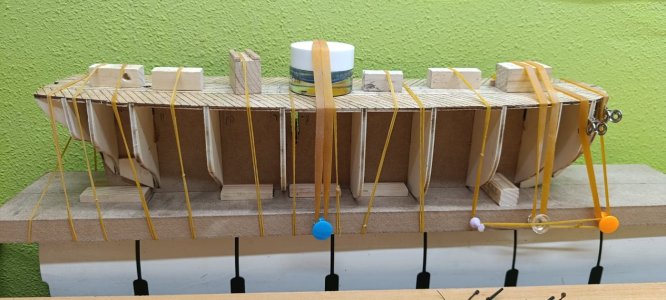
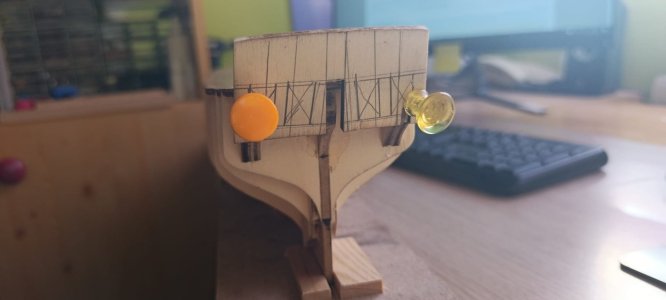
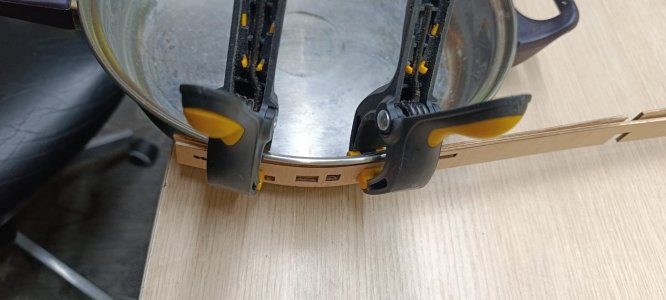
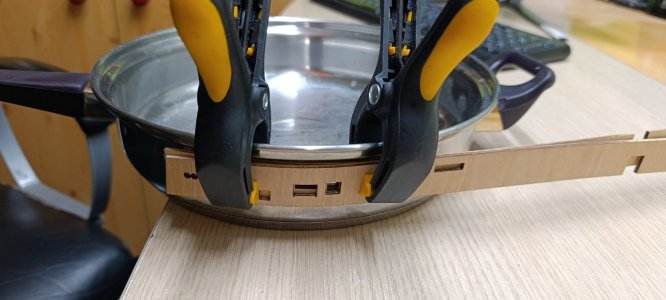
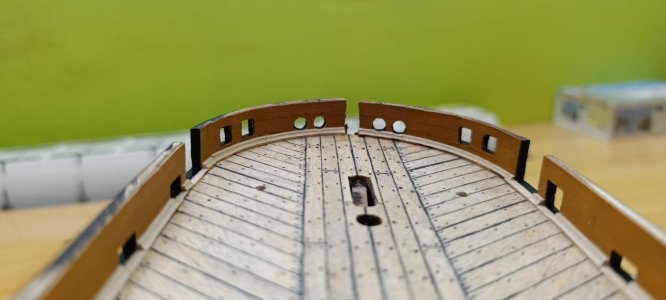
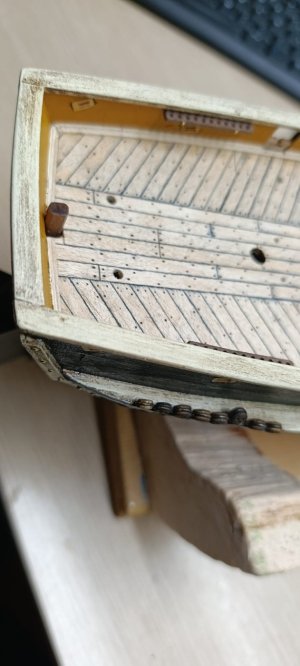
Okay, getting to the point, today I made a full-size copy of the deck to mark where the portholes, or skylights, or whatever they're called, will go. They're not symmetrical; I got the measurements from the actual maps, and I'll see when I get around to drilling them. I've been looking into reinforcing the mast pockets, and all four are the same diameter!!! :lol: :lol: :lol: which I highly doubt, unbelievable. I've already glued the deck in place; I've held it with rubber bands to force the sag, because it's not naturally swayed. I'm presenting the transom, and I see it doesn't fit. The hull needs to be lowered to accommodate the transom's angle. Furthermore, according to the actual plans and the shape of the deck, it curves at the stern, which needs to be forced. I'm looking for a large circumference so it doesn't break in the rudder area, where there's less material. The TV swivel works perfectly. I dampen it and gradually tighten it, applying heat at the same time, which helps maintain the curve. Cheers and shavings.Imagen de WhatsApp 2025-12-06 a las 18.38.38_0d1820ac.jpgImagen de WhatsApp 2025-12-06 a las 18.38.38_8e16845d.jpgImagen de WhatsApp 2025-12-06 a las 18.38.38_30c6f5da.jpgImagen de WhatsApp 2025-12-06 a las 18.38.38_ab82563b.jpgImagen de WhatsApp 2025-12-07 a las 11.47.46_b8190455.jpgImagen de WhatsApp 2025-12-07 a las 11.47.47_be718952.jpg
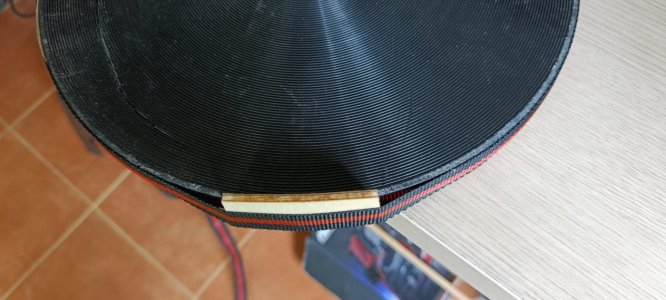
 
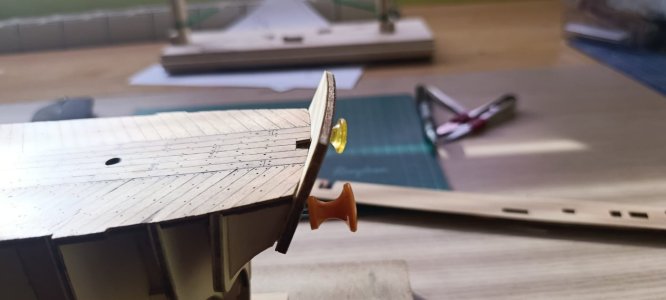
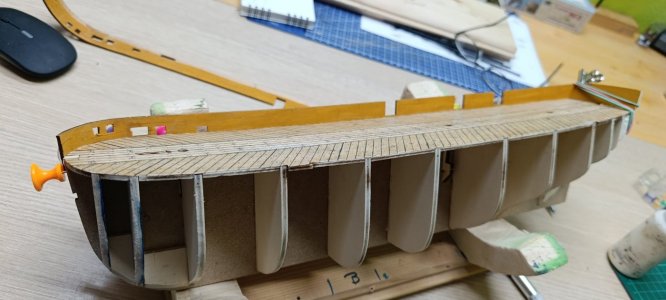
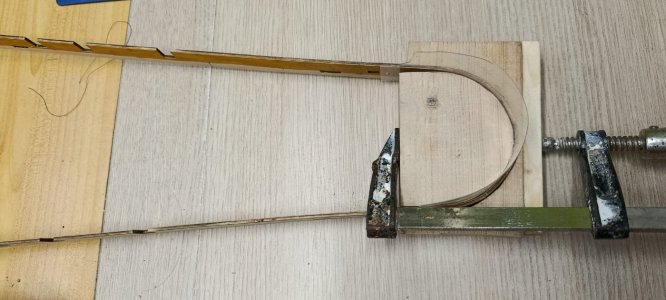
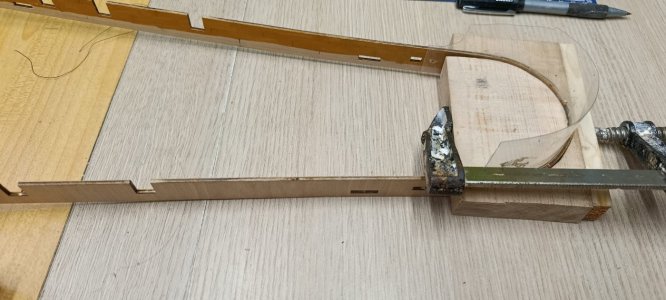
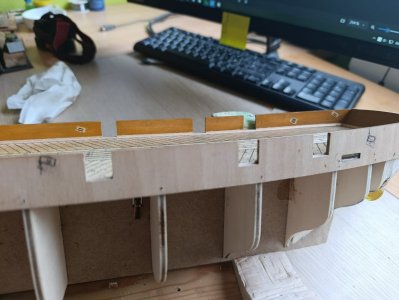
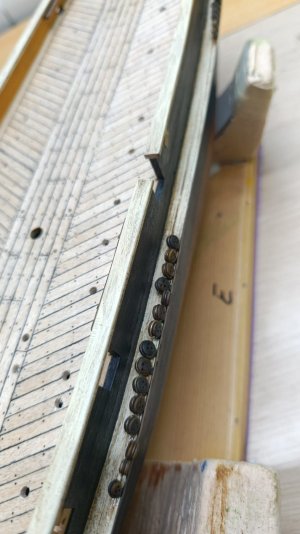
We continued with short breaks on the Nepo. I lined the bows with 0.5mm board and made cuts every 60mm to simulate planking, then painted it ochre yellow. As I said, I'll try to match its last voyage, and according to reliable sources, its interior changed from green during combat to yellow during the expedition. For 24 hours it rested on a flat surface with clamps to ensure it adhered perfectly with contact adhesive. Next, I began shaping it, starting with the edges of the bowls, but that wasn't enough. Finally, on a block of wood, I drew the curve of the deck at the bow, and with a coping saw, I cut along the line. Now I had a male and female part of the curve, so I lightly sanded it to create more space for the two bows. Little by little, I forced the curve by applying heat and steam with the plate placed on top of the mold, until it reached its full curvature, leaving it for 24 hours to set. Some of the boards glued with superglue shifted out of place, but it's a small section; I'll fix it. Having checked the curvature, I'm drilling 0.8mm holes to insert tacks for securing it against the ribs and ensuring a good glue bond.Imagen de WhatsApp 2025-12-11 a las 18.22.24_1fbec709.jpgImagen de WhatsApp 2025-12-11 a las 18.22.24_9238a8f7.jpgImagen de WhatsApp 2025-12-11 a las 18.22.24_f288d3a7.jpgImagen de WhatsApp 2025-12-11 a las 18.22.25_a0c0dd56.jpgImagen de WhatsApp 2025-12-11 a las 18.22.25_d5e7da3e.jpgImagen de WhatsApp 2025-12-11 a las 18.22.25_da628d51.jpgImagen de WhatsApp 2025-12-11 a las 18.22.26_7ef637ce.jpgImagen de WhatsApp 2025-12-11 a las 18.22.26_86c50e21.jpgImagen de WhatsApp 2025-12-11 a las 18.22.27_83ab4120.jpgImagen de WhatsApp 2025-12-11 a las 18.22.27_b8add103.jpg
 
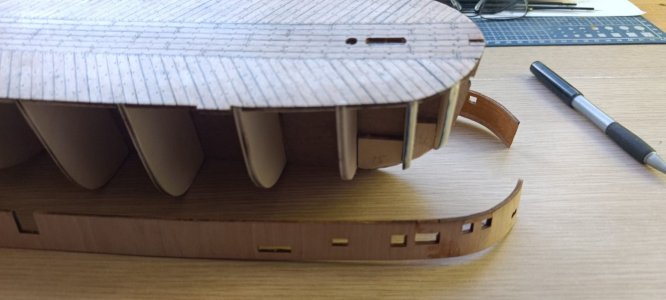
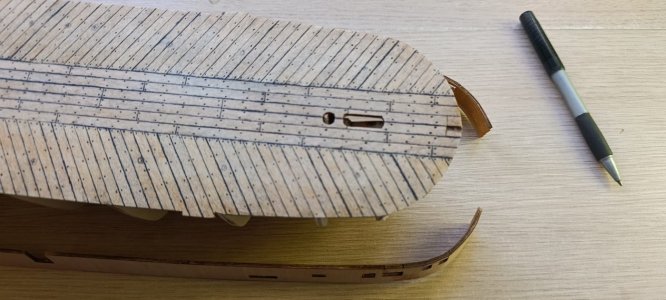
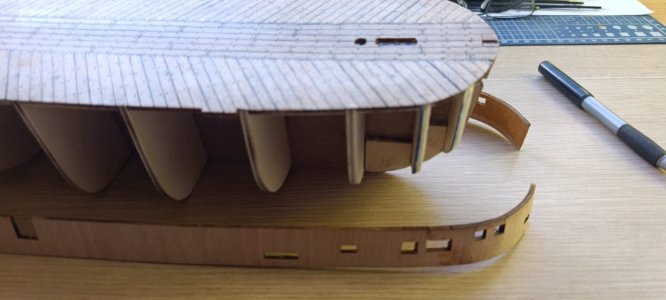
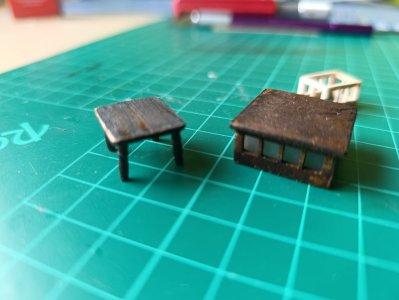
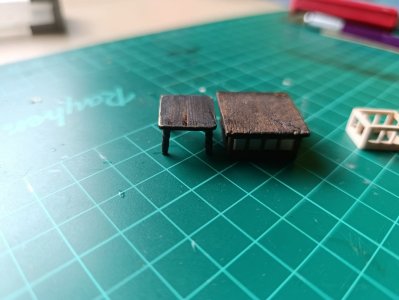
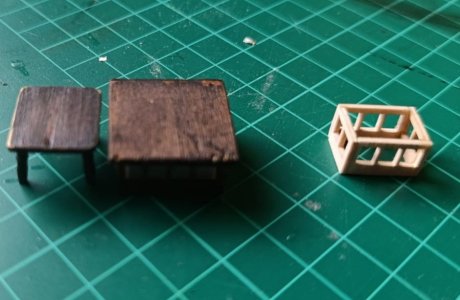
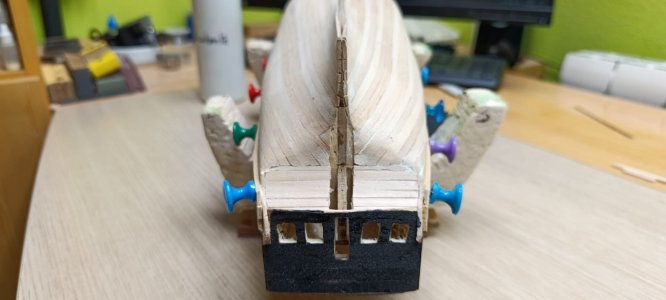
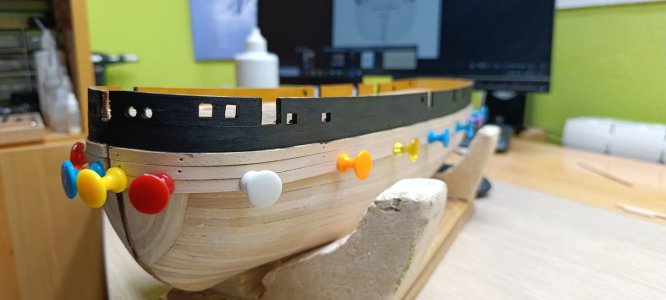
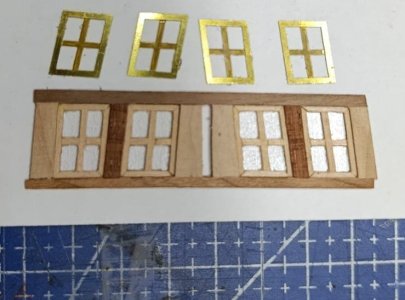
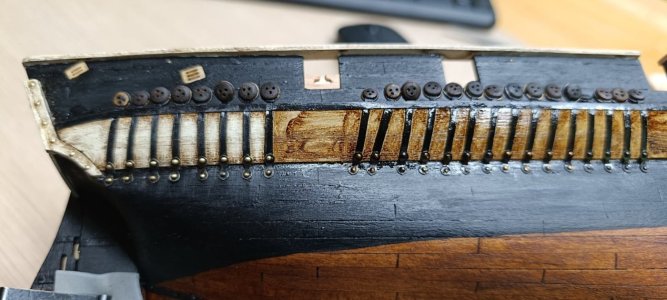
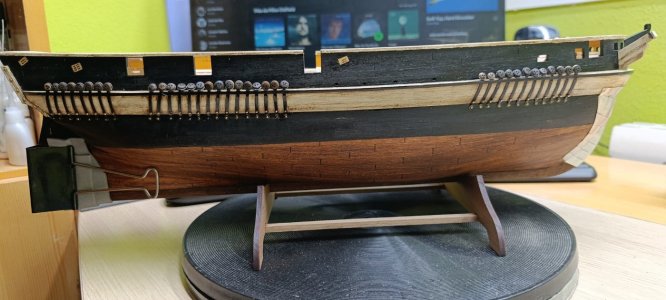
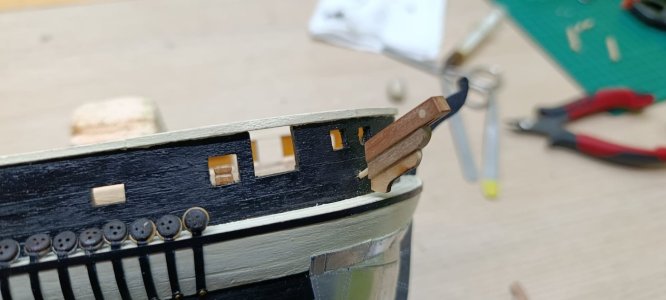
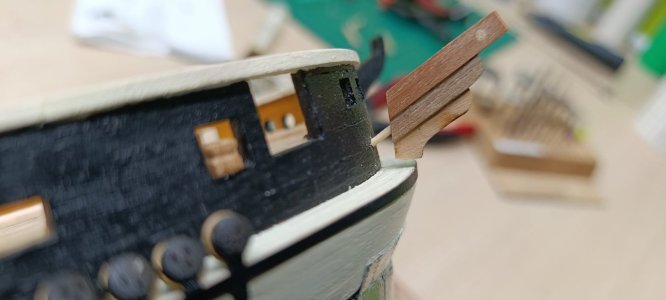
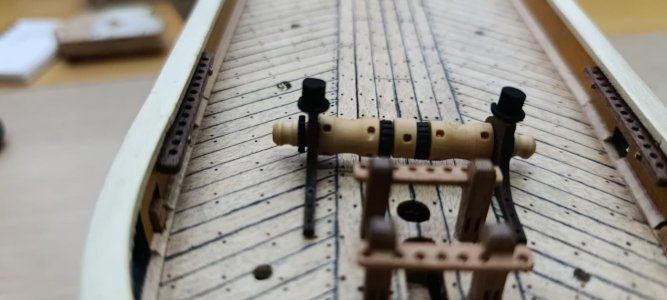
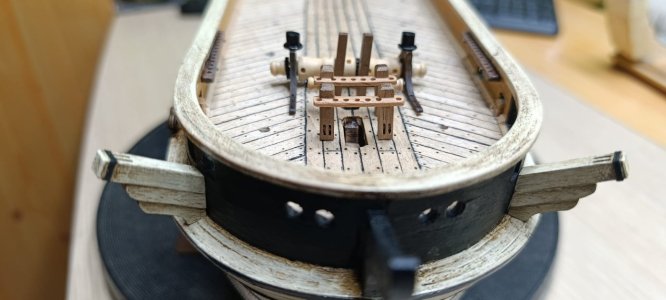
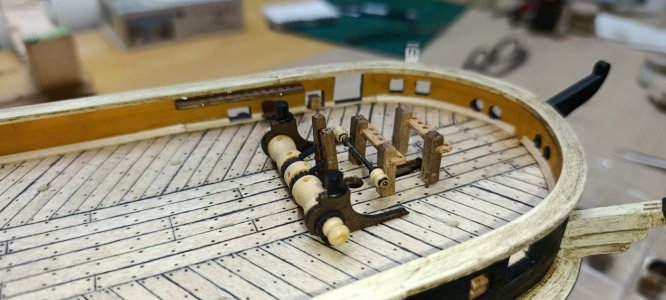
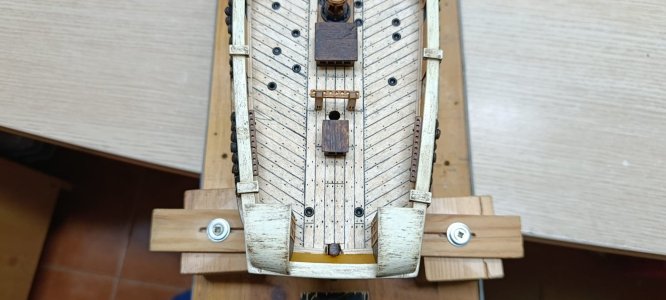
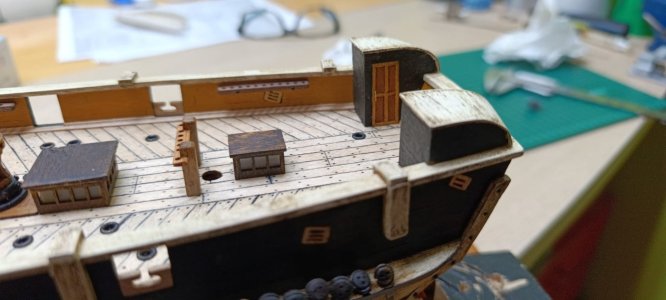
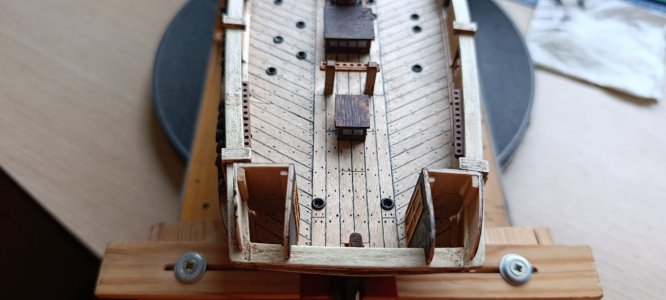
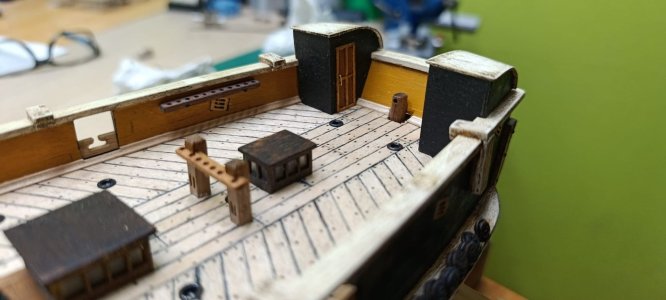
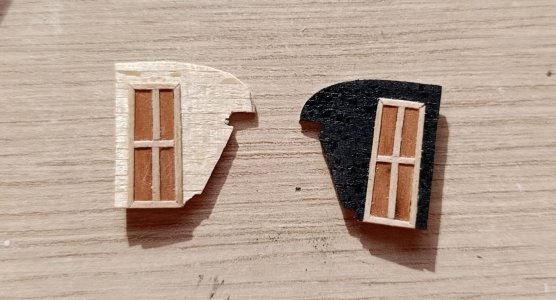
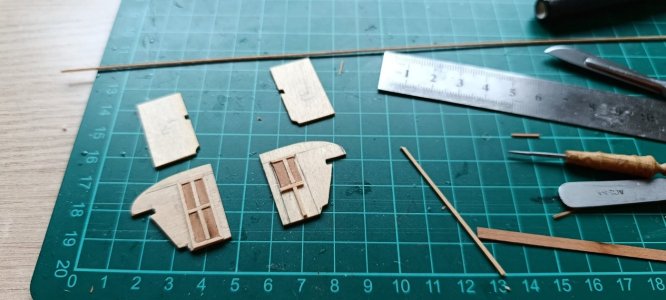
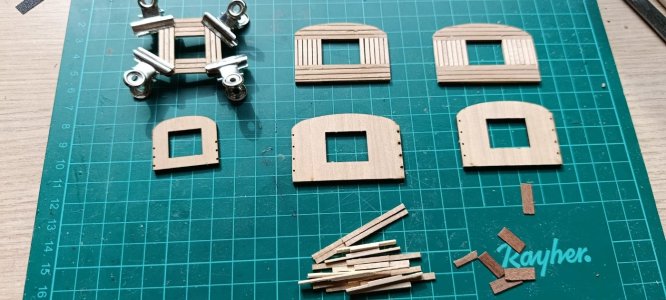
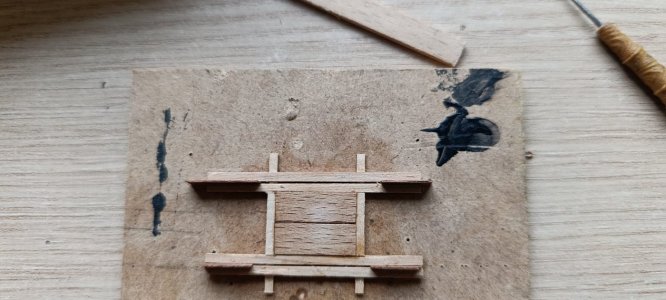
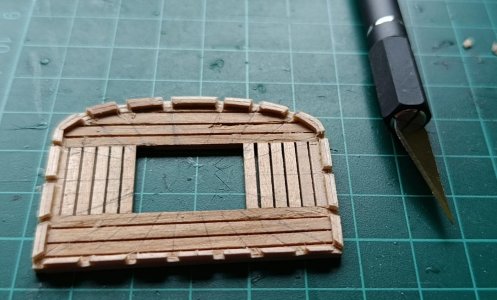
Good afternoon. As I believe—I say "believe" because in the end there are always blocks or rods missing—I'm focusing more on the Erebus-Terror with the SJN's yards. I've already attached the two bows and started planking the transom. I added the gunwale after shaping it somewhat. The bow's curvature with this ramin proved difficult; even when wet and hot, it kept cracking. I adjusted the openings relative to the gunwale, and on one side I had to add some filler to the bottom. I made the sides of the skylights; I finished one, and the other is in the process of cutting the glass, which will be translucent to simulate ice and frost. I made the table from 1mm thick board because the one that came with the model was 2mm plywood, which was too thick. The legs are made from the heads of round toothpicks, saving me from turning them.
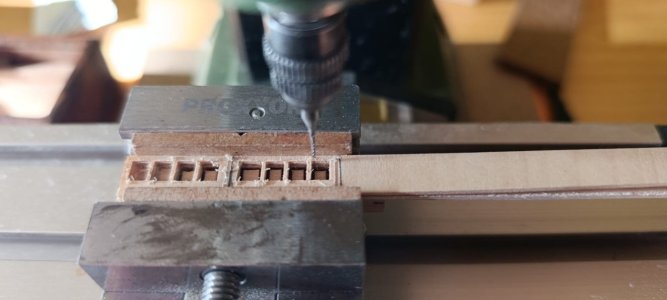
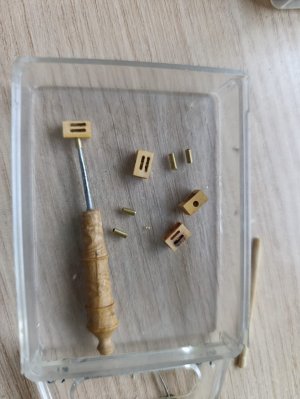
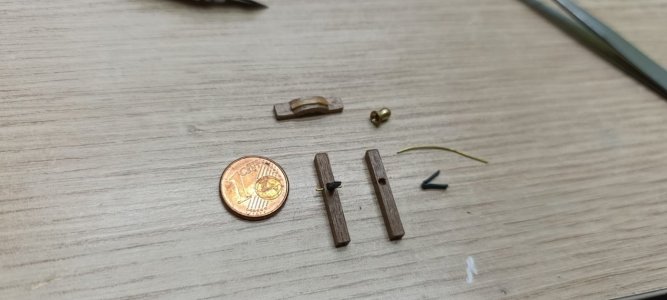
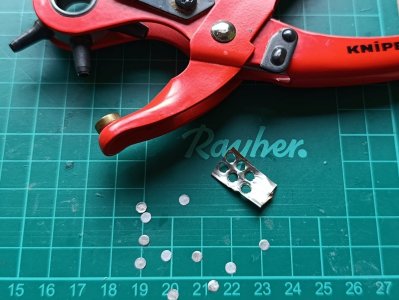
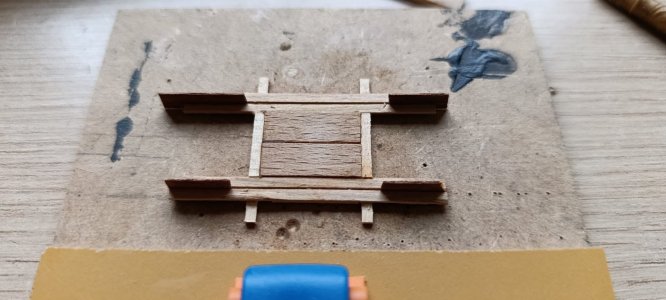
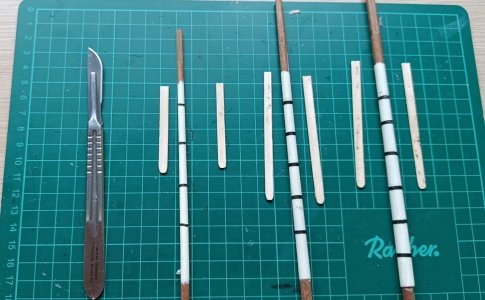
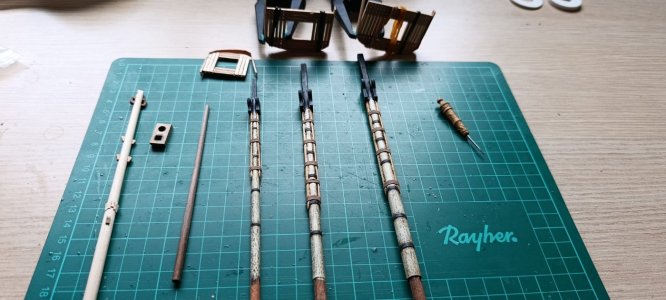
It has three grooves in the bands; I'm not doing this step, as it's already done in the SJN, which also has them: two with two pulleys and one with three, all according to the plans. I make them from boxwood blocks, routing the pulleys and inserting 1.5mm rod to simulate them. I mark the position of these grooves on the bands, and first, using a drill and a 0.7mm bit, I drill the entire perimeter to make cutting easier. It's adjusted with a blade.Imagen de WhatsApp 2025-12-16 a las 16.53.53_5e7bb683.jpgImagen de WhatsApp 2025-12-16 a las 16.53.53_9da0d834.jpgImagen de WhatsApp 2025-12-16 a las 16.53.42_cb1d3267.jpgImagen de WhatsApp 2025-12-16 a las 16.53.42_f7441c71.jpgImagen de WhatsApp 2025-12-16 a las 16.53.42_fedec28c.jpgImagen de WhatsApp 2025-12-16 a las 16.53.43_f85c2d99.jpgImagen de WhatsApp 2025-12-16 a las 16.53.52_1dc39123.jpgImagen de WhatsApp 2025-12-16 a las 16.53.52_5cb21943.jpgImagen de WhatsApp 2025-12-16 a las 16.53.45_4c830d20.jpgImagen de WhatsApp 2025-12-16 a las 16.53.46_1f12ee4e.jpgImagen de WhatsApp 2025-12-16 a las 16.53.49_8be86239.jpg
 
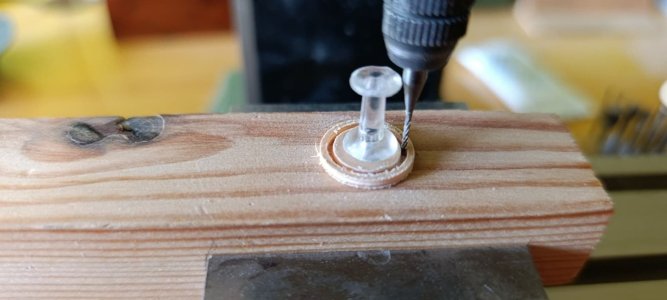
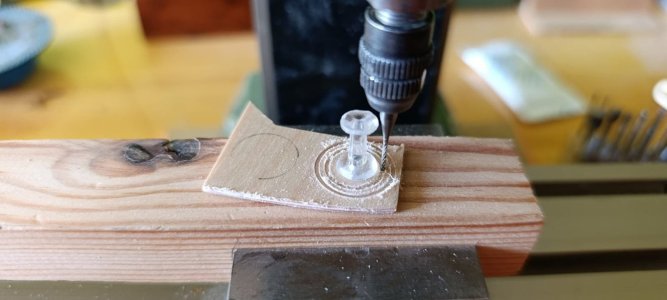
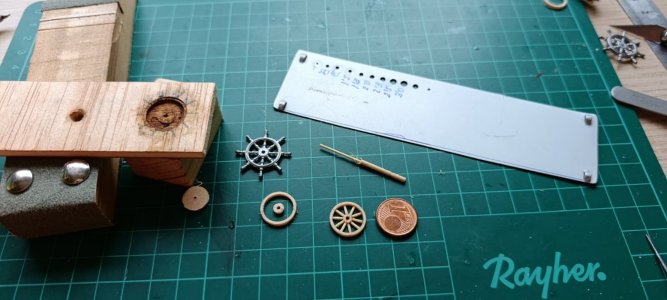
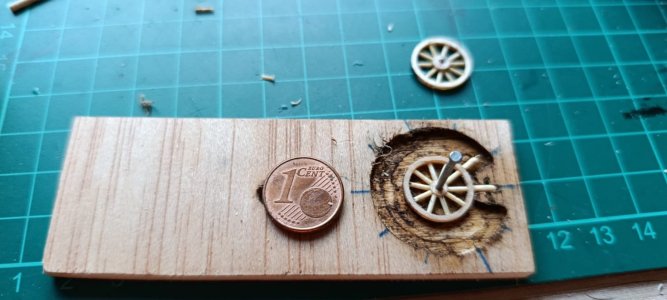
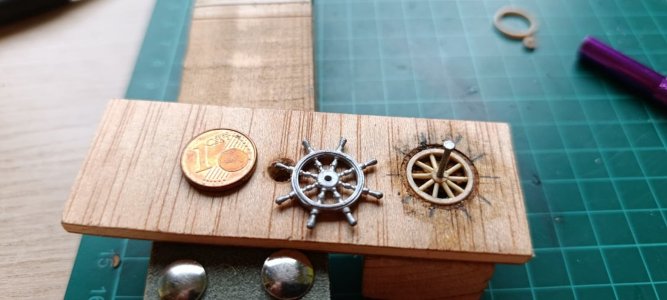
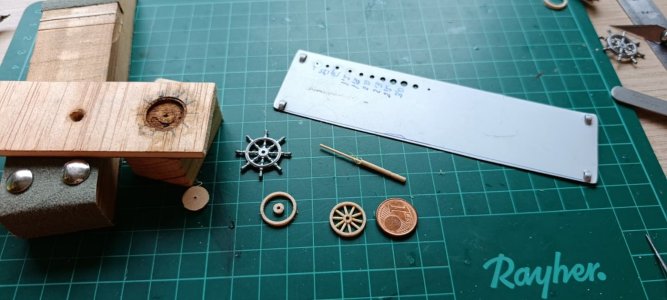
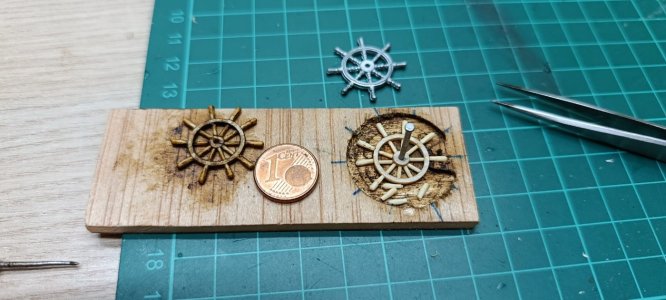
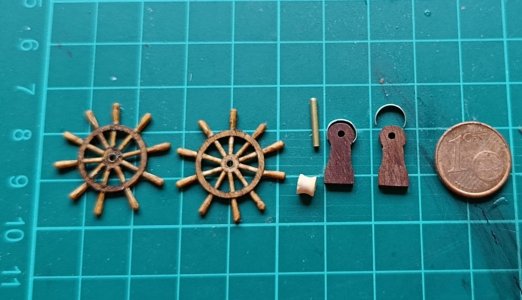
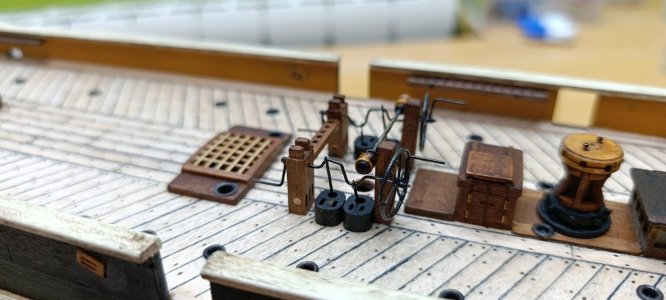
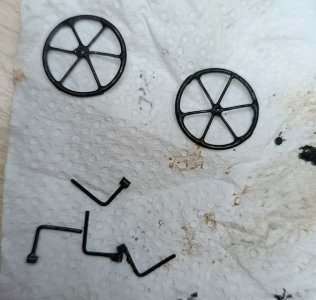
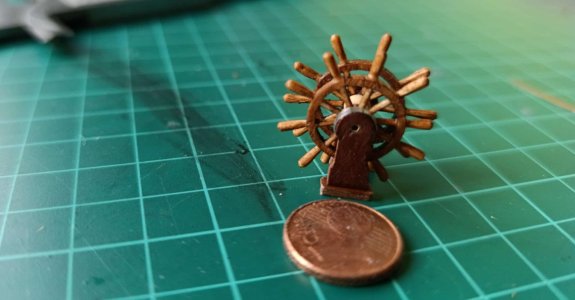
He puesto la primera traca justo debajo de las amuras, la siguiente será la de paradura, ya desde estas de cubierta hacia la quilla. Mientras seca la cola, me puse a investigar, la rueda del timón era de 10 radios en los dos buques, el kit la trae de 8, pues con mi SMA me pongo a construirla, aro exterior de 14mm, interior de 4 mm, osea radios de 4 mm +-, y de 1 mm de grosor. Construyo los aros en chapa de multicapa de 1´2 mm en la fresa, hago un agujero en medio, paso un clavo que sujeto a su vez en un taco, girando la placa nos salen los aros. Hay que hacer 2, hago uno más de reserva. En una pieza de contrachapado hago con el mismo sistema un fresado de 1,2 mm de profundidad vaciado su interior, asi alojara el aro exterior, marco los 10 radios en esta tabla, hasta el interior de cera para que no agarre el cianocrilato, coloco el aro central con el clavo y el exterior, solo me queda ir haciendo con la chapa calibrada, y palillos de los ejes de la rueda, e ir pegando con paciencia y tacto. Hago las dos sin sustos, ahora tengo que hacer las "manillas"...
:pensar:
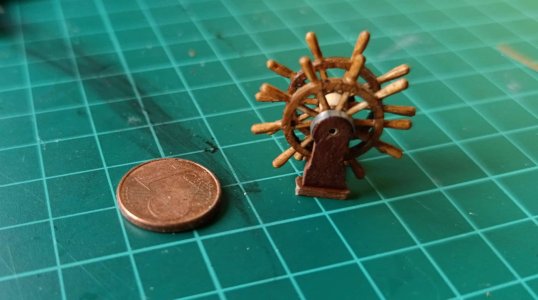
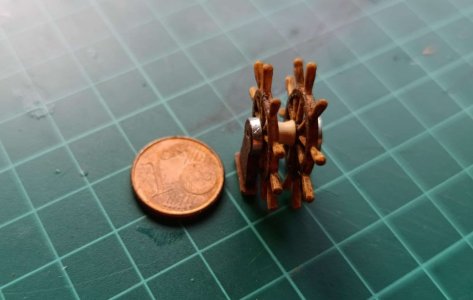
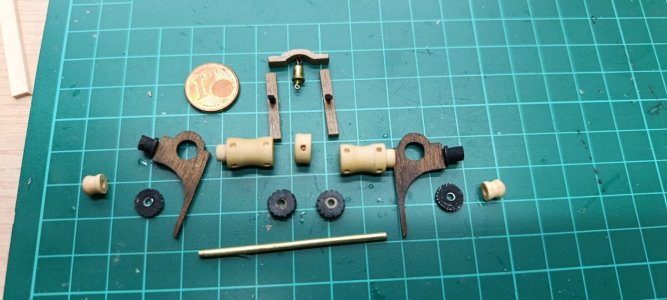
vacio el contrachapo dejando una parte sin rebajar, donde hare una muesca de 1´4 de grosor, 1 mm de profundidad y una transversal para poder medir las puntas de la pinza para colocar. Y ya solo queda hacer las "manillas" mismo sistema, chapa de regruesar a 1´4 mm de diámetro, 4´2 mm de largo, marcar un poco el perímetro con la cuchilla y rebajar un poco para darle algo de forma e ir pegando. Faltaria hacer el cubo central de 4 mm de diámetro por 6 mm de grosor y rebajar un poco el centro, y los dos soportes laterales, el eje será varilla hueca de latón.

I've laid the first plank right under the bows; the next one will be the strake, extending from the deck towards the keel. While the glue dries, I do some research. The wheel had 10 spokes on both ships, but the kit has 8, so I set about making it with my SMA router: 14mm outer rim, 4mm inner rim (meaning spokes of approximately 4mm), and 1mm thick. I made the rims from 1.2mm multi-layer sheet metal using a router bit. I drilled a hole in the middle, inserted a nail secured in a dowel, and by rotating the plate, the rims came out. I need to make two, so I made one extra as a spare. Using the same method, I cut a 1.2 mm deep groove on a piece of plywood, hollowing out the inside to accommodate the outer rim. I mark the 10 spokes on this board, covering them with wax to prevent the cyanoacrylate from sticking. I attach the center rim with the nail and the outer rim. Now I just need to make the wheel axles from calibrated sheet metal and toothpicks, gluing them on patiently and carefully. I make both without any problems. Now I have to make the "handles"... :thinking: I hollow out the plywood, leaving a section uncut, where I'll make a 1.4 mm thick, 1 mm deep notch and a transverse groove to measure the clamp tips for placement. And now all that remains is to make the "handles" using the same method: thickness sheet metal 1.4 mm in diameter and 4.2 mm long, lightly score the perimeter with a blade, and trim it slightly to give it some shape before gluing. The central hub, 4 mm in diameter and 6 mm thick, still needs to be made, with the center slightly trimmed, along with the two side supports. The axle will be a hollow brass rod.

Imagen de WhatsApp 2025-12-17 a las 18.54.03_e2f98375.jpg

Imagen de WhatsApp 2025-12-17 a las 18.54.04_964e40f0.jpg

Imagen de WhatsApp 2025-12-17 a las 18.54.03_afaf2568.jpg

Imagen de WhatsApp 2025-12-17 a las 18.54.02_c7ace9c2.jpg

Imagen de WhatsApp 2025-12-17 a las 18.54.03_8bc53b59.jpg

Imagen de WhatsApp 2025-12-17 a las 18.54.03_afaf2568.jpg

Imagen de WhatsApp 2025-12-17 a las 18.54.04_d7b63899.jpg

Imagen de WhatsApp 2025-12-18 a las 11.25.58_5ebe8e90.jpg

Imagen de WhatsApp 2025-12-18 a las 11.49.19_6e25ca36.jpg

Imagen de WhatsApp 2025-12-18 a las 11.49.19_696d203f.jpg

Imagen de WhatsApp 2025-12-18 a las 11.49.19_bf26c00b.jpg
 
Last edited by a moderator:
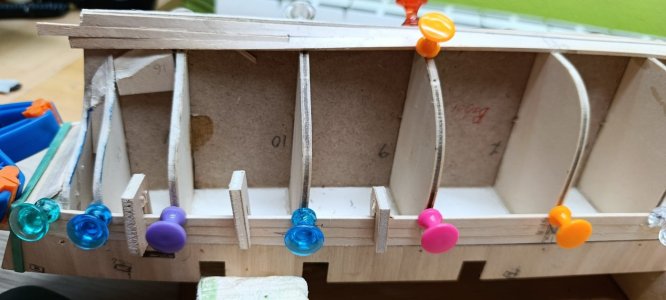
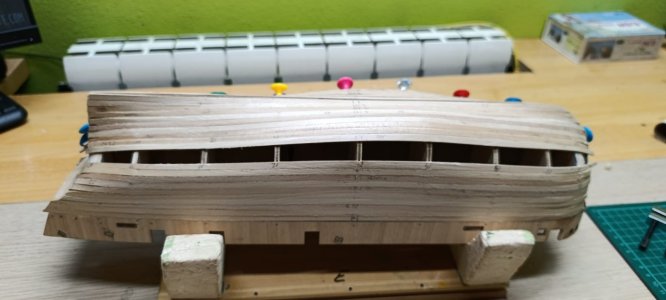
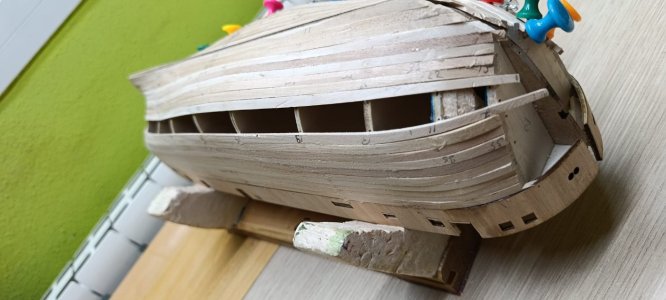
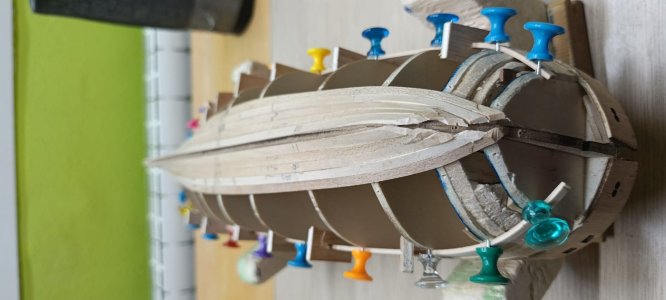
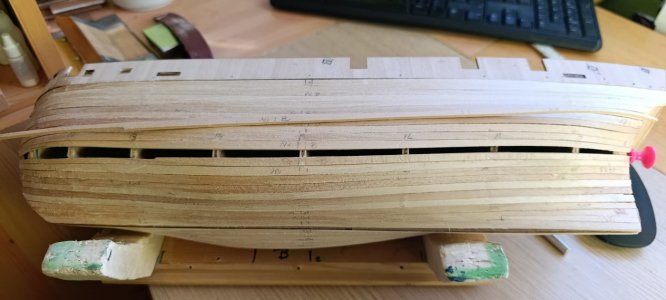
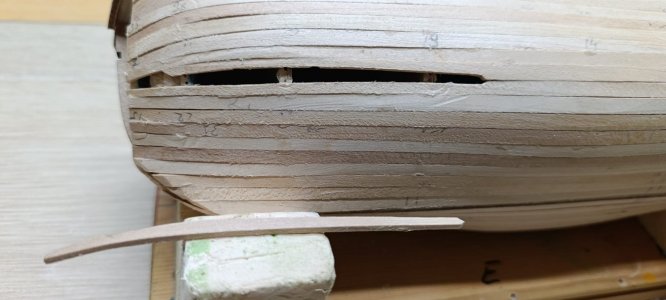
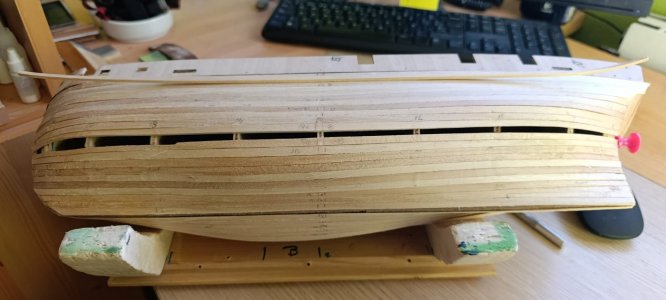
He seguido forrando el casco, alternando ambas bandas para evitar reviros, esta vez he probado con agua hirviendo y luego secador de pelo y el acoplador del soldador para dar forma a las curvas. El acople he de decir que va bien, no llega a quemar la madera y tiene suficiente calor para dar forma. Cuando llevaba 273 del casco empece a tomar en seria la de anchura de las tracas, aún así creo que tendre que poner otras atún medidas en proa. Ahora hubiera puesto en inicio un taco de refuerzo en la proa entra las falsas cuadernas 2 y 3 para dar más forma curva. La popa, no la he realizado como dicen las instrucciones, cuando este acabada pondre fotos de todo el conjunto. Un saludo y virutas.

Imagen de WhatsApp 2025-12-19 a las 00.25.23_035b8242.jpg

Imagen de WhatsApp 2025-12-19 a las 00.25.24_2b8f161a.jpg

Imagen de WhatsApp 2025-12-19 a las 00.25.24_8b444a42.jpg

Imagen de WhatsApp 2025-12-19 a las 00.25.24_88f93ff7.jpg

Imagen de WhatsApp 2025-12-19 a las 00.25.24_3475a90d.jpg

Imagen de WhatsApp 2025-12-19 a las 00.27.09_7f624339.jpg

WhatsApp Image 2026-01-04 at 17.24.58 (2).jpeg

WhatsApp Image 2026-01-04 at 17.24.58.jpeg

WhatsApp Image 2026-01-04 at 17.25.00.jpeg

WhatsApp Image 2026-01-04 at 17.42.06 (2).jpeg

WhatsApp Image 2026-01-04 at 17.42.06.jpeg
 
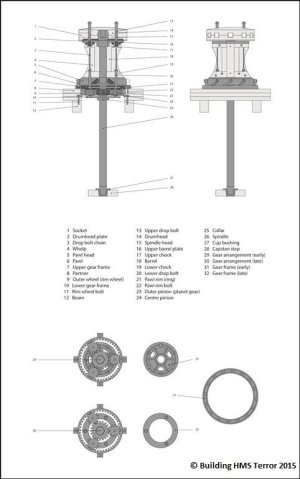
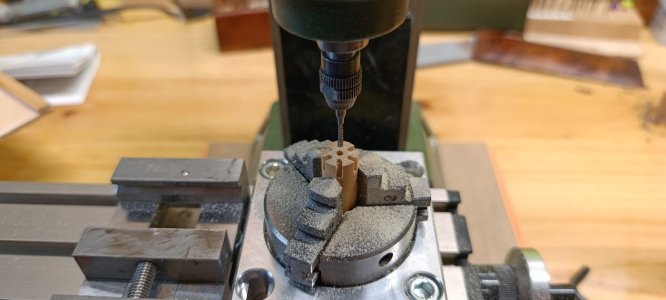
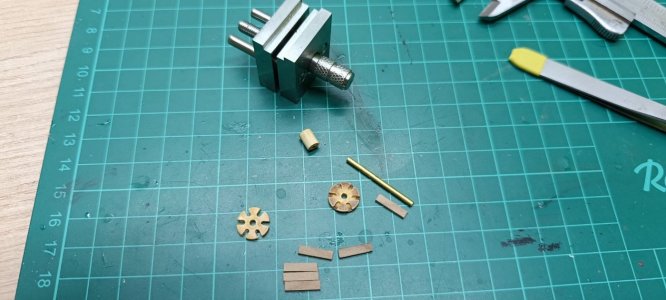
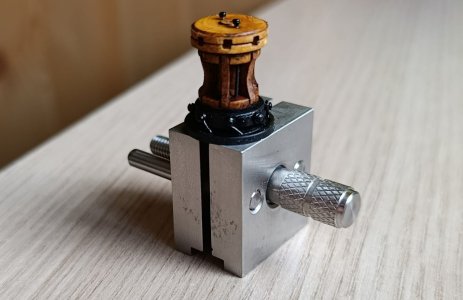
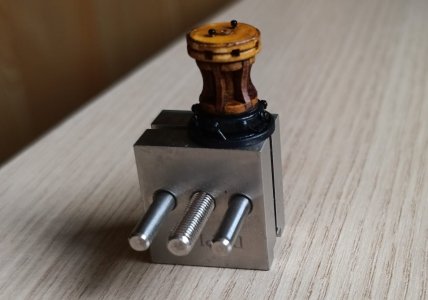
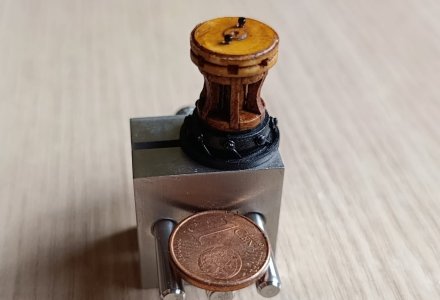
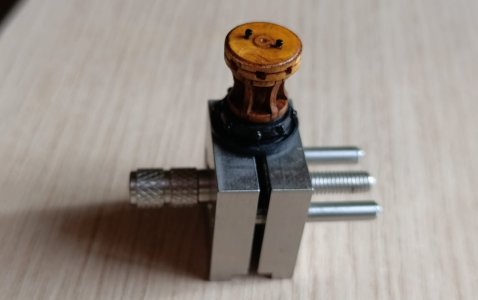
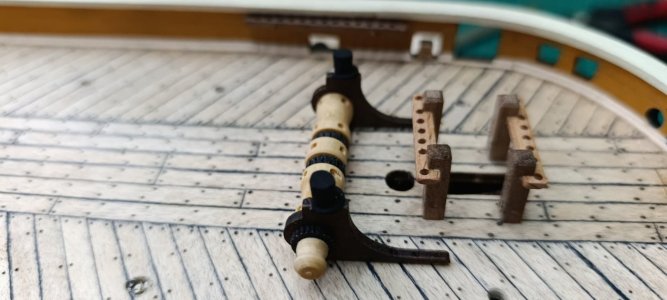
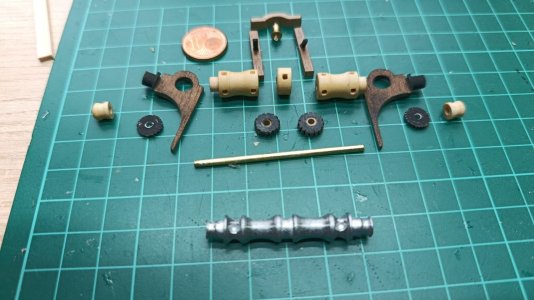
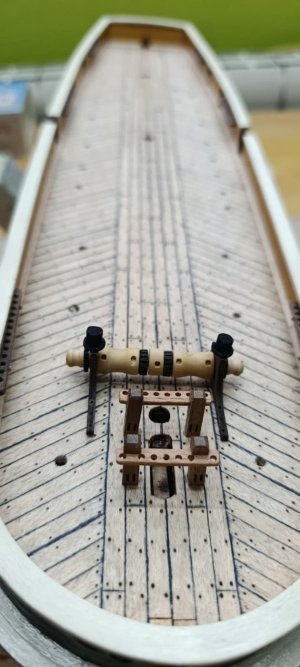
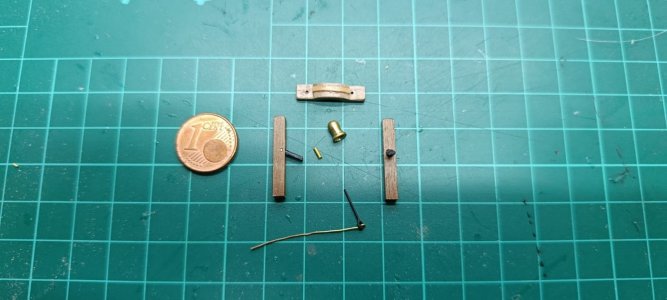
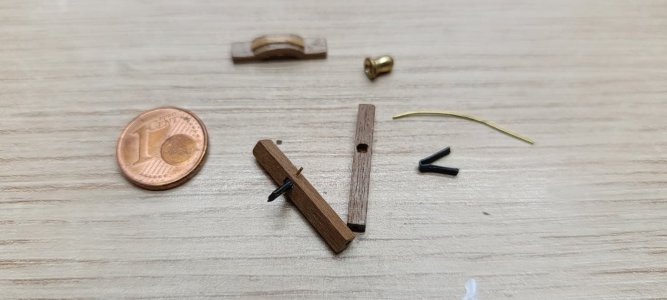
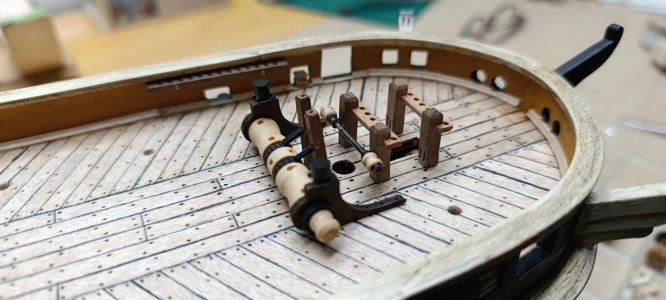
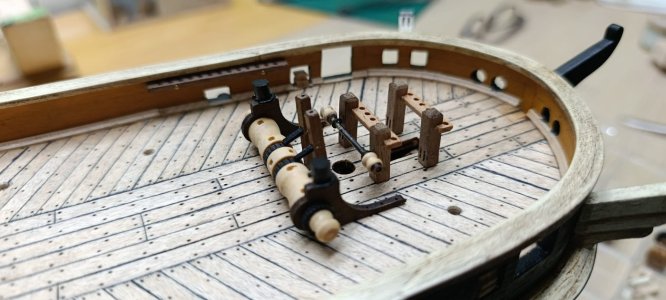
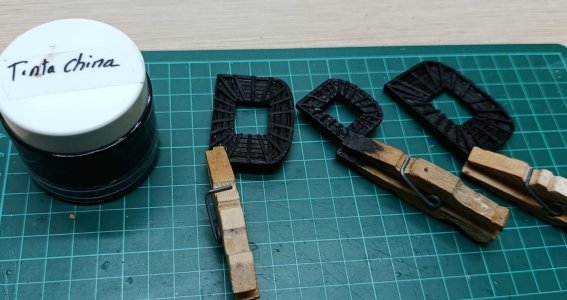
Y entre traca y traca, para gastar el tiempo, he realizado el cabrestante Philiphs, la información la he sacado del libro de Matthew Betts, HMS Terror: The Design, Fitting and Voyages of a Polar Discovery Ship que comprende en PDF, pero claro su modelo es a escala algo mayor, 1:48, con lo que los detalles se pueden hacer mejor, aún así esto contento con el resultado, eso sí, la maquinaria ayuda mucho, sobre todo el torno y la fresadora. Consta de 35 piezas de diferentes tamaños, para las uñas de freno he usado pequeños cáncamos, realizado casi su mayoría en madera de boj. La base donde lleva los trinquetes, es boj tratado de negro con tinta china.

Imagen de WhatsApp 2026-01-04 a las 18.04.51.jpeg

Imagen de WhatsApp 2026-01-04 a las 13.38.44.jpeg


Imagen de WhatsApp 2026-01-04 a las 13.38.43 (2).jpeg

Imagen de WhatsApp 2026-01-04 a las 13.38.43.jpeg

Imagen de WhatsApp 2026-01-04 a las 13.38.43 (1).jpeg

Imagen de WhatsApp 2026-01-04 a las 13.38.42.jpeg

Imagen de WhatsApp 2026-01-04 a las 13.38.42 (1).jpeg
 
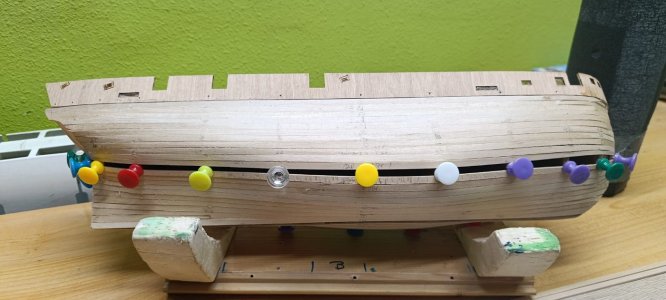
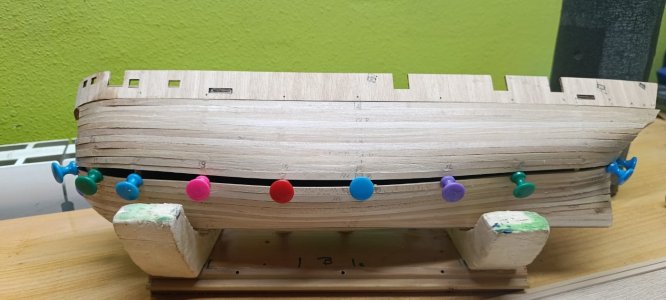
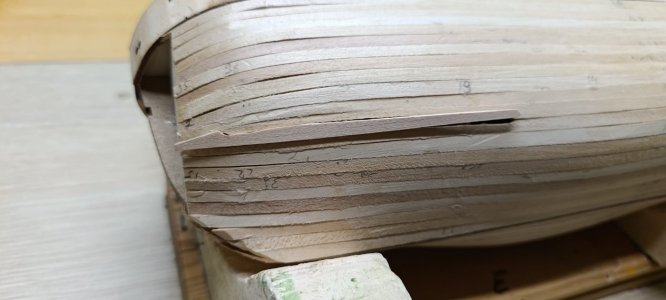
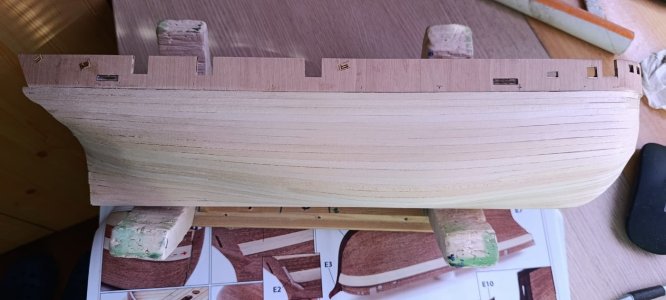
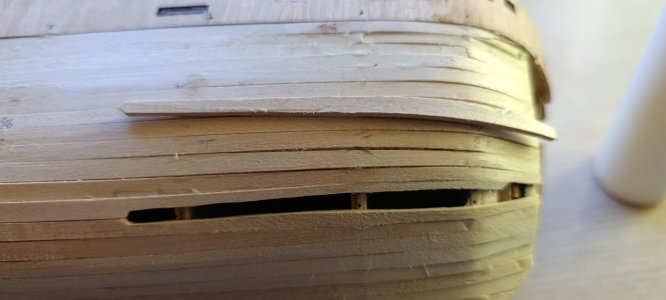
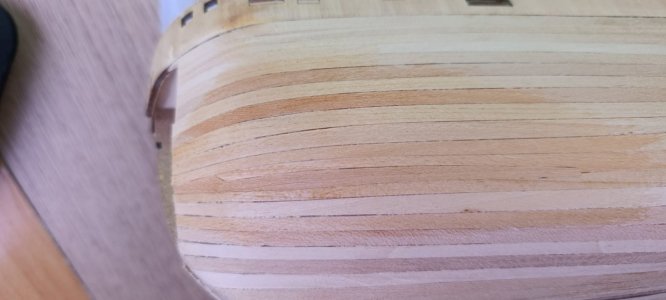
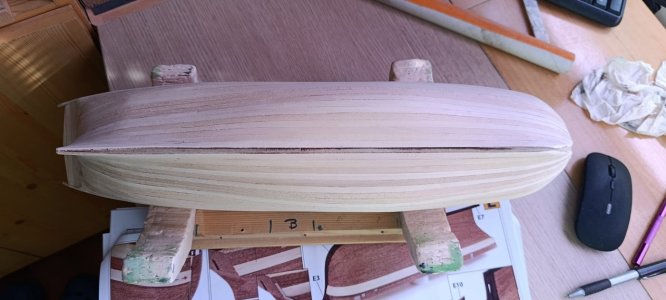
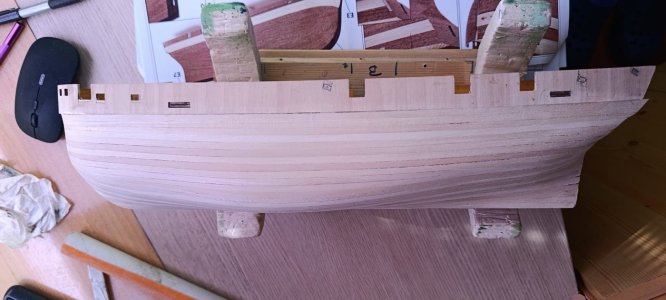
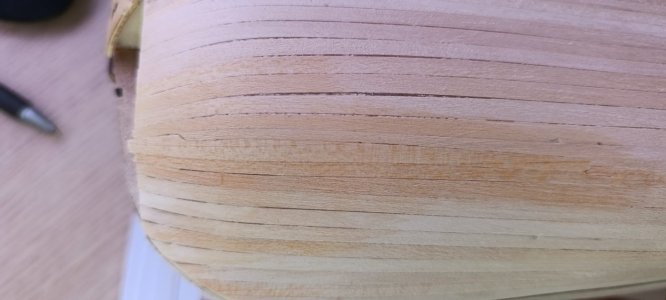
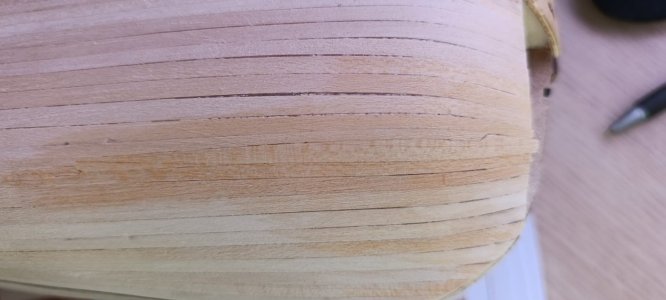
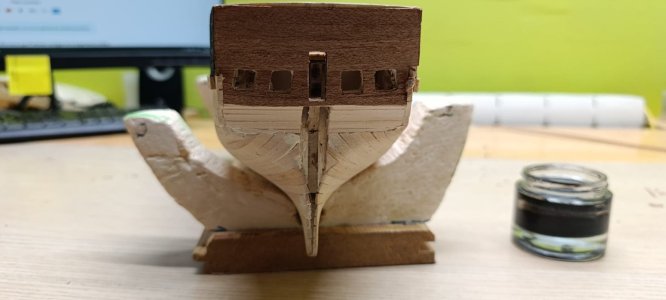
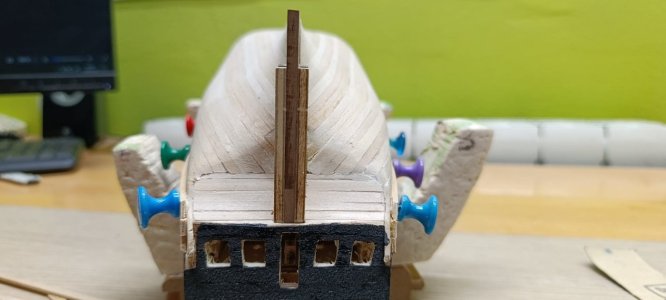
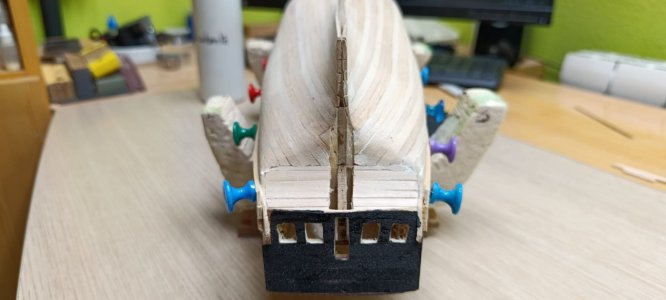
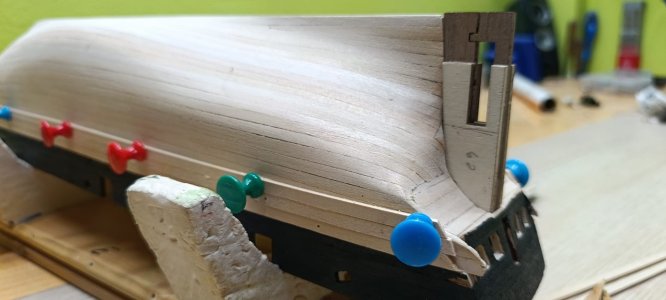
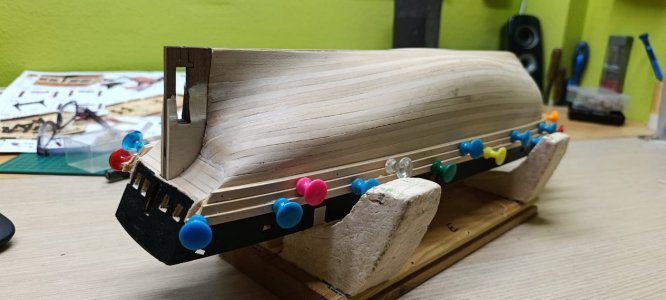
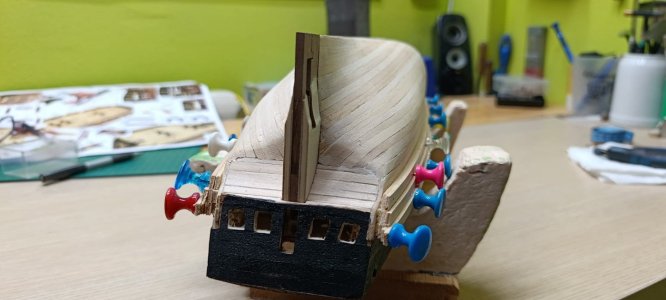
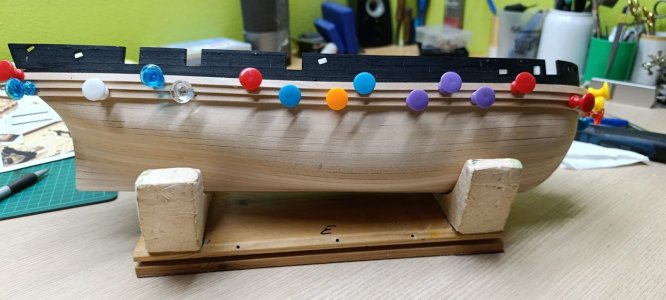
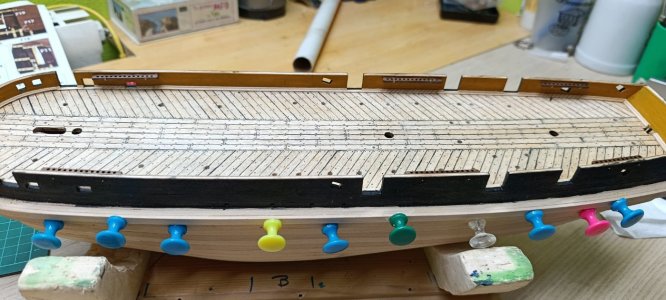
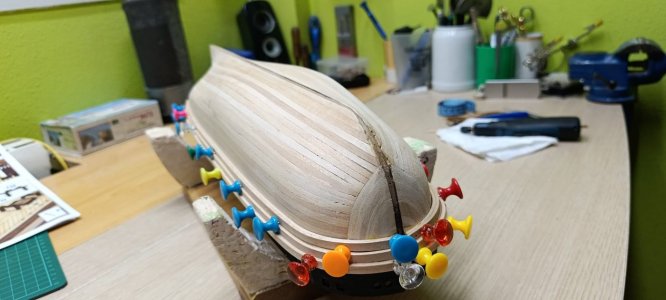
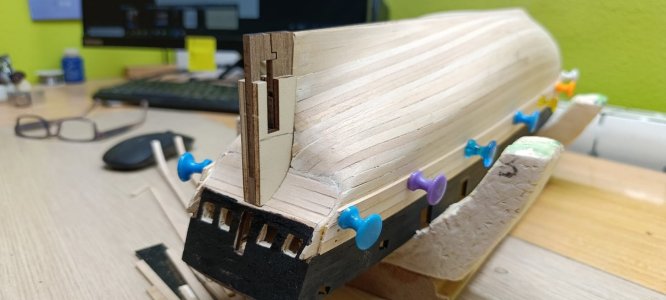
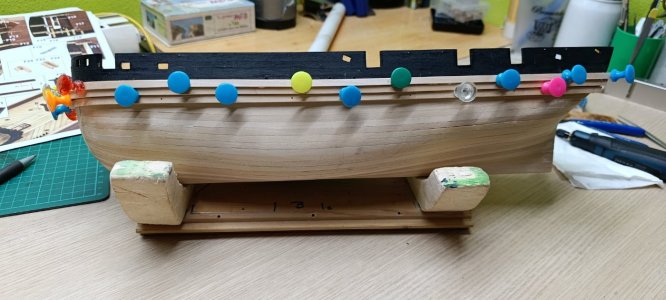
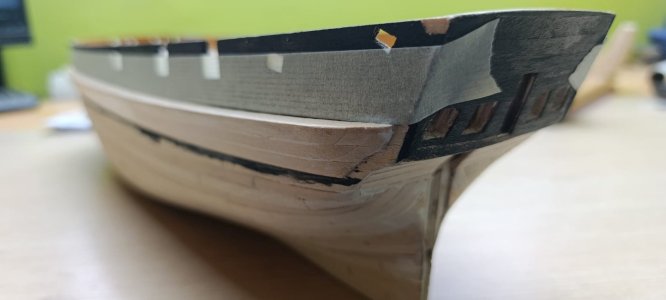
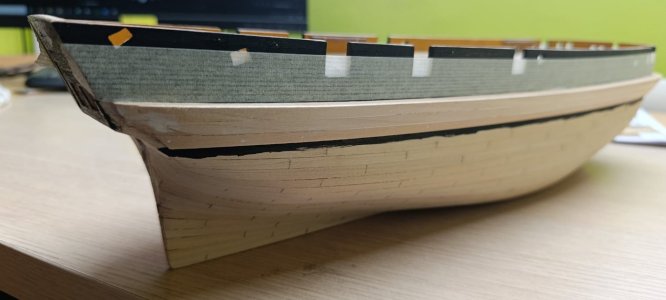
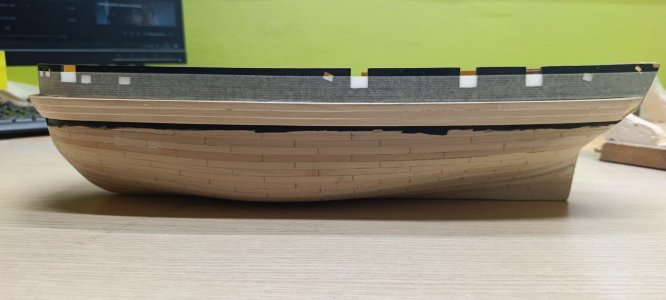
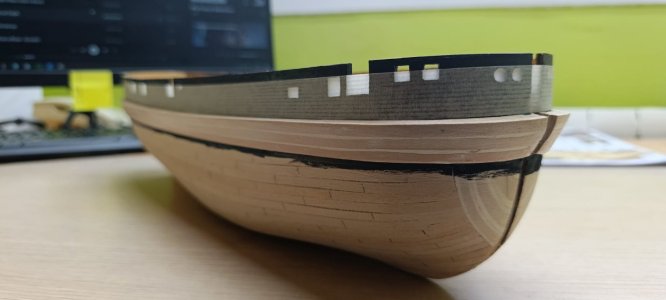
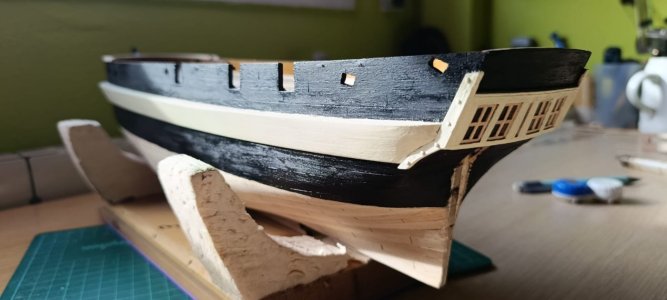
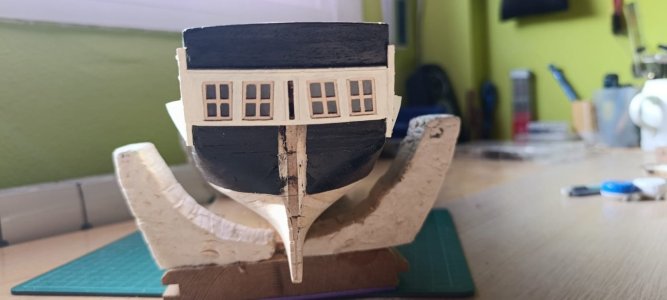
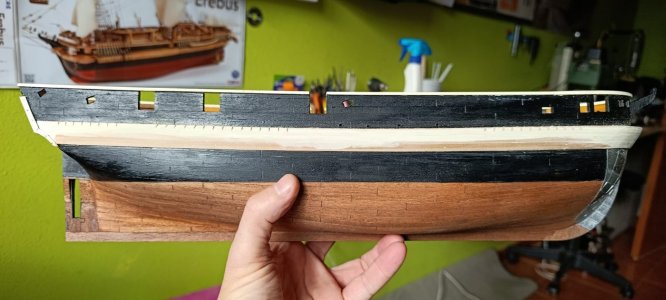
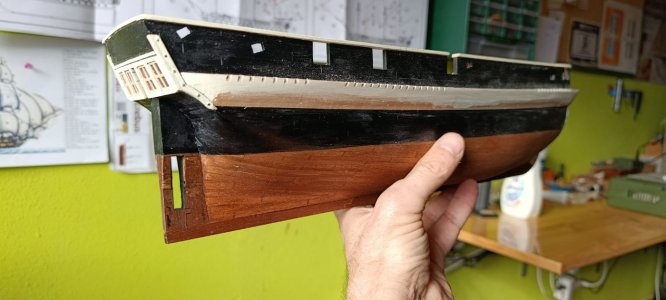
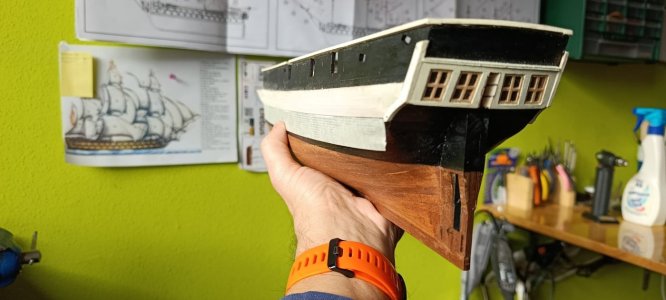
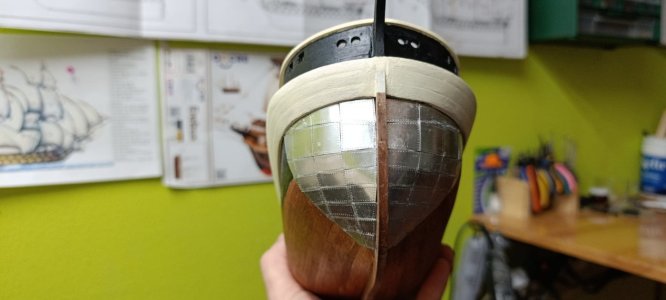
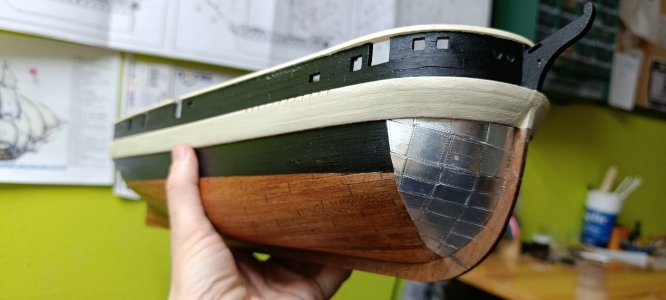
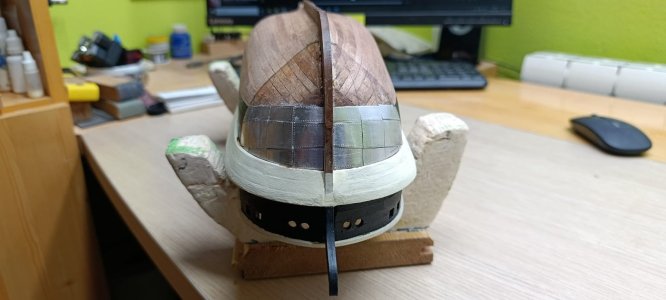
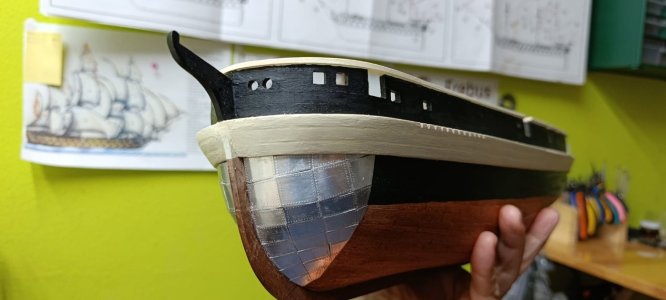
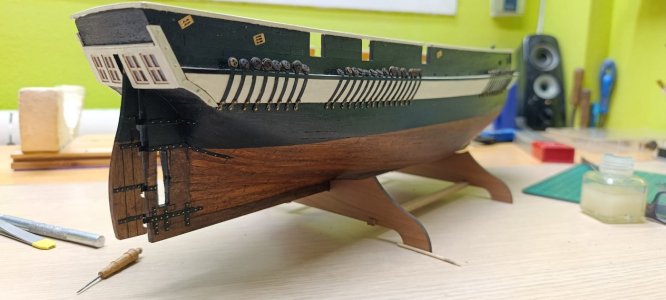
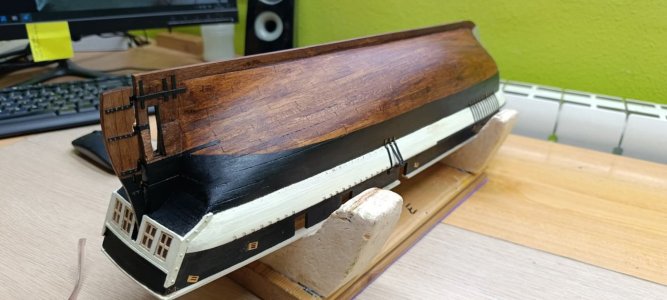
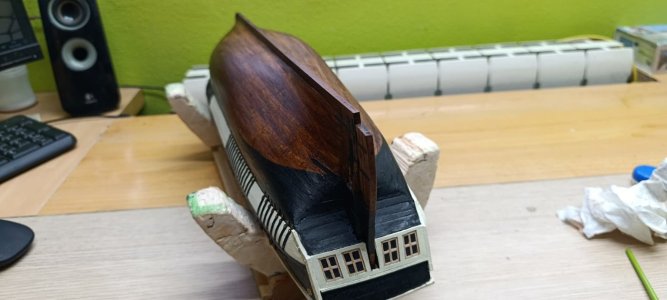
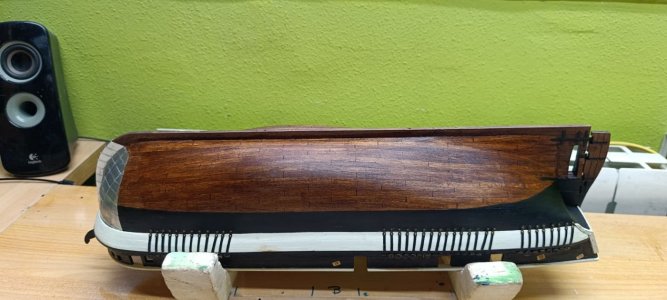
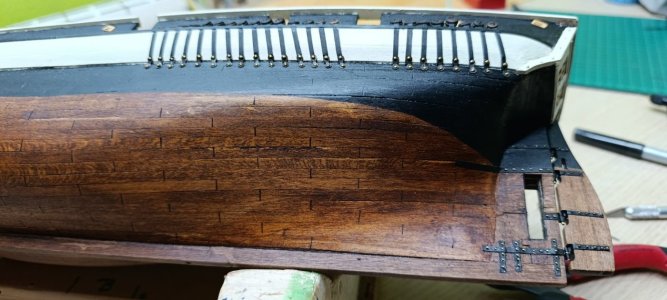
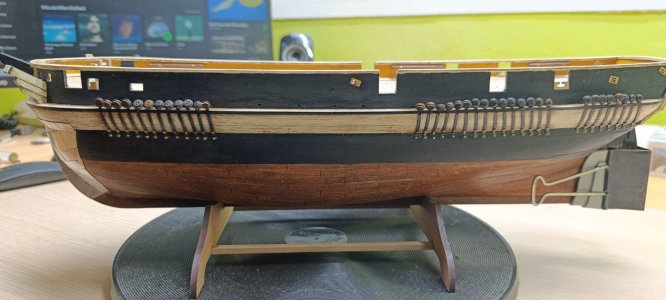
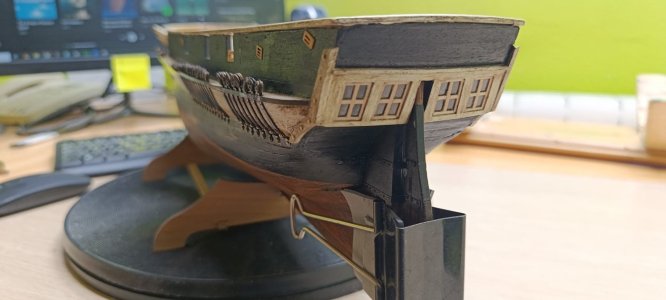
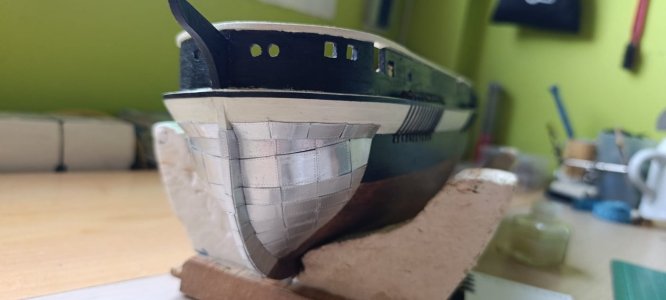
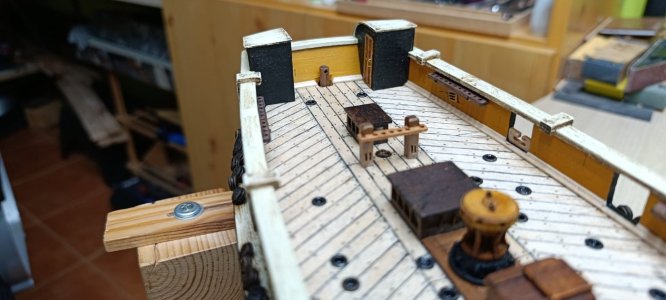
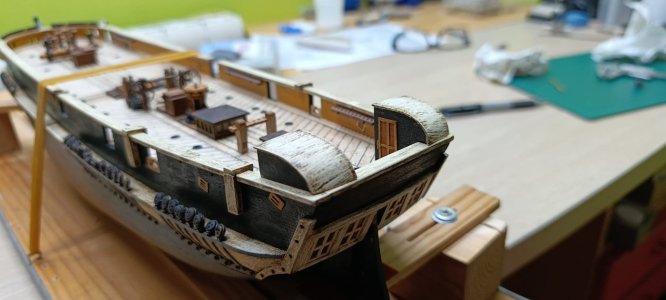
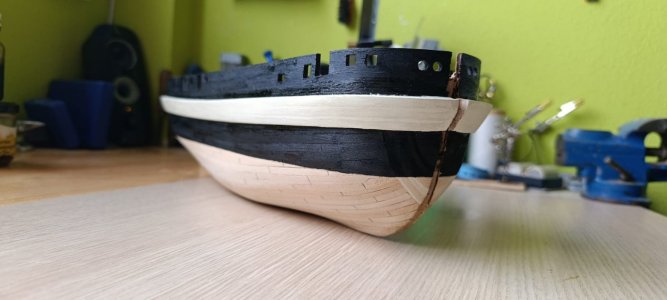
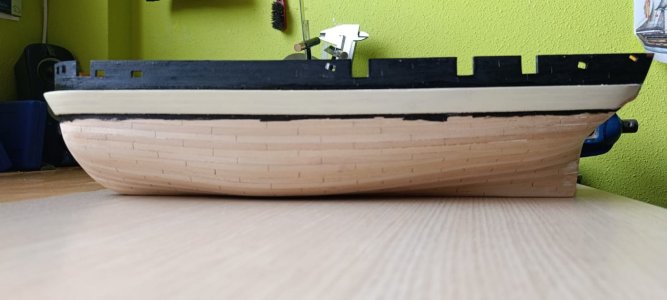
Como no me ha tocado la lotería, terminó el forrado del Terror. La final solo he tenido que poner dos atunes por banda, uno en zona de codaste de popa, pegado a traca de aparadura, y otros dos para cerrar el casco en proa. Me ha fallado por unos 3 mm el afilado de tracas, pero me siento satisfecho. Ya he pasado primero un cristal para desbastar lo más gordo y luego lija. El cristal es de un vaso que se me rompió el otro día, y he de decir que no había usado nunca y es una pasada, al ser curvo con diferentes curvaturas se da bien la forma. Un saludo y virutas de Reyes Magos
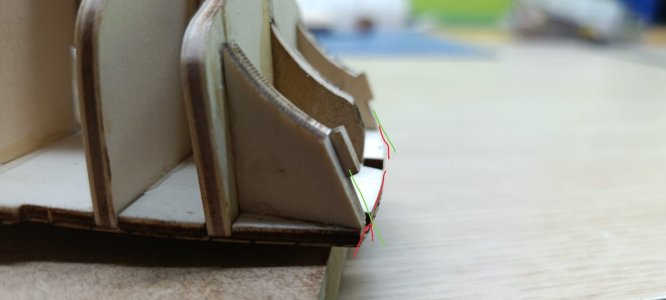
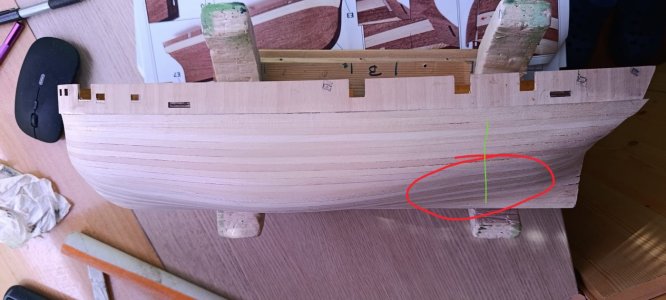
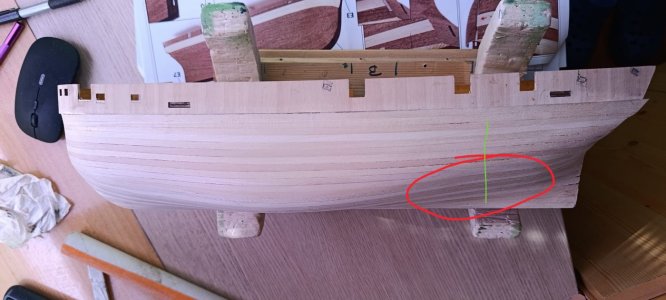
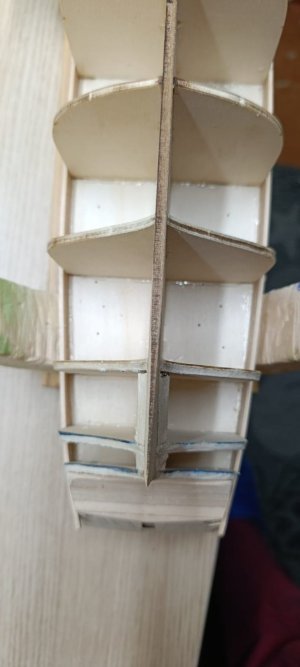
PD. En las cuadernas hay un error gordo en ambas bandas, por qué me extraña mucho que haga esa forma, desde el ordenador os señalaré el lugar y la cuaderna afectada, corregí algo pero no ha sido suficiente evidentemente, habría que meterle un relleno de 2 + - en ambas bandas.
Nota:
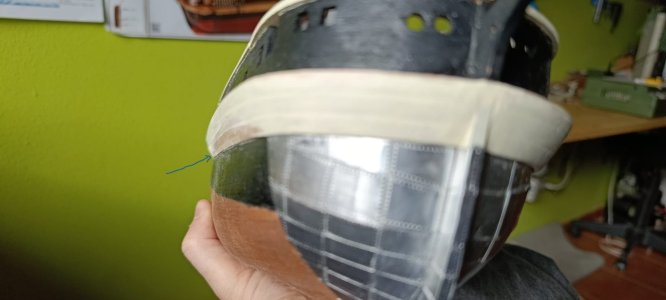
Lo marcado en rojo hace algo de hueco, y la línea verde sería la cuaderna afectada, lo estudiaré e intentare subir la solución, a ver si tengo foto del antes de forrar...
Efectivamente, en ambas bandas, se hace un "hueco" en la zona marcada, no creo que el casco tuviera esa forma, más bien es un fallo de diseño en esa cuaderna, la nº 9, le hace falta 1 mm de relleno en esa parte.

WhatsApp Image 2026-01-06 at 19.32.27.jpeg

WhatsApp Image 2026-01-06 at 19.32.26.jpeg

WhatsApp Image 2026-01-06 at 19.32.26 (1).jpeg

WhatsApp Image 2026-01-06 at 19.32.25.jpeg

WhatsApp Image 2026-01-06 at 19.32.24.jpeg

WhatsApp Image 2026-01-06 at 19.32.24 (1).jpeg

WhatsApp Image 2026-01-06 at 19.32.23.jpeg

WhatsApp Image 2026-01-06 at 19.32.23 (2).jpeg

WhatsApp Image 2026-01-06 at 19.32.23 (1).jpeg

WhatsApp Image 2026-01-06 at 19.32.22.jpeg

WhatsApp Image 2026-01-06 at 19.32.22 (2).jpeg

WhatsApp Image 2026-01-06 at 19.32.22 (1).jpeg
 
Back
Top