
• SUBSCRIBE TO SHIPS IN SCALE TODAY!

    The beloved Ships in Scale Magazine is back and charting a new course for 2026!
    Discover new skills, new techniques, and new inspirations in every issue.

    NOTE THAT OUR NEXT ISSUE WILL BE MARCH/APRIL 2026
  • Win a Free Custom Engraved Brass Coin!!!
    As a way to introduce our brass coins to the community, we will raffle off a free coin during the month of August. Follow link ABOVE for instructions for entering.

HMS Sphinx - Vanguard Models 1:64 by Ronald-V

Work on the knee/stem

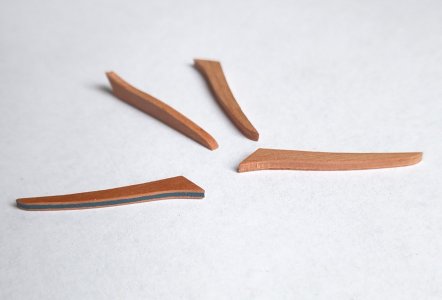
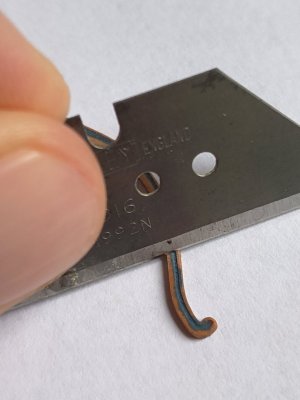
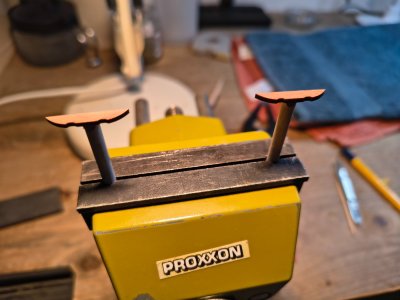
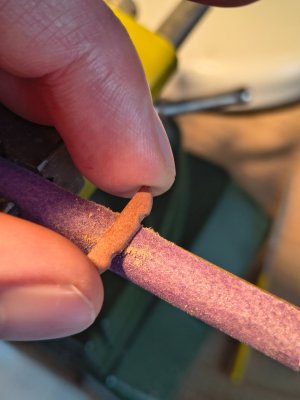
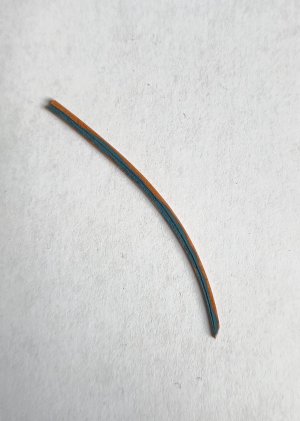
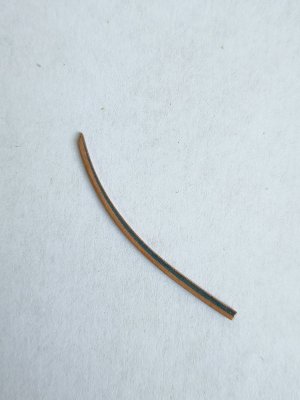
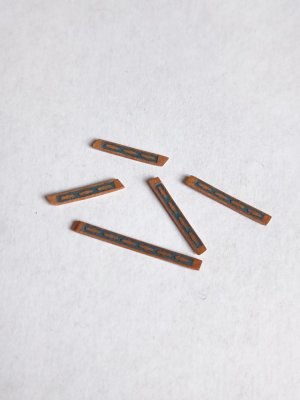
The parts were a bit simple straight out of the kit, and I saw in other build logs that people painted a nice blue stripe on them. That seemed like a good idea to me too, but it had to be nice and clean, and no mess on my part. So I made a simple template to scrape a groove that I could then paint blue.

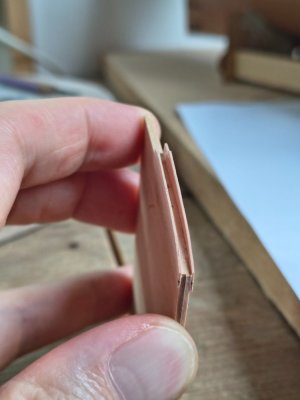
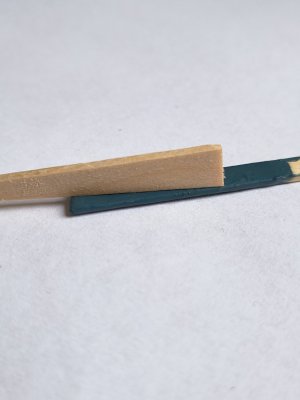
The simple jig to put the parts in

IMG_20251006_143633440_HDR.jpg


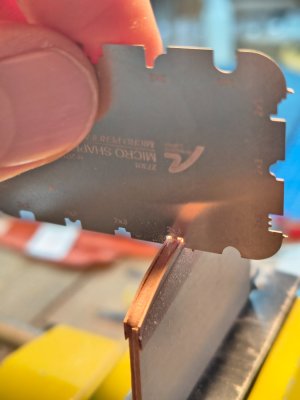
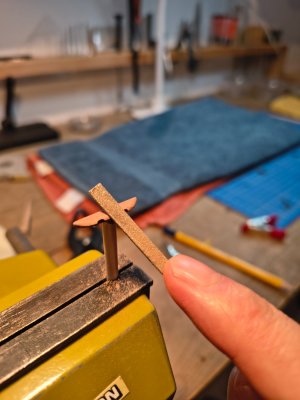
Scraping the parts with Artesania scrapers

IMG_20251006_143442692_HDR.jpg


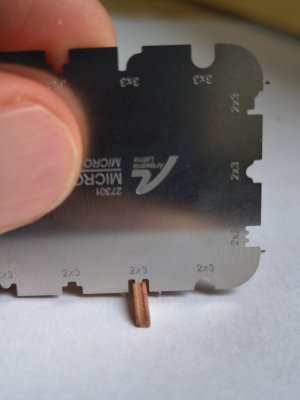
The jig was nessecary because the scrapers didn't have the right width. So the jig works like a filler

IMG_20251006_143537830.jpg


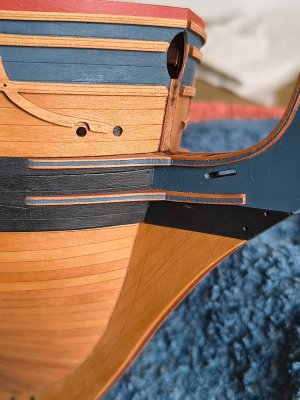
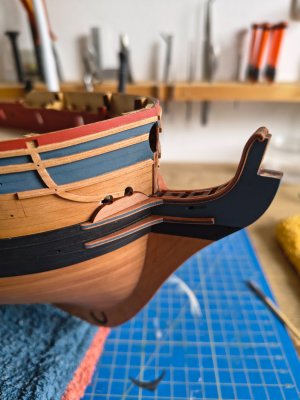
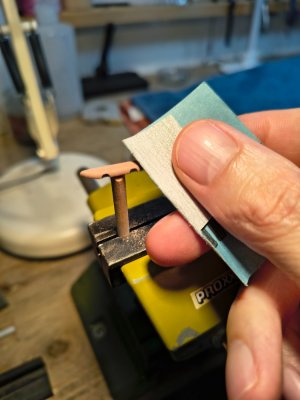
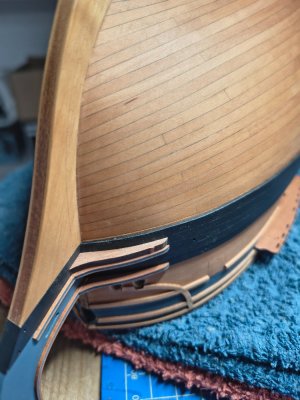
When painting the groove, if you get a bit of paint besides it, you can easily scrape it off with a knife. This gets you nice clean painted grooves

IMG_20251007_154055921.jpg


Here you can see how bad I painted the lasered grooves on the decoration. But by simply scraping of the excess (which lays higher), you get a really neat paint job.

IMG_20250927_093932620.thumb.jpg.ad66a4422e3a2d99099378a7298a9c65.jpg


I have tested how good PVA sits on painted surfaces and found the joint strong enough so that I don't have to sand everything before gluing. If I do have the opportunity to sand, I won't hesitate. But because the stem and wales were already painted so beautifully, I left it as it was.

IMG_20251009_160312203.jpg

IMG_20251009_160357789_HDR.jpg


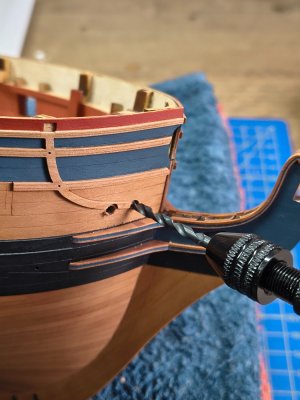
Drilling the hawse holes very carefull

IMG_20251009_161352933_HDR.jpg


Construction, sanding and varnishing of the various other parts in this area

IMG_20251011_150214298_HDR.jpgIMG_20251011_190458579_HDR.jpg
IMG_20251011_190823869_HDR.jpg
IMG_20251011_191535810_HDR.jpg

IMG_20251015_150533926_HDR.jpg
IMG_20251021_135349782_HDR.jpg
IMG_20251023_093505845_HDR.jpg
IMG_20251023_143029392.jpg
 
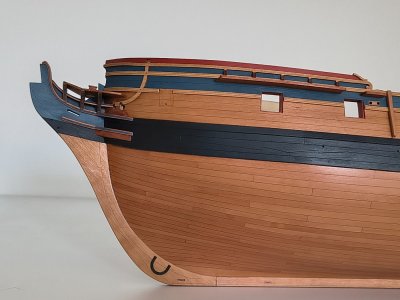
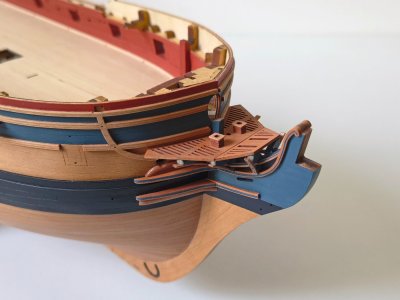
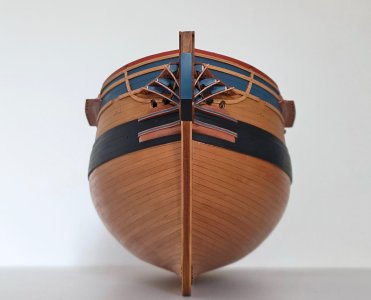
Beautifully done planking. FWIW, nearly all kits fail to address the tapering of the knee of the head. IF this kind of thing matters to you, for the next time the following may be helpful regarding how the knee of the head siding changes from where it attaches to the stem to the fore end.

From The Elements and Practice of Naval Architecture by David Steel

Guns - Siding at the stem - Siding at the fore part at the upper end
110 ------ 19.5" -------- 6"
98 --- --- 18 -------- 5.5
80 ------ 17 ---- --- 5.25
74 --- --- 16.5 -------- 5
64 ------ 15.5 -------- 5
50 ------ 15 --- ----- 5
44 ------ 14.5 ---------- 4.75
38 ---- --- 13.5 ----- ------ 4.75
36 ------ 13 ---------- 4.5
32 --- --- 12.5 ---- ------ 4.25
28 ------ 11.5 --- ------ 4
24 ------ 11 ---------- 4
18 --- --- 10.5 --------- 3.75
 
Such a clever and simple scraping jig. I'll borrow that one for sure.
Thanks! It did wear out pretty fast, needed to change the side boards twice. And I glued two pin points in the bottom of the slot. Just sticking out a milimeter. This way the wood piece that you want to scrape doesn't slide. Ofcourse this must be a side you don't see because there are going to be 2 little dents
 
Thanks! It did wear out pretty fast, needed to change the side boards twice. And I glued two pin points in the bottom of the slot. Just sticking out a milimeter. This way the wood piece that you want to scrape doesn't slide. Ofcourse this must be a side you don't see because there are going to be 2 little dents
How did you do the curvy part that goes to the top of the stem?

On my Kingfisher I created a double groove using a custom scraper (cutting one side at a time). I like your painted groove better.

1778592007673.png

Sorry to post my work on your thread. I'll remove it if you want.
 
How did you do the curvy part that goes to the top of the stem?

On my Kingfisher I created a double groove using a custom scraper (cutting one side at a time). I like your painted groove better.

View attachment 602315

Sorry to post my work on your thread. I'll remove it if you want.
Oh that's part of the kit lasering. Pretty nice details that come with the kit. I think i have better pictures of that in the next update. Your work on the Kingfisher is simply amazing! Love that!
 
The Scott Brothers (Scott Paper Company) began producing the world's first toilet paper rolls in 1890.
Yes, Royal Navy Captain, Sir James Loo invented the first use of toilet roll with bits of torn canvas hung over a simple dowel next to the “seat of ease.” Unfortunately, for him he didn’t bother to patent his hygiene invention which permitted entrepreneur, Sir William Scott, OBE to claim the prize. Thus the saying: “He who hesitates, gets constipated.”
 
Sir James Loo
Oh, yes.
But Loo stole his invention from Captain Francis Drake.
Drake had a special servant boy who would rapidly rotate his silk-stockinged leg, and Drake would place his buttocks under it. That's how both toilet paper and the automatic butt washer were invented!
 
Oh, yes.
But Loo stole his invention from Captain Francis Drake.
Drake had a special servant boy who would rapidly rotate his silk-stockinged leg, and Drake would place his buttocks under it. That's how both toilet paper and the automatic butt washer were invented!
Just FYI, No — Francis Drake did not invent toilet paper. That’s a common mix-up with another Englishman: Sir John Harington, who is associated with an early flush toilet design in the late 1500s during the reign of Elizabeth I.

Modern toilet paper came much later:
  • In ancient times, people used leaves, moss, wool, shells, or cloth.
  • In China, hygiene paper was documented as early as the 6th century.
  • Commercially packaged toilet paper was introduced in the United States by Joseph Gayetty in 1857 as “Gayetty’s Medicated Paper.”
  • Toilet paper rolls became common in the late 19th century, introduced by companies like Scott Paper Company.
Yes, Royal Navy Captain, Sir James Loo invented the first use of toilet roll with bits of torn canvas hung over a simple dowel next to the “seat of ease.” Unfortunately, for him he didn’t bother to patent his hygiene invention which permitted entrepreneur, Sir William Scott, OBE to claim the prize. Thus the saying: “He who hesitates, gets constipated.”
... that story appears to be fictional or a modern internet myth. There is no credible historical evidence that a “Royal Navy Captain, Sir James Loo,” invented toilet rolls made from torn canvas.

A few clues suggest it’s bogus:
  • There is no well-known historical Royal Navy figure named “Sir James Loo” connected with sanitation history.
  • “Loo” itself is British slang for toilet, which makes the name sound suspiciously joke-like.
  • Sailors historically did use rough materials aboard ships — including cloth, rope fibers, oakum, sponges, or whatever was available — but not a documented “first toilet roll” invention.
  • The modern perforated toilet roll developed much later in the 19th century.
 
“Loo” itself is British slang for toilet, which makes the name sound suspiciously joke-like.
From this Yank Anglophile, Thanks for embellishing my cheeky joke. In England, "cheeky" means being playfully impudent, disrespectful, or mischievous, but in a charming or amusing way rather than malicious.
 
From this Yank Anglophile, Thanks for embellishing my cheeky joke. In England, "cheeky" means being playfully impudent, disrespectful, or mischievous, but in a charming or amusing way rather than malicious.
From this Yank Anglophile: a joke is something said in fun rather than as fact, IMHO
 
We are learning so much here
Dear Ronald! Just in case, I'll clarify that I was joking. You said it yourself: "You do understand it was a joke, right?"
Of course, no servant boy could have wiggled his silk-stockinged leg around Drake's buttocks.
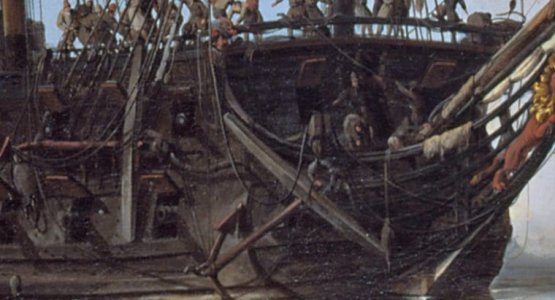
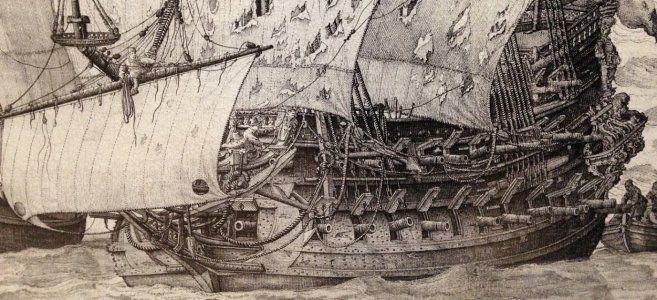
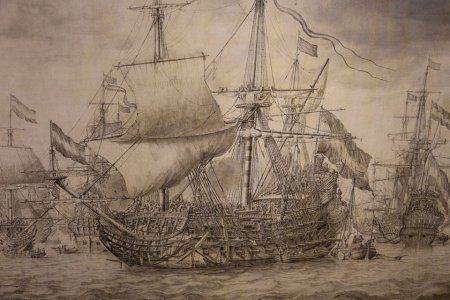
But, in case you're wondering, in reality, the sailors at the bow of the ship used old ropes as toilet paper. The ropes had frayed tassels, and the ropes themselves were dipped in water.
Sometimes these ropes are even visible in paintings. Take a closer look at Knee of the Head.
Willem_van_de_Velde_(II)_-_Calm_-_Dutch_Ships_Coming_to_Anchor_-_WGA24523 — копия (2).jpg
Rijksmuseum_vandervelde10 — копия.jpg
rBbiNKE_lAM.jpg
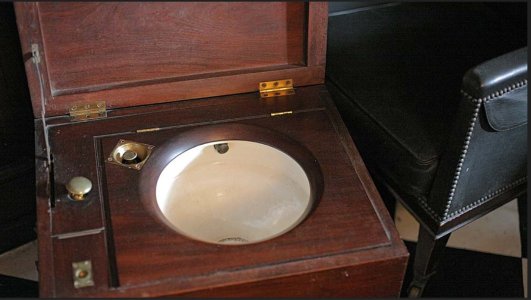
Officers used scraps of high-quality fabric (but not sails). And for admirals and kings, ships were furnished with individual chamber pots and real paper.

ночная ваза.jpg
 
Thanks for the nice pictures Igor! I can remember seeing the rope with a tour I got on the replica of the VOC ship "Batavia" here in the Netherlands.
 
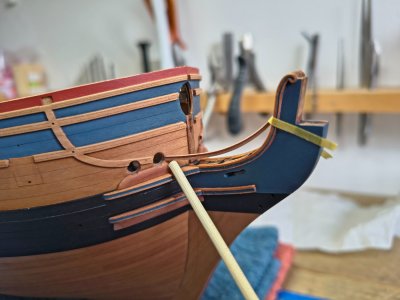
Okay, going further with the headworks
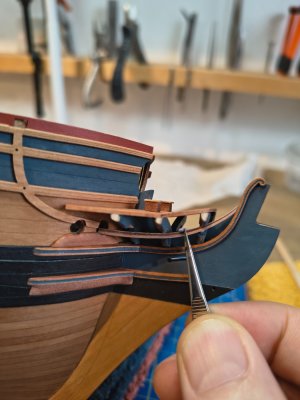
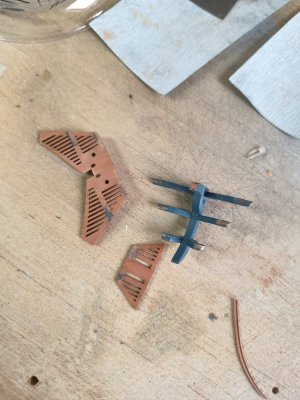
First a bit of dry-fitting and sand things in the right dimensions

IMG_20251024_142513767_HDR.jpg


The difference before between before scraping the decoration and after. Ofcourse...if that scraping option wasn't available I would try to paint more precise, but you see here how good it looks afterwards

IMG_20251028_112608495.jpg
IMG_20251028_140354535.jpg


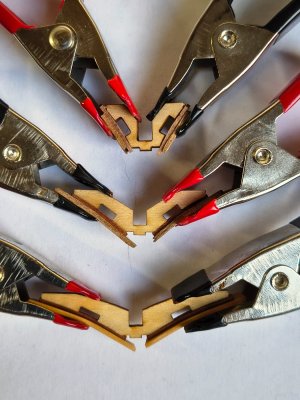
I made a mistake with this V-brackets with the perforated floors on top. For who doesn't know. PVA dissolves with alcohol, so you can always correct your mistake

IMG_20251025_152200643.jpg


Not sure anymore what I tried to tell here...so just some photo's

IMG_20251030_144520088_HDR.jpg

IMG_20251104_142134997_HDR.jpg

IMG_20251023_150508470_HDR.jpg

IMG_20251025_144042571_HDR.jpg


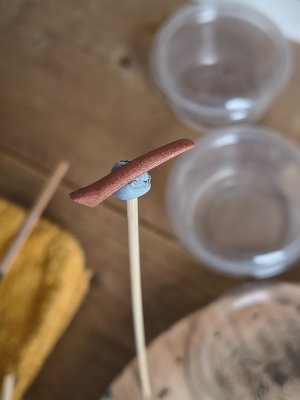
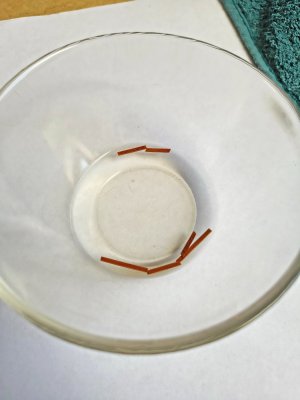
I did pre-soak the small pieces of decorative strips that go on the sides of the V-brackets. It might not even be necessary, but better safe than sorry.

IMG_20251027_141219773_HDR.jpg

IMG_20251027_143450471_HDR.jpg


Painted them on forehand ofcourse (don't forget to varnish the natural wood)

IMG_20251103_145437957.jpg


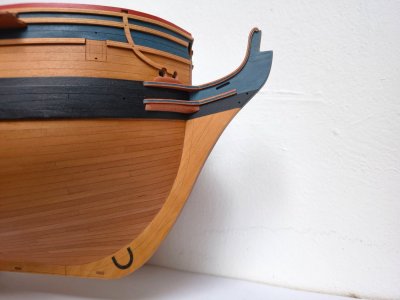
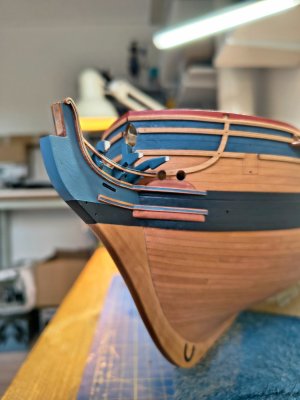
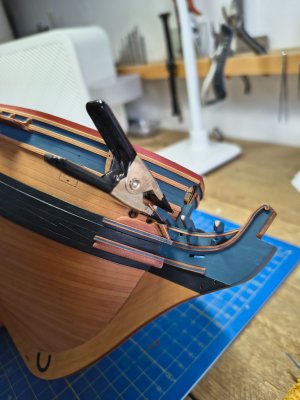
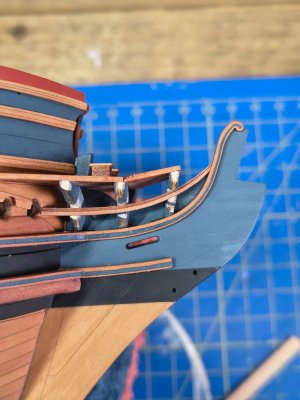
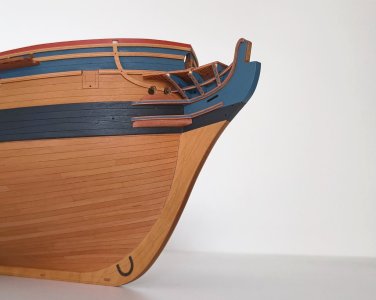
End result...this is not the completion of the headworks, but for now the manual goes further in other parts of the build.

IMG_20251106_143308313.jpg

IMG_20251106_143521758_HDR.jpg

IMG_20251106_144344047.jpg

IMG_20251106_143224421.jpg
 
Back
Top