




- Joined
- Jun 29, 2024
- Messages
- 2,172
- Points
- 488

Chuck,
Thanks for your kind words. Yesterday I spent much quality time at the grocery store while my wife examined the sell by dates of everything that she purchased so had time to think.
The great problem of the steam paddle engine was designing the mechanical linkage from the cylinder to the paddle shaft. Modern internal combustion engines are “single acting” the force in the cylinder acts on only one side of the piston. Steam engines are “double acting;” steam pushes alternatively from each side. Therefore, the piston rod from the cylinder passes through a tight gland that restricts is motion to one direction. The crank of course required a rotary motion so there were many different linkages to convert the piston rod’s linear motion to the motion required to turn the crank.
To do this, the British developed the Side Lever Engine where an oscillating lever transmitted power to the crankshaft. If L’Orenque (sp?) was equipped with side lever engines, my analysis would be incorrect as the movement of the crankshaft would depend on the location of the lever’s fulcrum.
Americans used Direct Acting engines where the engine cylinder was mounted in an inclined plane. Again, one would need to know the slope of the incline for my analysis to work.
There are also oscillating engines where the cylinders oscillate. Toy steam engines sold today are often of this design. It’s quite possible that oscillating engines powered L’Orenque. If so, my analysis would be correct.
Roger
Thanks for your kind words. Yesterday I spent much quality time at the grocery store while my wife examined the sell by dates of everything that she purchased so had time to think.
The great problem of the steam paddle engine was designing the mechanical linkage from the cylinder to the paddle shaft. Modern internal combustion engines are “single acting” the force in the cylinder acts on only one side of the piston. Steam engines are “double acting;” steam pushes alternatively from each side. Therefore, the piston rod from the cylinder passes through a tight gland that restricts is motion to one direction. The crank of course required a rotary motion so there were many different linkages to convert the piston rod’s linear motion to the motion required to turn the crank.
To do this, the British developed the Side Lever Engine where an oscillating lever transmitted power to the crankshaft. If L’Orenque (sp?) was equipped with side lever engines, my analysis would be incorrect as the movement of the crankshaft would depend on the location of the lever’s fulcrum.
Americans used Direct Acting engines where the engine cylinder was mounted in an inclined plane. Again, one would need to know the slope of the incline for my analysis to work.
There are also oscillating engines where the cylinders oscillate. Toy steam engines sold today are often of this design. It’s quite possible that oscillating engines powered L’Orenque. If so, my analysis would be correct.
Roger


 .
.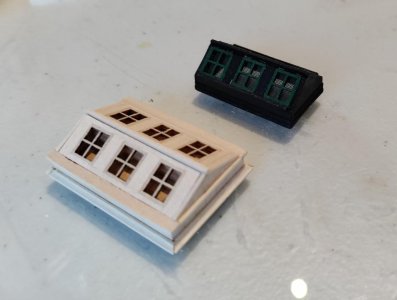
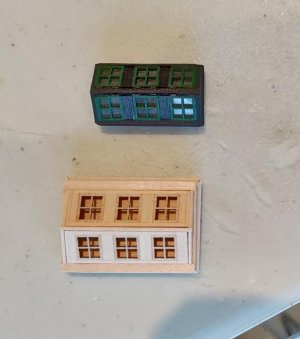
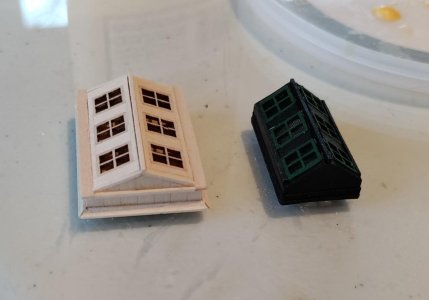
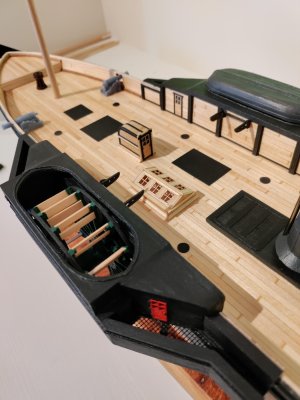
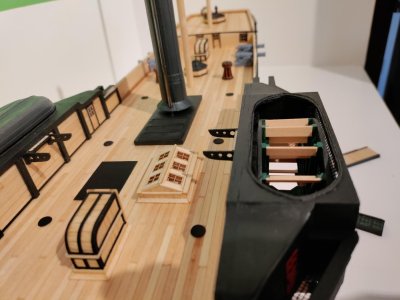
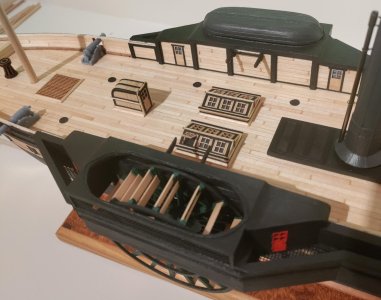
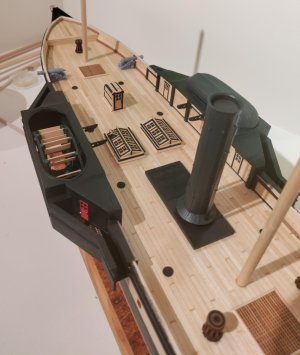
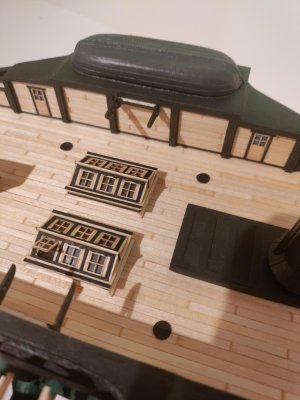
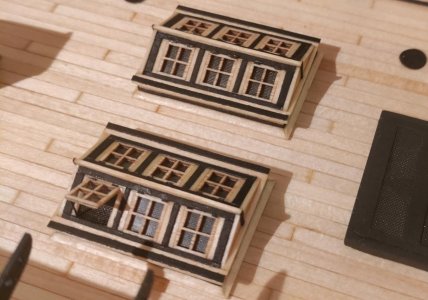
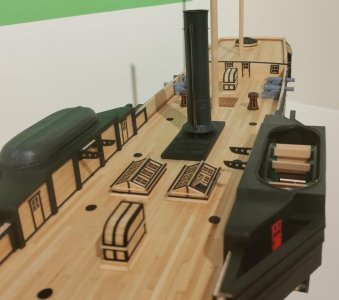


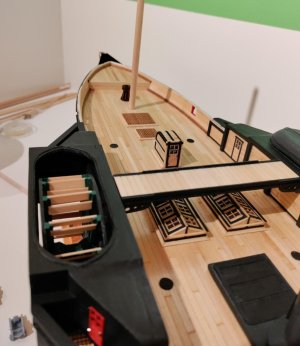
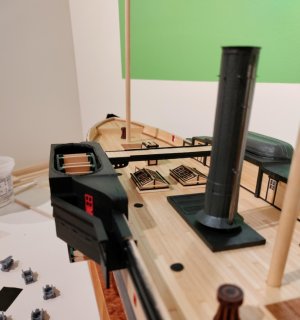
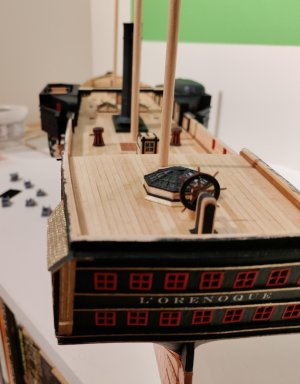
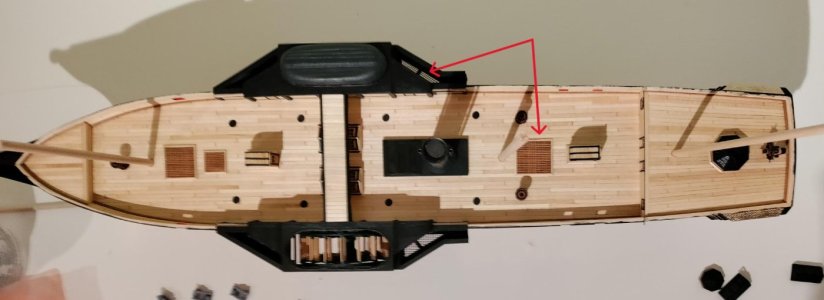
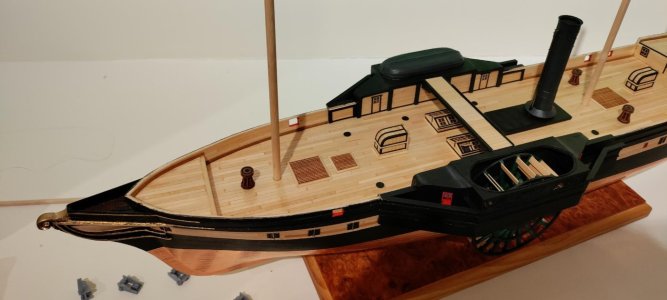
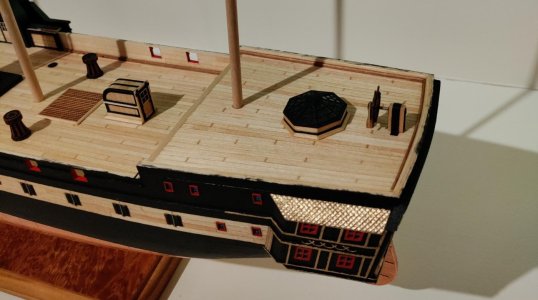
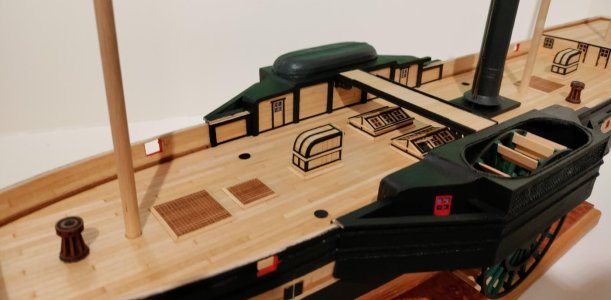
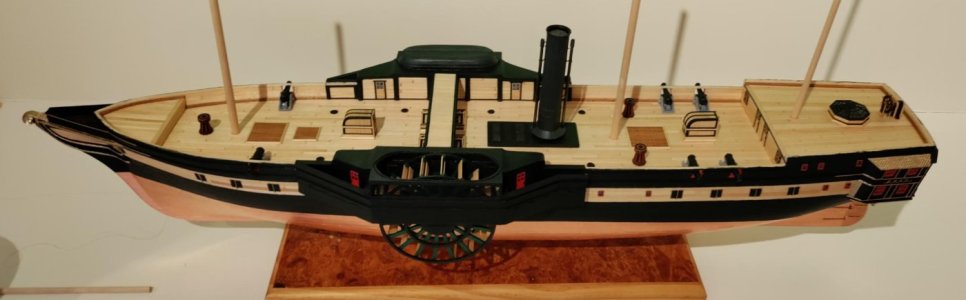
 I did finish the helm and (start getting excited!) painted the cannon from The Jerry Todd Miniature Cannon Foundry!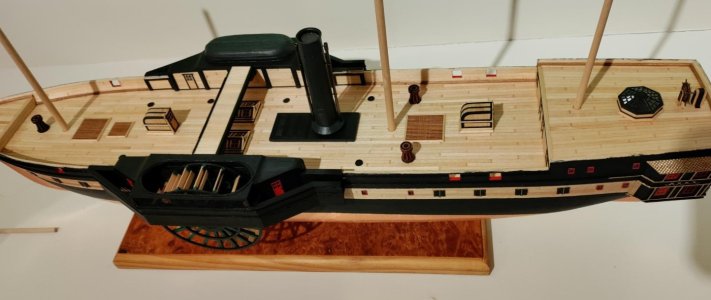

 !
!
