• Win a Free Custom Engraved Brass Coin!!!
    As a way to introduce our brass coins to the community, we will raffle off a free coin during the month of August. Follow link ABOVE for instructions for entering.
  • SUBSCRIBE TO SHIPS IN SCALE TODAY!

    The beloved Ships in Scale Magazine is back and charting a new course for 2026!
    Discover new skills, new techniques, and new inspirations in every issue.

    NOTE THAT OUR NEXT ISSUE WILL BE MARCH/APRIL 2026

L'Orenoque Mamoli 1:100 scale

What ho, shipmates!

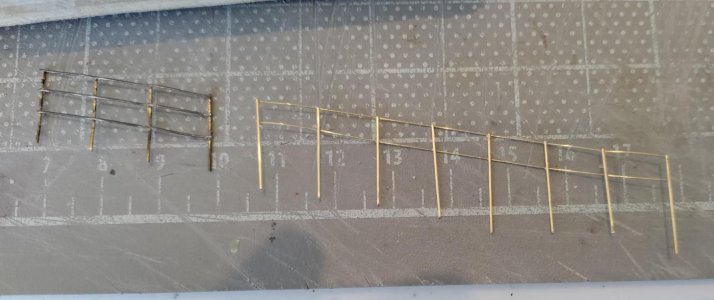
Well, I started the iron work last night! I decided to experiment and I am VERY pleased. The joints are very well bonded. I just need to remember to thoroghly clean the brass before assembly.

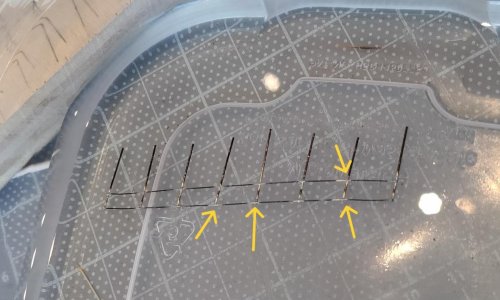
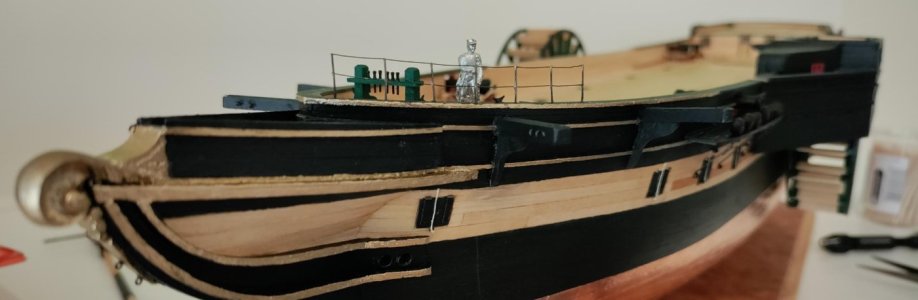
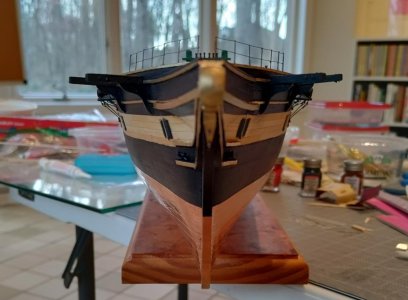
I watched a couple of YouTubes and "discovered" solder and flux in a syringe. One of the videos showed railings being made on a piece of scrap wood a bit at a time. I decided to copy that method ofr this trial. The syringe solder is no joke - just the smallest dab from the end of a toothpick did the trick. I didn't think to prepare the brass for blackening - I didn't think my first experiment would be so successful - no amount of cleaning after assembly allowed the brass to blacken. So excited:D The last pic shows the experiment aboard - I was surprised by how strong the joints were - I could simply move the two ends in opposite directions with my fingers to achieve the proper slope to follow the curve of the caprail as it lowers going aft. The final version I will set the correct angles and solder the posts and railings so I won't need to bend the finished product.

Pic 1 red arrows show the placement of the posts - 10mm apart based on the railings shown on the poo deck of the original L'Orenoque plans. Blue arrows shou the rails - 5/16ths high. I added a middle rail for safety. I may go without the lower rail. The brass is held down with standard masking tape.

View attachment 586902
View attachment 586903View attachment 586905View attachment 586906View attachment 586908

Solder paste is definitely worth the money. I keep mine in the fridge when not in use. It will last much longer that way.
 
What ho, shipmates!

The railing experiments continue! I decided to reduce the diameter of the posts and rails. So, the rails from the first experiment became posts and the next smallest size wire for the rails. This time I tried to clean the brass with 600 grit paper. Only moderately successful. I also wonder whether the soldering paste will blacken. I have put this experiment in a white vinegar bath (thank you for the advice, Paul!) to see if it helps with additonal cleaning. The next experiment I will sand with 600 grit and put the parts in vinegar first.

lo railings v2 1.jpglo railings v2 2.jpg
 
Last edited:
If you want to up your cleaning game even further you need to use a pickling solution (stronger acid than vinegar). It works better if it is warmed. This can be used before soldering - but also after soldering in that it removes all the scale. I only mention it because those rails are pretty thin so cleaning up afterward will be a challenge.


You will also need a container for it - I just use a glass jar - and copper tongs (or another jar to decant into).

Always a joy for me to suggest ways to spend your money, Chuck.
 
What ho, shipmates!

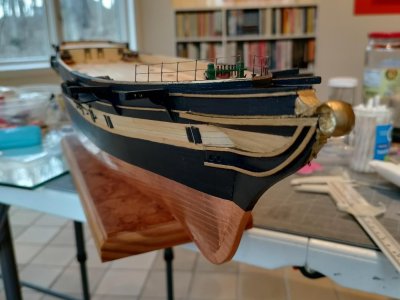
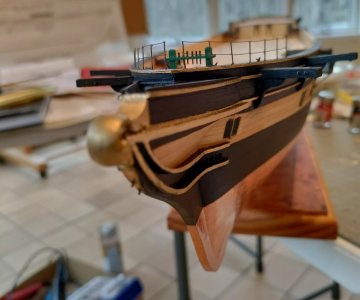
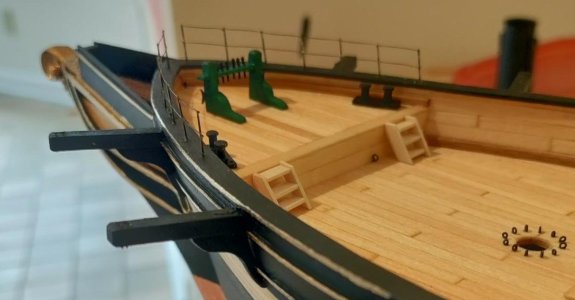
Second round with the railing 2.0. The cleaning was good enough to appear "black" at scale. The port forward railing is aboard and the XO is pleased that the hands won't be pitched overboard in a light chopROTF

It looks much better from a normal viewing distance - turns out that too much stress will break a joint. At this point, a little CA on one joint didn't bother me. Still. with the thin rails SUPER easy to distort.:eek:

lo railing forward port.jpg
 
My experience is that brass blackener will never work on solder. An alternate approach would be to tin the entire length of your pieces before assembly, which would allow you to tack solder the joints, then use solder patina to blacken the whole thing. Patina can be found at any stained glass supply outlet. There are several online.

Push comes to shove, automotive primer and black spray paint :eek:
 
My experience is that brass blackener will never work on solder. An alternate approach would be to tin the entire length of your pieces before assembly, which would allow you to tack solder the joints, then use solder patina to blacken the whole thing. Patina can be found at any stained glass supply outlet. There are several online.

Push comes to shove, automotive primer and black spray paint :eek:
Namabiiru! On Harriet Lane's davits and on L'Orenoque's steam escape tubes (I'm just making up names for stuff ROTF ) that run parallel to the funnel I had no problem with the solder blackening. I realy think it is the particular ingredients in this solder paste. Push will have to shove come with a tire iron before I paint my metal work!!!!ROTFROTFROTF All kidding aside - in person things have blackend enough for my satifaction. Also, I worked hard and purposefully to make the railings as close to scale as possible - any amount of paint would ruin the effect IMHO:p


Blessings. Peace. Gratitude.
Chuck
 
Good morning Chuck. You definitely have a "spring in your model building". Just fabulous work. Awesome soldering and I appreciate the comment from the other members as I am attempting to solder, and things don't seem to be going my way. ROTF . Solder paste will be my next purchase and I will see if I can get some pickling solution here. Thanks Paul.
Cheers Grant
 
Back
Top