
• Win a Free Custom Engraved Brass Coin!!!
    As a way to introduce our brass coins to the community, we will raffle off a free coin during the month of August. Follow link ABOVE for instructions for entering.
  • SUBSCRIBE TO SHIPS IN SCALE TODAY!

    The beloved Ships in Scale Magazine is back and charting a new course for 2026!
    Discover new skills, new techniques, and new inspirations in every issue.

    NOTE THAT OUR NEXT ISSUE WILL BE MARCH/APRIL 2026

Making Blocks and sheaves for a 1:48 scale model.

I build blocks and deadeyes at 1:50 scale.
I use maple dowels for blocks and black walnut dowels for deadeyes.

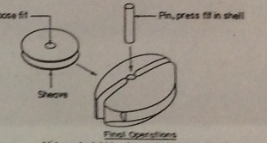
For my blocks, I sand two opposite sides of the maple dowels flat (on a belt sander) to establish the general shape. Then I hand sand with 250 grit to smooth and round the edges of the flat sides. Then I tack the dowels to the honeycomb of my laser cutter. I cut thin slices (about 1/32") like cutting a salami sausage on a meat slicer. Then, one by one, I drill a 1/32" hole at the ends of each oblong slice. Then I drill another hole at dead center. I use 1/8" round maple dowels cut into 1/16" slices on my laser cutter to create the circular "pulleys", then drill a center hole in each pulley. I slip a 1/32" dowel into to the top and bottom holes. I slide a 1/16" dowel through the center hole, slide on a pulley, slide on another oblong wafer, hit it with thin CA on the outside of the wafer where the dowels are protruding through. I slip a 1" square piece of wax paper through the protruding dowels. Then slide on: oblong wafer + pulley + wafer + thin CA + wax paper. Over and over and over until the 8" long dowels are filled with complete blocks. Then I cut them apart with a razor saw, sand both sides (rounded). Voila. Blocks. Done. To make double sheath blocks, Slide on: wafer + pulley + wafer + pulley + wafer + thin CA + wax paper....
For deadeyes, I turn the black walnut (about 4" lengths) dowel on my small table lathe, you get about 24 out of a 4" long dowel. Then drill the three holes on each one with my drill press. You have to hold them with something, so I drill out consecutive holes on a 2" x 1/2" piece of cherry 12" long - I cut the holes about an 1/8" deep and 1/2" apart l using a facing bit just slightly larger than the deadeye blanks. I mark the hole locations with a triangular open stencil and a .05mm white ink pen. I insert a blank into each jig hole, light a pipe, crack open a cold beer and drill drill drill drill. Then I pop them out with a dental pick. I've made bags of them.
Hi, AirBoss Rib. Pics? Would be great to see them. A photo tells a thousand words. Some of us may be illiterate.
I must say I want to see pics because then I can decide if (like a real block) they have that engineered look about them.
1775869109806.png
So let me decide, and I am not being nasty regarding your post. Any effort is a good effort, I must add.
With dead eyes, they seem to be easy to make until you drill those 3 elusive holes. What I would like to see is whether your dead eyes for drilling the holes have a jig to get the accuracy. I saw dead eyes on Temu and to the scale I wanted, and so I got some to see how accurate the three holes were, and they were smack on. Could I do that freehand- no way? So I want to know what jig they use to achieve such accuracy
What I am saying is I can make a pulley by hand, but its authenticity would not be miniature in reality. Maybe I should sound it out loud, and that is to make these pulleys, and to be real, there has to be a jig or three made to carry out a procedure, to be exact, for each one.
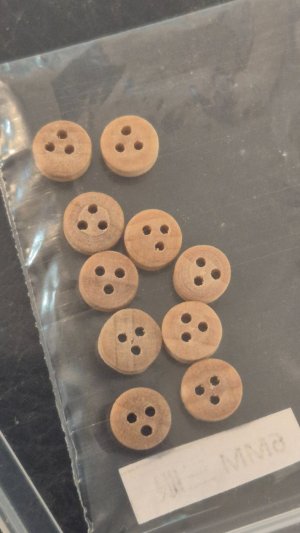
Here is a Pic of the Dead eyes at 48 scale, or actually 1/4" diameter, showing the accuracy of the three drilled eyes. I gues a jig was used so the drill did not wander off the position:
20260411_104051.jpg
Cheers Beer
 
Last edited:
I have a question regarding pulleys and such, and the color of the wood used, which is mainly made of a dark wood. I understand that it is very similar to tar expressions of color, but if blocks, dead eyes are made out of a more manageable wood and then dipped into a dark stain, is that feasible to give the impression of tarred implements?
I have noticed on SOS, that a lot of Model Shipwrights use a tarry-looking paint to do many of their riggings with. What is the name of the product?
 
I have a question regarding pulleys and such, and the color of the wood used, which is mainly made of a dark wood. I understand that it is very similar to tar expressions of color, but if blocks, dead eyes are made out of a more manageable wood and then dipped into a dark stain, is that feasible to give the impression of tarred implements?
I have noticed on SOS, that a lot of Model Shipwrights use a tarry-looking paint to do many of their riggings with. What is the name of the product?
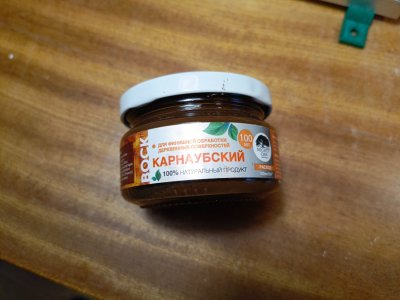
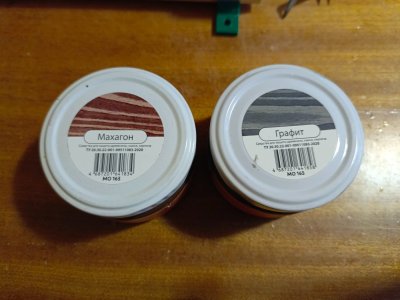
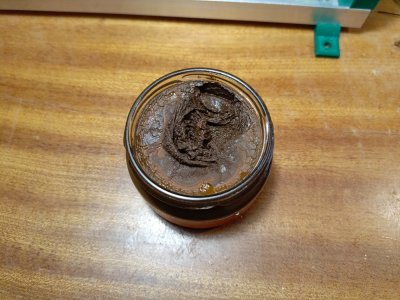
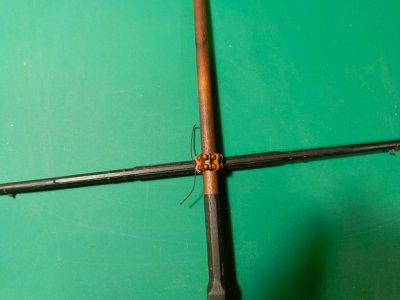
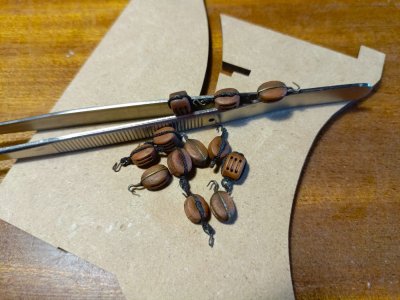
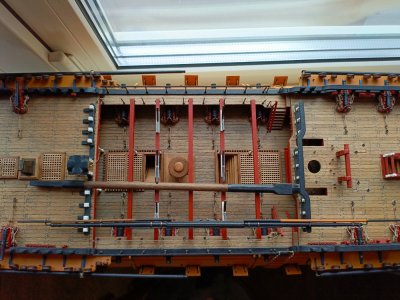
I use mahogany-colored carnauba wax for the blocks and spars, and graphite-colored wax for the deck.

IMG_20260411_065458_266.jpg

IMG_20260411_065551_357.jpg

IMG_20260411_065435_617.jpg

IMG_20251028_191727_947.jpg

IMG_20250826_090727_136.jpg

IMG_20250506_065702_374.jpg
 
What scale did you make the blocks at?
This is a crappy Amati Vanguard set in 1/72 scale, and I tried to make the blocks in the same scale. All the blocks are more than 5 mm, and the "shaped" blocks are homemade. The blocks up to 5 mm are from Russian manufacturers such as Master Shipbuilder and Falconet.
 
I like the color of the blocks. I just went on line and cannot find dark carnauba paste wax but there are others. Does anyone know of a carnauba dark paste wax like that shown by Winter that is available in the U.S or has experience with staining wood with some other wax product?
Thanks
Allan
 
I like the color of the blocks. I just went on line and cannot find dark carnauba paste wax but there are others. Does anyone know of a carnauba dark paste wax like that shown by Winter that is available in the U.S or has experience with staining wood with some other wax product?
Thanks
Allan
Hi, try using black or brown shoe polish (cream). Frank
 
I like the color of the blocks. I just went on line and cannot find dark carnauba paste wax but there are others. Does anyone know of a carnauba dark paste wax like that shown by Winter that is available in the U.S or has experience with staining wood with some other wax product?
Thanks
Allan
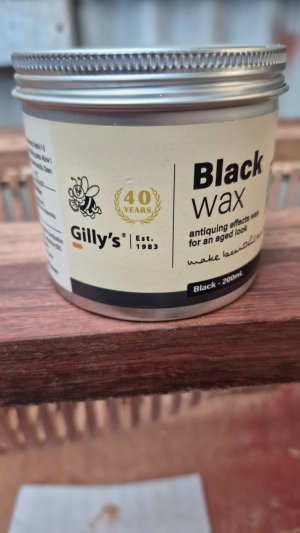
No, but in Australia, well, locally ( in Western Australia), too, there is a mob who make it. They are called Gilly's.
Gilly's Carnauba Polish (Dark) is a high-sheen, fast-drying, and creamy wax designed to protect and enhance dark-toned timber, furniture, and polished surfaces. Rich in carnauba and beeswax, it is ideal for high-traffic areas like tabletops to prevent marks. It serves as the final, third step in Gilly’s 3-step waxing process for maximum sheen.
I have the black wax, and apparently, it should also work, as I think it has a carnauba base also
Google it, and you may be able to get it by mail order. Maybe have to wait 3 months though :(.
Cost a fair penny for me, and I may look into making my own. That would be interesting, but it may cost as much for the ingredients, which is another factor I would have to consider. I think it goes a long way.
20260412_074241.jpg
 
Last edited:
Many thanks Gary! For once time is not an issue as rigging is likely more than a year away. The research will likely not be done for another month, then come the drawings and then making sawdust. :)
Thanks again.
Allan
 
I have a question regarding pulleys and such, and the color of the wood used, which is mainly made of a dark wood. I understand that it is very similar to tar expressions of color, but if blocks, dead eyes are made out of a more manageable wood and then dipped into a dark stain, is that feasible to give the impression of tarred implements?
I have noticed on SOS, that a lot of Model Shipwrights use a tarry-looking paint to do many of their riggings with. What is the name of the product?
I use walnut for deadeyes, then I soak them overnight in black India ink. India ink is shellac based and soaks deep into the wood. Let them air dry on a stack of paper towels. When they are dry, they have a lovely satin sheen. Look like the real deal. For blocks (of my own creation), I use maple. When I'm done, I soak those in Tung Oil for a couple of days. Dry on paper towels. They will appear like real blocks because the Tung Oil turns them a gorgeous honey color.
 
Back
Top