



• Win a Free Custom Engraved Brass Coin!!!
    As a way to introduce our brass coins to the community, we will raffle off a free coin during the month of August. Follow link ABOVE for instructions for entering.
  • SUBSCRIBE TO SHIPS IN SCALE TODAY!

    The beloved Ships in Scale Magazine is back and charting a new course for 2026!
    Discover new skills, new techniques, and new inspirations in every issue.

    NOTE THAT OUR NEXT ISSUE WILL BE MARCH/APRIL 2026

Making your own Ropes

Just another thing that has come up that blows me away. In the old days of sailing ropes were measured by their circumference. Not such a big deal, but how would they have measured them? Does anyone know?
I do not know for sure, but it makes sense that to measure the diameter of the rope they would take a piece of string and wrap it around the rope, measure the length of the string and divide by pi (3.14). Remember that circumference of a circle is PI X D.

Rob
 
I do not know for sure, but it makes sense that to measure the diameter of the rope they would take a piece of string and wrap it around the rope, measure the length of the string and divide by pi (3.14). Remember that circumference of a circle is PI X D.

Rob

Hi Rob, Apparently not, according to what was written in AI, but saying that, they were measured by tools, but not stating what type of tool. AI mentioned that many sailors measured rope mainly by wrapping their hand around the rope, and they had the measurement already worked out where their hand and fingers met.
That would have created a few problems measuring and replacing ropes, that's for sure.
 
Hi Phil, you are using a different thread here. Does this have to do with the size of the rope you are making?
Have to be patient with me as I am so new to this game.
Yes according to Ropes of Scale the E382 thread is for making thick rope. It’s sold in spool of 6000m

The E121 is for the thinnest rope

The E151 is for medium size rope.!

Apparently you can use any of the 3 to make thicker ropes. You use more yarns for the thinner threads.

E121 and 151 has 10,000m on each spool.

I’ve read that the E121 is the most popular. I have not tried that one or the 151 yet.

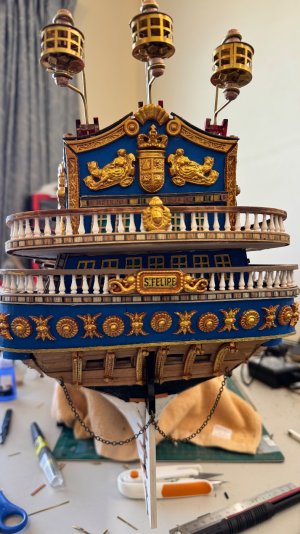
The first ropes I need are for a 1:50 scale Spanish warship dating back 400 years it’s a large build. I need 2mm and 1.5mm rope to continue the build.

I’m very happy with the enormous help from Steef66. I have made the ropes required to continue my build which has been on hold for over a month now.
 
Last edited:
The first ropes I need are for a 1:50 scale Spanish warship dating back 400 years it’s a large build. I need 2mm and 1.5mm rope to continue the build.
Are you sure about your calculations, Phil? At that scale 2.0 mm rope is nearly an anchor rope (unless you are talking about circumference?). At 1:50 scale the stays might be in the range of 1.6 mm diameter, shrouds for the lower masts would be in the range of 0.8 - 1.0 mm, running lines all smaller still.

Sorry to be jumping in like this - just didn't want to see you head off in the direction of having oversized lines.
 
Last edited:
Are you sure about your calculations, Phil? At that scale 2.0 mm rope is an anchor rope (unless you are talking about circumference?). At 1:50 scale the stays might be in the range of 1.2 mm diameter, shrouds for the lower masts would be in the range of 0.8 - 1.0 mm, running lines all smaller still.

Sorry to be jumping in like this - just didn't want to see you head off in the direction of having oversized lines.
There is according to the plans I have ropes that are that size and possibly larger that ties in between each on the masts where a lot of the main rigging is tied of to
 
Are you sure about your calculations, Phil? At that scale 2.0 mm rope is an anchor rope (unless you are talking about circumference?). At 1:50 scale the stays might be in the range of 1.2 mm diameter, shrouds for the lower masts would be in the range of 0.8 - 1.0 mm, running lines all smaller still.

Sorry to be jumping in like this - just didn't want to see you head off in the direction of having oversized lines.
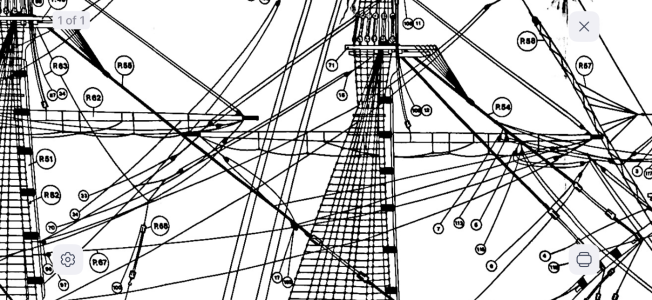
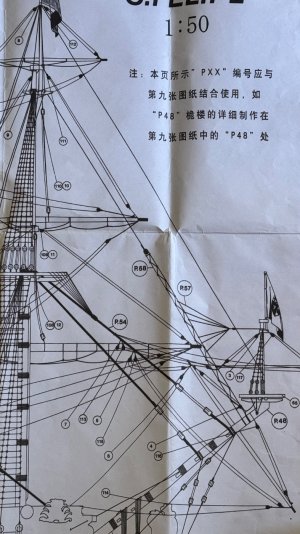
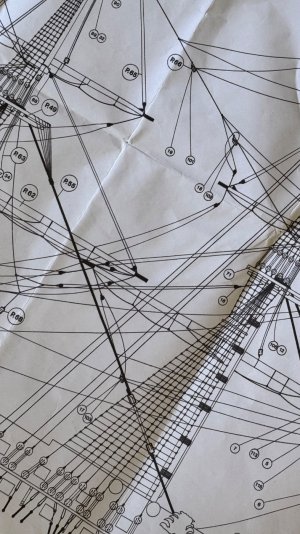
Look at the images of the plans. See the thick rope. It’s shown thicker on these plans. To thick I reckon. I’m downsizing that rope to 2mm

This is a huge build and it’s not from a battle ship that existed. It’s a representation of a Spanish warship from 400 years ago.

I’ve also increased the mast heights by 20cm because what’s shown on the plans here looks out of proportion to the size of the hull.

IMG_1992.png

IMG_1993.jpeg

IMG_1994.jpeg
 
That is a stay - it could be in the range of 1.5 - 1.8 mm. From your original post it sounded like you needed a lot of rope in the range of 1.5 or 2.0 mm - you won't need much at this size... Again, sorry to have jumped in out of nowhere. I was envisioning you making 20 feet of 2.0 rope...
 
That is a stay - it could be in the range of 1.5 - 1.8 mm. From your original post it sounded like you needed a lot of rope in the range of 1.5 or 2.0 mm - you won't need much at this size... Again, sorry to have jumped in out of nowhere. I was envisioning you making 20 feet of 2.0 rope...
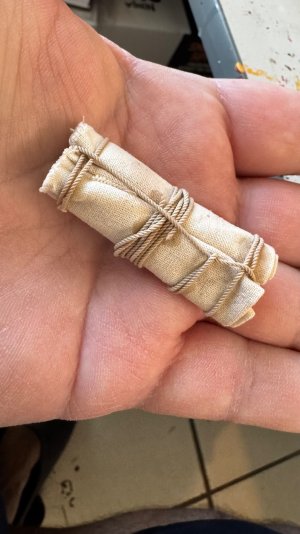
I made 3.2 meters of 2mm rope. I can’t make any less. I love building these larger scales. I can see the rest being used and more on future builds
 
I agree with Paul. The reason is that a stay on that galeon (1620) is a rope. And it can't be thicker then 73 mm. In diameter. That is the max of hemp rope.
A rope thicker than 73 mm would be considered a cable. This was not typical for a stay on a galleon from around 1620.

Ropes before the 19th century were probably never thicker than 229 mm (9") in circumference, or 73 mm in diameter. The source for this information can be found in the quote by Damien Sanders: 'Knowing the Ropes'

73 mm. devided by 50 is about 1,5 mm. max.

I think the shrouds and stay are the same ropes.

If you want to make a cable of 2 mm. You need 3 ropes of 0,6 tot 0,8 mm. And turn them LH to a cable. But like I said before, 1,5 mm. is max. probably.
 
Last edited:
I agree with Paul. The reason is that a stay on that galeon (1620) is a rope. And it can't be thicker then 73 mm. In diameter. That is the max of hemp rope.
A rope thicker than 73 mm would be considered a cable. This was not typical for a stay on a galleon from around 1620.

Ropes before the 19th century were probably never thicker than 229 mm (9") in circumference, or 73 mm in diameter. The source for this information can be found in the quote by Damien Sanders: 'Knowing the Ropes'

73 mm. devided by 50 is about 1,5 mm. max.

I think the shrouds and stay are the same ropes.

If you want to make a cable of 2 mm. You need 3 ropes of 0,6 tot 0,8 mm. And turn them LH to a cable. But like I said before, 1,5 mm. is max. probably.
This is handy to know. For this build I will use what I made. By the time it’s stretched it will probably be close to 1.5
 
This is handy to know. For this build I will use what I made. By the time it’s stretched it will probably be close to 1.5
Improvising Phil. LOL, like your style. Because we live in the land down under.
Miles from anywhere. I wonder whether it always cost so much in postage, even back in the day of the Tall Sailing Ships, to bring to Australia. I might write a song about it. lol.
I was having a quick look at some of the rope circumferences in Anatomy of a Ship for the Bounty, and they appear quite small in full scale.
I am enjoying the content from all of you guys very much. Thanks for sharing your knowledge. Regards
 
Improvising Phil. LOL, like your style. Because we live in the land down under.
Miles from anywhere. I wonder whether it always cost so much in postage, even back in the day of the Tall Sailing Ships, to bring to Australia. I might write a song about it. lol.
I was having a quick look at some of the rope circumferences in Anatomy of a Ship for the Bounty, and they appear quite small in full scale.
I am enjoying the content from all of you guys very much. Thanks for sharing your knowledge. Regards
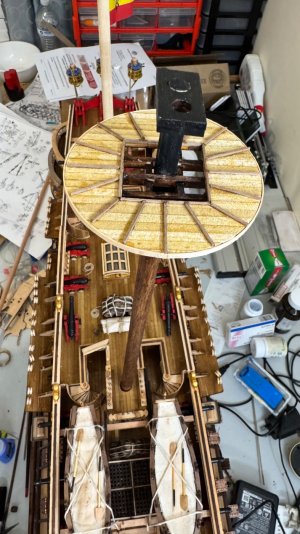
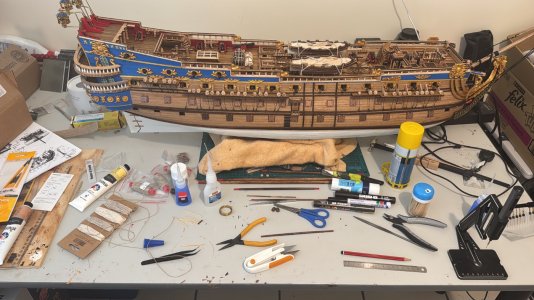
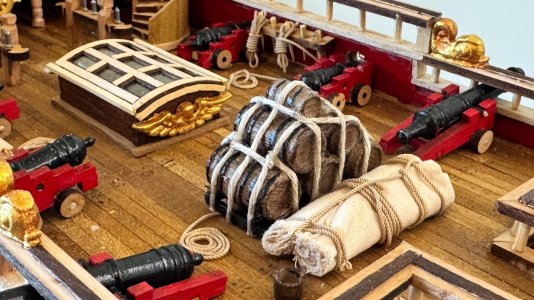
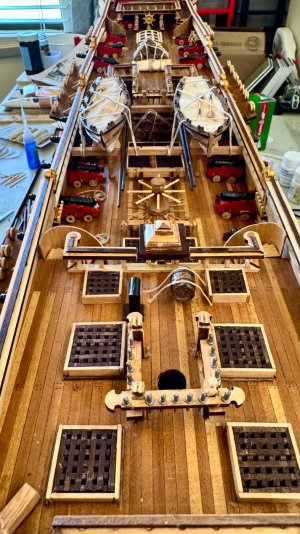
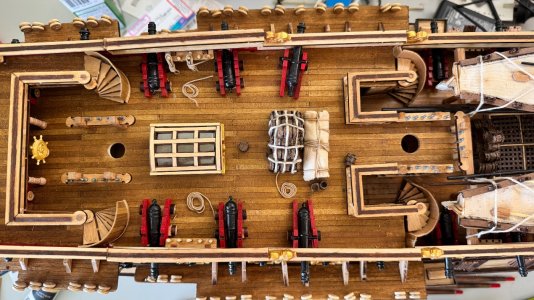
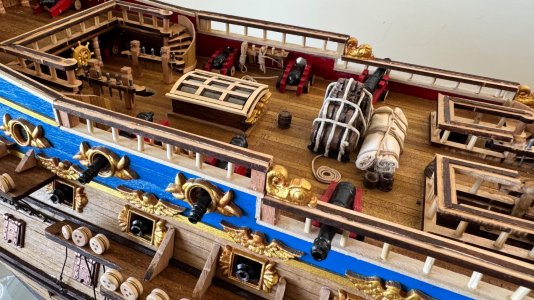
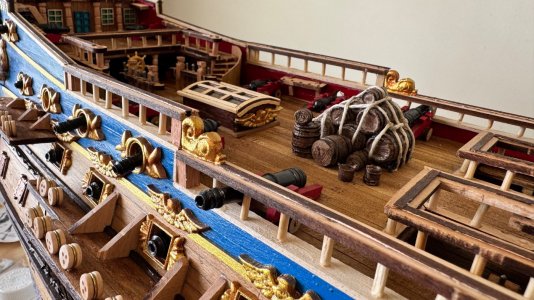
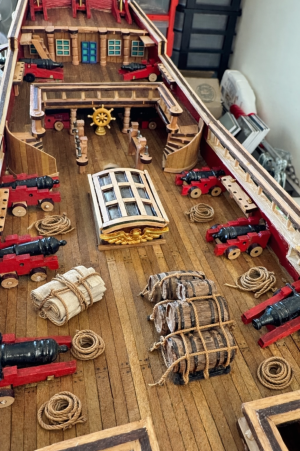
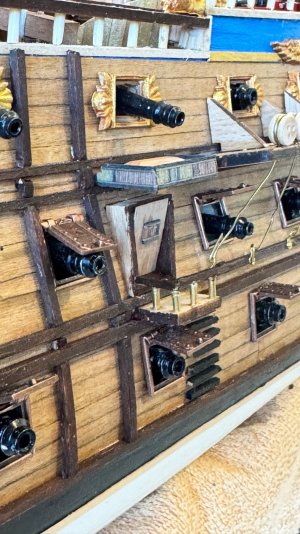
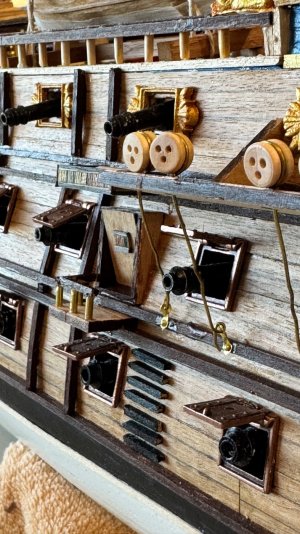
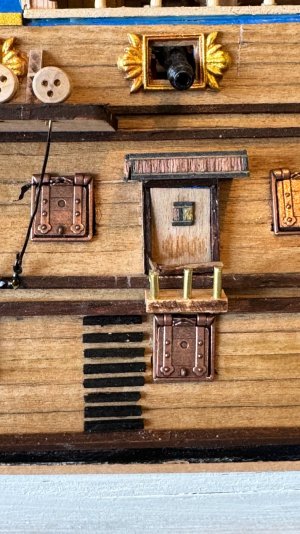
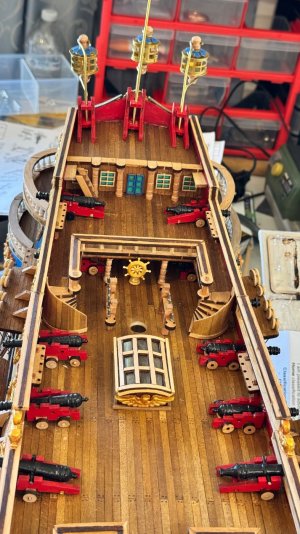
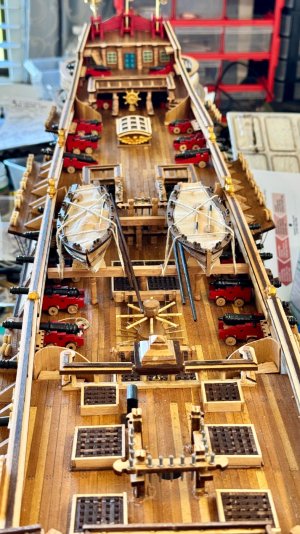
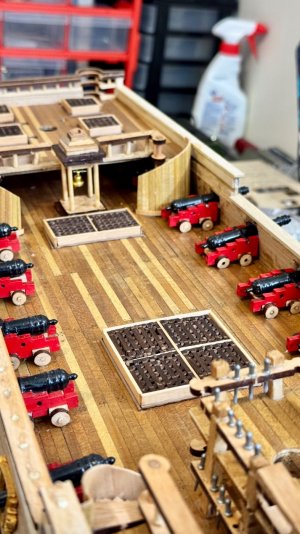
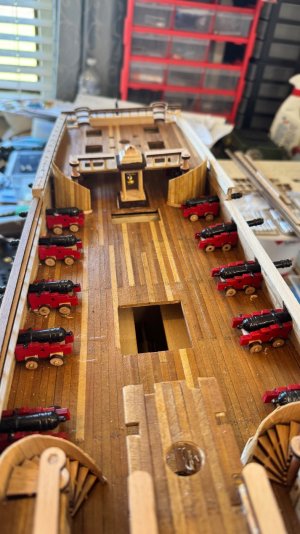
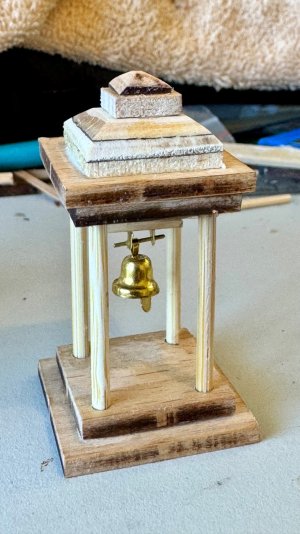
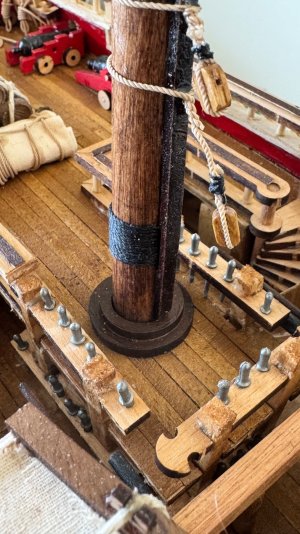
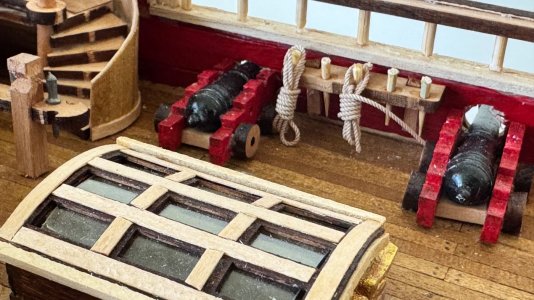
This build I’m going what I think looks great. It’s mostly custom built. Spent a long time on this build. Particularly the deck features.

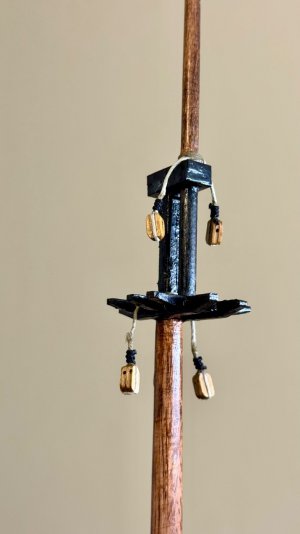
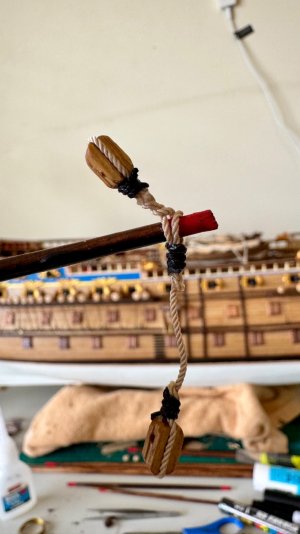
I’ve started tying on the rigging lines.

IMG_1164.jpeg

9CF34D34-8B28-48FA-B177-CCB7AE474180.jpeg

IMG_1129.jpeg

IMG_1127.jpeg

IMG_1126.jpeg

IMG_1125.jpeg

IMG_1119.jpeg

IMG_1115.jpeg

1C0B10E8-8495-472B-BB94-4AA4F69FC0ED.png

IMG_1008.jpeg

IMG_0965.jpeg

IMG_0966.jpeg

IMG_0956.jpeg

IMG_0940.jpeg

IMG_0935.jpeg

IMG_0912.jpeg

IMG_0547.jpeg

IMG_0511.jpeg

IMG_0510.jpeg

IMG_1221.jpeg

IMG_1195.jpeg

IMG_1154.jpeg

IMG_1118.jpeg
 
Looks great, Phil! Cheers. I am years away from where you are, as I play too much golf and am always doing other stuff. I'll get the "around Tuart" award soon, I am sure. I like to take my time and just learn a lot. I look at the pulleys and think that's another thing I am going to love making as well. In John McKay's Anatomy of the Bounty, he has a few pages also on the blocks and sheaves that were used in the rigging of the ship. Really fascinating to read and understand what is written is what I get out of it. BTW, I just scaled down some of the blocks, and they are miniature. How to make a block that is only just over 1/16th of an inch and fit a sheave in will be testing. I would say not possible, but a hole through a popsicle stick may be the way to go. Lots of hands-on with tiny blocks thats for sure.
 
Last edited:
Back
Top