• Win a Free Custom Engraved Brass Coin!!!
    As a way to introduce our brass coins to the community, we will raffle off a free coin during the month of August. Follow link ABOVE for instructions for entering.
  • SUBSCRIBE TO SHIPS IN SCALE TODAY!

    The beloved Ships in Scale Magazine is back and charting a new course for 2026!
    Discover new skills, new techniques, and new inspirations in every issue.

    NOTE THAT OUR NEXT ISSUE WILL BE MARCH/APRIL 2026

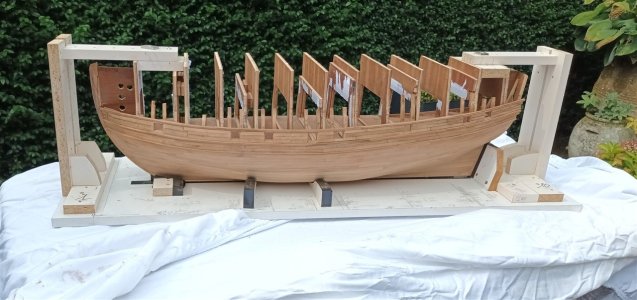
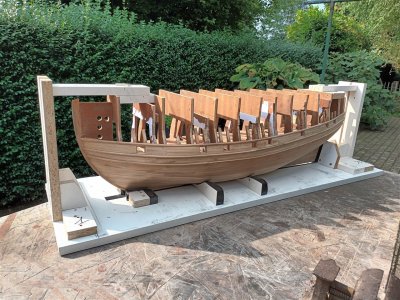
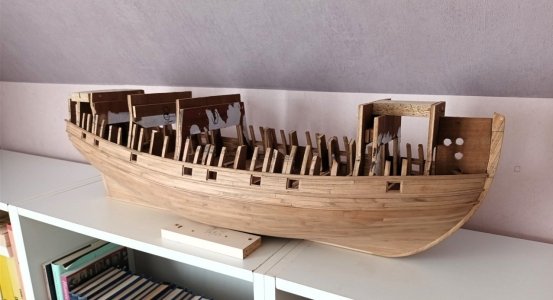
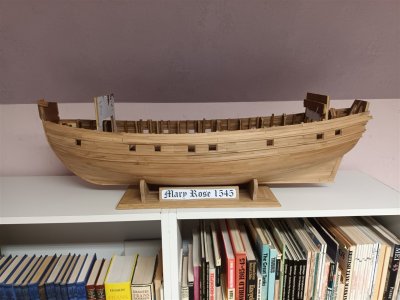
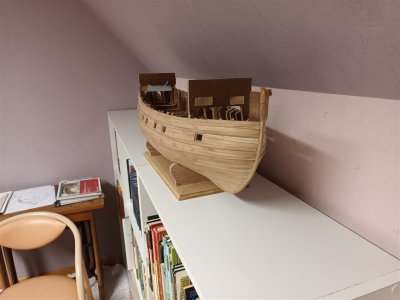
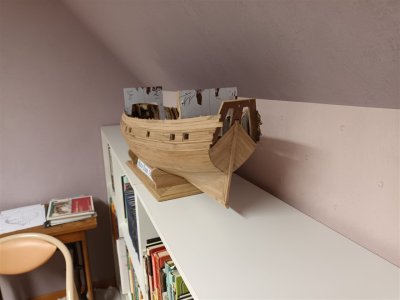
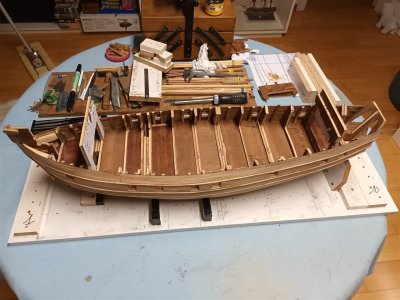
Mary Rose "Your Noblest Shippe" 1545 scale 1/50

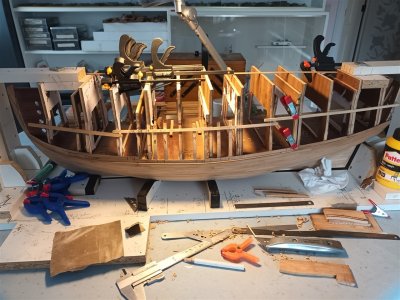
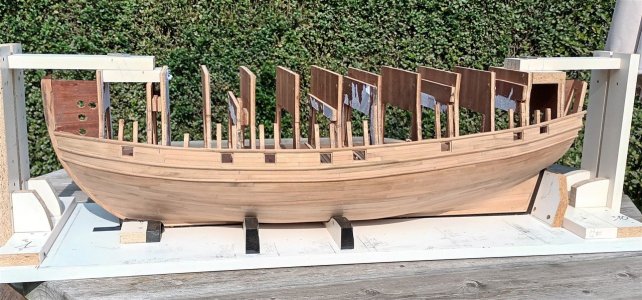
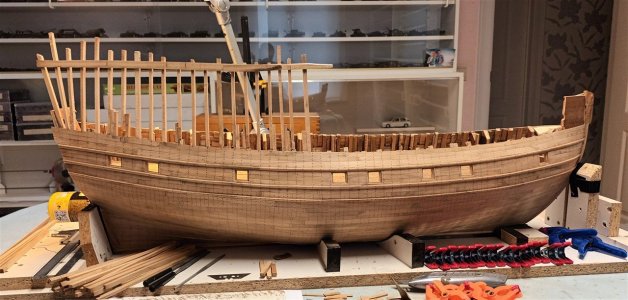
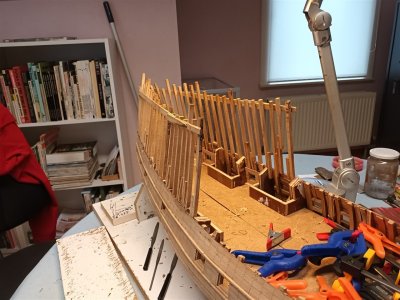
Further planking.
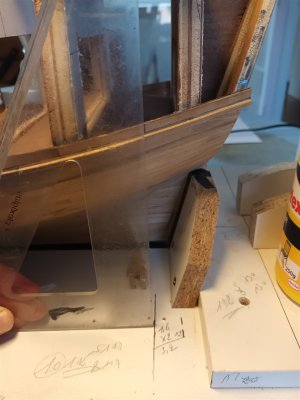
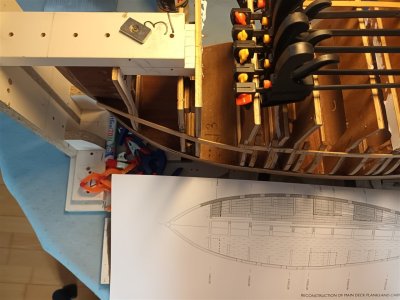
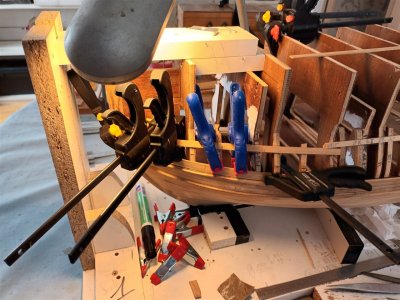
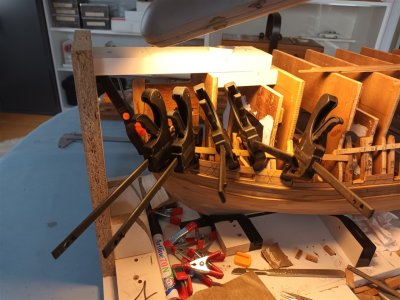
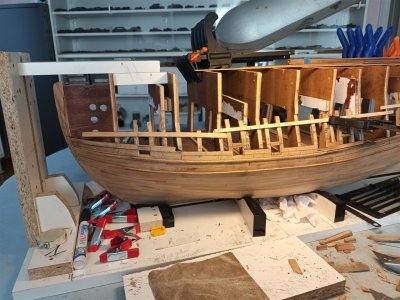
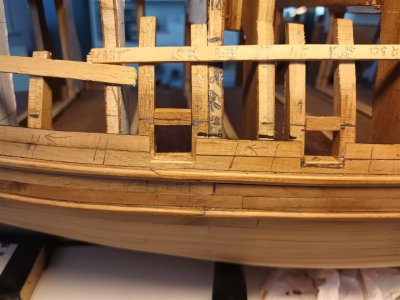
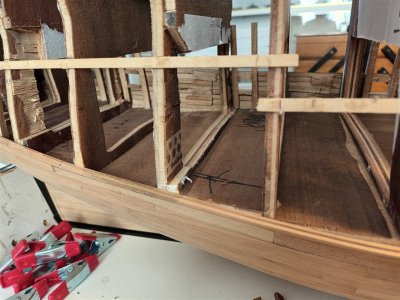
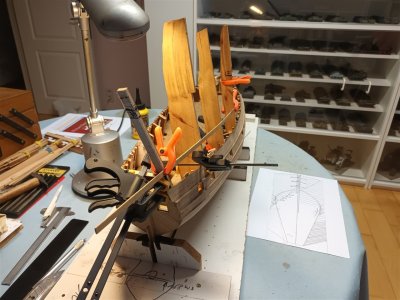
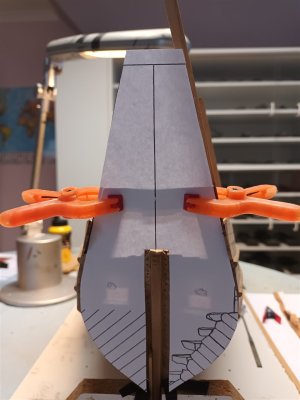
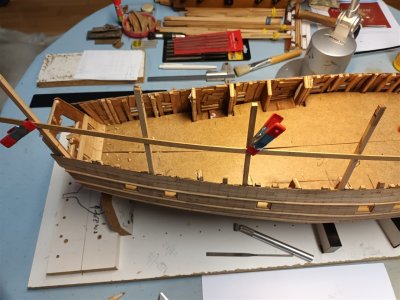
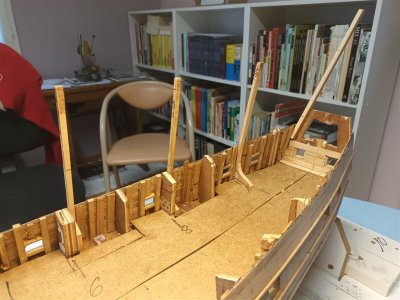
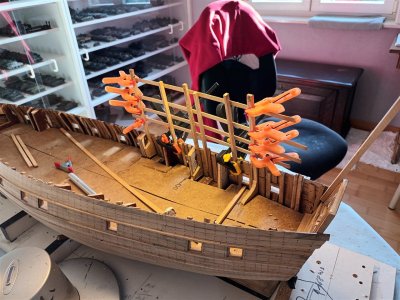
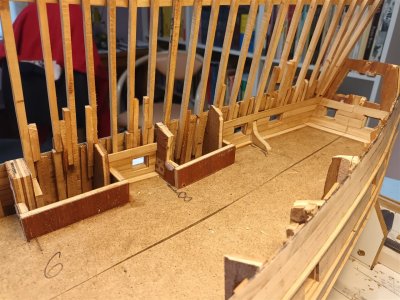
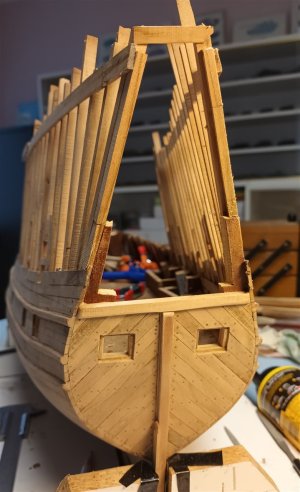
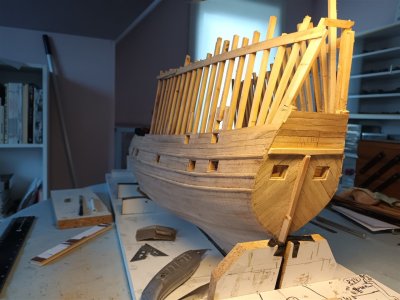
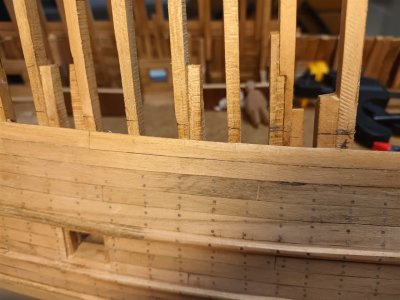
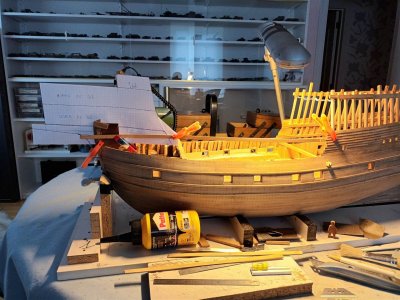
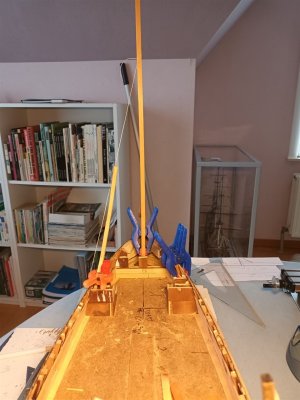
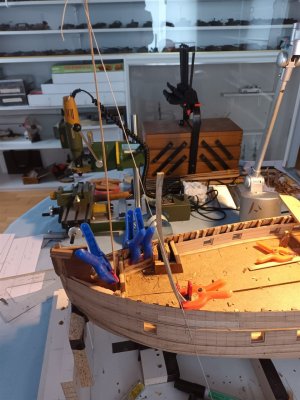
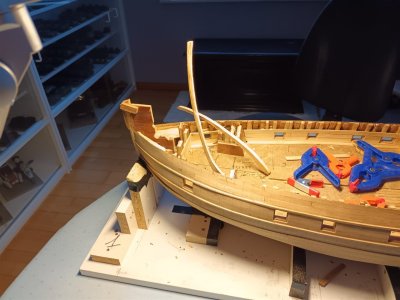
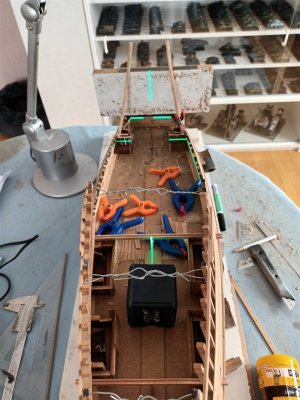
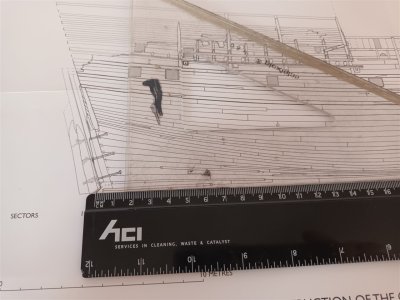
Planking with just the plywood frames isn't really easy. That's why I'm going to add the gunport frames first.
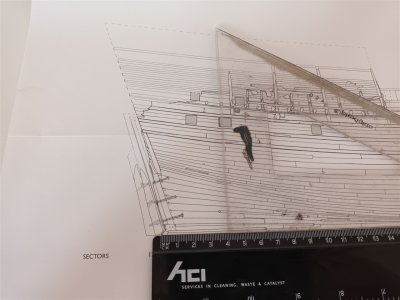
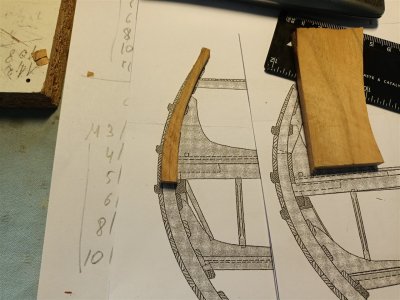
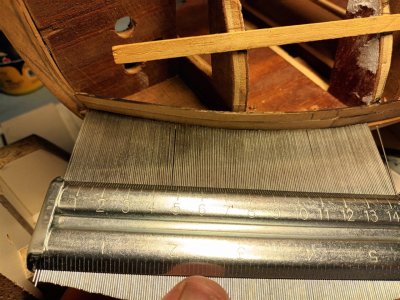
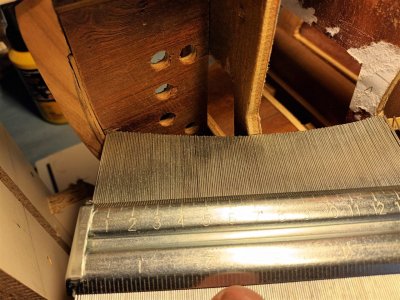
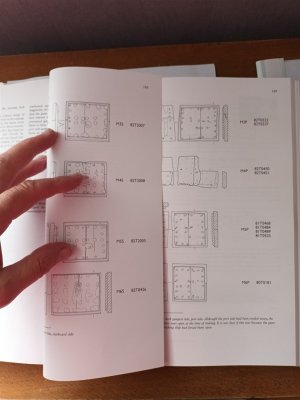
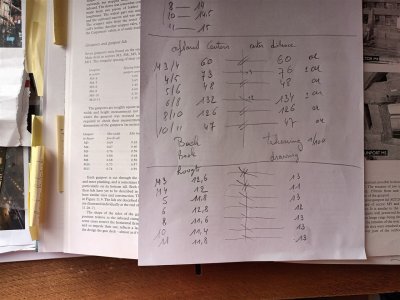
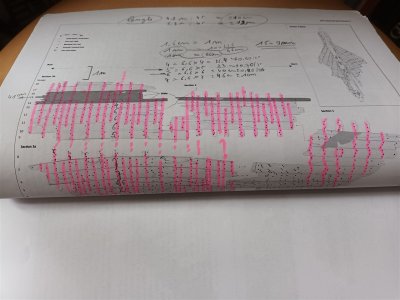
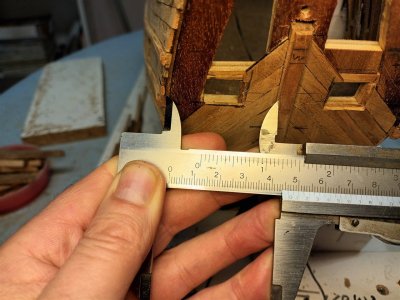
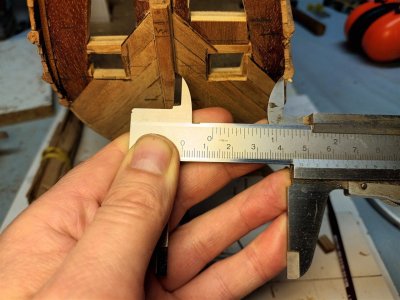
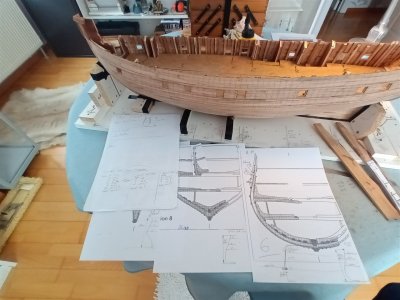
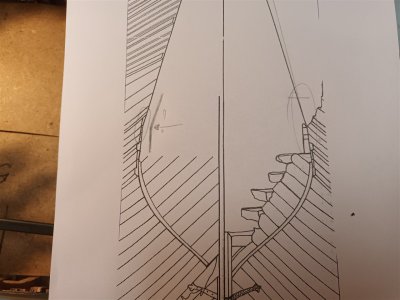
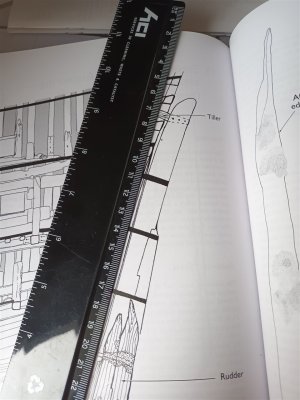
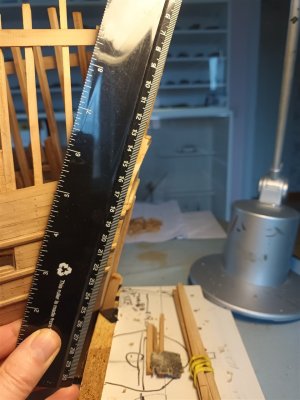
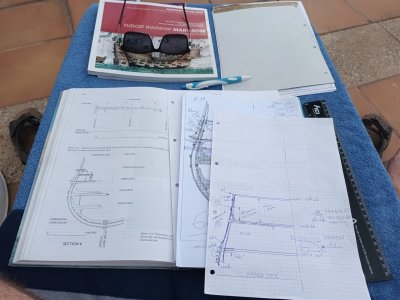
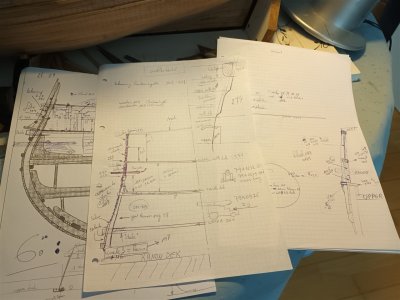
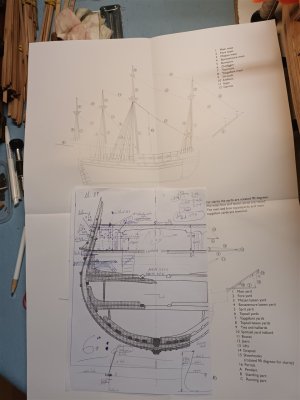
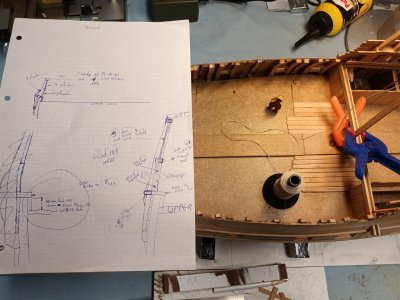
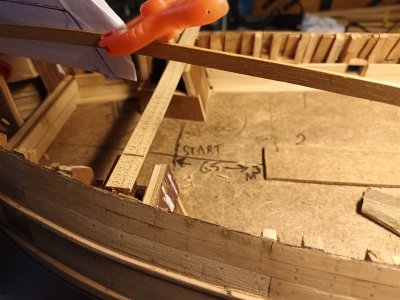
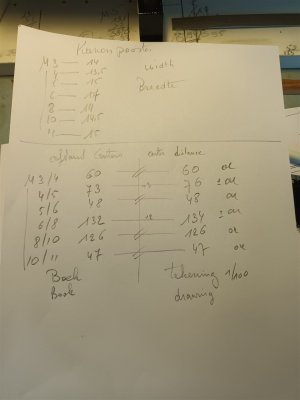
First measure on the drawing and then transfer to the model. From scale 1/100 to 1/50, so multiply everything by 2.
20230726_185234_1280.jpg


20230726_185310_1280.jpg


20230726_185335_1280.jpg


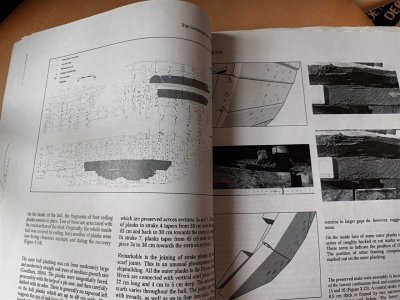
And the dimensions on the drawings match the information in the book quite well.
20230731_132745_1280.jpg


20230728_193905_1280.jpg


Constructing and installing frames
20230728_193829_1280.jpg


20230731_132625_1280.jpg


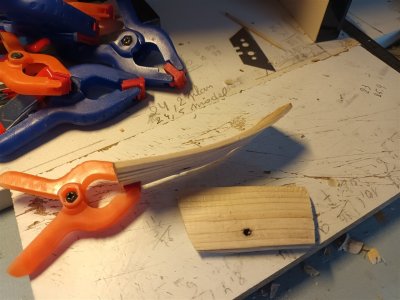
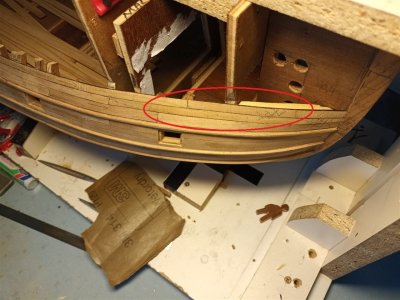
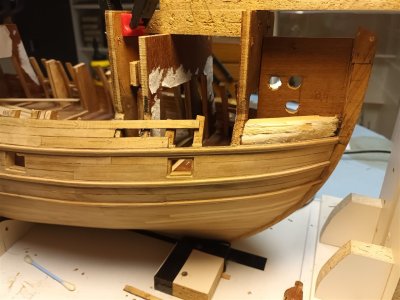
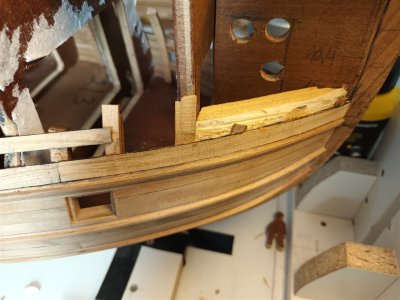
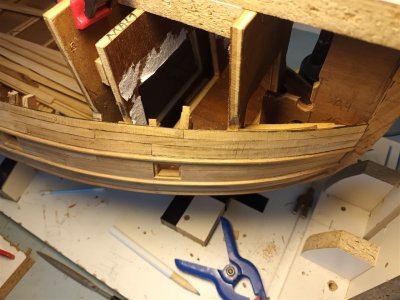
Some sawing and breaking work now and then...
20230730_164347_1280.jpg


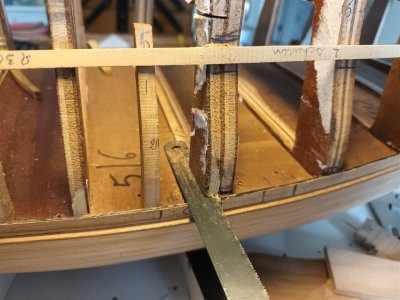
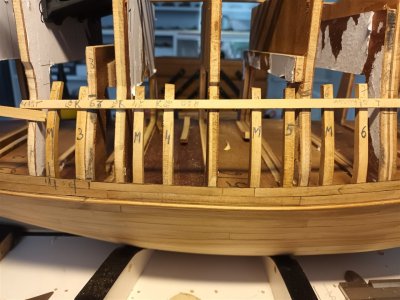
For some reason, the gunports were given an M number in the book. M3, M4, M5 (BMW fans? ;)....)
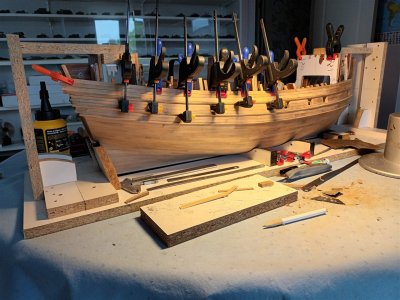
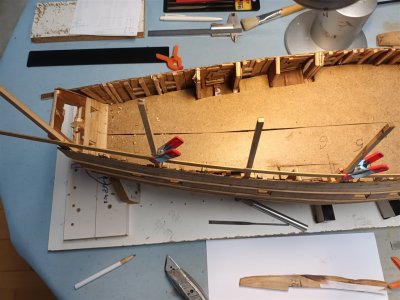
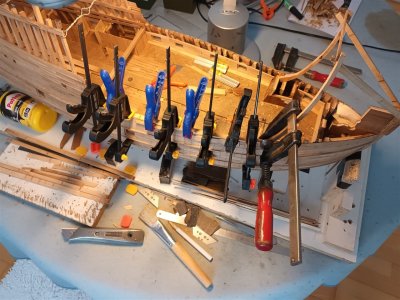
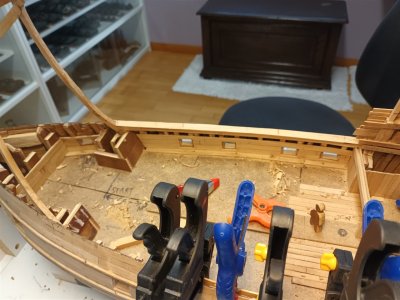
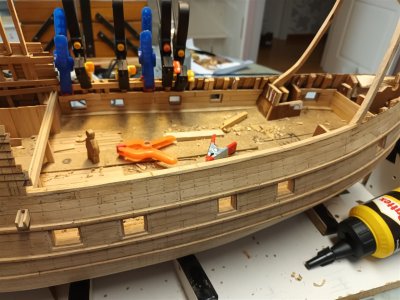
The planking is going much better now (there is more support and clamping points).
20230801_073405_1280.jpg
 
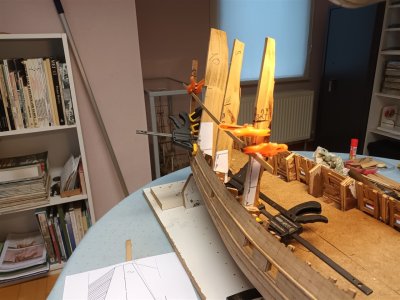
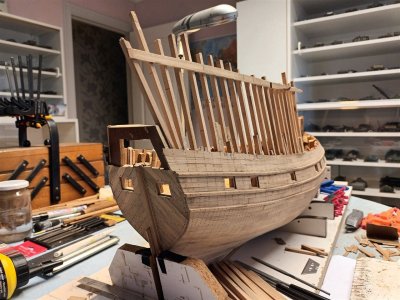
The bow still requires some thought.
I think I'm going to fill in the section between frame one and the bow at this height; you won't see it internally anymore, and it provides good support.
20230801_073306_1280.jpg


The form remains sharp.
20230731_200557_1280.jpg


20230731_200617_1280.jpg


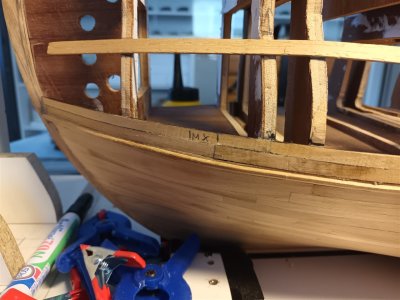
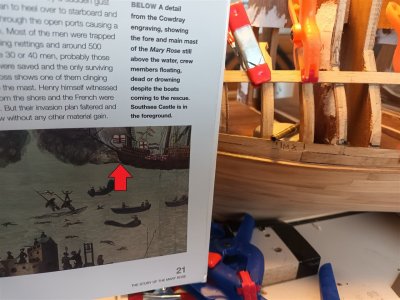
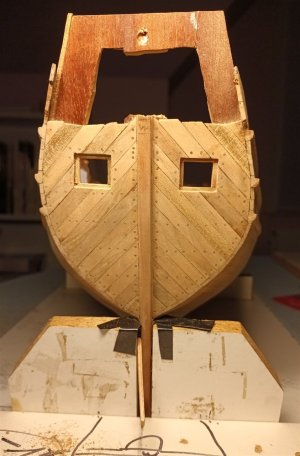
And at the front there is also a gunport, in accordance with findings from the wreck and paintings from that time.
Appropriately named Mx.
20230801_073452_1280.jpg


We continue with the port side. There is nothing left of it, so this will be a good exercise before starting on the starboard side.
The port gunports have largely survived, and it turns out that they are always the same width as the starboard side (why then do they make them the same width on their 1/100th scale drawings....)
20230827_091136_1280.jpg


20230827_091236_1280.jpg


The front cannon must be able to shoot forward reasonably well (see drawing of the Great Harry).
20230801_140414_1280.jpg


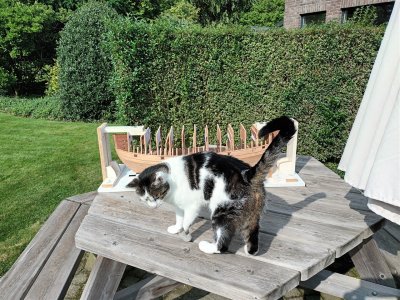
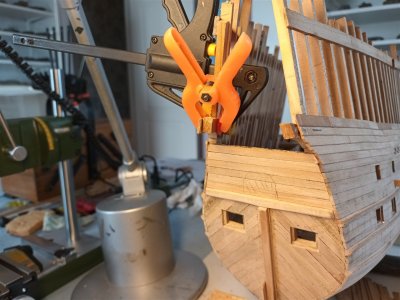
While chopping wood, I accidentally made the ideal support for the bow...
20230801_192948_1280.jpg


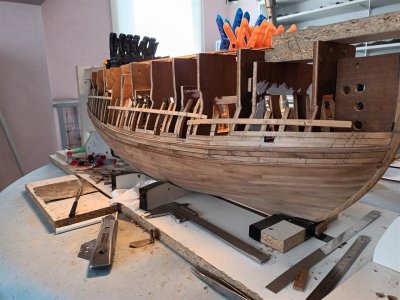
The planking and the making of the gunports are underway.
There is still a lot of touching up and sanding to do, but it is heading in the right direction.
20230826_150353_1280 - copy.jpg


20230826_150353_1280.jpg


20230827_091304_1280.jpg


20230827_091326_1280.jpg
 
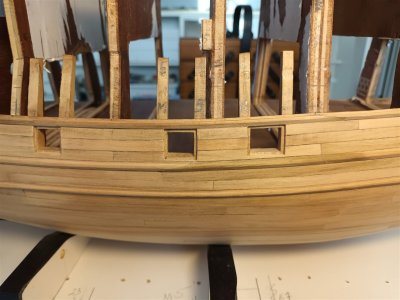
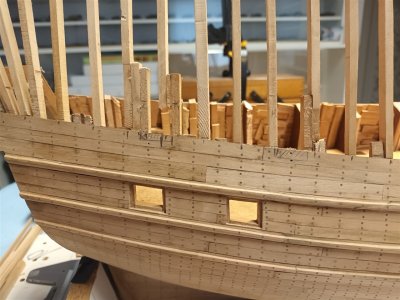
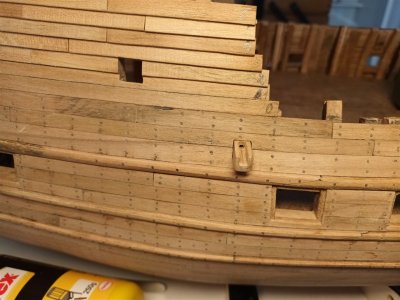
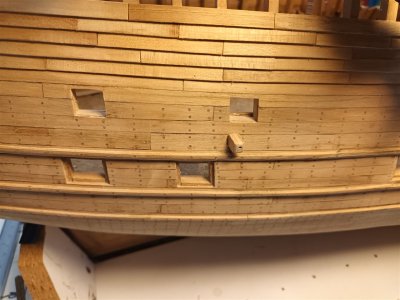
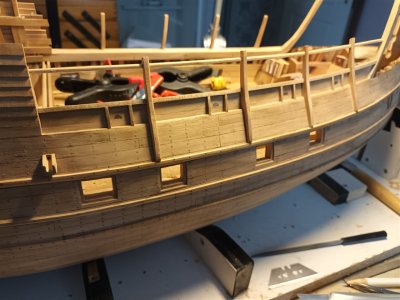
The planking between the second and third wale is finished on the port side. And the gunports have been worked out.
Time to give this a first sanding.

Before sanding
20230902_131546_1280.jpg


After sanding.
20230902_161714_1280.jpg


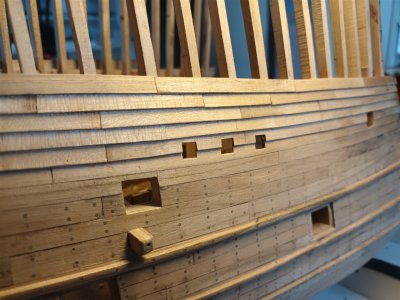
The irregular placement and varying dimensions of the canon ports are clearly visible.
20230902_161206_1280.jpg


Close up
20230903_092028_1280.jpg
 
The planking on the starboard side is progressing smoothly. The plywood frames were adjusted in advance, and the cherry wood frames for the gunports were already partially made beforehand.
It is simply a matter of transferring the dimensions from the port side to starboard and get started—plank away.
20230905_081759_1280.jpg


20230916_161133_1280.jpg


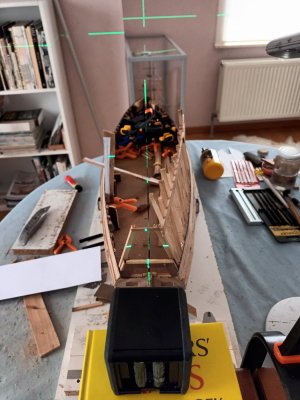
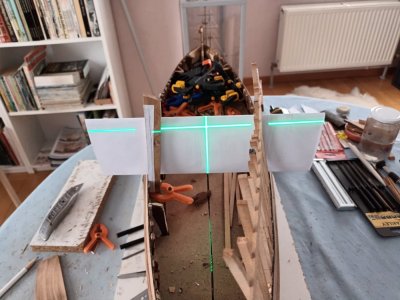
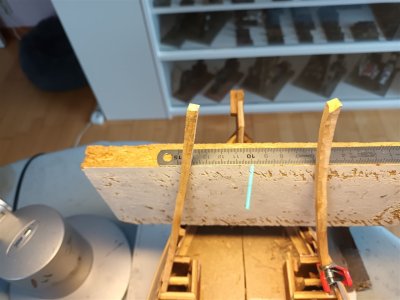
And the laser comes in handy again as well.
20230916_080638_1280.jpg


The planking between wale 2 and 3 is finished and has received its first sanding.
The intention is to add 3 more planks above the wale and then first sand the hull further and finish it with treenails
20231007_130750_1280.jpg
 
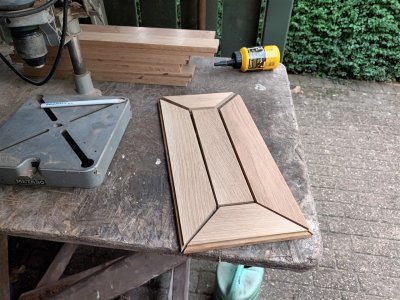
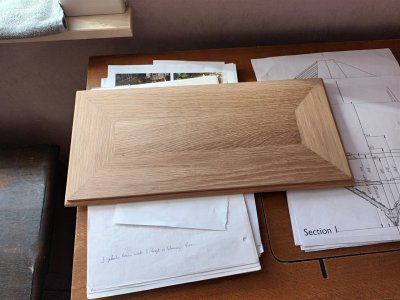
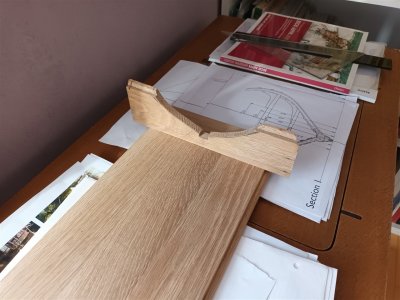
Because the hull is still easy to handle, I am making the base plate first.
The material is oak, recycled

Sawn and planed parts
20230911_162214_1280.jpg


The glued and sanded base plate
20231007_152237_1280.jpg


Determine the shape of the supports
20231007_151951_1280.jpg


work in progress
20231007_152251_1280.jpg

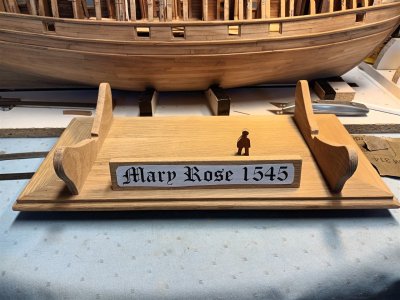
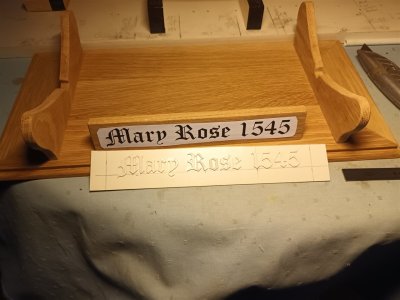
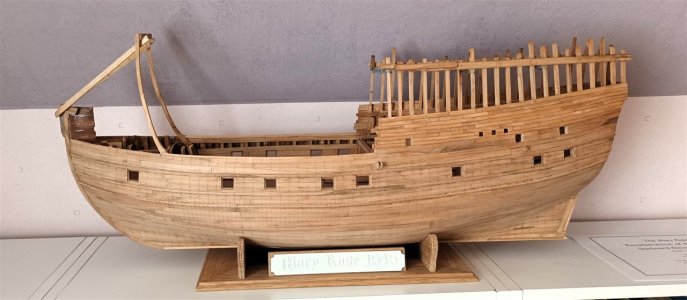
The stand is as good as finished and has been given a provisional name.
20231010_182313_1280.jpg


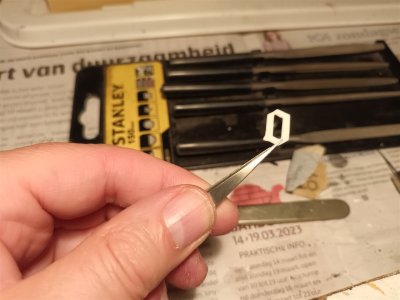
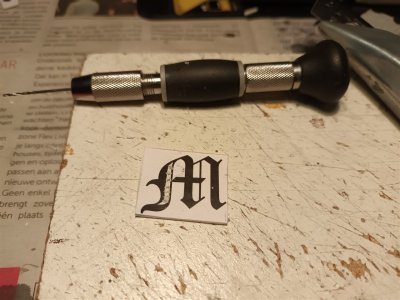
The letters will be cut out of plastic.

20231016_185649_1280.jpg


First the easy one.
20231016_192154_1280.jpg


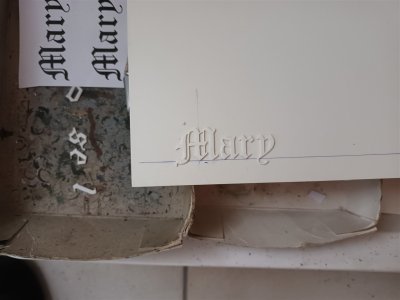
Then the difficult part
20231016_194142_1280.jpg


There is already a Mary, and "Rose" is on the way :yes:
20231021_084901_1280.jpg


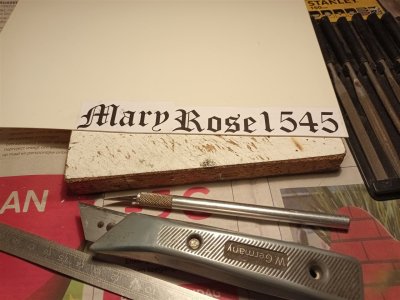
The name is now complete.
20231028_090440_1280.jpg
 
Last edited:
The planking above wale 3 went quite smoothly.
20231013_171352_1280.jpg


But...

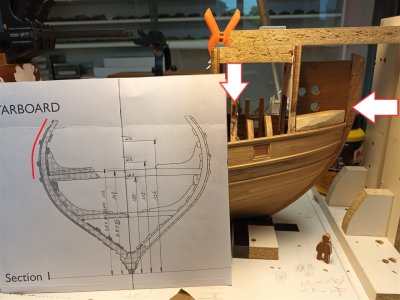
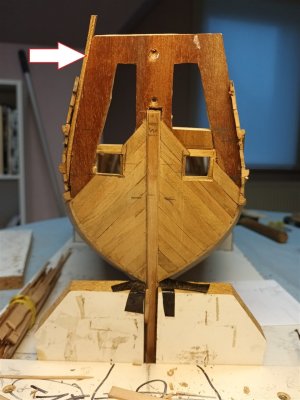
The frame of the section is curved sharply inwards at the top, and the bow is straight at the top.
20231010_182217_1280.jpg


As a result, the line between this frame and the bow was not really smooth.
20231013_171429_1280.jpg


So again, the advantage of PVA glue is that it softens again when treated with isopropyl alcohol.
So removing the planks went quite smoothly.
20231014_073117_1280.jpg


To craft...
20231014_112042_1280.jpg


The transition between section 1 and the bow is now much smoother.
20231014_165841_1280.jpg

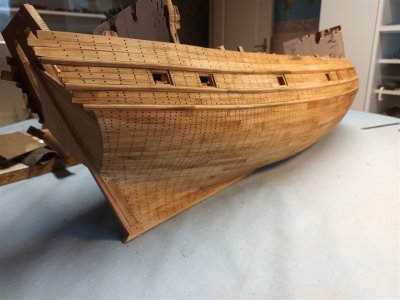
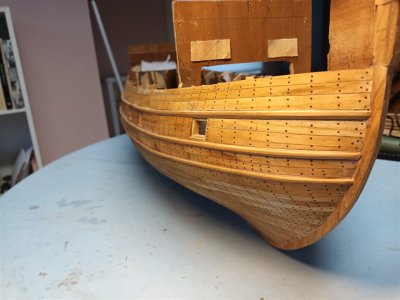
And the planking is finished on both sides. Further planking on the stern is for later, once I know exactly where the hole for the tiller needs to go. Now this part of the hull will first be further detailed, wooden pegs (treenails), etc.
20231028_082752_1280.jpg

20231028_082819_1280.jpg


20231028_082832_1280.jpg


20231028_082859_1280.jpg


Two plywood frames will remain in place for the time being, so the model can easily stand upside down for further finishing.
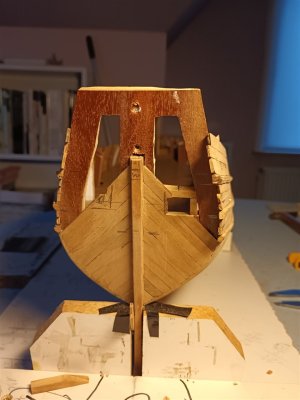
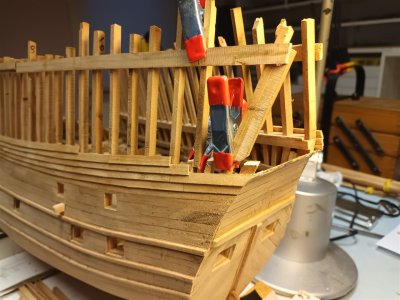
The strange piece of wood on the bow is just a temporary reinforcement to prevent the top of the bow from breaking off.
20231028_082946_1280.jpg
 
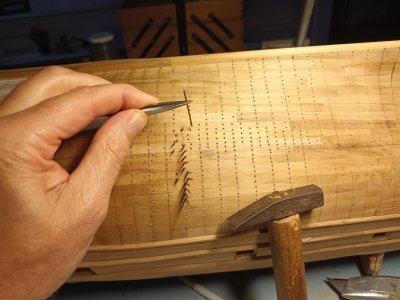
Securing the planks with wooden treenails, It is a lot of work, but for me, it adds value.
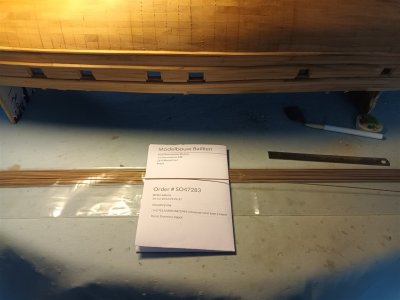
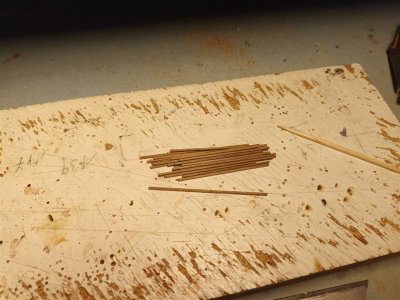
I purchased 1 mm diameter walnut strips; these provide sufficient contrast with the cherry wood to allow for painting over it later and to remain sufficiently visible.

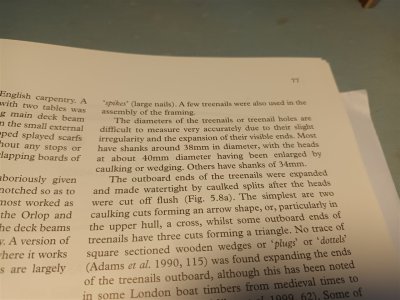
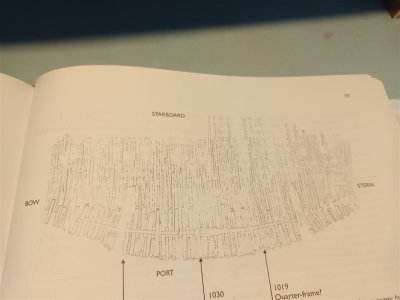
For the Mary Rose, there is not much information, only the diameter of the tree nails. The frames also do not have a truly ordered structure to draw up a diagram.
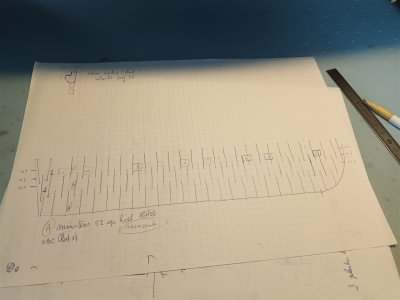
That is why I am going back to the method used on my previous model. This way, I get a diagram with some structure. This will not correspond to the real ship at all, but it looks good (I think).

The Mary Rose info, apart from the diameter, contains little new information.
20231028_131840_1280.jpg


The Mary Rose truss diagram
20231028_131905_1280.jpg


My plan B
20231106_123419_1280.jpg


20231106_123534_1280.jpg


20231106_123555_1280.jpg


20231028_133126_1280.jpg


20231031_134015_1280.jpg


The strips shortened
20231031_141634_1280.jpg


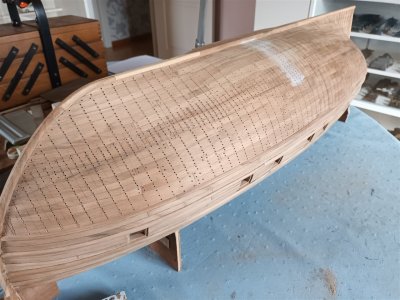
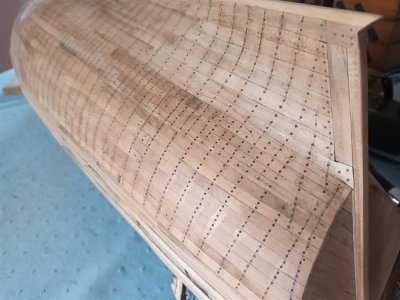
In the bottom part there will be approximately 5,500 to 6,000 holes...
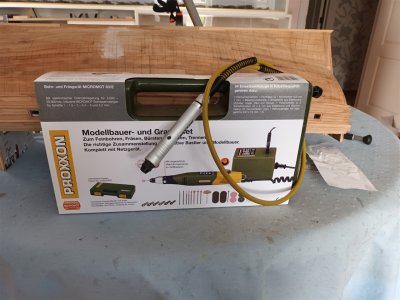
So, time for new tools.
20231031_100707_1280.jpg


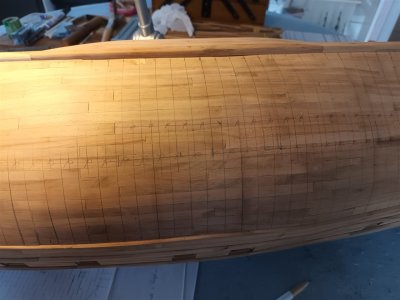
The diagram on the model
20231028_145636_1280.jpg


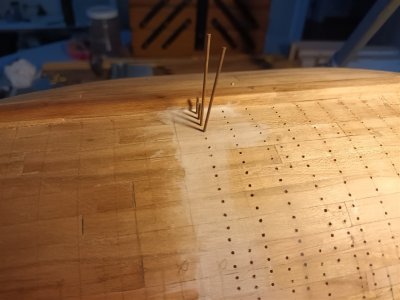
The first pens
20231031_141639_1280.jpg


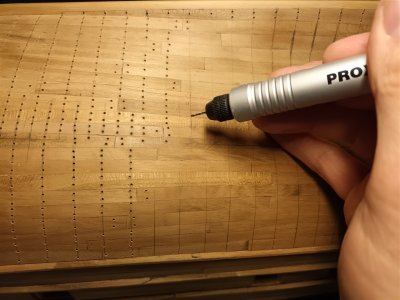
drill, drill drill
20231102_162619_1280.jpg


Gluing and hammering, with my very first hammer (almost as old as me...)
20231102_162652_1280.jpg


Work in progress
20231106_140443_1280.jpg


20231106_140500_1280.jpg


So, continue drilling holes and filling.
20231114_163308_1280.jpg
 
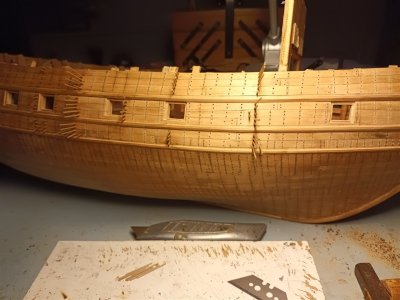
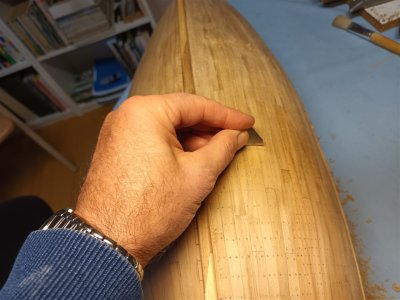
Once the entire side is finished, it is scraped and sanded.
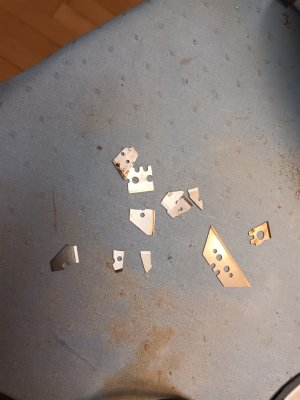
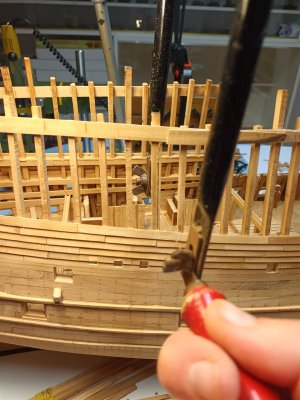
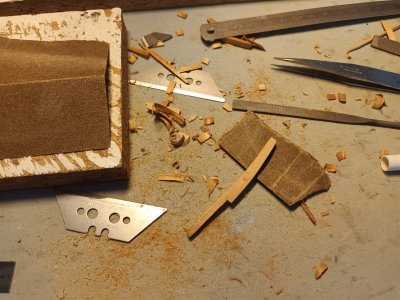
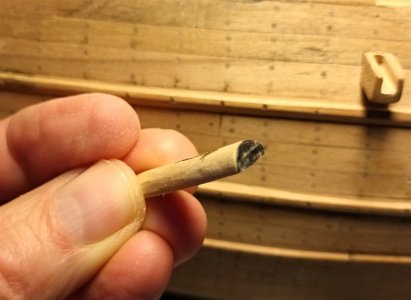
For scraping, I use old Stanley knives that are broken into pieces.
20231118_091046_1280.jpg


20231118_091054_1280.jpg


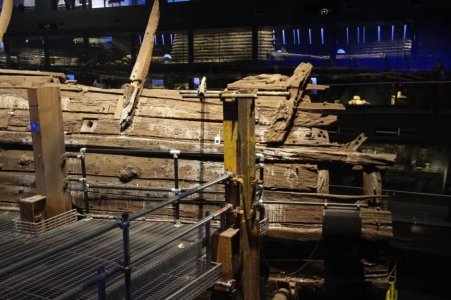
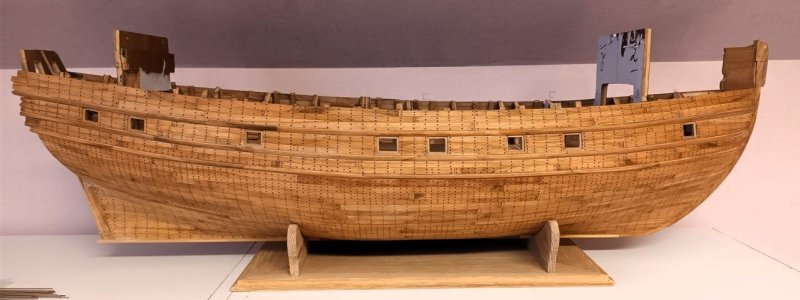
A photo of the original and the model; as you can see, then and now, no one cared about a wooden peg more or less ;)
34405151545_8bfd7afb6c_h.thumb.jpg.c56a1e59cd420d79f3e045ccfb258fac.jpg


20231118_130818_1280.jpg


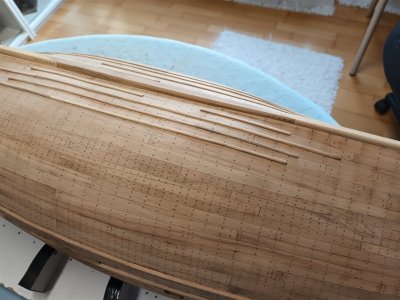
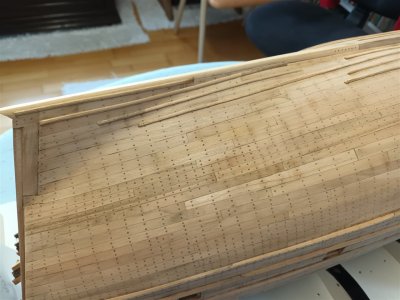
After sanding, everything was tidied up with a damp cloth.
20231118_130834_1280.jpg


20231118_130900_1280.jpg


Starboard is finished.
Only the wales still need pins and/or bolts.
20231118_130737_1280.jpg


All wooden pegs on the port side have been placed. Now just scrape and sand further.
20231220_170312.jpg
 
All connections in the keel are fitted with wooden treenails.
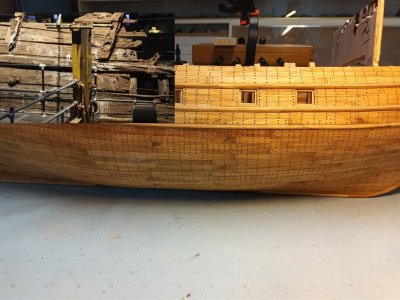
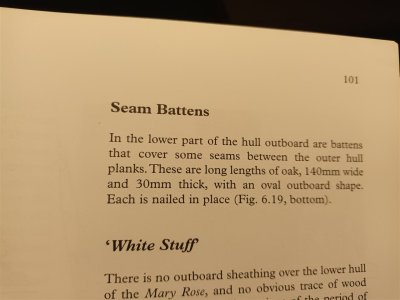
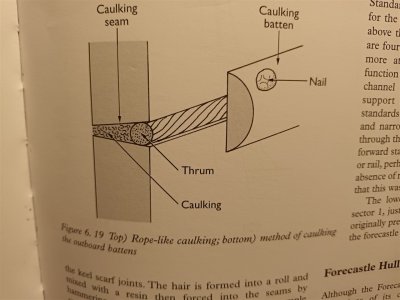
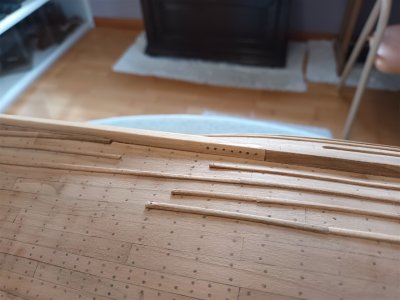
And the seams between the planks that turned out too wide at the time have been fitted with a "batten" . Not really pretty, but effective at keeping the caulking in place.

20231226_160341_1280.jpg


20231228_163326_1280.jpg


And on the model
20231228_115516_1280.jpg


20231228_115544_1280.jpg


20231228_115632_1280.jpg


20231228_115641_1280.jpg


20231228_115656_1280.jpg


It has only been sanded up to 120 grit sandpaper.
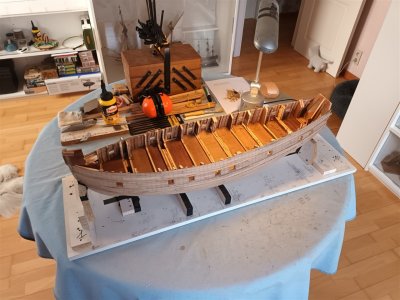
Back on the construction board for further finishing
20231228_151207_1280.jpg
 
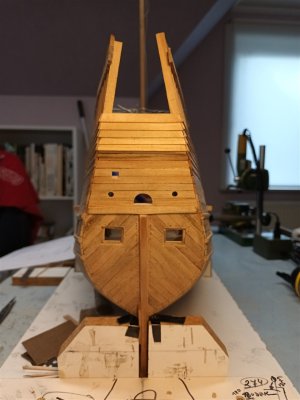
Planking of the lower part of the stern.

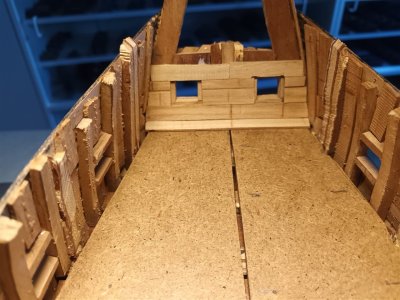
First, a "gun deck" is provided. This makes it easier to determine the position of the 2 gunports in the stern.
Because this deck will become virtually invisible later, I put little time and effort into it.
20240105_101020_1280.jpg


Just an "oops" moment... The charms of building from scratch without any plan...
The stern wasn't really symmetrical. The white wood glue can be loosened with some isopropyl alcohol. And the mistake is fixed.
20240105_100956_1280.jpg


20240106_103256_1280.jpg


Much better
20240106_103333_1280.jpg


20240106_103340_1280.jpg


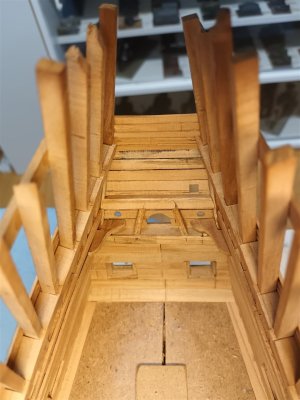
The planked stern.
20240110_081024_1280.jpg


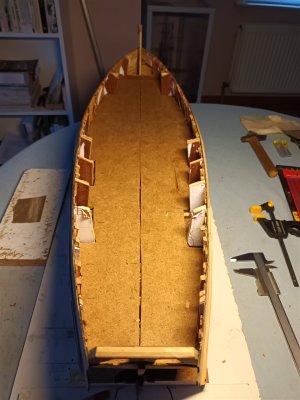
The roughly finished interior
20240109_163317_1280.jpg
 
Construction of the rearcastle
Not much of the original remains. So from here on, most of it is guesswork.
The frames of sections 6, 8, 10 and the mirror are used as the basis.
20240122_124133_1280.jpg


The first test isn't too bad.
20240125_160409_1280.jpg


20240125_160542_1280.jpg


The mirror in the drawing has an unnatural bent(personal opinion). Therefore, I am going to make it deviate slightly outwards.
20240125_160334_1280.jpg


20240126_163735_1280.jpg


The first 4 frames have been placed. They are still too tall and probably too thick as well. But these 4 must be long and sturdy enough to serve as a foundation for the rest.
The intention now is to first install more frames on this side.
20240126_163523_1280.jpg


20240126_163608_1280.jpg


20240126_164014_1280.jpg


continue with the reconstruction of the rear castle.

"Beams"
20240201_081813_1280.jpg


The preparation
20240201_081821_1280.jpg


The first rafters
20240201_113528_1280.jpg


Taking into account the future gunports of the upper deck.
20240206_153545_1280.jpg


All frames have been installed. The drawings of the Mary Rose were followed for the approximately correct position.
20240206_153528_1280.jpg


The chaotic interior has also been cleaned up a bit. (not exactly the same as the original, you won't see much of it later anyway)
The plywood pieces are the basis for the cabins.
20240207_091332_1280.jpg


Result
20240206_153818_1280.jpg


Now the port side
20240207_091408_1280.jpg
 
Further construction of the rear castle

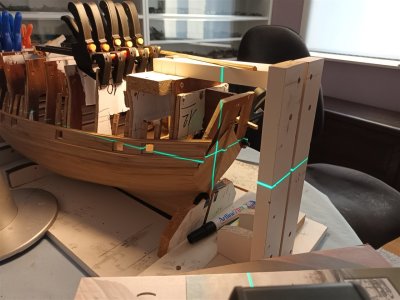
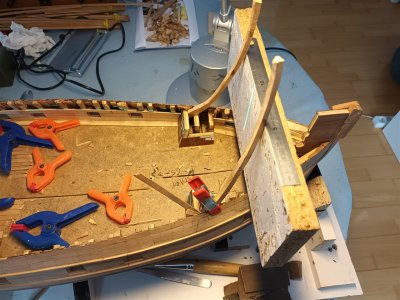
section 6, 8, and 10 are aligned using the laser.
First, align neatly from bow to stern
20240207_135709.jpg


And then you can easily measure if everything is aligned properly. And then glue it.
20240207_135749.jpg


All frames have been installed
20240214_122300_1280.jpg


Installing and finishing cannon ports
20240213_102902_1280.jpg


20240214_122601_1280.jpg


20240217_155323_1280.jpg


And, as in the previous post about discovering mistakes... Where there should be a hole, there are frames.
20240217_073741_1280.jpg


The advantage of using ordinary white wood glue is that it softens again due to isopropyl alcohol.
Soak, pry loose, and then reassemble, in the right place this time.
20240217_155310_1280.jpg
 
Further construction of the stern.

Fill first
20240214_125058_1280.jpg


Saw off excess material
20240214_125110_1280.jpg


Install a beam/gunwale just below the hole where the tiller will pass through.
The groove at the bottom hides my sloppy sawing...
20240214_132811_1280.jpg


20240214_135039_1280.jpg


The shape of the drawing is followed as much as possible.
20240216_143143_1280.jpg


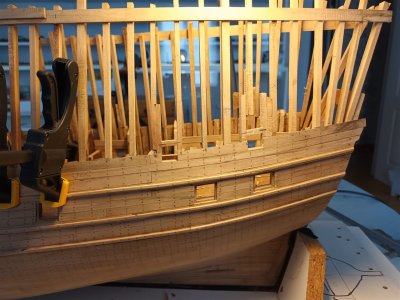
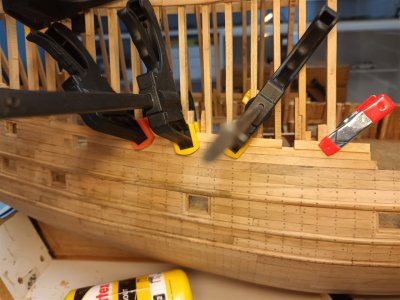
20240217_155557_1280.jpg


Current status
20240217_155621_1280.jpg
 
I started with the section that was planked using the overlapping (clinker) method. These planks were not sawn but made from tree trunks that were split. The length of the planks is no longer than 2.70 meters.

The first row of these planks was first beveled.
20240220_163433_1280.jpg


Above each plank it is marked up to how high the plank above may extend.
20240220_163456_1280.jpg


And so we continue.
20240220_165338_1280.jpg


20240303_132709_1280.jpg


20240303_135038_1280.jpg
 
To get the ratio between the outer planking/shields and the decks right, I must first install the 2 dales, which determine the correct position of the (upper) deck in the rearcastle.
20240303_154500_1280.jpg


Dale..
The intention is to discharge pumped water from the hold to the outside.
And if you need to pee.... Please do it in the dale.
Hence the second unofficial name "pisdale"...
From "dales"

Each dale is made of 3 pieces as a base (bad photo, apologies)
20240307_085430_1280.jpg


Finished
20240308_083734_1280.jpg


Making the holes on both sides in the same place was a challenge.
20240308_083853_1280.jpg


20240311_130123_1280.jpg


Work continues on the inside while the glue on the dales is drying.
The support under each trough is fictitious, and later virtually invisible. This gives the trough (as support of the deck) a slight curve.
20240311_130152_1280.jpg


20240311_132834_1280.jpg


And let's look 5 steps further into the future.
Perform a preventive check on the ratio of the castle side, mast, and standing rigging.
20240311_132345_1280.jpg

I'll get into trouble if I don't intervene now regarding the width of the top of the rear castle.
The rope touches the side of the castle.
Noticed just in time
20240311_132546_1280.jpg


20240311_132436_1280.jpg

This problem is fixed at this moment
 
Work has continued on determining the position of the decks.
And the "gun wale" on this beam was where the swivel cannons were placed on the first version of the Mary Rose; on the current version, only 3 would have remained.
20240315_080800_1280.jpg


Memory aid, Where is what...
20240315_080837_1280.jpg


20240324_091622_1280.jpg


Modification to the stern.
20240316_130727_1280.jpg


Holes provided for the 3 swivels
20240316_133827_1280.jpg


20240316_150518_1280.jpg


Further surgery on the stern.
The intention is to achieve approximately the same shape as on the cover of the book.
20240316_150532_1280.jpg


20240321_190249_1280.jpg


Two decks have been defined (upper and castle deck), and there will be a third deck above.
20240324_091510_1280.jpg


20240324_092943_1280.jpg
 
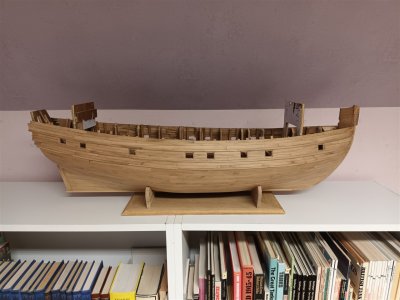
frames 6, 8, and 10, which served as the base for the aftcastle, were too thick and have therefore been made thinner.
The simple way: grab the saw and start sawing.
20240325_192131_1280.jpg


the transom is fitted with the necessary holes. tiller, etc.
20240402_183321_1280.jpg


20240402_183716_1280.jpg


There is also a cabin at the front. So the crew of the (optional) cannon has plenty of space again...
The sloping side of the cabin will later serve as the base for stairs.
20240403_182410_1280.jpg


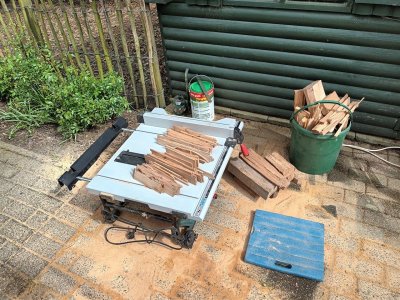
I was running a bit low on wood. So I put the guys from the sawmill to work (that is, myself...).
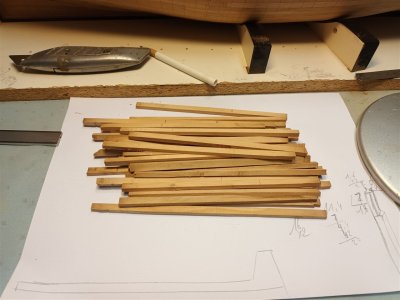
Material of 3, 4, 5, 6, 7, 8, and 9 mm thickness is back in stock.

20240404_134006_1280.jpg

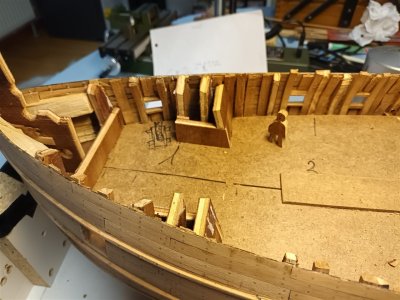
Time to tidy up the middle deck a bit.
Not much of it will be visible later, but it could have been finished a bit more neatly on the inside.

20240410_183745_1280.jpg


And then it is time to determine the position and shape of the forecastle.
20240410_183904_1280.jpg


The forecourt.
How do you start building something for which there is no clear example?
First, I enlarge the drawing from the books from 1/100th to 1/50th. This drawing is placed on the model at approximately the "correct" position.
20240411_084901_1280.jpg


Approximately at the correct height with the deck of the aftcastle
And the base starts at approximately the correct distance from gun port M3.
20240411_084920_1280.jpg


And then we continue building in cardboard.
20240411_190351_1280.jpg


20240411_200550_1280.jpg


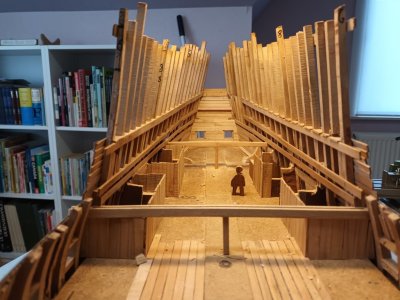
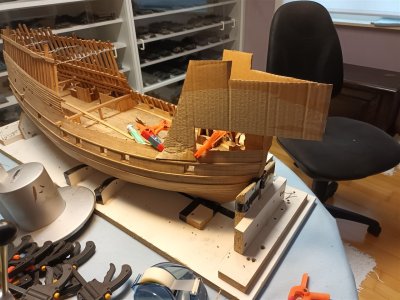
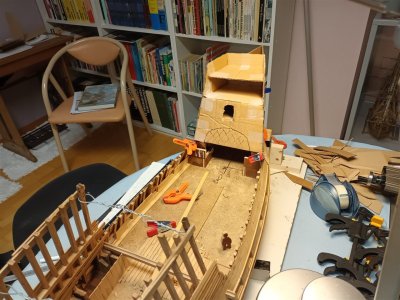
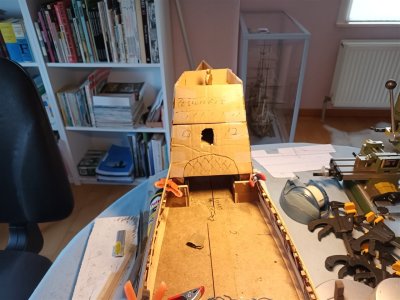
There is a cardboard forecastle, with a happy assistant on the top deck.
Of course, I don't know if this shape is correct. But the intention is to roughly rebuild the ship on the cover of the book.
20240412_193352_1280.jpg


20240412_193416_1280.jpg


20240412_193424_1280.jpg


Continued with the base of the forecastle.
This time I checked in time to ensure no problems would arise with the standing rigging.
20240415_140133_1280.jpg


Yes, so my cardboard superstructure was way too wide at the top.
20240415_140117_1280.jpg


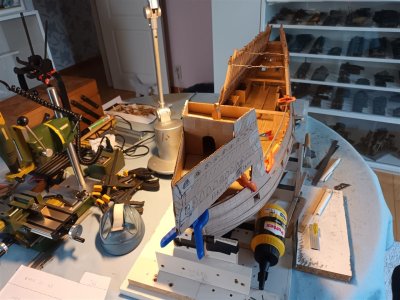
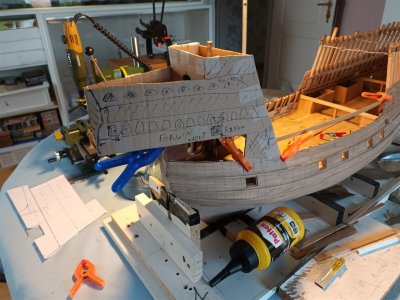
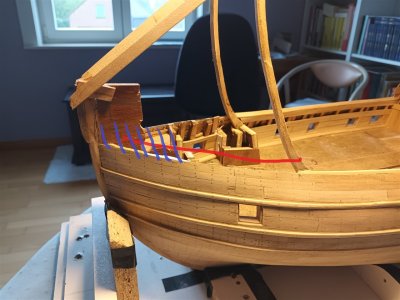
The base starts at a 45° angle, following the (few) remains of the outer castle. And then curves upwards. As always, I make it too high or too long; shortening it later is easier than lengthening it.
20240415_194551_1280.jpg


Applying the second one was a bit more challenging.
20240416_130759_1280.jpg


20240416_130828_1280.jpg


20240416_130843_1280.jpg


After that, additional temporary supports were installed. And then continue with finishing the bulwark of the middle deck.
Gluing on the starboard side is finished, now next the port side.
20240417_133624_1280.jpg


20240417_191810_1280.jpg
 
Well, that is where we are at the moment.
20240420_100822_1280.jpg


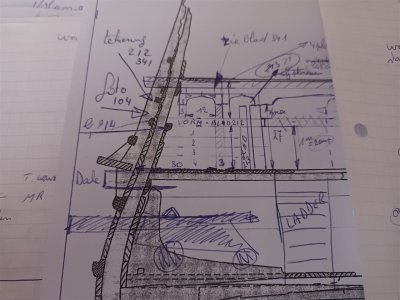
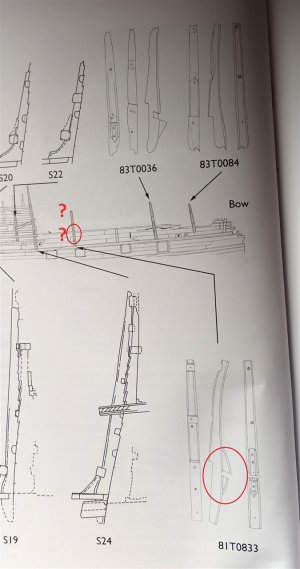
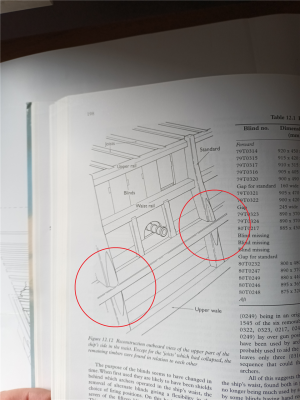
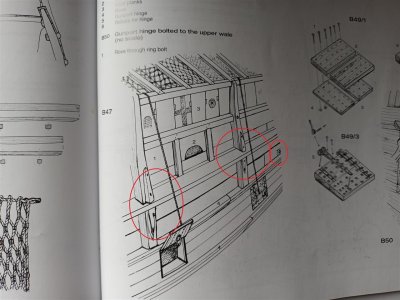
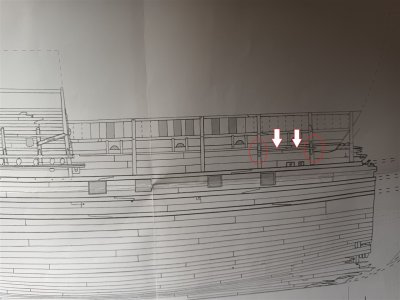
I think the books have a few mistakes.
Standard 81T0833
20240420_100908_1280.jpg


This is therefore completely incorrect.
20240420_100937_1280.png


And is shamelessly copied in the next book.
20240420_101023_1280.jpg


And this is actually what it looks like in the drawing.
Standing and/or running rigging will be attached to this setup later.
20240420_101045_1280.jpg


next matter to review
horizontal planking or curved straight "crack style"
Most drawings of ships from this period seem to opt for the horizontal. The curved straight lines are starting to look a bit old-fashioned, it seems to me.
20240420_101407_1280.jpg
 
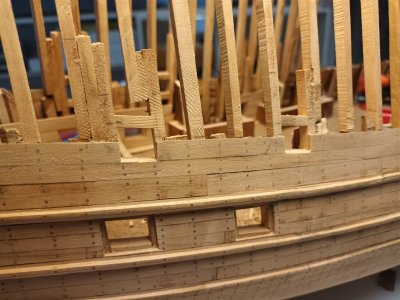
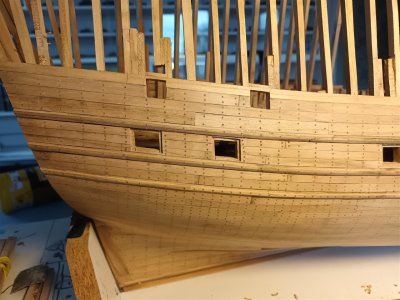
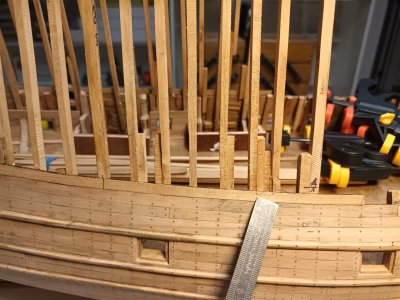
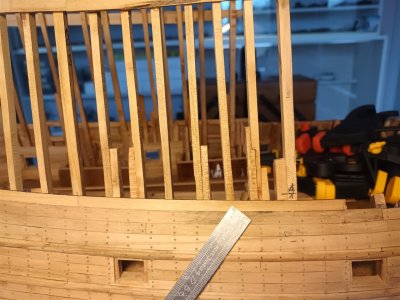
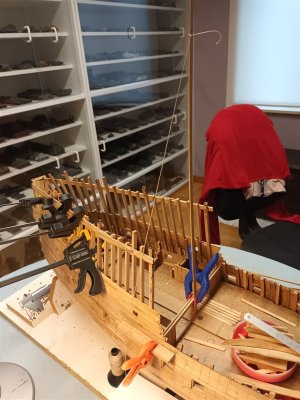
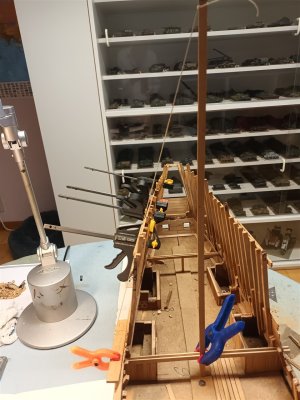
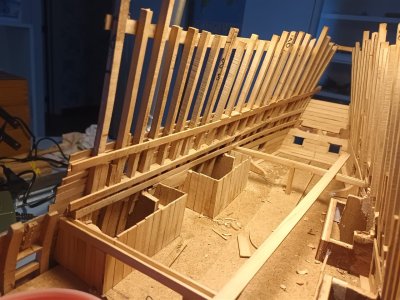
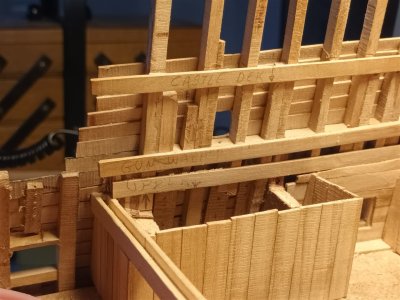
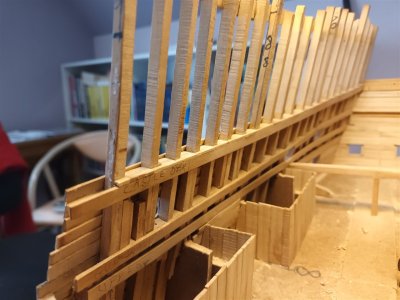
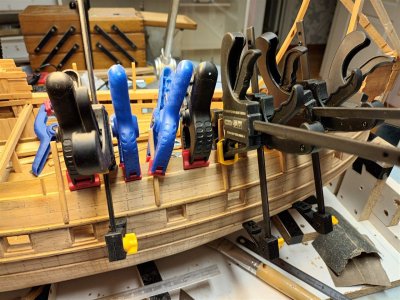
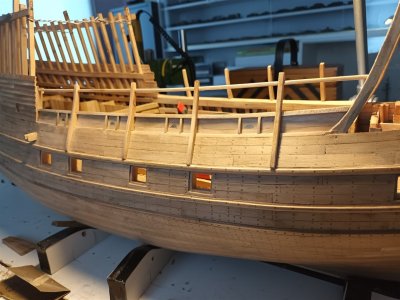
Continuing with the upper part of the planking on the mid-deck. We switch from frames on the inside of the planking to stands on the outside. The flanking is fairly thin here, but about 4 cm scale 1/1.
First the standards; fortunately, some of them are left. And these were made based on them.
One by one, a time-consuming task
20240424_111652_1280.jpg


The wall of the back castle is being tidied up.
20240426_084543_1280.jpg


The stands are glued in place.
20240425_164755_1280.jpg


The first plank
20240426_103410_1280.jpg


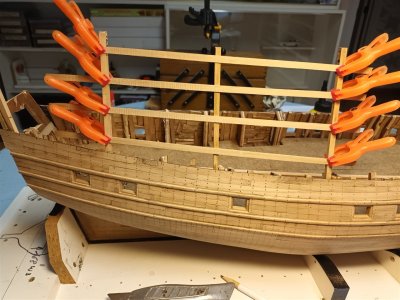
The second plank, with all hands (clamps) on deck.
20240426_213234_1280.jpg


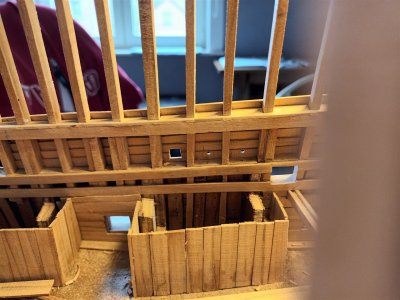
The extra supports for around the gunports.
20240428_103633_1280.jpg


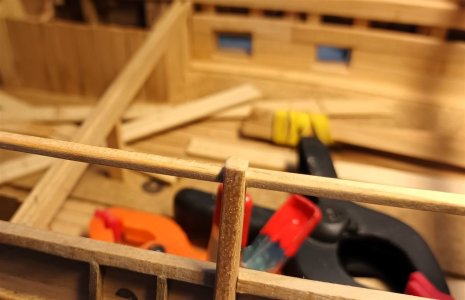
The middle rail is glued in place
20240428_155727_1280.jpg


And the top rail.
20240430_160221_1280.jpg


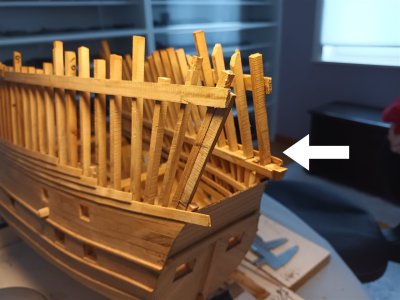
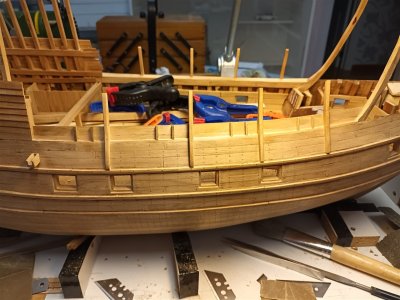
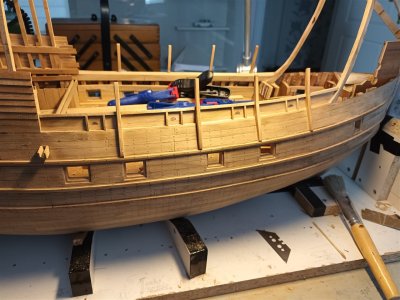
So the starboard side is finished; the tops of the rails still need to be shortened slightly later.
20240430_160237_1280.jpg

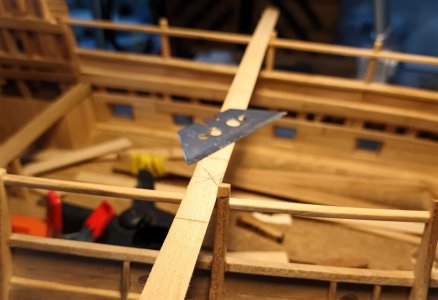
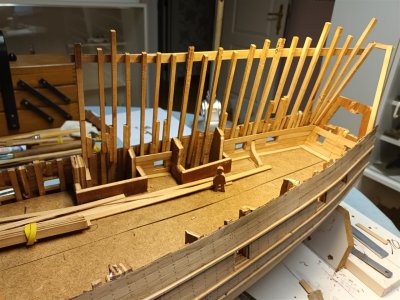
With the port side now also ready, the stands are being made to height. A simple way to measure: a wooden plank as a template.
20240503_160012_1280.jpg


20240503_160031_1280.jpg


And a mold to check the semicircular gunports
20240503_164943_1280.jpg


This one is slightly conical, so it goes into the hole up to the arrow and no further. Otherwise, the hole becomes too big.
20240503_164959_1280.jpg


20240503_165147_1280.jpg


Ready.
20240504_171525_1280.jpg


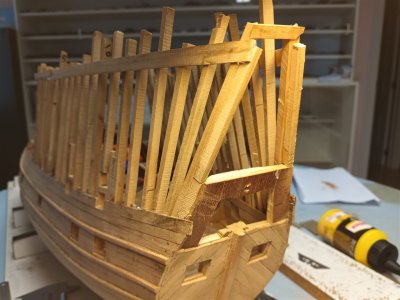
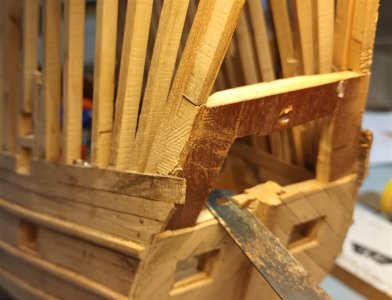
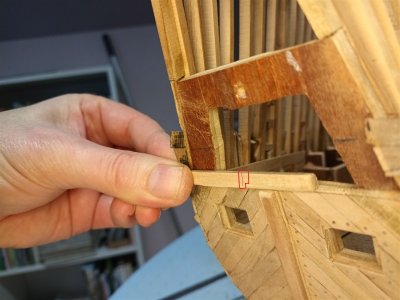
We've come this far; now to plank the last section of the bow.
This is going to involve fitting and measuring. No plan, no real example, and for now, just nothing to clamp anything onto
20240504_170824_1280.jpg
 
Back
Top