

• Win a Free Custom Engraved Brass Coin!!!
    As a way to introduce our brass coins to the community, we will raffle off a free coin during the month of August. Follow link ABOVE for instructions for entering.
  • SUBSCRIBE TO SHIPS IN SCALE TODAY!

    The beloved Ships in Scale Magazine is back and charting a new course for 2026!
    Discover new skills, new techniques, and new inspirations in every issue.

    NOTE THAT OUR NEXT ISSUE WILL BE MARCH/APRIL 2026

Mini Hobby 80502 1/350 Scale USS Enterprise CVN-65 Early

Part 9 Addendum

After reviewing my posts for detailing the hanger I found that a portion of the text had been deleted with references for several photos. I blame over enthusiastic editing (strictly on my part). I had wanted to show some of the photos of the work that went into making the double watertight doors and the Weapons Elevator Doors. After I showed the photo of the Double WTD blank I should have had several photos showing the built up doors in position. I checked all my backups and could not find the missing text so I'm afraid that it is gone forever.
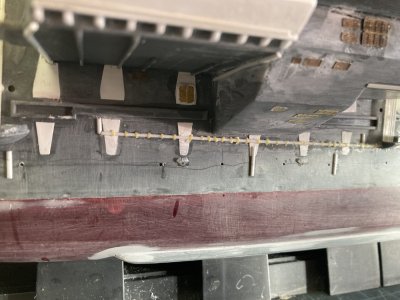
Hanger Details (7).JPG

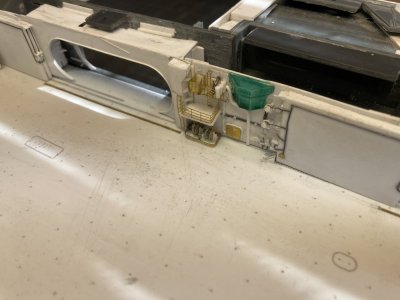
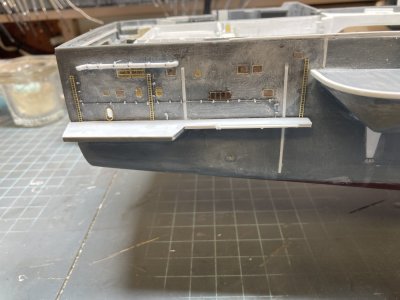
This photo shows the doors at Sponson # 5 going through these doors will bring you to the hanger via another set of double doors between the weapons elevator trunks.
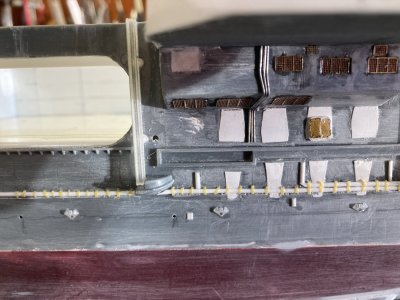
Hanger Details (8).JPG

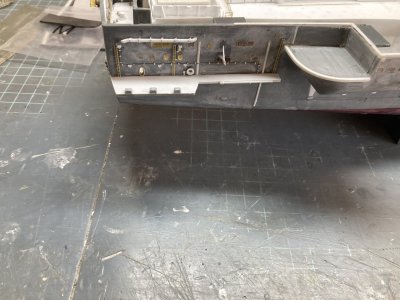
These are the doors at Sponson # 1. They lead to the hanger. This area was the quarterdeck in port when we were tied to a pier. This access to the ship was for officers and chief petty officers. I got these doors a bit crooked but fixed it later.
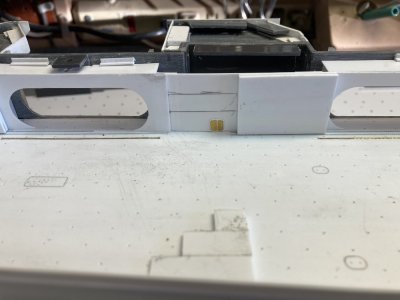
Hanger Details (10).JPG

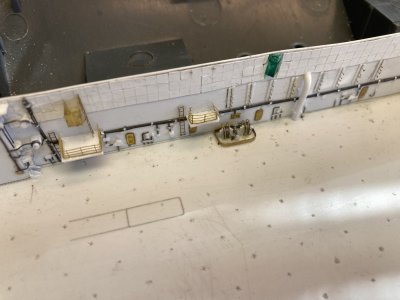
These are the hanger side doors for Sponson #1.
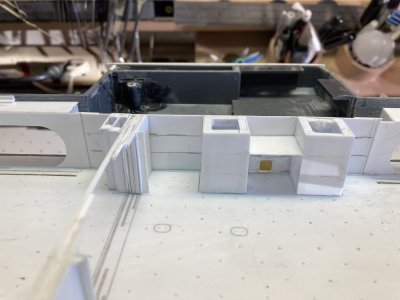
Hanger Details (11).JPG

This is the hanger set of doors for Sponson # 5. Just above this door there will be another double door on the platform. This was access to the ships Calibration Lab and was used to hoist large heavy items up to the shop rather than carry them up 2 flights of inclined ladders. Note that the divisional door tracks are beginning to fail.
Hanger Details (99).JPG

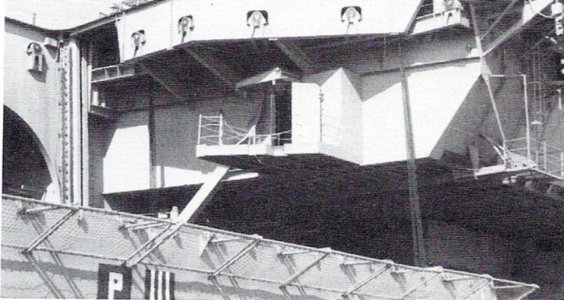
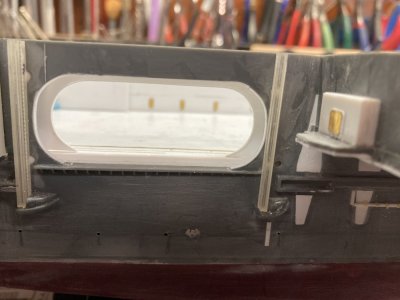
This photo shows the double doors over Elevator 3. This is also an access for the calibration lab to hoist items from the elevator when it is lowered. This area required some additional corrections to make it agree with this reference photo below.
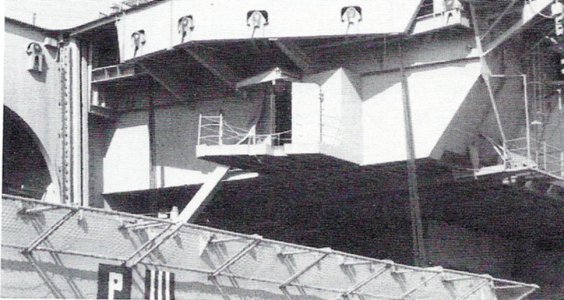
Hull 093.jpg

I had to cut away quite a bit of the molded deck and then add the box like door well before gluing on the double WTD.

Hanger Details (38).JPG

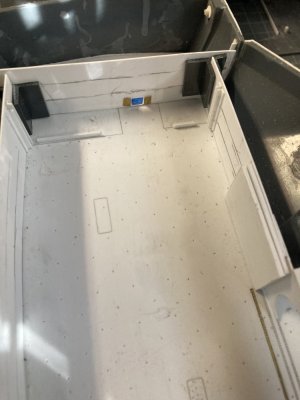
These open doors lead to the tunnel. This area is primarily Supply and AIMD avionics work centers. Because I had to move the forward bulkhead aft about a 1/2 inch (see part 8 basic construction of the hanger bay) there will be another set of open double WTD aft of this one. It is okay as this would be the alcove around the forward most weapons elevator trunk. I am going to add ramps for both of these doors.
Hanger Details (80).JPG

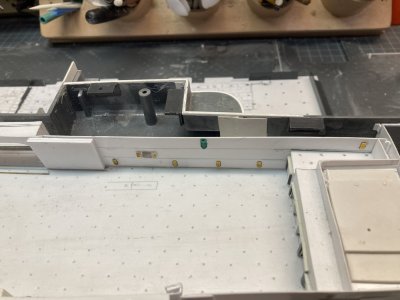
This is the set of doors leading to the Yellow Shirt Locker. I haven't placed any of the vertical ladders or the platforms yet.
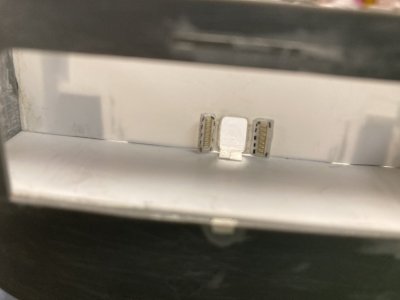
Hanger Details (4).JPG

This the installed Powerplants door looking in or forward from the fantail.
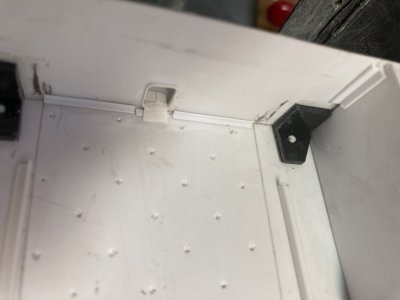
Hanger Details (3).JPG

This will become the interior bulkhead for Powerplants. I have installed the ramps and the L brackets will later be covered.
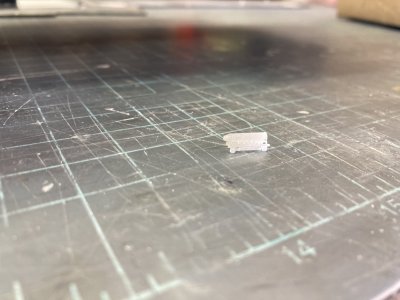
Hanger Details (12).JPG

The 3D printed engine on a trailer. The reorganization of shapeways was a great loss of detail parts. I now wish that I had spent more getting items that are no longer available unfortunately money is a finite resource.
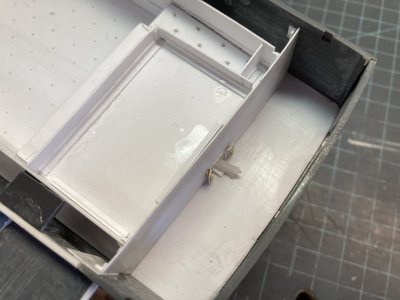
Hanger Details (14).JPG

Happily the engine and stand fit through the doors.


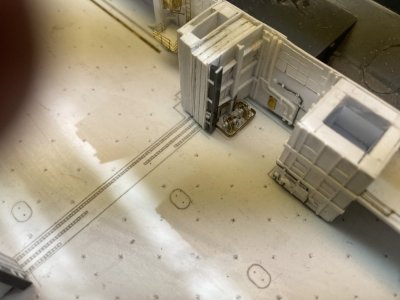
After this section on the double doors I would have gone back into the text in Part 9 post 2 which explained about the Weapons Elevator Doors.
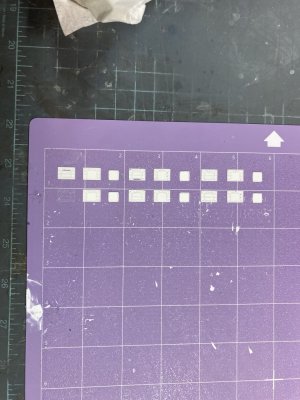
Hanger Details (28).JPG

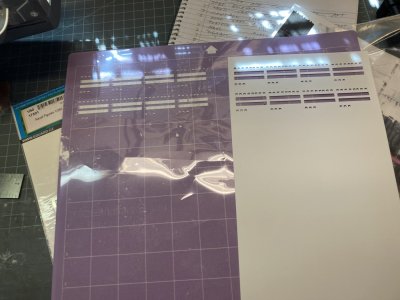
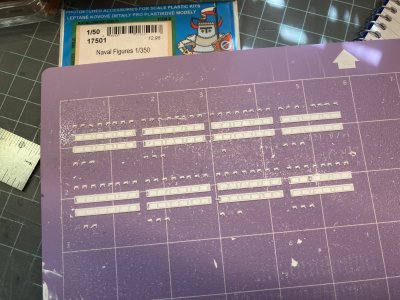
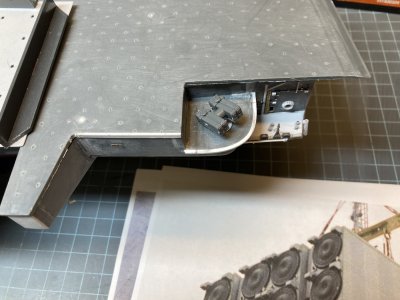
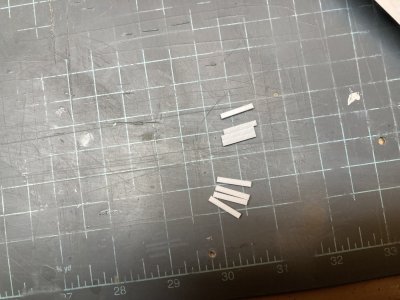
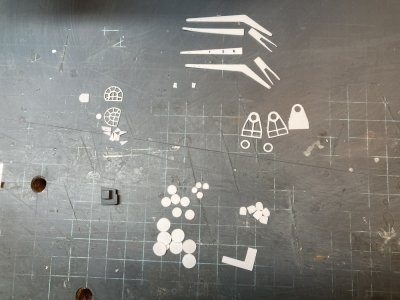
Several Weapons Elevator Door parts blanks on the cutting mat fresh out of the Silhouette.
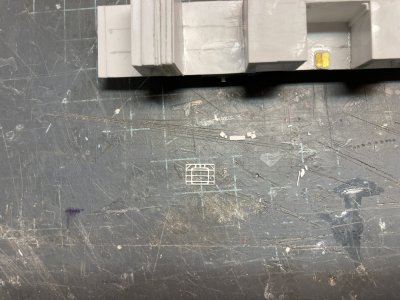
Hanger Details (27).JPG

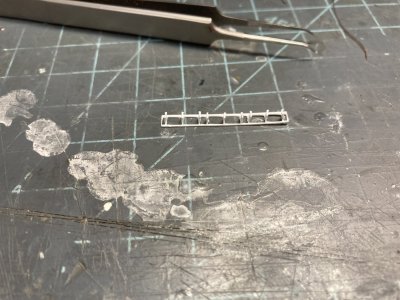
This piece has just had all the chads removed. Some of the plastic bits are nearby on the mat. That part actually went fairly easy.
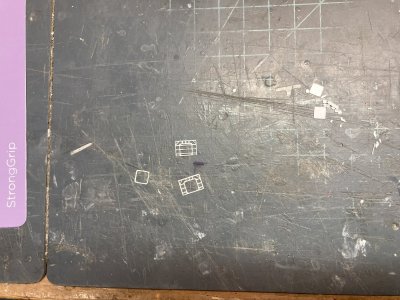
Hanger Details (29).JPG

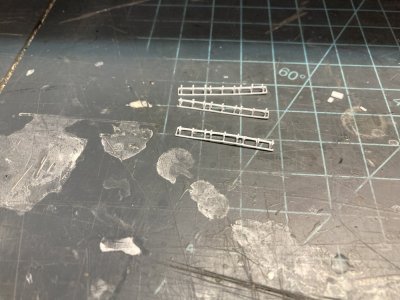
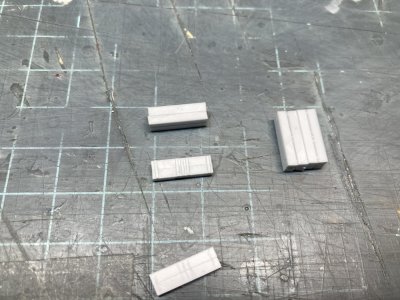
These three parts stacked up make up one door.
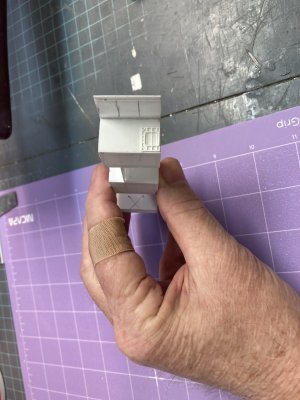
Hanger Details (30).JPG

Here the door is installed on the forward elevator trunk.
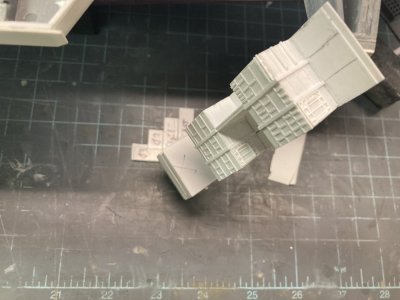
Hanger Details (32).JPG

The door on the aft trunk has been added as well as frame detail on both trunks.
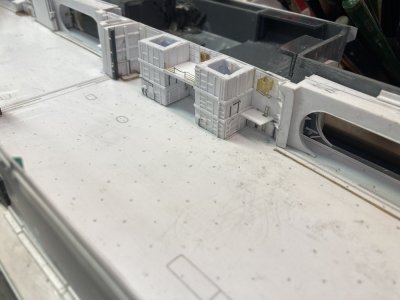
Hanger Details (152).JPG

This photo show the nearly finished elevator trunks with the pulley system represented.


Because of the trouble I had with getting the large amount of details written up in part 9 correctly I am thinking about going to a reduced amount of material in each post. I am currently working on the 3 Hanger fuel stations and I am thinking of trying a post just dealing with those. What do you prefer longer or more frequent?
 
Last edited:
Mini Hobby 80502 1/350 Scale USS Enterprise CVN-65 Early

Part 10 Hanger Bay Fuel Stations

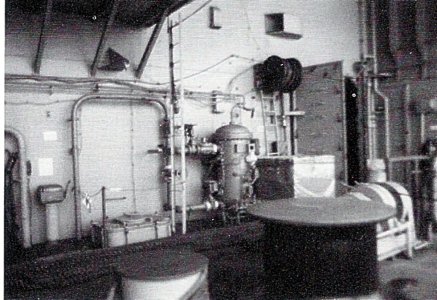
In order to fly aircraft you must be able to fuel them. There are of course parts to represent the fuel stations on the flight deck in the kit and the photoetch sets. But the Hanger fuel stations are usually overlooked in most builds of the Enterprise. The 3 hanger JP-5 fuel stations were vital to the day to day operations for the ship. They were necessary to fuel up aircraft coming out of maintenance before testing of repaired engines, flight controls, fuel cells and drop tanks. They were used to defuel as well as fuel. Pretty much every aircraft and support equipment vehicle ran on JP5.

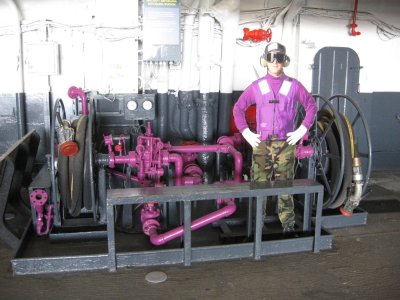
fuel 03.jpg

This photo is a hanger fuel station on a museum ship. It is a detailed photo which was very helpful.


JP5 and diesel are similar but JP5 is refined to the same standards worldwide while the standards for diesel can vary widely from nation to nation and time of year. Diesel can be refined from biomass as well as crude. JP5 is refined from crude oil only and it has a higher flashpoint than other jet fuels which is why it is the only jet aircraft fuel authorized for the US Navy (vice JP4, JP8 or Jet Fuel A). To me the diesel smell of jet fuel pervaded the flight deck. When you came off the flight deck after working up there for a day of flight ops your clothes and you reeked of diesel like a bus station. They carried that smell even after a trip through the ships laundry.

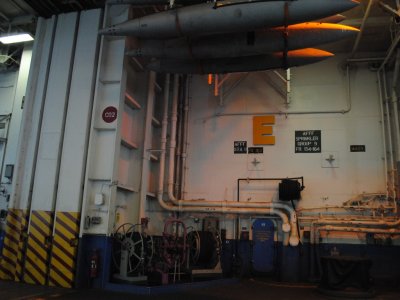
cvn-65-uss-enterprise-246.jpg

This is the midships fuel station on Enterprise. The photos that I have of the other 2 are usable but if you didn’t know what you were looking at you would miss them. Note the width of the reel to the inside versus the one to the outside


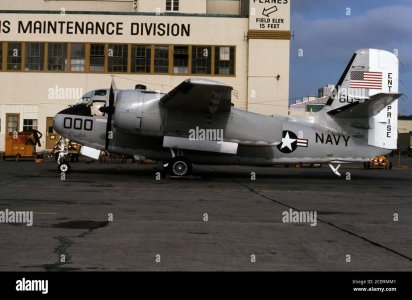
When Enterprise was first commissioned, prop aircraft with reciprocating engines were still in use. There were various marks of A-1 Skyraider aircraft and several versions of the C-1 also. Both of these aircraft were used on Enterprise. There were possibly other prop aircraft in use. When I first reported to VA-122 at NAS Lemoore California they still had two T-28 Trojan aircraft. The ship had a C-1A Trader, side number 000 which was used as a utility/ COD aircraft for both of the workups that I made. When we deployed it was left behind. This aircraft still needed type 100 aviation gasoline or AVGAS (highly flammable) .

grumman-c-1a-trader-146057-uss-enterprise-nas-alameda-8aug82-peter-b-lewis-2CB9MM1.jpg

Grumman C-1A Trader BUNO 146057, Modex 000 from USS Enterprise at NAS Alameda, CA on 8 Aug 82.


I know that after the C-1A was retired from the Navy in 1988 and they also got rid of the AVGAS reels on all the carriers at the same time. None of the reels in the hanger dispensed AVGAS according to Wikipedia. I don’t know how they knew that but it referred me to their article on Enterprise. I would guess that the volatility of AVGAS had something to do with that. There was only one AVGAS Station on the ship at the Starboard Bow Between the second and third JP-5 stations.

Hanger Fuel Stations (1)  I made this set but I wasn't at all happy with it.JPG

I made this set but I wasn't at all happy with it, the hose reel was too wide, the hose diameter was too big and the pedestals were a major pain to assemble. The pedestal base sort of dictates the width of the hose reels. Oddly none of the three sets were the same width or height.

Each set of Enterprise specific photoetch sheets that I have feature enough reels to make all the stations on the flight deck. None of them are exactly the same though. I liked the White Ensign sheet as the best of the 3 so they will be reserved for the flight deck. For the hanger I decided to use the reels from the Gold Medal set but I did not care for the pedestals from any of the sets. I did make up an example using parts from both Eduard and Gold Medal sets but I did not like the resulting prototypes. The actual reels at some of stations were different widths. In the hanger I just made them the same width although that is wrong by my one good photo. I tried 3 different versions in all before I finalized my assembly. I had to play around with the width of the reel, the size of the hose, (lead wire)as well as the parts for the pedestal to finally get what I wanted.

Hanger Fuel Stations (3)  I am cutting out the various parts for the station.JPG

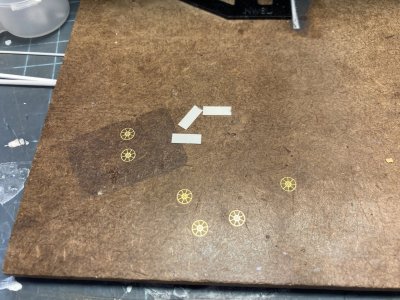
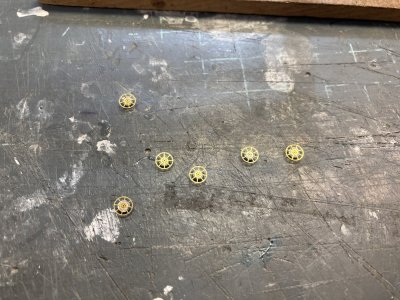
I am getting all the various parts for the fuel station. I have just cut out the bases and removed all the reels from the fret.

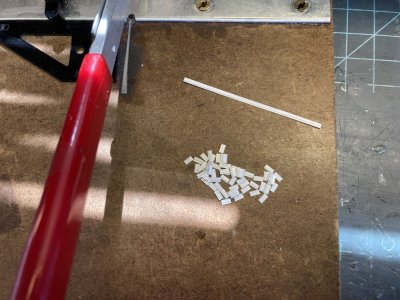
I decided to use plastic strip to make the base and pedestals. I used the widest .010 strip for the base that I had. For the uprights I glued a thin strip on the center of a .010” X .060” strip to give them some detail. This combination long strip was cut into equal lengths slightly longer than the diameter of the reels. I trimmed the pedestals at an angle from the border of the thin strip to the edge of the base. Finally I glued a shorter piece of .020” rod to the thin strip to look like an input/output pipe. For the center of the reel I wound lead wire onto a 2 inch piece of Evergreen 1/16” tubing. I glued the coiled wire tightly in place with thin CA and cut the tube into equal wafers about 1/16” thick with the Chopper.

Hanger Fuel Stations (4)  making the upright supports.JPG

Making the upright supports.

Hanger Fuel Stations (2)  Assembling the hose reels.JPG

Assembling the hose reels.


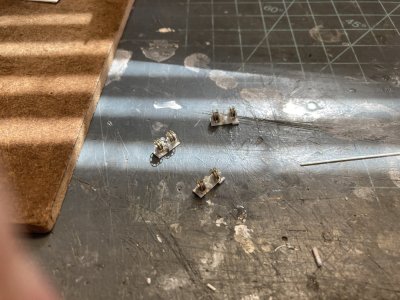
I glued one upright to the edge of each side of the base strip pipe side out and allowed them to set up, paced an assembled reel next to it and glued the other uprights in position. When the four uprights had firmed up on each base I glued a reel between each with CA. To make some representation of the plumbing I started with a very small section of .040” rod vertically between the pedestals. Another short piece of .025” rod was glued vertically on top of it. Then a second piece of .025” rod was glued on top of the .040” rod perpendicular to the base as an input pipe. This was trimmed just slightly wider than the base. I let all this dry hard.

The midships station is a bit unique since it is placed against a perpendicular bulkhead. Each of the reels is at an angle to the wall at their back in order to make rolling and unrolling the hoses easier. I have some Black Cat Hand Wheels on pipe sections which were used to provide valves. I used one large and 2 small hand wheels on each base. The large valve was glued on top of the input pipe. The smaller ones right next to each inner pedestal pipe. Finally I glued some lead wire to look like connecting pieces of pipe. Not accurate but kind of looking the part. I want a basic method of building and assembling these because there are far more on the flight deck.

Hanger Fuel Stations (6)  The 3 stations have been assembled and I have been adding extra plum...JPG

The 3 stations have been assembled and I have been adding extra plumbing to the left most one. It is almost fully assembled and the other 2 are in work.


I had to check these stations in the various positions as the assembly progressed to ensure they would continue to fit. Happily this went well and I went through assembly quickly. After testing a final time I confronted the last part. Tiny, tiny nozzles. Since most of this work will only be seen in photographs and the merest glimpse through the hanger doors the main purpose here was to come up with a sure fire way to manufacture and assemble these reels so that when I get to the flight deck it won’t be like pulling teeth.

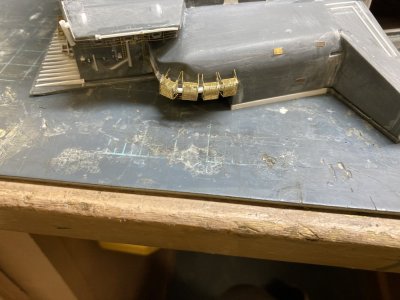
Hanger Fuel Stations (7)  The mostly completed forward fuel station dry fitted.JPG

The mostly completed forward fuel station dry fitted.

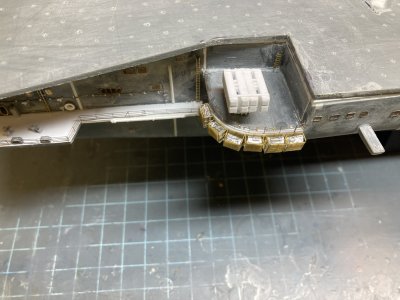
Hanger Fuel Stations (8)  Here the midships station is dry fitted.JPG

Here the midships station is in place.

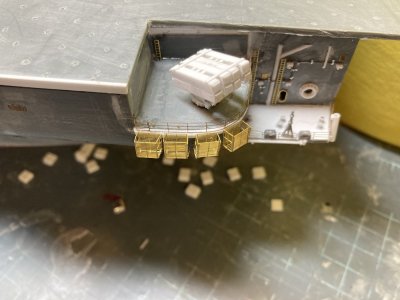
Hanger Fuel Stations (9) The aft station dry fitted note the tiny handwheels.JPG

The aft station: note the tiny hand wheels


Most of aircraft refueling is done at a single point pressure refueling port. This port allowed all the tanks including drop tanks to be refilled at just one place. The nozzle is grounded, then inserted and twisted to cam lock it tightly in place. So this nozzle has 2 handles to grip and give the technician better leverage to lock the nozzle. Fuel is fed under pressure into the system so you do not want this thing coming apart.

To make these nozzles I tried various gages of wire and bits of micro tubing to represent the fitting. Then since I had already used part of a 1/700 scale vertical ladder to make the windows for the hanger projection booth I cut off three sides of each ladder rung. This made a handlebar of sorts. This was placed on the nozzle and delicately glued in place. I took a small section of the lead wire for the hose and glued it to each reel to look as if the end of the hose was draped over the top. I glued the nozzle to the reel like it was connected to the hose.

This nozzle was used for aircraft but the vehicles did not have this type of port. They used a nozzle like a normal gasoline nozzle but larger. This nozzle was also used to defuel individual drop tanks when they needed to be moved or replaced. I think that they used a similar fitting to fuel the reciprocating engine aircraft. This nozzle was a bit smaller than the pressure nozzle so more experimentation with wire and tube followed until I was satisfied with it. I made three of each type nozzle and placed one of each on the 3 stations. I don’t know if this was the actual configuration but it seemed good to me.

Hanger Fuel Stations (11) The fuel nozzles have been added this part was fiddley.JPG

The fuel nozzles have been added.


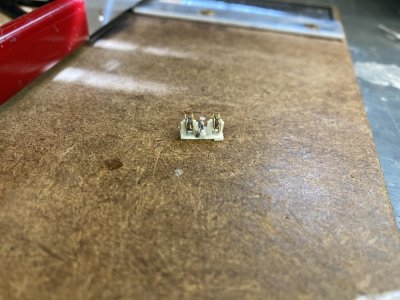
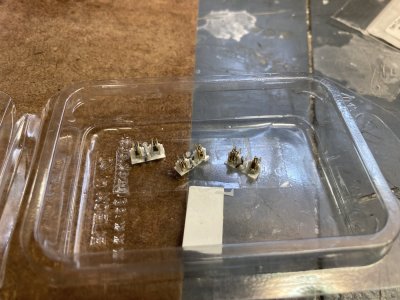
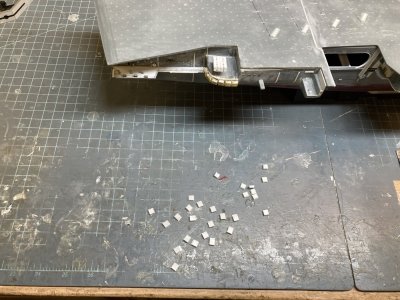
I wanted these made but not installed yet so I had to make a protective box or something to store them until I was ready to put them in place. I had used up a package of Black Cat parts so I re-purposed the package putting down a bigger strip of double sided tape. I marked it clearly and placed the 3 fuel stations inside. Then stored them in a secure location. I am pleased with the results that I have made and it will be a bit easier to make the flight deck reels.

Hanger Fuel Stations (13)  The 3 finished stations going into protective custody.JPG

The 3 finished stations going into protective custody.


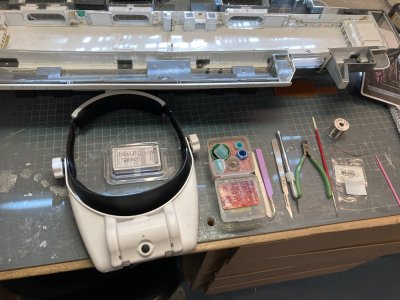
Doing work this fine is difficult for me. I have to fight my eyesight and the arthritis in my hands. So it is all the sweeter when I can make something this small and have it look at least okay. To do this I use some good tools. In the photo below you see the package of hose reels inside the headband of my lighted magnifier. It has one attached lens and 4 other lenses that can supplement it. For these parts I used a 3.5 X lens with a 1.5 X lens.

Super glue is too expensive to waste and I am clumsy so I made this glue station. The aqua colored cap holds enough thin superglue for most sessions, the blue cap holds acetone to keep my applicators clean and the clear cap holds accelerator. I use “T” pins, wire and applicators I made with the eye of a needle and an old paint brush handle. I have 3 of them in small, medium and large they work precisely and neatly. The red applicator is my medium and is lying next to the green handled nippers. I can place a dollop of thick or medium CA on the card in the lid of my station and use a toothpick or the handle from a worn out micro brush to apply glue where needed. The green lid which has a spare thin superglue holder in it is for debonder or acetone when I need to clean a part that I have messed up. This system is working really well for me.

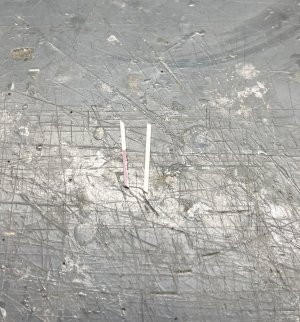
There are two pairs of tweezers which I found by trial and error on the internet. The pink ones are eyelash tweezers and work great for photoetch. The other is an ANYZ set who make superior tweezers as well as model detail parts. They weren’t cheap, about 30 dollars for the pair but so worth it when you need to hold something tiny and not shoot it off into the ether someplace. I have many cheap tweezers that I got on the internet but found they did not work. These are now clamps and heat sink and such. I use both a small scalpel and a standard hobby knife with new sharp blades regularly. The green nippers are strictly for wire and brass. They are sharp and I have had them for years. This also is not something to chintz out on. The lead wire, tubing and copper wire went into each of these reels. I have a variety on my bench and I always look for this sort of thing whenever I am out shopping with my wife. Curiously the lead wire and tubing came from a fishing catalog that somebody sent me in the mail. I am not a fisherman but I found several items in that catalog that I use a lot.

Hanger Fuel Stations (15)  The tools necessary to put these items together.JPG

The tools necessary to put these items together


I hope you find this smaller post easier to digest. Take care and enjoy your modeling.
 
Last edited:
Part 11 The 1960 Commemorative Launching/Commissioning Bronze Medallion

This does not have to do with any part of the model build for the ship but it has a direct relationship with the original vessel. I have a friend Bill Scoggins who like me served in the US Navy. He was an Aviation Ordnance Man. Between 1987 and 1990 he served aboard Enterprise in the Weapons Department as the Leading Petty Officer in G-3 Division. They stowed, broke out, maintained and assembled the bombs that the airwing launched with. They were responsible for transferring these weapons to the flight deck. They also maintain and repair the weapons elevators that moved them. He was aboard during operation Praying Mantis.

In April of 1988 The Samuel B. Roberts FFG-58 hit a mine while operating in the Persian Gulf as part of the Task Force prosecuting Operation Earnest Will. Earnest Will was a show of force to stop Iranian efforts to deny the gulf to the Iraqis. The explosion opened the hull and broke the keel of the Roberts which nearly sank. The heroic damage control efforts of the crew saved the Roberts. The investigation traced the mine to Iran. Iran threatened and harassed ships trying to trade in the gulf and then laid mines. Praying Mantis sank 2 Iranian frigates, numerous small armed boats and captured oil platforms.

Bill and I met through our wives. He became interested in my build of the Enterprise since he served aboard and is thinking of making his own model. He is also interested in memorabilia related to his service. Neither he nor I were old enough to be invited to the launch of CVAN-65. It would have been something to be there though. On 24 September 1960, the ship was launched. The wife of the Secretary of the Navy, Mrs. William B. Franke, sponsored the ship with the traditional bottle of Champaign. On 25 November 1961, Enterprise was officially commissioned, with Captain Vincent P. de Poix, commanding. De Poix was formerly of Fighting Squadron 6 aboard her predecessor, CV-6.

Memorabilia (5).JPG

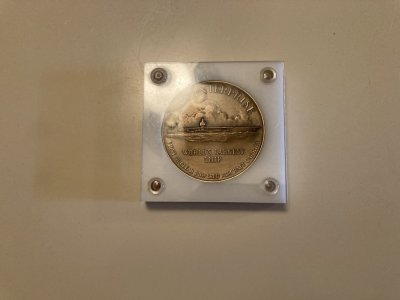
The face of the medallion.

Memorabilia (4).JPG

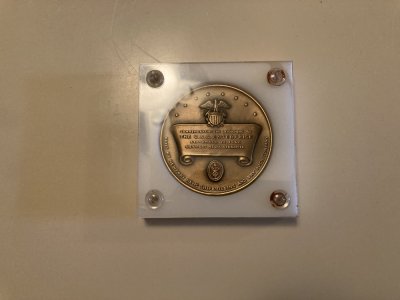
The reverse.


As part of the ceremony a 2 1/2 inch bronze medallion was struck. I haven’t been able to find out any more particulars of who received them but I would guess they were given to the invited guests at least. Maybe they were also issued to the crew as well. Bill found one of these commemorative bronze medallions from the launching ceremony and bought it. I wasn’t aware that he had it. When he told me that he was going to give it to me I was a bit nonplussed and tried to refuse. He was firm and wouldn’t take no for an answer so I accepted it. I will incorporate the medallion into the display of the model to honor the ship and all who sailed in her with many thanks to Bill. I hope my model will live up to Its Namesake.

Memorabilia (1)

Memorabilia (1).JPG

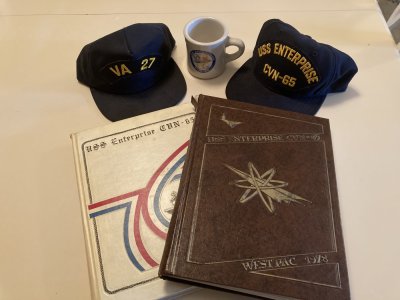
My hats, coffee cup and cruise books from my service on Enterprise.


Any of you readers who have certain knowledge on the history of the medallion please feel free to respond.

 
The medallion you have was a commemorative launch of the aircraft carrier USS Enterprise (CVN-65). This type of bronze medallion was produced to commemorate the ship’s launching on September 24, 1960, at Newport News Shipbuilding and Dry Dock Company in Newport News, Virginia. Shipyards commonly created such medallions for major milestones — keel laying, launching, commissioning, especially for historically significant vessels.
USS Enterprise (CVN-65) was:
  • The first nuclear-powered aircraft carrier
  • At the time, the world’s largest warship
  • The only carrier ever built with eight nuclear reactors
  • In service from 1961 to 2017
The medallion:
  • Front: Relief image of the carrier at sea, with the inscription “World’s Largest Ship” and “First Nuclear Powered Aircraft Carrier.”
  • Reverse: Commemorates the launching date and location, with the builder’s name around the rim.
  • The shipyard emblem at the bottom is the Newport News Shipbuilding logo.

These were typically presented to shipyard officials, Navy personnel, sponsors, or VIP guests attending the launch ceremony. Some were also sold or distributed in limited numbers.
 
The medallion you have was a commemorative launch of the aircraft carrier USS Enterprise (CVN-65). This type of bronze medallion was produced to commemorate the ship’s launching on September 24, 1960, at Newport News Shipbuilding and Dry Dock Company in Newport News, Virginia. Shipyards commonly created such medallions for major milestones — keel laying, launching, commissioning, especially for historically significant vessels.
USS Enterprise (CVN-65) was:
  • The first nuclear-powered aircraft carrier
  • At the time, the world’s largest warship
  • The only carrier ever built with eight nuclear reactors
  • In service from 1961 to 2017
The medallion:
  • Front: Relief image of the carrier at sea, with the inscription “World’s Largest Ship” and “First Nuclear Powered Aircraft Carrier.”
  • Reverse: Commemorates the launching date and location, with the builder’s name around the rim.
  • The shipyard emblem at the bottom is the Newport News Shipbuilding logo.
These were typically presented to shipyard officials, Navy personnel, sponsors, or VIP guests attending the launch ceremony. Some were also sold or distributed in limited numbers.
Thanks that was more than I was able to find just asking google.
 
Part 12 The Powerplants engine work stands.

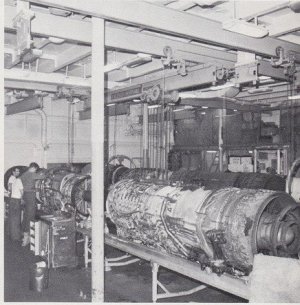
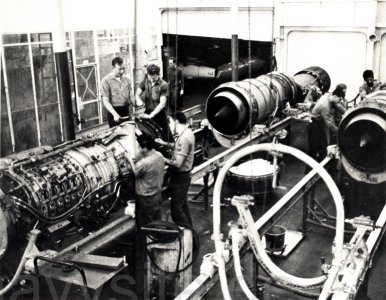
Jet Shop 006.jpg

This photo gives you an idea of the number of engines in work and the general shop arrangement.

Jet Shop 007.jpg

A second photo from the opposite direction. In this picture you can see the stands are bolted to the deck.


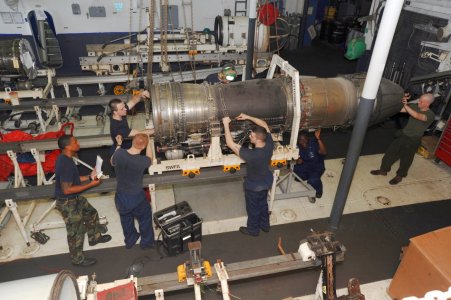
The next detail item will be the engine work stands that will be visible through the Elevator 3 and 4 and the open roll up doors to Powerplants. There were 3 rows of stands with the ability to have up to 3 stands in each row. The stands were designed in such a way as to be able to have multiple engines in work at the same time. Adapters for the different engine types and other support equipment were stored in the cages on either side of the work center. Each individual stand had a pair of rails supported by 3 legs on each side and the pairs of legs were connected together by a cross brace. The legs in the earliest configurations were bolted to the deck.
8073987981_5d79827f04_o.jpg

Look at the pads with the uprights. I believe this is a Nimitz class carrier. The location of the Powerplants work center is consistent among modern carriers.


Later round pads with a hole in the center were welded to the deck and the stand uprights were threaded into them. The rails of the stands in each row were connected together at the ends to form a continuous surface so any engine could be slid along its length. There will be one more single stand on a shock mount on the fantail for testing engines for a total of 10 individual stands. The long stands in the work center will be left together.

Engine Stands (1).JPG

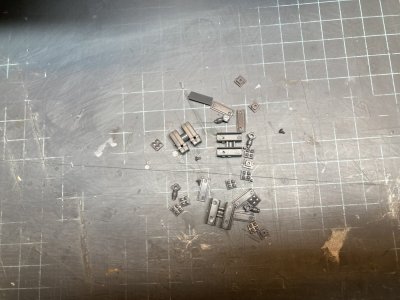
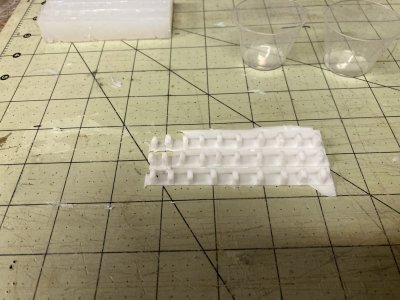
This is the cutting mat after I removed the 12 x 6 inch plastic sheet. To the right you cqn see the parts still stuck to the mat.

Engine Stands (2).JPG

A closer look at the mat, when I pull away the part the individual chads stay with the mat. You can see also that some of the cross pieces did not turn out very well which will cause problems later.


To model the stands I looked at several ways to make the parts. I thought of drilling holes in the deck, inserting rod and joining that to a rail then once the glue had dried being able to remove the assembly. This was discarded because of the size of the parts involved would just be too complicated to get assembled with regular spacing. I also discarded repurposing some photoetch because it would have been too flimsy and 2 dimensional (I also couldn’t find anything that I wanted to waste). Since I had some pretty good success with the Silhouette making the drop tank racks I went back to the cutting machine for this too. I was able to make a cut program based on the size of the stands in my drawings. These were verified against the size of my 3-D engine and some Eduard figures. Based on experience with past cut jobs, I put a runner across the bottoms and ends. Typically this produces a better part. After assembly undesired material can be cut away. The stands came out fine but some of the cross braces were kind of messed up. I had made many extras and so I had plenty of good parts to make what I needed.

Engine Stands (3).JPG

The first set with all the cross members shakily glued in place. As the glue firmed up I got them all to relatively perpendicular.

Engine Stands (4).JPG

These 3 sets of stands have all the cross braces. They will all be in the Powerplants shop. The thin rail capping off the ends will be removed. I’m not sure about the bottom rail. Removing it may weaken the frame too much.


In this case when I removed the top sheet all the cut out parts remained on the mat. As I removed parts from the mat the chads were left in place. I did not have to spend time removing them. I took one of the rails and began gluing cross braces in place. I kept this up until the all connected stands and the one individual stand had all the cross members in place. At this point I had to stop until the glue on each had dried. I left them to dry overnight.

Engine Stands (5).JPG

All the parts are waiting for the glue to dry. At the bottom is the single stand for the test cell on the fantail. Note the engine an trailer at the very bottom of the shot.

Engine Stands (6).JPG

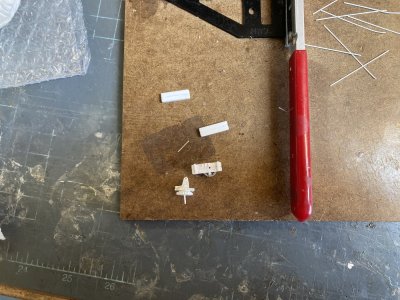
These are the discards of my first attempt.


When I came back to the bench the next day my goal was to glue the two parts of each stand together, I started with the short stand since this only needed 3 connections and it actually went together pretty well. Encouraged I moved on to the longer stands and ran into complications. There was absolutely no way to set the outside frame to the inside and make all the connections simultaneously. Since I had put small dabs of glue on each cross brace they softened and in some cases collapsed. I tried variations on the other remaining stands but I just couldn’t bring it off.
Engine Stands (7).JPG

I am well along in gluing these two sets together.


Back to the drawing board. I got out the 1/16” deep channel and sliced off wafer thin pieces. These would be my new cross braces. They were stronger than the parts I had made although less detailed. I had plenty of frames so I glued up cross braces on 3 new frames. The next day I came back. This time I taped each stand to the mat, checked that everything was square and put a drop of glue on just one end. I glued the sides together but just at that one brace. I did this to all three frames and let them firm up. Being extremely careful I returned to the first and glued the second cross brace in place. I kept rotating through the frames one joint at a time until I had them all in place.

Engine Stands (8).JPGEngine Stands (8)

This is the third stand. I had to keep the units that were drying well away from the ones I was working on so I did not bugger them up with an errant elbow.


The frames were still taped down and I let the glue dry a bit before I tried anything else. I went back to my cross braces and glued them on top of the channel one at a time. This stiffened up the frames measurably. Once this was mostly dry I trimmed the ends of each stand removing the first vertical and the bottom runner that was past the second vertical. I left everything to dry for two days. When I came back to the bench I was able to remove the bottom runner and the stands remained solid.

Engine Stands (10).JPG

It’s together and trimmed on the ends.

Engine Stands (11).JPG

All the stands in the hanger for safety.

Engine Stands (12).JPGEngine Stands (12)

I couldn’t resist putting the stands in the shop to see how it would look. I haven’t removed the bottom rail yet.


I printed drawings and photos for the fantail and I will work on that area next. Thanks for looking this over and happy modeling.
 
Part 13 The Fantail (Part 1)
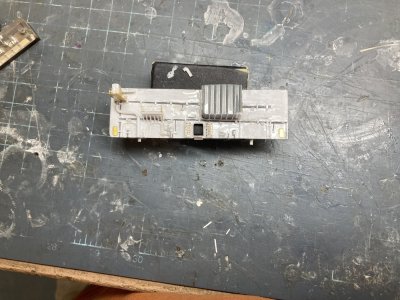
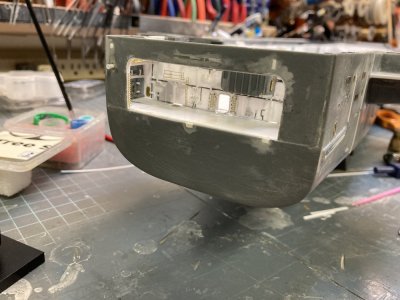
I previously reported that the hanger door mural was painted in 1972. That was incorrect. I found several photos of a USO show in the hanger from the 1965-1966 Cruisebook which show the mural as a background to the show. The photos I used as a reference from the 1971-1972 cruisebook must have been a retouching of the mural. There is a photo in it with sailors on ladders painting and a caption “painting the mural.” I looked through all the cruisebooks page by page from 1962 to 1978 to try and pinpoint when it was painted but was unable to find a date. I apologize for the mistake.

The fantail of the ship was primarily a working area. 3rd Division of the Deck Department (formerly of the Weapons Department), maintained the space and during the 1960’s the side painters stowed their small boats from the starboard side overhead out of sight. During that same era there was a large drop tank rack suspended from the port overhead. There appears to have been some sort of platform at the fantail to starboard from the beginning of the ships career. There were two capstans, 3 very large fairleads and 4 large bitts for mooring. Just off the fantail were the vertical mooring line spools in the port and starboard passageways leading to the fantail. Off the stern below the deck level were swinging brackets for support while rigging the after accommodation ladder. The upper platform was designed to fold out and lock into place. There were ladder rungs welded to the stern for access while rigging.
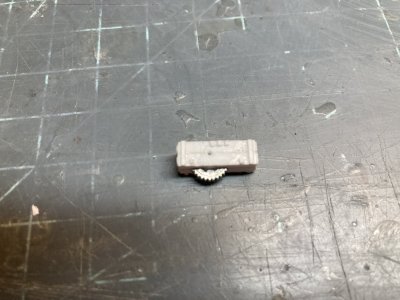
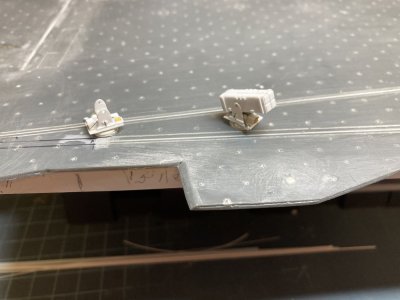
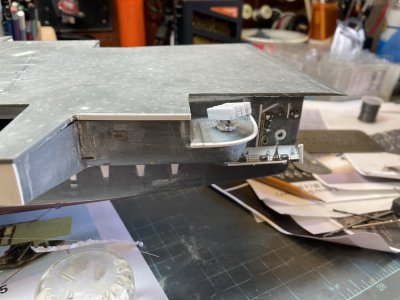
Fantail 005.jpg

This photo shows the test cell in the background, you can see the opening for the jet exhaust and the stand with a yoke. In the foreground the bosuns are prepping the accommodation ladder for deployment or to return it to storage.


The accommodation ladder was stored above the fantail just under the ramp of the flight deck. There was access to the ladder provided by a catwalk at the 03 level. The ladder was lowered down to the level of the fantail and swung in to be prepared. Once the ladder was ready to be rigged it was lifted up and lowered into place resting on the brackets until attached to the upper platform. The lower end of the ladder had a platform installed but later it was removed and would then be dropped down to a camel or float below. The ladder had rollers on the lower end to account for the motion of the ship and the float. This could catch the unwary or inebriated sailor by surprise (Don’t ask me how I know). The whole process of rigging this ladder was labor intensive and I owe many of my best liberties to the hard work and efforts of the Deck Department. Later much of this was built right onto the stern greatly simplifying the process.

Hull 122.jpg

I think this is what they were trying to make with the grid on the kit left fantail bulkhead but that was from the 1960’s era. The after accommodation ladder is rigged in this photo and if you look under the flight deck you can see the catwalk where it is stored. In this photo they did not use a camel or float at the bottom so there is a platform at the lower end. The starboard folding strut is being used as a support davit.


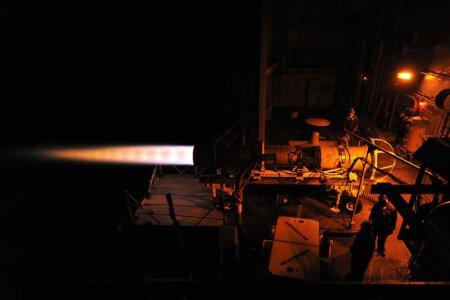
AIMD used the stern to test new and repaired aircraft engines. During the Comprehensive Overhaul which began in 1979 the test cell was moved to the center of the fantail from the port side to make room for the Phalanx system. There was an enclosed operator booth added. They added a deck level platform which extended out from the center of the fantail where the engines were situated on a trailer. However during the time I was aboard there was a shock mounted platform between the outboard access door to the port side sponson and the aft wall of the fantail. I think there was some sort of fume extraction or ventilation system exiting directly aft on the port side. The engines were placed on a stand attached to the platform with the exhaust pointing out through the port in the side of the hull. The controls and all connections were handled from a console box which was also on the platform.

Fantail 019.jpg

This is an engine being tested on the fantail after the 1979 refit. The trailer is what I referred to as transport trailer but it has been modified with jack stands to make a more rigid mount. There would be some sort of holdback to keep the engine from moving. This particular engine is at full afterburner.


To get an engine onto this stand must have involved an overhead crane but while I found no photographic evidence of this I will portray it that way. The only other way it could have been done would have been to use a jacking engine stand and align it with the stand on the platform. The engine would then have been slid across to the platform stand. It could have been done this way but it would have been very time consuming. Just trying to align the trailer with the platform stand would have been difficult at best. Generally the jacking stands were used to install and remove the engines from aircraft because each end could be raised or lowered independently. I believe that power plants used simple transport stands.

Hull 004.jpg

This photo shows the Enterprise in 1978 at NAS Cubi Point RP. Note the orientation of the AN/SPN-41 ACLS antennas on the flight deck. Forward of the exhaust opening for the test cell on the port side is the doorway opening to the fantail. Note that there is no door. On the upper port fantail you can see the pipe for the fume extraction or ventilation system.


In the Restricted Availability between the 1976 and 1978 deployments the AN/SPN-41 Automatic Carrier Landing System (ACLS) was installed. The platform on the stern was enlarged and the azimuth antenna for the system was mounted on the platform, the elevation antenna was on a tower on the aft flight deck. There was some other antenna on the little finger that extends aft of the platform on the starboard side. I don’t know if this was part of the ACLS or another system. Another pilot landing aid were the drop lights running down from the landing area center line. These lights with the centerline lights on the flight deck provided visual cues to pilot’s line up when landing at night. These drop lights were just behind the azimuth antenna and extended from just under the flight deck to just above the waterline.

475666.jpg

This is Enterprise from the 1978 cruise with a stern quarter view that gives a pretty good idea of the layout of the fantail at the time. Note that the after accommodation ladder has been rigged on a camel.

Fantail 006).jpg

This photo from 1972 shows the layout prior to the installation of the ACLS system. The drop tank rack appears to have been removed.


The thing about ships in general and warships in particular is that they are constantly being updated. In order to model a ship like Enterprise you should have an era in mind and do some research to see what it looked like. Then you have to judge if the kit parts are satisfactory or need to be modified. The kit fantail parts weren’t deep enough and the orientation of the azimuth antenna did not appear to be correct.

When I designed my hanger deck I incorporated the deck of the fantail as part of it in order to correct the kit fantail dimensions. I placed the aft bulkhead at its correct location at frame 255. This makes the fantail deeper than the kit parts would depict. This change caused some problems with the use of some of the Eduard detail parts but I found work arounds. The detail on the kit’s aft bulkhead is a bit spurious in most cases so I made my own bulkhead from the start.

Fantail (1).JPG

These are the kit fantail parts dry fitted off the model. The two ACLS antennas should have the same orientation. I determined to the best of my ability that this one is incorrect it will have to be rotated 90 degrees to the right. Unfortunately I did not find this out right away.


Tamiya/Mini Hobby have molded very basic details. Hatches, doors deck equipment and structures are just rectangular or round bumps. The ribbed structure to the right is one item that is pretty close to what was there and I cannibalized it for my model. I think the grid to the left side may have been trying to represent a drop tank rack that was there in the 60’s. It wasn’t there in the 80’s which is the period that the kit represents. There was a platform which was used for storage. I think this might have been items to set up the Quarterdeck on the fantail. It was wider than what is portrayed by the kit parts.

To start I compared the position of the ribbed structure from the kit part and transferred that position to my bulkhead. I cut this portion free of the kit bulkhead. I filed the ends smooth and sanded off the thickness of the bulkhead itself from the backside. On the inboard side there was a sink mark and I covered it with some plastic card. That inboard edge was cut at an angle at the bottom so I duplicated that. I had to fill the little positioning indent for the kit ACLS equipment deck. I sanded the bottom smooth and then used some strip to continue the ribs across the bottom. I was then able to transfer the part and glue it in place on my bulkhead.

Fantail (4).JPG

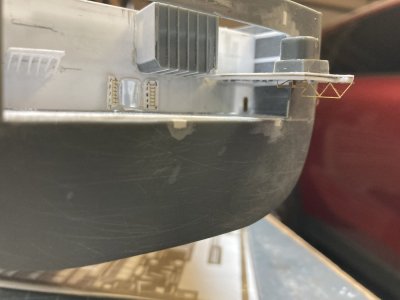
In this photo I have modified and transferred the ribbed structure. I have added some doors and the storage platform. The first rendition of the ACLS platform is finished. The inclined ladder did not last long before it was hopelessly chewed up.


Fantail (10).JPG

In this photo the ACLS platform has been extended to reach the forward and starboard bulkheads.

Eduard provides a metal part to replace the kit ACLS Platform. I had to extend it in order for it to reach the new bulkhead location. I used the photoetch part as a template and cut out a longer piece from some .010” sheet. I got it to fit from the fantail opening to the bulkhead and then I noticed the detail on the underside. I also found a photo which makes me suspect that the platform reached all the way over to the starboard side bulkhead so I used some additional .010” sheet to extend it again to the side. I used some .010” rod to detail the underside of the plastic parts to look like the photoetch. I did this more than once because I broke my first platform trying to move and reorient the antenna. I had to start over and make a new one. It was easier to replace it than to try and repair it. The second time the parts of the old one did act as a template for the new one plus it is all one piece and a bit stronger.

7996150619_4d90fb3a52_o.jpg

Although this 2012 photo is pretty dark back under the platform it can be discerned that it extends to the starboard side. You can see the skirt around the edge. There are more electronics under the platform which weren’t there in 1978. Up on the platform there is a hint of a bulkhead walling off a section of the platform. The second antenna is visible on the finger.

Fantail (14).JPG

Now I have added the skirts, the support trusses and the wiring. The antenna is oriented incorrectly, different but I got it wrong again when I first glued it down and the second time I moved it was too much stress and the platform broke where I extended it to the side.

Fantail (15).JPG12 Fantail (15)

This photo shows the detail on the underside. Too bad that it gets wrecked in the end.


In photos of the platform there is a skirt around the inboard and aft edges of the platform. I used some HO scale Evergreen 1 X 3 strip to make that edge. The Eduard set includes a single diagonally braced truss for the starboard side but there should be a second that runs athwartships and connects to the first. So I used one from the Gold Medal set. The White Ensign set also has 2 but they are too long because they are designed to run the width of the platform in parallel to each other which is incorrect. There are 2 diagonal struts supporting the platform but only one is provided by Eduard. I could not find any way to add it now as it would interfere with removing the ACLS platform and/or be destroyed while trying to remove and install it. I went and lost the singe Eduard strut and made 2 out of plastic strip.

Fantail (64).JPG13 Fantail (64)

These 2 struts have been cut and fitted to the ACLS platform the longer one supports the platform fore and aft and the marked one runs from the aft center of the platform to just above the rail on the starboard side.


The Eduard Photoetch Set Part 5 set includes piece 27 for the ACLS platform railing. It’s sized to fit the Eduard photoetched deck and includes the skirts. Because of my extensions the railing is too small to fit the platform I made. The Eduard part incorrectly wraps the railing around the finger extension. The finger extension does not have railing because of the second antenna. In the 2012 photo above you can see some vertical supports on the inboard side of the platform. I made these from plastic strip. I bent some generic railing to fit my platform and glued the vertical supports to the railing. This railing and the inclined ladder won’t be glued in place till the fantail is being assembled.

Fantail (60a).JPG14 Fantail 60a

This is the prebent rail with the vertical struts for the ACLS Platform


I ran some lead wire to the antennas and also a branch off to starboard on the bottom of the platform. I used slices of channel for brackets. On top I glued the antenna in position. I made a bulkhead with an offcut from some plastic sheet. I glued it in position and when it had dried I put a door, wiring and a lamp on the visible side. There is a sink mark on top of the azimuth antenna and I covered it with card. I added the second antenna’s pillar and some struts from Albion Alloys micro tubing and .010” rod. I used some ultraviolet curing resin to glue this together. I was impressed by how easy it was to assemble the antenna with this material. From photos it appears that the antenna pivots but I never found a photo showing it extended. I just modeled it on the folded antenna in all my pictures.

Fantail (57).JPG

This is the underside of the new platform.

Fantail (58).JPG

This is the upper side it shows the correct antenna orientation and the second antenna.


Eduard provided an inclined ladder for access to the platform but I broke off the lower step. It is also a bit long. The Tom’s ladder is a bit short. They have you remove the molded door on the starboard side of the kit fantail bulkhead. But there is supposed to be a WTD there. Eduard uses the photoetch deck which puts the ladder in the wrong place. I used a shorter inclined ladder but placed a hole in my deck to move the ladder inboard and I glued it on the bulkhead. This turned out to be a bad idea though because with all the fitting for the platform I managed to mangle it and ended up removing it to be added later. I went back to the Eduard ladder in the end. It was easier to fit down through the access hole and I cut off the bottom step which brings the ladder to the right length.

Fantail 019a.jpg

This photo shows the mid to late 80’s fantail under the platform. The duct arrangement leads to a grill on the exterior. This was not there in the 70’s. It was added at some point when the girders on the port side of the opening were installed. You can see the bottom of the inclined ladder, the open deck hatch and the WTD in the corner.


On my fantail bulkhead I used some Tom’s Modelworks doors for the port and starboard access doors to the fantail. I added a small door to access the catwalk around the vent unit. I had some leftover parts from the elevator door machinery platforms that I made for the hanger bay and I used a set of these to make the storage platform on the port side. I made the support braces from another set. I glued several runs of lead wire for electrical cables. I decided to use slices of channel for the brackets which worked better (read less fiddly) than the aluminum tape that I used in the hanger. This ends part 1 of this installment.
 
Last edited:
Part 13 The Fantail (Part 2)

The interior bulkheads on the aft, starboard and port sides of the fantail were detailed with some strip to represent “I” beams. I also framed the interior side for the duct opening and the test cell openings with slices of tube. There were doorways leading to the two side sponsons. These were just simple openings with no doors. I used a template to mark the locations on the exterior. I carefully drilled out as much as possible and cleaned up the opening with a round micro file. I had some L’Arsenal photoetch oval door openings and I framed the doors inside and out with these. The Eduard set has one frame but I wanted the frames to all be the same size.

Fantail (17).JPG

The open doorway on the starboard side…

Fantail (18).JPG

…and the port side


On the deck of the fantail I placed 2 generic deck hatches. The chads from the power plants engine frames were perfect to raise the photoetch hatches off the deck a bit. I placed a photoetched scuttle in the center of each of these. I continued electrical runs on the port interior. Then I started adding some plumbing on the Fantail bulkhead. There are several pipes and a couple of rectangular vent ducts. There is a large round vent duct on the starboard stern interior.

Fantail (37).JPG

These are the 2 capstans that I made.


There are several items of deck furniture that need to be installed. I made 2 capstans from rod, tube and punched discs. To position these on the deck I cut out the fantail from one of my drawings. I used this to make marks on the fantail section of the hanger deck. I glued the capstans in place then punched holes for their locations on the drawing. I slipped the drawing over the capstans and marked the locations of the 4 bitts. I used some Eduard CV/BB bitts for these and glued them at the marks. I used 3 Black Cat CV/BB fairleads and glued them on top of the hull at the fantail opening. Finally I assembled a photoetch rope/cable reel but did not glue it in position yet.

Fantail (25).JPG

Some of the plumbing on the starboard side of the fantail bulkhead. The deck hatch can also be seen. I later rerouted the pipes from through the deck to suspended to the bottom of the platform.


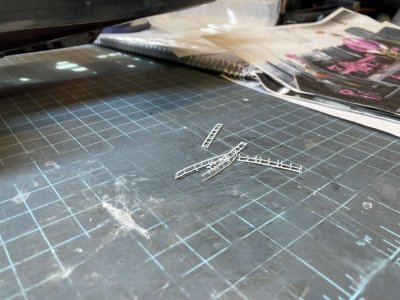
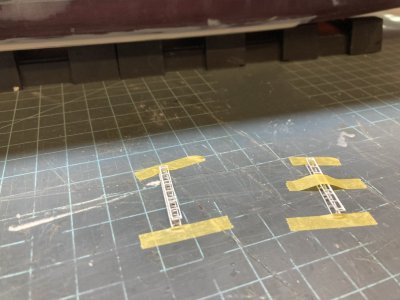
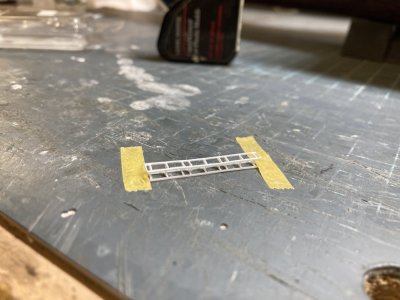
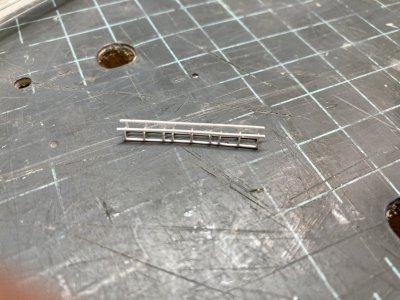
I made a coaming for the fantail opening. It extends inward but is smooth on the outside. On the starboard side there needs to be a small gap around the ACLS deck. On the port side there were ladder rungs welded to it part way up. The individual rungs were tried first but it was beyond my dexterity level in the confined space of the opening. I tried twice to drill the coaming for the rungs before installing it but I couldn’t get the rungs glued in position later. It wouldn’t be possible to glue the rungs in place off the model and then try to glue the coaming to the ship because of the pressure necessary to form it to the opening. Instead I used the 5 Star ladders like I used on the Powerplants doors.

I scratch built the engine test cell platform with strip and rod. It has a control console and a stand for the engines. On the long sides of the console 8 photoetched small oval doors were glued in place in 2 rows of 4. The controls and engine connections were behind these doors. I didn’t know if they were duplicated on the other side but I installed some there too.
X
Fantail (23).JPG

The coaming, ladder and test cell are all visible in this photo.

Fantail 013.jpg

This is a detail shot of the center fantail in the early 80’s. Some elements like the test cell and the AFFF hose reel weren’t there in the 70’s. The tank like object with It’s loop plumbing was.


I continued to detail the fantail bulkhead and the port interior with more wiring runs and plumbing. There is a complicated piece of equipment which I can’t identify surrounded by some odd plumbing. I found a photo of 1966 Enterprise entering Pearl Harbor and although the photo is grainy and dark you can make out the vertical tank. I made the pipe and tank from plastic rod, punched discs and bits of strip. The plumbing was recreated with rod bent to shape. Some Black Cat valves finished this off. I don’t know what the loops were for, possibly some sort of backflow prevention. Then I added electrical panels, an AFFF fire station and an AFFF control group station. There were several light fixtures on the bulkhead and these were made from slices of channel for the base and rod for the lens. At this point I added some plumbing to the overhead for sprinklers and an “I” beam for the overhead crane.

Fantail (53).JPG

This shot shows the completed fantail bulkhead.


To model the round vent duct on the port side I used a piece of rod that would fit through the hole in the stern, detailed it with a slightly larger diameter disc at the end and then drilled it out. I passed it through the hole and marked its location on the bulkhead. I drilled this out to give the vent a solid resting place at both bulkheads. On the back side of the bulkhead I made a stop to limit how far in the vent would go. On top of this pipe suspended from the overhead is some sort of vent blower. I couldn’t tell if they are connected. I made this with 2 pieces of strip glued together to make the right thickness. I sanded the edges and on the inboard face and added some photoetch to detail it. I cut slices of channel and glued them to the bottom. These brackets straddle the pipe and locate the fan unit. To the forward edge I added a duct which runs inboard and enters the fantail bulkhead and some brackets to mount the unit to the bulkhead.

Fantail (33).JPG

The vent pipe in place on the port stern.


I positioned the fan on top of the round vent and glued it to the fantail bulkhead. Once it had dried I could remove the round vent and the fan remains in position on the bulkhead. There is a second duct running from the inboard side of the fan to a vent on the upper aft end of the port interior. There is a photoetch grate on the exterior. I glued this to the bulkhead but not the fan. You would not see the connection in any case (the real one exits on top of the blower but mine is positioned by the location of the exterior grill). I used some Tom’s Modelworks catwalk sections with attached railings to make a work platform around the fan.

Fantail (34).JPG

This shows the ventilation unit and catwalk on top of the vent pipe.

Fantail 007.jpg

This photo shows a great deal of detail on the stern it is a closer shot of the 1972 photo above


To make the numerous details physically on the stern I first tried the individual rungs again. I taped the drilling template over the area to port and drilled holes for 8 rungs. The smallest bit I own is a #80 Xacto micro bit (.0135 Inches or .3429 mm). This is too large and the rungs fall into the holes. I wasted 3 rungs to the garage floor before I got one installed. It just didn’t look right with the large holes. I do want to try these out but I probably won't use them on this model now. The smallest bit I could find online was .1 mm. I ordered some circuit board drill bits from .1 to 1 mm.

I filled the holes in and went back to something that I know works. I used the 5 Star ladders there, in the center and a longer one next to the lower set of drop lights. There are 2 wider rungs inboard of the port ladder. I found some wide ladder on a Tom’s Modelworks sheet and cut away 2 rungs folded them at the second rung and used the folded section as a gluing surface. I made 2 of these and glued them in place. There is a bracket and some other unidentified details that I made from bits of plastic strip and glued on the hull.

The 2 folding braces on the stern are represented in the Eduard Part 5 set and I glued these on either side of the center ladder. They are very fragile the lower hinge on the smaller brace just broke away from the force to cut the fret. I had to replace this with plastic since the tiny hinge disappeared. I wanted to use the Eduard ladder/drop light part but I broke it trying to fold the lights over and then some of the ladder rungs too. I broke all the lights off and use the part as asingle layer without the ladder². The part is too flat around the lamps even if I had managed to fold it. In the Glenn Hoover Model Build Instruction Series on the Enterprise he uses the kit part to supplement the Eduard part and so that is what I did too.

I took the kit part for the lower section of lights and sanded the back down until the connecting link was very thin. I then cut the lights apart into individual lamps. I placed the strip of the Eduard part with the lamp locations next to the ladder and then glued the plastic lamps on it one at a time. This looked pretty good actually. The upper lamps are smaller because they aren’t in the waterproof boxes like the lower ones. I made these out of small pieces of strip and a punched disc. These 2 parts will not be installed until the platform is permanently located.

Fantail (47).JPG

This shows the fantail with most of the detail on the stern exterior.


The outlet pipe on the port side has several supports to hold it up. I dithered around with many options to make this part. I wanted it to be affixed to the pipe so I wouldn’t lose it and I needed to keep the pipe removable for now. Since I had 3 different types of hose reels for the flight deck fuel stations I could afford to use one or two to make the struts. None of the three sets had any reels that were large enough in center diameter to drill out so the pipe would fit. I found a ring that slid over the pipe on an old set of photoetch from my spares. I soldered this to the center of the hose reel (I did not think it would hold up if I just glued it).

Fantail (48a).JPG

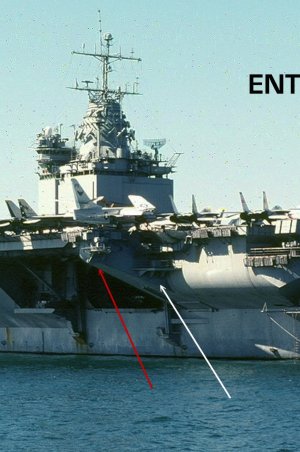
The white arrow in this photo shows the troublesome support bracket for the vent duct.


I drilled out the center by slowly increasing the drill bit size until I arrived at 1/16”. I cut away a section of the outer ring and tapered the part over a pencil. It slid into place on the pipe and the pipe was positioned on the fantail then I glued the support to the pipe only. It took 3 hours to finally make one that worked. I destroyed 3 while drilling, lost 2 to the garage floor and finally glued one to the part. I probably should have given up after 2, certainly after 3 but I just could not reconcile giving up. No expletives were uttered, maybe a moan or groan or 10. I just doggedly kept trying until I got it right.

Fantail (56).JPG

The railing and the upper platform for the accommodation ladder on the port side have been added to the stern. The stowed ladder and catwalk are installed above the fantail.


The upper platform for the accommodation ladder is modeled in the stowed position. It closes off the opening for the ladder at the rail. I used a platform for an accommodation ladder from a Tom’s Modelworks set and some angle brackets from the L’Arsenal to make the folded platform. I arranged the supports by the photo. I glued this on the stern at the proper location. I cut sections of generic rail to make the stern railing and glued them in place on the hull. I did have to remove sections of the lower rails around the 3 fairleads.

I had to do this twice also because test fitting the 2 upper drop light pieces indicated that both outer fairleads were out of position. So the two fairleads were removed (I didn’t break them yay) and glued them in the new positions. Then new sections of generic railing were glued to the stern hull. I had to remove the deck both times. I did this to keep from gluing it at the stern prematurely. Eduard does provide railing for the stern but it is in multiple sections for working around the 2 platforms that are added for the 1982 and up Enterprise.

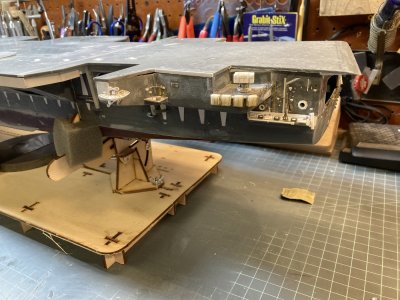
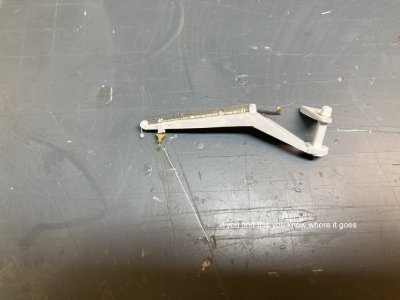
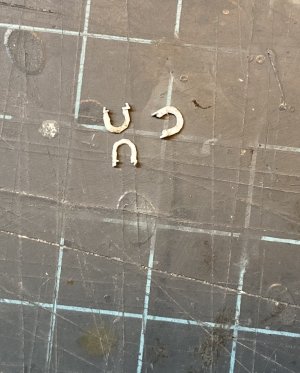
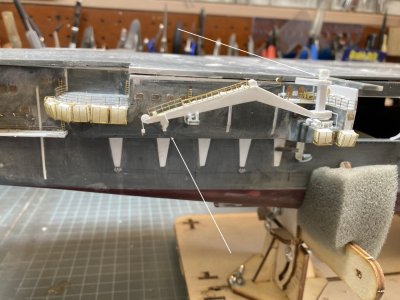
The final item was the catwalk and accommodation ladder above the fantail opening. The Eduard Part 5 set does include these items. !2 tiny parts must be cut from the fret, folded and assembled. The set has you rig the accommodation ladder like the crew were going on liberty and does not provide instructions for stowing it. I thought that it would be easy to mount the braces for the lower catwalk with the angles left out rather than folding them in per the instructions. The real angled brace would swivel in or out as needed but they are far too long. I cut them off, shortened them and glued them back in place sticking straight out to hold the ladder.

Fantail (59).JPG

The mostly completed fantail with the ACLS platform test fitted.


There is a small inclined ladder to make the transition from the upper to lower catwalk which I mangled trying to fold. I substituted a cut down one from the White Ensign sheet. There seems to be some issue between me and Eduard. I managed to fold the accommodation ladder rungs the wrong way and of course when I tried to fix my mistake they all broke off (I can't blamethis on Eduard). I used a generic accommodation ladder from Tom’s Modelworks. I cut off the handrails and glued them lying on the steps of the ladder. I also cut off the top and bottom platforms since they weren’t needed.

Fantail (65).JPG15 Fantail (65)

Here I have test fitted the fore and aft strut and the inclined ladder to the platform. I have not shortened the ladder yet.


So the fantail is mostly complete all the parts are made but not necessarily installed yet. This is the end of part 13. In the next section I will work on the aft port and starboard sponsons 10 and 11 respectively. Thanks for looking over my work and happy modeling.
 
Last edited:
Back
Top