



• Win a Free Custom Engraved Brass Coin!!!
    As a way to introduce our brass coins to the community, we will raffle off a free coin during the month of August. Follow link ABOVE for instructions for entering.

My 1/72 scale aircraft

Update on the Fokker DVII…
The struts were painted and I added the outboard gauge…
IMG_0949.jpeg
IMG_0951.jpeg
Then the upper wings were finished…

IMG_0948.jpeg
Well…until I decided to add one more thing…

IMG_0952.jpeg
Always loved the angled stripes on wings. ;)
Time to add struts for the upper wing…

IMG_0954.jpeg
Once these dry I can start adding the upper wing. I have found if you put these outer struts in first, on a lot of airplanes, you can add the inner ones after the fact. Not all, but some. I take advantage of that when I can! ;)

See ya soon…
 
Last edited:
As always, very smart work. Doubly so in 1/72. I’m jest a little envious! :D

Given the beautifully tight rigging on the albatross, I’m surprised that you didn’t rig the Fokker’s undercarriage.
 
As always, very smart work. Doubly so in 1/72. I’m jest a little envious! :D

Given the beautifully tight rigging on the albatross, I’m surprised that you didn’t rig the Fokker’s undercarriage.
Thank you! Working in WW1 aircraft in 1/72 scale is a bit crazy! Yet I keep punishing myself …ROTF.
You are correct, there are two cables on the landing struts. And there is also one from the vertical stabilizer to the horizontal stabilizer on each side. These tiny aircraft are no fun to rig, but I do it for realism. However, sometimes I leave some of the rigging off. The reason is two fold. One because it involves drilling a hole at each end of the cable and using super glue…and I am allergic to superglue fumes and if not careful pay for it with the flu like symptoms, which is why I hate the new PE stuff. And the resin parts are not much better in that regard.
Second is it makes the model difficult to handle or dust. I have had to repair rigging on a few of my models before.
In conclusion, I may still add them in the future because it completes the look of the scale. ;)
 
Thank you! Working in WW1 aircraft in 1/72 scale is a bit crazy! Yet I keep punishing myself …ROTF.
You are correct, there are two cables on the landing struts. And there is also one from the vertical stabilizer to the horizontal stabilizer on each side. These tiny aircraft are no fun to rig, but I do it for realism. However, sometimes I leave some of the rigging off. The reason is two fold. One because it involves drilling a hole at each end of the cable and using super glue…and I am allergic to superglue fumes and if not careful pay for it with the flu like symptoms, which is why I hate the new PE stuff. And the resin parts are not much better in that regard.
Second is it makes the model difficult to handle or dust. I have had to repair rigging on a few of my models before.
In conclusion, I may still add them in the future because it completes the look of the scale. ;)

Dean, there seems to be quite a few hypoallergenic CA glues available now - have you tried any? (search "hypoallergenic ca glue")
 
Dean, there seems to be quite a few hypoallergenic CA glues available now - have you tried any? (search "hypoallergenic ca glue")
Yes, thank you. I was using a brand I found that worked. Then I ordered some that was much cheaper from Walmart, and it was a Chinese ripoff and I had a reaction…sigh! So the real stuff is not cheap. I have to order more. ;)
 
drilling a hole at each end of the cable

Yes, very difficult in tiny scale. I cheat in 148. I just tie my fishing line direct to the strut ends. Good enough for me.

I do secure the knots with CA, but like you, I react badly to it so I have to buy the expensive stuff. I keep it in the fridge. It seems to make it last longer.
 
I decided on one more change…the elevator was bothering me in black…so I painted it dark grey. ;)
IMG_0986.jpeg
IMG_0987.jpeg
I think this works better with the scheme.

In addition, to demonstrate how small these WW1 aircraft are once again…

IMG_0982.jpegIMG_0984.jpegIMG_0985.jpeg
They become difficult to handle once all parts are on. They are so small it’s easy to break a small part off if you don’t grab it in a spot where your fingers will not touch anything else. Which is the typically the fuselage.
 
I thought it would be interesting to compare the propeller and rigging of each WW1 aircraft I built thus far…
IMG_0988.jpeg
Wood grain prop and rigging

IMG_0989.jpeg
Wood grain prop and rigging

IMG_0990.jpeg
Laminated prop and rigging

IMG_0991.jpeg
Wood grain prop and rigging

IMG_0992.jpeg
Painted prop and riggingIMG_0993.jpeg
Painted prop with some wood grain and rigging

IMG_0994.jpeg
Laminated prop and no rigging

IMG_0995.jpeg
Laminated prop and no rigging

IMG_0996.jpeg
Wood grain prop and rigging

IMG_0997.jpeg
Wood prop and no rigging

IMG_0998.jpeg
Wood prop and rigging

IMG_0999.jpeg
Laminated prop and no rigging

So you see, each time I build one, I create a wood prop that is unique and I make it up as I go! ROTF Some WW1 aircraft had rigging and some didn’t or had very little.
 
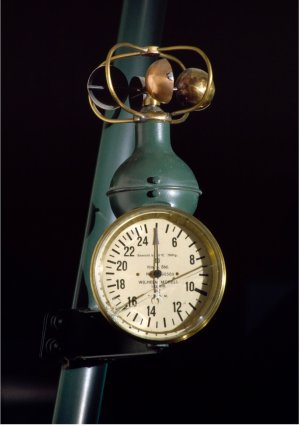
I'm not an A & P (airframe and power) certified person, but I believe the modern aircraft use a form of pressure sensing to determine airspeed.
They used a pitot tube forever…not sure about modern fighters? I think they all still use one. The Camel used one in WW1, and they have been in use ever since, as far as I know.
 
Last edited:
Back
Top