


Wishing for a speedy recovery, my friend!

 |
The beloved Ships in Scale Magazine is back and charting a new course for 2026! Discover new skills, new techniques, and new inspirations in every issue. NOTE THAT OUR NEXT ISSUE WILL BE July/August 2026 |
|
 |
As a way to introduce our brass coins to the community, we will raffle off a free coin during the month of August. Follow link ABOVE for instructions for entering. |
|

Good morning John. At least you had the courage to post your video. Mine are horrendous and stay well in my cloud never to be sharedHi All,
Lologaditano, Grant, Rob @rtwpsom2 thanks of course much appreciated
Papatolos THANKS for your many likes
And thanks to all mates for looking at my first - poorly made - video. I've been practicing and now getting better. I'll post a couple of "completed" videos - then wrap this one up.
===========================================
PS: I don’t know where to post this thread -- But for builders interested building this kit -
View attachment 557819
I just ordered this one directly from the best legitimate retailer in Japan for the Woody Joe kits (Zootoyz) WHY? - the ¥ has taken a very significant beating against the $.
This kit retail sold (level 4) there are two versions the level 2 is more simplified and does not allow for many inner hull parts for added details. Level 4 $202.00 USD - Ebay sells them for north of $300 USD and add $100 shipping - AND those sellers don’t specify if kit is level 2 or 4. hmmmm??
With shipping out-the-door to CA -- $250.00 a great price for this interesting kit - there are a couple of builders here who have logged their work
@Submarinerblue here is his completed images log - really great!
!
Higaki Kaisen Finished
This is my finished Japanese 17th century cargo ship 1/72 scale from Woody Joe. The kit is beautifully designed and while the instructions are in Japanese they are very clear and well illustrated. This ship is very different from western ships. No keel, no deadeyes, no ratlines, a retractable...shipsofscale.com
AND this one - wow as well @Ekis
Higaki kaïsen 1:72 (Woody Joe) byEkis [COMPLETED BUILD]
A new shipyard opens ! A little history... Two types of sailing ships, once used to transport taru (casks) of sake from Kamigata (上方, the present Keihanshin area of Kyoto, Osaka and Kobe) to Edo (now Tokyo). Until the Meiji period (1868-1911), movement from the center of the capital Kyoto to...shipsofscale.com
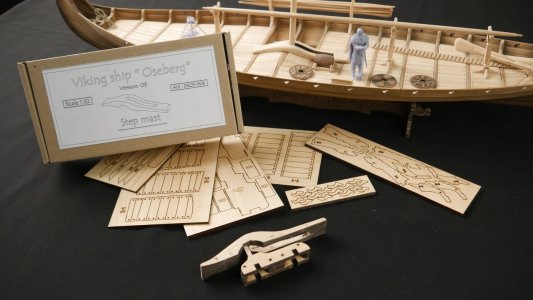
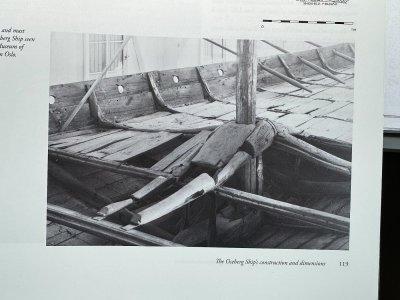
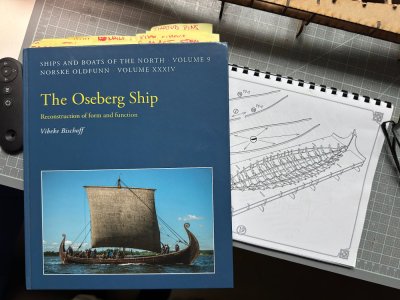
My next project - Pavel’s Oseberg should be, for me, a quick project (that is of course subjective) so this Higaki Kaisen is "a long term investment" haha - that reminds me of George Carlin who joked that his mother bought green bananas as "a long term investment".
Cheers,
 . Looking forward to your Oseberg however that Japanese ship looks cool. Variety is the spice of life they say…..well mostly. Good luck with the wrist recovery. Cheers Grant
 You have been a constant inspiration for me and certainly many others on how to improve their building skills.
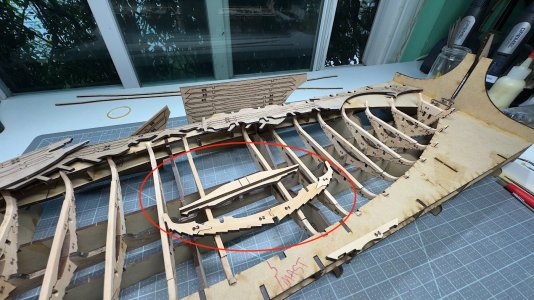
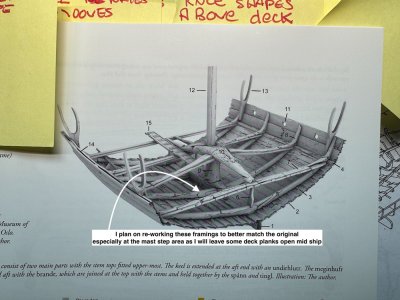

Hi Kurt,There was no wheel with ropes and pulley running to the tiller. In the early 17th century and before, ships were steered with a whipstaff. The helmsman operated it from under the halfdeck or from a room on a sublevel below the main deck or upper gun deck. The helmsman could often look forward out portals across the main deck to hear orders from officers above, or if the helm is located too deep within the ship, orders were relayed down to the helmsman.
From zu Mondfeld:
View attachment 356550
View attachment 356551
Working whipstaff on model of HMS Sovereign of the Seas. The Sovereign is probably the largest ship capable of being controlled using a whipstaff. The ships wheel has many advantages over the whipstaff, foremost being the ease of which a heavy rudder under great force can be positioned and held. It probably took more than one person to hold the whipstaff with the rudder at extreme angles if heavy seas.
View attachment 356553
The tiller protrudes from the transom, and will be incorporated into the rudder later in the build. The tiller and whipstaff are positioned "hard to larboard".
View attachment 356552
View attachment 356554
 keeping quiet and learning from the most experienced members of the forum, haha. For the past two days, I haven't been able to tear myself away from this John thread. BTW, John, I’m not commenting on the original thread because it’s a bit old and you might have already finished your SOTS!! And I wouldn't want to make it any longer than it already is, so I can finish analyzing it sooner hahaha, just kidding. I still have the second half of the thread to go, but honestly, your documentation of the build is more than spectacular (I have no words)!!! Since I’m here, I wanted to ask you Kurt if you happen to have any diagrams showing how to adjust all the bulkheads to build out all the gun decks. Remember, my kit is the Mantua version, as I mentioned to you at some point, I don't like the dummy models, so for me, that’s something that will 100% be changed in my SOTS. But I see that John didn't make the modifications to build the gun decks, which is why I'm asking you; maybe you've heard of someone, or perhaps someone will see my reply and help me out with this. I know the bulkheads are completely different from the DeAgostini ones, plus it's a smaller scale. That’s the look I want for my Mantua SOTS—along with adding LEDs, of course.
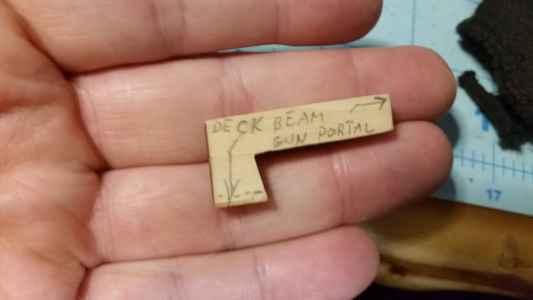
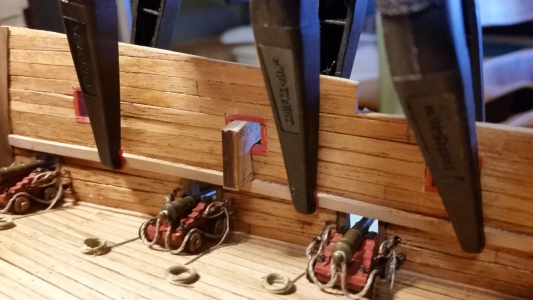
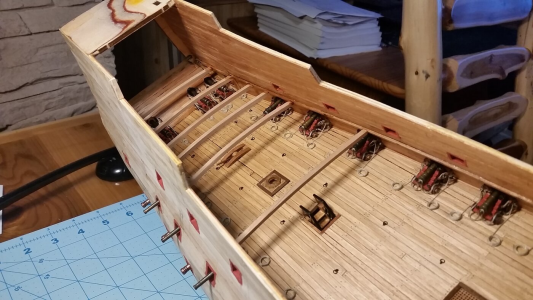
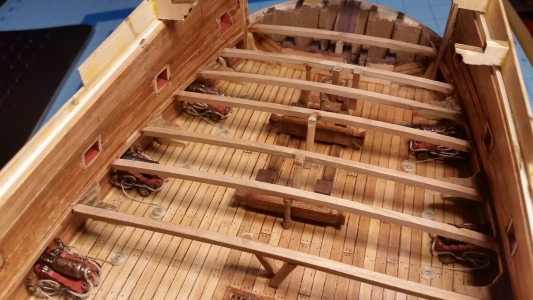
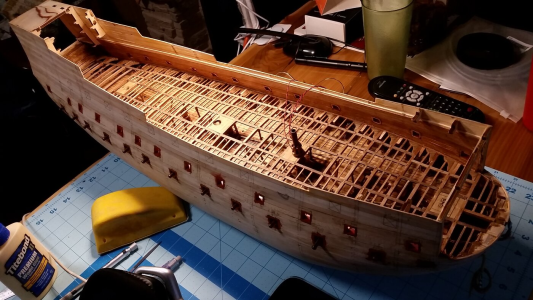
The vertical position of the gun decks was determined by the position of the gun ports. Obviously, the gun port bottom sills have to be a certain distance above the deck in order for the guns barrels to be at the proper position vertically in order to be able to depress and elevate when aimed. Starting with the gun port locations, you work backwards and determine where the lower decks need to be using once of your completed cannon carriages. When you know how many millimeters the deck should be below each sill, then you figure out how thick the deck planks and false deck beneath those are. add that thickness to the sill height, and there you have distance from the sill down to the top surface of the beams that support the deck. After that, create a jig that inserts into a gun port, and has wood that extends down to the level of the top of the beam surface. That tool will ensure you set your deck beams at the correct height at the gunwales as you install them.Hi Kurt,
I’m still here taking notes
As always, I thank you in advance for your prompt response.
 "Aye, aye, Captain!"


Hi John,Hi,
Had forgotten about this log - Finished - Had meant to post some completed images and where she is now permanently displayed.
Will look and post a few more images and mark this log as completed.
Jacapa412 -- glad that you found some bits here interesting - thanks for your kind words
Regards,
View attachment 611143

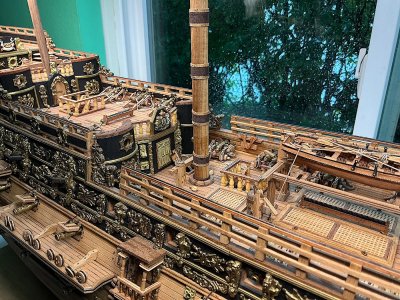
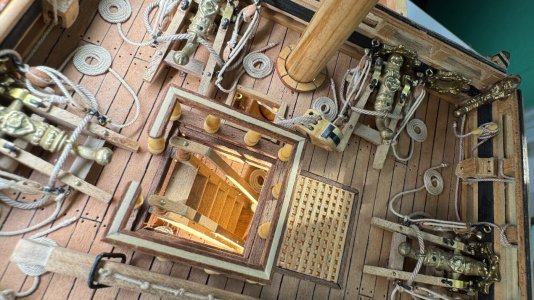
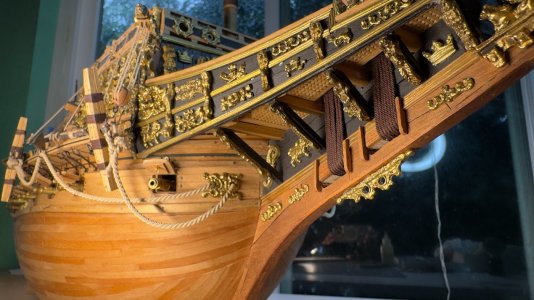
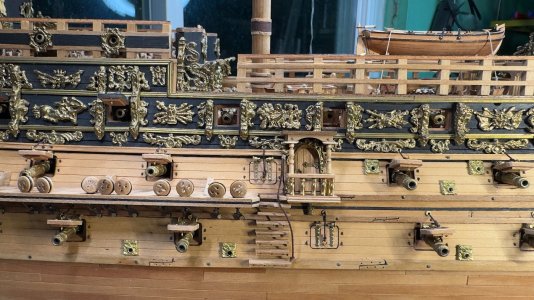
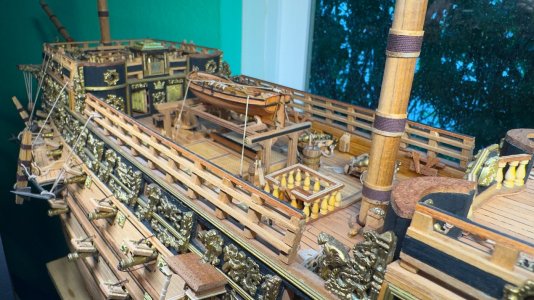
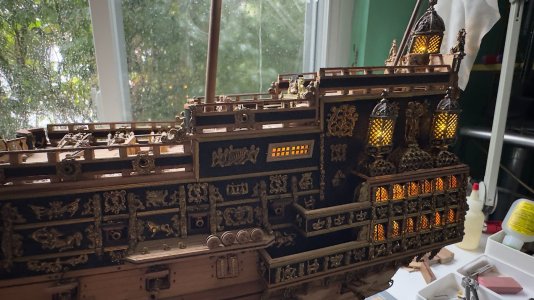
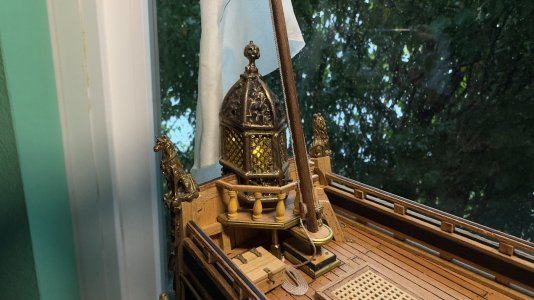
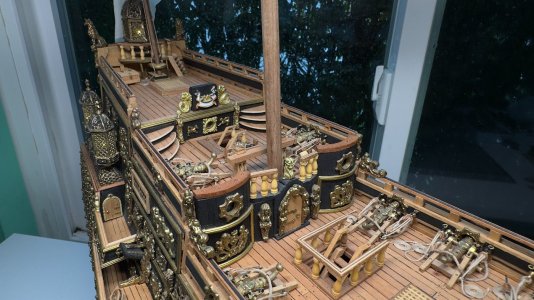
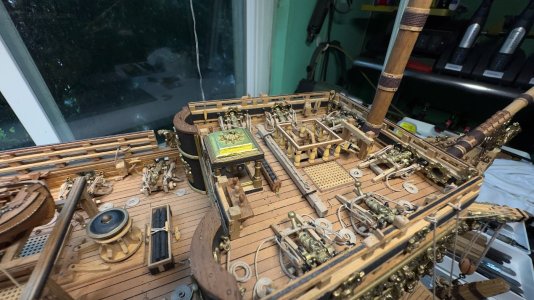
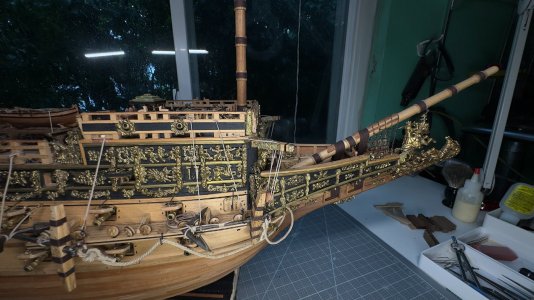
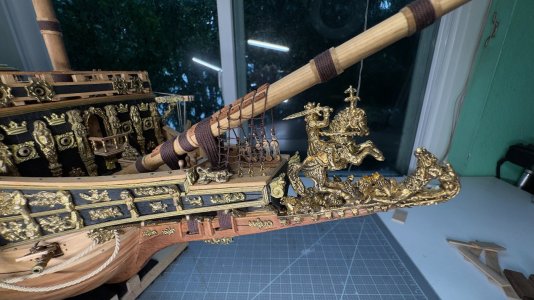
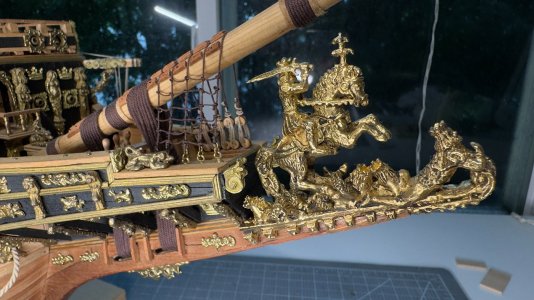
SOOOOOOooooo Pretty!Hi all,
Jacapa412 Wow so kind you to post such positive comments Thanks SO much. I understand your interest in trying as faithfully as possible to replicate a much more accurate example - The Sergal kit won’t help in that regard. But I hope that some of my bashing of this kit will offer you some ideas…
Daniel - again you are SO nice - touched by your estimation of how this example turned out. Big hugs my friend…
TexBilly - hi - probably too many images - thanks for your post…
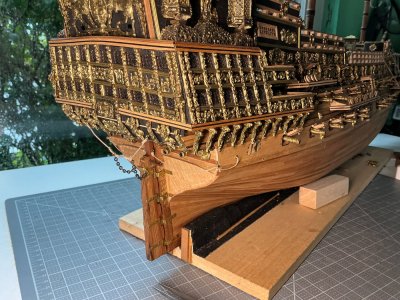
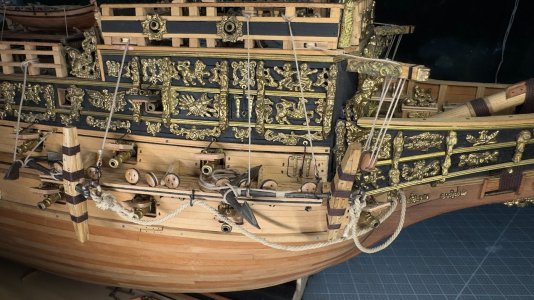
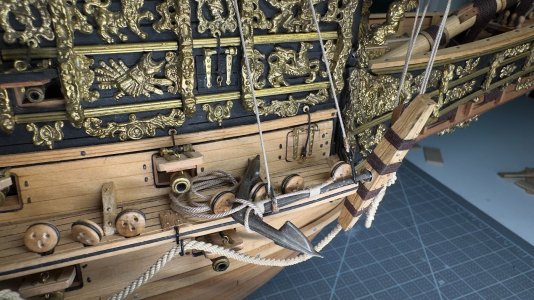
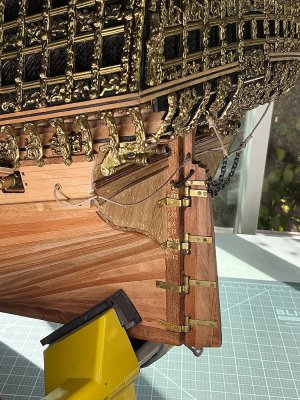
Here are some (too many) images from the - finally - finished hull model for this log.
Please note that I had the luck of working from two new kit two examples - the vintage one from the 1980s that included some 600+ solid bronze decorative bits, as well the current kit picking through the improved bits from that kit but, NOT using any of the decorative very poor quality, by comparison, metal bits.
The current kit much to its detriment (IMO) has replaced all of the solid very well cast vintage solid bronze bits with a sort of much cheaper and by comparison poorly cast metal and added some - what appears to be electroplating. Scraping the back of a new bit removes the “gold” and results in white metal underneath.
Next final post will have images (just a few) where it’s being displayed..
Regards,
View attachment 611660View attachment 611661View attachment 611662View attachment 611663View attachment 611664View attachment 611665View attachment 611666View attachment 611667View attachment 611668View attachment 611669View attachment 611670View attachment 611671View attachment 611672View attachment 611673View attachment 611674
 Congratulations and thank you for sharing!
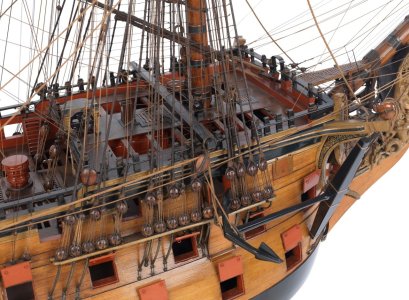
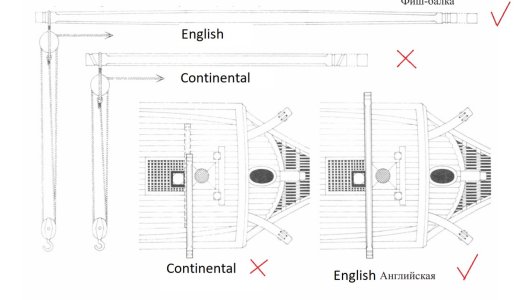
No, you've got it all wrong. You've made a continental fish davit, which was short. Until 1782, the length of an English fish davit was equal to the full width of the forecastle. Therefore, it was stored either on the forecastle bulwarks (drift), or with the spare yards and spare topmasts near the boats in the waist.Were the rope grabhandles ever placed on top of the fish davit like this...
So good to see some more pics of this beauty John. Cheers GrantHi all,
Jacapa412 Wow so kind you to post such positive comments Thanks SO much. I understand your interest in trying as faithfully as possible to replicate a much more accurate example - The Sergal kit won’t help in that regard. But I hope that some of my bashing of this kit will offer you some ideas…
Daniel - again you are SO nice - touched by your estimation of how this example turned out. Big hugs my friend…
TexBilly - hi - probably too many images - thanks for your post…
Here are some (too many) images from the - finally - finished hull model for this log.
Please note that I had the luck of working from two new kit two examples - the vintage one from the 1980s that included some 600+ solid bronze decorative bits, as well the current kit picking through the improved bits from that kit but, NOT using any of the decorative very poor quality, by comparison, metal bits.
The current kit much to its detriment (IMO) has replaced all of the solid very well cast vintage solid bronze bits with a sort of much cheaper and by comparison poorly cast metal and added some - what appears to be electroplating. Scraping the back of a new bit removes the “gold” and results in white metal underneath.
Next final post will have images (just a few) where it’s being displayed..
Regards,
View attachment 611660View attachment 611661View attachment 611662View attachment 611663View attachment 611664View attachment 611665View attachment 611666View attachment 611667View attachment 611668View attachment 611669View attachment 611670View attachment 611671View attachment 611672View attachment 611673View attachment 611674
Until the second half of the 18th century, there were no handles, whether rope, iron, or any other kind, and there never would be. This is confirmed by numerous documents from that era. The photograph below shows what our object would have looked like before 1750.What about the rope grab handles?