• Win a Free Custom Engraved Brass Coin!!!
    As a way to introduce our brass coins to the community, we will raffle off a free coin during the month of August. Follow link ABOVE for instructions for entering.
  • PRE-ORDER SHIPS IN SCALE TODAY!

    The beloved Ships in Scale Magazine is back and charting a new course for 2026!
    Discover new skills, new techniques, and new inspirations in every issue.

    NOTE THAT OUR FIRST ISSUE WILL BE JAN/FEB 2026

Sterling American Scout WWII Cargo Ship

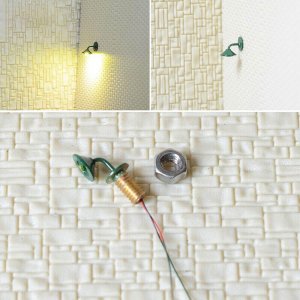
Yes, but there is no ridge around the outside of the porthole. I’ll try to post a photo later.
I may flatten the ridge, I haven't decided yet. It will be easy to do - drill a 1/8" hole in a piece of steel, insert the eyelet and a gentle tap with a hammer will flatten the ridge into a simple flange. The ridge isn't objectionable to me at this point in the project but I understand your point which I why I've already thought about flattening it if I decide it will look better that way. Thanks for the advice, it may push me towards flattening it :).
 
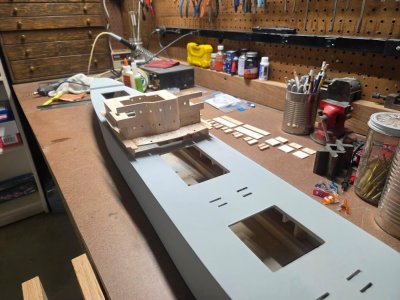
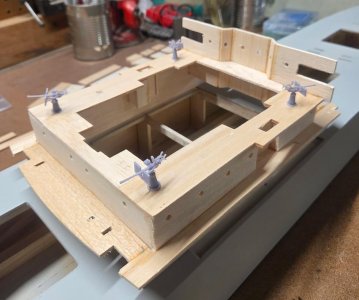
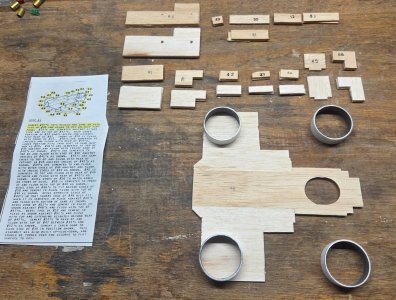
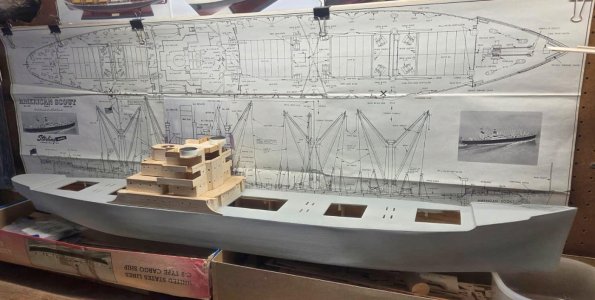
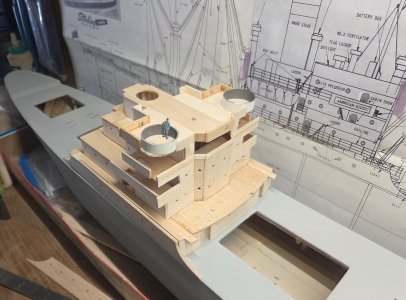
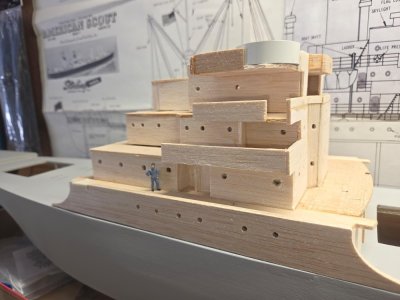
The instructions for the deckhouse in this kit are divided into four major steps, each of which involves a dozen or two parts. I've completed the first step at the new height. The new taller parts for the second step are on the bench behind the ship and those will get assembled next.

DeckhouseStep1.jpg
 
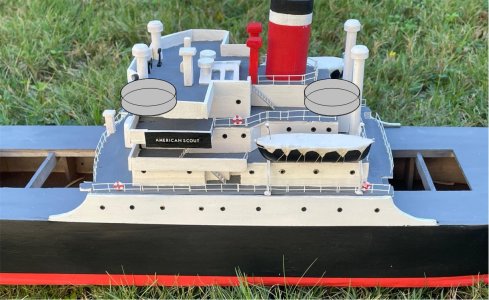
I think if you look at the finished model in the context of a C2 freighter and think "the deckhouse is too tall for a C2", you won't like it. On the other hand, I look at it as a "360' long ship that could be", much like Howard Lloyd's model pictured here which also has a deckhouse the height of which has about the same relationship to the length of the ship that my model will. For my purposes with the HO trains, I'm going for the impression of a cargo ship that "could be", not an exact scale rendering of any particular ship in the same way that Lloyd seems to have done.

View attachment 571461

Lloyd started out with a Dean's Marine "Melanie 2" kit in 1:96 scale, but if you look at the photos it appears that he may have made the deckhouse taller because the HO scale people on the upper part of the deckhouse don't seem out of scale.
I am considering making plank hatch covers like in the picture above.
 
I am considering making plank hatch covers like in the picture above.

I like them too and may do the same.

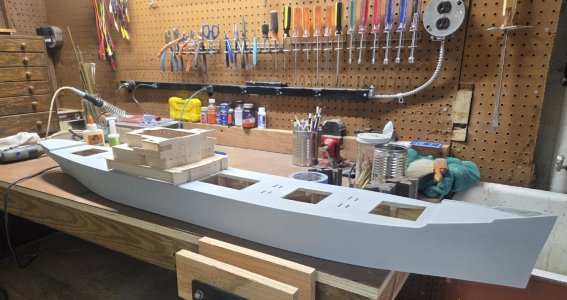
I like your workshop.

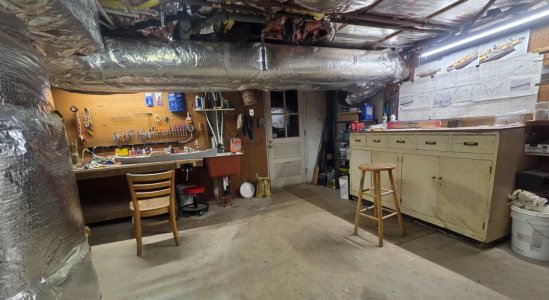
Oh the challenges of a 200-year-old house... this workshop, which I call my hobby workshop, existed in the basement when we bought the house. It really isn't big enough to be a real workshop but it's almost perfect for hobby work like this ship project. Because of the 80's-installed forced air HVAC system, my 6'5" height is too much for much of the space, in fact I had to rebuild the workbench at left to be lower because sitting on a stool high enough for the original workbench my head would hit the duct above. But I'm very happy with how the space worked out, it's perfect for model building.

HobbyWorkshop.jpg

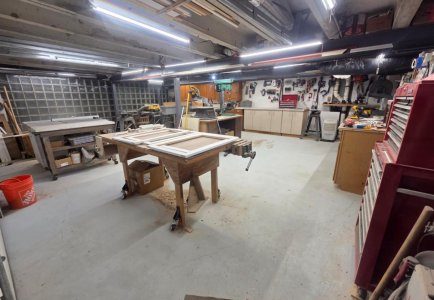
I also needed a "real workshop" because I need a space to do the many home renovation/restoration projects this house requires. Sometime between the 1920's and the 1950's a two-car attached garage was added to the back of the house. Unfortunately none of my Jeeps or my Grenadier will fit in it because the garage doors and ceiling are too low, so it became my real workshop. I do have to duck under the steel beams holding the roof up but other than occasionally banging my head when I forget to duck, it's a great work space. On the workbench in the foreground are frames for some raised panel doors I'm making for cabinets in the family room - built-ins were added in a number of rooms in the 70's and they've got plywood doors on them that in no way go with a 200-year old house. Many projects like this delay progress on my ship model :(.

Workshop.jpg
 
Back
Top