• SUBSCRIBE TO SHIPS IN SCALE TODAY!

    The beloved Ships in Scale Magazine is back and charting a new course for 2026!
    Discover new skills, new techniques, and new inspirations in every issue.

    NOTE THAT OUR NEXT ISSUE WILL BE MARCH/APRIL 2026
  • Win a Free Custom Engraved Brass Coin!!!
    As a way to introduce our brass coins to the community, we will raffle off a free coin during the month of August. Follow link ABOVE for instructions for entering.

USS Constitution - Model Shipway’s 5/32” = 1 ft. (1:76.8) Kit No.: MS2040

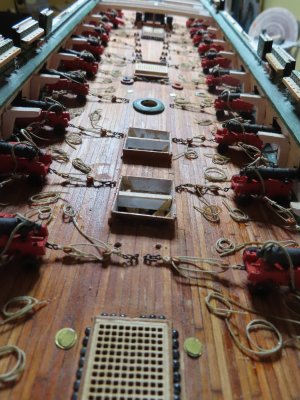
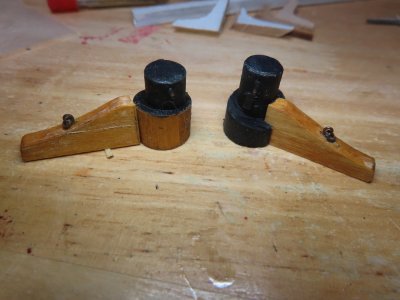
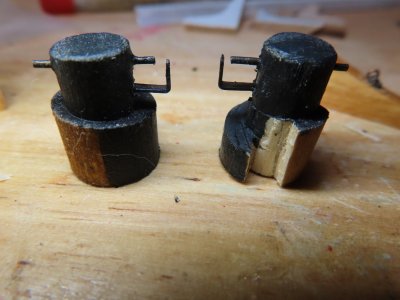
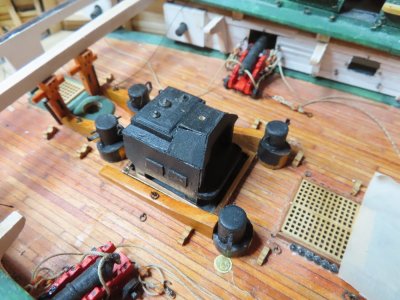
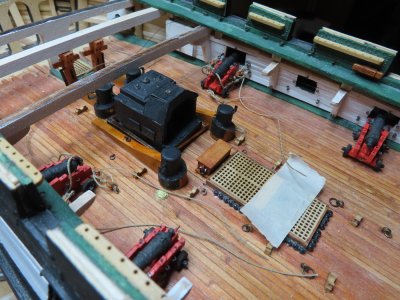
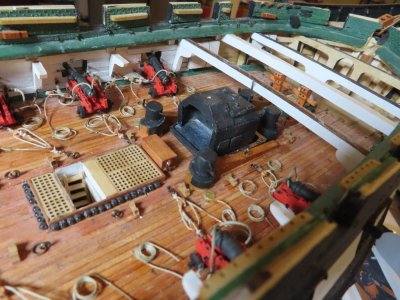
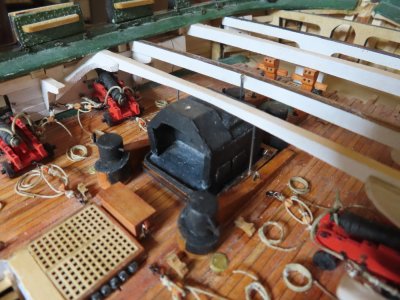
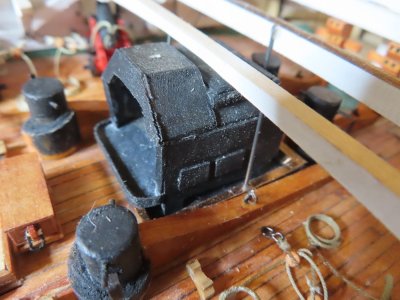
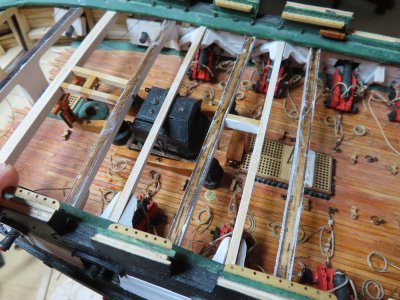
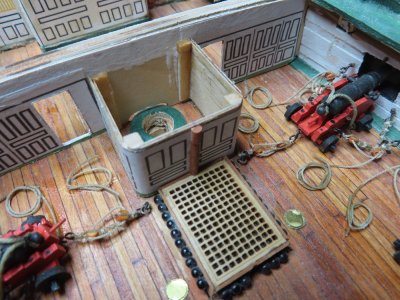
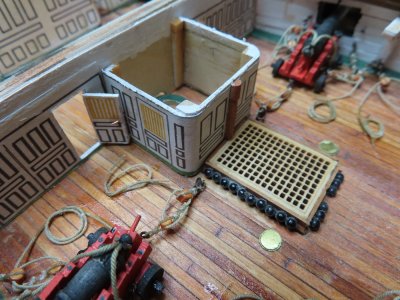
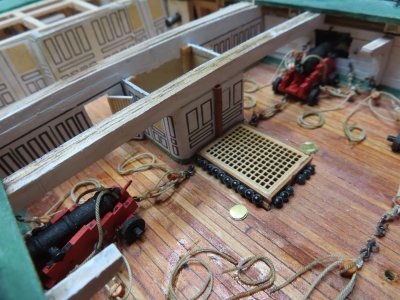
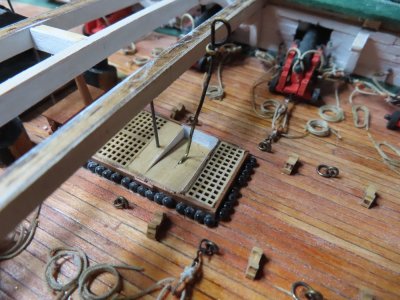
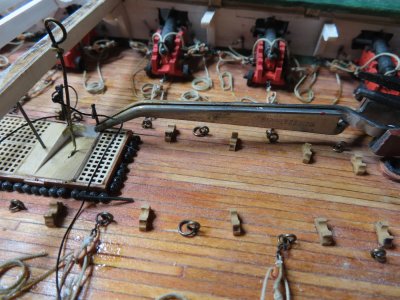
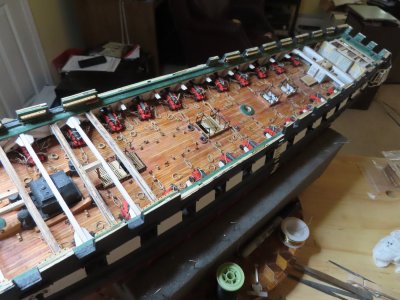
Then the next items to be installed were the anchor line bits and the stove with the stove tray which were previously fabricated. These were installed after dry fitting their final position and installing the spar deck beam that passes over the stove (not shown).

IMG_2517.JPG

IMG_2519.JPG

IMG_2520.JPG

IMG_2523.JPG
 
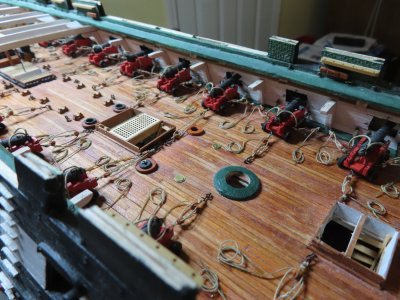
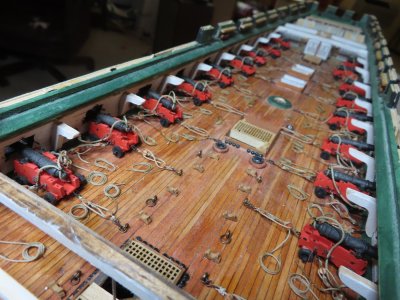
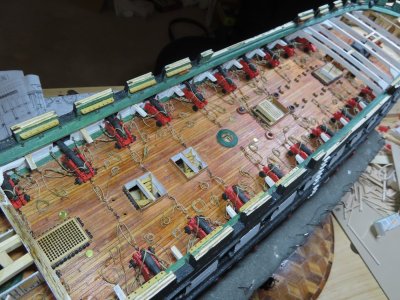
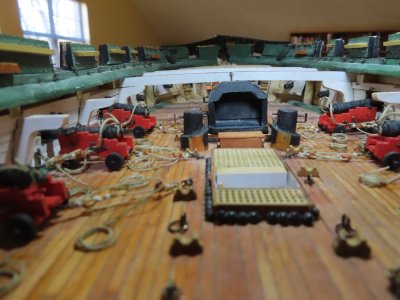
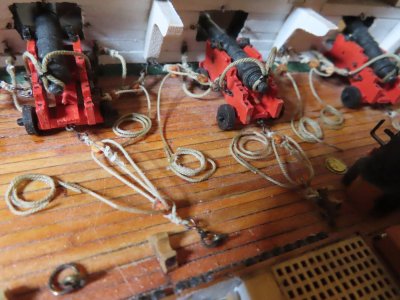
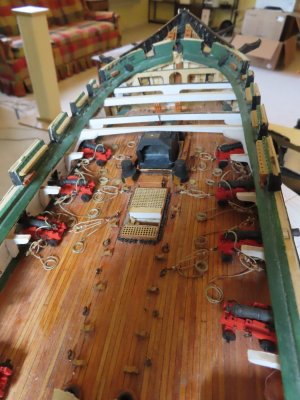
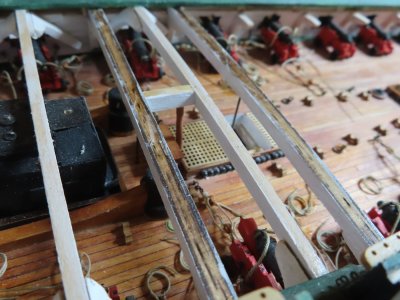
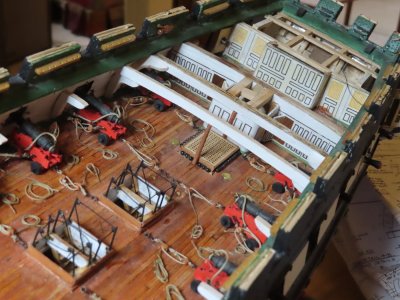
At this point, As I promised, the gun deck is becoming quite cluttered. I wanted the ship to look more like a working ship than one on display for the “Brass”, so no pretty coiled rope spirals.

IMG_2524.JPG

IMG_2525.JPG

IMG_2526.JPG
 
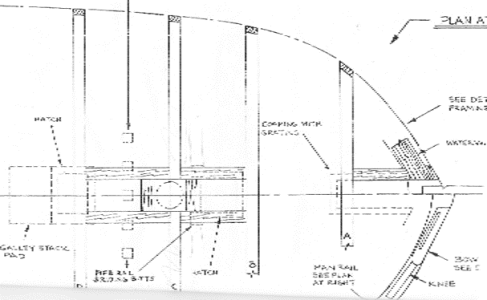
Finally, using the US Navy plan No. 022-06-2011 - Diagonal Rider & Knee Layout Revised 2011 (a minor revision of 27772, 1996) for the elevation view and No, 17636 Spar Deck Planking Removed 1926 for the plan view, I fabricated and added diagonal knees to the bulwarks around the gun ports of the rigged guns. Additionally, the three vertical stanchions around the stove were also fabricated from 0.032” music wire (for rigidity) and installed. Before I can move aft to the next section and while the gun deck is still accessible, I want to create spare deck structure to ensure the foremast will have a 3° rake when it is installed. As I have it presently planned, this portion of the spar deck is expected to be planked.

IMG_2527.JPG

IMG_2528.JPG

IMG_2529.JPG
 
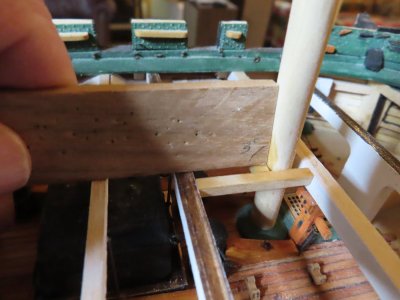
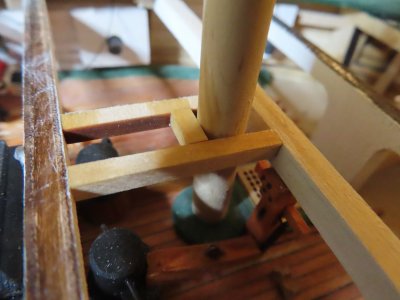
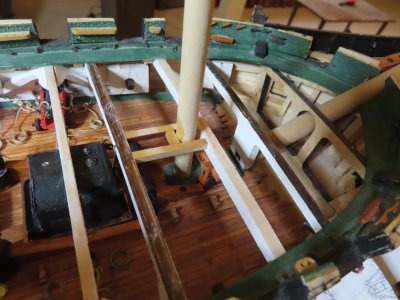
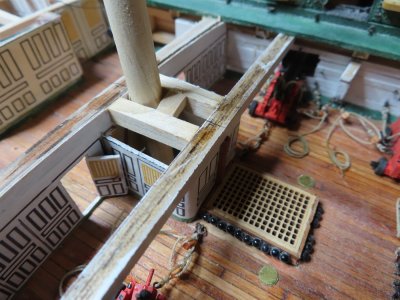
To fabricate the fore mast opening in the spar deck, two structural members were installed between bulkhead Beams C and D offset equally from the centerline by the width of the fore mast dowel. The dowel, sitting in its seat on the gun deck. restrained in its side to side motion, was now perfectly vertical to the beam of the model. Next, a piece of scrap wood’s edge was cut to 3° from the vertical. The scrap wood was now a 3° mast gauge. Placed on the beams, the dowel was pivoted aft back against the gauge and a cross beam glued into place to restrain the dowel’s aft movement. The dowel still has a little forward movement to facilitate removal and then its final placement. Once the foremast is seated again and leaned against the cross beam, it will at the proper rake of 3°.

It is to be noted that the position of the foremast on my model, is not exactly in the same position as shown on the MS plans. The MS plans have the fore mast seated in the C-bulkhead just under the spar deck planking. My fore mast is completely behind the bulkhead C and obviously seated in the gun deck’s extended keel. Why the slight aft position shift, I don’t know.

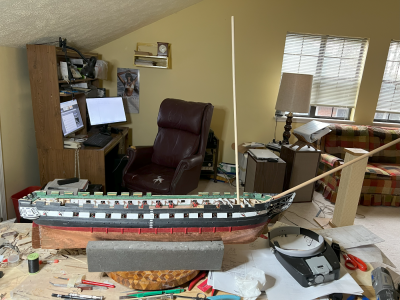
And just for grins and giggles I took a photo with the bowsprit and foremast dowels to get a sense of size of the model. That sucker is biiiigggg!

IMG_2532.JPG

IMG_2531.JPG

IMG_2530.JPG

Spar Deck Foremast Opening.png

IMG_1480H.png
 
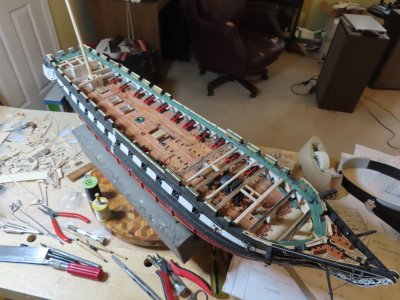
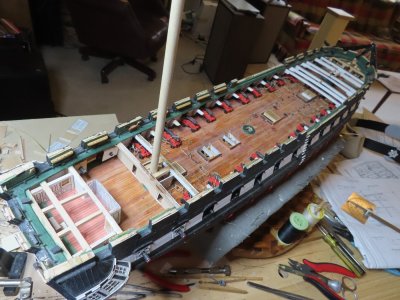
At this point, I’ve installed the main beams above the first two pairs of guns after the bow dummy guns. There are additional supplementary support beams between the main beams which I have not installed because this area will be mostly covered by the spar deck planking. However, as I progress aft, areas of the spar deck will be open to the gun deck for viewing. I haven’t decided whether to install some or none of these supplementary beams because they will substantially obscure the view of the gun deck. This last main beam (as you view the image) is just forward of the main hatch where the whale boat is to be stored on the spare deck. My original intension was to work aft from the bow adding the gun rigging, furniture, support stanchions and beams as I progressed. I have since decided to pause here and start work from the stern forward and pausing to construct the supports for the hatchways as I encounter them.

IMG_2540.JPG

IMG_2541.JPG
 
Dining Area Partition and Commodore’s Pantry

Early in the build, I did not partition the dining room area from the main gun deck area; I was going to leave that open. Since the present configuration of the actual ship has the partition in place, I’ve decided to recreate that on my model. Additionally, I did not construct the Commodore’s Pantry which encompasses the mizzen mast on the gun deck. I thought at the time that I might need that area open to facilitate the seating the mizzen mast. If I sequence assembling the parts correctly, I don’t think that will be a problem. The partition and the pantry will connect to each other.

2016 July - Restorers apply a coat of stain to Constitution‘s gun deck in front of the Captain...jpg

Picture29.png
 
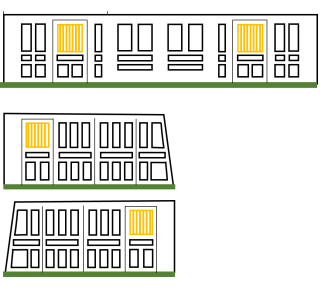
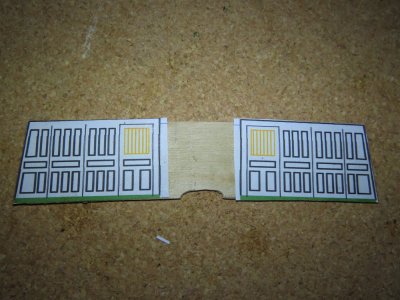
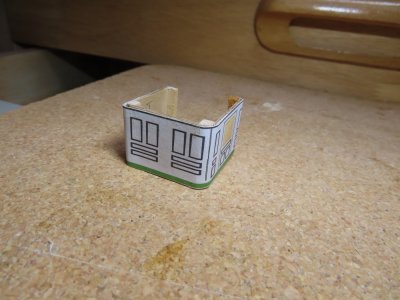
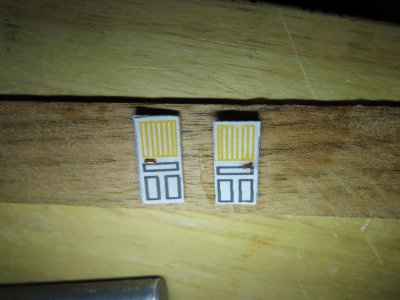
Using card stock, I made a template for the partition. Then, using 1/32” plywood, I fabricated the partition based on the template. Due to the expected confined viewing space and dark lighting inside the finished model, the partition and pantry walls details will not be seen clearly. Like I did for the captain’s cabin’s interior walls previously, I printed the details of the partition walls on paper using PowerPoint and pasted them onto 1/32” plywood.

Commodore's Pantry & Partitions.png

IMG_2543.JPG
 
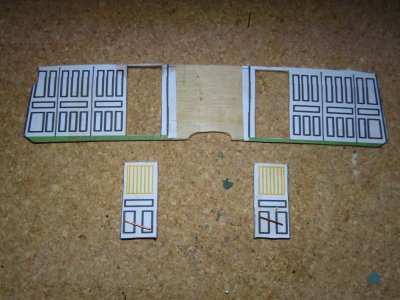
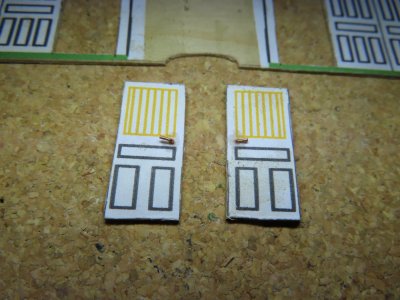
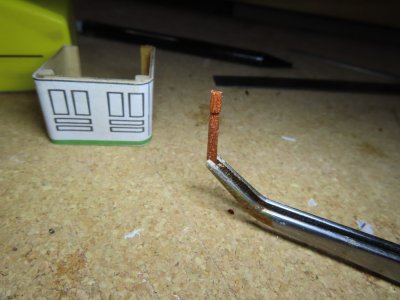
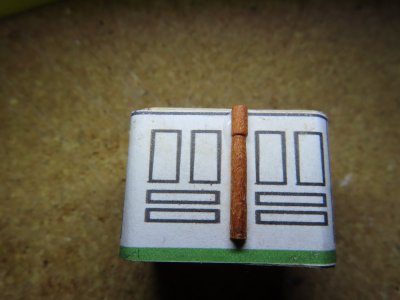
I cut the doors out of the plywood using an X-acto knife to add some depth in this space. Door handles were made from some bent wire to add some three dimensional detail. Should one be curious enough to look closely with a flashlight, the open doors will give a glimpse to the dining area. The open doors themselves will be added once the pantry is installed.

IMG_2545.JPG

IMG_2546.JPG

IMG_2554.JPG
 
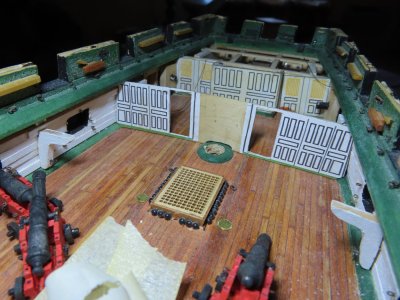
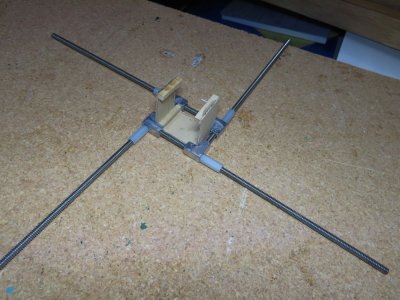
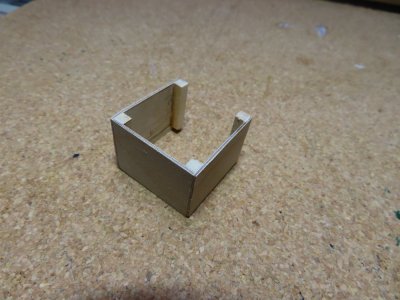
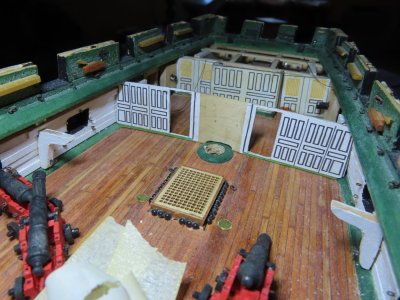
Construction of the Commodore’s pantry was made from three identical pieces of 1/32” plywood based on the US Navy plans and four vertical glueing surfaces. Using a four-way clamp, the three pantry walls were glued together. Next the two corners were filed to rounded them off. The partition was then dry fitted on the gun deck again for the image below.

IMG_2550.JPG

IMG_2551.JPG

IMG_2553.JPG

IMG_2554.JPG
 
Half Column on Commodore’s Pantry

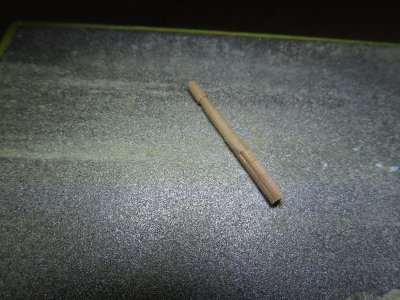
The next component was the half column at the center of the forward end of the pantry. This was fabricated just like the column aft of the stove, however one side was flattened using a block sander until only a half column remained. The half column was then glued to the front of the pantry.

IMG_2555.JPG

IMG_2556.JPG

IMG_2557.JPG
 
When I dry fitted the spar deck floor beam to the partition. I neglected to account for the effect it would have on the partition doors. I had drawn them too tall. Also, I noticed that the printed panels and doors were not to my liking, and the pasting work on the pantry front was not centered properly. So, all the printing and pasting had to be done over, as well as making new shorter doors.

IMG_2559.JPG
 
While all of this was going on, I was also busy rigging four more sets of guns to match pace with the gun deck construction. These had to be in position before I could glue into place the dining partition, the Commodore’s pantry, and the spar deck floor beams. The partition doors were then installed in an open configuration leading into the dining area. The last item was installing the mizzen mast supports giving the future mast a 5° rake.

IMG_2562.JPG

IMG_2563.JPG

IMG_2564.JPG

IMG_2565.JPG

IMG_2566.JPG

IMG_2567.JPG
 
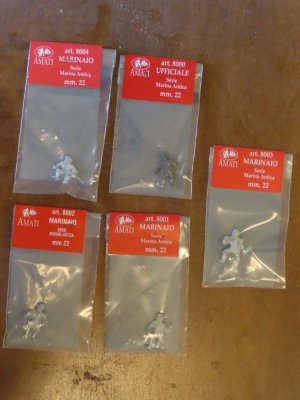
While continuing to work on rigging the guns, I took a diversion from this tedious task and once again went looking for figurines to be placed on the model later to add some scale. I added figurines to my 1:64 scale Rattlesnake which I finished in 2017 which worked out quite nicely and I want to do the same thing with the 1:76.8 Constitution which I started in 2017, but I’ve had no success finding any suitable figurines.

For a typical 5’6” (165cm) tall man, I needed something around 0.841” (21.34mm) at scale. I was seriously considering modifying HO train figurines when I finally found five 22mm 18th (?) century sailor figures at Ages of Sail. I’ve checked this site before numerous times and even got the 25mm figurines for my Rattlesnake (1:64) from them some 8 or 9 years ago, but I never saw the 22mm ones until now. Strangely enough, the two sizes do not have the same figures, and are totally different from each other. Still, I immediately bought all five and it may be years (at my rate of speed) before I’ll need them. Who knows how long they will be available?

Ages of Sail Figurines.png

IMG_2568.JPG
 
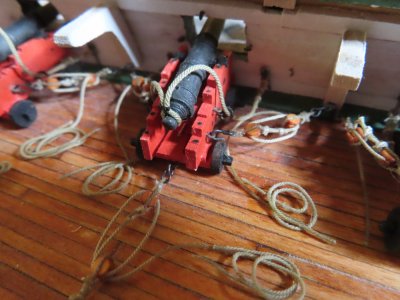
Getting back to the gun rigging, I decided to plunge in and complete the rigging once and for all. I just wanted to get it over and done with. Adding 22 fully rigged guns was no simple task. I made the following calculations and was staggered by what it revealed. From start to finish, adding eyebolts to the interior of the gun deck, to fabricating and assembling the gun trucks, and then rigging them, I got the following numbers:

There are 235 separate parts per gun port or 5,170 parts for 22 fully rigged guns not counting brass blackening, painting, and do-overs. Most of these had to be fabricated from scratch. That breaks downs as follows:

Gun & Truck = 26 pieces/gun = 572 pieces total

Item Quantity
Gun 1
Sides 2
Axials 2
Wheels 4
Transom 1
Breast Piece 1
Quion 1
Quion Handle 1
Quion Bed 1
Trunnion cap 2
Eyebolts 8
Rings 2

Gun Ropes (including excess waste)

Ropes/gun: 10 cut pieces/gun = 220 pieces of rope total
Recoil Rope: 1-6” piece 0.030” (0.76mm) dia./gun x 22 guns = 66 pieces = 132” = 11’ = 3.6 yds total
Tackle Ropes w/coils: 7” piece 0.018” (0.45mm) dia. + 1.5” (for double block)/tackle + coil = 8.5”/tackle + 1 rope coil x 3 tackles + coils/gun” = 7 pieces of rope/gun = 3 Tackles +3 coils/gun @ 25.5”/ gun = 154 pieces of rope = 561” = 47’ ~ 16 yds total for 66 tackles + 66 coils = 3,388 pieces total

Rope Seizings/
gun: = 21 rope seizings/gun = 462 seizings total = 3 yds thread total
Recoil rope seizings 6 seizings/piece = 24” of thread = 2’ total/recoil rope
Tackle seizings 5 seizings (@4”/seizings) /tackle = 20” thread/tackle rope
3 tackles/gun = 15 seizings = 5’ thread/gun = 3 yards thread total
Note
: rope coils made from excess rope and supplemented with additional rope

3 Tackles/gun = 6 blocks/gun = 132 blocks total
3/32” Single blocks 1/tackle @ 3 tackles/gun = 3 blocks/gun = 66 blocks total
3/32” Double blocks 1/tackle @ 3 tackles/gun = 3 blocks/gun = 66 blocks total
Block hooks 6/gun
= 132 hooks total

Gun Ports = 12 parts/port = 222 total
Eyebolts
: 10/port = 220 total:
Recoil Rope eyebolts/port 4 = 88 total
Tackle double eyebolts/port 2 = 44 total
Idle eyebolts/port 3 = 66 total
Deck tackle eyebolt 1 = 22 total
Recoil rope bulkhead pins 2/port = 44 total

Whew!!!

IMG_2573.JPG

IMG_2569.JPG

IMG_2570.JPG

IMG_2571.JPG

IMG_2572.JPG
 
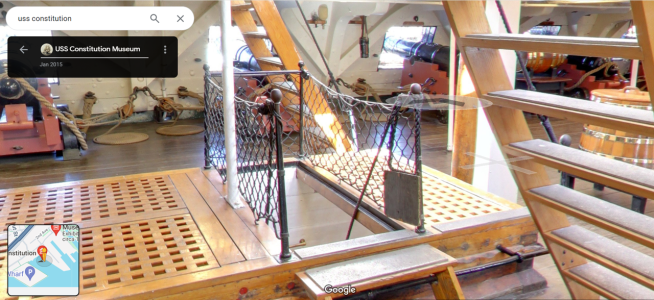
Waaaaayyyyy back in July 2018 when I was first installing ladders from the gun deck down to the pseudo berth deck level, I made and installed the associated ladder stanchions and hand ropes. They didn’t last long due to my inadequate fabrication and installation skills; and they were being battered about by handling the model installing other stuff. Well, due to my admiration and inspiration of Mustafa’s (mtbediz) fine workmanship of his model, I’m giving it another go. If I’m going to do it, it must be now before the gun deck becomes too inaccessible for this detail.

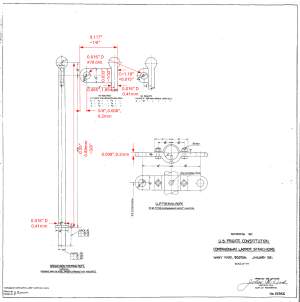
My first attempt, I tried to maintain the scale based on the US Navy’s plans and I wanted my stanchions to be robust enough to handle any jarring due to my manipulation of the model.

2015 January1 port.png

Ladder Stanchions.png
 
What to do? So, for my second attempt, I messaged Mustafa (mtbediz), the man who inspired me to do this over again. He very graciously gave all the details which I followed with some minor modifications.

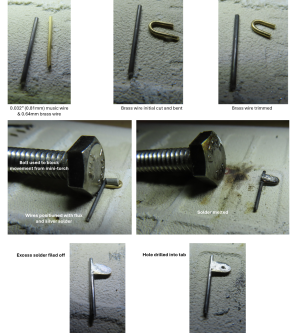
First, He used exclusively 0.8 mm brass wire, but I stuck with the 0.81mm music wire for the stanchion for reasons mentioned above.

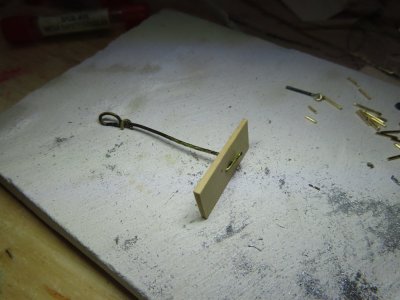
He used a short piece of 0.81mm brass wire to create the rope tab. I used a short piece of 0.64mm brass wire which was cut and formed into a U-shape like he did. It was trimmed so the ends were even and placed near the top of the music wire piece like a flag with the open ends of the brass wire touching the music wire.

Mustafa used lead solder paste (I believe) to fill the interior of the “flag” and secured the two pieces of wire in place with metal weights. I had silver solder paste but found mine wasn’t sticky enough to stay in place when I tried to fill the “flag” void (paste too old?). As a result, I used soldering flux and silver solder wire. The surface tension of the flux held everything in position. It was backed up with a bolt so it wouldn’t move during the heating process.

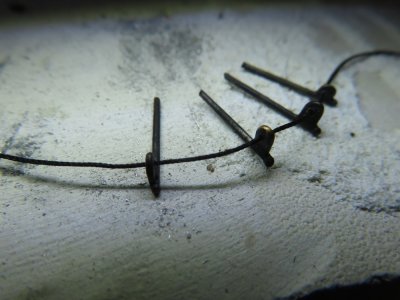
To heat the assembly so the solder would melt, Mustafa used a heat gun which I don’t have. I used a mini-butane torch which worked quite nicely. The excess solder was filed off and a hole was drilled through the solder without any problems. The stanchion were painted black, threaded with miniature rope.

Construction of Ladder Stanchion 3.png
 
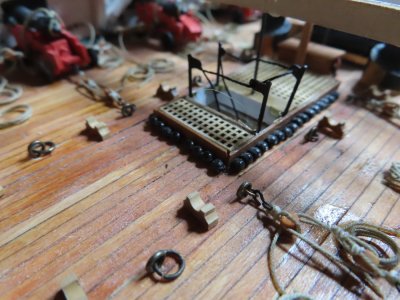
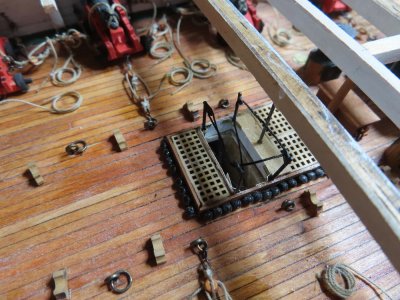
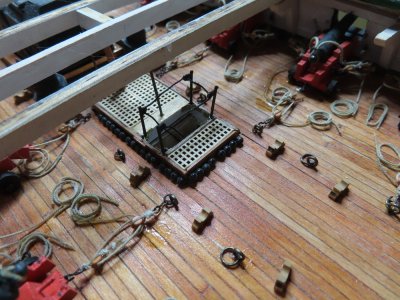
If you look closely at Mustafa’s model. His stanchions fit into holes drilled into the top of the hatchway walls. For whatever reason, the walls on my hatchways ended up being too narrow to drill holes for the stanchion poles. To support the stanchions, I decided to use brass brackets on the inside corners of the hatchway. Hopefully these would provide sufficient physical support and glueing surface to hold the stanchions in place. Making the brackets was simple but installing them was a little tricky. Due to the installed beams, the most forward hatchway was the most difficult to access. My fingers were too fat to fit between the beams, so I had to do everything with tweezers. I couldn’t use CA glue because I couldn’t get the bracket into position, hold it there, at the same time applying minute drops of CA glue. PVA glue allowed me to stick the bracket in close vicinity of where it needed to be and maneuver it into the proper position (still not easy). Once it dried, then I could add more glue for proper strength. Once the brackets were in place, then the stanchion could be set into them. This was a time-consuming process because I had to wait for the glue to dry solid before I moved on to the next step. I also made a stairway plug to prevent anything from falling to the hatchway, like a loose bracket. Once anything fell in, there was no way I could get it out. It was a black hole.

IMG_2591.JPG

IMG_2587.JPG

IMG_2588.JPG
 
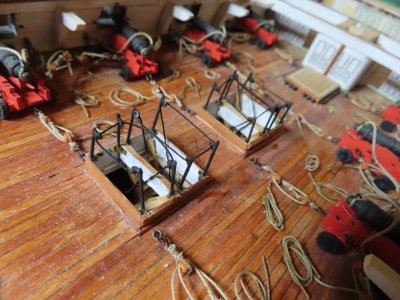
The stanchions were stung together with 0.12” (.30mm) black rope prior to installation so that I wouldn’t have to thread them on the model. Mustafa used tan rope which I must admit looks great, but the real ship uses black rope; but it doesn’t have the visual impact like the tan. So be it. It was slow, tedious, tricky, and time consuming. That’s one stairwell down, six to go. Hopefully these will get installed quicker.

IMG_2589.JPG

IMG_2590.JPG

IMG_2592.JPG

IMG_2593.JPG
 
Well, creating the remaining six stairwell hand ropes did go quicker, just not quick. Because I had to use PVC glue both to allow me time to position properly the 24 stanchions and as a filler material at the base of some of the stanchions, I had to wait at least an hour or so before I could move on to the next steps. During that wait I couldn’t touch the model for fear of upsetting the drying setup and process. If I had done this sooner (which I did) but more robust (which it wasn’t), this installation could have been much simpler to do.

IMG_2594.JPG

IMG_2595.JPG

IMG_2596.JPG
 
There is still a bunch of stuff that needs to be installed on the gun deck but requires the installation of more spar deck beams and those beams must be in the proper position to line up with stuff on the gun deck. It’s almost like which comes first, the chicken or the egg. So, I be installing both gun deck and spar deck items alternately.

To install the wood column at the forward end of the furthest aft gun deck hatchway, the spar deck beam had to be installed directly overhead of that column so it could support the beam. This beam is also supported at its ends by knee braces previously attached to the bulwarks which the gun riggings are now attached. Unfortunately, when the beam was dry fitted on the knees, the beam did not center directly over the column. It was about a beam’s width aft off. To dismantle and reposition the knees meant removing the gun rigging as well. I could do that or fudge it. Because where the knees and the beam ends join will be hidden when the partial spar deck is installed, the beam was moved forward just enough to get it centered over the column, just not sitting directly on the knees.

IMG_2597.JPG
 
Back
Top