


• SUBSCRIBE TO SHIPS IN SCALE TODAY!

    The beloved Ships in Scale Magazine is back and charting a new course for 2026!
    Discover new skills, new techniques, and new inspirations in every issue.

    NOTE THAT OUR NEXT ISSUE WILL BE MARCH/APRIL 2026
  • Win a Free Custom Engraved Brass Coin!!!
    As a way to introduce our brass coins to the community, we will raffle off a free coin during the month of August. Follow link ABOVE for instructions for entering.

USS Constitution - Model Shipway’s 5/32” = 1 ft. (1:76.8) Kit No.: MS2040

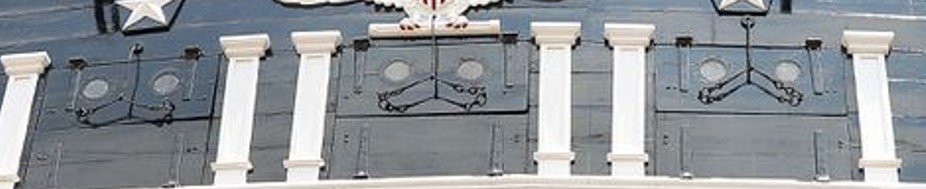
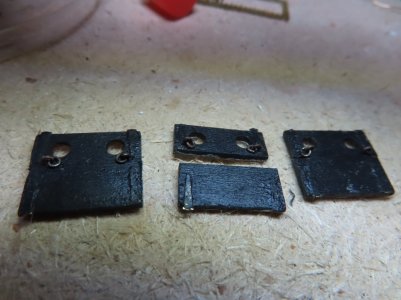
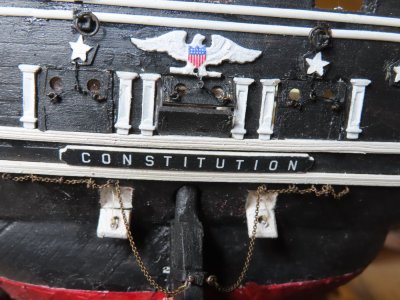
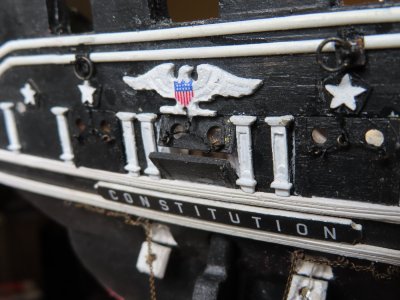
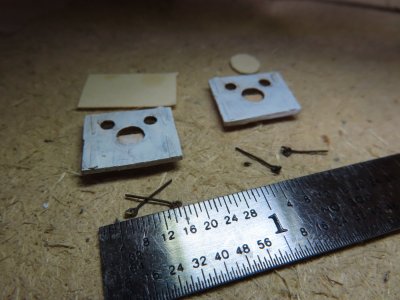
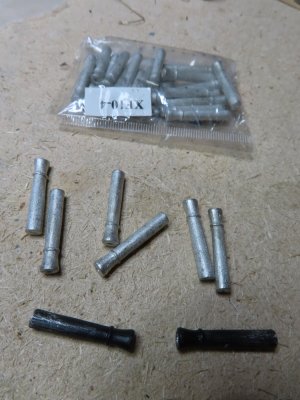
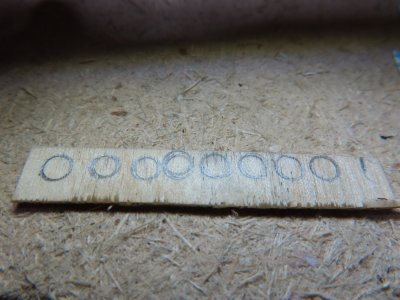
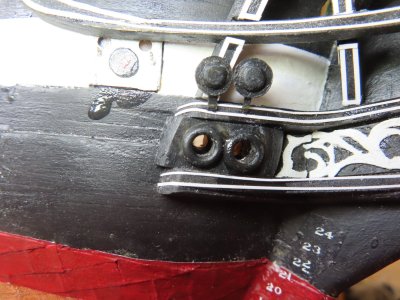
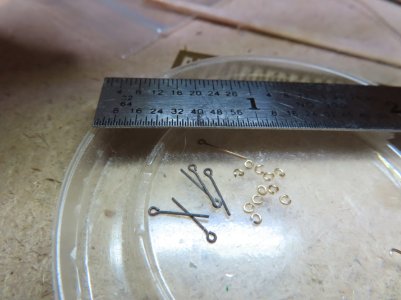
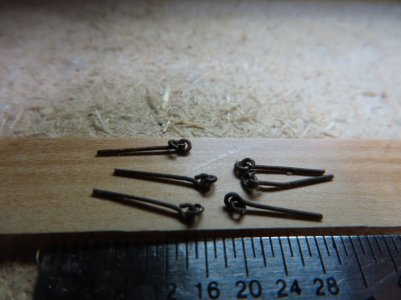
The kit does provide the 1/32” eyebolts, but I didn’t know which part of the kit they were intended for. The practicum doesn’t use them because Mr. Hunt used styrene to simulate the cord lines. I used mine that I bought as a bag of 100, years ago from Model Expo. They have come in handy many times. In addition to the eye bolts, I noticed that cord used to open the port doors is not simply tied to the eye bolts directly but have additional rings and accoutrements. Because I believe even my 1/32” eyebolts are still oversized out of scale even at this size, trying to emulate the rigging exactly was out of the question, but I wanted to suggest it. I made 1/32” rings from brass wire (the diameter of a #77 drill) in the typical way by wrapping the wire around a standard stick pin to create a length of coil, and then the coil was sliced up its length to create the rings, which were then blackened. The rings were then inserted into the eyes of the bolts.
IMG_2404.JPG

IMG_2406.JPG
 
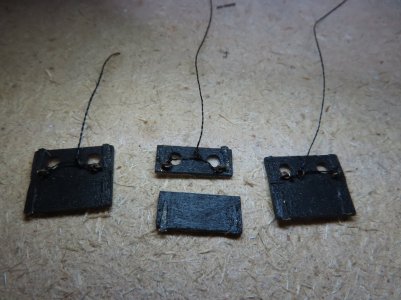
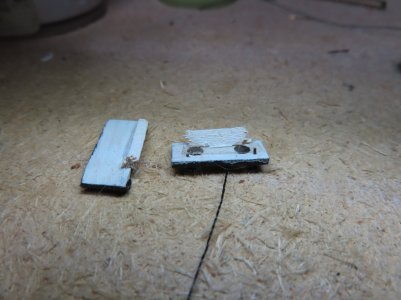
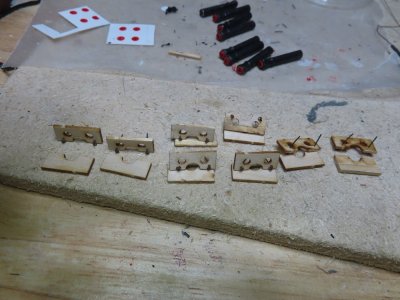
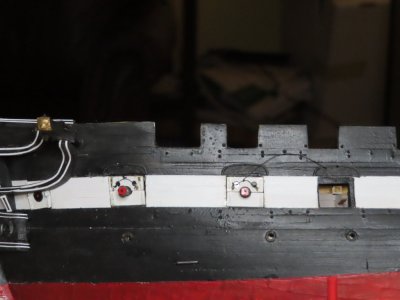
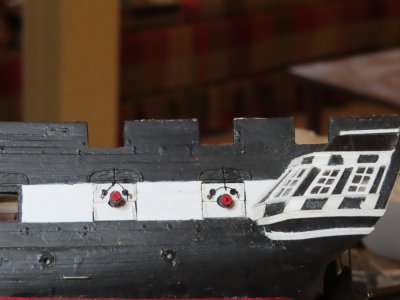
The front of the lids with the hinges attached were painted black, while the center port lids additionally had their backs painted white because they could possibly be partially visible. Then the eyebolts with their rings were inserted into the top lids. Finally, black thread was attached to the first ring in the door while the loose end was threaded through a ring tied to another thread. Finally, the loose end was tied to the remaining bolt ring on the door. As near as I could tell, the pull line was not tied to the line that went from eyebolt to eyebolt, but to a ring that could slide back and forth. This would always provide even tension for both door rings.

Stern Windoe Ports.jpg

IMG_2407.JPG

IMG_2408.JPG
 
Installing the two outer doors was easy enough, just glue them in place. The center lids were to be partially open which would reduce the gluing surface, so a piece of wood was added to the edge of those half lids to establish the lid ajar angle and a gluing surface. After the lids were secured in their final positions, the loose line attached to the sliding ring was glued into position. Initially, holes were drilled into the transom to accept the pull cords but was just easier to glue the end of the thread at the hole with no one being the wiser.

IMG_2409.JPG

IMG_2411.JPG

IMG_2412.JPG
 
Gun Port Gutters

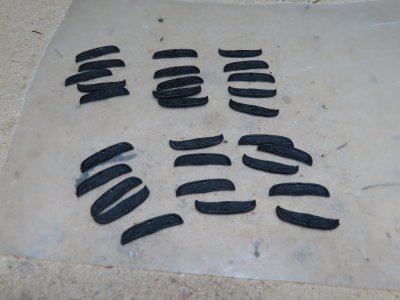
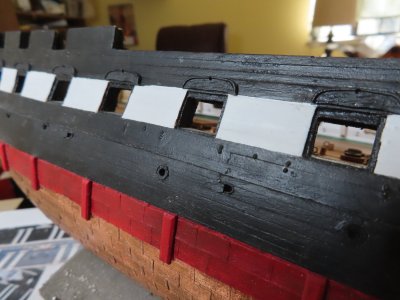
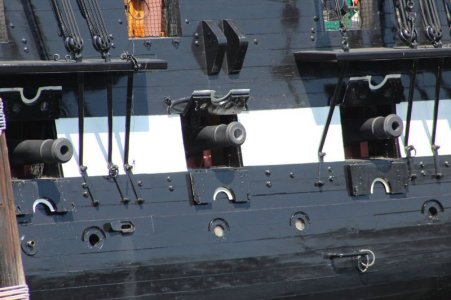
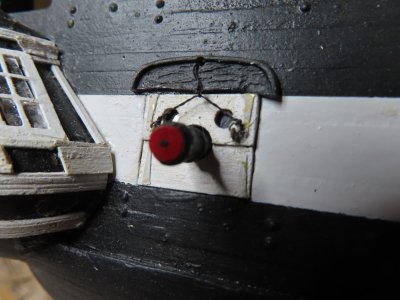
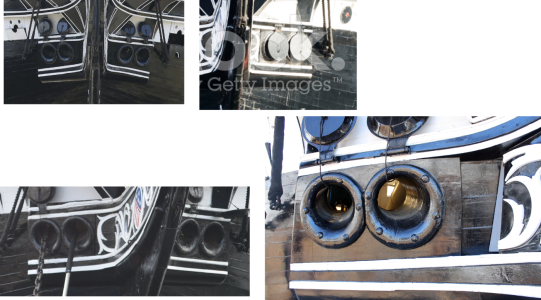
I am not sure what the structure above the gun ports are officially called. The kit refers to them as “carved boards,” the practicum refers to them as “curtains”, and I’ve read on other build logs as being called “eyebrows.” Then there is the question, what are they made of. The kit drawing states they were a “decorative carved surface” while the practicum states were a “wrinkled canvas.” My first impression was that they were painted copper sheeting. In any case, the purpose of them was to shed water away from the guns port openings. In other words, a gutter. Luckly the kit provided these structures as nicely cast metal parts. All I had to do was paint and apply them to the hull.
2007 02.jpg

IMG_2410.JPG

IMG_2413.JPG

IMG_2415.JPG
 
Just a minor update. In my last post, I waxed on about what the proper name was for the gun port gutters. According to Cornwall Model Boats, they are called “drip shields” and some readers in Ships of Scale site call them “wriggles.” Take your pick.
Mooring Staples

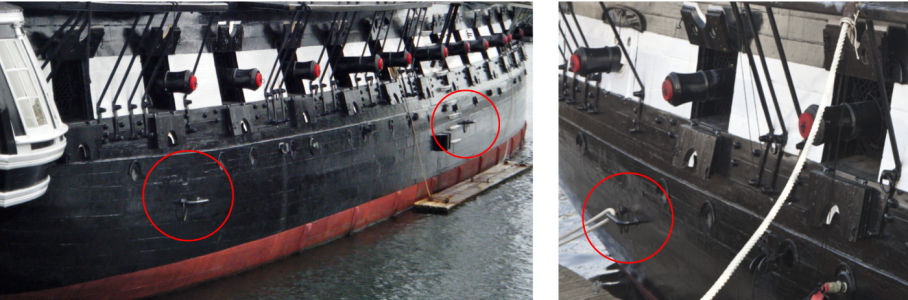
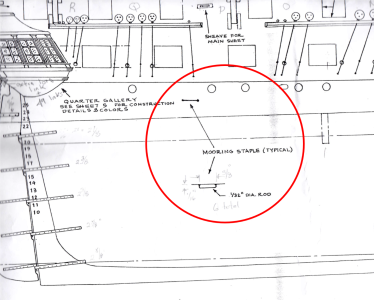
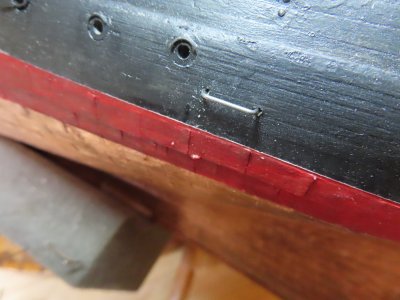
Here is an item that is easy to overlook on the plans, the mooring staples. There are three of them at the waterline on each side of the hull, near the stern, amidships, and the bow. I could not find a direct image of these staples, but I was able to get glimpses of them in some photos. From what little the photos showed, there was very little detail to them other than what is shown on the MS plans.

Mooring Staple.png

Mooring Staples Plan.png
 
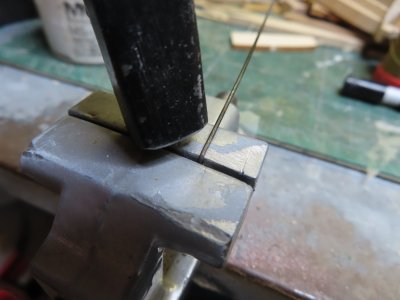
The staples were made from 0.032” music wire, close enough to the 1/32” (0.03125”) rod called out by the plans. Music wire was chosen because it won’t deform easily, and it’s dark in color. The wire was bent while in the grasp of a small vise and using a light hammer forming two 90° legs to the shape of a staple. The staples were glued into pre drilled holes in the hull.

IMG_2416.JPG

IMG_2417.JPG
 
Guns with Tampions

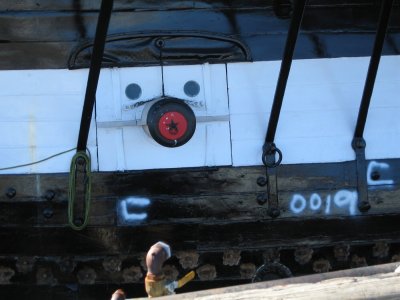
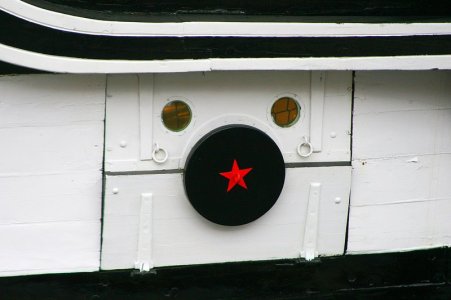
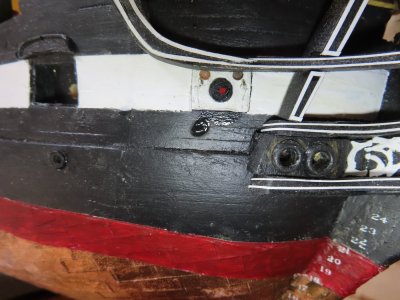
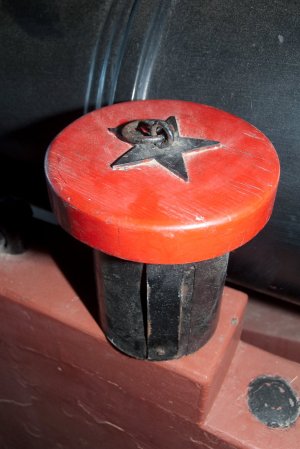
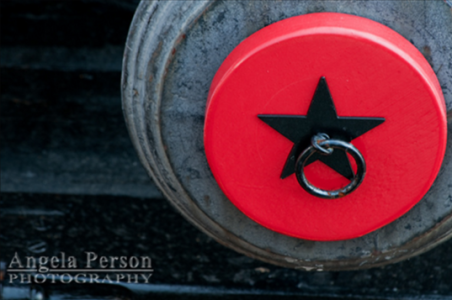
Tampions are wooden muzzle stoppers. The first gun port starting at the bow does not have a gun as there is no room for one in the interior of the bow. As a result, the lids are usually kept closed and the muzzle opening is closed with a special tampion, which is a bit larger than the a muzzle tampion. This tampion is painted black with a red star in the center.

8078987279_448df8dd66_c.jpg
 
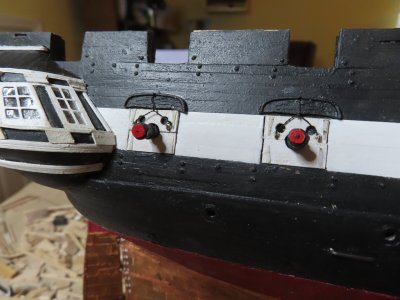
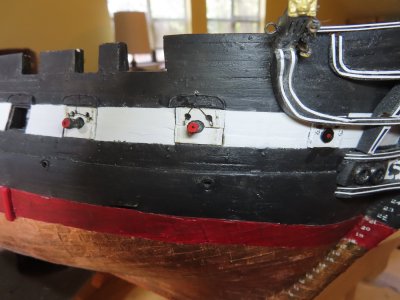
The next two guns positions moving aft on my model will also have their lids closed, but their gun muzzles will be exposed poking through the lid opening. Their tampions will be painted red with a black star. Additionally, the first two gun ports from the stern will also be presented in this manner as well. Finally, the remaining guns will be in their firing positions with their lids opened, tampions removed, extending out of the ports, and fully rigged. This will present the guns in two positions which will reduce the number of gun positions that will require full rigging. The eight guns with tampions will be dummy guns having no trucks or rigging in view. Only their tampion covered muzzles will be in view.

2018 March - 02.jpg

2017 08Aug 17 02.jpg
 
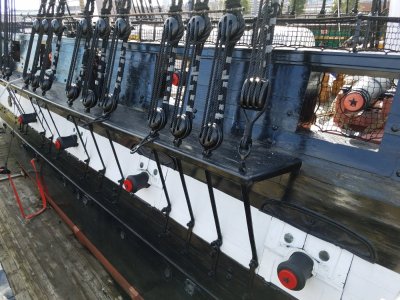
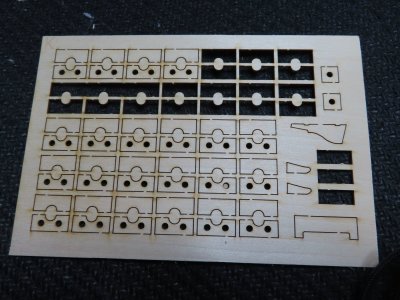
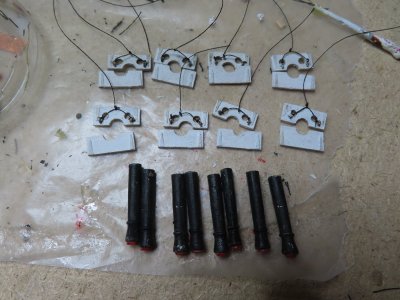
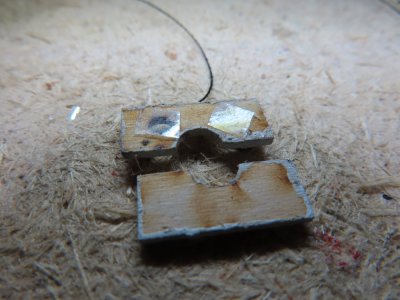
The raw gun port lids are provided by the kit which consists of an upper and lower part. The upper has two window port openings and the top half muzzle opening for the gun. The bottom lid just has the bottom half muzzle opening. The kit also provides pseudo photo-etched hinges. Mr. Hunt’s practicum creates the pull mechanism out styrene which I didn’t like. As with the port lids on the transom, the upper lid opening mechanism consisted of an eyebolt and ring assembly on either side of the lid. All the ports except the bow port will have pull lines to open the top lid.

As simple as these port lids look, there are a lot of components for each one. Ten in total.
  • 2 raw lids (upper and lower)
  • 2 eyebolts
  • 2 rings
  • 4 pseudo hinges
  • 1 thread line between the two eyebolt ring assemblies (excluding bow lid)
  • 1 draw line thread from center of assembly line through the port gutter to inside the hull (excluding bow lid)
  • 2 pieces of mica for the two windows openings (backside of lid)
  • White paint

IMG_2427.JPG
 
Bow Gun Port Lids

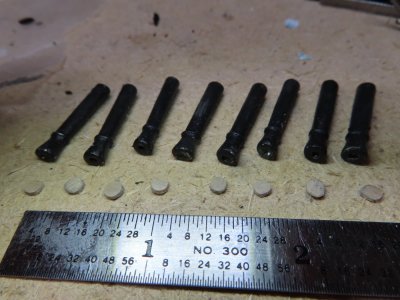
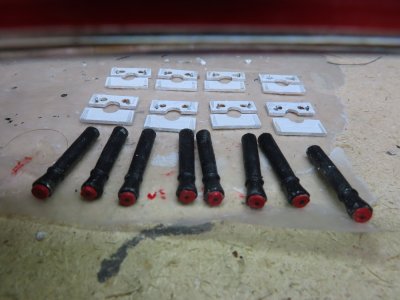
Like on the transom ports, 1/32” eyebolts and scratch made 1/32” rings were used. Shown below are the parts for the bow lids. The tampions were made from 1/64” thick plywood. I tried to make a decal for the tampion so that the black star could be seen, but the resolution for this small image was quite poor and had low contrast. Instead, a red dot was painted directly on the black painted surface of the tampion which looked just fine from a foot away.

IMG_2419.JPG

IMG_2426.JPG
 
Tampion fitted Guns

The kit’s cast metal guns are OK but not great. Looking directly at the muzzles you can tell they are not perfectly round, so some detailing was required. They were painted black,

IMG_2420.JPG
 
Again, the tampions were made from plywood, but this time, 1/32” thick. Looking at the photos, they look at least 2 inches thick beyond the face of the muzzle. That translates to 1/32” scale. Once again, I painted a dot in lieu of the star, this time black on red. I abandoned hanging a ring from an eye bolt in the center of the tampion as it was too small to make at scale.

TAMPION.jpg

Tampion.png

IMG_2421.JPG

IMG_2422.JPG
 
Hawser Plugs

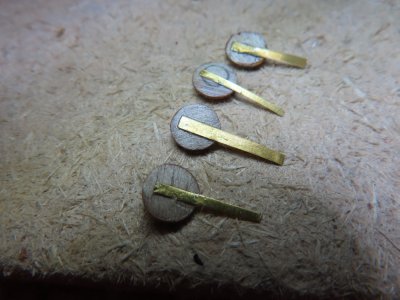
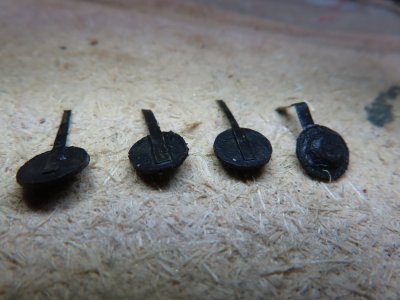
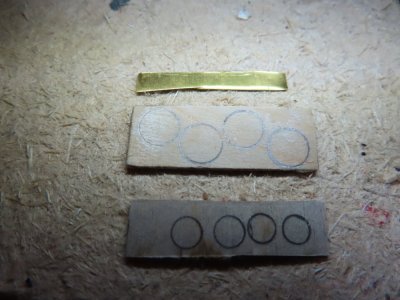
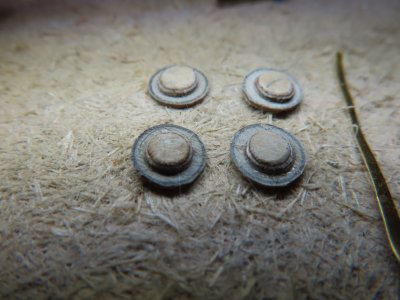
This one I almost missed, the hawser plugs, which BTW are not covered in the practicum. I thought they were going to be a little tricky; but they weren’t. Once more, I used plywood for added strength for these items due to their size. There were only three components that made up the plug: the outer rim, the inner plug, and the hinge.

Hawsers.png
 
The ¼” rim circle was cut from 1/64” plywood while the 5/32” plug circle was cut from 1/32” plywood. The plug circle edges were filed to slope inward to form a short, truncated cone. The hinge was cut from 0.005” brass sheet into 1/16” wide strips. First, the rim and plug components were wood glued together on center. Then the brass strip was CA glued to the backside almost across the full diameter of the rim piece to provide the maximum gluing surface. After the CA glue dried solid, the plugs were painted black. Slits were formed in the rail just above the hawsers with an X-acto knife for the flat brass hinge to slip into. To install the plugs, the brass strip was bent 90° so that the plug would be in the open position when inserted into the hull. The open position is needed to allow anchor ropes and chains to pass through the hawser later in the build.

IMG_2436.JPG

IMG_2437.JPG

IMG_2438.JPG

IMG_2439.JPG

IMG_2440.JPG
 
Gun Deck Fully Rigged Guns

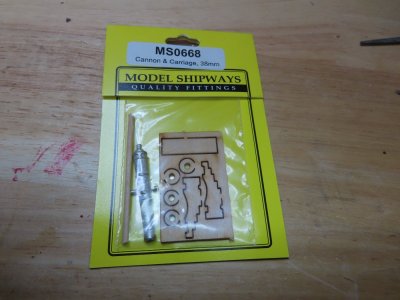
With trepidation, I have finally arrived at the gun deck to fabricate and install all of its armament, rigging, and structural deck elements. Like its furniture I fabricated previously, (but not installed yet), all of it will have to be scratch built, save for the gun barrels. There are 22-gun ports remaining waiting for their guns. Some years ago, I was far sighted enough to buy from a fellow Constitution builder, his excess Model Shipway cast metal guns he purchased from Model Expo for his build. I forgot why they were available, but he sold them to me much cheaper than what I would have to pay for at Model Expo. I believe at the time when he bought these, Model Expo was selling them at a discount rate if they were bought in bulk. Today, Model Expo sells the gun and carriage package (MS 0668) singularly for $7.00/pkg. No bulk discounts. That’s $210.00 for all 30 guns, a tidy sum. The laser cut carriage kit pieces that came with the guns were useless to me as they did not match the US Navy plans (too short in height), and all you got were the two sides, a simplistic unrealistic bottom, four wheels and a dowel to make some bare unsupported axials. There was no front transom or breast (bumper) piece and forgot about any hardware. Still, it’s cheaper than Syren Ship Mode Co.’s offerings. Their guns are of course much better quality (either black resin or turned brass) so obviously you pay even more for them. The carriage kits are better too and are sold separately, an additional cost should you want them. Luckily, Mr. Hunt’s practicum for the Rattlesnake, my previous build, had his followers scratch build the gun carriages, so I have some experience doing this.

IMG_2441.JPG
 
Gun Deck Gun Carriage Fabrication

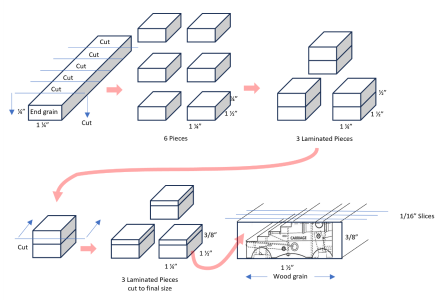
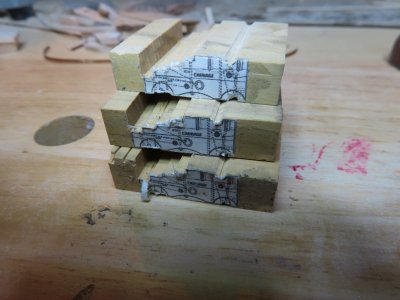
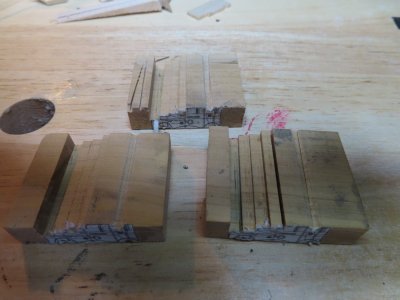
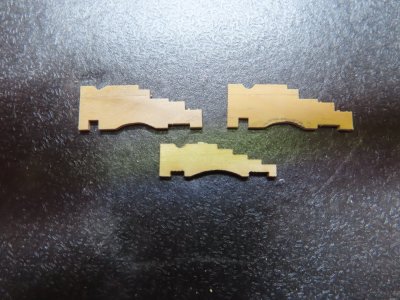
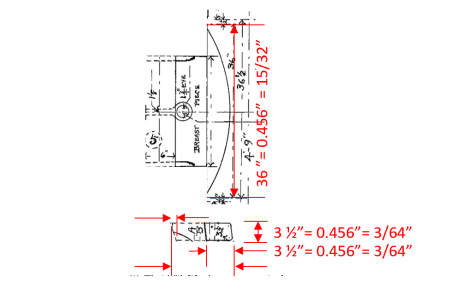
First, I did some research with the 1907 US Navy plan No 14939 (sheet No.:3103) 24 Pdr Gun and Gun Carriage to determine the proper carriage dimensions. This revealed that I needed as a minimum a piece of wood 15/16” wide x 5/16” tall to create the carriage sides. The plan was to cut the carriage profile into the wood block such that I could cut 1/16” slices from it like a loaf of bread creating the sides of the carriage. 44 sides at 1/16” thick required a length of wood almost 3” long.

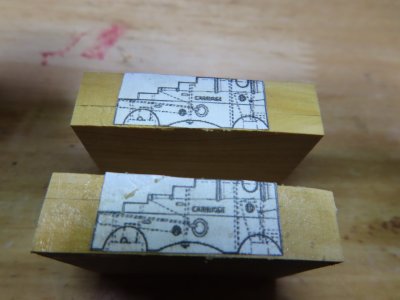
I chose boxwood for this task because it will hold a clean-cut edge and is not as fragile as basswood. However, because I did not have a piece of boxwood of those dimensions, I had to laminate two pieces of 1¼” wide x ¼” thick wood together to get the required height. I could have cut the wood stock 3” in length to make one laminate block, but that would have meant that the resulting carriage sides were cut cross grain. I wanted the side made with the wood grain requiring rip cuts.

From the 1¼” x ¼” wood stock, I cut six 1½” length pieces to make three laminated stacks a ½” thick. Then this was cut down to 3/8” thick. The scale size image of the gun carriage was rubber cemented to the 1½” face (with the grain) resulting in excess wood on either side of the image. That was left for support when cutting the profile with the Byrnes saw. The process worked as indicated in the schematic and photo below. Shown are two sides that were sliced off with the excess support material removed in comparison to the original gun carriage kit.

Gun Deck Carriage Side Fabrication Method.png

IMG_2442.JPG

IMG_2444.JPG

IMG_2445.JPG

IMG_2446.JPG

IMG_2447.JPG
 
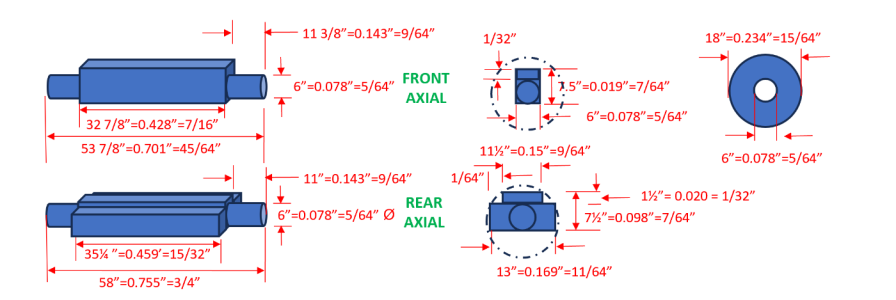
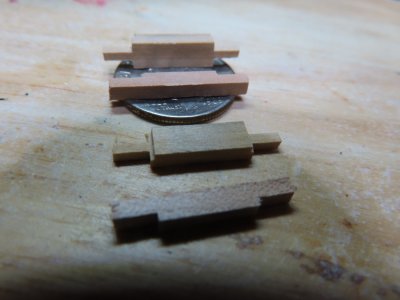
Continuing, the axials were the next carriage parts fabricated. The axials act both as the wheel support with the typical circle cross section at the ends and as the support for the carriage sides which rests directly on the square or rectangular cross sections interior portions. It appears that the fore and aft axials are fabricated out of single pieces of lumber. Due to the small scale, the resulting shapes have been simplified slightly from my original design sketches. As I was trying to wrap my head on the fabrication process, I ran across bthoe’s wonderful build in which he did the exact same thing for his carriages. I had forgotten about his build as he hasn’t posted since November 2022. For the most part, he and I basically came up with the same carriage pieces dimensions within 1/64” of each other.

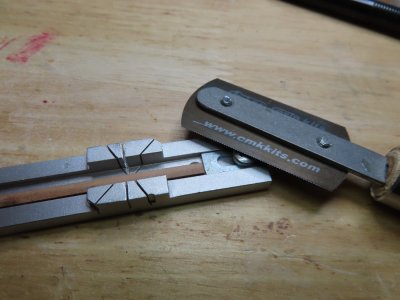
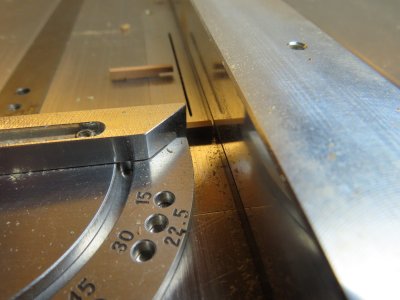
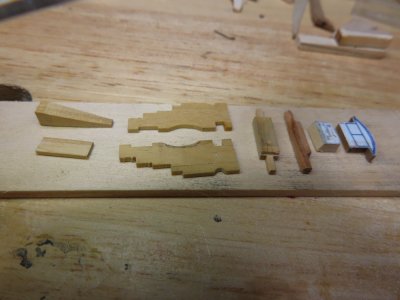
Stock boxwood was properly sized to the desired profile for the fore and aft axials on the Byrnes saw. Then 22 pieces of boxwood for each axial were cut from the applicable axial boxwood. Utilizing the fine 1/32” width slicing blade, each axial piece was trimmed at the ends to create the truck wheel portion of the axial.

Gun Carriage Axial Fabrication.png

IMG_2448.JPG

IMG_2449.JPG

IMG_2450.JPG
 
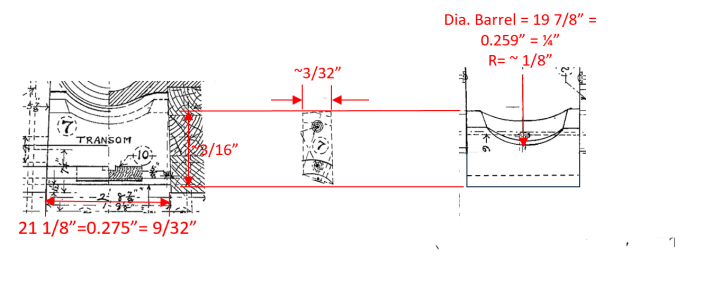
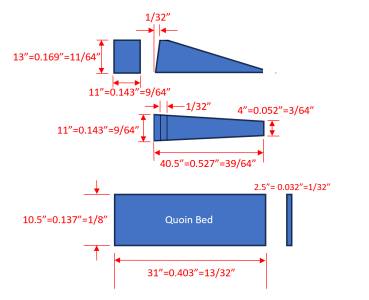
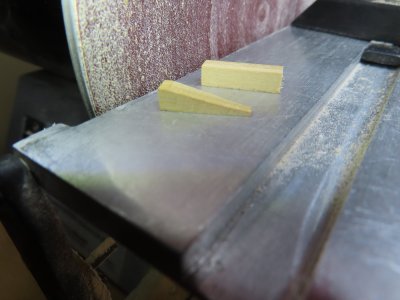
The remainder of the gun carriage pieces were much simpler to fabricate. Pretty much just slicing pieces of wood to length or cutting out the pieces using templates made from the US Navy plan. To create the Quion, a disk sander was used. Note: The US Navy plan uses the term “Coin” for Quion.

Gun Carriage Breast Piece.png

Gun Carriage Transom.png

Gun Carriage Quion.png

IMG_2453.JPG

IMG_2454.JPG
 
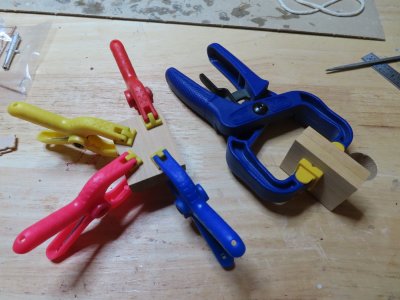
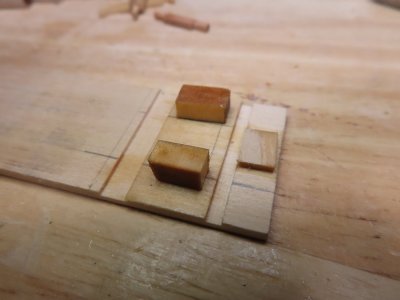
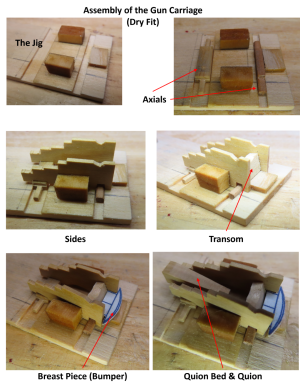
To put together 22 gun carriages simply and consistently, a simple jig was made that held the various pieces in their proper positions. Shown below is my first attempt at a dry fit. Now I must assemble and glue all 22 carriages.

IMG_2451.JPG

Gun Carriage Assembly.png
 
Back
Top