



• SUBSCRIBE TO SHIPS IN SCALE TODAY!

    The beloved Ships in Scale Magazine is back and charting a new course for 2026!
    Discover new skills, new techniques, and new inspirations in every issue.

    NOTE THAT OUR NEXT ISSUE WILL BE MARCH/APRIL 2026
  • Win a Free Custom Engraved Brass Coin!!!
    As a way to introduce our brass coins to the community, we will raffle off a free coin during the month of August. Follow link ABOVE for instructions for entering.

USS Constitution - Model Shipway’s 5/32” = 1 ft. (1:76.8) Kit No.: MS2040

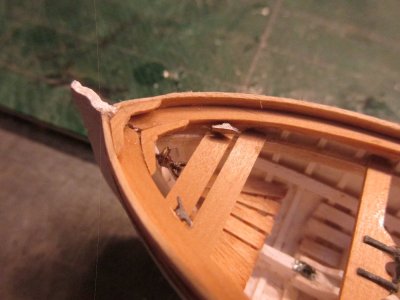
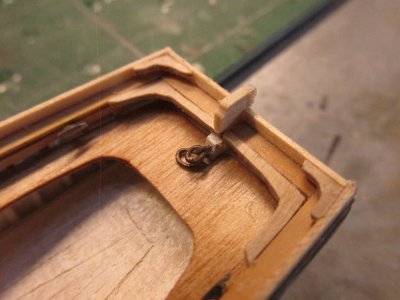
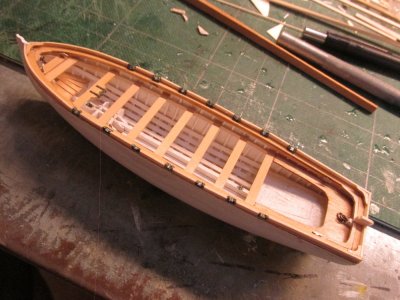
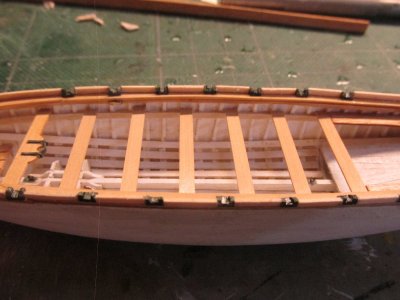
Pinnace Rail and Rowlocks

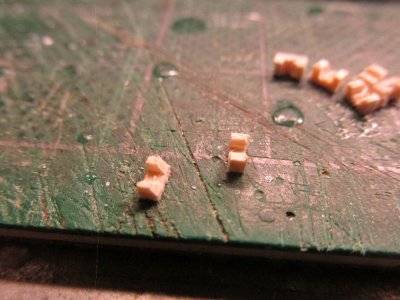
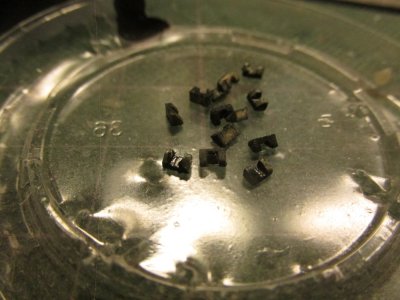
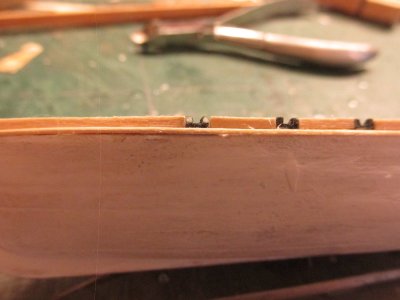
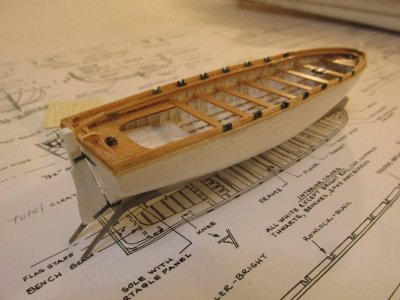
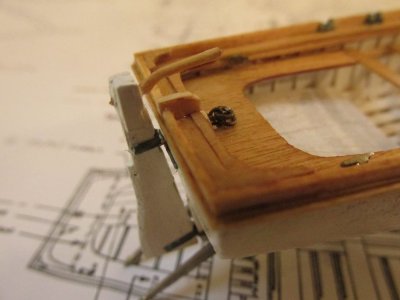
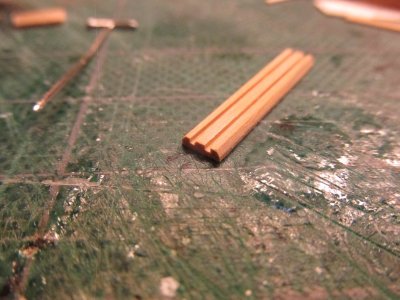
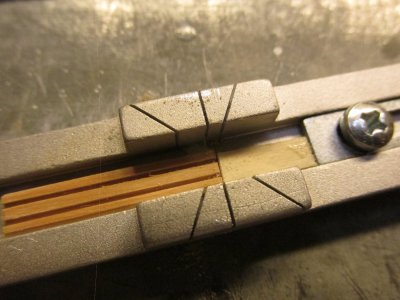
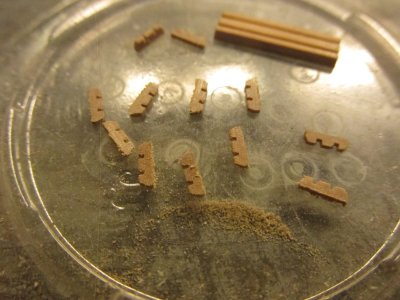
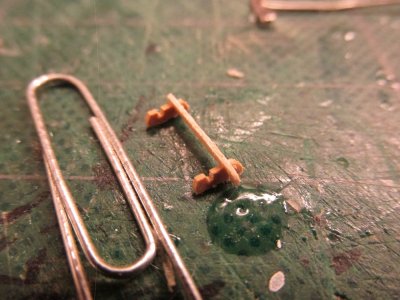
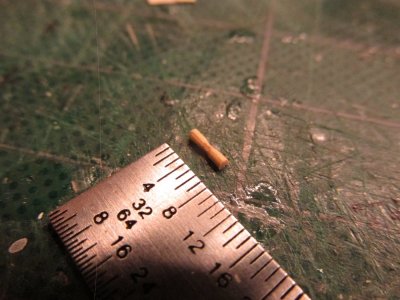
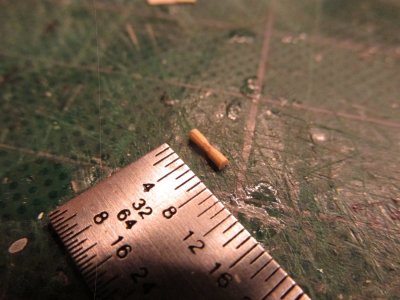
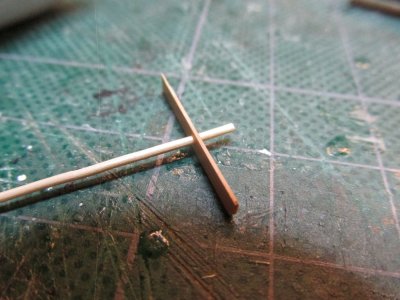
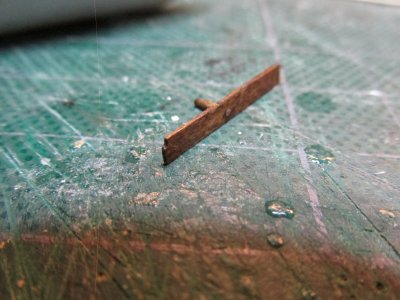
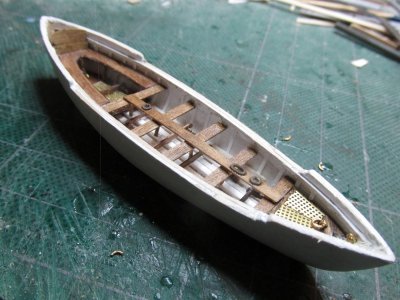
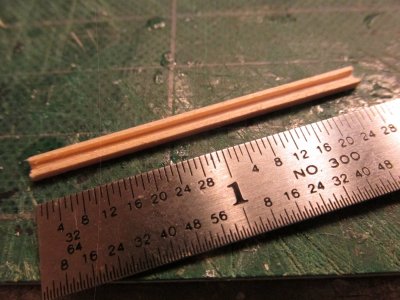
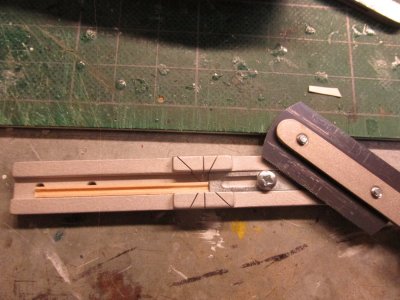
The 14 rowlocks were fabricated from a 1/8” x 1/16” piece of basswood stock to match the rail height of 1/16”. A channel was cut along the length of the stock by making multiple passes with my Byrnes Saw. The piece of channeled wood was then sliced to 3/64” lengths like a loaf of bread with a razor saw and its miter accessory. Then one side was filed to a 45-degree angle to mimic the actual rowlock. This was the hardest part because trying to hold these tiny pieces secure enough so I could perform the actions required as well as seeing what I was doing was a real pain in the… fingers. Finally, they were all painted black as directed by the kit’s instructions.
IMG_1121.JPG

IMG_1122.JPG

IMG_1124.JPG

IMG_1125.JPG
 
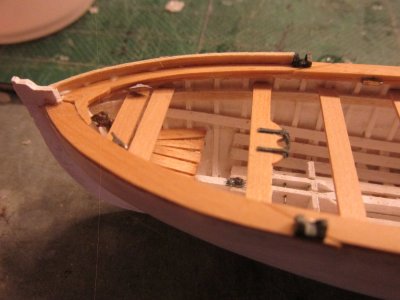
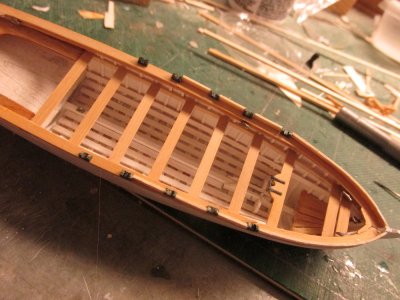
The practicum would have you glue in place the rails with the required spacing to create openings for the rowlocks. Then it would have you custom fit cut styrene flat pieces to create the locks. I did it differently.

Because the rowlock had to be in specific positions, I installed the first set beginning at the bow end. The rails at the bow were pre-bent to the required curve and custom fitted between the stem and the first rowlock. The next set was done the same way; install the lock first, then the rail till the final rail was installed reaching the transom.

IMG_1126.JPG

IMG_1127.JPG
 
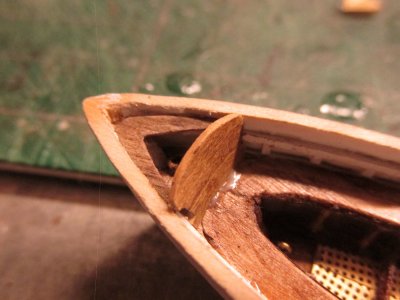
Pinnace Upper Horizontal Knees

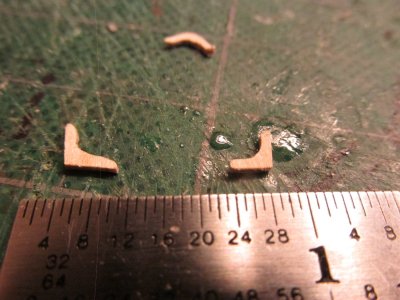
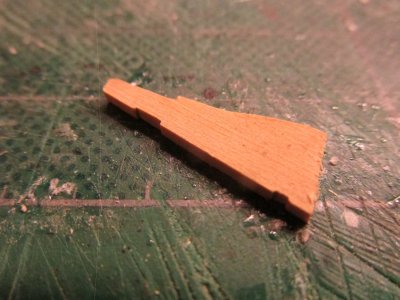
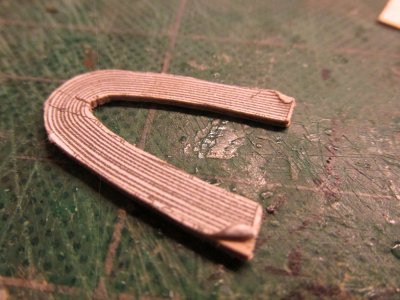
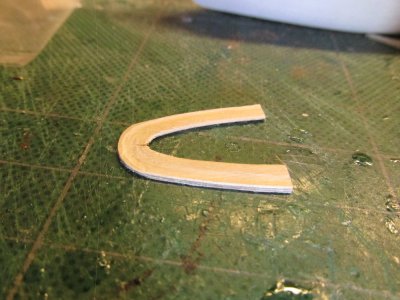
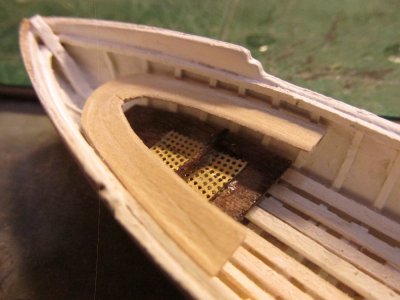
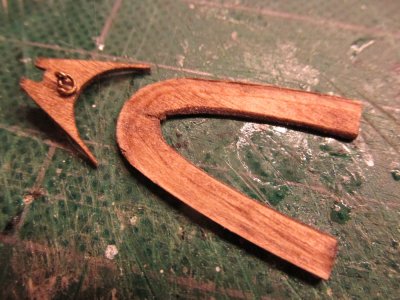
The upper horizontal knees were fabricated like the lower ones. After I took the photo of the three knees below, I remade the bow knee because I didn’t like the way it fit.

IMG_1128.JPG

IMG_1130.JPG

IMG_1131.JPG

IMG_1132.JPG

IMG_1133.JPG
 
Pinnace Fender

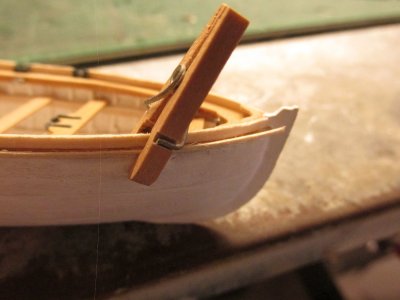
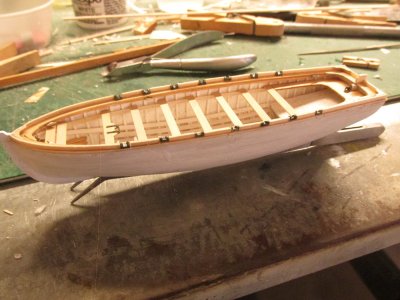
The last thing to install on the hull (excluding the rudder) was the half round fender. Per the US Navy plans, the fender 2½” x 1¼”. This translated to 1/32” x 1/64” at scale which matched the kit’s instructions. Now that is one fragile strip of wood. I chose to use 1/32” x 1/32” because wanted the extra strength as I pulled it through a scraper to create the half-round profile. When I was done, I needed my magnifying headset to actual see the roundness and to be sure I was gluing the proper side to the hull. In other words, nobody but me would know I had even bothered to shape the fender
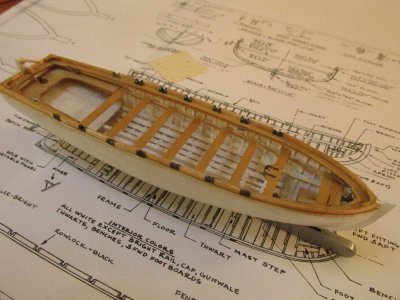
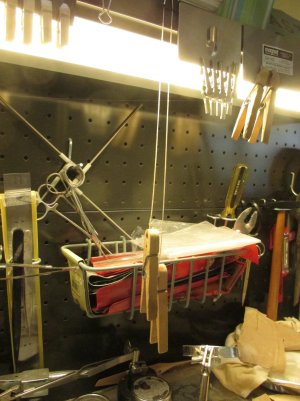
Initially when I was pulling the strips through the scraper, the fine strip would curl 90-degrees towards the scraped side, opposite of what I would have liked. Dipping my fingers in water and pulling the strips through my fingers removed the curl as the water seeped into the wood. To ensure the strips didn’t re-curl as they dried, I hung them with a clothes pin as a weight to keep them straight.

IMG_1129.JPG
 
CA glue was used to adhere the strip to the hull working my way from the bow to the transom for each side. Then the transom fender piece was added.

IMG_1134.JPG

IMG_1135.JPG

IMG_1136.JPG
 
Pinnace Rudder

The last major piece of the pinnace is the rudder. As in my previous part fabrications, I made a template from the US Navy plans and cut out the part from some boxwood stock. So far everything was going smooth…too smooth as it turned out. To my surprise, when I placed the newly cutout rudder part next to the stern of the pinnace, something was wrong…very wrong. The part matched exactly the shape and size in the plans as all my other parts had done except in this case IT WAS TOO SMALL for the boat. What was going on?

The length of the boat was correct, so was the width, but not the height. I never measured the height of the hull once it was carved. I never thought to check that dimension since the hull was formed using the pre-cut pieces that made up the bread and butter sandwich method construction. Subconsciously I just assumed the carved hull was correct for outside dimensions. For some reason(s), either accumulative measuring errors, I didn’t remove enough material during the carving process, or whatever, the hull was too tall. I was not about to shelve this little model and start over.
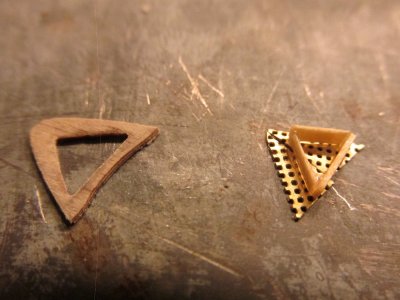
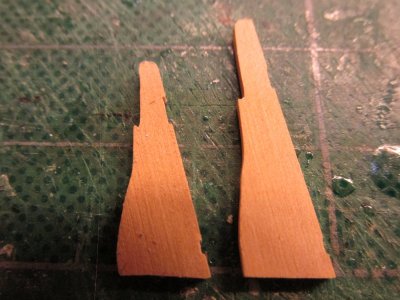
To salvage the model, I decided to just go with it and only I, God, and the readers of this log would know. I got on the computer, brought up the image of the US Nay plan of pinnace (reduced to scale) and stretched the image vertically to reflect the actual build height. That image was printed, a new template was made, and a new part made. In the photo below you can see the difference.

IMG_1137.JPG

IMG_1139.JPG
 
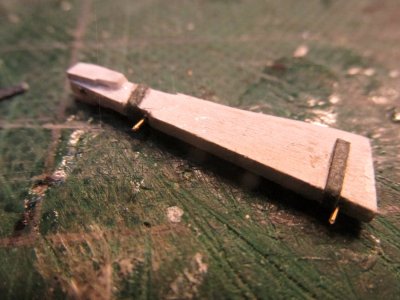
The rudder was then painted white with two coats, re-enforcing plates added where the tiller is inserted into the rudder stem, added “metal” straps made of painted card stock, and pins to secure the rudder to the hull.

IMG_1140.JPG
 
The tiller was made from boxwood to resemble the US Navy plans and inserted into the rudder stem where a hole had been previously drilled. An additional hole was added on the rudder where it jets out midway down. A final coat of Minwax Polycrylic was added to the whole model to protect the bare wood and add a little gloss to the painted sections as well. One down, three to go.

IMG_1141.JPG

IMG_1142.JPG

IMG_1143.JPG
 
Gig

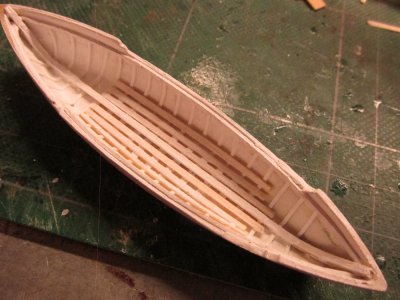
The gig, when last worked on, only had the ribs and keelson installed. So now the question was, what to do next. The kit plans basically state, follow the plans and make the boats. The practicum does not put in all the detail I want to include. Other build logs don’t have the detailed step by step guidance I was looking for.

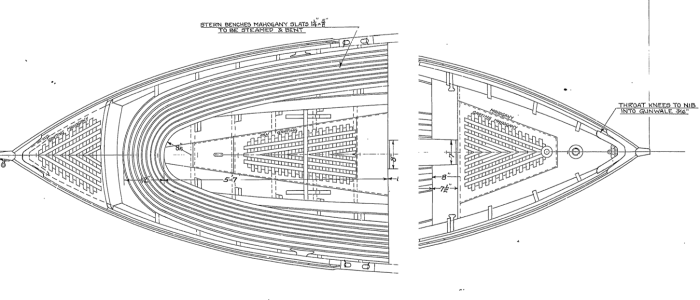
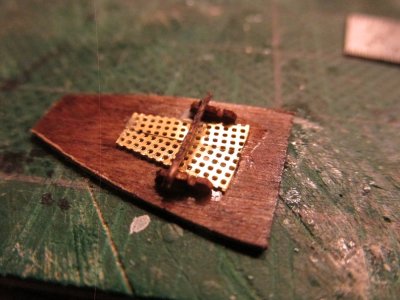
So, after a number of false starts, I plunged ahead. Working from the bottom up, inside to outside progression, I decided that the sole at the stern was a good place to start. The sole has a unique grating. In fact the gig has three unique gratings. They look like chevrons instead of the typical square cross-hatch patterns…and they have very fine openings.

Gig Gratings.png
 
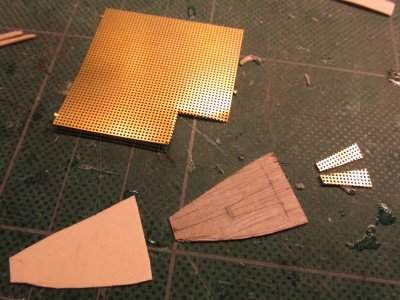
I thought about how to reproduce these. The problem of course was scale. 1/76.8 is just too small, at least for me. The kit, however, provided a compromise. It provided a photo-etched mesh to use in lieu of creating one or just faking it. From what I have seen on other builds, the mesh was cut such that they ended up with a fine square cross-hatch pattern. I wanted to emulate the chevron pattern.

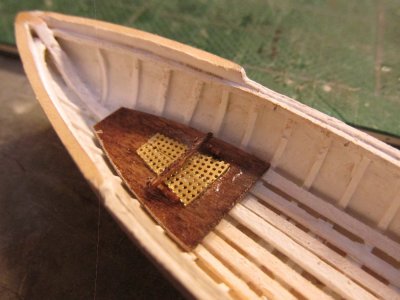
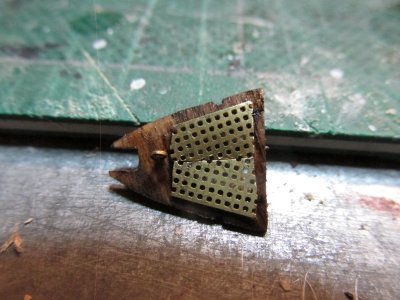
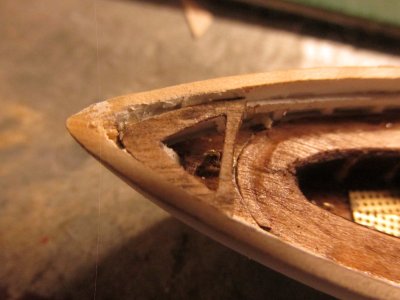
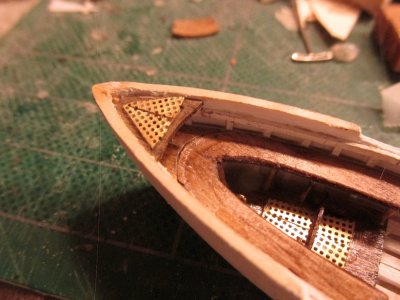
First off, I made a pattern for the sole and then made the sole itself from 1/64” plywood and stained it mahogany. An opening was then cut matching the plans. Instead of just cutting out the mesh to the shape of the grating, I split the mesh such that when the two pieces were put together, the mesh holes were on an angle, more reminiscent of the actual grating. Looking at the plans, I also noticed that the grating did not have a frame around the edges due to the method the actual grating was made, so I deliberately made sure my cut mesh had ragged edges. The two pieces were aligned and CA’d into place over the sole opening.
IMG_1144.JPG

IMG_1147.JPG

IMG_1148.JPG

IMG_1149.JPG
 
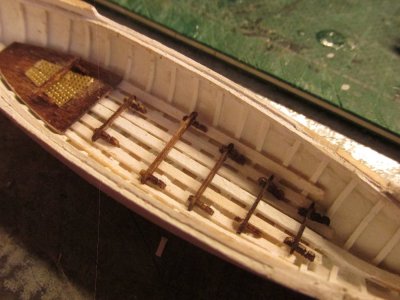
The footrest was made from 1/32” x 1/64” basswood, assembled with the supports, and stained mahogany. It was then set into place on the sole.

IMG_1151.JPG

IMG_1153.JPG
 
Remaining Gig Footrests

The remaining 5 footrests were constructed and installed in a similar manner as the one over the grating. The footrest lengths did vary though.

IMG_1160.JPG
 
Gig Wrap Around Bench Seat

The wrap around bench seat presented me with a conundrum. In the actual boat, the seat was made up from concentric slats separated by a space. One can see that in the template I made from the US Navy plans. However, the scale was just too small for me to simulate the slats and spaces. So, like others before me, I used to make the rough cut from 1/32” plywood. I did try to contour the seat profile so it would fit a scale tush as shown in the plans. I’m not certain whether I was successful at that or even if it was, would anyone even notice it. It was then dry fitted until if fit properly into position.

IMG_1155.JPG

IMG_1156.JPG

IMG_1157.JPG
 
This is a complicated area of the boat. The bench must fit in a corner with sloping sides coming to an apex at the stern post. Between the stern post and the bench there is supposed to be a covered area with a grating on top, a backrest behind the bench, all sitting on a platform that has a ring assembly accessible when the grating is removed. I chose to make this platform separate from the bench although in hindsight, I could have made both the bench and platform from one piece of plywood. Here are the two components-stained mahogany before installation and glued into place.

IMG_1159.JPG

IMG_1161.JPG
 
The bench is supported from below with pilasters. I made mine from bamboo skewers that are available at any grocery store. Using a Byrnes draw place, I made a 1/32” diameter “toothpick” and cut seven, 7/32” segments. Three for each side, and one for the apex. These were a bit long, but it gave me room to adjust the lengths to make them fit under the bench. The actual pilasters have a fancy curvy profile to them, so I filed the centers to create a subtle “hourglass” shape. The pilasters were then stained and glued to place.

IMG_1161.JPG

IMG_1163.JPG
 
Gig Stern Compartment

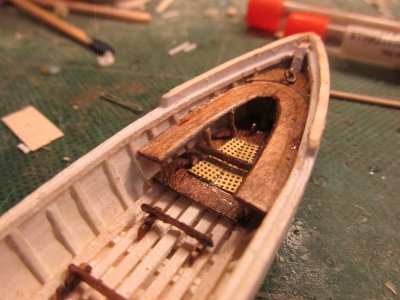
The last component to be installed in the stern at this stage of the build is the stern compartment with the grating on top. Because the stern lifting ring is inside this compartment, the grating must be removeable to gain access. This is made trickier in my case because like the grating in the sole, the brass mesh was split into two pieces to emulate the actual grid pattern. These two pieces must be structurally supported. When the boat is installed on the Constitution model, the grating will be stored inside the boat somewhere.

The stern compartment top surface was made from 1/64” plywood for its strength and width. A pattern was made, transferred to the plywood, and cut to shape. The piece was filed to fit into the corner of the stern and to accept the rake of the backboard from the bench seat which has a slight tilt aft.

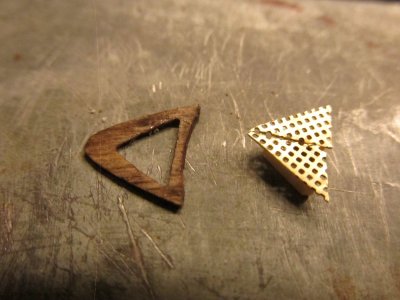
A triangular hole was cut out of the plywood to provide access to the lifting ring. Based on the opening’s shape, a triangle was formed from 1/32” x 1/64” basswood. This will form a lip that will slide into the opening. The two brass mesh pieces were placed on top of the triangle structure. Drops of CA glue were placed where the mesh was resting on triangle. The glue was drawn through the mesh to the wood below and set. After a bit of fiddling, the mesh grating slipped into the opening in the plywood. A this point I had stained the plywood.

The last two pictures below show the dry fit. The final part will be the backboard.

IMG_1165.JPG

IMG_1166.JPG

IMG_1168.JPG

IMG_1167.JPG
 
The backboard was made from a single piece of 1/32” boxwood which was bent to a slight curve. Then it was shaped and fitted so that it leaned slightly against the top of the stern compartment. It was glued into place with PVC glue. You may notice that the grating does not quite align properly nor lie completely flat. I did try, but since that is not its final position, as mentioned above, I am not too concerned.

IMG_1169.JPG

IMG_1170.JPG

IMG_1171.JPG

IMG_1172.JPG

IMG_1173.JPG
 
Gig’s Thwarts

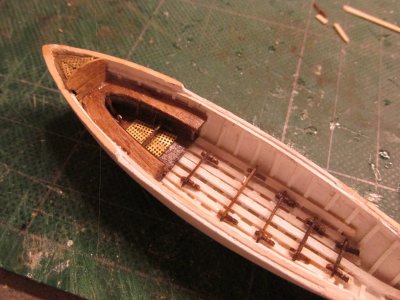
Working from the Gig’s stern, I started to add the thwarts which were made from 1/64” boxwood. Once I had fitted a thwart to its position, I marked the position of the stanchion and drilled a hole for the 1/32” diameter support. Like the bench seat, I used bamboo which I pulled through a drawplate. The bamboo was inserted into the thwart, position on the boat to get the appropriate length and then glued with CA. The excess was snipped off and filed flush, then the whole assembly was stained. Then it was just a matter of gluing it into place.

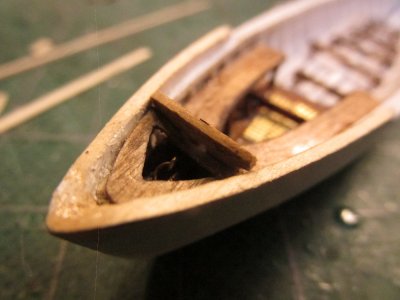
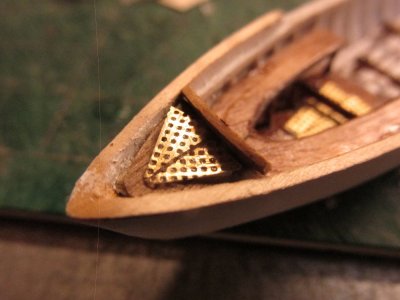
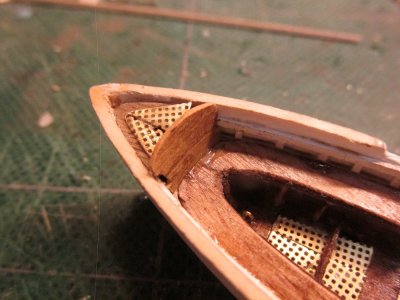
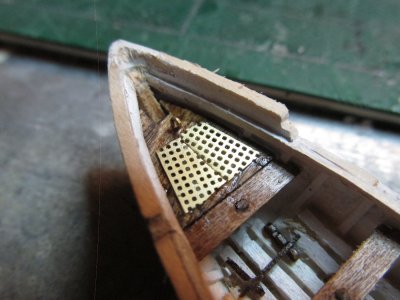
At the bow, there was the matter of the grating. This time, it did not have to be removable like the stern because the lifting rings were accessible. Once more, I cut the mesh to emulate the diagonal pattern of the grating.

IMG_1174.JPG

IMG_1175.JPG

IMG_1176.JPG

IMG_1177.JPG

IMG_1178.JPG
 
Gig Gangway Board

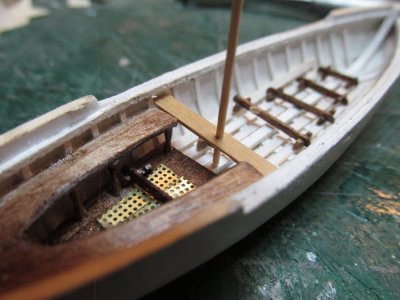
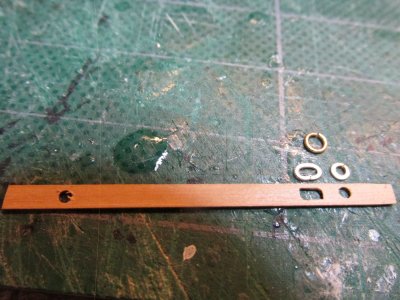
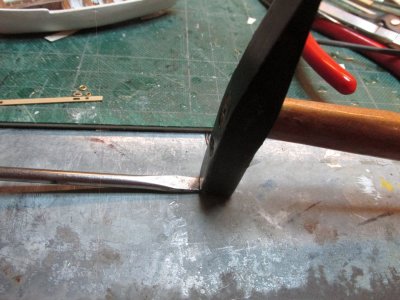
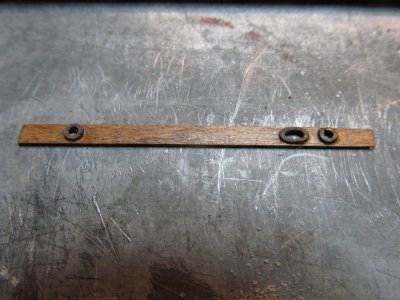
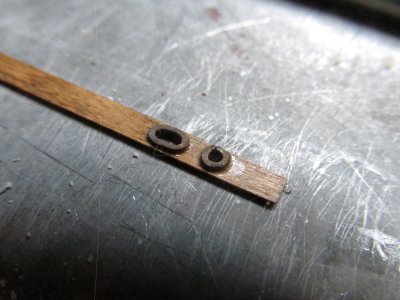
The gig gangway board lies on top of the thwarts with holes for the masts. This was made from 1/8” x 1/64” boxwood. The mast rings were formed from 1/8” split rings cut to size and shaped. Then using the wide flat face of a screwdriver lying on the ring, it was pounded a couple of times with a hammer to flatten the wire. The forms were then blackened and glued into position.

IMG_1180.JPG

IMG_1181.JPG

IMG_1182.JPG

IMG_1183.JPG

IMG_1185.JPG
 
Back
Top