• SUBSCRIBE TO SHIPS IN SCALE TODAY!

    The beloved Ships in Scale Magazine is back and charting a new course for 2026!
    Discover new skills, new techniques, and new inspirations in every issue.

    NOTE THAT OUR NEXT ISSUE WILL BE MARCH/APRIL 2026
  • Win a Free Custom Engraved Brass Coin!!!
    As a way to introduce our brass coins to the community, we will raffle off a free coin during the month of August. Follow link ABOVE for instructions for entering.

USS Constitution - Model Shipway’s 5/32” = 1 ft. (1:76.8) Kit No.: MS2040

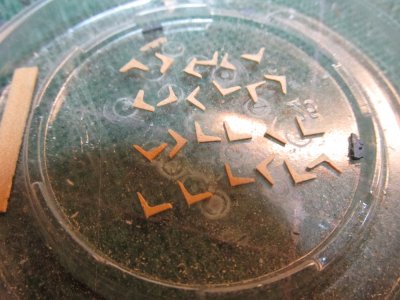
Gig Thwart Braces

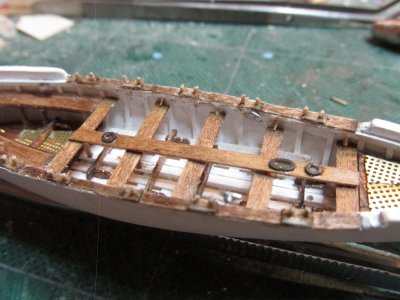
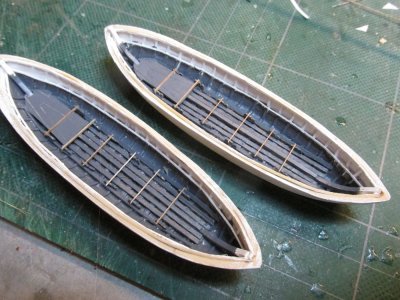
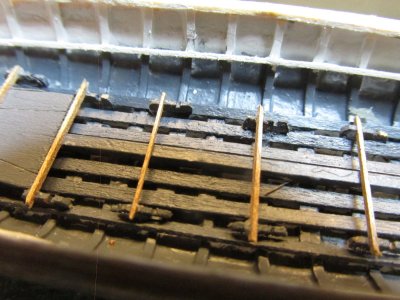
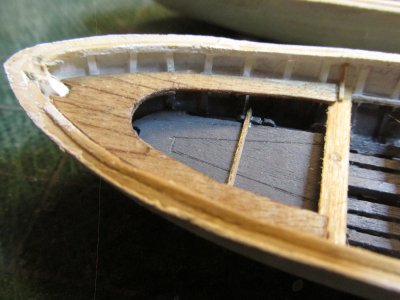
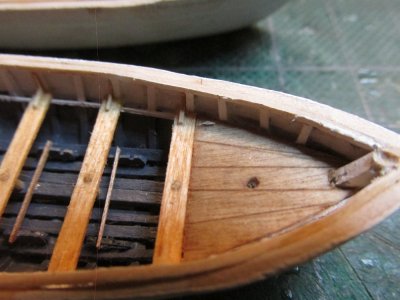
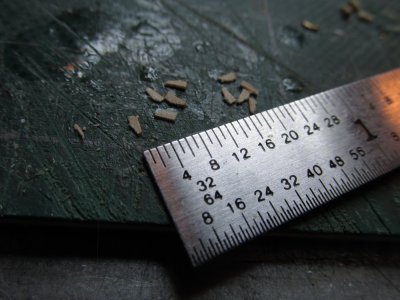
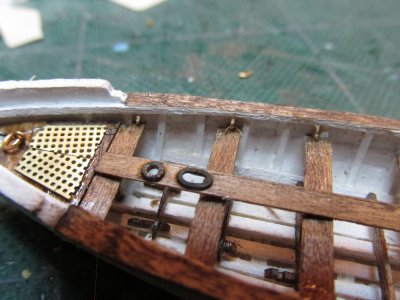
The thwart braces are almost not required for a boat of this scale, they are so small. But I like like to pull the viewer in so the closer they get, the more they discover. A case in point was my Rattlesnake’s tree nails. I deliberately did not use a high contrasting color so that they would be noticeable. Only when one looked real close did you realize they were there. The same is true of the braces. These thing are tiny as should on the scale plans: 5/32” x 1/64”. On my model, they are a bit smaller due to my lack of building skills to maintain that kind of tolerance. I had to trim them to make they fit.
IMG_1187.JPG
 
Gig Rail Cap

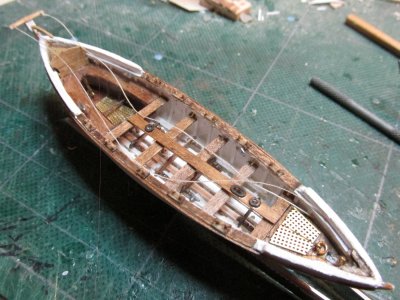
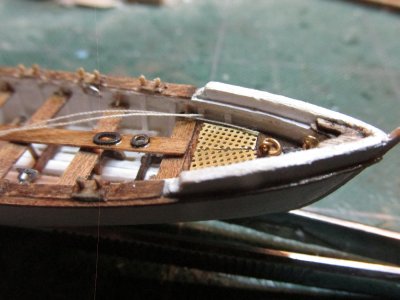
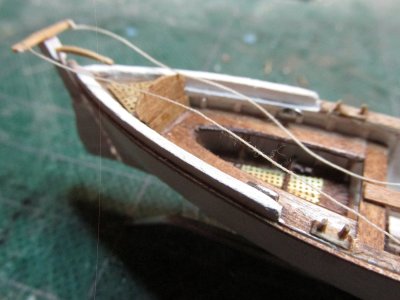
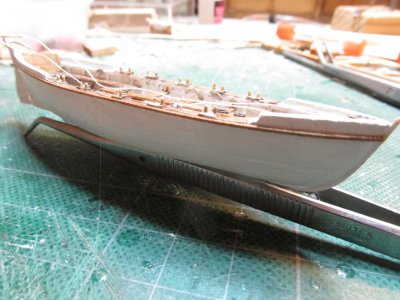
On the full-scale US Navy drawing, the rail cap is ½”. At scale, that works out to be 0.0065” abou the thickness of s piece of copy paper. As it so happens, like many of you model builders, we don’t throw anything away. What is scrap to one person is perfection to another. While cutting a piece of stock to size with Byrnes saw, I sliced off a strip of paper thin wood. It was perfect for the rail cap.

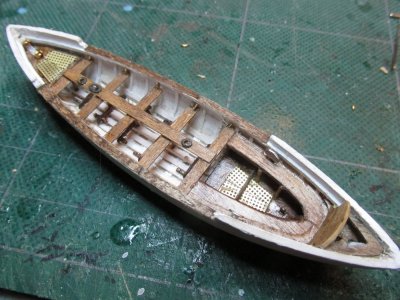
First the strip was stained. Then two pieces were used to cover the rail using PVC glue. Once set, the excess was trimmed off with an X-actor knife and file. Finally, 4 cleats were made as before for the pinnace, and installed.

The was one small caveat, the stern grating has vanished into the land of lost socks. I had picked up the gig and forgotten that the grating was on the boat, turned it over and felt something hit my bare foot. At least I think it did. I did everything but rip the rug off the floor. No luck. So, for now, it’s gone and maybe it will make miraculous appearance before I need it again. Otherwise, I’ll have to make it again.

IMG_1188.JPG

IMG_1189.JPG
 
So far, the missing grating has not made its reappearance. Of course, I know when it will… after I make a new one. That’s how the Laws of Nature work.

Gig Keel

Meanwhile, back on the bench, I’ve installed the keel and stern post. The keel was made from 2 pieces of 1/32” x 1/32” stock basswood. The bow piece was soaked and bent to shaped with a heating iron. The keel was made from 1/32” x 1/32” stock and 1/32” plywood. Since all these parts are to be painted, I wasn’t too concerned about wood types.

IMG_1190.JPG
 
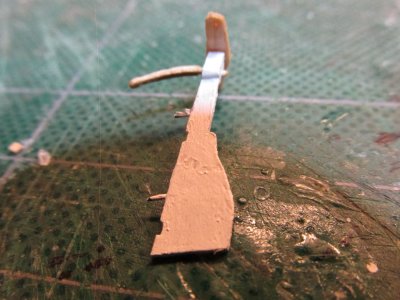
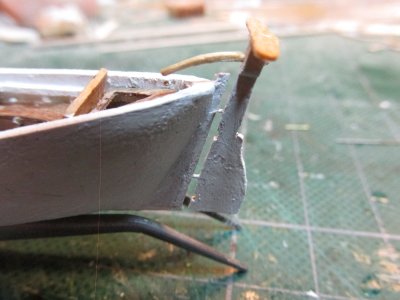
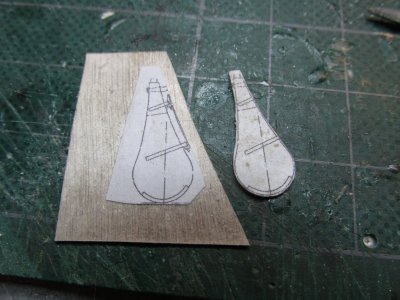
Using the US Navy plans to make the templates for the rudder parts. I used 1/32” boxwood here because the rudder has some sharp curves and I wanted clean edges. Basswood can be a bit fuzzy. Both the kit plans and the US Navy plans show a yoke tiller.

The US Navy plans show a hole for a standard tiller (but no plan of it) which I assumed was to give the occupants of the boat a choice of steering methods.

The kit shows the tiller installed along with the yoke tiller. I would assume you would have one or the other, not both. But I’m not a sailor, I don’t know. I’ve looked at other builder’s models and of those that went to the trouble of making a yoke tiller, also had the standard tiller installed as well. So, unless someone can definitively state use one or the other, I’ll install both.

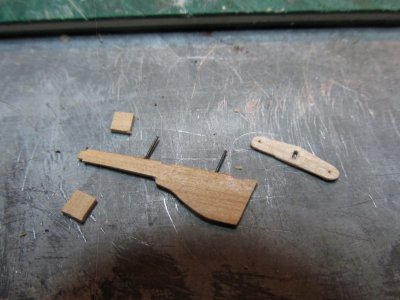
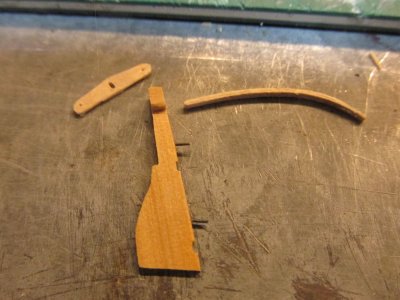
The first picture below shows the parts of the rudder and the yoke tiller. The second image show the rudder partial assembled and a bent 1/32” stock to be used for the standard tiller.

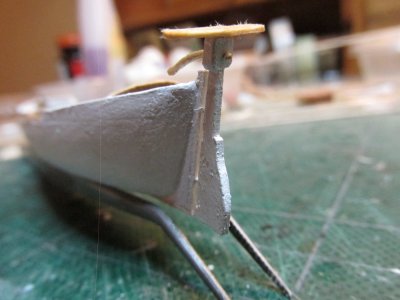
The rudder ended up being about 3/128” thick after sanding which is what the US Navy plans call for at scale. This required that I use very small diameter pins to secure the rudder to the stern. I used broken #80 drill bits. They are very thin, stiff, strong, and dark in color which will make them all but invisible. As I have mentioned before, I don’t throw away scraps. The broken bits are a case in point.

IMG_1191.JPG

IMG_1192.JPG
 
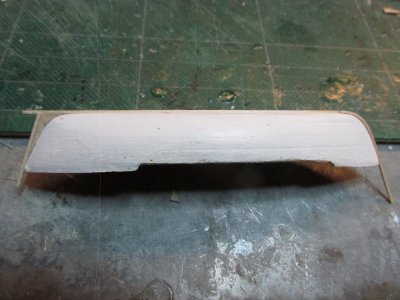
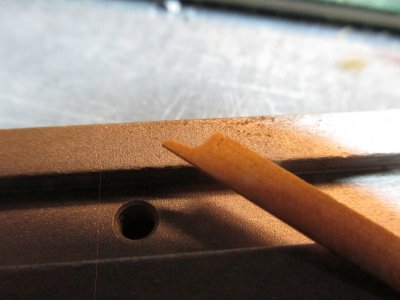
The rudder was painted white. It looks almost all brown in the image but that was just the shadow of the camera lens. The yoke tiller and the standard yoke are unpainted oak on the actual boat so these were given a light stain. The standard tiller looks awfully short to my eyes, but it matches perfectly with the kit’s plans. These pictures show the dry fit. They will be permanently assembled as a last step.
IMG_1193.JPG

IMG_1194.JPG

IMG_1195.JPG
 
Gig Thole Pins

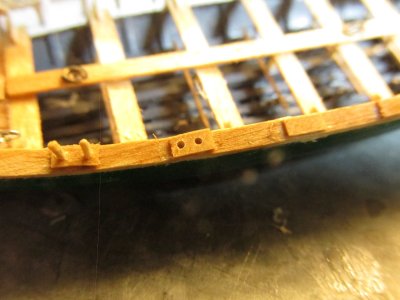
The US Navy’s plans provide excruciating detail of the thole pins; way too much detail for this level of scale. The pins are not cylinder shaped but slightly conical; do not have a circular cross section, more oblong; come to a flattened rounded point at the top; and the pairs aren’t even the same shape. So like many of the other builders who decided to include thole pins, I chose to make mine circular cross section with a flattened pointed top. Using a Byrnes draw plate, I drew down bamboo skewers close to 7/128” in diameter. The thole plate was supposed to be 1/128” thick but I didn’t dare get any thinner than 1/64”.

My idea was to make the plates, drill the two thole pin holes, add the pins and use CA glue. Once the CA dried solid, I would trim the pins and sand the bottom of the plate and again using CA glue into position. Drilling two holes in the plate for the pins was next to impossible because as soon as the drill bit started to turn, the wood would split.
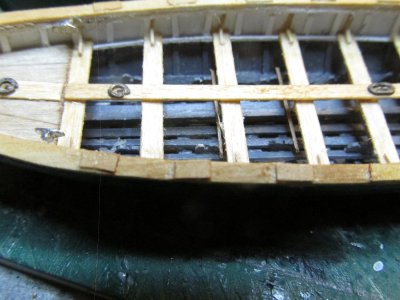
I then used Plan B. I stained the plate first hoping the stain would act a bit like glue in the grain of the wood. Then I glued the plate into position on the rail to provide additional structural strength. Then I drilled the hole for the pins. Even then, I had one plate split.
IMG_1196.JPG
 
The pins were created by inserting the long bamboo pin stock and cutting it in place to slightly larger than needed length. Once all the pins were in place I then trimmed the pins to their proper length and filed their ends to approximate the slightly conical pointed end.
IMG_1197.JPG
 
Gig Bumper

The major element of the gig was the bumper. This was made from 1/32” square boxwood which was pre-bent by soaking in water and then using a hot iron wood bender. It makes gluing so much easier.

Gig Completed

The pintle and gudgeon were made of ordinary white paper wrapped the rudder and rudder post. According to the photographs on the actual ship, they are white so I did not use a contrasting color to make them stand out. It’s part of my philosophy that less is more. Finally, I used ordinary beige sewing thread for the yoke tiller ropes.

IMG_1201.JPG

IMG_1200.JPG

IMG_1202.JPG

IMG_1203.JPG
 
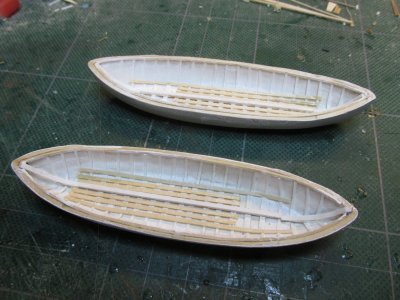
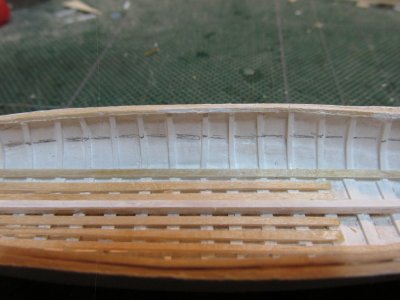
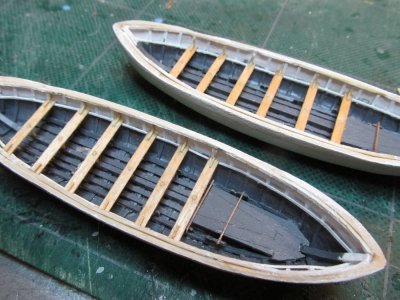
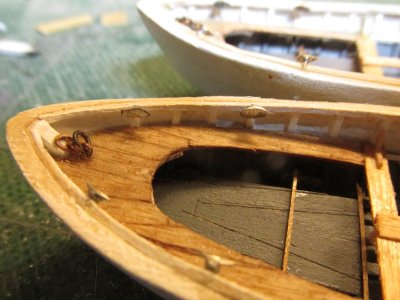
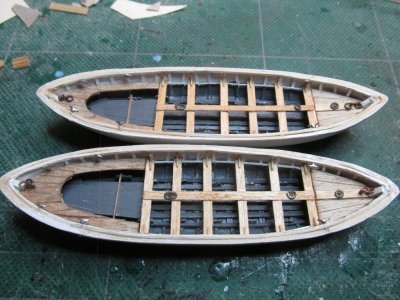
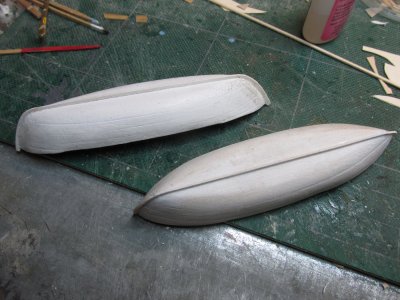
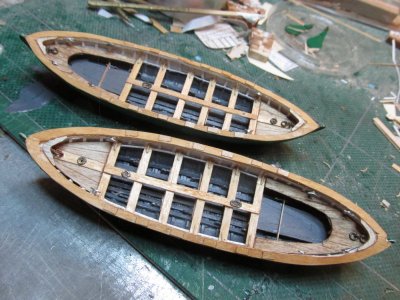
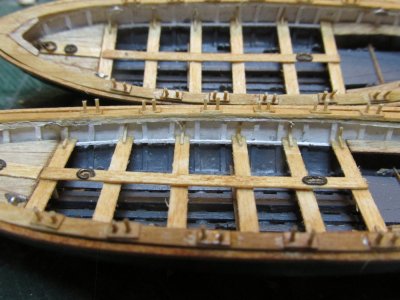
When we last saw the two whaleboats, I had left them as a simple hull with simulated ribs painted with white primer. Per the Hunt practicum, he gave the builder a choice of priming the hull and ribs and then adding the flooring, or adding the flooring and then painting a more difficult structure. Since I had already primed the hull and ribs earlier, the flooring was added and then a coat of white primer was then applied to it. Ideally one would want to glue the bare wood pieces to a bare wood surface and not a painted one. On the other hand, a coat of gray had to be applied to the inside of the hull as well and I would still have to paint the hull and ribs again. Eventually all was glued and painted. The plans called for the use of 1/32” x 1/64” risings but due to the fragility of the stock and the low probability anyone would notice, 1/32” square painted white strip of basswood was used and positioned at the border of the white and gray paint inside the hull. The rising will eventually support the thwarts.

IMG_1204.JPG

IMG_1205.JPG
 
The sole was made from a single piece of 1/64” plywood. Lines were etched in with an X-acto knife to represent the removeable hatch. It was painted and glued into position.

IMG_1206.JPG
 
Whaleboat Foot Rests

Just like in the gig, the foot rest were made in the same manner from 1/64” stock material. This time, the two position brackets were paint grey. I left the foot rest itself bare because I thought that paint would not last very long under the wear and tear of rower’s feet and they probably were replaced as needed. It also offers a little contrast.

IMG_1207.JPG

IMG_1208.JPG
 
Whaleboat Thwarts

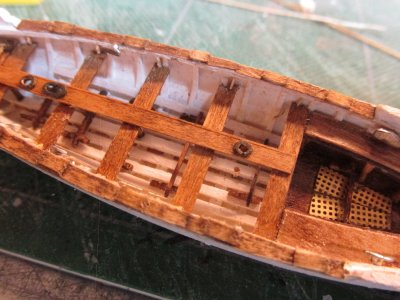
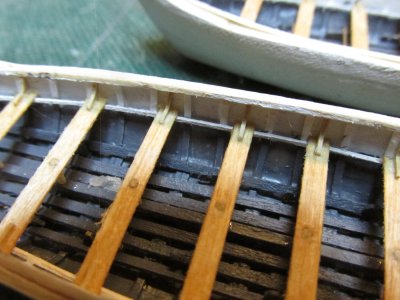
I decided to install the thwarts next. Because the thwarts are not painted, I used 3/32” x 1/64” boxwood. These were cut to fit and rested on the riser installed earlier.

The thwart stanchions are 1/32” in diameter and were made from bamboo pulled through a drawplate just like the gig.

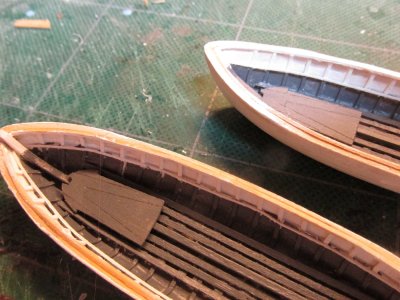
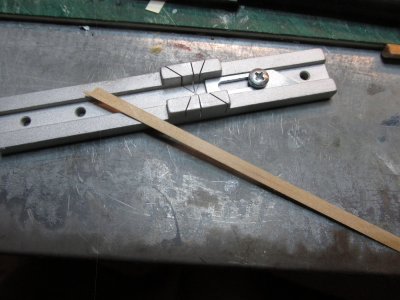
The thwarts also have knees which attach to the top of the seats. These were made from 1/8” x 1/64” boxwood. The knees were first carved on the wood stock then cut off using the razor saw and miter. The miter was used more for creating consistent lengths than squareness of cut because I had to file off an additional fraction of wood so that the legs of “L” shape was a bit more than 90 degrees to conform to the shape of the hull. These were then glued into position.

IMG_1209.JPG

IMG_1210.JPG

IMG_1211.JPG

IMG_1212.JPG

IMG_1213.JPG
 
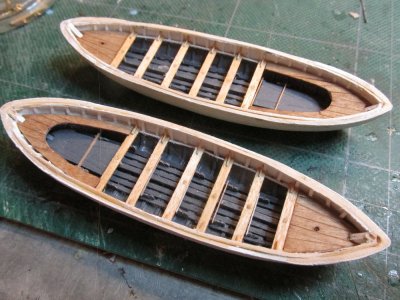
Whaleboat Stern Benches and Aft Decks

I attempted without success to create the stern U-shaped bench from straight planks. I thought I would use the plans as a pattern cutting, fitting, and gluing the pieces so that I could insert the whole assembly as a unit. That didn’t work because the gluing surface were the edges of the planks and they would snap apart just looking at them.

I tried assembling them in situ, but there was no support for the planks to be attached to during construction.

I admitted defeat, and used 1/64” plywood and with an X-acto knife, etched in the board marks. Then I stained it which brought out the etched lines. Note: these images are dry fits.

IMG_1214.JPG

IMG_1215.JPG

IMG_1216.JPG
 
Metal Hardware

Like I did with the gig, I used split-rings to create the various little metal pieces protecting the holes in the centerboard and lifting rings. Once more I used my poor man’s cleat making technique – no metal lathe, just files and a rotary drill

IMG_1217.JPG

IMG_1218.JPG

IMG_1219.JPG

IMG_1220.JPG
 
Whaleboat Keels

It was time to install the keels. The kit called for a cross section of 1/32”w x 1/16”h. Per the US Navy plans, I figured it to be 1/32” x 3/64” not that anyone would notice. I cut some stock boxwood to my dimensions for the straight length on the Byrnes saw. I cut to size the curved sections of the bows and sterns from a cardstock template based on the actual model, not the plans. Once glued into place, they were painted with white primer.

IMG_1221.JPG
 
Whaleboat Paint Job

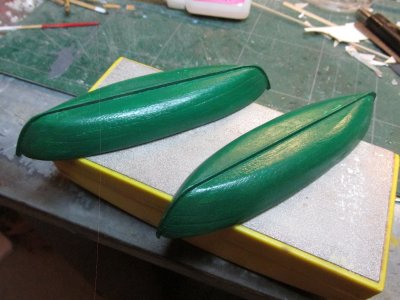
Using the paint from the paint package I purchased from Model Expo for this kit, I painted the hulls dark green. The first thing I noticed was that the paint dries very quickly both on the models and on the brush. This is some sort of water solvent paint at least for thinning and cleaning up. I found that I had to add water to the paint to make it flow better on the hull surface but that reduced its coving effect of the white primer (also from Model Expo’s paint package). Because it dried so quickly, the thickness of the paint on the surface would vary. Because of that, I let the paint dry 24-hrs and gave the surfaces a very light sanding and applied a second coat. It improved, but I still did not like the effect I was getting. Not only that, but these hulls are also supposed to be somewhat glossy, whereas the painted dried flat.

So, I bit the bullet and purchased Model Master Green Gloss, an acrylic paint. After another light sanding of the hulls, I painted them with the acrylic…much better. I don’t know much about the different types of paints, their pros and cons, the do’s and don’ts, etc. Hopefully I haven’t violated any taboos on mixing paint types.

IMG_1223.JPG
 
Whaleboat Rudders

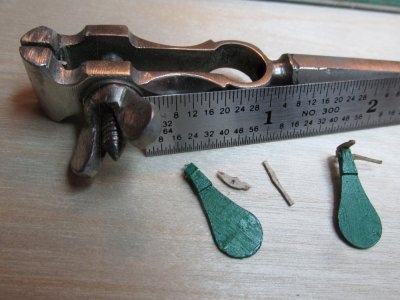
Using the US Navy Plans, the rudder plans were made into templates and rubber cemented to 1/64” plywood. Because most the parts were to be painted, the plywood was used for its strength. Like the gig, the rudder was made of four components: the main rudder blade, the re-enforcement plates for the tiller, the tiller, and the yoke. The tillers and yokes were stained. The rudder assembly will be installed later. You will note in the last picture my hand vise (holding up the ruler) which I used to file and shape the tillers and yokes.

IMG_1222.JPG

IMG_1226.JPG
 
Whaleboat Rails, Knees and Thole Plates

The rails were made from 1/64” boxwood. The bow and stern knees, as well as the thole pin plates used 1/64th plywood (for its strength).

IMG_1230.JPG

IMG_1232.JPG
 
Whaleboat Thole Pins

Like the gig, the thole pins were made from bamboo using a Byrnes draw plate. By gluing the plates to the rail first, and then drilling the holes for the pins, the glue that held the plates in place also prevented the plates from splitting. The pins were then trimmed once the glue dried.

IMG_1237.JPG

IMG_1236.JPG
 
Whaleboat Steering Oarlock

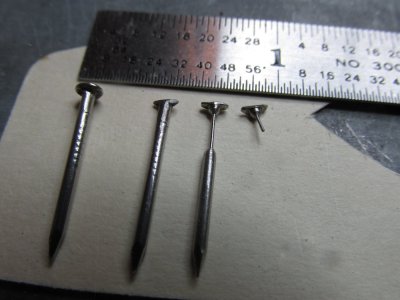
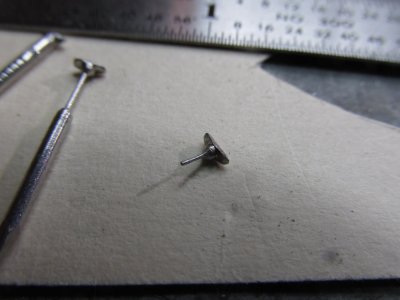
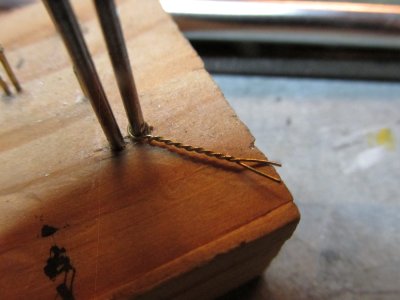
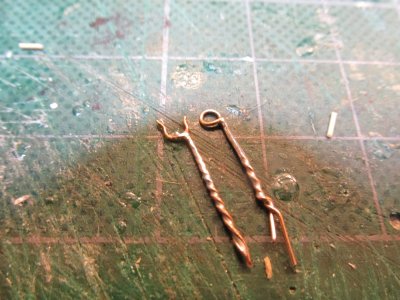
Unlike the gig, the whaleboats have an oar lock on the port side for a steering oar. Following xKen’s lead, the oar lock was made by twisting 22-gauge wire tightly around a nail to form a loop at one end. I then silver soldered the twisted wire and filed it to simulate a solid shaft. The loop was cut and form into a U-shape. According to the plans, the lock was to be fastened to the inside face of the rail with a bracket. But due to the scale, I elected to just drill a hole into the rail and inserted the lock with a spot of CA.

IMG_1229.JPG

IMG_1233.JPG
 
Back
Top