- Joined
- Jun 29, 2024
- Messages
- 2,172
- Points
- 488

The current model ship building fad seems to be to encase everything in plastic.

 |
The beloved Ships in Scale Magazine is back and charting a new course for 2026! Discover new skills, new techniques, and new inspirations in every issue. NOTE THAT OUR NEXT ISSUE WILL BE July/August 2026 |
|
 |
As a way to introduce our brass coins to the community, we will raffle off a free coin during the month of August. Follow link ABOVE for instructions for entering. |
|
The current model ship building fad seems to be to encase everything in plastic.



Yes, there is, but it is somewhat expensive, compared to mixing your own.

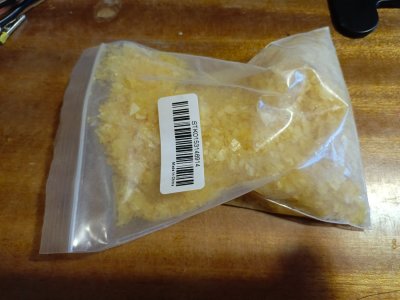
As a solid it comes in pellets which should have an extremely long shelf life. It is quite simple to make your own at various concentrations. You can mix it with acetone or alcohol. A one pound bag would probably be good for a lifetime of use.

You have a point. I find it interesting to see what new ideas are out there that I had never thought about. Bob Cleek introduced me to the use of B-72 and I think it may be a new alternative for many areas of usage (I just need the time to try it more). It is nice to see there are usually more than one solution to a problem.Forgive me if I am being over simple and possibly ignorant but, I have been quite happy to use PVA both neat and diluted on many, many models without any problem. If I make a mistake or need to remove something a good soaking in just plain water softens PVA quite enough to separate parts and residue is easy enough to scrape off if necessary when dry again. I have used diluted PVA with water a few times on rigging lines with no problems at all. I am just amazed at how a simple question at the beginning of this post has become so involved and 'technical'. Just my thoughts and not meant to cause any offence.

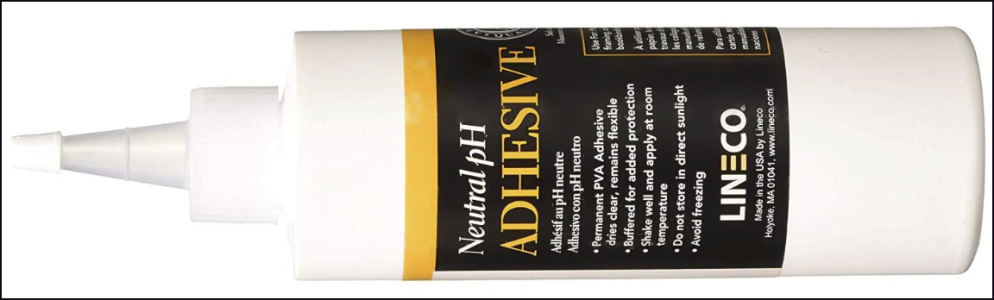
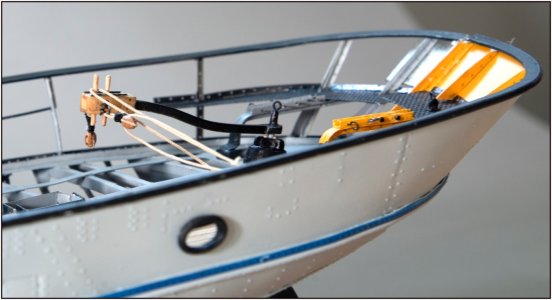
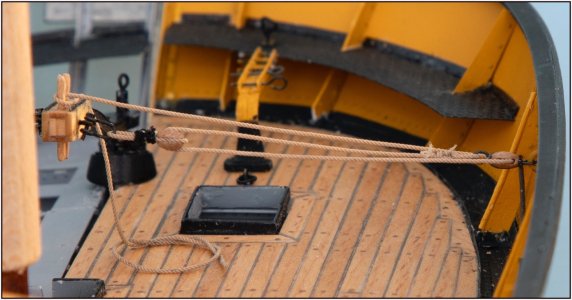
The line looks totally natural.To keep ropes in their 'natural' shape, or secure knots, I use Lineco Neutral pH Adhesive, diluted with water.
View attachment 589658
2 or 3 thin layers will dry transparent, without a glossy surface. Let it dry in the shape you wanted:
Before:
View attachment 589668
After:
View attachment 589659
Use the ‘search option’ of the forum with ‘Lineco’ and you will find lots of positive posts with the use of this PVA.
Regards, Peter
How long is the shelf life / is it worth buying in larger quantities?
For securing knots, natural shellac is the best solution in my opinion. It dissolves in isopropyl alcohol, dries quickly, and is reversible.

Not really necessary if before you install any rigging thread you run itHey all,
Once I get a section of rigging done, I like to put some sort of sealer to keep the fibers of the various thicknesses of thread from fraying and to seal the knots. As an experiment, I used CA, but all it did was soak into the fibers, crystalized and weakened the thread and it just snapped/broke. I was thinking about using a water-based all purpose sealer. Saw "Masters Touch" at my Hobby Lobby. Fairly expensive at $7.49 for an 8-ounce bottle. Would that be safe? What do you guys use? Thanks!
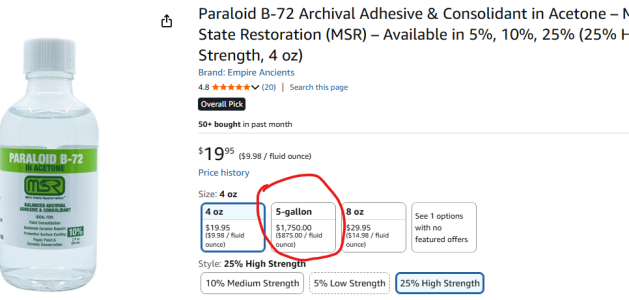
My comment was a bit if a joke - the 5 gallon offering at $1,750.00 is ridiculous for a modelerI suppose there's a savings in packaging, but I can't imagine a ship modeler having any reason to buy five gallons of mixed B-72!

1. Use thinned raw bee's wax. Thin with dilute alcohol (dilute the commercial alcohol until it will no longer dissolve the wax then backup a bit). Consistency to be about like thick cream. Use an artists paint brush to apply. I apply it everything cotton. Use can also use this thin wax as a finish for wood: apply to the wood, then polish the excess off.Hey all,
Once I get a section of rigging done, I like to put some sort of sealer to keep the fibers of the various thicknesses of thread from fraying and to seal the knots. As an experiment, I used CA, but all it did was soak into the fibers, crystalized and weakened the thread and it just snapped/broke. I was thinking about using a water-based all purpose sealer. Saw "Masters Touch" at my Hobby Lobby. Fairly expensive at $7.49 for an 8-ounce bottle. Would that be safe? What do you guys use? Thanks!
Forgive me if I am being over simple and possibly ignorant but, I have been quite happy to use PVA both neat and diluted on many, many models without any problem. If I make a mistake or need to remove something a good soaking in just plain water softens PVA quite enough to separate parts and residue is easy enough to scrape off if necessary when dry again. I have used diluted PVA with water a few times on rigging lines with no problems at all. I am just amazed at how a simple question at the beginning of this post has become so involved and 'technical'. Just my thoughts and not meant to cause any offence.
 Lots of people are happy with one method or another. Sometimes a method is "six of one and a half dozen of another." Other times, it's flat out wrong for a lot of reasons, but the modeler who's doing it is happy doing it, proof that "ignorance is bliss." For the latter crowd, diving deep into the science and technology is part of what makes ship modeling challenging and enjoyable for them.
 3. the reason for all the emphasis on raw is because the raw wax has antimicrobial properties that stop the growth of bacteria that rot the cotton rigging line that I make. WIth proper waxing the line should last for a hundred or more years. Basically, use every technique to increase the lifetime.
4. Do not use any type of glue. All glues will dry hard and brittle. then they break. guaranteed. Glue is a disaster for all rigging applications.


Hi, Bob. Will this Shellac work on polyester ropes and knots as good as on cotton ones? Will it seal polyester rope ends to prevent them to flare out?I later came to use nothing but clear Zinsser "Bull's Eye" brand shellac right out of the can (3-pound cut), which is a staple in my paint locker for sealing all wooden parts, hardening card stock, and so on. If applied in a single coat, it will be absorbed and become virtually invisible when dry. Multiple coats will build, with a high gloss, though. Shellac is thinned with alcohol (not isopropyl rubbing alcohol, just regular alcohol from the paint store, but not the alcohol sold for stove fuel and dyed blue, for obvious reasons. I buy it by the gallon, which is a lot cheaper than pint cans. Like shellac, It's a stock item in my shop.