Follow along with the video below to see how to install our site as a web app on your home screen.
Note: This feature may not be available in some browsers.
Ships of Scale has incorportated an extra level of security when you log In. Please follow
on-screen prompts to acknowledge that you are not a robot via a "Check Box" or a "Pictorial Check Box Puzzle". This is needed due
to higher level of AI Activity Security.
The beloved Ships in Scale Magazine is back and charting a new course for 2026!
Discover new skills, new techniques, and new inspirations in every issue.
NOTE THAT OUR NEXT ISSUE WILL BE July/August 2026
Win a Free Custom Engraved Brass Coin!!!
As a way to introduce our brass coins to the community, we will raffle off a free coin during the month
of August. Follow link ABOVE for instructions for entering.
A jig was made for locating where the holes need to be drilled for the breeching line and gun tackle eyebolts for the guns of the middle gun deck. These are drilled from outside the hull. The jig ensures that the holes appear in the correct place on the inside surface of the bulwark. You don't care about holes on the outside surface of the hull because you will cover them up with the final planking later.
After the eyes are calibrated, that's when you calibrate your hands and before you know it, you start making better stuff. Oh, heck.. skip calibrating the hands and make a jig! Why? because repetitive actions using your hands never turn out as consistent as you want them to be.
Just catching up - spritmast offset - may have missed it, will you "center it" at its tip, or leave the mast offset longitudinally? Mine will be recentered, McKay's images are not. Museum examples that I have used as references all seem to have the mast tip recentered - Nice work she's really coming along.
Just catching up - spritmast offset - may have missed it, will you "center it" at its tip, or leave the mast offset longitudinally? Mine will be recentered, McKay's images are not. Museum examples that I have used as references all seem to have the mast tip recentered - Nice work she's really coming along.
The end of the bowsprit will be centered. My thinking is that for a ship this large, having the forestays off center doesn't make as much sense with regard to properly supporting the foremast from a geometry standpoint, and in turn, the masts behind it. The position and angle of the bowsprit was already established a few steps back in the build log test fitting the dowel in the hole in the deck of the bow. Spanish galleons of the late 16th century appear to have frequently angled the bowsprit in parallel with the keel, but with many features like this, there may be a general rule, but here are also plenty of exceptions. When we have no information, we typically fall back on using the general rule.
If you OR ANYONE has any comments on something that could be added or changed for a correction, PLEASE SPEAK UP. I would to miss something that could have easily been fixed in one stage of building get made inaccessible so it could not be fixed later on. To those who have corrected or commented on things for improvement in the past, YOU are the most helpful and have my undying gratitude. (That includes Paul, too ).
If you OR ANYONE has any comments on something that could be added or changed for a correction, PLEASE SPEAK UP. I would to miss something that could have easily been fixed in one stage of building get made inaccessible so it could not be fixed later on. To those who have corrected or commented on things for improvement in the past, YOU have my undying gratitude. (That includes Paul, too ).
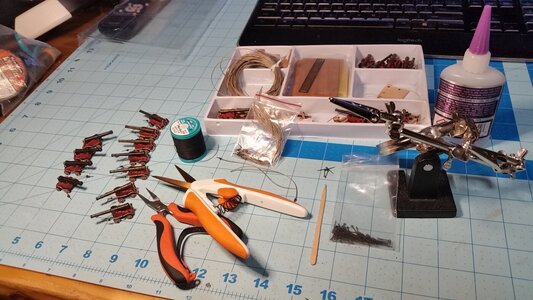
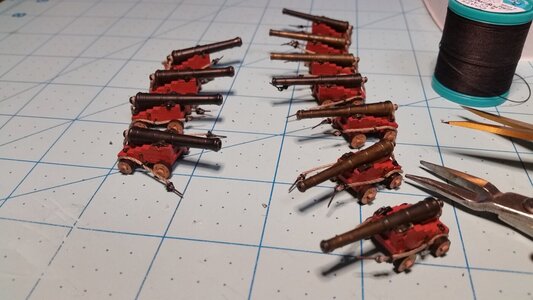
While Paul is taking a well deserved vacation, I am continuing construction on the Sovereign. Assembling the culverin drakes for the middle deck broadsides and the four stern demi culverin drakes has begun.
, Kurt - you asked, so I am going to express my opinion. One thing that strikes me is the contrast between your middle deck color and the accompanying inner bulwarks. Personally, I would not highlight a difference, here, unless you are "painting" with stain to represent a darker color on the inner bulwarks. This is just a preference, of course.
, Kurt - you asked, so I am going to express my opinion. One thing that strikes me is the contrast between your middle deck color and the accompanying inner bulwarks. Personally, I would not highlight a difference, here, unless you are "painting" with stain to represent a darker color on the inner bulwarks. This is just a preference, of course.
Goodee! A helpful comment! , I was using stain to darken the bulwarks, but what would be ACCURATE for such a ship? Painted? If so, PLEASE tell me the appropriate color. I understand that not be known, being an older 17th century ship, but a good guess is better than nothing at all. I would choose take your best guess on any feature on this model over my total ignorance. Looking forward to your reply, since painting the bulwark would naturally be the next step in construction. AND THANK YOU SO MUCH for the help!
PS I can live with the lower gun deck bulwarks staying in wood tone at this point... because I no longer have any choice.... POINT MADE.
Leaving it wood shows more detail. A little paint covereth a multitude of sins, to misquote a Bible verse. If I use paint, i can prep it with putty and my mistakes aren’t quite as glaring. I love seeing your woodwork, but that’s just me.
Back in the day, when I was on Deagostini's forum and there were several of us researching this vessel, one of my friends had gone the full internal detail route and he had read that in this period the inside walls of the ship were painted in a lime wash to prevent rot and fungal growth.He painted his Bulwarks in an off greyish white and it did look good. Just thought I would throw it in for debate as an alternative
Regarding the bowsprit, I had read that the tip should fall on the ship"s centreline to prevent "torque" in the structure.Don't ask me why but seems plausible
Back in the day, when I was on Deagostini's forum and there were several of us researching this vessel, one of my friends had gone the full internal detail route and he had read that in this period the inside walls of the ship were painted in a lime wash to prevent rot and fungal growth.He painted his Bulwarks in an off greyish white and it did look good. Just thought I would throw it in for debate as an alternative
Regarding the bowsprit, I had read that the tip should fall on the ship"s centreline to prevent "torque" in the structure.Don't ask me why but seems plausible
Much obliged, Nigel. There are so many things I do not know about early ships, this one in particular. You and other learned members are hugely valuable in providing shreds of information where none exist, even if they are guesses based on other vessels and traditions. I'll look for some off white paint or make it myself, and paint the middle and upper gun deck bulwarks in Bristol fashion by hand. Most other models of the Sovereign show red ochre bulwarks on the weather deck. Do you agree that is the best guess? Hopefully Hubac's Historian and some other members will weigh in on the bulwark color topic soon.
As for the bowsprit, your tip aligns with the general consensus with other builders, and I agree about the need for the fore topmast and topgallant stays to run down to a centered bowsprit for even support port to starboard. It seems logical so the masts don't have a weaker less supported side.
Lime washed wood, the look to go for if aged
This morning, all the rest of the middle gun deck gun carriages had their breeching ropes completed. After painting the bulwarks, these will be ready for installation, then come columns and other feature closer to centerline. After that, the upper gun deck gun ports will be cut, inboard planking extended upward another deck, and the process of creating the next deck support structure repeats.
I have to say that this model project seemed hugely daunting at first, being overwhelmed with questions on how to begin and how to build, but now things are less stressful and parts seem to find their proper place and the planning using the information sources on this ship is falling in to a rhythm. There are new obstacles to tackle later, such as making the golden decorations, that have to be figured out eventually. But that's later. It's fun right now just making and installing wooden parts.
Kurt I agree with Red Ochre for the Bulwarks on the weather deck.These areas are exposed to constant air circulation so do not require the lime wash.You can only imagine how damp and muggy things were below decks when all the ports were closed
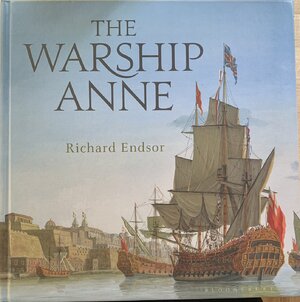
I began with a look at Richard Endsor’s excellent book on the reconstruction of the third-rate Anne of 1678:
Within, there are contract specifications for the Yarmouth of 1677. While there is some general mention of the paint and gilt work to be done, there are no specifics mentioned.
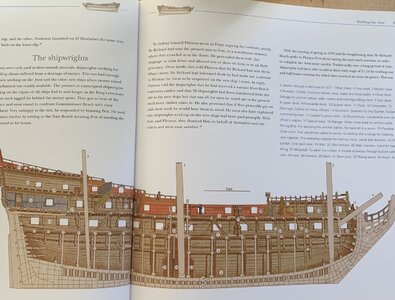
Interestingly, Richard draws a cutaway of the ship where only the weather deck bulwarks are painted red, as suggested by Nigel:
Why, then, do most contemporary dockyard models show the interior of port lids painted a bright red? Wouldn’t that also presume that the interior planking is painted red to match?
Well, next, I looked at Frank Fox’s hugely important book “Great Ships..”
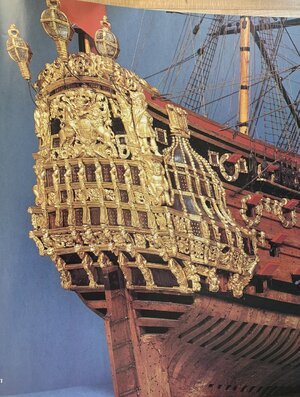
Note the red port lids on the frontispiece, a Van de Velde portrait showing the HMS Prince. Inside, are pictures of the Science Museum model of the Prince:
What I found really interesting, here, is that only the lid interiors, here, are painted red, but not the port framing, itself.
Although, as modelers we tend to presume that the interior bulwarks are painted this bright red (myself included), perhaps this is not so. Perhaps the lid interiors were painted such, so as to provide a striking backdrop to whatever port ornaments were painted or affixed to them.
Perhaps, the red is a color-code psyche-out toward the enemy as the ships prepare to engage; a reminder that all of these guns are about to extract a huge price in blood.
I can’t say for certain. I did find a few interesting discussions on the subject, both here and on MSW:
Good afternoon, beautiful day in Florida today. I am getting ready to start the Occre Albatross and looking at all the pictures of this ship i have decided that I would like the bulwarks painted dark green. Would this be a no no ? Would this take a mid 1800 ship out of that time period? This...
Does anyone know when the practice of painting bulwarks red began? Would it be appropriate for ships during the Armada? Kurt
modelshipworld.com
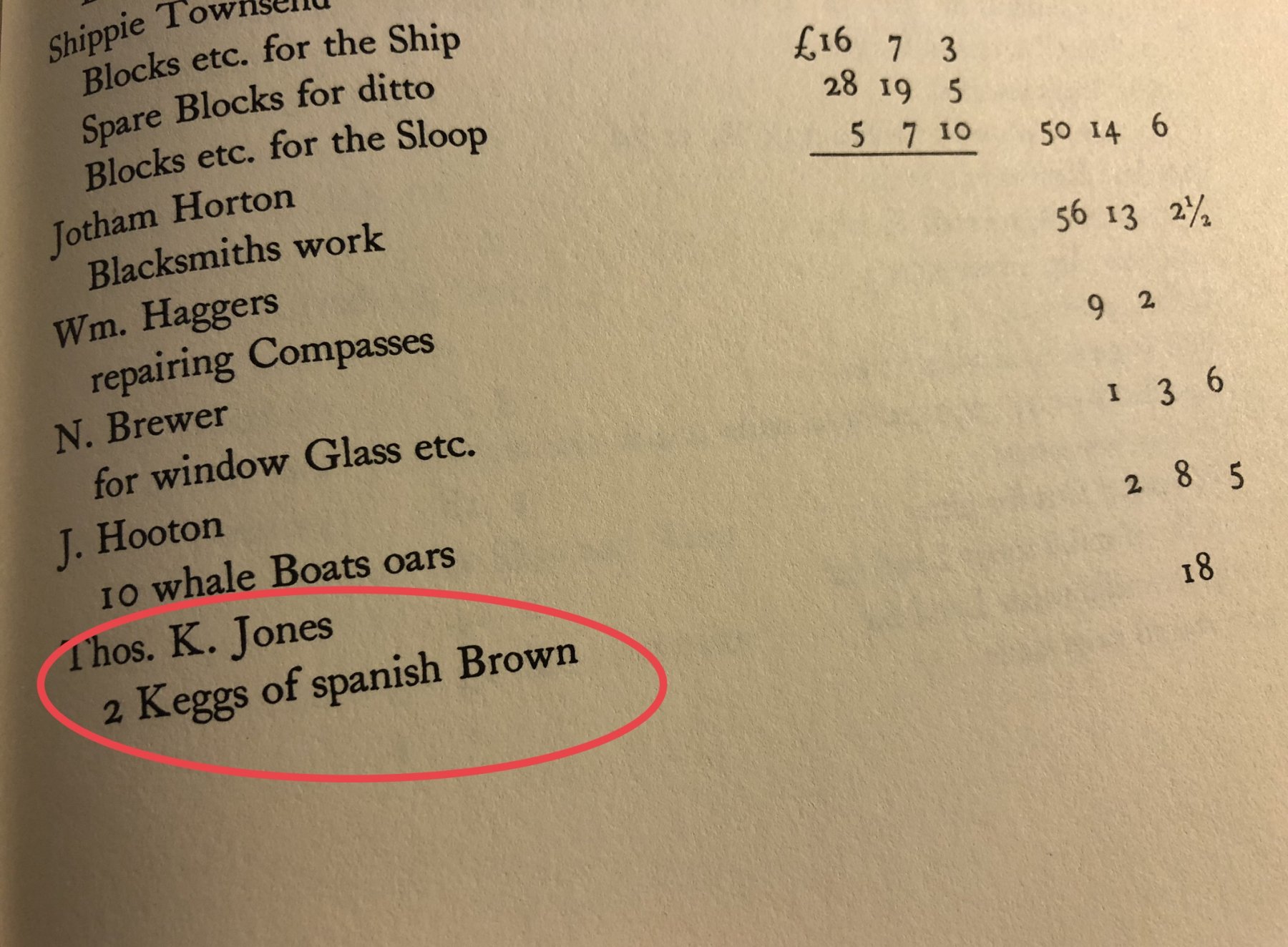
There is a particularly interesting discussion of the cheap to produce and readily available “Spanish Brown.”
All of this considered, I don’t think one can go too far wrong by painting a lime, whitewash to their bulwark interiors, even if your port lid interiors are painted red.
From a practical standpoint, it makes considerable sense to use a light color that is reflective in a dark dingy environment. That this lime wash has some value as an anti-microbial surface also supports its use, although I’d have to wonder whether that was common knowledge in the 17th C. Chief among all considerations is that whitewash would have been very cheap.
I began with a look at Richard Endsor’s excellent book on the reconstruction of the third-rate Anne of 1678: View attachment 301681
Within, there are contract specifications for the Yarmouth of 1677. While there is some general mention of the paint and gilt work to be done, there are no specifics mentioned.
Interestingly, Richard draws a cutaway of the ship where only the weather deck bulwarks are painted red, as suggested by Nigel:
Why, then, do most contemporary dockyard models show the interior of port lids painted a bright red? Wouldn’t that also presume that the interior planking is painted red to match?
Well, next, I looked at Frank Fox’s hugely important book “Great Ships..”
Note the red port lids on the frontispiece, a Van de Velde portrait showing the HMS Prince. Inside, are pictures of the Science Museum model of the Prince:
What I found really interesting, here, is that only the lid interiors, here, are painted red, but not the port framing, itself.
Although, as modelers we tend to presume that the interior bulwarks are painted this bright red (myself included), perhaps this is not so. Perhaps the lid interiors were painted such, so as to provide a striking backdrop to whatever port ornaments were painted or affixed to them.
Perhaps, the red is a color-code psyche-out toward the enemy as the ships prepare to engage; a reminder that all of these guns are about to extract a huge price in blood.
I can’t say for certain. I did find a few interesting discussions on the subject, both here and on MSW:
Good afternoon, beautiful day in Florida today. I am getting ready to start the Occre Albatross and looking at all the pictures of this ship i have decided that I would like the bulwarks painted dark green. Would this be a no no ? Would this take a mid 1800 ship out of that time period? This...
Does anyone know when the practice of painting bulwarks red began? Would it be appropriate for ships during the Armada? Kurt
modelshipworld.com
There is a particularly interesting discussion of the cheap to produce and readily available “Spanish Brown.”
All of this considered, I don’t think one can go too far wrong by painting a lime, whitewash to their bulwark interiors, even if your port lid interiors are painted red.
From a practical standpoint, it makes considerable sense to use a light color that is reflective in a dark dingy environment. That this lime wash has some value as an anti-microbial surface also supports its use, although I’d have to wonder whether that was common knowledge in the 17th C. Chief among all considerations is that whitewash would have been very cheap.









 Why? because repetitive actions using your hands never turn out as consistent as you want them to be.

 - may have missed it, will you "center it" at its tip, or leave the mast offset longitudinally? Mine will be recentered, McKay's images are not. Museum examples that I have used as references all seem to have the mast tip recentered - Nice work she's really coming along.

 ...
...

 , Kurt - you asked, so I am going to express my opinion. One thing that strikes me is the contrast between your middle deck color and the accompanying inner bulwarks. Personally, I would not highlight a difference, here, unless you are "painting" with stain to represent a darker color on the inner bulwarks. This is just a preference, of course.