



• Ships of Scale has incorportated an extra level of security when you log In. Please follow on-screen prompts to acknowledge that you are not a robot via a "Check Box" or a "Pictorial Check Box Puzzle". This is needed due to higher level of AI Activity Security.
  • SUBSCRIBE TO SHIPS IN SCALE TODAY!

    The beloved Ships in Scale Magazine is back and charting a new course for 2026!
    Discover new skills, new techniques, and new inspirations in every issue.

    NOTE THAT OUR NEXT ISSUE WILL BE July/August 2026
  • Win a Free Custom Engraved Brass Coin!!!
    As a way to introduce our brass coins to the community, we will raffle off a free coin during the month of August. Follow link ABOVE for instructions for entering.

Paddle Steamer Robert E. Lee, scale 1:96, scratch build by the Alan L. Bates drawings [COMPLETED BUILD]

I’m delighted that a recent question by Neilm about a lack of steamboat models has resurrected Peter’s magnificent Robert E. Lee model.

In looking at the photos, I was struck by the height of her chimneys relative to those of boats that I am more familiar with. This is a great example of the role that environment played in the development of these craft.

The use of the word “chimney” is not a mistake. Period accounts of these vessels often describe what salt water sailors call funnels as chimneys.

Anyhow, the first bridge spanned the Ohio River at Wheeling West Virginia in 1849 in spite of intense opposition from steamboat interests concerned that the bridge would limit the height of steamboat chimneys. The Wheeling Bridge was followed by other Ohio River bridges downstream as Railroads expanding West were allowed to cross the river. The presence of these bridges led to development of Ohio River boats with shorter stacks that could clear these bridges. This ultimately resulted in “pool boats” with folding stacks. The WP Snyder preserved at Marietta, Ohio is a pool boat.

The Mississippi was different. Although the Upper Mississippi was first crossed in the 1850’s, again opposed by steamboat interests, the River below St Louis was not spanned by a bridge until one was built at Memphis, TN in the mid-1890’s. The Mississippi is also known for having strong currents. Very tall stacks like those shown on the Robert E. Lee could provide the necessary furnace draft to provide steam for more powerful engines and were not obstructed by overhead bridge clearances.

As late as the 1980’s Dravo Corporation’s Neville Island shipyard (sadly, long since closed) offered specially built higher powered diesel towboats to deal with the Lower Mississippi’s currents.

Roger
Thank you for the compliments, kind words, and substantive response, Roger. The latter is especially appreciated for gaining more insight into these ships.
Regards, Peter
 
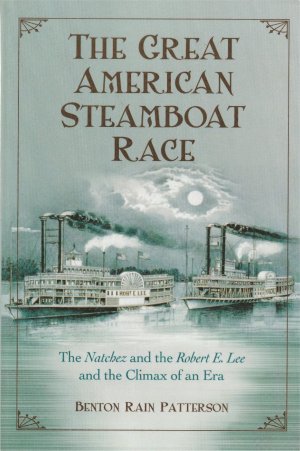
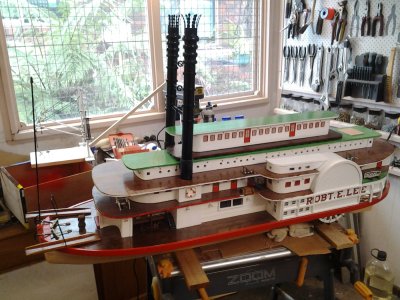
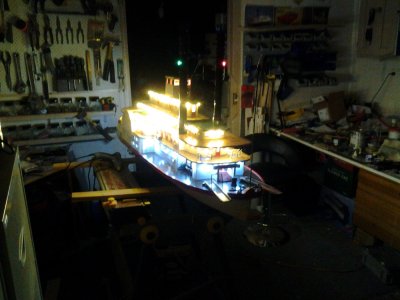
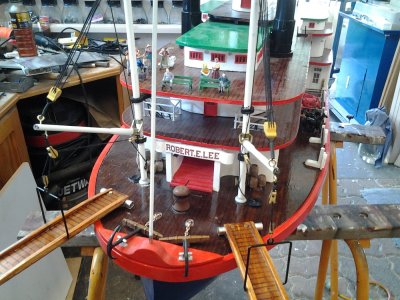
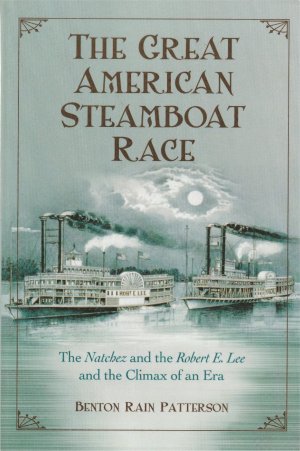
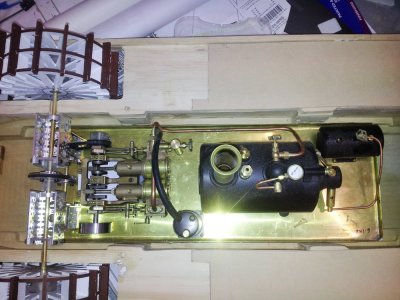
Great build Peter it bought back a lot of memories for me. As you can see by my Avita I am a Robert E Lee fan, my boat was a working model, originally steam powered but because of council restrictions with registrations and testing of boilers it was eventually converted to electric power unfortunately due to family health reasons I had to sell it in 2016, it was unfinished, but only handrails and trims needed to be added to finish it. I worked of the same set of plans as you Peter, and it broke my heart to have to get rid of it. but that's life, I still have the plans and who knows one day. I have attached some photos and also one of a book that I purchased quite a while ago now that you may be interested in, it has some great pictures of the boats in it.

River boat.jpg

20160821_122254.jpg

20160906_195056.jpg

20160923_160459.jpg

River boat.jpg

15 Engine arragement1.jpg
 
Great build Peter it bought back a lot of memories for me. As you can see by my Avita I am a Robert E Lee fan, my boat was a working model, originally steam powered but because of council restrictions with registrations and testing of boilers it was eventually converted to electric power unfortunately due to family health reasons I had to sell it in 2016, it was unfinished, but only handrails and trims needed to be added to finish it. I worked of the same set of plans as you Peter, and it broke my heart to have to get rid of it. but that's life, I still have the plans and who knows one day. I have attached some photos and also one of a book that I purchased quite a while ago now that you may be interested in, it has some great pictures of the boats in it.

View attachment 623460

View attachment 623473

View attachment 623476

View attachment 623477

View attachment 623478

View attachment 623479
Thanks for visiting, John. And sorry that I missed your introduction on the SoS and your posted pictures. It must have been a great view to see your 1,5 mtr model floating through the water and here the original sound of the steam engine!
Regards, Peter
 
Back
Top