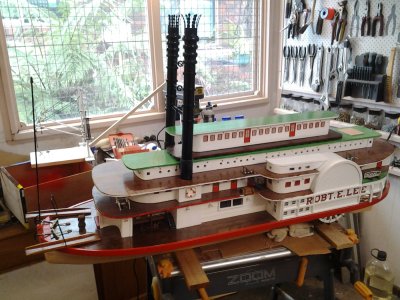
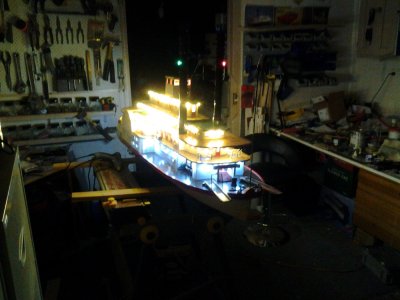
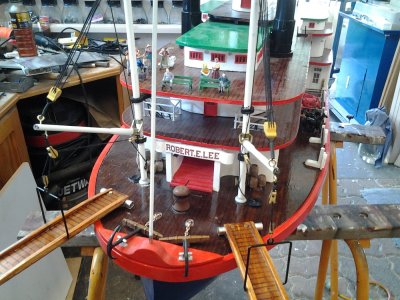
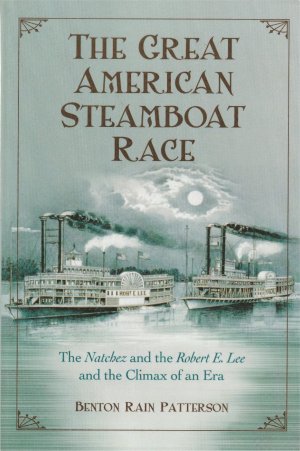
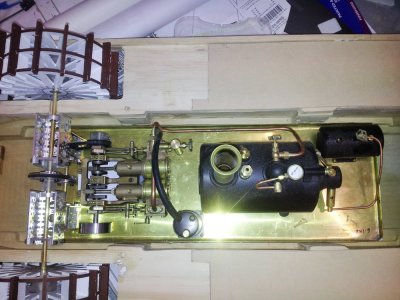
Thank you for the compliments, kind words, and substantive response, Roger. The latter is especially appreciated for gaining more insight into these ships.I’m delighted that a recent question by Neilm about a lack of steamboat models has resurrected Peter’s magnificent Robert E. Lee model.
In looking at the photos, I was struck by the height of her chimneys relative to those of boats that I am more familiar with. This is a great example of the role that environment played in the development of these craft.
The use of the word “chimney” is not a mistake. Period accounts of these vessels often describe what salt water sailors call funnels as chimneys.
Anyhow, the first bridge spanned the Ohio River at Wheeling West Virginia in 1849 in spite of intense opposition from steamboat interests concerned that the bridge would limit the height of steamboat chimneys. The Wheeling Bridge was followed by other Ohio River bridges downstream as Railroads expanding West were allowed to cross the river. The presence of these bridges led to development of Ohio River boats with shorter stacks that could clear these bridges. This ultimately resulted in “pool boats” with folding stacks. The WP Snyder preserved at Marietta, Ohio is a pool boat.
The Mississippi was different. Although the Upper Mississippi was first crossed in the 1850’s, again opposed by steamboat interests, the River below St Louis was not spanned by a bridge until one was built at Memphis, TN in the mid-1890’s. The Mississippi is also known for having strong currents. Very tall stacks like those shown on the Robert E. Lee could provide the necessary furnace draft to provide steam for more powerful engines and were not obstructed by overhead bridge clearances.
As late as the 1980’s Dravo Corporation’s Neville Island shipyard (sadly, long since closed) offered specially built higher powered diesel towboats to deal with the Lower Mississippi’s currents.
Roger
Regards, Peter