
• SUBSCRIBE TO SHIPS IN SCALE TODAY!

    The beloved Ships in Scale Magazine is back and charting a new course for 2026!
    Discover new skills, new techniques, and new inspirations in every issue.

    NOTE THAT OUR NEXT ISSUE WILL BE MARCH/APRIL 2026
  • Win a Free Custom Engraved Brass Coin!!!
    As a way to introduce our brass coins to the community, we will raffle off a free coin during the month of August. Follow link ABOVE for instructions for entering.

HMS Elephant Amati 1786

Joined
Feb 17, 2025
Messages
6
Points
53

Hello all from California! My name is Jan. For my birthday I bought the HMS Vanguard Amati 1787 kit off of Facebook Marketplace, having eyed it for several months. I didn't jump on it right away figuring the total market size of this hobby is very small and it wouldn't move quickly.
I have always loved ships of the Age of Sail and have dreamt of building a wooden ship, and so last year I finally took a giant leap and built the Mamoli HMY Mary to see if my patience had evolved to a level I could spend months on a single art project. My eventual goal was a ship of the line, so after that I built the Frigate Hermione (took ~10 months), and a Revell plastic Beagle kit.

This kit is a behemoth. The box weighs more than 30 pounds.
My plan is to build this kit as the HMS Elephant. I adore elephants, and shall try to build this ship so I can display her with an elephant figurehead and varnished wood sides. I don’t see many Elephant build logs on here, or on the internet in general. I trawled Instagram and found one public account with it.

First notes on unboxing and looking a the contents:
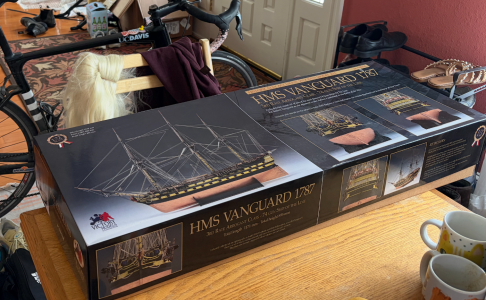
  1. The kit is gorgeous, the plans themselves are a work of art. I have hung one on my wall. I stashed the ones I don’t need currently in a drawer. There are several smaller boxes containing some resin parts, various railings, anchors, deadeyes, buckets, cannons, false-cannons, carronades, and blocks.
  2. A fancier kit will come with more fancy parts. I was pleased to see the deadeye chain plates came in photo etch; I had a devil of a time making them on my Frigate. The paper instructions are a nice change from the pdf I had to read from a CD included for the Frigate.
  3. I don’t think I could take a stab at this without having done a 3 masted ship before. I'm proud of my Frigate and I hope this one turns out even better. The larger size of this ship (over 1 foot longer than the Frigate).
  4. There are a lot of laser cut parts. The photoetch looks excellent.
  5. The cannon carriages are cast metal. I've seen others replace these but for now I shall keep them. I might 3D print some extra carronades for the quarterdeck, as HMS Elephant was equipped with these and Amati sells each of them at a criminal price.
  6. The copper plating will be a first for me, but that will only come many moons from now. It comes as sheets of etched copper that you can snap off in pieces
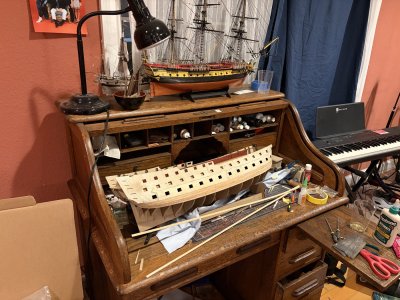
My existing model bench is somewhat smaller than the box, and so I commandeered a coffee table to assist in providing space. I still move apartments semi-frequently, otherwise I would buy a bigger craftbench. I aim to do as good a job as I can with the 2nd planking so I can preserve it un-painted. We shall see how well this goes.

Screenshot 2026-03-26 at 8.47.55 PM.png

Screenshot 2026-03-26 at 8.51.00 PM.png

Screenshot 2026-03-26 at 8.50.50 PM.png
 
Last edited:
HMS Vanguard
First, welcome to SoS Jan :)

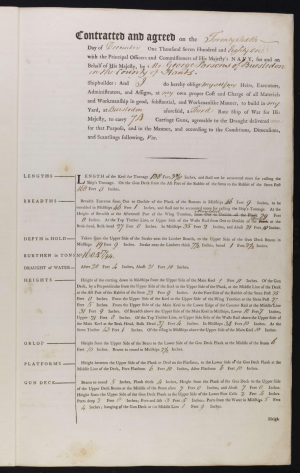
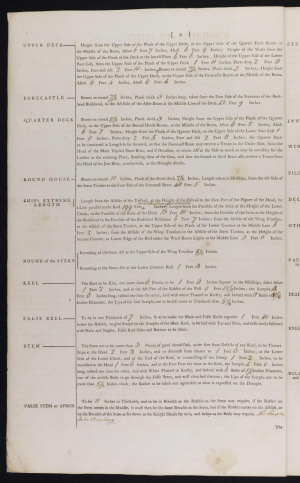
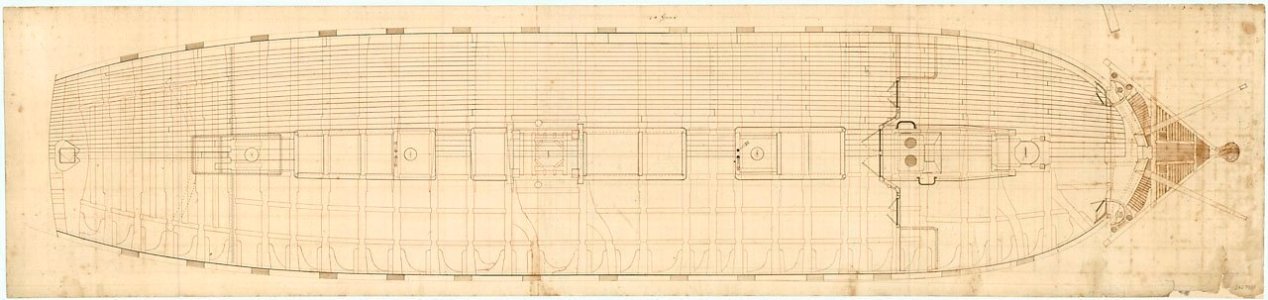
The Vanguard was an Arrogant class 74 same as the Elephant so a great idea that you have as there is so much information about her. Depending on what you are looking to achieve there is the original contract from for Elephant which gives dimensions of every piece of the ship and more. There are also a lot of drawings on the RMG Collections website as well. https://www.rmg.co.uk/collections/objects/search/Elephant 1786 plans

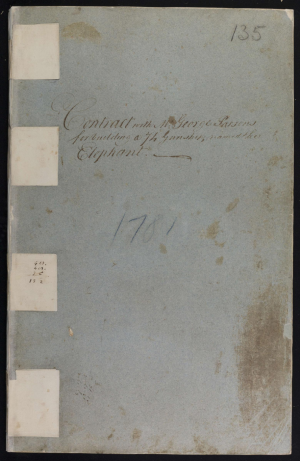
The contract was written earlier, 1781, but is described by RMG and on the cover page as being for Elephant, built by Parsons in Bursledon.
Cover page
1774610653855.png
Page 1 of 24 pages
1774609986346.png

Page 2
1774610030673.png

Have fun, and good luck.
Allan
 
Last edited:
You might find this interesting.
 
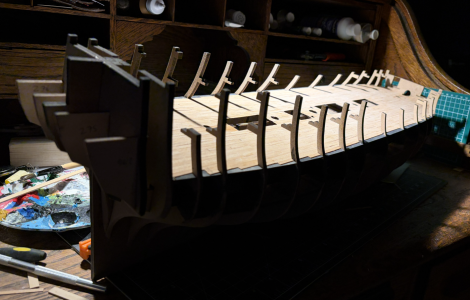
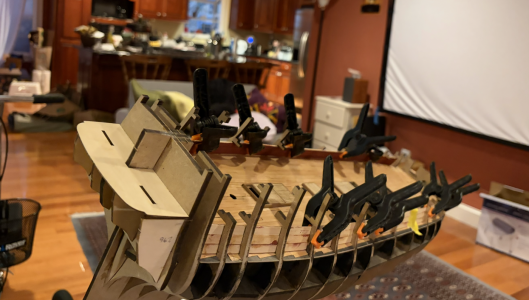
Onwards ho. The bulkheads of the ship are laser cut out of MDF, which is soft and easy to sand. Much better than plywood. The instructions said to sand each bulkhead before installation but I felt that was strange so I glued everything into place first and then sanded. I sanded only the sternmost bulkhead before installation as the planks of the first planking bend sharply and join the transom at that bulkhead.
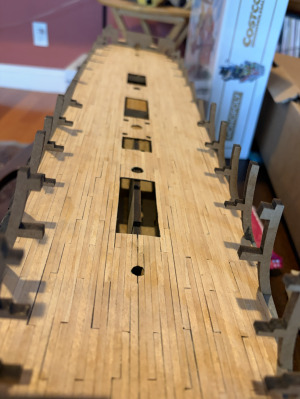
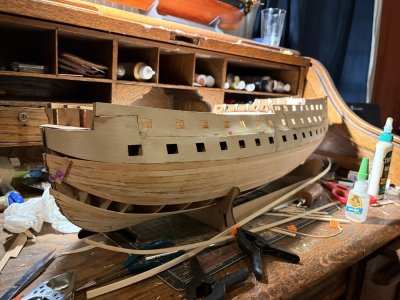
For planking the upper deck, I chose 100mm strips and then did a 4 butt shift every 25mm. This made placement of each plank very easy. I painted the plywood deck layout a dark grey to see if that would come out as caulking. At this scale, it shouldn’t really be visible, but I thought I’d give it a go. It ended up looking worse than expected, so I won’t paint the other decks’ plywood bases. Once the deck was planked, I cut it in half and glued it in place with plenty of clamps.
Some harsh lighting reveals Elephant's lovely lines that I hope to do justice to.
Fun fact: at this point (deck glued in, before bulwark planking begins) Elephant weighs 1980g according to my kitchen scale.
Screenshot 2026-04-05 at 5.11.55 PM.png
Screenshot 2026-04-05 at 5.12.09 PM.png
The instructions say to plank the inner bulwarks of the upper gundeck at this point, so I did so. I decided to paint the bulwarks a brick red acrylic paint before adding them so as not to spoil my deck or risk bleed through with masking tape. My Frigate Hermione had much more of a fire engine red which I ended up regretting, and I also presume a brick red would be more similar to red ochre used on ships of the day. There are about 3 full 7mm planks that can fit with no trimming between the upper gun deck and the underside of the spar deck support beams. After that I fit a fourth plank that I cut notches in, allowing me to snugly fit the fourth plank beneath the deck support frames. Once all the strips were glued in I applied a liberal amount of wood glue to the backside of the bulwarks. At this point I also glued the stern gallery balcony deck base in, and wetted it to get it to curve.
Screenshot 2026-04-05 at 5.12.16 PM.png

Future plans for deck include the addition of a pad for the capstans to sit on. The plans you so kindly linked suggest they should be there; it was unclear to me based on the model kit's instructions.
 
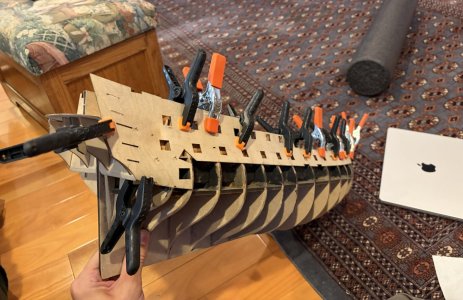
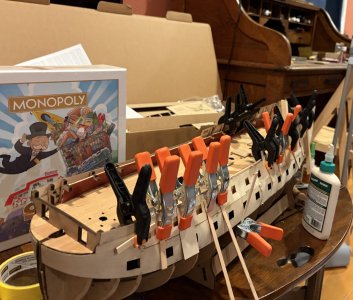
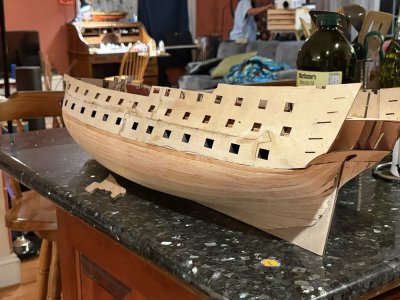
Next up were the gunport patterns. These things initially looked easy, but were a menace to put on. I’d read that excessive soaking caused worse warping in plywood, so I soaked them for less than twenty minutes each, and then used my pin punch to pin the parts in their tentative locations. I carefully ensured that the pins were punched in only about half their length to facilitate easy removal, only for the pattern to promptly fall off, the nails having only dented the MDF. I then bought more clamps and used every clamp I own to hold the parts in position, and punched the nails in deeply. This got the ply to finally stay in position until the glue cured.
Three of the patterns go on relatively quickly, but the fourth is the worst, as it is the one that curves around the bow AND curves outboard at roughly the same point. No amount of steaming with an iron got the pattern to bend like that and it eventually started to split.
IMG_8251.jpeg
Light steaming of the lowermost gunport patterns were sufficient to get a decent curve that could be pinned into place. I glued a small strip of wood along the bottom inside sill of the lowermost gunport patterns to reduce warping. At this point my clamp collection was insufficient keep it in place, so I added little wooden planks to spread load to the lowermost gunports.
IMG_8253.jpeg


After extracting all the pins with my pliers, I started on the first planking.

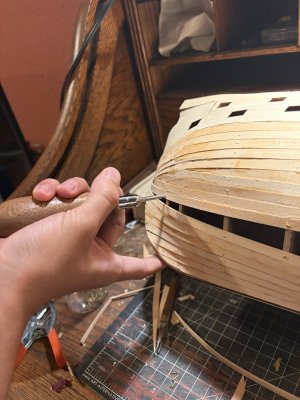
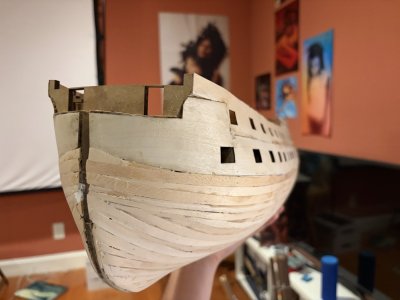
The supplied 1.5mm Limewood bends like a charm. The first planking does not need to be very beautiful, just smooth, so I proceeded quickly, bending each plank with an iron before nailing it in place with lots of wood glue. The curve at the bow is quite extreme under the gunport patterns, so I let the plank curve a bit more naturally and filled in the bow with stealers. As recommended, I did not plank the stern to the sternpost, as it would be too thick once the sternpost is installed, instead stopping near the end of each bulkhead. The iron and the rounded edge of my apartment's kitchen counter proved more than sufficient to steam the wood. I am grateful to my roommates for tolerating the small halo of splinters, brass pins, and wood scrap that have crept out from the work bench.
IMG_8264.jpeg
IMG_8280.jpegIMG_8282.jpeg
The stern counter proved entirely resistant to my efforts to make it bend. The wretched grain runs along the direction the piece needs to curve, and even soaking for hours in hot water made it impossible to iron the 2mm thick walnut around a curve. In the end, I scored several lines across the back of the piece which then splintered and crunched into a curve, and glued them in place after trimming the bottom to match the first planking. It fit snugly, but the poor piece had been so badly tortured I painted some glue onto it to stop it cracking further. In hindsight it probably would have been easier to just plank it myself and cut the rudder hole out, but that lesson is for future me.

IMG_8328.jpeg
IMG_8326.jpeg

The First Planking took about two weeks, and then it was on to a lot of sanding and wood filler. At this point I will glue the stem, sternpost, and keel pieces before doing the second planking.

After first planking, Elephant weighs 2.2kg.
 
The First Planking took about two weeks, and then it was on to a lot of sanding and wood filler.
If you look at the various posts here at SoS with videos on how planking is actually done there would be no fillers nor much sanding needed. For the first layer, I get it as no one will ever see it, but for the second layer are you going to do the same or will you be marking out the hull and shaping the planks?
Allan
 
If you look at the various posts here at SoS with videos on how planking is actually done there would be no fillers nor much sanding needed. For the first layer, I get it as no one will ever see it, but for the second layer are you going to do the same or will you be marking out the hull and shaping the planks?
Allan
Depends what you mean! I will taper the planks more at the bow and stern than I did with the first planking and generally be more careful, trying to avoid the poor job at the bow especially. I have measured the distance at the bow and amidships to estimate how much I need to taper each plank below the wale. I will most likely not scarf any planks. Planks above the wale will need less tapering than the ones below (I've found only mild tapering is needed, and only at the bow), so currently I've planked the main wale in three full width strips (the wale is doubled up on top of these planks for the most part) and will work up and then down. Garboard plank will be full width too.
 
Hello all from California! My name is Jan. For my 26th birthday I bought the HMS Vanguard Amati 1787 kit off of Facebook Marketplace, having eyed it for several months. I didn't jump on it right away figuring the total market size of this hobby is very small and it wouldn't move quickly.
I have always loved ships of the Age of Sail and have dreamt of building a wooden ship, and so last year I finally took a giant leap and built the Mamoli HMY Mary to see if my patience had evolved to a level I could spend months on a single art project. My eventual goal was a ship of the line, so after that I built the Frigate Hermione (took ~10 months), and a Revell plastic Beagle kit.

This kit is a behemoth. The box weighs more than 30 pounds.
My plan is to build this kit as the HMS Elephant. I adore elephants, and shall try to build this ship so I can display her with an elephant figurehead and varnished wood sides. I don’t see many Elephant build logs on here, or on the internet in general. I trawled Instagram and found one public account with it.

First notes on unboxing and looking a the contents:
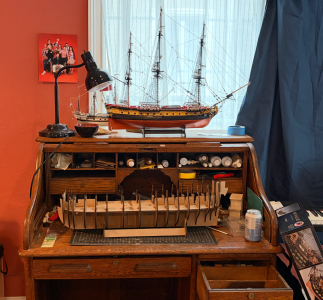
  1. The kit is gorgeous, the plans themselves are a work of art. I have hung one on my wall. I stashed the ones I don’t need currently in a drawer. There are several smaller boxes containing some resin parts, various railings, anchors, deadeyes, buckets, cannons, false-cannons, carronades, and blocks.
  2. A fancier kit will come with more fancy parts. I was pleased to see the deadeye chain plates came in photo etch; I had a devil of a time making them on my Frigate. The paper instructions are a nice change from the pdf I had to read from a CD included for the Frigate.
  3. I don’t think I could take a stab at this without having done a 3 masted ship before. I'm proud of my Frigate and I hope this one turns out even better. The larger size of this ship (over 1 foot longer than the Frigate).
  4. There are a lot of laser cut parts. The photoetch looks excellent.
  5. The cannon carriages are cast metal. I've seen others replace these but for now I shall keep them. I might 3D print some extra carronades for the quarterdeck, as HMS Elephant was equipped with these and Amati sells each of them at a criminal price.
  6. The copper plating will be a first for me, but that will only come many moons from now. It comes as sheets of etched copper that you can snap off in pieces
My existing model bench is somewhat smaller than the box, and so I commandeered a coffee table to assist in providing space. I still move apartments semi-frequently, otherwise I would buy a bigger craftbench. I aim to do as good a job as I can with the 2nd planking so I can preserve it un-painted. We shall see how well this goes.

View attachment 587180

View attachment 587181

View attachment 587182
Hello all from California! My name is Jan. For my 26th birthday I bought the HMS Vanguard Amati 1787 kit off of Facebook Marketplace, having eyed it for several months. I didn't jump on it right away figuring the total market size of this hobby is very small and it wouldn't move quickly.
I have always loved ships of the Age of Sail and have dreamt of building a wooden ship, and so last year I finally took a giant leap and built the Mamoli HMY Mary to see if my patience had evolved to a level I could spend months on a single art project. My eventual goal was a ship of the line, so after that I built the Frigate Hermione (took ~10 months), and a Revell plastic Beagle kit.

This kit is a behemoth. The box weighs more than 30 pounds.
My plan is to build this kit as the HMS Elephant. I adore elephants, and shall try to build this ship so I can display her with an elephant figurehead and varnished wood sides. I don’t see many Elephant build logs on here, or on the internet in general. I trawled Instagram and found one public account with it.

First notes on unboxing and looking a the contents:
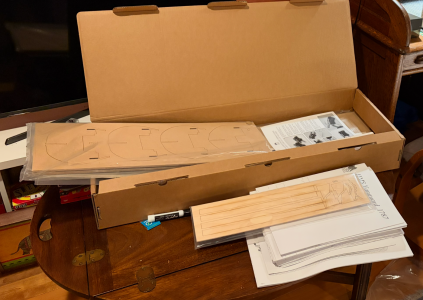
  1. The kit is gorgeous, the plans themselves are a work of art. I have hung one on my wall. I stashed the ones I don’t need currently in a drawer. There are several smaller boxes containing some resin parts, various railings, anchors, deadeyes, buckets, cannons, false-cannons, carronades, and blocks.
  2. A fancier kit will come with more fancy parts. I was pleased to see the deadeye chain plates came in photo etch; I had a devil of a time making them on my Frigate. The paper instructions are a nice change from the pdf I had to read from a CD included for the Frigate.
  3. I don’t think I could take a stab at this without having done a 3 masted ship before. I'm proud of my Frigate and I hope this one turns out even better. The larger size of this ship (over 1 foot longer than the Frigate).
  4. There are a lot of laser cut parts. The photoetch looks excellent.
  5. The cannon carriages are cast metal. I've seen others replace these but for now I shall keep them. I might 3D print some extra carronades for the quarterdeck, as HMS Elephant was equipped with these and Amati sells each of them at a criminal price.
  6. The copper plating will be a first for me, but that will only come many moons from now. It comes as sheets of etched copper that you can snap off in pieces
My existing model bench is somewhat smaller than the box, and so I commandeered a coffee table to assist in providing space. I still move apartments semi-frequently, otherwise I would buy a bigger craftbench. I aim to do as good a job as I can with the 2nd planking so I can preserve it un-painted. We shall see how well this goes.

View attachment 587180

View attachment 587181

View attachment 587182
Very nice kit, looking forward to watching this build progress. Also couldn't help noticing the UC Davis sticker on the bike. Go Aggies!
 
I will taper the planks more at the bow and stern than I did with the first planking and generally be more careful, trying to avoid the poor job at the bow especially. I have measured the distance at the bow and amidships to estimate how much I need to taper each plank below the wale.
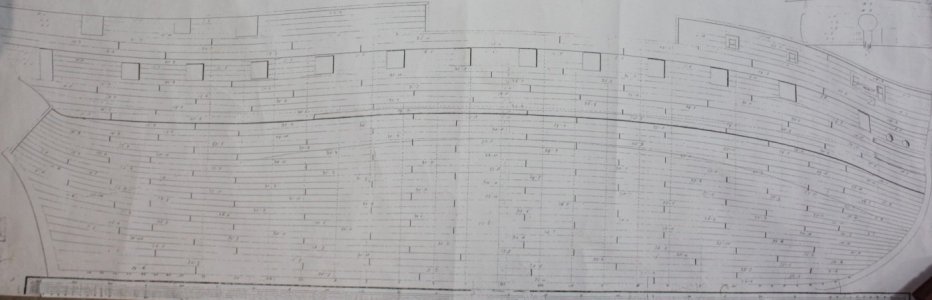
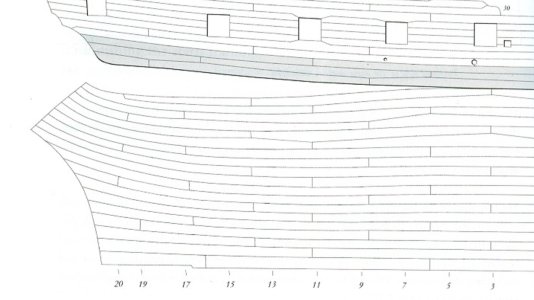
The planks at the stern actually get wider below from about the bottom of the lower counter to the keel but this is a problem as most kits give straight sticks. Stealers can take care of the gaps though. The biggest problem is not the tapering at the bow. If you mark out the plank widths at each bulkhead or even every other one, getting the taper is pretty easy to figure out. The edge bending is the big problem as they will lift if trying to force them in place. The edge bending can be done before gluing in place on the hull with a home made jig fixture. This video has been posted a number of times here at SoS but it is worth watching.
Allan
There are four videos in the series. Part 1

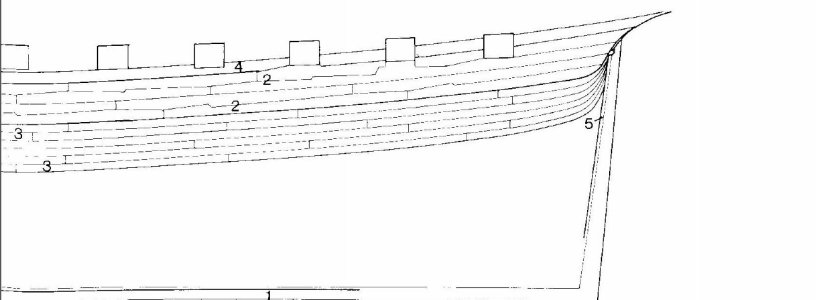
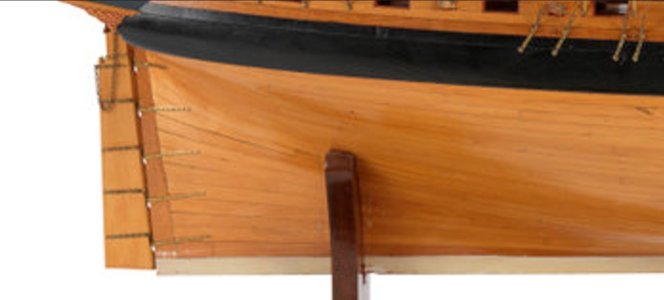
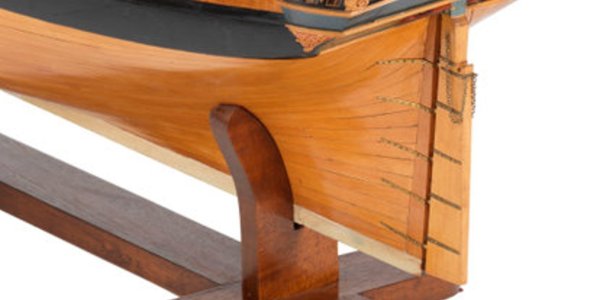
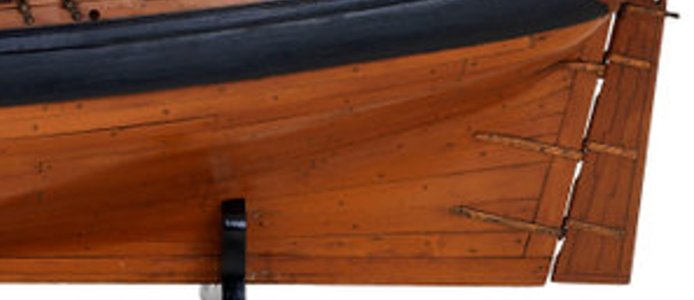
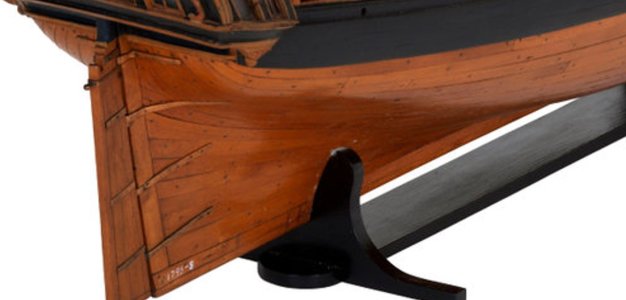
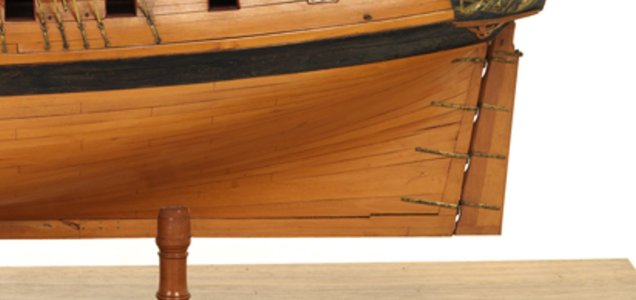
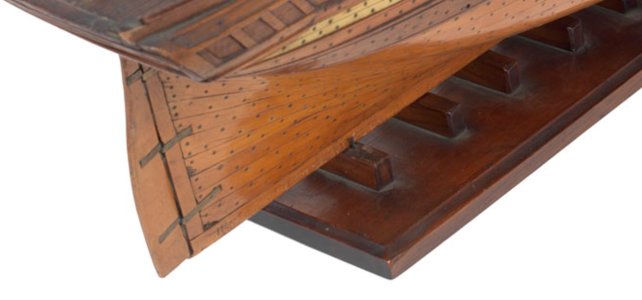
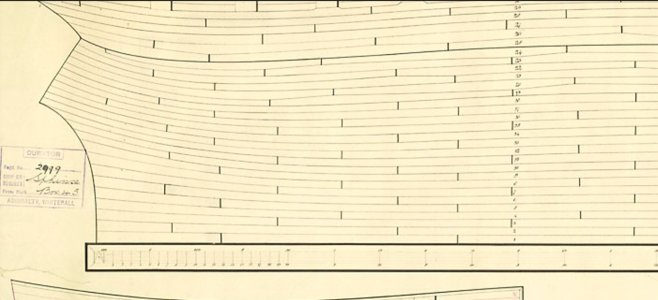
Planking expansion shows the widening of the lower dozen strakes aft and narrowing taper from the dead flat to the bowfrom the boxing joint to the wales.
1777372581103.jpeg
 
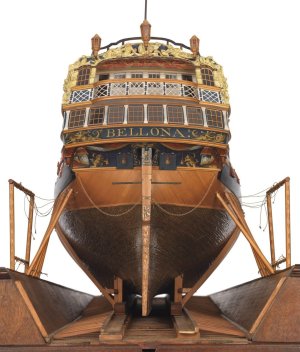
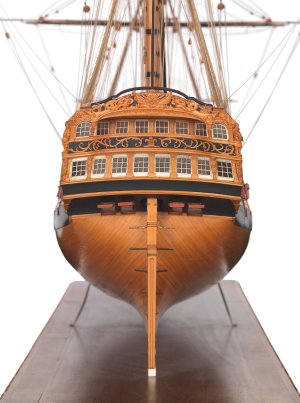
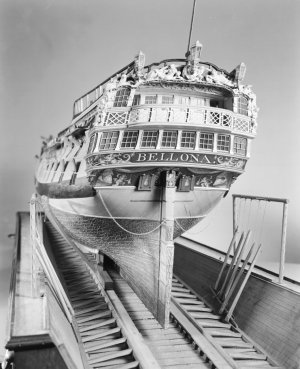
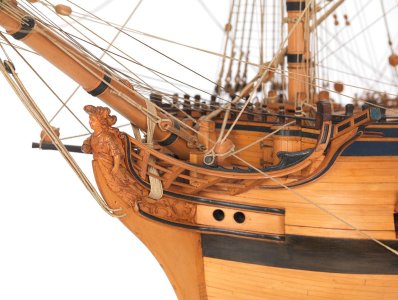
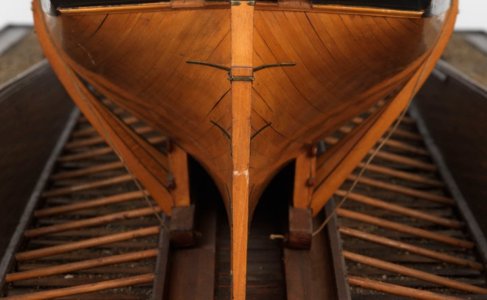
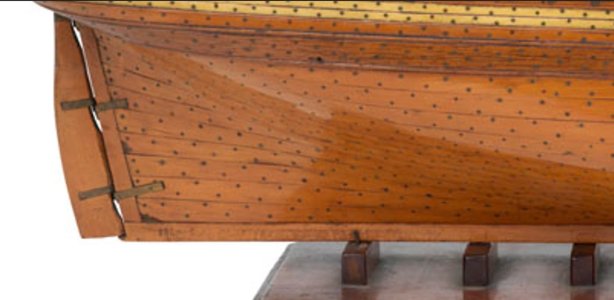
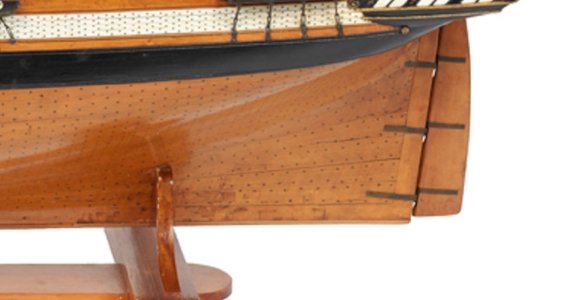
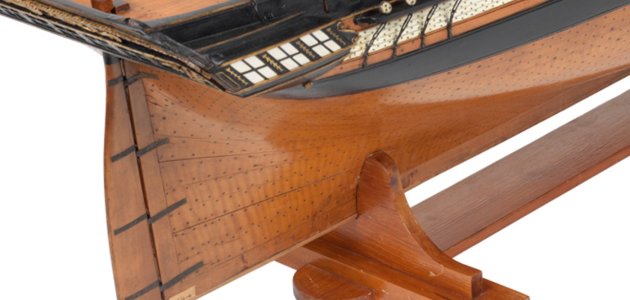
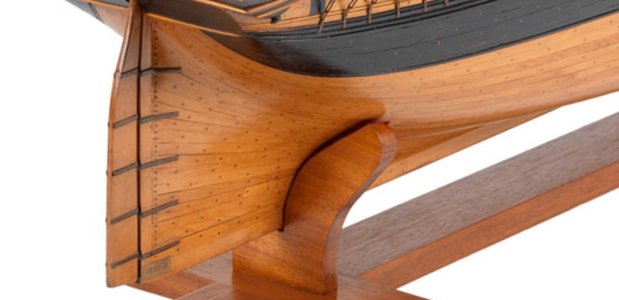
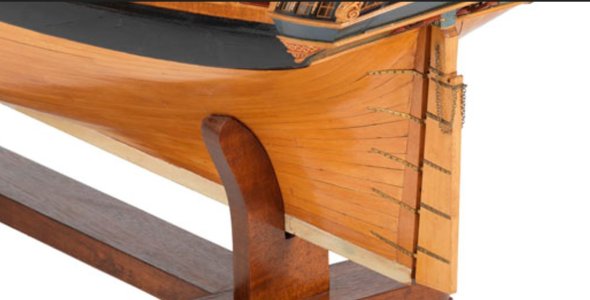
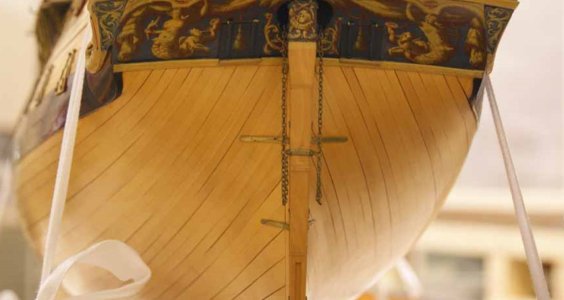
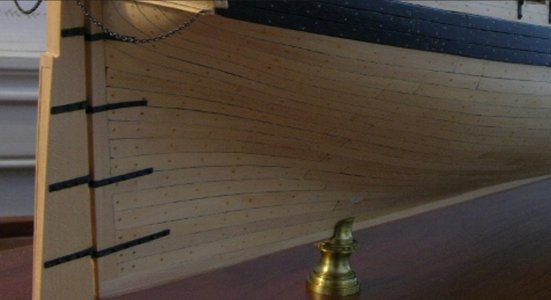
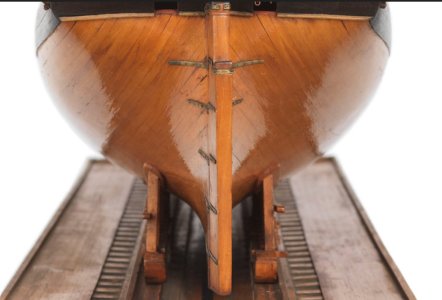
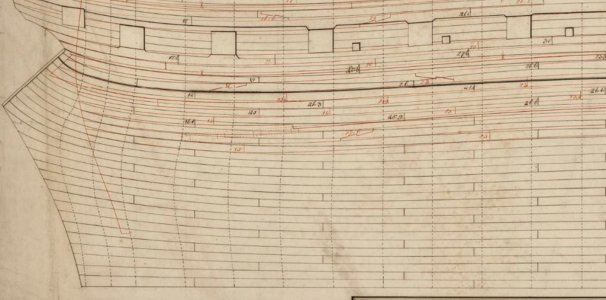
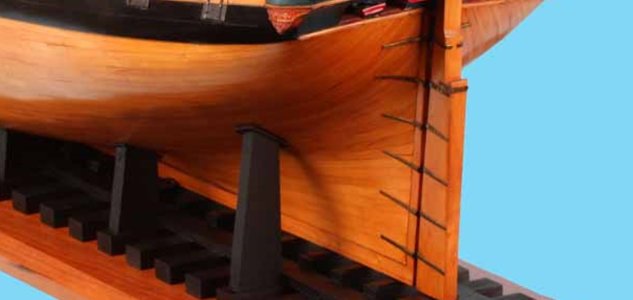
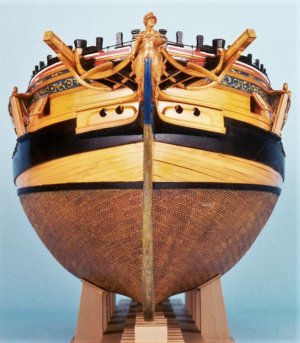
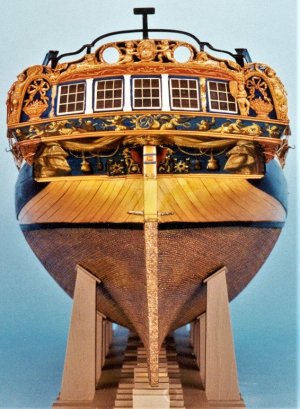
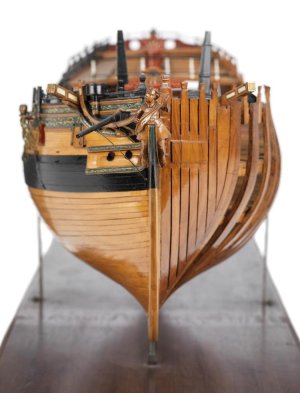
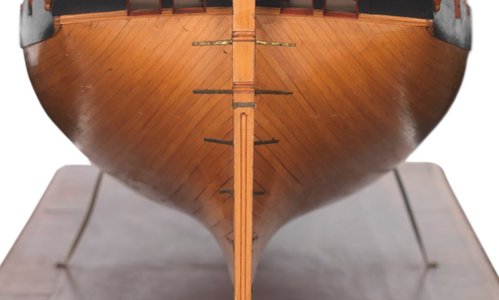
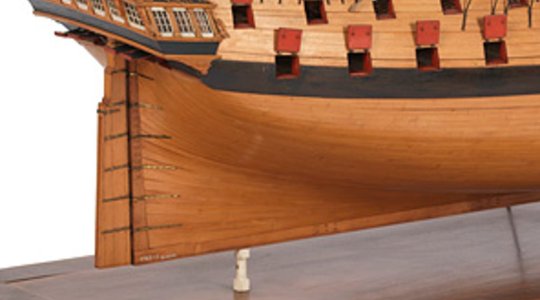
Dear Elephant1786, good evening! This might be useful. All 74-gun ships descended from Sir Thomas Slade's Bellona had the same planking. It's good that some models from those years have survived.

1-5 — копия.jpg

1-7.jpg

1-8.jpg

4VIJBaV3L08 — копия.jpg

l5775_004.jpg

фф 2.jpg

фф 13.jpg

gallery_10197_919_27134.jpg

gallery_10197_919_28668.jpg

gallery_10197_919_30288.jpg

gallery_10197_919_50551.jpg

gallery_10197_919_70102.jpg

gallery_10197_919_95731.jpg

gallery_10197_920_2526.jpg

gallery_10197_920_14835.jpg

gallery_10197_920_47553.jpg

gallery_10197_920_50834.jpg

gallery_10197_945_90568.jpg

gallery_10197_945_121511.jpg

l5775_005 (1) Hercules or Thunderer; Warship.jpg
 
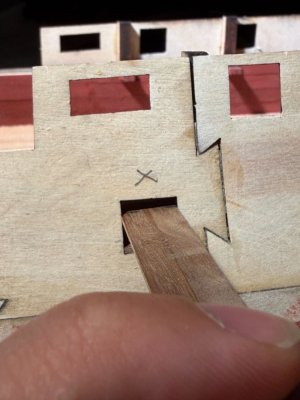
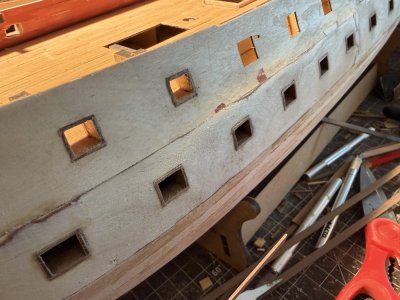
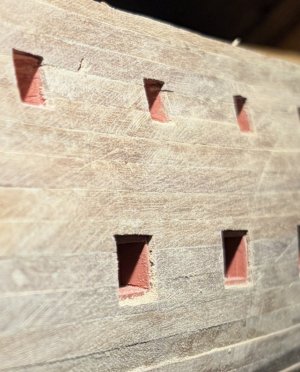
The instructions say to first do the second planking, and then to line the gunports. Gunports with lids (most of them) should be lined such that their lip is flush with the first planking so that after second planking is applied the lip is 1mm recessed. These should be painted red. However, I felt like doing the 2nd planking first would make lining the gunports much more difficult, so I opted to line them now. Instructions also say to make a tube of 2 x 1mm x 6mm walnut strips glued edgewise, and I am glad I did not listen to them because none of the gunports are these dimensions and so the tube would not have fit. In addition I don’t see how to cut the tube without it collapsing flat.
I started with the upper gundeck. Fortunately, the upper gunports are 12mm wide at the base, so glueing the two 1x6mm strips together works. I insert the strip, measure the width and cut. For the vertical sills, I had to heavily trim my boards as they are only about 8mm tall once the horizontal linings are in place. I cut an approximation of the angle necessary to fit the tumblehome of the hull, and tested the wedge until it fit. Once all sides were in place, I used a pin drill to bore out the inner bulwark planking, using a knife with a fresh blade to trim the edges smooth. Lastly I used a file and sanded each side vigorously. I also sanded the inner surface of the inner bulwarks. This way my inner bulwarks don’t have an unsightly gunport lining visible from the inside.
The main gundeck’s ports are such that they are wider than 12mm horizontally and also shorter than 12mm heightwise. I proceeded much the same, except this time the grain was travelling along the length of the ship for the horizontal sills.
After sanding and scraping I painted them all red ochre. The gunports are amazingly thick, and I cannot imagine how heavy the hull would be were it to be entirely about 0.8-1cm thick. The gunport depths are pleasing to look at.

Once 2nd planking is done, I will touch up all the gunports and paint their linings.
1779415358128.jpegIMG_8377.jpegIMG_8569.jpg1779415375406.jpeg
 
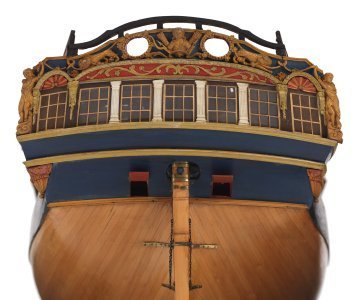
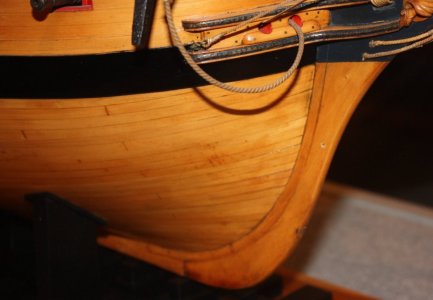
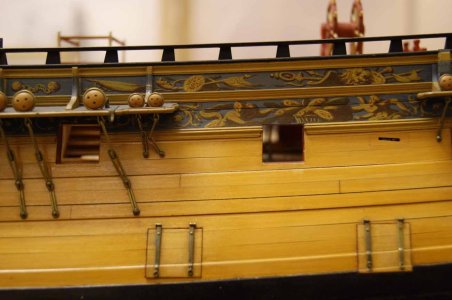
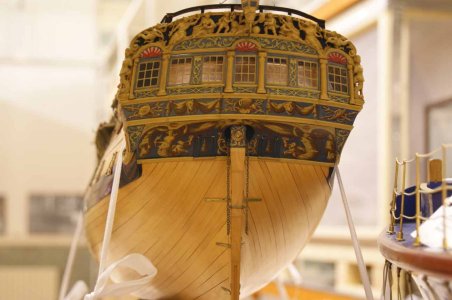
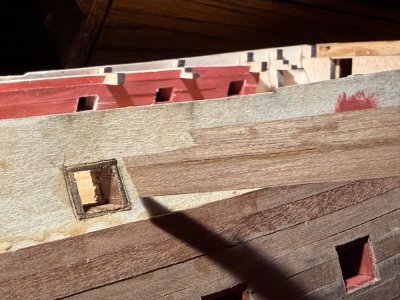
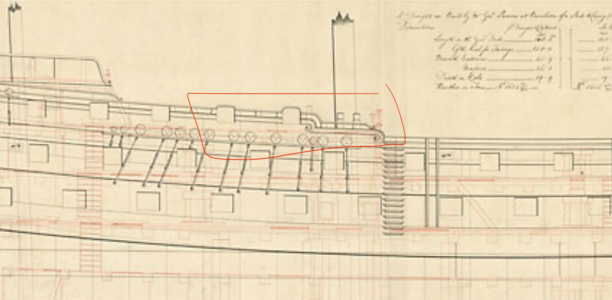
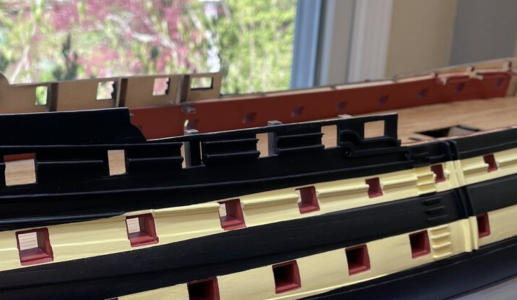
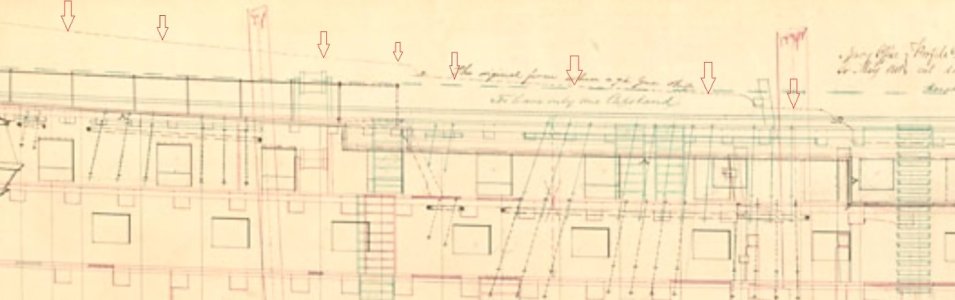
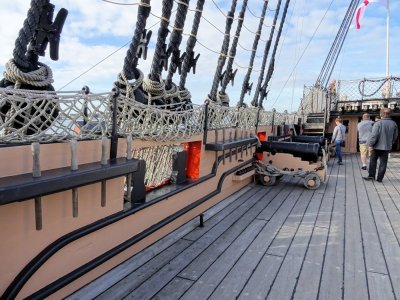
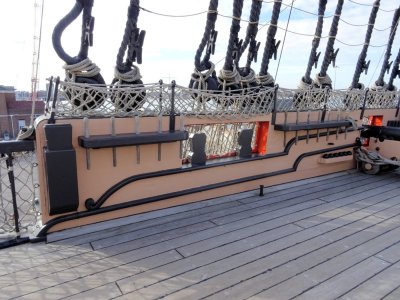
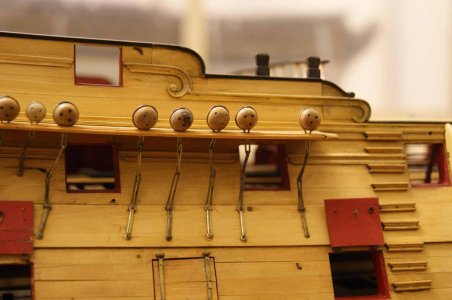
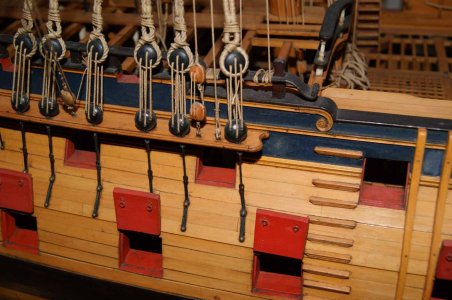
I have a question regarding the bulwarks of the Elephant. The model plans call for the bulwark to have this squared off look, extending above the scrollwork (as seen in this other model from a different build log). However the RMG has Elephant plans showing the scrollwork is the top of the bulwark, with some kind of arch over the existing gunports. Which is correct? I presume the kit plans must be drawing from somewhere.
Screenshot 2026-05-28 at 7.57.10 PM.png
Screenshot 2026-05-17 at 5.29.01 PM.png
 
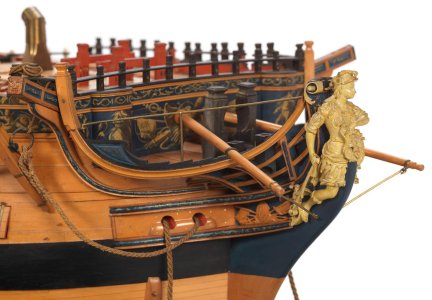
As for the blueprints for the Amati kit model, those drawn by Chris Watton contain a huge number of errors. You can find good copies of the archival blueprints and see for yourself. Not only are the theoretical hull lines and frames incorrect, but, most importantly, almost every individual element is flawed. There are even some funny moments, such as the completely ridiculous figurehead in the form of a giant elephant's head.
There's nothing even close to "museum quality" (as the Amati ad puts it). But the model can be redesigned.
 
The drawing you posted looks like ZAZ1070 which was made circa August-November 1786. There are about 8 Elephant profile drawings at RMG from 1759 through 1816 for the refit as Iutar points out. The kit model in your photo does not look like any of them.

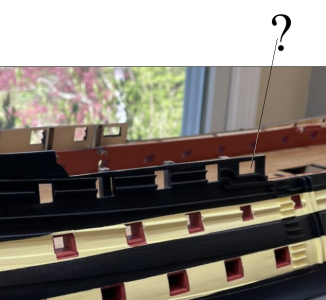
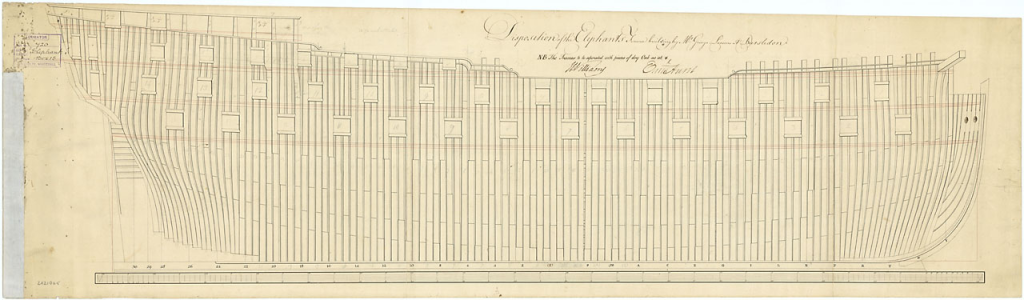
Do the plans show or explain what the opening marked below is for? There is nothing like this on any of the RMG plans that I could find so far, including the framing plan from 1784 attached below. I think Iutar is correct in that it may not be a good idea to trust the plans in the kit without studying the contemporary drawings IF accuracy is a priority for you. I doubt many viewers of your model will notice any of this and probably will not care as your model does look extremely well assembled.
Allan

1780051936202.png
1780052018139.png
 
Dear elephant1786!

In fact, experienced modelers, none of the three ship variants in this kit have a raised bulwark (drift).
All modelers typically trim these parts. Look at how Andrey did it, for example:
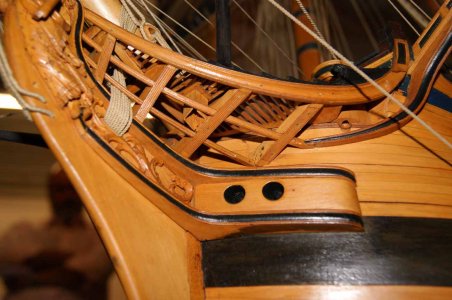
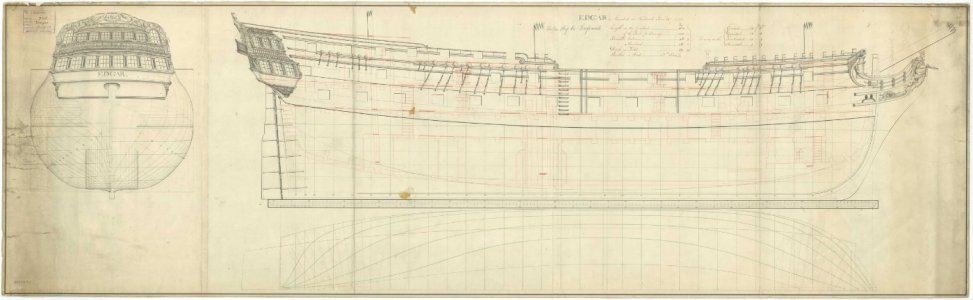
If you want to build something decent from the Amati kit, download the plans for these ships online. These drawings (I'm only showing previews) are so large that you can even see every hair on the figurehead's beard.
I would attach them here, but the forum limits file sizes.

The advantage: the free plans are in excellent quality (search on Common Files), and, most importantly, they show the stern decorations and figurehead.
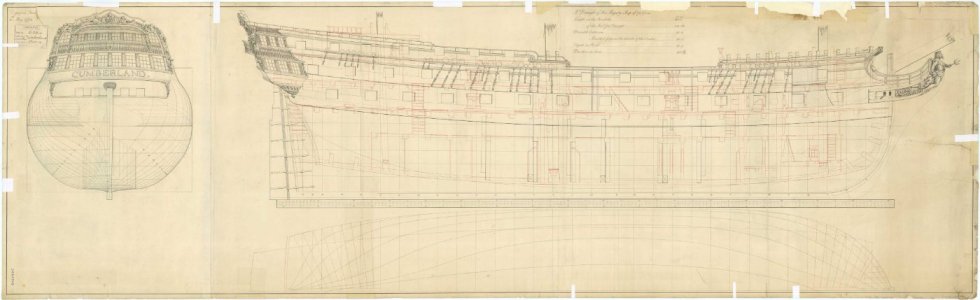
The Amati kit model is unreliable. There are nothing but mistakes there.

e47f3aea7541ea1aa2ce438a90b8886d.jpg

Edgar (1779).jpg

j7921.jpg.d0594c247310f4e7df62139d0515b212.jpg
 
Back
Top