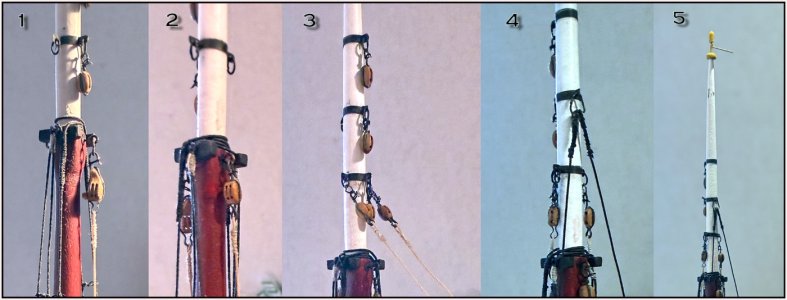
Thanks, Marco. I created my own problemThat's looking pretty good, Peter. Smart solution to a nasty problem.
 ….. and glad I solved it!
Regards, Peter

 |
The beloved Ships in Scale Magazine is back and charting a new course for 2026! Discover new skills, new techniques, and new inspirations in every issue. NOTE THAT OUR NEXT ISSUE WILL BE July/August 2026 |
|
 |
As a way to introduce our brass coins to the community, we will raffle off a free coin during the month of August. Follow link ABOVE for instructions for entering. |
|
Thanks, Marco. I created my own problemThat's looking pretty good, Peter. Smart solution to a nasty problem.
….. and glad I solved it!
Thanks, Richard. A lot of measurement work on the 1:1 and remaining critical of the outcome.Such a meticulous adherence to scale. Beautiful.
But sometimes it is quite a headache.


Thanks, Grant. Sure the splitted parts give an extra dimension on the model. But there are more challenges with the rigging. What about splitting halyards which running ends are secured to the belaying pins on the starboard bulwark?Good morning Peter. This is the first split model I have seen with split rigging. Man she looks good when split.....Certianly my preference when you come to display her. Cheers Grant





Thanks, Dirk. It’s indeed a nicely written article.Very nice
Thanks, Heinrich. Yes, Mr. H. Van Beek did a great job. During the almost a year between the 2 articles I took the model several time with we to the 1:1 Balder. So, he was aware of all the stages. He first wrote the 1st version and send it to me. I made some notification and he made the final version. It is a skill you must possess, not everyone is gifted with that.The article is just recognition for what is simply an outstanding and groundbreaking modeling project! I think Mr van Beek did an excellent job of capturing the essence of the build - this is a really challenging task to summarise such an enormous project within the scope of two or three pages! Congratulations. Peter!
Thanks, Paul. In Vlaardingen and other ‘herring-cities’ it’s no problem. You can smellI'm happy your work is being noticed and valued, Peter. Well deserved!
the traditions, so to speak….. or better: you can feel it.
Thanks for the compliments and very nice words, Jack. It remains a challenge to get everything realized. For sure now the rigging.Well worth all your hard work Peter. An ambition very successfully fulfilled,and of course a splindit original model.. You deserve all the praise recived.
My congratulations,
JJ..
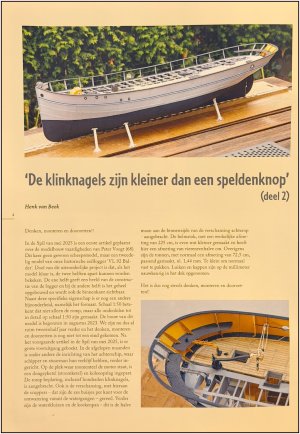
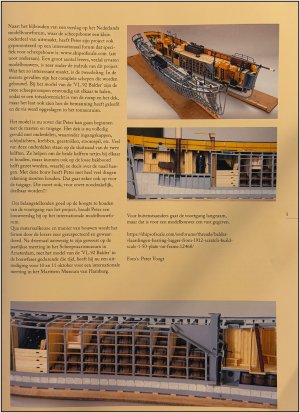
Congratulations Peter. Very cool indeed and much deserved. Cheers GrantIn this post --> #1864 De Spil <-- I mentioned the 1st artikel in the magazine "De Spil".
In the last issues of April '26 the 2nd artikel was published:
View attachment 608813
View attachment 608814
Got again positive reactions. Also when I mention my name when introducing myself to new people related to the Museum of Balder: "Aha, the men of the small model."
Regards, Peter
You also thanks, Grant. Time to go on with the rigging ….. new info to share.Congratulations Peter. Very cool indeed and much deserved. Cheers Grant
Thanks, Johann, to give her this extra attention. Really appreciate it from yours.This is a truly special model that deserves attention.