Semplicemente impressionante il lavoro (anzi il capolavoro) che stai facendo.
E' per me un vero piacere aver letto le fasi di costruzione, le foto e i video.
Vederla in acqua è una soddisfazione immensa. Il primo traguardo è centrato in pieno, sei bravissimo.
Impressionante come hai manovrato le vele, hai fatto diventare semplice una faccenda molto complicata.
La prossima volta farò come hai fatto tu, è molto meglio.
The work you're doing is simply impressive (actually, a masterpiece).
It's been a real pleasure for me to read about the construction phases, photos, and videos.
Seeing it in the water is immensely satisfying.
You've achieved your first goal, you're brilliant.
The way you handled the sails was impressive; you made a very complicated task seem simple.
Next time I'll do as you did; it's much better.
You’re very kind with your praise… thank you.
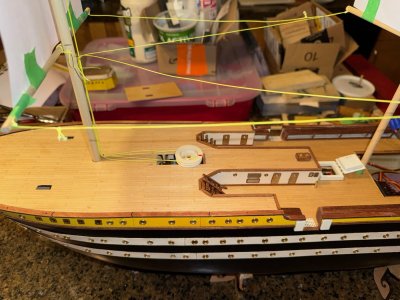
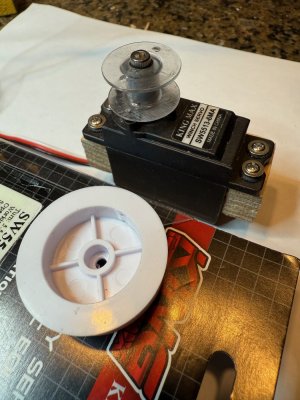
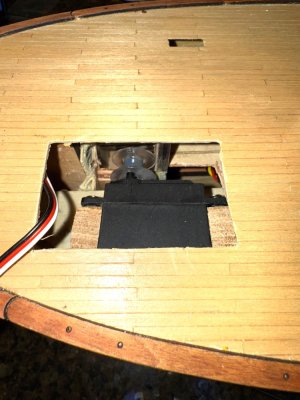
These drum winches make the work much easier. For the spinnaker, I plan to use another drum winch, however this time I think I’ll fabricate my own winch at half diameter. That way it should be easier to conceal, yet still provide sufficient travel.
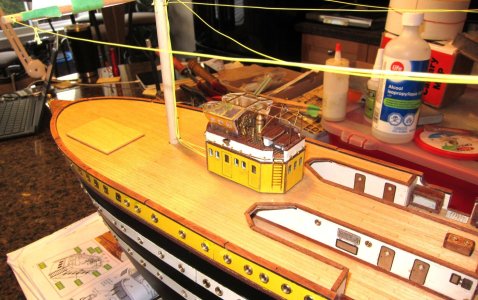
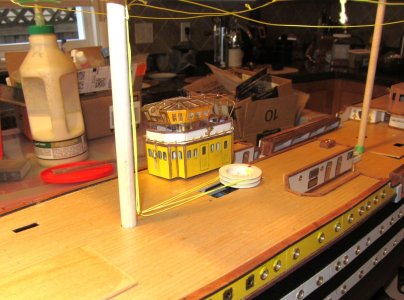
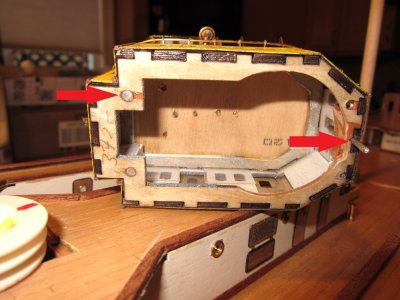
I have great admiration for all the model builders on SoS who have the patience to fabricate all the deck accessories and details these models call for. I’ve spent the last few days fabricating tiny little tables and benches… and frankly… it drives me crazy!
I would much rather focus my time on propulsion systems and functional sail control. However, I entered this project knowing that much of my time would be spent with tiny brushes and files. So, while I make the deck fixtures, I’m also jumping ahead to the masts, yards, braces, etc.
As I get closer to the next set of sea-trials, I’ve done more research into ‘ballast’ considerations. And what I learned has me a little worried. I learned that the heeling and righting moments is not linear in scale sailboats. In fact, I read that for a 1/100th scale model, the heeling moment is reduced by 1/1000, and the righting moment by 1/10,000. Plus, there’s the ‘crabbing’ issue that these hulls are subject to.
Crabbing (when the ship slips sideways due to side winds), can be addressed with sailing skills.
Heeling and righting is another matter. No one wants to capsize their new model. And even though this hull showed encouraging righting characterises in the bathtub, real life conditions may not be as positive when your carrying 20-wet sails.
To that end, stability risks can be reduced by:
-Sailing on calm days.
-Lowering the sail center of pressure by only using sheets closer to the deck. This of course comes at the expense of speed.
-Reduce the overall number of sails.
-And lastly, add an external fin and ballast. I really do not want to implement this option. It looks odd, makes ship launching a challenge, and introduces a potential leak risk.
This model shows very generous freeboard, so I can easily add much more ballast if required.
Of course, this concern will only reveal itself during full-sail sea trials.
(Here’s another short vid demonstrating my rigging for the three masts. Simple, yet functional)
Sei molto gentile con i tuoi complimenti... grazie.
Questi winch a tamburo semplificano notevolmente il lavoro. Per lo spinnaker, ho intenzione di usare un altro winch a tamburo, ma questa volta credo che ne costruirò uno mio a metà diametro. In questo modo sarà più facile da nascondere, pur garantendo una corsa sufficiente.
Nutro una grande ammirazione per tutti i modellisti di SoS che hanno la pazienza di realizzare tutti gli accessori e i dettagli di coperta che questi modelli richiedono. Ho passato gli ultimi giorni a costruire minuscoli tavolini e panche... e sinceramente... mi fa impazzire!
Preferirei di gran lunga concentrarmi sui sistemi di propulsione e sul controllo funzionale delle vele. Tuttavia, ho iniziato questo progetto sapendo che avrei dedicato gran parte del mio tempo a pennelli e lime. Quindi, mentre realizzo le attrezzature di coperta, sto anche passando ad alberi, pennoni, bracci, ecc.
Con l'avvicinarsi delle prossime prove in mare, ho approfondito le considerazioni sulla "zavorra". E quello che ho imparato mi preoccupa un po'. Ho scoperto che i momenti di sbandamento e raddrizzamento non sono lineari nelle barche a vela in scala. Infatti, ho letto che per un modello in scala 1/100, il momento di sbandamento si riduce di 1/1000 e quello di raddrizzamento di 1/10.000. Inoltre, c'è il problema del "crabbing" a cui sono soggetti questi scafi.
Il "crabbing" (quando la nave scivola lateralmente a causa dei venti laterali) può essere risolto con le abilità veliche.
Sbandamento e raddrizzamento sono un'altra questione. Nessuno vuole capovolgere il proprio nuovo modello. E anche se questo scafo ha mostrato caratteristiche di raddrizzamento incoraggianti nella vasca da bagno, le condizioni reali potrebbero non essere così favorevoli quando si trasportano vele bagnate.
A tal fine, i rischi per la stabilità possono essere ridotti:
-Navigare in giornate calme.
-Abbassare il centro di pressione velica utilizzando solo scotte più vicine al ponte. Questo ovviamente va a scapito della velocità.
- Ridurre il numero complessivo di vele.
- Infine, aggiungere una pinna esterna e una zavorra. Non voglio assolutamente implementare questa opzione. Ha un aspetto anomalo, rende il varo della nave una sfida e introduce un potenziale rischio di perdite.
Questo modello mostra un bordo libero molto generoso, quindi posso facilmente aggiungere molta più zavorra se necessario.
Naturalmente, questo problema si manifesterà solo durante le prove in mare a vela intera.
(Ecco un altro breve video che mostra il mio sartiame per i tre alberi. Semplice, ma funzionale)