
• Win a Free Custom Engraved Brass Coin!!!
    As a way to introduce our brass coins to the community, we will raffle off a free coin during the month of August. Follow link ABOVE for instructions for entering.
  • PRE-ORDER SHIPS IN SCALE TODAY!

    The beloved Ships in Scale Magazine is back and charting a new course for 2026!
    Discover new skills, new techniques, and new inspirations in every issue.

    NOTE THAT OUR FIRST ISSUE WILL BE JAN/FEB 2026

Le Requin-Zebec-1750 POF 1:48 (ZHL)

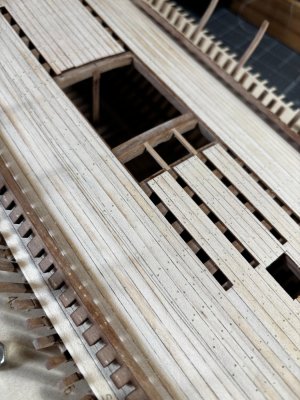
While drilling and filing holes representing deck nails, the rate of drill bit destruction is worth noting. Using 0.6mm drill bits, if you apply the slightest bit of lateral torsion the little things just snape off. I bought 2ea. 10 packs of bits from Amazon anticipating this problem and already down 6 bits in one pack. Ha! you wouldn't want me drilling on your teeth! ROTF .
Those 0.6 mm bits are actually designed with PCB drilling in mind, not wood. They’re extremely hard but brittle as glass, with virtually no tolerance for lateral load, so even the slightest side pressure will snap them instantly. They’re great for straight-down work in fiberglass boards, but wood grain and hand pressure are a whole different story.
You might have better luck using regular twisted micro drill bits instead — they’re a bit more forgiving and much better suited for wood.
 
Thanks for the heads up, Jim. I had no idea.
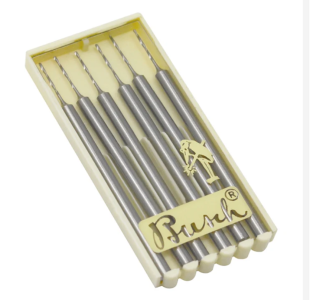
The ones below are definitely not cheap; they are premium priced, but...take my word, they will last you much longer. They occasionally break when drilling metal or brass, and putting extreme pressure. But for the wood, I have not had a chance to break one yet.

1770312189514.png
 
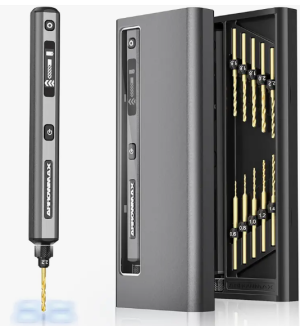
I got the little Arrowmax pen style drill set from Amazon and it is great.
Interesting item Jeff.

I had the same problem drilling and found that normal drills are much better
I appreciate the input Daavey, I need to see how far I can get with what I have.
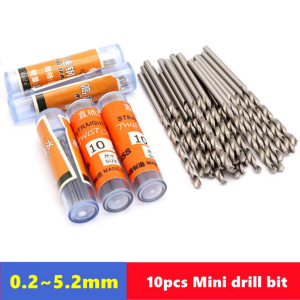
These above are the cheapest ones and they are the best for a job like this.
Thanks for the input, Stephan. I'll run through the batch I have then see what's available in the size I need.
 
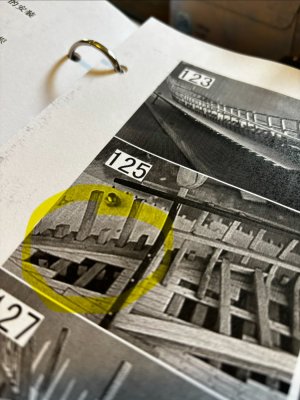
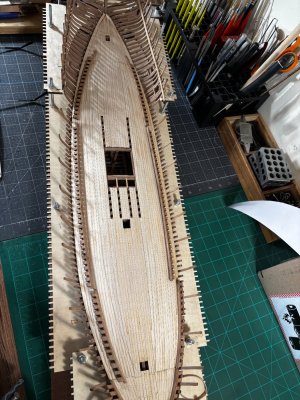
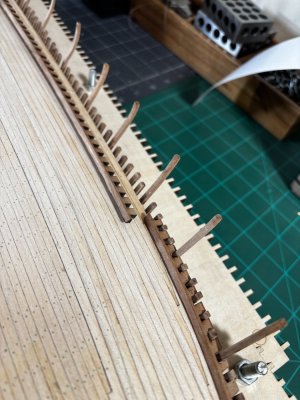
I finally finished installing the deck nails on the exposed portion of the deck and turned my attention to the next step, installing what they call the deck edge molding. This molding creates a nice transition from the deck to the bulwarks, similar to a waterway. these strips are notched to fit in between each standing frame rib and naturally one has to file each notch to fit properly in place. The first picture from the instructions highlights its placement.

IMG_1611.jpeg

You can see several other pieces standing knees and other cross timbers that will fit on top. The last pictures are the beginning layout and fitment procedure.

IMG_1608.jpegIMG_1609.jpegIMG_1610.jpeg

I will dry fit each piece first, then do a final sanding before glue up.

Till next time!
 
This will certainly be a test of your framing!
Indeed, it will. Also, a test of the accuracy of the kits notched jig system. Actually, during preliminary inspection, every notch in the molding lines up reasonably well with the ribs it's just sub mm tight because of laser cutting not being vertical, I guess.
 
Back
Top