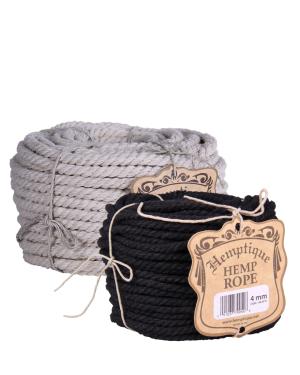
Idle curiosity, I looked up linen thread on the internet and it’s still available. A company called Taras sells linen bookbinding thread and another called Hollander sells linen sewing thread. Research is required to figure out thead nomenclature and sizes. Also, some linen threads have little lumps every so often, which would not work for us.
In the progression of natural fibers used for ropewalk stock for model rigging line I go by the following:
fibers - what comes from the plant
yarn - fibers spun or twisted into a single
thread - two or more yarns into a single unit
linen yarn -even the finest as in diameter not quality - is larger than most cotton thread.
When I started linen yarn was sold as Lea (Imperial) now it is Nm (metric) - if they bother to say the size.
The smallest linen yarn that I have obtained is 62 Lea (37 Nm) Lea = Nm/0.6047 Lea: Yds/lb /300 Nm: 1000m/kg { Nec: 840yds/lb }
If what is being sold is 40/3 Lea it does not mean three yarns twisted to 40 Lea final! It is three 40 Lea yarns as a single unit and not model rope tight either.
If linen is being sold by someone not amateur who knows from official units anything sold as linen thread will be 1:48 anchor cable at its smallest and too loose a twist to use as a final product. Huge stuff that we cannot reverse engineer to make three times as much ropewalk stock - cause it tends to break when being untwisted.
I have found 80/3 90/3 100/3 linen yarn - I will use for running rigging - because even though the twist is not all that it is so small it would take magnification to see that. It comes dear. It is high quality - no inclusions - and even three twisted is smaller size line - the price per length would be prohibitive for a vessel larger than 50'.
We have to start with linen yarn for a ropewalk. Etsy and the Baltic region seems to be it right now. The shipping - absurd. Their QA could use some improvement at the combing stage. Stem fragments - inclusions.
Natural linen is olive green not straw yellow but is still more proper than white or half- bleached. Straw yellow was darker than that even for running rigging because it partially tarred when twisted up. It deterred the rodents from eating it while in storage both in the yard and in the hold.





 The Lineco (see #29) remains flexible. What is stated on the label is correct.