The beloved Ships in Scale Magazine is back and charting a new course for 2026!
Discover new skills, new techniques, and new inspirations in every issue.
NOTE THAT OUR NEXT ISSUE WILL BE MARCH/APRIL 2026
Win a Free Custom Engraved Brass Coin!!!
As a way to introduce our brass coins to the community, we will raffle off a free coin during the month
of August. Follow link ABOVE for instructions for entering.
Today in Naval History - Naval / Maritime Events in History 18 November 1800 - HMS Leda launched at Chatham. The first of the largest class of sailing frigates ever built for the Royal Navy. MS Leda, launched in 1800, was the lead ship of a successful class of forty-seven British Royal Navy...
shipsofscale.com
1691 – Launch of French Merveilleux, a 80/90-gun Foudroyant-class, at Brest – burnt together with her sistership by the English in the Battle of La Hogue in June 1692
1746 - HMS Portland (1744 – 50) and HMS Winchelsea (1740 - 24), Cptn. Henry Dyve, took French frigate Subtile off Scilly Isles during which Lt. Samuel Hood wounded.
1804 - HMS Romney (1762 - 50) wrecked off the Texel
1808 – Launch of french La Eylau, an 80-gun Bucentaure-class 80-gun ship of the line of the French Navy, designed by Sané.
1808 – Launch of HMS Owen Glendower (or Owen Glendour), a Royal Navy 36-gun fifth-rate Apollo class frigate
1941 – World War II: Battle between HMAS Sydney and HSK Kormoran. The two ships sink each other off the coast of Western Australia, with the loss of 645 Australians and about 77 German seamen.
2002 – The Greek oil tanker Prestige splits in half and sinks off the coast of Galicia, releasing over 20 million US gallons (76,000 m³) of oil in the largest environmental disaster in Spanish and Portuguese history.
Today in Naval History - Naval / Maritime Events in History 18 November 1800 - HMS Leda launched at Chatham. The first of the largest class of sailing frigates ever built for the Royal Navy. MS Leda, launched in 1800, was the lead ship of a successful class of forty-seven British Royal Navy...
shipsofscale.com
1739 – Begin of Capture / Battle of Porto Bello between British and Spanish forces during the War of Jenkins' Ear.
The Battle of Porto Bello, or the Battle of Portobello, was a 1739 battle between a British naval force aiming to capture the settlement of Portobello in Panama, and its Spanish defenders. It took place during the War of the Austrian Succession, in the early stages of the war sometimes known as the War of Jenkins' Ear. It resulted in a popularly acclaimed British victory.
1759 - Battle of Quiberon Bay/Cardinaux. British fleet of 23 ships of the line, under Admiral Sir Edward Hawke, defeated a French fleet of 21 ships of the line, under Marshal de Conflans, near St Nazaire. 6 French ships were taken and many others foundered or ran ashore.
The Battle of Quiberon Bay (known as Bataille des Cardinaux in French), was a decisive naval engagement fought on 20 November 1759 during the Seven Years' War between the Royal Navy and the French Navy. It was fought in Quiberon Bay, off the coast of France near St. Nazaire. The battle was the culmination of British efforts to eliminate French naval superiority, which could have given the French the ability to carry out their planned invasion of Great Britain. A British fleet of 24 ships of the line under Sir Edward Hawke tracked down and engaged a French fleet of 21 ships of the line under Marshal de Conflans. After hard fighting, the British fleet sank or ran aground six French ships, captured one and scattered the rest, giving the Royal Navy one of its greatest victories, and ending the threat of French invasion for good.
1790 – Launch of Spanish Intrépido, 74 gun San Ildefonso class at Ferrol - transferred to France 1 July 1801, renamed Intrépide, captured by Britain at the Battle of Trafalgar and sank in storm, 1805
1820 – An 80-ton sperm whale attacks and sinks the Essex(a whaling ship from Nantucket, Massachusetts) 2,000 miles from the western coast of South America. (Herman Melville's 1851 novel Moby-Dick is in part inspired by this story.)
1845 – Anglo-French blockade of the Río de la Plata: Battle of Vuelta de Obligado.
The naval Battle of Vuelta de Obligado took place on the waters of the Paraná River on 20 November 1845, between the Argentine Confederation, under the leadership of Juan Manuel de Rosas, and a combined Anglo-French fleet. The action was part of the larger Anglo-French blockade of the Río de la Plata. Although the attacking forces broke through the Argentine naval defenses and overran the land defenses, the battle proved that foreign ships could not safely navigate Argentine internal waters against its government's wishes. The battle also changed political feeling in South America, increasing support for Rosas and his government.
1861 – Launch of The second USS Oneida was a screw sloop-of-war in the United States Navy.
Today in Naval History - Naval / Maritime Events in History 20 November 1845 – Anglo-French blockade of the Río de la Plata: Battle of Vuelta de Obligado. The naval Battle of Vuelta de Obligado took place on the waters of the Paraná River on 20 November 1845, between the Argentine...
shipsofscale.com
1742 - sloop HMS Drake (1741 - 14) and several other ships like two fine Xebecs belonging to the King, three ships with stores for the garrison and a large Settee storeship, besides several Portuguese vessels lost in a violent storm in Gibraltar Bay
HMS Drake was an 8-gun snow-rigged sloop of the Royal Navy, launched in 1741 as the first of three Drake class sloops constructed for convoy duty during the Anglo-Spanish War of Jenkins' Ear from 1739 to 1742. After limited service off the Channel Islands, she was sailed to Gibraltar where she was wrecked in 1742 while under the temporary command of her first lieutenant.
1779 - HMS Hussar (1763 - 28), Cptn. Elliott Salter, took Nostra Senora del Buen Confegio (26).
HMS Hussar was a sixth-ratefrigate of the Royal Navy, built in England in 1761-63. She was a 28-gun ship of the Mermaid class, designed by Sir Thomas Slade. She was wrecked at New York in 1780.
In early 2013, a cannon from Hussar was discovered stored in a building in New York's Central Park still loaded with live gunpowder and shot
1808 - HMS Dedaigneuse (1797 - 36), Cptn. William Beauchamp Proctor, engaged French frigate Semillante (1791 - 32) off Mauritius.
The Dédaigneuse was a 40-gun Coquille-class frigate of the French Navy, launched in 1797. The Royal Navy captured her in 1801 and took her into service as HMS Dedaigneuse. She was hulked as a receiving ship in 1812 and sold in 1823.
1839 – Launch of French Inflexible, a 90-gun Suffren-class Ship of the line of the French Navy
The Inflexible was a 90-gun Suffren-classShip of the line of the French Navy.
Commissioned in Rochefort in 1840, Inflexible was appointed to the Mediterranean squadron, where she served from 1841 under Captain Guérin des Essarts.
From 1860, she was used as a boys' school in Brest, and was eventually broken up in 1875
1910 – Sailors on board Brazil's warships including the Minas Geraes, São Paulo, and Bahia, violently rebel in what is now known as the Revolta da Chibata (Revolt of the Lash).
1916 – Mines from SM U-73 sink the HMHS Britannic, the largest ship lost in the First World War.
HMHS Britannic (/brɪˈtænɪk/) was the third and final vessel of the White Star Line's Olympic class of steamships and the second to bear the name "Britannic." She was the fleet mate of both the RMS Olympic and the RMS Titanic and was intended to enter service as a transatlanticpassenger liner. Britannic was launched just before the start of the First World War. She was designed to be the safest and most luxurious of the three ships, drawing lessons from the sinking of the Titanic. She was laid up at her builders, Harland and Wolff, in Belfast for many months before being put to use as a hospital ship in 1915. In 1915 and 1916 she served between the United Kingdom and the Dardanelles. On the morning of 21 November 1916 she was shaken by an explosion caused by a naval mine near the Greek island of Kea and foundered 55 minutes later, killing 30 people.
1944 – World War II: American submarine USS Sealion (SS 315) sinks the Japanese battleship Kongō and Japanese destroyer Urakaze in the Formosa Strait.
Today in Naval History - Naval / Maritime Events in History 20 November 1845 – Anglo-French blockade of the Río de la Plata: Battle of Vuelta de Obligado. The naval Battle of Vuelta de Obligado took place on the waters of the Paraná River on 20 November 1845, between the Argentine...
shipsofscale.com
1718 – Off the coast of North Carolina, British pirate Edward Teach (best known as "Blackbeard") is killed in battle with a boarding party led by Royal Navy Lieutenant Robert Maynard.
- Death of Edward Teach - better known as Blackbeard
1744 – Launch of French Magnanime, 74 at Rochefort, designed by Blaise Geslain – captured by the British in January 1748 and added to the RN under the same name, BU 1775
The Magnanime was originally a 74-gun ship of the line of the French Navy launched in 1744 at Rochefort. Captured on 12 January 1748, she was taken into Royal Navy service as the third rateHMS Magnanime. She played a major part in the 1757 Rochefort expedition, helping to silence the batteries on the Isle of Aix, and served at the Battle of Quiberon Bay in 1759 under Lord Howe, where she forced the surrender of the French 74-gun Héros. Following a survey in 1770, she was deemed unseaworthy and was broken up in 1775.
1786 – Launch of HMS Saturn, a 74-gun third rate ship of the line of the Royal Navy, at Northam
1790 – Launch of british Woodford, an East Indiaman of the British East India Company (EIC)
1847 - Steamship Phoenix burned down to waterline on Lake Michigan with the loss of at least 190 but perhaps as many as 250 lives. The loss of life made this disaster, in terms of loss of life from the sinking of a single vessel, the fourth-worst tragedy in the history of the Great Lakes.
1869 – In Dumbarton, Scotland, the clipper Cutty Sark is launched and is one of the last clippers ever built, and the only one still surviving today.
1873 – The French steamer SS Ville du Havre sinks in 12 minutes after colliding with the Scottish iron clipper Loch Earn in the Atlantic, with a loss of 226 lives.
Today in Naval History - Naval / Maritime Events in History 22 November 1869 – In Dumbarton, Scotland, the clipper Cutty Sark is launched and is one of the last clippers ever built, and the only one still surviving today. Cutty Sark is a British clipper ship. Built on the River Clyde in 1869...
shipsofscale.com
1703 - HMS York (1653/1654 - 54), Cptn. Smith, lost off the Shipwash, Harwich Marston Moor was a 52-gun third rateSpeaker-classfrigate built for the navy of the Commonwealth of England at Blackwall Yard, and launched in 1654.
After the Restoration in 1660, she was renamed HMS York. By 1677 her armament had been increased to 60 guns. York ran aground and was wrecked in 1703.
1757 - HMS Hussar (1757 - 28) and HMS Dolphin (1751 - 24) destroyed french Alcyon (1726 - 50)
Action on 23 November 1757
British 28-gun ship Hussar, Captain John Elliot, and 24-gun ship Dolphin, Captain Benjamin Mario w, being on a cruize, gave chase to a large French ship. The Hussar closed with her at about 8h. p.m., and commenced the action, in which she was soon joined by the Dolphin. The fire of the British ships must have been well directed, for at 10h. p.m. the stranger, which was by that time dismasted, went down with her colours flying. The French ship was supposed to have been the Alcyon, of 50 guns, armed en flute. The Hussar had received much injury, and had no boat that would swim; the Dolphin, however, sent a boat, but was, unfortunately, not able to save any of the devoted French crew.
1757 – french Abénakise (1756) was captured by the British Navy on the Atlantic Ocean
renamed HMS Aurora in British service - The british Mermaid-class frigates designed in 1760 by Sir Thomas Slade, were based on the scaled-down lines of HMS Aurora Abénaquise (or Abenakise) was a 36-gun ship of the French Navy of the Ancien Régime, designed by René-Nicholas Lavasseur and launched on 8 July 1757. She was commanded by captain Gabriel Pellegrin. In 1757 she crossed the Atlantic Ocean in 38 days. This was one of the fastest crossings from Brest to Petite ferme on the La Côte-de-Beaupré with pilot Pellegrin, port captain of Quebec, who was on his forty-second crossing.
Captured by the Royal Navy in 1757, she was renamed HMS Aurora and saw active service in the latter half of the Seven Years' War. She was broken up for timber at Plymouth Dockyard in 1763.
1820 – Launch of HMS Atholl and HMS Niemen, both Atholl class corvettes at the same day at Woolwich Dockyards
1939 – World War II: HMS Rawalpindi is sunk by the German battleships Scharnhorst and Gneisenau.
HMS Rawalpindi was a British armed merchant cruiser, (a converted passenger ship intended to raid and sink enemy merchant shipping) that was sunk in a surface action against the German battleshipsScharnhorst and Gneisenau during the first months of the Second World War. Her captain was Edward Coverley Kennedy.
2007 – MS Explorer, a cruise liner carrying 154 people, sinks in the Antarctic Ocean south of Argentina after hitting an iceberg near the South Shetland Islands. There are no fatalities.
MS Explorer was a Liberian-registered cruise ship designed for Arctic and Antarctic service, originally commissioned and operated by the Swedish explorer Lars-Eric Lindblad. Observers point to Explorer's 1969 expeditionary cruise to Antarctica as the forerunner for today's sea-based tourism in that region.
The vessel was originally named MS Lindblad Explorer (until 1985), and MS Society Explorer until 1992. Ownership of the vessel changed several times, the last owner being the Toronto-based travel company G.A.P Adventures which acquired Explorer in 2004.
Today in Naval History - Naval / Maritime Events in History 22 November 1869 – In Dumbarton, Scotland, the clipper Cutty Sark is launched and is one of the last clippers ever built, and the only one still surviving today. Cutty Sark is a British clipper ship. Built on the River Clyde in 1869...
shipsofscale.com
1720 - HMS Monck (1659 - 60), Cptn. Hon. George Clinton, wrecked in Yarmouth Roads.
HMS Monck was a 52-gun third ratefrigate built for the navy of the Commonwealth of England at Portsmouth, and launched in 1659. She retained her name after the Restoration of the monarchy in 1660. By 1677 her armament had been increased to 60 guns.
1797 – Launch of French Spartiate, a 74 gun Téméraire-classship of the line at Toulon – Captured by the British in the Battle of the Nile in August 1798 and added to the RN under the same name, BU 1857.
The Spartiate was originally a French 74-gun ship of the line, launched in 1797. In 1798, she took part in the Battle of the Nile, where she became one of the nine ships captured by the Royal Navy.
1804 - HMS Venerable (1784 -74), Cptn. John Hunter, wrecked on the Rocks off Roundham Head, Torbay.
The Battle of Camperdown, 11 October 1797 by Thomas Whitcombe, painted 1798, showing the British flagship Venerable (flying the Blue Ensign from her stern) engaged with the Dutch flagship Vrijheid.
1877 - While en route to Cuba to collect scientific information, the screw steam gunboat USS Huron wrecks in a storm near Nag's Head, N.C. The crew attempts to free their ship but it soon heels over, killing 98 officers and men.
USS Huron was an iron-hulled gunboat of the United States Navy. She was a screw steamer with full-rig auxiliary sail, built by John Roach & Sons in Chester, Pennsylvania from 1873–75 and commissioned at Philadelphia Navy Yard on 15 November 1875, with Commander George P. Ryan in command.
Today in Naval History - Naval / Maritime Events in History Other Events on 24 November 1642 – Abel Tasman becomes the first European to discover the island Van Diemen's Land (later renamed Tasmania). On 24 November 1642 Abel Tasman reached and sighted the west coast of Tasmania, north of...
shipsofscale.com
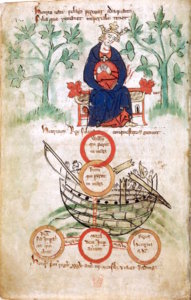
1120 – The White Ship sinks in the English Channel, drowning William Adelin, son and heir of Henry I of England.
The White Ship (real name: French: la Blanche-Nef, Latin documents Latin: Candida navis) was a vessel that sank in the English Channel near the Normandy coast off Barfleur, on 25 November 1120. Only one of those aboard survived. Those who drowned included William Adelin, the only legitimate son and heir of King Henry I of England, his half-sister Matilda, his half-brother Richard and also Richard d'Avranches, 2nd Earl of Chester. William Adelin's death led to a succession crisis and a period of civil war in England known as the Anarchy.
1826 – The Greek frigate Hellas arrives in Nafplion to become the first flagship of the Hellenic Navy.
The Greek frigate Hellas (Greek: Ελλάς) was the flagship of the RevolutionaryHellenic Navy. After an arbitration hearing in New York due to financial default by the Greek government, she was delivered to Greece in 1826. She was burned in 1831 by the Greek Admiral Andreas Miaoulis when the government of Ioannis Kapodistrias ordered her turned over to the Russian navy.
1839 - HMS Pelorus was an 18-gun Cruizer-class brig-sloop of the British Royal Navy wrecked
HMS Pelorus was an 18-gun Cruizer-classbrig-sloop of the British Royal Navy. She was built in Itchenor, England and launched on 25 June 1808. She saw action in the Napoleonic Wars and in the War of 1812. On anti-slavery patrol off West Africa, she captured four slavers and freed some 1350 slaves. She charted parts of Australia and New Zealand and participated in the First Opium War (1839–1842) before becoming a merchantman and wrecking in 1844 while transporting opium to China.
1872 - Royal Adelaide, iron-built emigrant clipper, wrecked on the Chesil and looted
The Royal Adelaide was an iron sailing ship of 1400 tons built by William Patterson at Bristol in 1865.
Today in Naval History - Naval / Maritime Events in History Other Events on 24 November 1642 – Abel Tasman becomes the first European to discover the island Van Diemen's Land (later renamed Tasmania). On 24 November 1642 Abel Tasman reached and sighted the west coast of Tasmania, north of...
shipsofscale.com
1703 - Great Storm of 1703 - The Royal Navy was badly affected, losing thirteen ships including the entire Channel Squadron
The Great Storm of 1703 was a destructive extratropical cyclone that struck central and southern England on 26 November 1703 (7 December 1703 in the Gregorian calendar in use today). High winds caused 2,000 chimney stacks to collapse in London and damaged the New Forest, which lost 4,000 oaks. Ships were blown hundreds of miles off-course, and over 1,000 seamen died on the Goodwin Sands alone. bulletins of casualties and damage were sold all over England – a novelty at that time. The Church of England declared that the storm was God’s vengeance for the sins of the nation. Daniel Defoe thought it was a divine punishment for poor performance against Catholic armies in the War of the Spanish Succession.
Naval losses
In the English Channel, fierce winds and high seas swamped some vessels outright and drove others onto the Goodwin Sands, an extensive sand bank off the southeast coast of England and the traditional anchorage for ships waiting either for passage up the Thames Estuary to London or for favourable winds to take them out into the Channel and the Atlantic Ocean. The Royal Navy was badly affected, losing thirteen ships including the entire Channel Squadron, and upwards of 1,500 seamen drowned.
The third-rateHMS Restoration was wrecked on the Goodwin Sands; of the ship's company of 387 not one was saved.
The third-rate HMS Northumberland was lost on the Goodwin Sands; all 220 men, including 24 marines were killed.
The third-rate (battleship) HMS Stirling Castle was wrecked on the Goodwin Sands. Seventy men, including four marine officers, were saved, but 206 men were drowned.
The fourth-rateHMS Mary was wrecked on the Goodwin Sands. The captain and the purser were ashore, but Rear Admiral Beaumont and 268 other men were drowned. Only one man, Thomas Atkins, was saved. His escape was remarkable – having first seen the rear admiral get onto a piece of her quarter-deck when the ship was breaking up, and then get washed off again, Atkins was tossed by a wave into the Stirling Castle, which sank soon after. From the Stirling Castle he was swept into a boat by a wave, and was rescued.
The fifth-rateMortar-bomb was wrecked on the Goodwin Sands and her entire company of 65 lost.
The sixth-rate advice boatEaglewas lost on the coast of Sussex, but her ship's company of 45 were all saved.
The third-rateResolutionwas lost at Pevensey on the coast of Sussex; all her ship's company of 221 were saved.
The fifth-rate Litchfield Prize was wrecked on the coast of Sussex; all 108 on board were saved.
The fourth-rateNewcastlewas lost at Spithead. The carpenter and 39 men were saved, and the other 193 were drowned.
The fifth-rate fire-ship Vesuvius was lost at Spithead; all 48 of her ship's company were saved.
The fourth-rateReservewas lost by foundering off Yarmouth. The captain, the surgeon, the clerk and 44 men were saved; the other 175 members of the crew were drowned.
The second-rateVanguard was sunk in Chatham harbour. She was not manned and had no armament fitted; the following year she was raised for rebuilding.
The fourth-rateYorkwas lost at Harwich; all but four of her men were saved.
Lamb (1991) claimed 10,000 seamen were lost in one night, a far higher figure, about one third of the seamen in the Royal Navy. Daniel Defoe's book The Storm suggests that the Royal Navy lost one fifth of its ships which would however indicate a much lower proportion of seamen were lost, as some wrecked sailors survived. Shrewsbury narrowly escaped a similar fate. More than 40 merchant ships were also lost.
1776 – Launch of HMS Ruby, a 64-gun Intrepid-class third rate ship of the line of the Royal Navy
HMS Ruby was a 64-gun third rateship of the line of the Royal Navy, launched on 26 November 1776 at Woolwich.
She was converted to serve as a receiving ship in 1813, and was broken up in 1821.
1787 - Launch of HMS Captain, a 74-gun Canada class third-rate ship of the line at Limehouse
HMS Captain was a 74-gun third-rate ship of the line of the Royal Navy, launched on 26 November 1787 at Limehouse. She served during the French revolutionary and Napoleonic Wars before being placed in harbour service in 1799. An accident caused her to burn and founder in 1813. Later that year she was raised and broken up.
1865 – Battle of Papudo: A Spanish navy schooner is defeated by a Chilean corvette north of Valparaíso, Chile.
The Naval Battle of Papudo was a naval engagement fought between Spanish and Chilean forces on November 26, 1865, during the Chincha Islands War. It was fought 55 miles north of Valparaiso, Chile, near the coastal town of Papudo.
Following the outbreak of the First World War, Bulwark, along with the rest of the squadron, was attached to the Channel Fleet, conducting patrols in the English Channel. On 26 November 1914, while anchored near Sheerness, she was destroyed by a large internal explosion with the loss of 736 men. There were only 14 survivors of the explosion and of these 2 died later in hospital. The explosion was likely to have been caused by the overheating of cordite charges that had been placed adjacent to a boiler room bulkhead.
1941 - Under the greatest secrecy, the Japanese armada, commanded by Vice Adm. Chuichi Nagumo, leaves Japan to attack the U.S. Navy at Pearl Harbor Dec. 7, 1941
Today in Naval History - Naval / Maritime Events in History 26 November 1914 - HMS Bulwark, pre-dreadnought battleships, destroyed by internal explosion HMS Bulwark belonged to a sub-class of the Formidable-class of pre-dreadnought battleships of the Royal Navy known as the London class...
shipsofscale.com
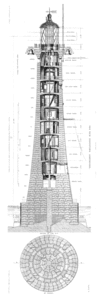
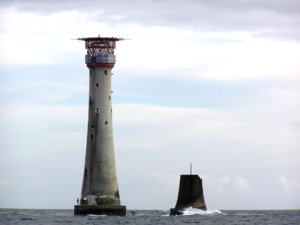
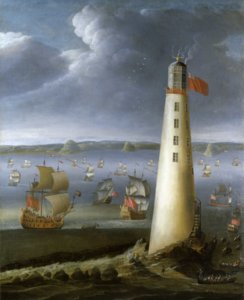
1703 – The first Eddystone Lighthouse is destroyed in the Great Storm of 1703.
The Eddystone Lighthouse is on the dangerous Eddystone Rocks, 9 statute miles (14 km) south of Rame Head, England, United Kingdom. While Rame Head is in Cornwall, the rocks are in Devon and composed of Precambriangneiss.
1784 – Launch of HMS Dido, one of the twenty-seven Enterprise class of 28-gun sixth-rate frigates
HMS Dido was one of the twenty-seven Enterprise class of 28-gun sixth-ratefrigates in service with the Royal Navy during the late eighteenth and early nineteenth centuries. Dido was commissioned in September 1787 under the command of Captain Charles Sandys. She participated in a notable action for which her crew would later be awarded the Naval General Service Medal; her participation in a campaign resulted in the award of another. Dido was sold for breaking up in 1817.
1784 – Launch of HMS Experiment, a Roebuck-class ship was a class of twenty 44-gun sailing two-decker
1806 - The Raid on Batavia - Boats of British squadron, under Admiral Sir Edward Pellew, destroyed Dutch frigate Phoenix and 20 other vessels in Batavia Roads.
The Raid on Batavia of 27 November 1806 was an attempt by a large British naval force to destroy the Dutch squadron based on Java in the Dutch East Indies that posed a threat to British shipping in the Straits of Malacca. The British admiral in command of the eastern Indian Ocean, Rear-Admiral Sir Edward Pellew, led a force of four ships of the line, two frigates and brig to the capital of Java at Batavia (later renamed Djakarta), in search of the squadron, which was reported to consist of a number of Dutch ships of the line and several smaller vessels. However the largest Dutch ships had already sailed eastwards towards Griessie over a month earlier, and Pellew only discovered the frigate Phoenix and a number of smaller warships in the bay, all of which were driven ashore by their crews rather than engage Pellew's force. The wrecks were subsequently burnt and Pellew, unaware of the whereabouts of the main Dutch squadron, returned to his base at Madras for the winter.
1812 - HMS Southampton (1757 - 32) wrecked on reef of rocks, off Conception Island
HMS Southampton was the name ship of the 32-gun Southampton-classfifth-ratefrigates of the Royal Navy. She was launched in 1757 and served for more than half a century until wrecked in 1812.
1940 – World War II: At the Battle of Cape Spartivento, the Royal Navy engages the Regia Marina in the Mediterranean Sea.
The Battle of Cape Spartivento, known as the Battle of Cape Teulada in Italy, was a naval battle during the Battle of the Mediterranean in the Second World War, fought between naval forces of the Royal Navy and the ItalianRegia Marina on 27 November 1940.
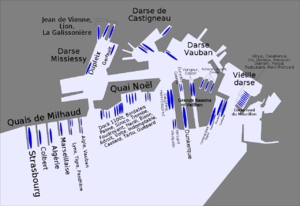
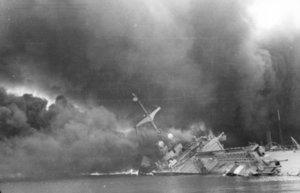
1942 – World War II: At Toulon, the French navy scuttles its ships and submarines to keep them out of Nazi hands.
Today in Naval History - Naval / Maritime Events in History 26 November 1914 - HMS Bulwark, pre-dreadnought battleships, destroyed by internal explosion HMS Bulwark belonged to a sub-class of the Formidable-class of pre-dreadnought battleships of the Royal Navy known as the London class...
shipsofscale.com
1627 – The Polish–Lithuanian Commonwealth Navy has its greatest and last victory in the Battle of Oliwa
The naval Battle of Oliwa, also Battle of Oliva or Battle of Gdańsk Roadstead, took place on 28 November 1627 (N.S.) during the Polish–Swedish War slightly north of the port of Danzig (Gdańsk) near the village of Oliva (Oliwa). It was the largest naval battle fought by the Polish royal navy, and resulted in the defeat of a small Swedish squadron. The Poles slipped out of the Danzig harbor and captured the Swedish flagship and sank another vessel.
1758 - HMS Lichfield (1746 - 50), Cptn. Matthew Barton, went aground on the Barbary coast and the crew were enslaved until 1760
HMS Lichfield was a 50-gun fourth rateship of the line of the Royal Navy, built at Harwich to the dimensions laid down in the 1741 proposals of the 1719 Establishment, and launched on 26 June 1746. She was wrecked on the Barbary Coast of North Africa on 28 November 1758.
1788 - slaver Tarleton foundered on 28 November 1788 off St David's Head Tarleton was built in France under another name in 1778 (or simply captured then). The partnership of the Tarletons and Backhouse purchased her in 1779. She first traded between Liverpool and Jamaica, and then became a slaver. She was lost in November 1788.
1795 – Launch of French Résistance, a Vengeance-class frigate of the French Navy. Résistance was a Vengeance-class frigate of the French Navy. She was captured by HMS St Fiorenzo in 1797 and taken into British service as HMS Fisgard. She was sold in 1814.
1924 - HMS Marlborough (1855 - 131), a first-rate three-decker 131 gun screw ship built for the Royal Navy in 1855, capsized and sank
HMS Marlborough was a first-rate three-decker 131 gun screw ship built for the Royal Navy in 1855. She was begun as a sailing ship of the line (with her sister ships HMS Duke of Wellington, HMS Prince of Wales and HMS Royal Sovereign), but was completed to a modified design and converted to steam on the stocks.
1941 - USS Enterprise (CV 6) sails from Pearl Harbor for Wake Island to ferry Marine aircraft to the island. By Dec. 5, there are no carriers left at Pearl Harbor.
1944 - 10 days after commissioning Japanese aircraft carrier Shinano sunk by submarine USS Archerfish Shinano (信濃), was an aircraft carrier built by the Imperial Japanese Navy (IJN) during World War II, the largest such built up to that time. Laid down in May 1940 as the third of the Yamato-classbattleships, Shinano's partially complete hull was ordered to be converted to a carrier following Japan's disastrous loss of four fleet carriers at the Battle of Midway in mid-1942. Her conversion was still not finished in November 1944 when she was ordered to sail from the Yokosuka Naval Arsenal to Kure Naval Base to complete fitting out and transfer a load of 50 Yokosuka MXY7 Ohka rocket-propelled kamikazeflying bombs. Hastily dispatched, she had an inexperienced crew and serious design and construction flaws, lacked adequate pumps and fire-control systems, and did not carry a single aircraft. She was sunk en route, 10 days after commissioning, on 29 November 1944, by four torpedoes from the U.S. NavysubmarineArcherfish. Over a thousand sailors and civilians were rescued and 1,435 were lost, including her captain. She remains the largest warship ever sunk by a submarine.
Today in Naval History - Naval / Maritime Events in History 28 November 1912 - SS Friendship was an Australian cargo ship which ran aground and sank at Tweed Heads, New South Wales, Australia, at the end of South Wall during a voyage from the Tweed River to Sydney, Australia. SS Friendship was...
shipsofscale.com
1612 – The two-days Battle of Swally takes place, which loosens the Portuguese Empire's hold on India.
The naval Battle of Swally, also known as Battle of Suvali, took place on 29–30 November 1612 off the coast of Suvali (anglicised to Swally) a village near the Surat city (now in Gujarat, India) and was a victory for four English East India Companygalleons over four Portuguese galleons and 26 barks (rowing vessels with no armament).
1682 - Death of Prince Rupert of the Rhine
Prince Rupert of the Rhine, Duke of Cumberland, KG, PC, FRS (17 December 1619 – 29 November 1682) was a noted German soldier, admiral, scientist, sportsman, colonial governor and amateur artist during the 17th century. He first came to prominence as a Cavalier cavalry commander during the English Civil War.
The Four Days' Battle, 1–4 June 1666, by Abraham Storck, during which Rupert's new aggressive fleet tactics were first applied
1762 - HMS Marlborough (1669 / 1706 / 1732 - 68), Cptn. Thomas Burnett, met very heavy weather and had to be abandoned in a sinking condition and destroyed
HMS St Michael (1669), a second rate, renamed HMS Marlborough 1706; fought in the Seven Years' War; present in Sir George Pocock's fleet at the taking of Havana from the Spanish 1762; foundered at sea 1762.
1781 – The crew of the British slave ship Zong murders 133 Africans by dumping them into the sea to claim insurance.
The Zong massacre was the mass killing of more than 130 African slaves by the crew of the British slave shipZong on and in the days following 29 November 1781.The Gregson slave-trading syndicate, based in Liverpool, owned the ship and sailed her in the Atlantic slave trade. As was common business practice, they had taken out insurance on the lives of the slaves as cargo. When the ship ran low on potable water following navigational mistakes, the crew threw slaves overboard into the sea to drown, in part to ensure the survival of the rest of the ship's passengers, and in part to cash in on the insurance on the slaves, thus not losing money on the slaves who would have died from the lack of drinking water.
1784 – Launch of HMS Mermaid, an Active-class frigate
HMS Mermaid was a 32-gun Active-class fifth-rate frigate of the Royal Navy, launched in 1784 and broken up in 1815. During the French Revolutionary Wars she served in the West Indies, the Channel, and the Mediterranean. During the Napoleonic Wars she first served in the Americas, but from early 1811 on, she was armed en flute and served as a troopship until she was broken up.
1811 - Action of 29 November 1811 - HMS Alceste (38), HMS Active (38) and HMS Unite (38) took Pomone and Pesanne off Lissa
The Action of 29 November 1811 was a minor naval engagement fought between two frigate squadrons in the Adriatic Sea during the Adriatic campaign of the Napoleonic Wars. The action was one of a series of operations conducted by the British Royal Navy and the French Navy to contest dominance over the Adriatic between 1807 and 1814. During this period the Adriatic was surrounded by French territory or French client states and as a result British interference was highly disruptive to the movement of French troops and supplies.
1940 – HMS Javelin torpedoed and lost bow and stern, but did not sunk
HMS Javelin was a J-classdestroyer of the Royal Navy laid down by John Brown and Company, Limited, at Clydebank in Scotland on 11 October 1937, launched on 21 December 1938, and commissioned on 10 June 1939 with the pennant number F61.
Today in Naval History - Naval / Maritime Events in History 28 November 1912 - SS Friendship was an Australian cargo ship which ran aground and sank at Tweed Heads, New South Wales, Australia, at the end of South Wall during a voyage from the Tweed River to Sydney, Australia. SS Friendship was...
shipsofscale.com
1652 - Battle of Dungeness.
Dutch fleet of 88 ships and 5 fireships, under Lt. Admiral Maarten Tromp, defeat English fleet of 42 ships, under Robert Blake
The naval Battle of Dungeness took place on 30 November 1652 (10 December Gregorian calendar), [a] during the First Anglo-Dutch War near the cape of Dungeness in Kent.
1780 – HMS Tamar (1758 – 16) captured at sea by 24-gun French privateer Duc de Chartres (1780 - 24)
HMS Tamar or Tamer was a 16-gunFavourite-classsloop-of-war of the Royal Navy.
The ship was launched in Saltash in 1758 and stationed in Newfoundland from 1763 to 1777.
Scale: 1:48. Plan showing the body plan, an outboard profile and plan view of the Tamar (1758), a 16-gun ship sloop. The plan specifically illustrates the jury rudder made on the return voyage to Britain after she lost her rudder through electrolysis between the copper sheathing and iron rudder pintles [see Mariner's Mirror, volume 87, No. 4 (Nov 2001)].
1803 - British squadron, under Commodore John Loring of HMS Bellerophon (1786 - 74) accepted the surrender of French vessels at Cape Francois, including French frigates Surveillante (1802 - 40), Vertu (1794 -40) and Clorinde (1800 - 40), which were threated by the insurgents.
The Blockade of Saint-Domingue was a naval campaign fought during the first months of the Napoleonic Wars, in which a series of British Royal Navy squadrons blockaded the French-held ports of Cap Français and Môle-Saint-Nicolas on the Northern coast of the French colony of Saint-Domingue.
Scale model of the Duquesne
1803 – The Balmis Smallpox Expedition starts in Spain with the aim of vaccinating millions against smallpox in Spanish America and Philippines - The First Public Health Vaccination Campaign in South America
The Balmis Expedition (1803–1806) was a three-year mission to Spanish America and Asia led by Dr. Francisco Javier de Balmis with the aim of vaccinating millions against smallpox. Vaccination, a much safer way to prevent smallpox than older methods such as inoculation, had been introduced by the English physician Edward Jenner in 1798.
1811 - French frigate Flore was wrecked in a heavy storm off Chioggia Flore was a 44-gun Armide-classfrigate of the French Navy.
1853 – Crimean War: Battle of Sinop:
The Imperial Russian Navy under Pavel Nakhimov destroys the Ottoman fleet under Osman Pasha at Sinop, a sea port in northern Turkey.
The Battle of Sinop, or the Battle of Sinope, was a Russian naval victory over the Ottoman Empire during the Crimean War that took place on 30 November 1853 at Sinop, a sea port in northern Anatolia, when a squadron of Imperial Russian warships struck and defeated a squadron of Ottoman ships anchored in the harbor. The battle was a contributing factor to bringing France and Great Britain into the conflict. It is commemorated in Russia as a Day of Military Honour.
1942 – World War II: Battle of Tassafaronga;
A smaller squadron of Japanese destroyers led by Raizō Tanaka defeats a U.S. cruiser force under Carleton H. Wright.
The Battle of Tassafaronga, sometimes referred to as the Fourth Battle of Savo Island or, in Japanese sources, as the Battle of Lunga Point (ルンガ沖夜戦), was a nighttime naval battle that took place on November 30, 1942, between United States (US) Navy and Imperial Japanese Navy warships during the Guadalcanal campaign. The battle took place in Ironbottom Sound near the Tassafaronga area on Guadalcanal.
USS Minneapolis at Tulagi with torpedo damage
New Orleans near Tulagi the morning after the battle, showing everything missing forward of turret two
1994 – MS Achille Lauro catches fire and sinks 2 days after off the coast of Somalia.
MS Achille Lauro was a cruise ship based in Naples, Italy. Built between 1939 and 1947 as MS Willem Ruys, a passenger liner for the Rotterdamsche Lloyd, she was hijacked by members of the Palestine Liberation Front in 1985.
In other incidents, she also suffered two serious collisions (in 1953 with the MS Oranje and in 1975 with the cargo ship Youseff) and four onboard fires or explosions (in 1965, 1972, 1981, and 1994). In the last of these, in 1994, the ship caught fire and sank in the Indian Ocean off Somalia.
Today in Naval History - Naval / Maritime Events in History 30 November 1853 – Crimean War: Battle of Sinop: The Imperial Russian Navy under Pavel Nakhimov destroys the Ottoman fleet under Osman Pasha at Sinop, a sea port in northern Turkey. The Battle of Sinop, or the Battle of...
shipsofscale.com
1768 – The former slave ship Fredensborg sinks off Tromøya in Norway.
The Fredensborg was a frigate built in Copenhagen in 1753. She was originally named Cron Prindz Christian after the crown prince, the future king Christian VII of Denmark and Norway, and was fitted out as a slave ship. Following an initially unsuccessful stint in the triangular trade, her operational area was limited to the Caribbean, where she sailed as a trader until 1756.
1811 – Launch of French Impérial, a 118 gun Ocean-class, at Toulon – Renamed Royal Louis April 1814, renamed Impérial March 1815, renamed Royal Louis July 1815, condemned 31 March 1825 at Toulon.
The Impérial was a first-rate 118-gun ship of the line of the French Navy, of the Océan type, designed by Jacques-Noël Sané and built by François Poncet.
1842 - Midshipman Philip Spence, Boatswains Mate Samuel Cromwell, and Seaman Elisha Small of the Bainbridge-class brig USS Somers are executed for mutiny.
Spencer was the son of then-Secretary of War, John Canfield Spencer.
The second USS Somers was a brig in the United States Navy during the John Tyler administration which became infamous for being the only U.S. Navy ship to undergo a mutiny which led to executions.
1855 – Launch of USS Minnesota, a wooden steam frigate in the United States Navy.
USS Minnesota was a wooden steam frigate in the United States Navy. Launched in 1855 and commissioned eighteen months later, the ship served in east Asia for two years before being decommissioned. She was recommissioned at the outbreak of the American Civil War and returned to service as the flagship of the North Atlantic Blockading Squadron.
1906 – Launch of SS Kronprinzessin Cecilie, an ocean liner built in Stettin,
SS Kronprinzessin Cecilie was an ocean liner built in Stettin, Germany (now Szczecin, Poland), in 1906 for North German Lloyd that had the largest steam reciprocating machinery ever fitted to a ship. The last of four ships of the Kaiser class, she was also the last German ship to have been built with four funnels. She was engaged in transatlantic service between her homeport of Bremen and New York until the outbreak of World War I.
1910 - The japanese Antarctic Expedition on board of the Kainan Maru started - they will come back in summer 1912
The Japanese Antarctic Expedition of 1910–12 was the first exploration of Antarctic territory by an expedition from Japan. Led by ArmyLieutenantNobu Shirase, its ship Kainan Maru left Tokyo in December 1910, reached the ice on 26 February 1911 and sailed on into the Ross Sea. As it was very late in the Antarctic season, the ship was not able to get beyond Coulman Island, and returned to Sydney, Australia to winter there.
Today in Naval History - Naval / Maritime Events in History 30 November 1853 – Crimean War: Battle of Sinop: The Imperial Russian Navy under Pavel Nakhimov destroys the Ottoman fleet under Osman Pasha at Sinop, a sea port in northern Turkey. The Battle of Sinop, or the Battle of...
shipsofscale.com
1799 - HMS Racoon (1795 - 16), R. Lloyd, captured French privateer lugger Vrai Decide (14) in the Channel.
HMS Racoon (or Raccoon) was a brig-sloop built and launched in 1795. She served during the French Revolutionary Wars and in the beginning of the Napoleonic Wars. She had an active career under several captains, working essentially independently while capturing or destroying some 20 enemy privateers and naval vessels. Several of the captures involved engagements that resulted in casualties on Racoon as well as on her opponents. She was broken up early in 1806.
1840 - HMS Zebra (1815 - 18), Robert Stopford, wrecked off Mt. Carmel near Haifa.
HMS Zebra, was an 18-gun Cruizer-class brig-sloop of the Royal Navy. She was built of teak in the East India Company's Bombay Dockyard and launched in 1815 as the last of her class. She chased pirates in the Mediterranean, just missed the Battle of Navarino, sailed to East Indies, where she almost foundered, and on to Australia, chased Malay pirates, and was wrecked in 1840 during the Syrian War.
1891 - New York (CA 2) launches. In 1911, it is renamed Saratoga and renamed again in 1917 to Rochester. Rochester serves as the flagship of the Asiatic Fleet from 1932-33 and is decommissioned in 1933.
USS New York (ACR-2/CA-2) was the second United States Navyarmored cruiser so designated; the first was the ill-fated Maine, which was soon redesignated a second-class battleship. Due to the unusually protracted construction of Maine, New York was actually the first armored cruiser to enter U.S. Navy service. The fourth Navy ship to be named in honor of the state of New York, she was later renamed Saratoga and then Rochester. With six 8-inch guns, she was the most heavily armed cruiser in the US Navy when commissioned.
1942 - Battle of Skerki Bank
The Battle of Skerki Bank was a World War IInaval battle which took place near Skerki Bank in the Mediterranean Sea on the early hours of 2 December 1942 between British and Italian forces, as the last major naval battle in the Mediterranean during 1942.
Today in Naval History - Naval / Maritime Events in History 30 November 1853 – Crimean War: Battle of Sinop: The Imperial Russian Navy under Pavel Nakhimov destroys the Ottoman fleet under Osman Pasha at Sinop, a sea port in northern Turkey. The Battle of Sinop, or the Battle of...
shipsofscale.com
1670 - Launch of HMS Prince (also referred to as Royal Prince), a 100-gun first rateship of the line of the Royal Navy, built by Phineas Pett the Younger - renamed into HMS Royal William and after several rebuilts broken up in 1813 - so 143 years of service
HMS Prince (also referred to as Royal Prince) was a 100-gun first rate ship of the line of the Royal Navy, built by Phineas Pett the Younger at Deptford Dockyard and launched in 1670.
1775 – The USS Alfred becomes the first vessel to fly the Grand Union Flag (the precursor to the Stars and Stripes); the flag is hoisted by John Paul Jones. Alfred was the merchant vessel Black Prince, named for Edward, the Black Prince, and launched in 1774. The Continental Navy of what would become the United States acquired her in 1775, renamed her Alfred, and commissioned her as a warship. She participated in two major actions, the battle of Nassau, and the action of 6 April 1776. The Royal Navy captured her in 1778, took her into service as HMS Alfred, and sold her in 1782. She then became the merchantman Alfred, and sailed between London and Jamaica.
1807 - HMS Curieux (18), John Sheriff (Killed in Action), engaged privateer Revanche (25) off Barbados.
HMS Curieux was a French corvette named Curieux, launched in September 1800 at Saint-Malo to a design by François Pestel, and carrying sixteen 6-pounder guns. She was commissioned under Capitaine de frégate Joseph-Marie-Emmanuel Cordier. The British captured her in 1804 in a cutting-out action at Martinique. In her five-year British career Curieux captured several French privateers and engaged in two notable single-ship actions, also against privateers. In the first she captured Dame Ernouf; in the second, she took heavy casualties in an indecisive action with Revanche. In 1809 Curieux hit a rock; all her crew were saved but they had to set fire to her to prevent her recapture.
1810 - Capture of Ile de France (Mauritius) by the British – the ending of the Mauritius Campaign
The Mauritius campaign of 1809–1811 was a series of amphibious operations and naval actions fought to determine possession of the French Indian Ocean territories of Isle de France and Île Bonaparte during the Napoleonic Wars. The campaign lasted from the spring of 1809 until the spring of 1811, and saw both the Royal Navy and the French Navy deploy substantial frigate squadrons with the intention of disrupting or protecting trade from British India. In a war in which the Royal Navy was almost universally dominant at sea, the campaign is especially notable for the local superiority enjoyed by the French Navy in the autumn of 1810 following the British disaster at the Battle of Grand Port, the most significant defeat for the Royal Navy in the entire conflict. After their victory, the British used the original Dutch name of Mauritius for Isle de France. In 1814, Île Bonaparte was returned to France, who eventually renamed it La Réunion.
1906 – HMS Dreadnought commissioned
HMS Dreadnoughtwas a Royal Navybattleship that revolutionised naval power. Her name and the type of the entire class of warships that was named after her stems from archaic English in which "dreadnought" means "a fearless person". Dreadnought's entry into service in 1906 represented such an advance in naval technology that its name came to be associated with an entire generation of battleships, the "dreadnoughts", as well as the class of ships named after it. Likewise, the generation of ships she made obsolete became known as "pre-dreadnoughts". Admiral Sir John "Jacky" Fisher, First Sea Lord of the Board of Admiralty, is credited as the father of Dreadnought. Shortly after he assumed office, he ordered design studies for a battleship armed solely with 12-inch (305 mm) guns and a speed of 21 knots (39 km/h; 24 mph). He convened a "Committee on Designs" to evaluate the alternative designs and to assist in the detailed design work.
Today in Naval History - Naval / Maritime Events in History 3 December 1798 - HMS Kingfisher (1782 - 18), Lt. Frederick Maitland, wrecked on the bar at the mouth of the Tagus. HMS Kingfisher was an 18-gun sloop of the Royal Navy which saw service during the American War of Independence and the...
shipsofscale.com
1695 – Launch of Adventure Galley, also known as Adventure, an English sailing ship captained by William Kidd, the notorious privateer. Adventure Galley, also known as Adventure, was an English sailing ship captained by William Kidd, the notorious privateer. She was a type of hybrid ship that combined square rigged sails with oars to give her manoeuvrability in both windy and calm conditions. The vessel was launched at the end of 1695 and was acquired by Kidd the following year to serve in his privateering venture. Between April 1696 and April 1698, she travelled thousands of miles across the Atlantic and Indian Oceans in search of pirates but failed to find any until nearly the end of her travels. Instead, Kidd himself turned pirate in desperation at not having obtained any prizes. Adventure Galley succeeded in capturing two vessels off India and brought them back to Madagascar, but by the spring of 1698 the ship's hull had become so rotten and leaky that she was no longer seaworthy. She was stripped of anything movable and sunk off the north-eastern coast of Madagascar. Her remains have not yet been located.
1770 – Launch of HMS Intrepid, a 64-gun Intrepid-class third rate ship of the line of the Royal Navy, launched on 4 December 1770 at Woolwich
HMS Intrepid was a 64-gun third rateship of the line of the Royal Navy, launched on 4 December 1770 at Woolwich. She was sold in 1828.
1799 - HMS Racoon (1795 - 16) captured lugger Intrepide (16) in the Channel
HMS Racoon (or Raccoon) was a brig-sloop built and launched in 1795. She served during the French Revolutionary Wars and in the beginning of the Napoleonic Wars. She had an active career under several captains, working essentially independently while capturing or destroying some 20 enemy privateers and naval vessels. Several of the captures involved engagements that resulted in casualties on Racoon as well as on her opponents. She was broken up early in 1806.
1811 - HMS Saldanha (1809 - 36), Cptn. William Packenham, lost in Lough Swilly, Donegal . There were no survivors out of the estimated 253 aboard.
HMS Saldanha was a 36-gun Apollo-class frigate of the British Royal Navy, launched in 1809 and wrecked on the coast of Ireland in 1811. Before she was wrecked she participated in the capture of a noted French privateer.
1872 – The crewless American ship Mary Celeste is found by the Canadian brig Dei Gratia. The ship had been abandoned for nine days but was only slightly damaged. Mary Celeste (/səˈlɛst/; often misreported as Marie Celeste) was an American merchant brigantine, discovered adrift and deserted in the Atlantic Ocean, off the Azores Islands, on December 5, 1872. The Canadian brigantine Dei Gratia found her in a dishevelled but seaworthy condition, under partial sail, and with her lifeboat missing. The last entry in her log was dated ten days earlier. She had left New York City for Genoa on November 7, and on discovery was still amply provisioned. Her cargo of denatured alcohol was intact, and the captain's and crew's personal belongings were undisturbed. None of those who had been on board were ever seen or heard from again.
1868 - The sailing ship Andrew Jackson, a 1,679-registered-ton medium clipper wrecked
The sailing ship Andrew Jackson, a 1,679-registered-ton medium clipper, was built by the firm of Irons & Grinnell in Mystic, Connecticut in 1855. The vessel was designed for the shipping firm of J.H. Brower & Co. to carry cargo intended for sale to participants in the California Gold Rush.
1939 – World War II: HMS Nelson is struck by a mine (laid by U-31) off the Scottish coast and is laid up for repairs until August 1940.
HMS Nelson (pennant number 28) was one of two Nelson-classbattleships built for the Royal Navy between the two World Wars. She was named in honour of Horatio Nelson, 1st Viscount Nelson the victor at the Battle of Trafalgar. The Nelsons were unique in British battleship construction, being the only ships to carry a main armament of 16 inch (406mm) guns and the only ones to carry all the main armament forward of the superstructure. These were a result of the limitations of the Washington Naval Treaty. Commissioned in 1927, Nelson served extensively in the Atlantic, Mediterranean and Indian oceans during the Second World War. She was decommissioned soon after the end of the war and scrapped in 1949. She was nicknamed "Nels-ol" from the resemblance in her outline to RN oilers, whose names ended in "-ol".
Today in Naval History - Naval / Maritime Events in History 3 December 1798 - HMS Kingfisher (1782 - 18), Lt. Frederick Maitland, wrecked on the bar at the mouth of the Tagus. HMS Kingfisher was an 18-gun sloop of the Royal Navy which saw service during the American War of Independence and the...
shipsofscale.com
1691 – Launch of French Ambitieux, a First Rank three-decker ship of the line of the French Royal Navy.
The Ambitieux(1691 - 92) was a First Rank three-decker ship of the line of the French Royal Navy. She was armed with 92 guns, comprising twenty-eight 36-pounder guns on the lower deck, twenty-eight 18-pounder guns on the middle deck, and twenty-six 8-pounder guns on the upper deck, with ten 6-pounder guns on the quarterdeck.
and in Rochefort we had a wonderful scratch built based on the drawings of Jean Boudriot - Denis Desormiere showed his L´AMBITIEUX in scale 1:48
1758 – Birth of Admiral Sir Eliab Harvey GCB (5 December 1758 – 20 February 1830) AdmiralSir Eliab HarveyGCB (5 December 1758 – 20 February 1830) was an eccentric and hot-tempered officer of the Royal Navy during the French Revolutionary and the Napoleonic Wars who was as distinguished for his gambling and dueling as for his military record. Although Harvey was a significant naval figure for over twenty years, his martial reputation was largely based on his experiences at the Battle of Trafalgar, when he took his ship HMS Temeraire into the thick of the action. Harvey used Temeraire to force the surrender of two French ships of the line and later created his family motto from the names of his opponents in the engagement; "Redoutable et Fougueux".
1763 – Launch of HMS Guadeloupe, a 28-gun sixth-rate Coventry-class frigate of the Royal Navy.
HMS Guadeloupe was a 28-gun sixth-rateCoventry-classfrigate of the Royal Navy. The ship was designed by Sir Thomas Slade, and was initially contracted to be built with the Pembrokeshire shipwright John Williams of Neyland; however he became bankrupt and the Admiralty transferred the order to the PlymouthNaval Dockyard.
1779 - HMS Roebuck (1774 - 44) took American privateer Lady Washington
HMS Roebuck was a 44-gun, fifth-rate ship of the Royal Navy which served in the American and French Revolutionary Wars. Designed by Sir Thomas Slade in 1769, to operate in the shallower waters of North America, she joined Lord Howe'ssquadron towards the end of 1775 and took part in operations against New York the following year, engaging the American gun batteries at Red Hook during the Battle of Long Island in August 1776, and forcing a passage up the Hudson River in October. On 25 August 1777, Roebuck escorted troopships to Turkey Point, Maryland, where an army was landed for an assault on Philadelphia. She was again called upon to accompany troopships in December 1779; this time for an attack on Charleston. When the ships-of-the-line, which were too large to enter the harbour, were sent back to New York, Admiral Marriot Arbuthnot made Roebuck his flagship. She was therefore at the front of the attack; leading the British squadron across the bar to engage Fort Moultrie and the American ships beyond.
1797 - Insurgente captured Prince Frederick
The Insurgente was a 40-gun Sémillante-class frigate of the French Navy, launched in 1793. USS Constellation, Captain Thomas Truxtun in command, captured her off the island of Nevis during the Quasi-War. After her capture she served in the US Navy, patrolling the waters in the West Indies. In September 1800 she was caught up in a severe storm and was presumed lost at sea Prince Frederick was launched at Amsterdam in 1793 for the Dutch East India Company as Prinz Fredrik. Captain Daniel Correch stopped at Duins (The Downs), where the English detained her. In December 1795, the British Government confiscated the ship.
1812 - HMS Plumper (1807 - 14), Lt. Josias Bray, lost on a ledge of rocks near Dipper Harbour, New Brunswick
HMS Plumper was launched in 1807. She captured three small American privateers early in the War of 1812 but was wrecked in December 1812.
1830 - HMS Thetis (46), Cptn. Samuel Burgess, wrecked on Cabo Frio, South America.
HMS Thetis was a 46-gun Leda-classfifth-ratefrigate built for the Royal Navy during the 1810s. She was first commissioned in 1823 and was assigned to the South America Station three years later. The ship was wrecked in 1830 off Cape Frio, Brazil, with the loss of 22 crewmen; most of her cargo of bullion was successfully salvaged.
1904 - During the Siege of Port Arthur - Entire russian fleet was lost
Russian battleship Poltava (1894) and Retvizan were hit and sunk at 5th December, the battleships Pobeda and Peresvet and the cruisers Pallada and Bayan four days later. Battleship Sevastopol was scuttled to prevent her capture
The Siege of Port Arthur (Japanese: 旅順攻囲戦, Ryojun Kōisen; Russian: Оборона Порт-Артура, Oborona Port-Artura, August 1, 1904 – January 2, 1905), the deep-water port and Russian naval base at the tip of the Liaodong Peninsula in Manchuria, was the longest and most violent land battle of the Russo-Japanese War.
1931 – Launch of Pola, a Zara-class heavy cruiser of the Italian Regia Marina (Royal Navy) Pola was a Zara-classheavy cruiser of the Italian Regia Marina (Royal Navy). She was built in the Odero-Terni-Orlando shipyard in Livorno in the early 1930s and entered service in 1932. She was the third of four ships in the class, which also included Zara, Fiume, and Gorizia. Pola was built as a flagship with a larger conning tower to accommodate an admiral's staff. Like her sisters, she was armed with a battery of eight 203-millimeter (8.0 in) guns and was capable of a top speed of 32 knots (59 km/h; 37 mph).
Today in Naval History - Naval / Maritime Events in History 5 December 1797 - Launch of Hercule, a Téméraire class ship of the line of the French Navy HMS Hercule was a 74-gun third rate ship of the line of the Royal Navy. She was previously Hercule, a...
shipsofscale.com
1667 – Launch of HMS Resolution, a 70-gun Third rate ship of the line
HMS Resolution was a 70-gun third-rateship of the line of the Royal Navy, launched at Harwich Dockyard on 6 December 1667. She was one of only three third rate vessels designed and built by the noted maritime architect Sir Anthony Deane.
1743 – Launch of French Alcide, a 64-gun ship of the line of the French Navy, Alcide was a 64-gun ship of the line of the French Navy, launched in 1742. The captain of the vessel was Toussaint Hocquart, for the re-enforcement campaign that was sent to Canada in May 1755.
1782 - french Solitaire, 64-gun Solitaire-class, and french brig Speedy were captured by HMS Ruby and a british squadron Solitaire was a 64-gun ship of the line of the French Navy, launched in 1774, lead ship of her class. She was captured by the Royal Navy on 6 December 1782, and commissioned as the third rateHMS Solitaire. She was sold out of the navy in 1790.
1812 – Launch of French Montebello, an Océan type 118-gun ship of the line of the French Navy. Montebello was an Océan type, second modified group subclass "Later Dauphin Royal" class, 118-gun ship of the line of the French Navy. She was launched in 1812 and refitted in 1821.
1842 – Launch of Corse, initially named Napoléon before its second commission, a sail and steam experimental schooner Corse, initially named Napoléon before its second commission, was a sail and steam experimental schooner, initially commissioned as a mail steamer. Largely overperforming her specifications and an excellent sailor, she was purchased by the Navy and commissioned to serve as an aviso, becoming the first propeller ship in service in the French Navy. She took part in the Crimean War and ferried Prince Napoléon to Iceland in 1856. She was eventually broken up in 1902.
1862 – Launch of USS Keokuk, an experimental ironclad screw steamer
USS Keokuk was an experimental ironclad screw steamer of the United States Navy named for the city of Keokuk, Iowa. She was laid down in New York City by designer Charles W. Whitney at J.S. Underhill Shipbuilders, at the head of 11th Street. She was originally named Moodna (sometimes incorrectly spelled "Woodna"), but was renamed while under construction, launched in December 1862 sponsored by Mrs. C. W. Whitney, wife of the builder, and commissioned in early March 1863 with Commander Alexander C. Rhind in command.
1886 – Launch of Balclutha, also known as Star of Alaska, Pacific Queen, or Sailing Ship Balclutha, a steel-hulled full rigged ship Balclutha, also known as Star of Alaska, Pacific Queen, or Sailing Ship Balclutha, is a steel-hulled full rigged ship that was built in 1886. She is the only square rigged ship left in the San Francisco Bay area and is representative of several different commercial ventures, including lumber, salmon, and grain. She is a U.S. National Historic Landmark and is currently preserved at the San Francisco Maritime National Historical Park in San Francisco, California. She was added to the National Register of Historic Places on 7 November 1976.
1917 - The Halifax was a maritime disaster in Halifax, Nova Scotia. The Norwegian vessel SS Imo collided with SS Mont-Blanc, a French cargo ship laden with high explosives. A fire on board the French ship ignited her cargo, causing a large explosion that devastated the Richmond district of Halifax. Approximately 2,000 people were killed.
The Halifax was a maritime disaster in Halifax, Nova Scotia, Canada, which happened on the morning of 6 December 1917. The Norwegian vessel SS Imo collided with SS Mont-Blanc, a French cargo ship laden with high explosives, in the Narrows, a strait connecting the upper Halifax Harbour to Bedford Basin. A fire on board the French ship ignited her cargo, causing a large explosion that devastated the Richmond district of Halifax. Approximately 2,000 people were killed by the blast, debris, fires or collapsed buildings, and an estimated 9,000 others were injured. The blast was the largest man-made explosion at the time, releasing the equivalent energy of roughly 2.9 kilotons of TNT (12,000 GJ).
Today in Naval History - Naval / Maritime Events in History 6 December 1875 - SS Deutschland, an iron passenger steamship of the Norddeutscher Lloyd line, wrecked Deutschland was an iron passenger steamship of the Norddeutscher Lloyd line, built by Caird & Company of Greenock, Scotland in...
shipsofscale.com
1748 – Launch of HMS Unicorn, a 28 gun Lyme-class frigate
HMS Unicorn was a 28-gun Lyme-classsixth-ratefrigate of the Royal Navy. She was originally ordered as a 24-gun ship to the draft of the French privateer Tyger. The third vessel of the Royal Navy to bear the name, Unicorn, as well as HMS Lymewhich was a near-sister, were the first true frigates built for the Royal Navy. They were actually completed with 28 guns including the four smaller weapons on the quarterdeck, but the latter were not included in the ship's official establishment until 22 September 1756. The two ships differed in detail, Unicorn having a beakhead bow, a unicorn figurehead , two-light quarter galleries and only five pairs of quarterdeck gunports, while Lyme had a round bow, a lion figurehead, three-light quarter galleries and six pairs of quarterdeck gunports.
1798 - HMS Perdrix (1784 - 22) captured Armee d'Italie (1798 - 18). Perdrix was a corvette of the French Royal Navy, launched in 1784. The British captured her off Antigua in 1795 and she served briefly in the Royal Navy in the West Indies, where she captured a French privateer, before being broken up in 1798.
1798 - HMS Colossus (1787 - 74), Cptn George Murray, drifted onto a shelf of rocks known as Southern Wells near the island of Sampson, Scilly Isles, after her cables parted in a gale.
HMS Colossus was a 74-gun third-rateship of the line of the Royal Navy. She was launched at Gravesend on 4 April 1787[1] and lost on 10 December 1798.
1804 - Action of 7 December 1804
The Action of 7 December 1804 was a minor naval action that took place at the beginning of the Napoleonic Wars. Royal Navy ship-of-the-line HMS Polyphemus (64) under the command of Captain John Lawford, and the frigate HMS Lively (38) under the command of Captain Graham Hamond captured the Spanish frigate Santa Gertrudis off Cape Santa Maria.
1906 - Launch of SMS Schleswig-Holstein, the last of the five Deutschland-class battleships built by the German Kaiserliche Marine.
SMS Schleswig-Holstein (pronounced [ˈʃleːsvɪç ˈhɔlʃtaɪn]) was the last of the five Deutschland-classbattleships built by the German Kaiserliche Marine. The ship, named for the province of Schleswig-Holstein, was laid down in the Germaniawerft dockyard in Kiel in August 1905 and commissioned into the fleet nearly three years later. The ships of her class were already outdated by the time they entered service, being inferior in size, armor, firepower and speed to the new generation of dreadnought battleships.
1941 – World War II: Attack on Pearl Harbor: The Imperial Japanese Navy carries out a surprise attack on the United States Pacific Fleet and its defending Army and Marine air forces at Pearl Harbor, Hawaii. The U.S. is brought into the World War II as a full combatant.
The attack on Pearl Harbor was a surprise military strike by the Imperial Japanese Navy Air Service against the United States naval base at Pearl Harbor, Hawaii Territory, on the morning of December 7, 1941. The attack, also known as the Battle of Pearl Harbor, led to the United States' entry into World War II. The Japanese military leadership referred to the attack as the Hawaii Operation and Operation AI, and as Operation Z during its planning.
The attack was an initial shock to all the Allies in the Pacific Theater. Further losses compounded the alarming setback. Japan attacked the Philippines hours later (because of the time difference, it was December 8 in the Philippines). Only three days after the attack on Pearl Harbor, the battleships Prince of Wales and Repulse were sunk off the coast of Malaya, causing British Prime Minister Winston Churchill later to recollect "In all the war I never received a more direct shock. As I turned and twisted in bed the full horror of the news sank in upon me. There were no British or American capital ships in the Indian Ocean or the Pacific except the American survivors of Pearl Harbor who were hastening back to California. Over this vast expanse of waters Japan was supreme and we everywhere were weak and naked".
During the Japanese attack on Pearl Harbor on 7 December 1941, Arizona was bombed. After a bomb detonated in a powder magazine, the battleship exploded violently and sank, with the loss of 1,177 officers and crewmen. Unlike many of the other ships sunk or damaged that day, Arizona was irreparably damaged by the force of the magazine explosion, though the Navy removed parts of the ship for reuse. The wreck still lies at the bottom of Pearl Harbor and the USS Arizona Memorial, dedicated on 30 May 1962 to all those who died during the attack, straddles but does not touch the ship's hull.
To all who are interested, one of our member @SigEp Ziggy (Shane) building the diorama in the below-mentioned build log
I have the Revell 1/426 USS Arizona model kit and wish to build a diorama of the Arizona Memorial. Here are some photos for inspiration.
shipsofscale.com
1942 - SS Ceramic, a British ocean liner, was sunk by a German submarine in 1942, leaving only one survivor from the 656 people aboard.
SS Ceramic was a Britishocean liner built in Belfast for White Star Line in 1912–13 and operated on the Liverpool – Australia route. Ceramic was the largest ship serving the route until P&O introduced RMS Mooltan in 1923. In 1934 Shaw, Savill & Albion Line took over White Star's Australia route and acquired Ceramic. The liner served as a troopship in both World Wars. She was sunk by a German submarine in 1942, leaving only one survivor from the 656 people aboard.
1942 – battleship USS New Jersey launched
exactly one year later 7 December1942 - battleship USS Wisconsin launched, Both Iowa-class battleships
USS New Jersey (BB-62) ("Big J" or "Black Dragon") is an Iowa-classbattleship, and was the second ship of the United States Navy to be named after the US state of New Jersey. New Jersey earned more battle stars for combat actions than the other three completed Iowa-class battleships, and was the only US battleship providing gunfire support during the Vietnam War.