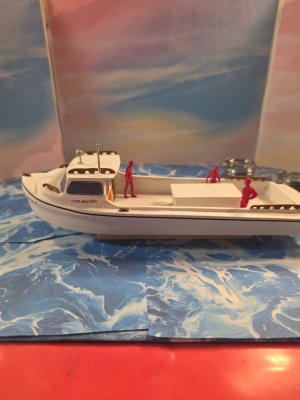
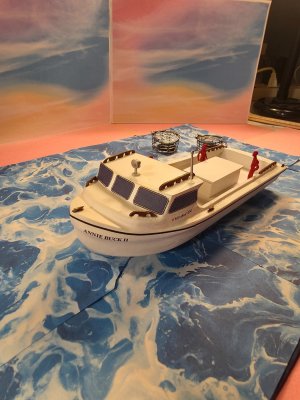
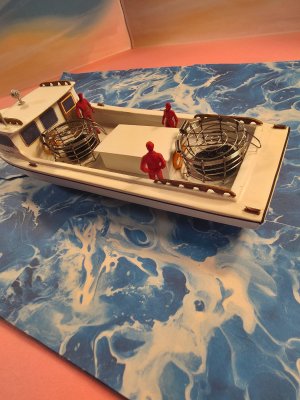
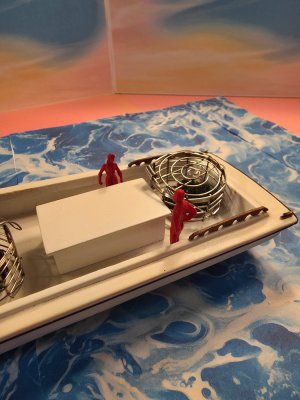
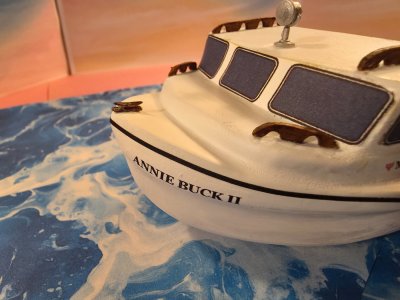
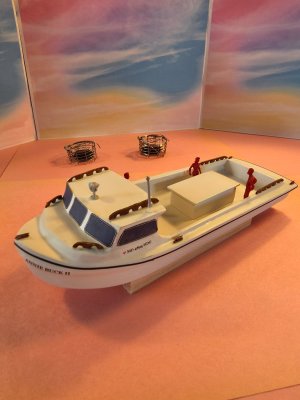
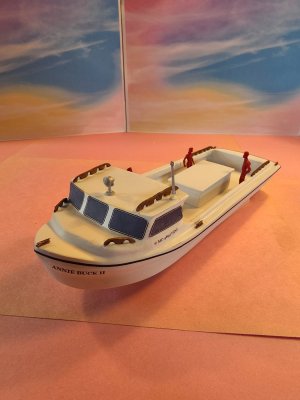
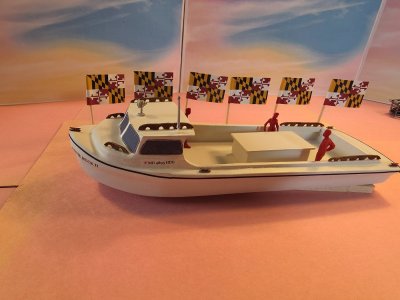
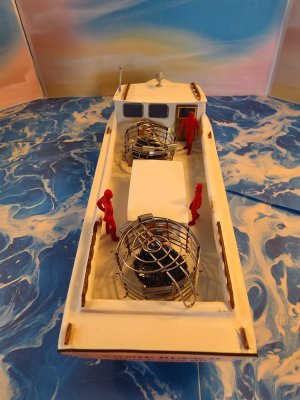
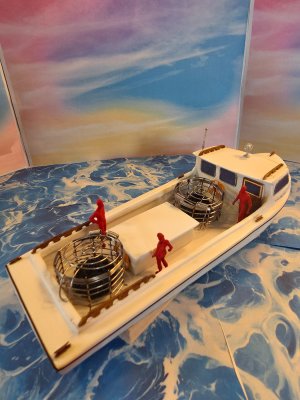
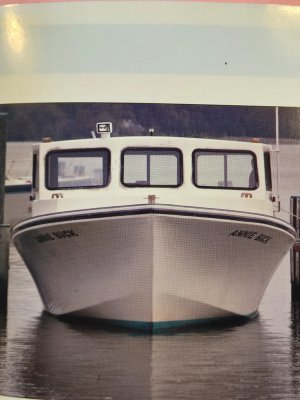
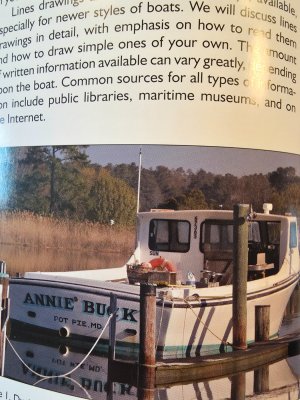
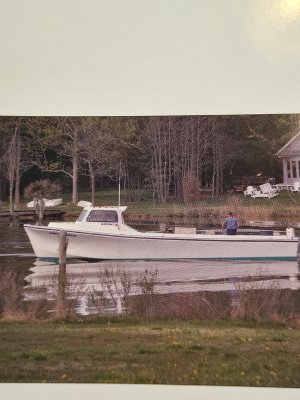
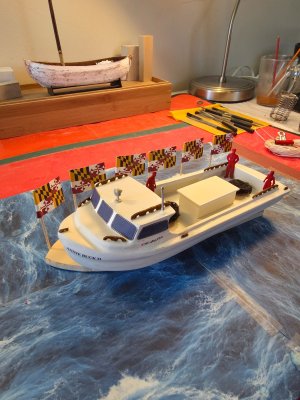
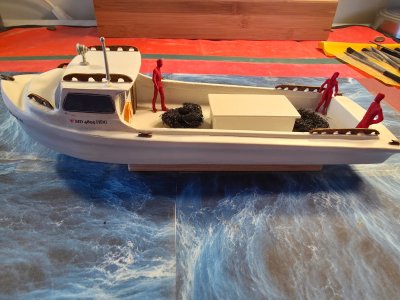
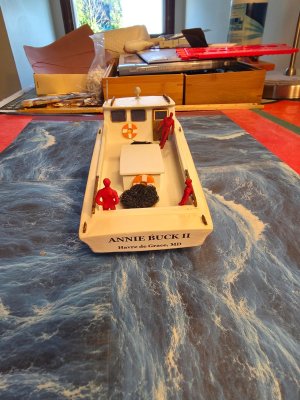
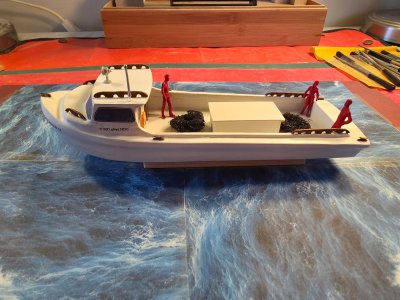
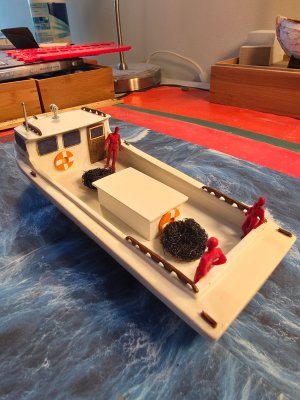
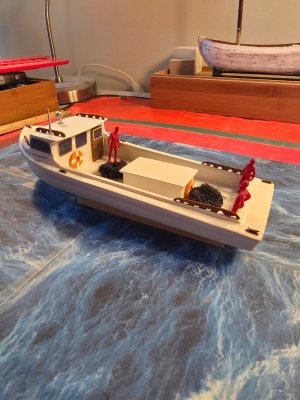
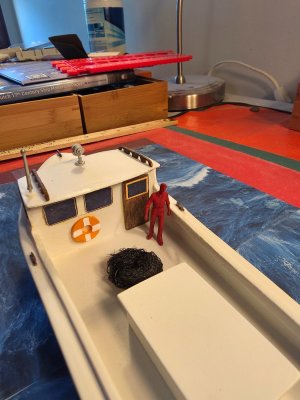
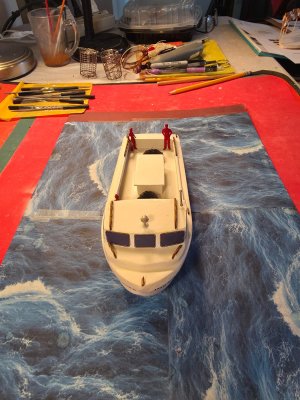
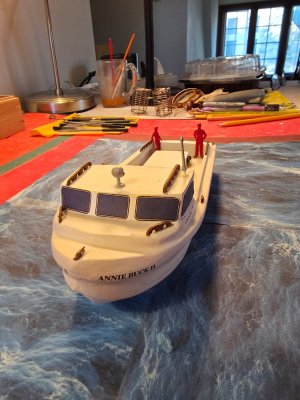
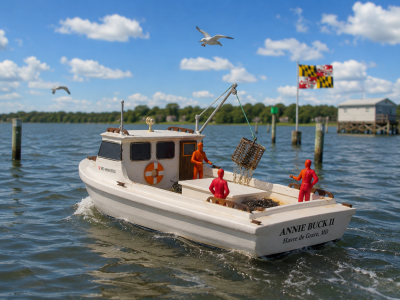
18. Annie Buck II, Chesapeake Bay deadrise oyster/crab working boat -- Build Log COMPLETE!
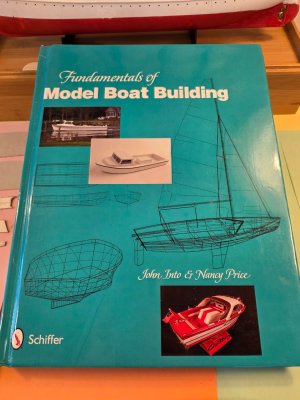
Happy to finally finish this basic scratch build from plans in
"Fundamentals of Model Boat Building" by John Into & Nancy Price.
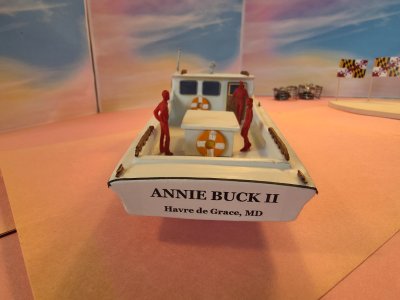
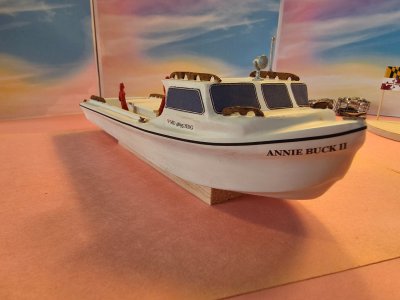
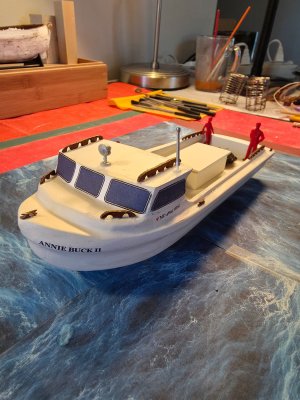
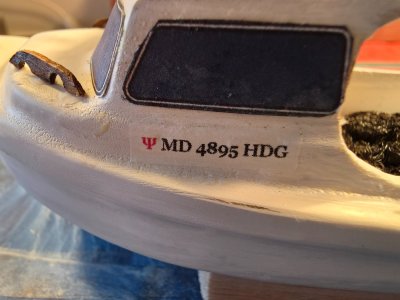
My goals were to learn how to use my new (used) scroll saw, work with different wood stocks (pine, bass, cherry - I will never use balsa wood again!) and to learn the "Bob Cleek" method of obtaining fine surfaces on acrylic painted structures (I used 1200 grit sandpaper as the final sand). The final painted surface has some crackling, so I'm going to go back to Bob Cleek's guidance to see if I put enough undercoats of shellac before I started painting. Also set a side goal of learning more about boat hulls, primarily planing hulls and displacement hulls, and how chines, flares and skegs are used on working boats. I used a mallet and chisel to start the hull side flares and finished them with sandpaper wrapped around dowels. Very happy about the flare on the stern and how the water slide decals on the transom worked with the surface geometry.
I achieved most of my objectives and am ready to move on to my next project, which will be my new build of a 17th century Dutch "smalschip" from plans by Ab Hoving in his book "17th Century Dutch Ship Models in Paper," from SeaWatch Books. I am excited to do some paper cardstock modeling using the "Ab Hoving Method" of reinforced chip board in an economical and creative way of approaching scratch building. I will also start planning (ordering wood stock) for my half-hull presentation model of The Shadow, an 1870's racing yacht from Newport, RI.
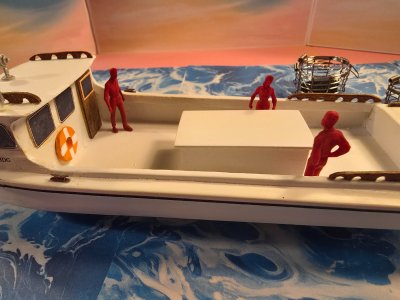
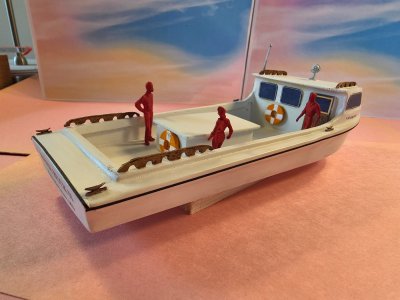
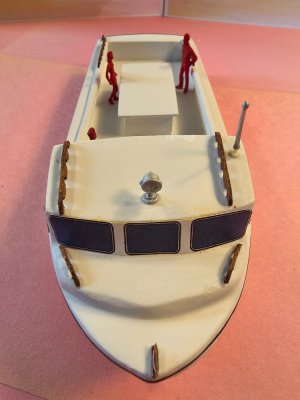
I am happy that I was able to learn how to use my mini-planer and small spokeshave to create flat even surfaces on my hull, cabin and pilot house. I will be purchasing a Japanese pull saw, a spirit level, and an adjustable planer before I get working on my half-hull model build. I am also happy with how the printed water slide decals turned out.
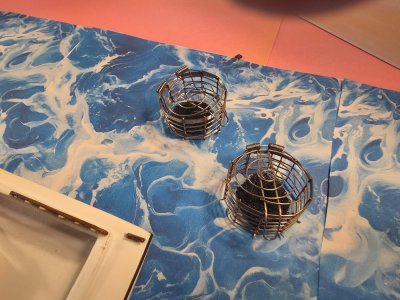
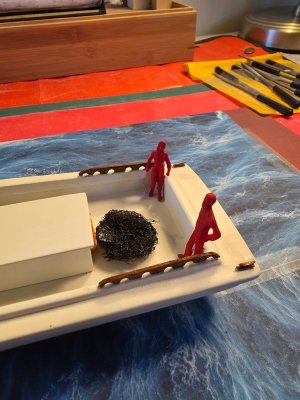
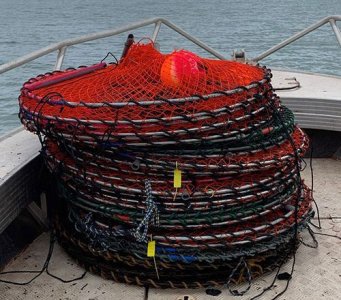
My only shortfall was in the sizing of the commercial crab traps. They are probably a tad larger than 1/4" = 1' scale. It took some time to find human figures at the right scale. All wooden parts, including coamings and "gingerbread" handrails, fabricated with hand tools, except for the original scroll saw cuts of raw pine plank.
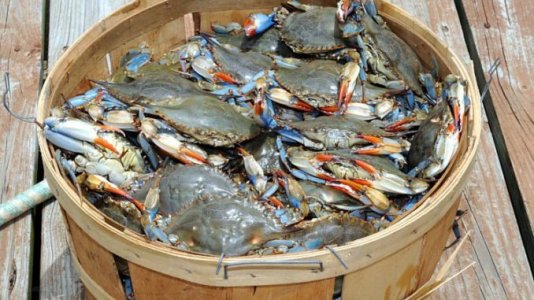
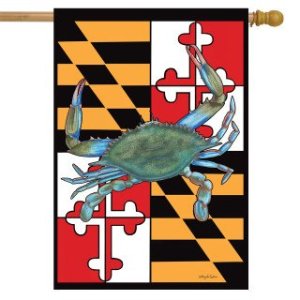
Had a little fun with the crabbing imagery and the Maryland / Chesapeake Bay vibe. "Havre de Grace," Maryland is a real fishing town where the Chesapeake Bay meets the Susquehanna River. It means "Harbor of Grace" and it is a lovely place to visit, unless the U.S. Army is testing ordnance at nearby Aberdeen Proving Grounds! They fish for oysters during the winter and crabs during the summer using these "Chessie Deadrise" working boats. Staging my builds with a background and floor images for a little better presentation.
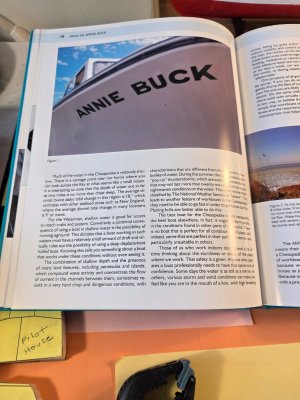
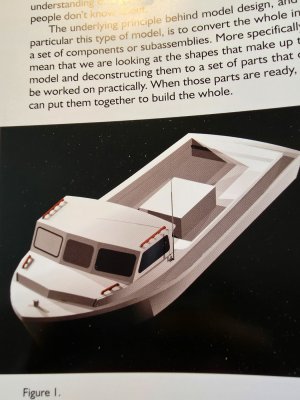
Including some reference pics of the original Annie Buck from "Fundamentals of Model Boat Building," a nice entry-level model boat book that has information on using different scales, reading boat design plans, half-hull modeling, and the lift-building method of hull construction. Great intro to boat hull dynamics for a newbie boat builder like myself.