• SUBSCRIBE TO SHIPS IN SCALE TODAY!

    The beloved Ships in Scale Magazine is back and charting a new course for 2026!
    Discover new skills, new techniques, and new inspirations in every issue.

    NOTE THAT OUR NEXT ISSUE WILL BE MARCH/APRIL 2026
  • Win a Free Custom Engraved Brass Coin!!!
    As a way to introduce our brass coins to the community, we will raffle off a free coin during the month of August. Follow link ABOVE for instructions for entering.

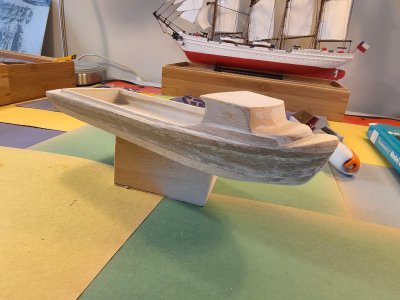
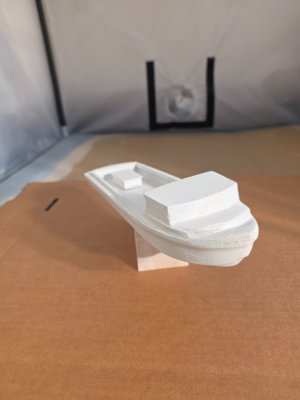
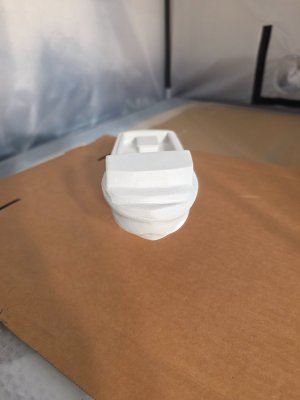
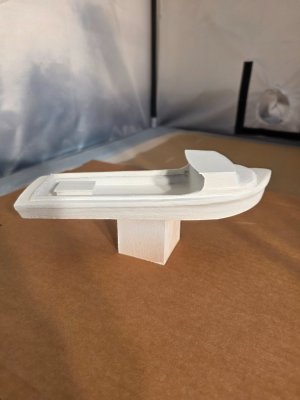
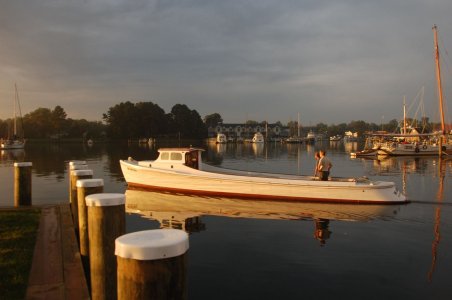
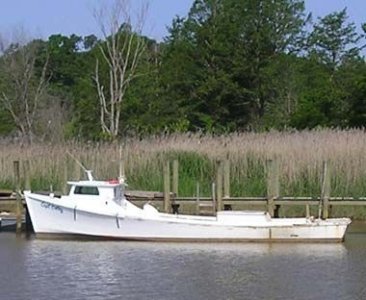
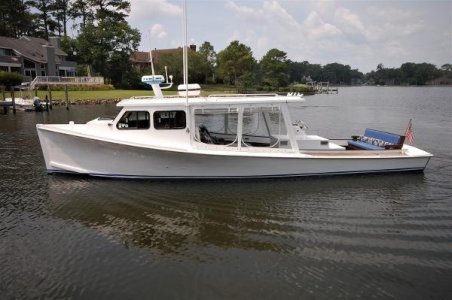
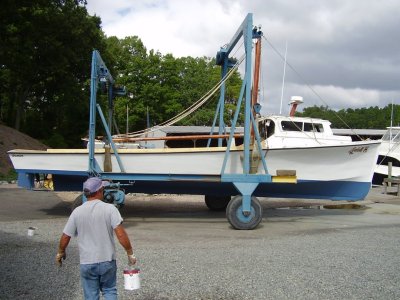
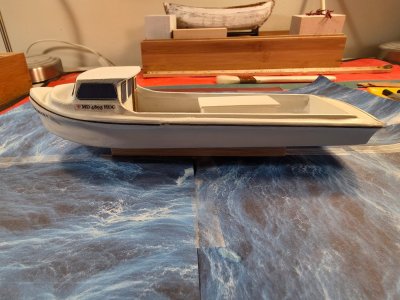
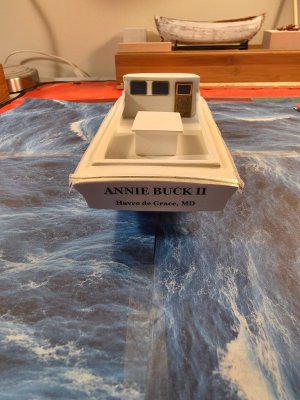
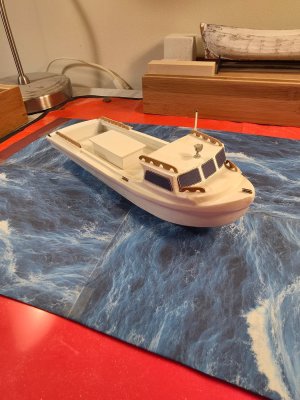
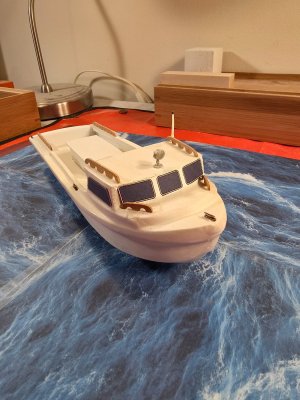
Annie Buck Chesapeake deadrise oyster / crab working boat Build Log

Glad to help. If you need cut to order, though, The Lumberyard is the place to go.
Allan
Allan - When you say "cut to order" is that just specifying L x W x H of the wood board you're ordering, and the wood stock, or do you also specify other things like "no knots", etc.? Just curious before I order some apple wood from The Lumberyard.
 
I was thinking size, but you can ask Ev or Dave about the other things. Dave is a longstanding member here so may answer you post if he sees it. He is a ship modeler and understands the needs as much or more than any supplier of wood.
Allan
 
It is my objective to be of help. Your positive response is excellent encouragement to continue.

https://www.woodboardsandbeams.com/hardwoods

How close are you to these guys?

For wood - There are two categories for the first cut:
A: Is it for display? or
B: will it be hidden or painted?

If it is B: the useful species list is much longer

If it is A: I see zero species of Nutwood as being appropriate. This group encompasses the majority of species used for furniture in North America.
The grain is too coarse - the pores are too large - most everything else about them is good. In Nutwood I include - Oak (Red and White) Ash Hickory Willow Butternut Walnut - there are more. It is a shame about Walnut too. Black Walnut (Juglans nigra) is a man cave dream species. The stuff in most kits called walnut is not any sort of Juglans. Most likely it is one of many African - low cost - brittle crap species that just happens to be brown in color.
The 'grifters really saw you coming' sort of stuff.

Nutwood: The micro: rough - irregular surface is the reason that a finishing material called sand-n-sealer even exists. It is essentially thick nitrocellulose (lacquer) with "dirt" suspended in it if freshly stirred. The "dirt" is fine particles of a material that is transparent when dry. It fills the open pores so that the finished surface looks glass smooth when viewed at an oblique angle.
Fruitwood and Maple: there is no reason for something like sand-n-sealer to even exist. Any effects of using it on this group of wood will be negative. You may as well cover the wood surface with a sheet of clear vinyl the look will be the same.

If it is A - As far as I have seen everything in the Fruitwood group is perfect for our needs. The whole Rosaceae is good. Unfortunately most of it is too small for commercial inventory. DIY chainsaw/bowsaw or being friendly with your local tree services or an orchard is more the way to get it.

It sounds like hard maple, apple, pear, boxwood and black cherry are good places to start.
Hard Maple - Sugar Maple - Rock Maple are all the same wood - It is essentially the North American substitute for Boxwood. It is not as hard and the grain on view can get tricky because the plane of the resaw cut relative to the growth rings makes a difference. It is plenty hard enough.

Black Cherry - the Fruitwood that is most easily obtained.

Pear - an expensive import - fun for small parts - there is not much that it can't do well - I cannot justify the cost-benefit equation result for framing in North America. We have a lot of Callery Pear - ornamental - street planting Pear - excellent - DIY - after a serious wind storm it is probably possible to get tons of logs and branches for free from cities.

Boxwood - in our world this is a very ambiguous name for wood. Buxus sempervirens - real Boxwood - formal garden box - is small logs and near impossible to find. For carving and ship board statues and friezes and knightheads it is the first choice. For major structures - it is too valuable to use for this.
Castelo - what is usually what is meant by Boxwood around here - is not any sort of Buxus - it is a marketing name. The wood shares most every useful characteristic of Buxus. It has also become so popular that the cost is going sky high and is becoming difficult to source. Save it for carving and for miniature scale models.

Yellow Poplar - under used - low cost - easy to obtain in eastern North American - carves like a dream for hulls - for molds to plank ships boats over. -but not a figurehead or a statue. Good for POF framing at larger scales as long as it is then hidden from sight.

 
Last edited:
I know that Dean has taken you in hand and his advice as usual is spot on, but let me add my two cents worth. When I began seriously building ship models, like you I became interested in acquiring the “big three” ship modeling woods; boxwood, Holly, and pear. I still have substantial supplies of all three that will probably be around when I’m not.

The fact is that interests change from project to project. In my case, I’m stuck on a very long term project that doesn’t make use of there high end woods, although I recently used Holly to make some 1:96 scale raised panel doors.

Here’s what I suggest:
1. Sort out the pile of wood that you posted the other day. Mark each piece with its species. See if you have any of those that Dean recommends. Maybe your clarinet builder friend might help with identify.

2. There’s no way to use this or lumber that you purchase without some way to cut it into usable pieces and if I remember correctly you don’t have anything to do this. I have a 10” table saw, a Byrnes table saw, and a 14” bandsaw. The essential tool of the three is the 10” table saw. I would start looking for either an 8” or preferably a10” one. Used ones are worth considering. To build ship models, a cabinet maker quality one with a huge table is not necessary

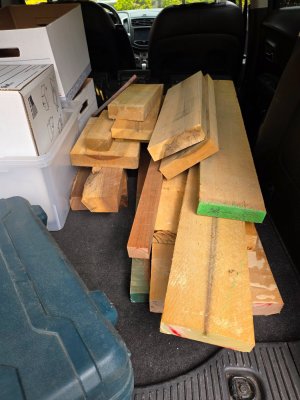
3. Don’t overlook pine. Construction lumber sold in lumberyards is “SPF” Spruce, Pine, Fir. Look in the yard’s offcut bin, aka bargain bin, or value wood. Sometimes you will find 24” lengths of very wide pine boards (not spruce or fir) with a crack in one end. This is prime stuff at bargain price. Sawing out the crack means that you’ll still have a lot of useful wood.

Roger
 
It is my objective to be of help. Your positive response is excellent encouragement to continue.

https://www.woodboardsandbeams.com/hardwoods

How close are you to these guys?

For wood - There are two categories for the first cut:
A: Is it for display? or
B: will it be hidden or painted?

If it is B: the useful species list is much longer

If it is A: I see zero species of Nutwood as being appropriate. This group encompasses the majority of species used for furniture in North America.
The grain is too coarse - the pores are too large - most everything else about them is good. In Nutwood I include - Oak (Red and White) Ash Hickory Willow Butternut Walnut - there are more. It is a shame about Walnut too. Black Walnut (Juglans nigra) is a man cave dream species. The stuff in most kits called walnut is not any sort of Juglans. Most likely it is one of many African - low cost - brittle crap species that just happens to be brown in color.
The 'grifters really saw you coming' sort of stuff.

Nutwood: The micro: rough - irregular surface is the reason that a finishing material called sand-n-sealer even exists. It is essentially thick nitrocellulose (lacquer) with "dirt" suspended in it if freshly stirred. The "dirt" is fine particles of a material that is transparent when dry. It fills the open pores so that the finished surface looks glass smooth when viewed at an oblique angle.
Fruitwood and Maple: there is no reason for something like sand-n-sealer to even exist. Any effects of using it on this group of wood will be negative. You may as well cover the wood surface with a sheet of clear vinyl the look will be the same.

If it is A - As far as I have seen everything in the Fruitwood group is perfect for our needs. The whole Rosaceae is good. Unfortunately most of it is too small for commercial inventory. DIY chainsaw/bowsaw or being friendly with your local tree services or an orchard is more the way to get it.


Hard Maple - Sugar Maple - Rock Maple are all the same wood - It is essentially the North American substitute for Boxwood. It is not as hard and the grain on view can get tricky because the plane of the resaw cut relative to the growth rings makes a difference. It is plenty hard enough.

Black Cherry - the Fruitwood that is most easily obtained.

Pear - an expensive import - fun for small parts - there is not much that it can't do well - I cannot justify the cost-benefit equation result for framing in North America. We have a lot of Callery Pear - ornamental - street planting Pear - excellent - DIY - after a serious wind storm it is probably possible to get tons of logs and branches for free from cities.

Boxwood - in our world this is a very ambiguous name for wood. Buxus sempervirens - real Boxwood - formal garden box - is small logs and near impossible to find. For carving and ship board statues and friezes and knightheads it is the first choice. For major structures - it is too valuable to use for this.
Castelo - what is usually what is meant by Boxwood around here - is not any sort of Buxus - it is a marketing name. The wood shares most every useful characteristic of Buxus. It has also become so popular that the cost is going sky high and is becoming difficult to source. Save it for carving and for miniature scale models.

Yellow Poplar - under used - low cost - easy to obtain in eastern North American - carves like a dream for hulls - for molds to plank ships boats over. -but not a figurehead or a statue. Good for POF framing at larger scales as long as it is then hidden from sight.

Dean - Thanks for the link to Wood Boards & Beams...the pictures of each species of common and exotic wood stock is super useful. My wife and I are going to our first lumbermill / woodworking shop tomorrow. It's called Manayunk Timber and it is the only lumberyard in Philadelphia that has its own small forest.
 
11. Annie Buck build log.
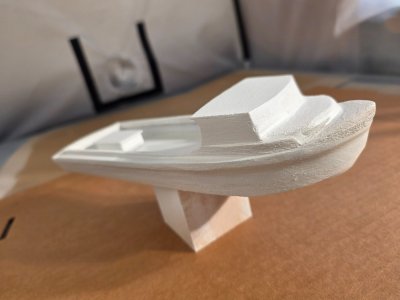
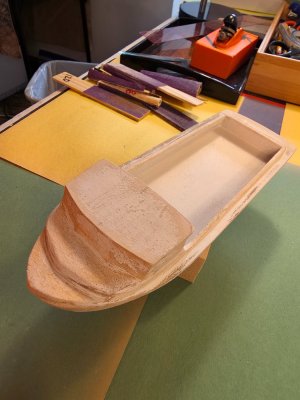
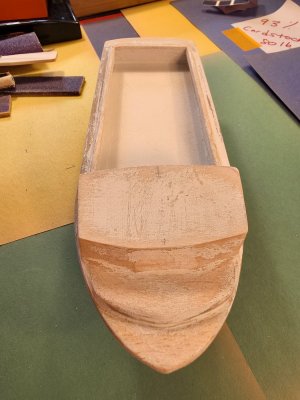
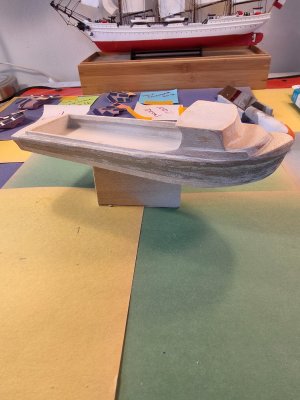
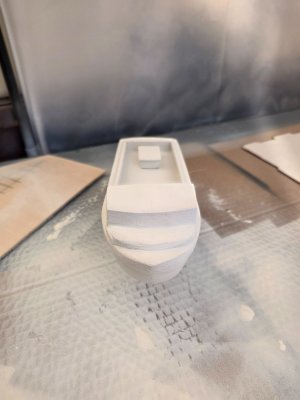
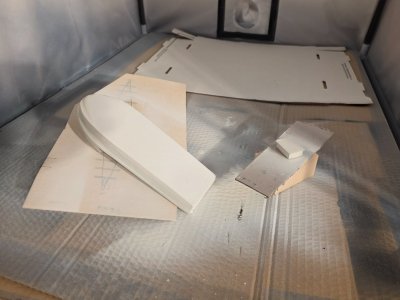
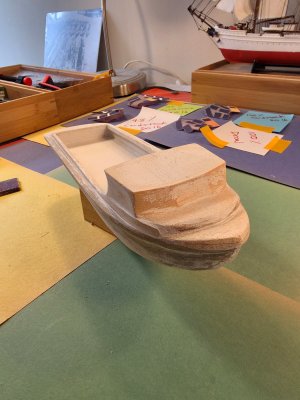
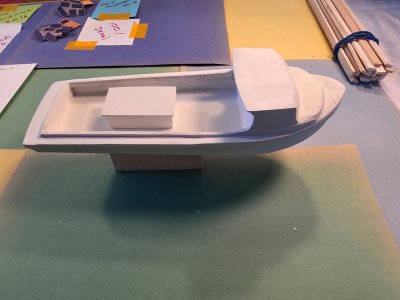
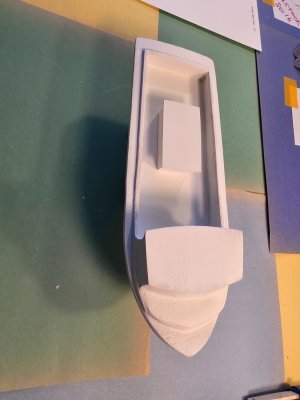
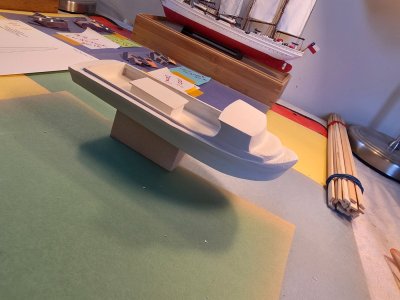
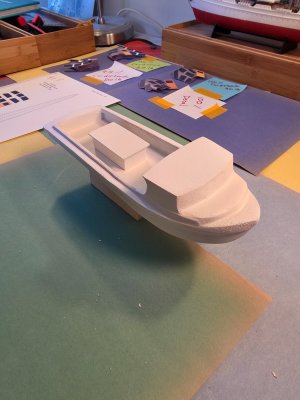
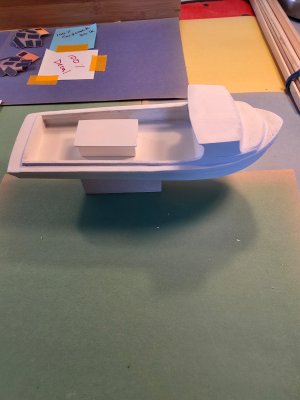
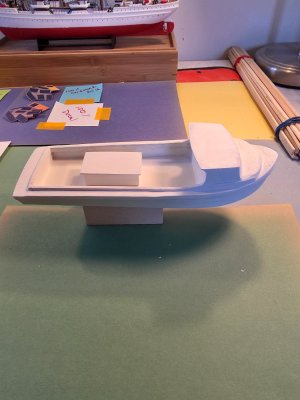
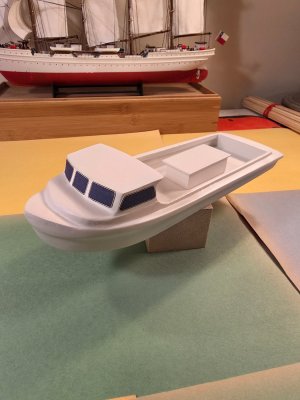
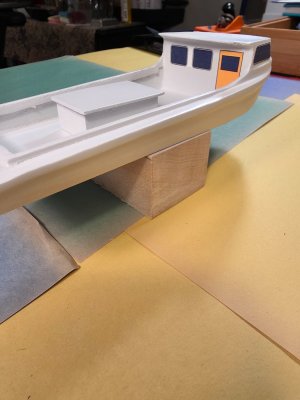
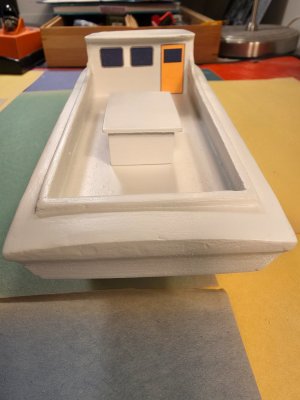
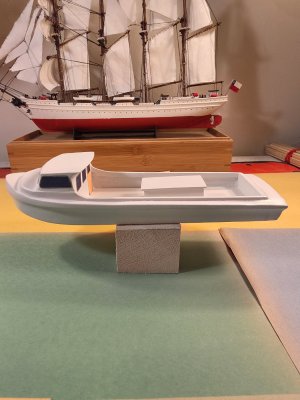
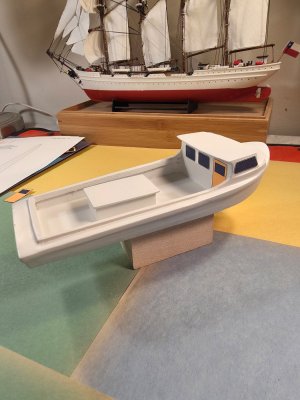
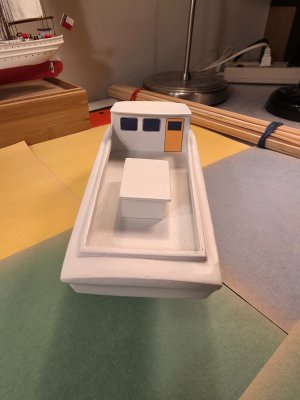
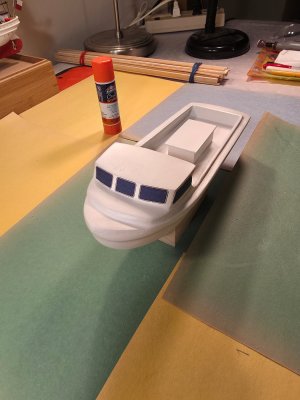
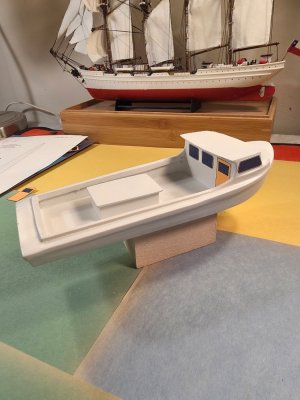
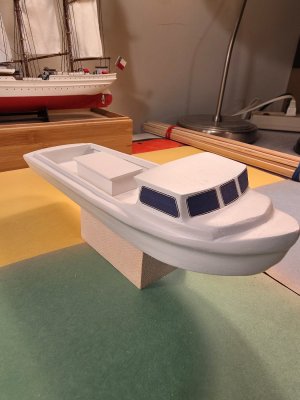
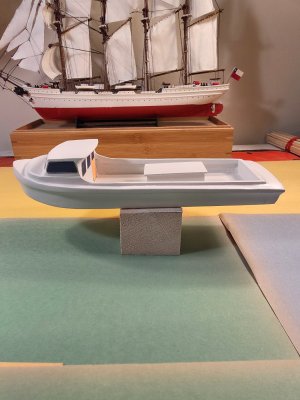
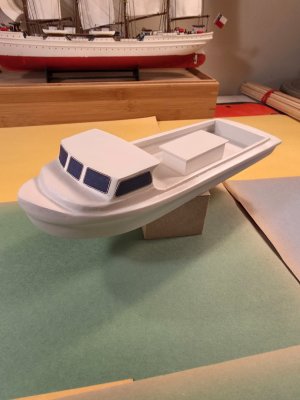
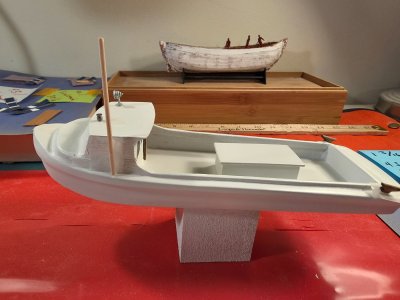
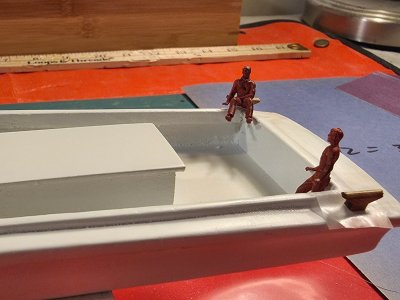
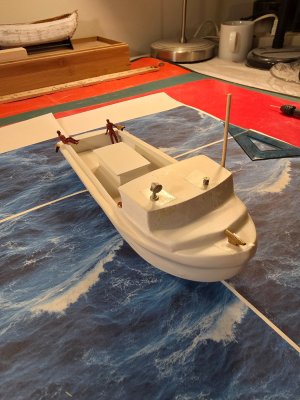
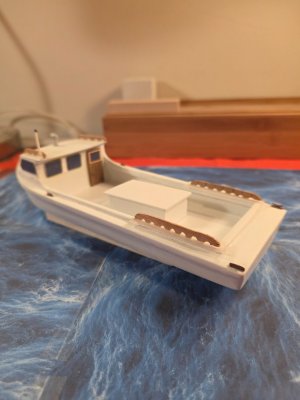
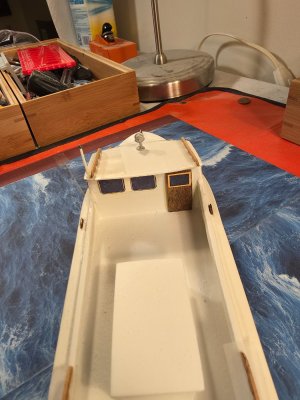
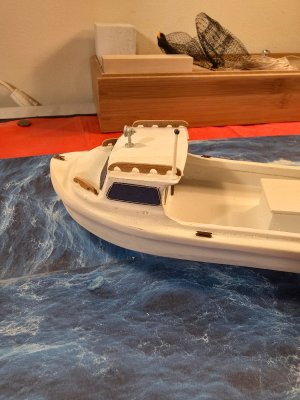
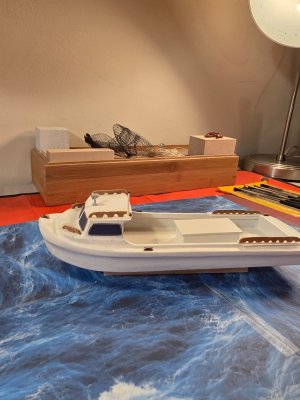
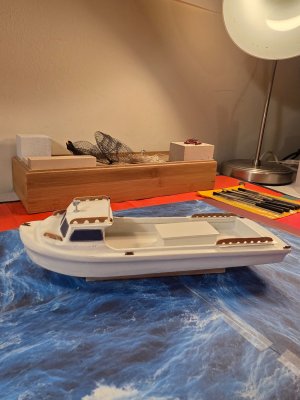
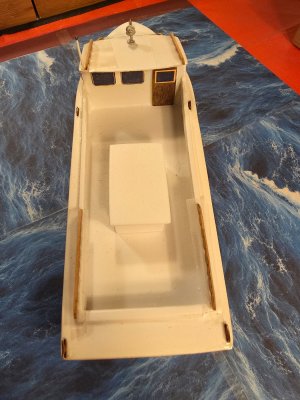
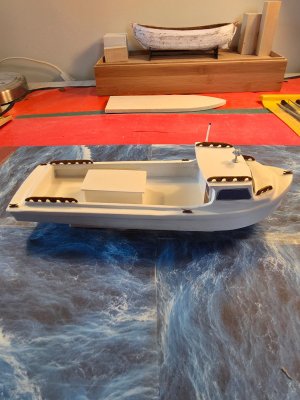
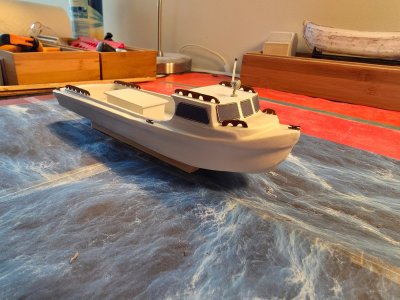
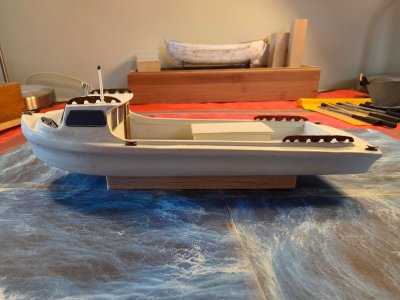
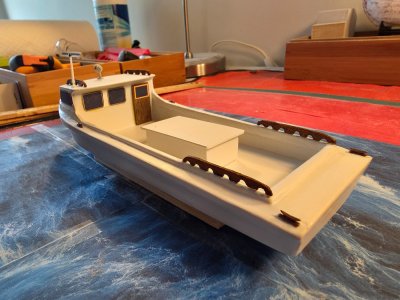
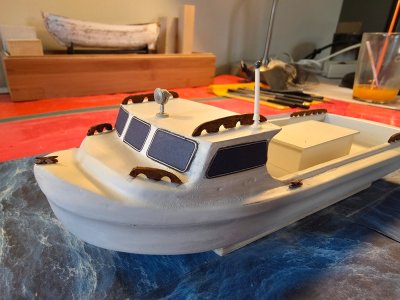
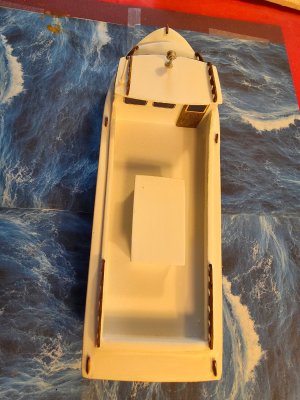
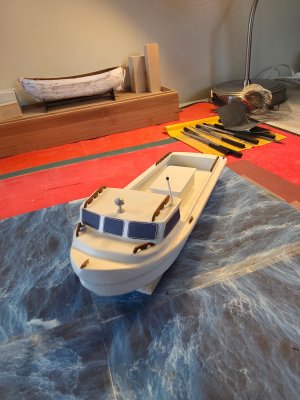
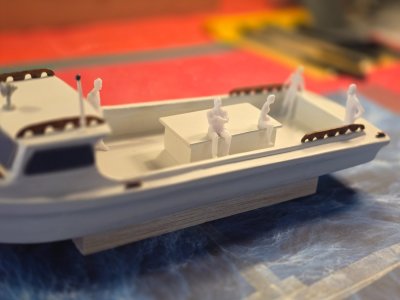
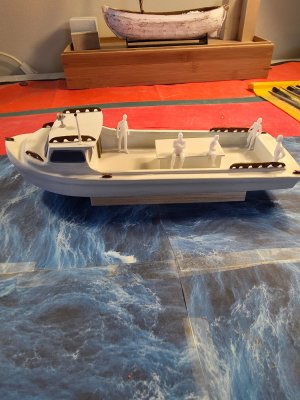
Sanding down after the first coats of shellac and paint. Will follow Bob Cleek's advice and use very fine grit sandpaper, 500+ grit, to get the final topcoat smooth. I redid the engine box back to original size in pine because the balsa and smaller (80% of original) did not look ship shape.
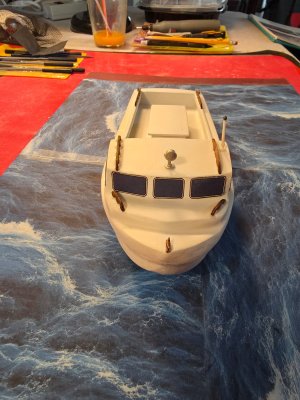
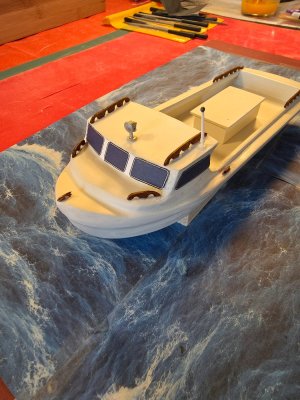
One valuable lesson I learned on this build is to never use Balsa wood for structural parts. It's too easy to dent and scrape, and it does not take paint well, even after shellacking. I also learned about the "fuzzy" surface that balsa and basswood sometimes presents, so will have to choose my wood more carefully next time.

I know I received advice from several members about changing my wood choices away from balsa and boxwood. I felt I was too far into the build to redo the balsa parts and now I'm seeing what a difference it could have made. Especially to the balsa trim and coamings, as well as to the cabin. I should have done the entire build in pine, especially since I have 9 board feet of pine stock in the shop. Lessons learned!

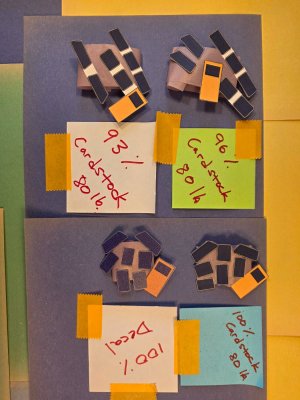
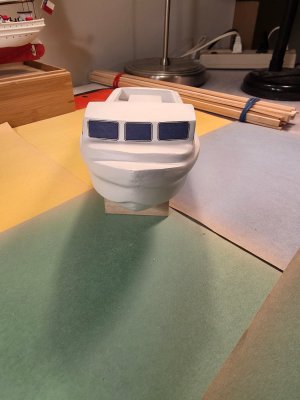
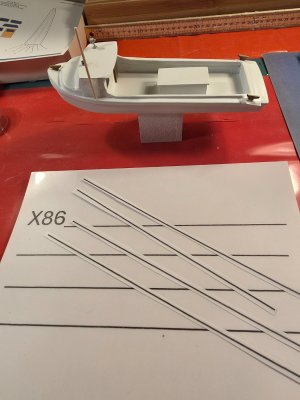
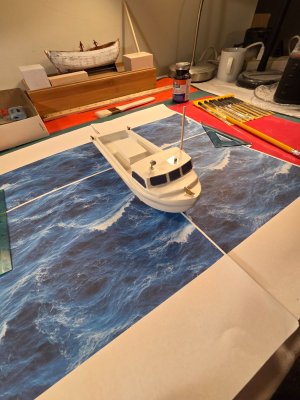
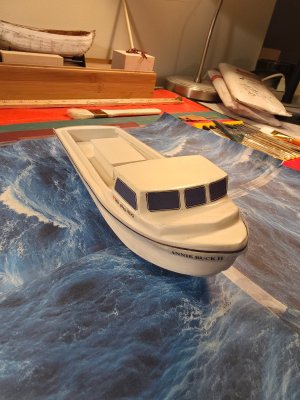
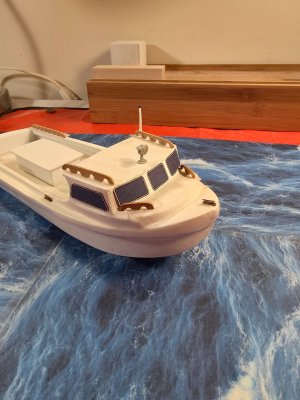
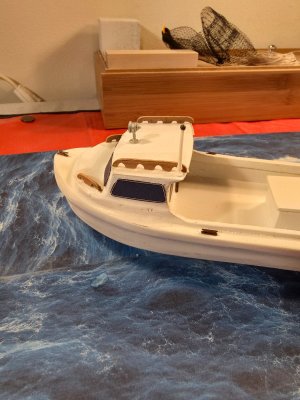
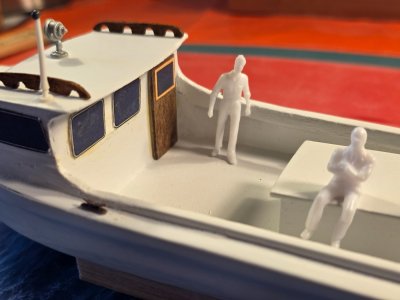
Going to get black line tape for the top rail. Also, will decide whether to paint the 7 windows, use decals or something else. I printed out several copies of the windows in different sizes because the amount of sanding (too much) left the Pilot Cabin smaller.

I'm planning to finish this build tomorrow.

20260514_152411.jpg

20260515_132856.jpg

20260515_132849.jpg

20260515_132840.jpg

20260515_132835.jpg

20260514_152402.jpg

20260514_152354.jpg

20260514_152343.jpg

20260514_152248.jpg

20260514_152212.jpg

20260514_152053.jpg

20260514_111502.jpg

20260515_132844.jpg
 
Last edited:
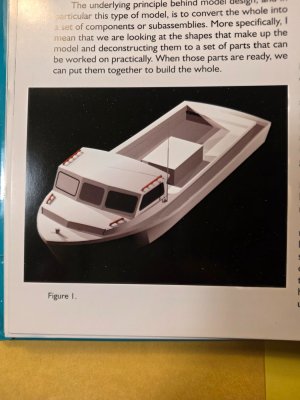
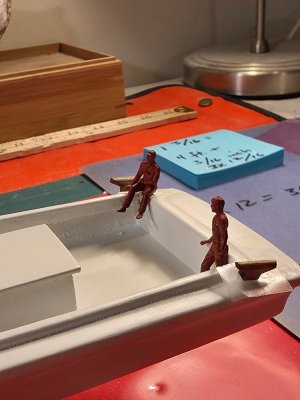
Here are some pics with the engine box back to the original size and a rendering of the boat with larger engine box.The engine box is not glued in yet because I haven't put on the final coats of paint yet.

20260516_102304.jpg

20260516_102256.jpg

20260516_102239.jpg

20260516_102227.jpg

20260516_102222.jpg

20260516_102218.jpg

20260512_210547.jpg
 
I know that Dean has taken you in hand and his advice as usual is spot on, but let me add my two cents worth. When I began seriously building ship models, like you I became interested in acquiring the “big three” ship modeling woods; boxwood, Holly, and pear. I still have substantial supplies of all three that will probably be around when I’m not.

The fact is that interests change from project to project. In my case, I’m stuck on a very long term project that doesn’t make use of there high end woods, although I recently used Holly to make some 1:96 scale raised panel doors.

Here’s what I suggest:
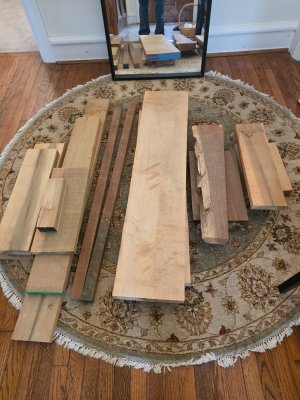
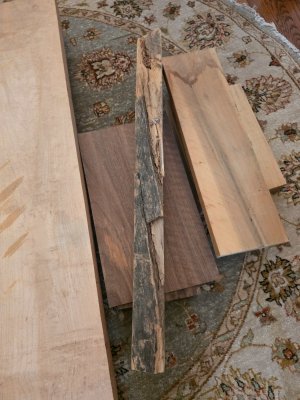
1. Sort out the pile of wood that you posted the other day. Mark each piece with its species. See if you have any of those that Dean recommends. Maybe your clarinet builder friend might help with identify.

2. There’s no way to use this or lumber that you purchase without some way to cut it into usable pieces and if I remember correctly you don’t have anything to do this. I have a 10” table saw, a Byrnes table saw, and a 14” bandsaw. The essential tool of the three is the 10” table saw. I would start looking for either an 8” or preferably a10” one. Used ones are worth considering. To build ship models, a cabinet maker quality one with a huge table is not necessary

3. Don’t overlook pine. Construction lumber sold in lumberyards is “SPF” Spruce, Pine, Fir. Look in the yard’s offcut bin, aka bargain bin, or value wood. Sometimes you will find 24” lengths of very wide pine boards (not spruce or fir) with a crack in one end. This is prime stuff at bargain price. Sawing out the crack means that you’ll still have a lot of useful wood.

Roger
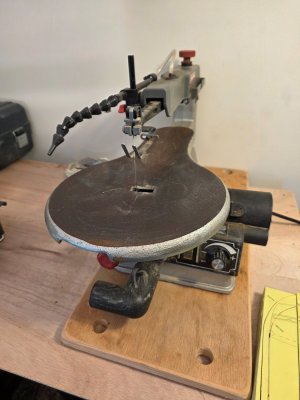
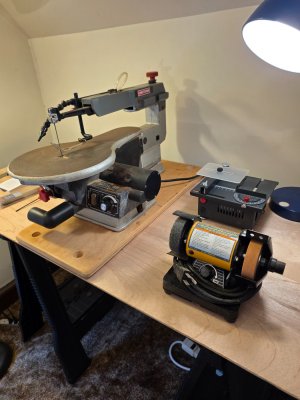
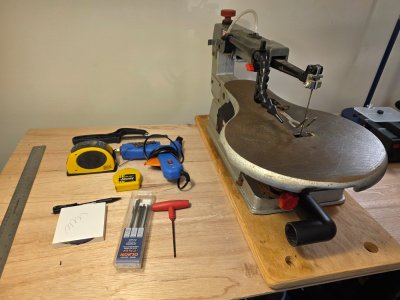
Roger - Great advice, as always. When I bought my new (gently used) scroll saw, it freed me up to start cutting wood parts, but the scroll saw only accepts up to 3 inches of wood at a time and is for more fine woodworking. So I know that a bigger saw is needed. I found this "jobsite" 10-inch table saw from Skil for around $300. Would this tool meet my model wood sawing needs?

It is a 10-inch saw, so is that 10-inches of cutting sawblade, or is the cutting sawblade 5 inches with a diameter of 10 inches? I also found a 10 inch bandsaw for under $300, but at this point I could probably only get one or the other.

Also, what's the difference between a table saw and a band saw. If I could only afford one, is it better to go for a table saw or a bandsaw?


Woodskil 10 Inch Dual Speed Band Saw with Stand, 4.3A 2360/3000 FPM Benchtop Bandsaw with Quick Tension System & Quick Tool-Free Doors for Hard & Soft Woodworking, DIY https://a.co/d/0hPcZy37

Sorry for the newbie questions. I will take your advice on cataloging my wood stock to see what types of wood I already have and go from there. I know alot of it is pine, with some maple as well, so it will be a good learning experience to figure out each species of wood in the shop. Thanks!
 
A 10” table saw uses a 10” diameter blade. The saw that you are looking at will make a cut of up to 3-12”. It also has a 5/8 arbor (the spindle that the blade fits on to) which will fit a wide variety of standard saw blades. I wish that instead of an ampere rating, in this case 15 amps, they would give the horsepower rating. Older table saws are belt driven with separate motors. This allows the motor to be swapped for a more powerful one. In this case the motor is integral within the saw and if it’s not powerful enough you’re stuck.

Before spending money visit big box home improvement stores in your area; Home Depot, Lowe’s, etc. Each will probably sell similar saws. Woodcraft also has retail stores in larger markets like Philadelphia. They claim these are staffed with knowledgeable woodworkers. Go and “kick the tires”!

A table saw is a major purchase and can be dangerous to the inexperienced user. Take your time before making a purchase.

Roger
 
What Roger said.
In the spirit of - don't do what we did when we didn't know any better.
Rather than purchasing a brand new tablesaw with economy level precision and accuracy -
Try to find a poor ole new widow - who just got stuck with woodworking tools that she does not need, want, and always resented being purchased and is taking up room that she has other uses for. If you are lucky, the tools will have been bought by someone who thought that buying high quality tools also imparted the knowledge and skills to use them without actually paying the necessary dues. That means that they may have their new shine still on them. Because things do not work that way. Dues must be paid. Big metro area - more chances.

A tilt arbor saw - getting the blade 90 degrees - an ability of even an economy saw - keeping it at 90 degrees thru a cut - not a sure thing.
A dead flat table is an absolute necessity. A fence that is worth having and is high enough and stays where you want it - costs extra. It is all about the fence.

For hardwood - 10" tablesaw - I call it lucky if I can cut 2" stock with one pass. Multiple passes - same board - same surface on table - still runs the danger of the second pass being a slightly different vertical plane. Flipping the board over - both surfaces of the board must be perfectly parallel for the cut to be the same plane. This is wood - not steel - changing room temp - changing atmospheric humidity have an effect. The quality of the surface planer used matters.

The thicker the cut the wider the blade must be - the more torque required from the motor.
Thicker blade -the more loss to kerf of expensive and hard to get wood.
The more teeth a blade has - the thinner is the wood it can cut.
Once the gullet of a blade's tooth is full of sawdust - it can no longer cut - it burns from friction and slows the possible feed rate and increases push force necessary to keep the board moving.
A dull blade - burned wood.
A carbide blade - stays sharper much longer - has much more set - Outward lean of the tooth - the kerf is wider than the thickness of the steel disc.

This is all a Dennis Moore situation.

A tablesaw is a lurking monster - just waiting for any opportunity to remove a finger or all of them. It demands the utmost respect and attention and 100% of your focus when the power cord is plugged in.

This is why way too much money is spent to obtain a large floor model bandsaw for resawing. Going economy here = heartache and frustration.
Becoming your own sawmill - expensive up front for the necessary tools - if you go quality - it is a one time purchase - If you do a lot of it - the "investment" in tools is paid back in savings on wood cost in fairly short order.
And in being able to produce any size or thickness of any wood you desire - as soon as you want it - and at any volume you desire. It is a near infinite number of degrees of freedom for wood stock.
You will need enough floor space - a 220V power source - a whole lot of mad money where the amount expended does not matter if this is just a flyer for you - or if the money matters be determined that you are in this for the long haul. Otherwise - you will have become the new widow with a room full of dust covered Baby Hueys.
 
A 10” table saw uses a 10” diameter blade. The saw that you are looking at will make a cut of up to 3-12”. It also has a 5/8 arbor (the spindle that the blade fits on to) which will fit a wide variety of standard saw blades. I wish that instead of an ampere rating, in this case 15 amps, they would give the horsepower rating. Older table saws are belt driven with separate motors. This allows the motor to be swapped for a more powerful one. In this case the motor is integral within the saw and if it’s not powerful enough you’re stuck.

Before spending money visit big box home improvement stores in your area; Home Depot, Lowe’s, etc. Each will probably sell similar saws. Woodcraft also has retail stores in larger markets like Philadelphia. They claim these are staffed with knowledgeable woodworkers. Go and “kick the tires”!

A table saw is a major purchase and can be dangerous to the inexperienced user. Take your time before making a purchase.

Roger
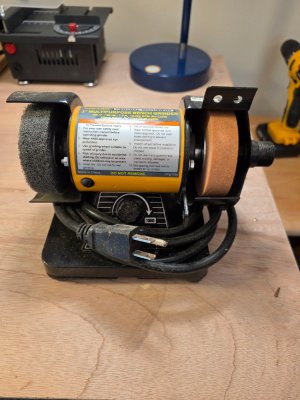
Thanks Roger. I've been using the cheap internet Chinese mini-table saw that I bought online

It has a cutting area of about 1/2 inch. I also use it as a grinding tool. I'll see if I can get a deal. I have Dewalt and Ryobi equipment, so perhaps one of those might have a less expensive table saw available.

My next 2 builds will be out of Foamcore and 3mm card stock, so will wait a frw weeks before shopping for the table saw.
What Roger said.
In the spirit of - don't do what we did when we didn't know any better.
Rather than purchasing a brand new tablesaw with economy level precision and accuracy -
Try to find a poor ole new widow - who just got stuck with woodworking tools that she does not need, want, and always resented being purchased and is taking up room that she has other uses for. If you are lucky, the tools will have been bought by someone who thought that buying high quality tools also imparted the knowledge and skills to use them without actually paying the necessary dues. That means that they may have their new shine still on them. Because things do not work that way. Dues must be paid. Big metro area - more chances.

A tilt arbor saw - getting the blade 90 degrees - an ability of even an economy saw - keeping it at 90 degrees thru a cut - not a sure thing.
A dead flat table is an absolute necessity. A fence that is worth having and is high enough and stays where you want it - costs extra. It is all about the fence.

For hardwood - 10" tablesaw - I call it lucky if I can cut 2" stock with one pass. Multiple passes - same board - same surface on table - still runs the danger of the second pass being a slightly different vertical plane. Flipping the board over - both surfaces of the board must be perfectly parallel for the cut to be the same plane. This is wood - not steel - changing room temp - changing atmospheric humidity have an effect. The quality of the surface planer used matters.

The thicker the cut the wider the blade must be - the more torque required from the motor.
Thicker blade -the more loss to kerf of expensive and hard to get wood.
The more teeth a blade has - the thinner is the wood it can cut.
Once the gullet of a blade's tooth is full of sawdust - it can no longer cut - it burns from friction and slows the possible feed rate and increases push force necessary to keep the board moving.
A dull blade - burned wood.
A carbide blade - stays sharper much longer - has much more set - Outward lean of the tooth - the kerf is wider than the thickness of the steel disc.

This is all a Dennis Moore situation.

A tablesaw is a lurking monster - just waiting for any opportunity to remove a finger or all of them. It demands the utmost respect and attention and 100% of your focus when the power cord is plugged in.

This is why way too much money is spent to obtain a large floor model bandsaw for resawing. Going economy here = heartache and frustration.
Becoming your own sawmill - expensive up front for the necessary tools - if you go quality - it is a one time purchase - If you do a lot of it - the "investment" in tools is paid back in savings on wood cost in fairly short order.
And in being able to produce any size or thickness of any wood you desire - as soon as you want it - and at any volume you desire. It is a near infinite number of degrees of freedom for wood stock.
You will need enough floor space - a 220V power source - a whole lot of mad money where the amount expended does not matter if this is just a flyer for you - or if the money matters be determined that you are in this for the long haul. Otherwise - you will have become the new widow with a room full of dust covered Baby Hueys.

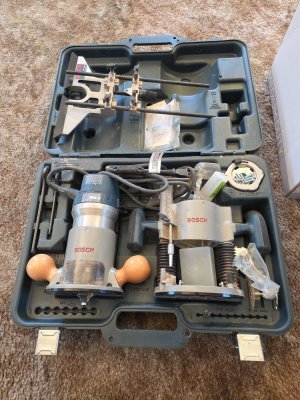
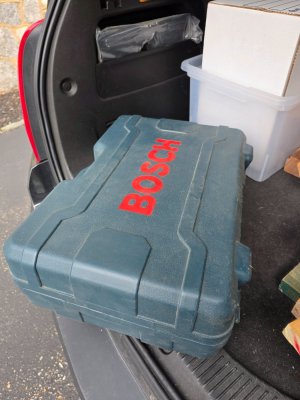
Dean - That's how I got my Craftsman scroll saw and my Bosch router. A nice widower and 50 year woodcrafter was selling all the tools in his shop as well as his shed of dried wood stock. His kids were putting him in assisted living. Sad, but there was some joy in knowing his tools would bring others the same joy.

In the category of "funny but not funny" I recently took my first power tool safety course at my local Lowe's. Ironically, one of my college mates, a dentist and amateur carpenter had a slip on his band saw and cut his left middle finger 80% and his ring finger 50%. He told me he's going to go through at least a year of recovery and may never practice dentistry again. Power tools are serious and dangerous. At least he has a beach house to recuperate!
 
Last edited:
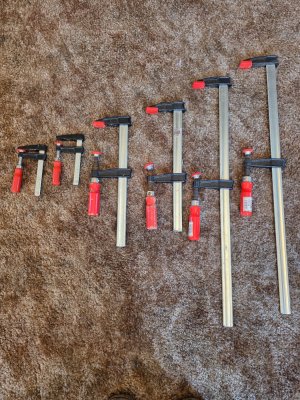
Since we are talking about my power tools...or lack thereof!

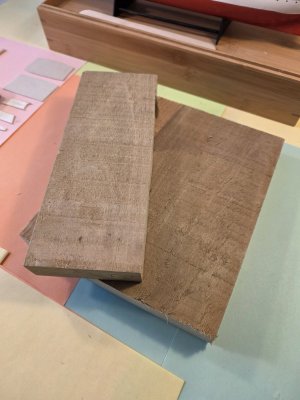
Going to start sorting my wood pile this week. The gentleman who sold me all of the wood said it was mostly pine and maple (but what kind of maple?). But he also said he worked alot in oak, pear and some dark woods in his ornamental door / wood screen projects for inlay work.

I am thinking about trading in the Bosch router for some of the classic woodworking tools that Roger and Dean are talking about, like a belt-driven band saw or table saw. I agree that I'm not going to get my own 40-year tools at Home Depot, Lowe's or off the internet.

The economics of quality woodworking seems to involve one's longevity in the hobby. Paying more for better tools now pays off in the end if you make up the capital expenditure by paying less for wood stock over the long haul. Making your own wood planks, frames, bulkheads, keels, decking out of a 4' x 10' slab of, say, cherry wood sounds like an incredible way to save money, if you amortized it over 10-12 years or so. At my age that is doable.

But there is another economic aspect to quality woodworking that bears mention. If a 40-year old American-made power saw is better than some cheap foreign mini-saw that you buy off the internet, then, when one is ready to build that last ship model and call it a career, the tools will still maintain their generational value for the next owner/woodworker -- as long as you take good care of the tools as stewardship for the next generation. Capital expenditure indeed!

20260504_141505.jpg

20260404_163251.jpg

20260404_163200.jpg

20260404_163011.jpg

20260404_163044.jpg

20260404_163115.jpg

20260404_150609.jpg

20260404_150710.jpg

20260404_145341.jpg

20260404_145346.jpg
 
Last edited:
DeWalt makes a similar table saw.

Based on amperage that the saw draws at 110 volts. I esimate that the Skilsawhas a 1-1/2 hp motor. Sufficient.

I agree with Dean, however, There are used saws that will cost you significantly less and will be of better quality than the saws that you’re considering. I would prefer a belt driven machine.

I have an old 10” Delta Contractors saw. It is belt driven by a 110/220 dual voltage motor. It draws electricity from a 110v circuit with a 20 amp breaker. I have not found it necessary to use 220v.


Roger
 
12. Annie Buck build log

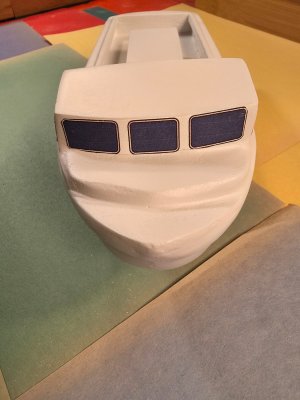
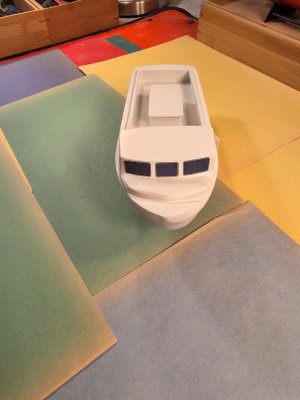
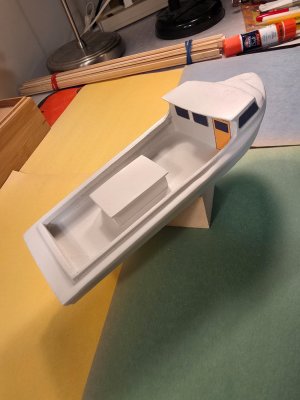
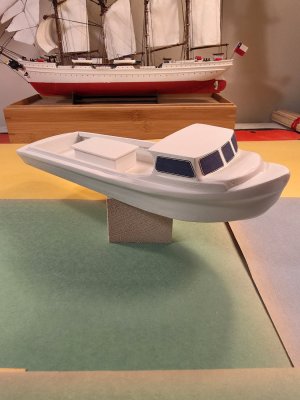
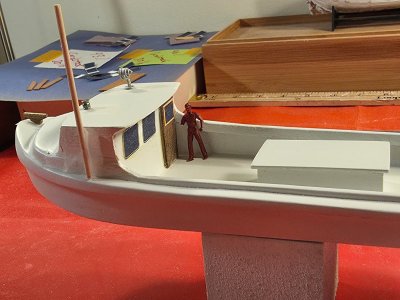
Interlude for windows...mocking up the windows with 80 lb card stock. I printed out different sizes for each window, as I needed smaller windows in the aft wall of the pilot house and larger windows on the sides of the pilot house or "gingerbread." Ended up using windows that were 91% of original size on the front of the pilot house.

I will decide on the final window placement tomorrow and paint the windows off hull before attaching permanent, with or without a celophane top layer.

I sanded the last coat of paint with 600 grit sandpaper, then will put the penultimate coat of paint, then sand with 1000 grit sandpaper before the last coat of paint and the final fairing, as per the Bob Cleek method. I found that approaching the paint job for this model systematically as a "paint system" with each coat of paint having a separate sanding with increasing higher grit sandpaper works great. Can't wait to use this method again the next time I paint a model ship.

I just wished that I'd use pine for the entire build, not just the hull and waterline instead of basswood and balsa. Lesson learned!

I expect to finish this build tomorrow or Monday.

20260516_211106.jpg

20260516_211054.jpg

20260516_211050.jpg

20260516_211044.jpg

20260516_211036.jpg

20260516_211014.jpg

20260516_211006.jpg

20260516_210947.jpg

20260516_210901.jpg

20260516_210855.jpg

20260516_210429.jpg

20260516_210210.jpg
 
Last edited:
Back
Top