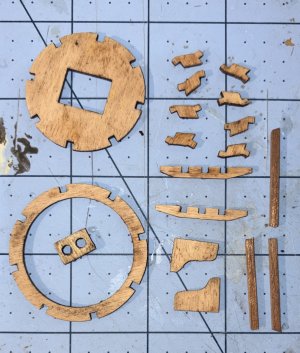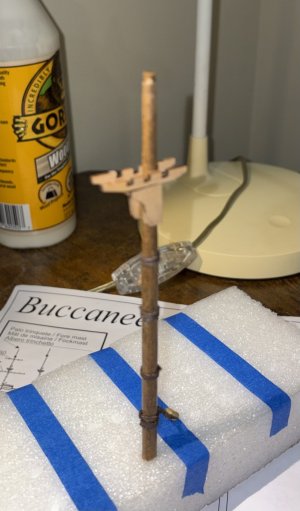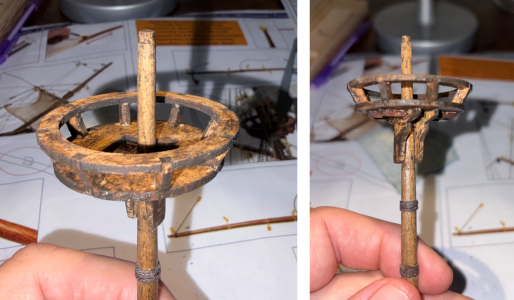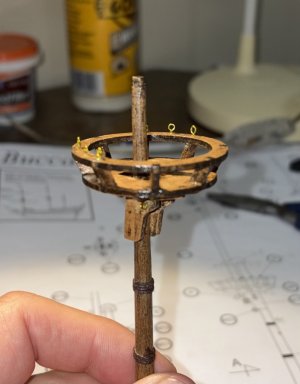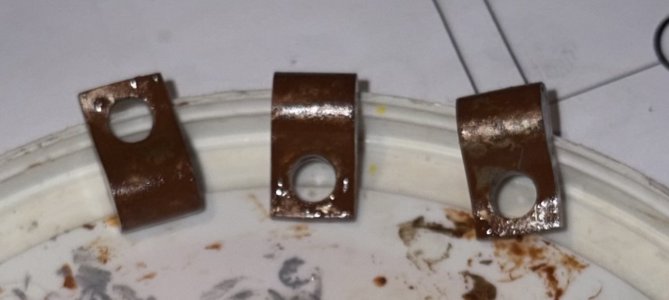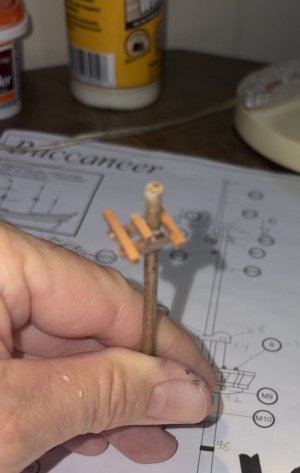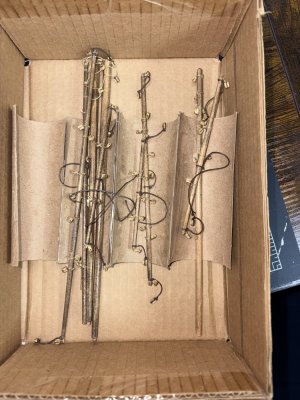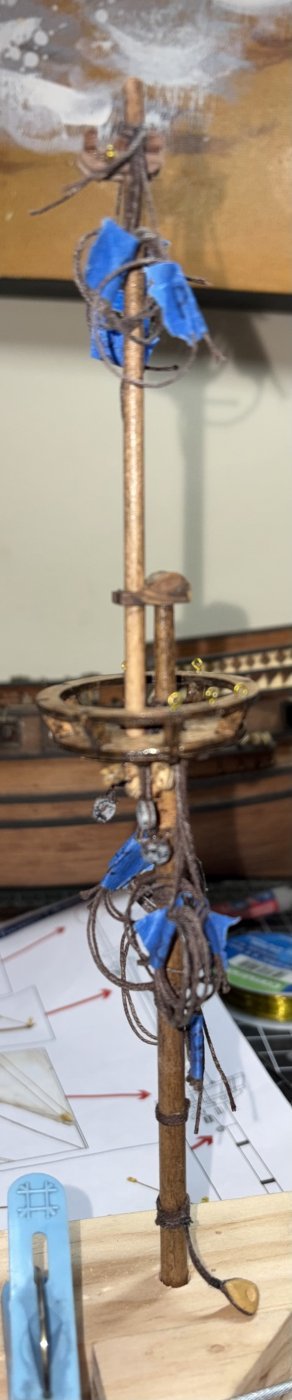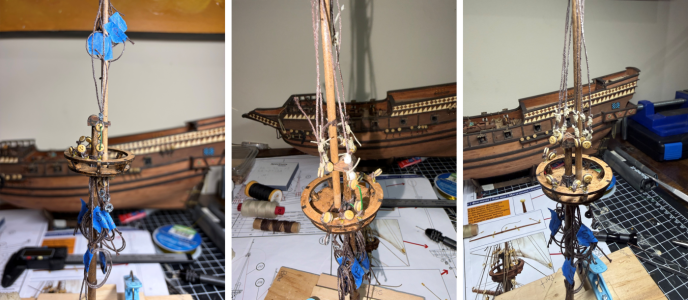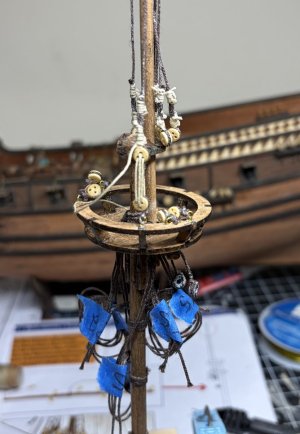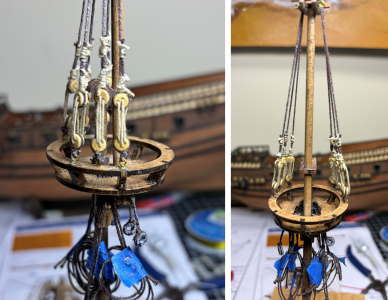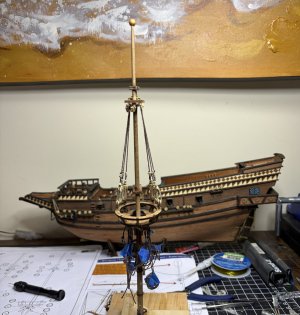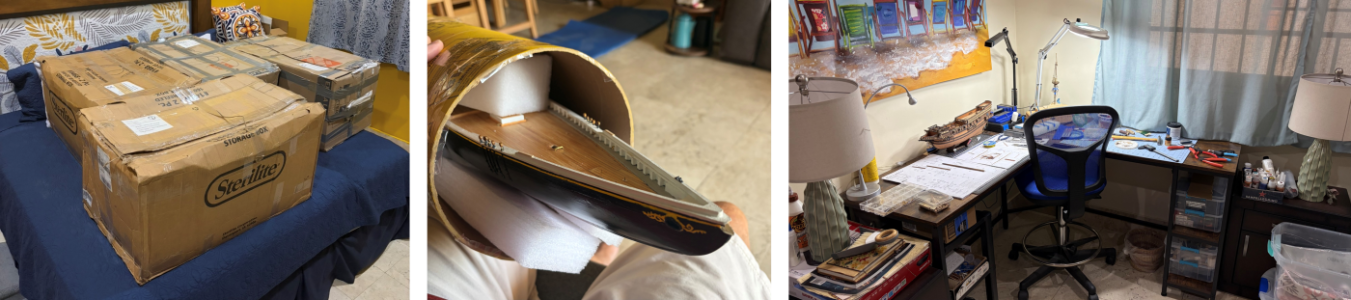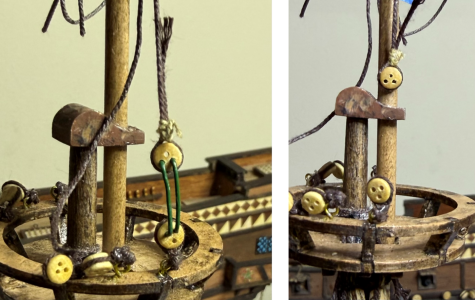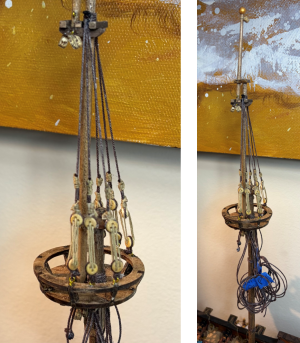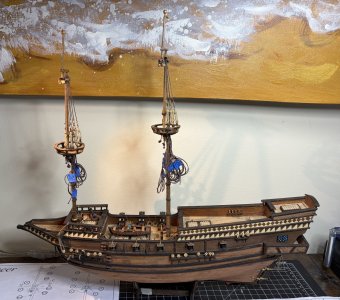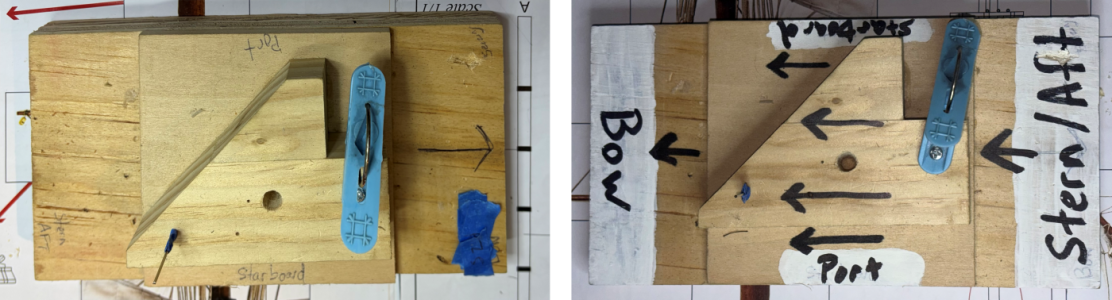



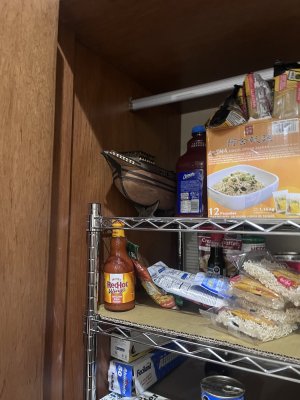
So the Molino is safely tucked away in the closet until my return in October.

 |
The beloved Ships in Scale Magazine is back and charting a new course for 2026! Discover new skills, new techniques, and new inspirations in every issue. NOTE THAT OUR NEXT ISSUE WILL BE July/August 2026 |
|
 |
As a way to introduce our brass coins to the community, we will raffle off a free coin during the month of August. Follow link ABOVE for instructions for entering. |
|
Thanks. It was a small community college in Sonora CA - Columbia College.Nicely done Hugh! Which school did your daughter go to?


Glad it’s been helpful. There have been a number of mistakes, but I’ve learned a lot along the way.Great build log. I’m working on the Albatros right now, which is my first ever build. I’m making a lot of mistakes, but learning a lot. The Buccaneer will be my second build. As a matter of fact, I just ordered it today. Your build log should help out a lot when I start. By the way, I grew up in Lakewood and my parents are still there. I’m in Brighton. Well, at least until next June when my wife retires. Then it’s off to Florida.



Have a good vacation Hugh! Magic Mike11/23/25 to 12/7/25
I’ll be carrying on with my less wordy and condensed build log but will include the full unredacted build log as a pdf for those who want it.
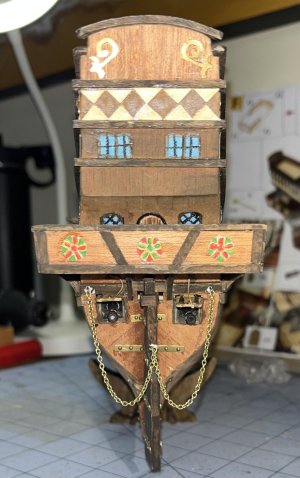
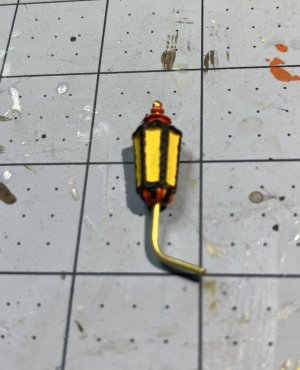
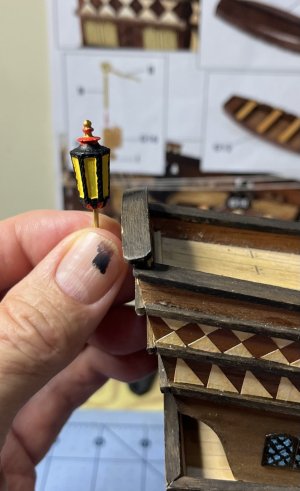
Starting with step G, the first task was the stern lantern.
View attachment 562670
View attachment 562671
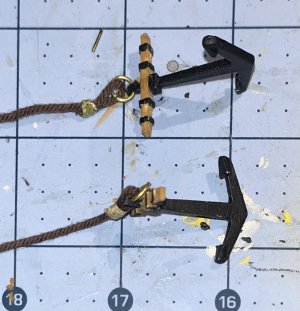
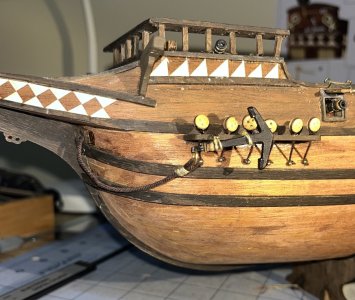
The anchors are next, each made of two pieces of Britannia metal, which required significant sanding. I painted the shanks and associated parts black, while the stocks were painted medium brown with black bands.
View attachment 562672
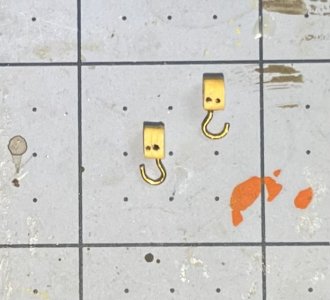
After gluing the anchor together, I opted to make a hook to connect it to a double block, as would be used on a galleon, instead tying it to the anchor as detailed in the instructions.
View attachment 562673
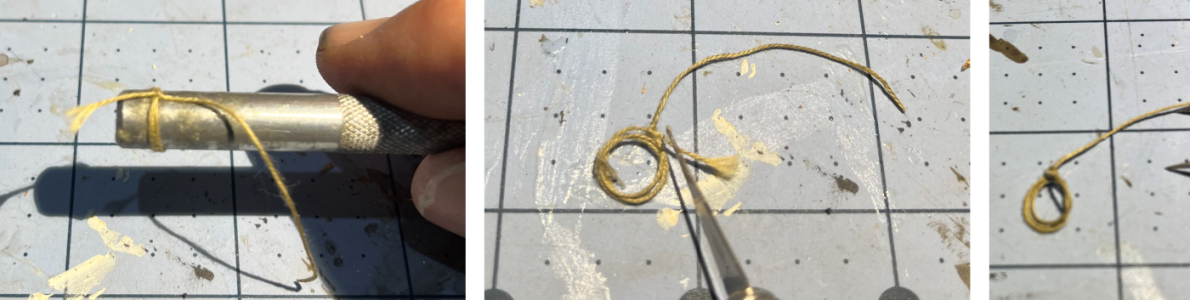
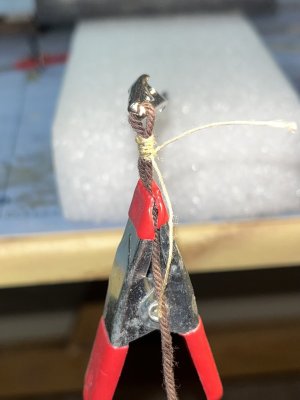
The anchor rope goes through the ring and is seized to itself, marking it as my first attempt at seizing. Instead of tying the anchors to the front channels as instructed, I added two ring bolts to each channel and tied the anchors off to them.
View attachment 562674
View attachment 562675
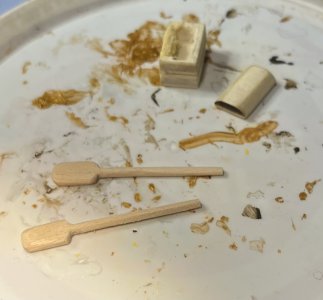
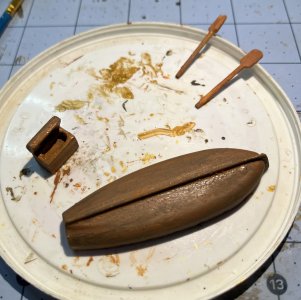
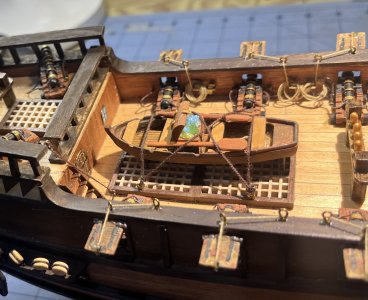
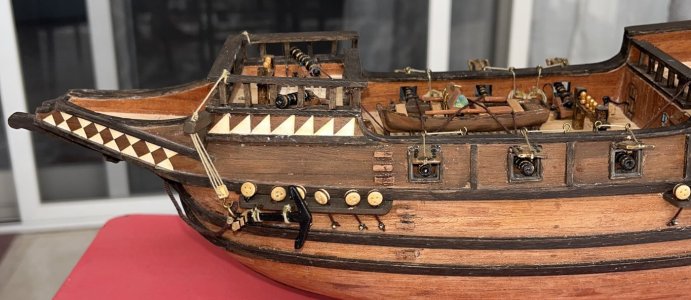
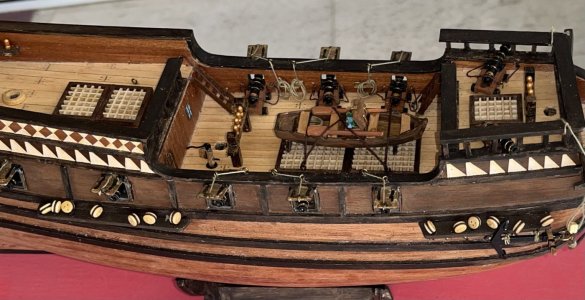
Moving on to the lifeboat, I glued on the four benches, then, I added two oars, a rope coil, and a treasure chest. After all, it is a pirate ship.
View attachment 562676
View attachment 562677
The treasure is tiny bits of sea glass I found on the beach (another hobby of mine).
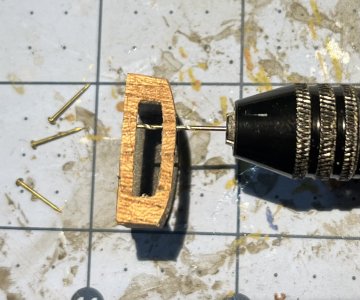
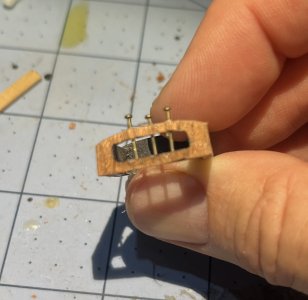
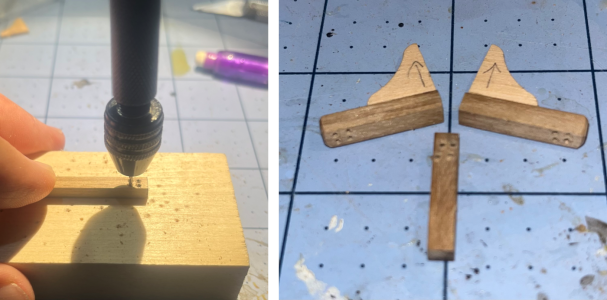
After arranging and gluing the boat's accessories, I drilled four holes for the eyebolts to tie down the lifeboat. On the third hole, my pin vise broke, so I used a Goxawee (Dremel) for drilling.
View attachment 562678
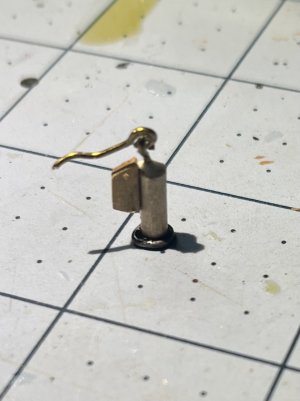
Lastly, I worked on the bilge pump.
View attachment 562679
View attachment 562680
That does it for section G; rigging begins next. Since I only have about a week left in Mexico, I will hold off on starting it. I will look through all my notes to see if there was anything else that I wanted to do that was outside of the instructions.
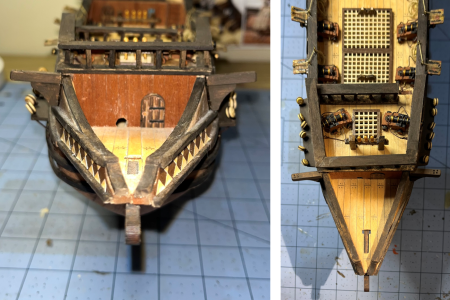
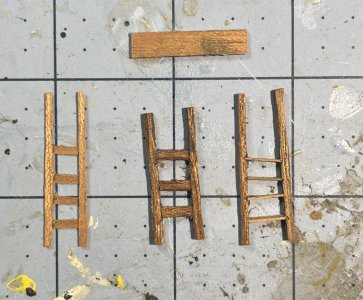
One of the things I have wanted to add for a while is a “plank.” Ok, I know they did not really exist, at least did not exist in mass, but I wanted one. So, after a little research about what they may have looked like, I had to find a place for it. The best place was on the starboard side of the main deck, between the front two cannons. The plank was the easy part, (three pieces of veneer glued together) but I needed a ladder of some sort that the victim would have to climb to get to the plank. I made three different ladders and did not like any of them. So, I am not sure if I will add it or not. Only time will tell.
View attachment 562681
The next thing I wanted to add was a pilot ladder on the hull. I decided on it being placed on the main deck on the port side, right by the stairs to the fo’c’sle or foredeck. So, a person would climb up the “ladder,” then step onto the channel, then climb up and onto the ship. They would then step onto the stairs to get to the deck. I have seen ropes that were either attached or thrown over when people were boarding. I will have to decide if I want them or not.
View attachment 562682
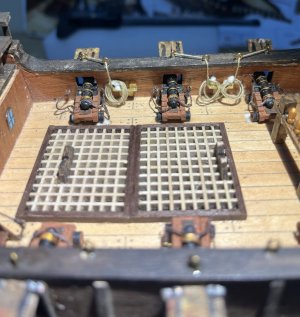
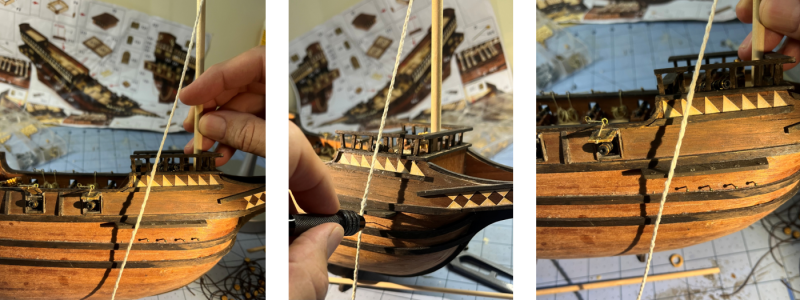
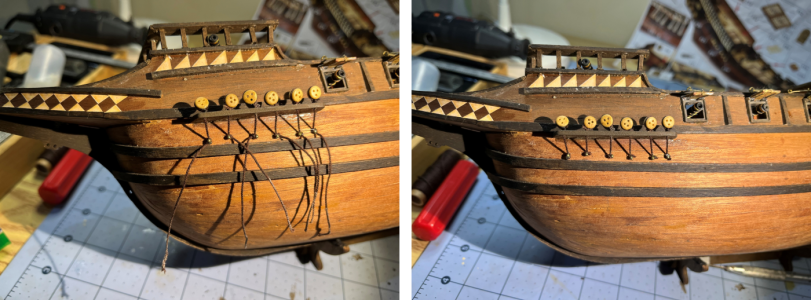
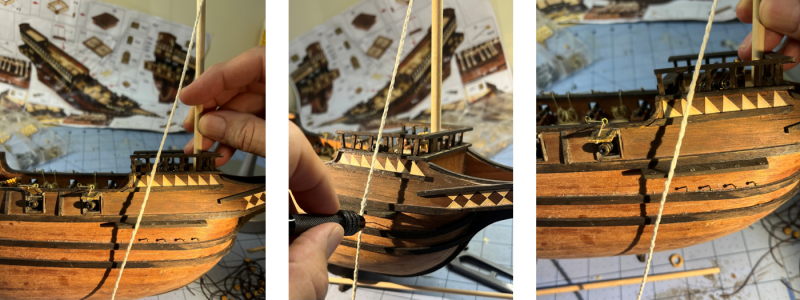
Next up are the eyebolts located at various locations around the ship; 2 on the quarter deck, 4 on the poop deck, and 4 on the bulwarks (2 per side).
View attachment 562683
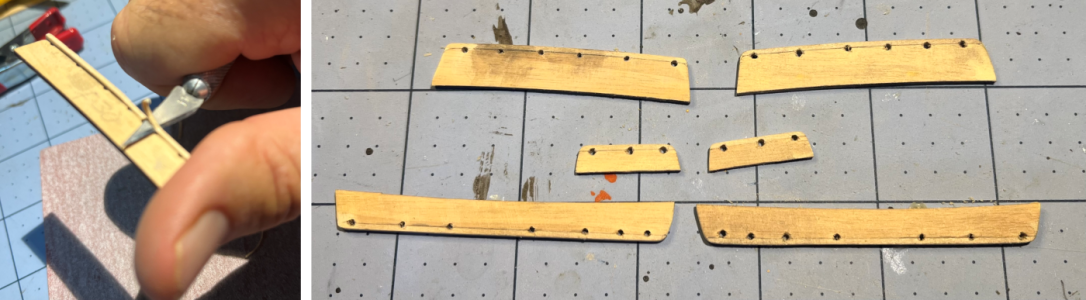
The biggest challenge with the eyebolts is that my pin vise is under the weather so drilling the 10 holes will take a little bit longer than they should.
The McGuyvered pin vise worked well enough to drill the 10 holes, and then I glued an eyebolt into each one.
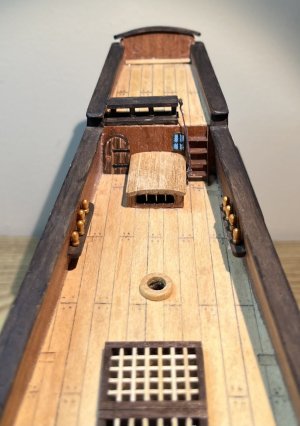
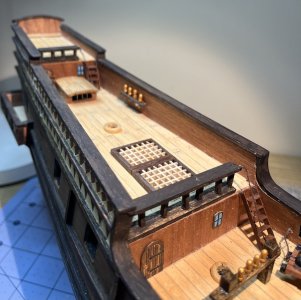
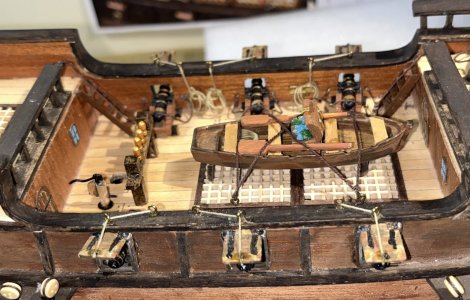
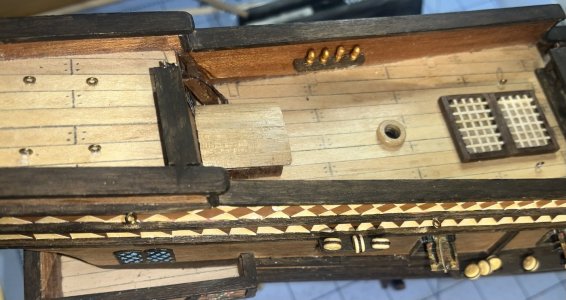
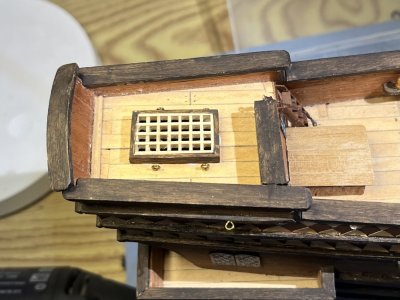
Last up of my list of “extras” is the “extra” grate up on the poop deck between the eyebolts. I saw this on Baltic Submariner’s build log on Model Shop World. I know on a real ship this would not be a suitable location for a hold, but this ship is not real so I can do whatever I feel like. And I like the look of it. Without it, the poop deck would be completely empty space.
I tried several of the leftover pieces of grate and found one that is 15mm x 25mm. I sand the edges and trim them off with some walnut lumber and put a coat of satin varnish on it. Before glueing down the grate, I paint the deck that will be covered by the grate black to give it some depth
View attachment 562684
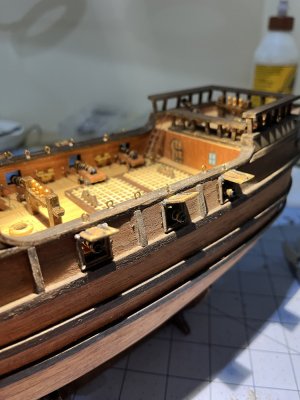
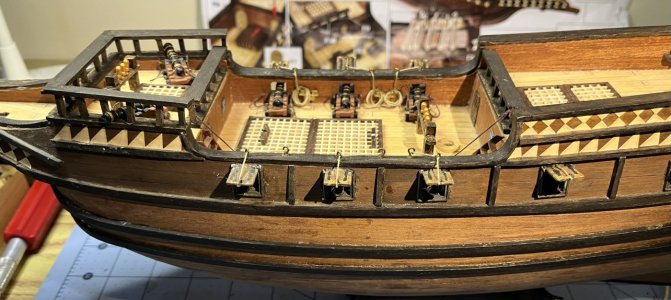
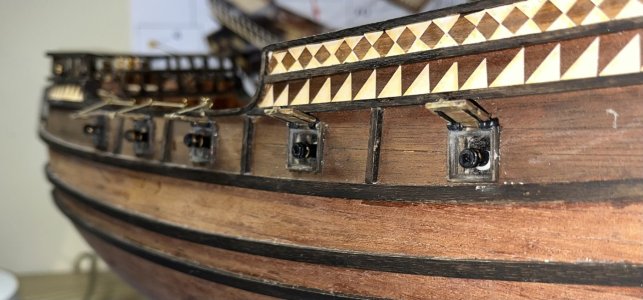
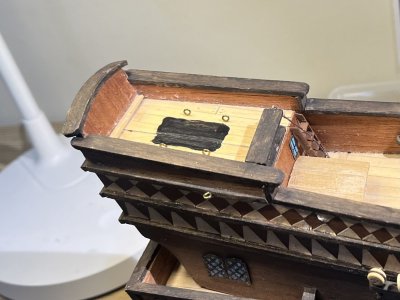
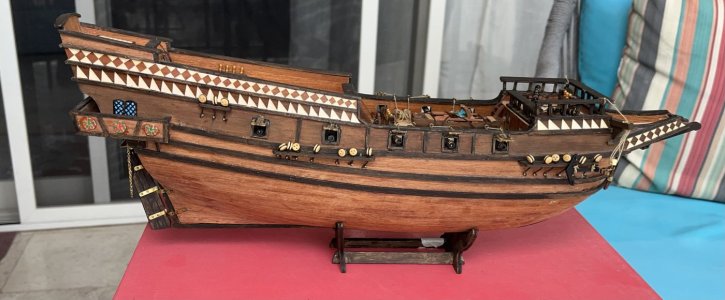
After it is glued in place, my work on the Molino is done for this trip, and she will shortly be put away in the closet.
View attachment 562685
View attachment 562686
View attachment 562687
Our next trip is at the end of February, so only about two and a half months, at that point, I will finally get to begin my first work ever on the masts and rigging.
Time for this portion: 15.5 hours
Total time to date: 243.0 hours
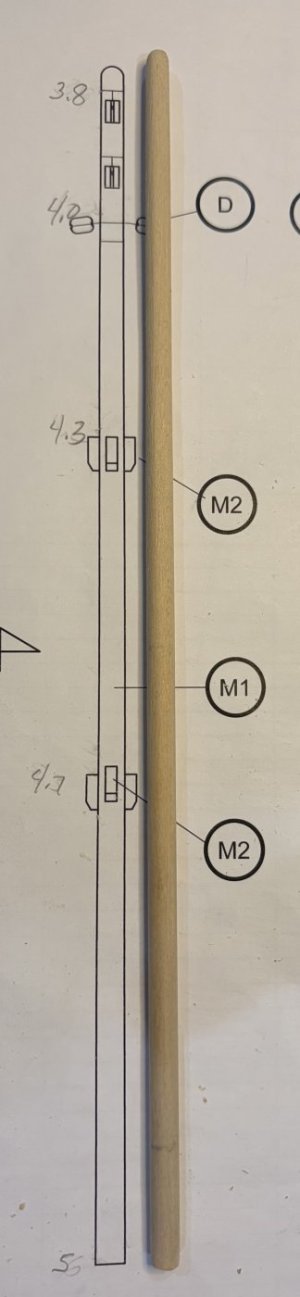
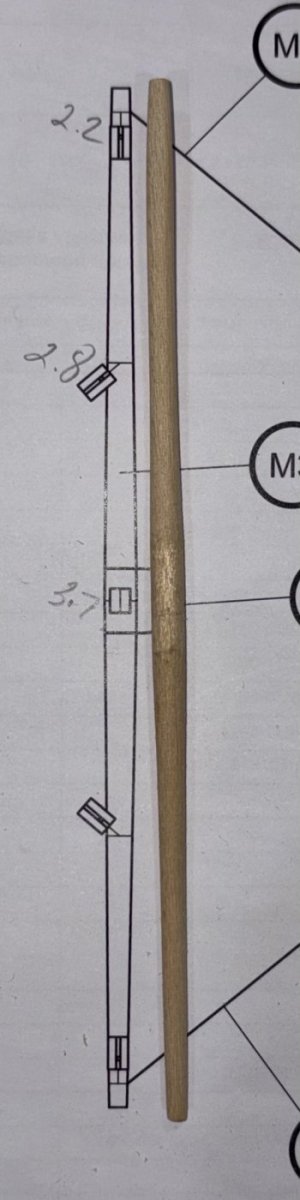
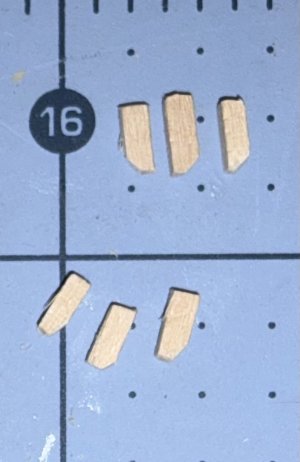
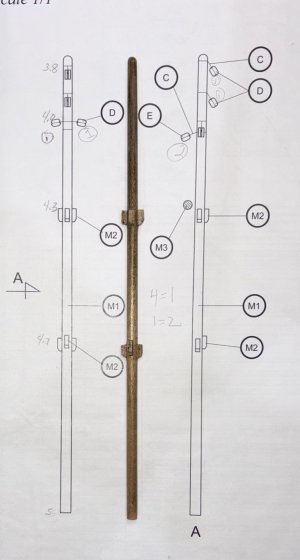
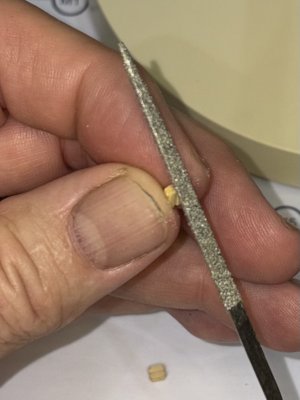
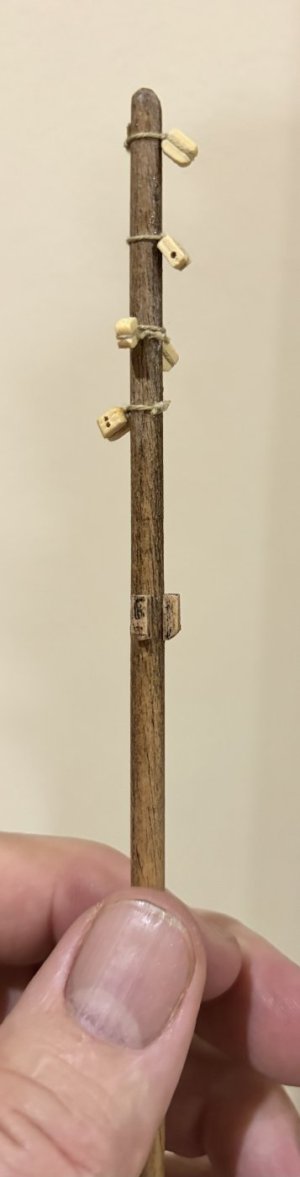
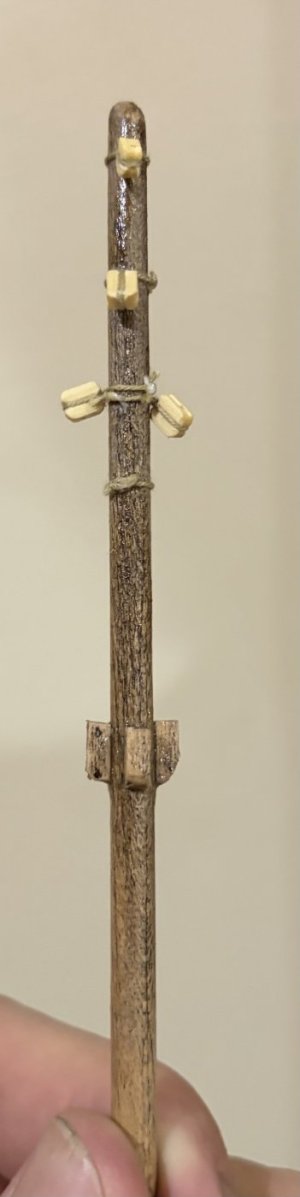
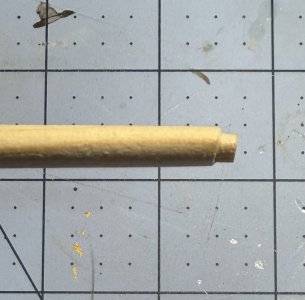
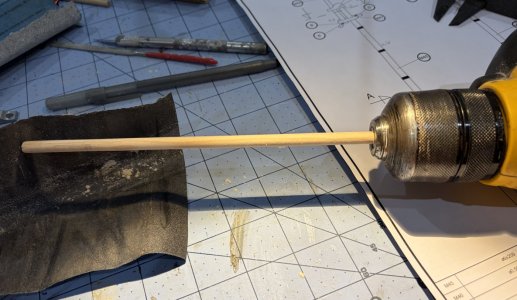
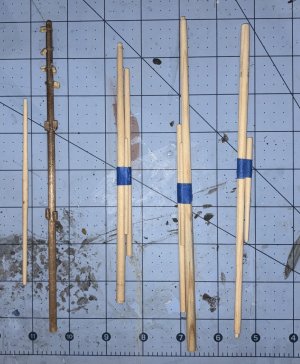
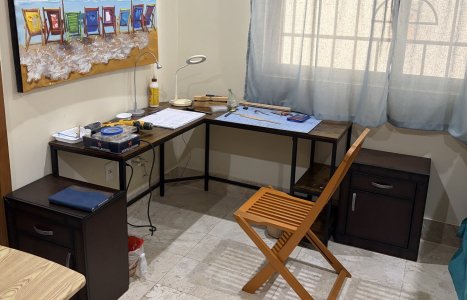
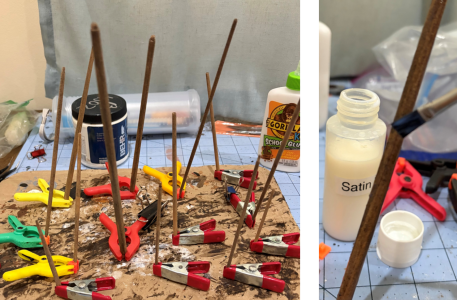
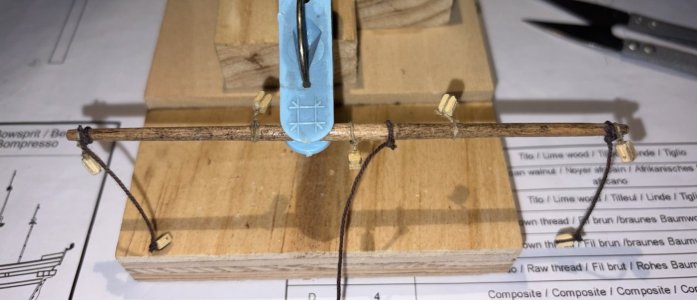
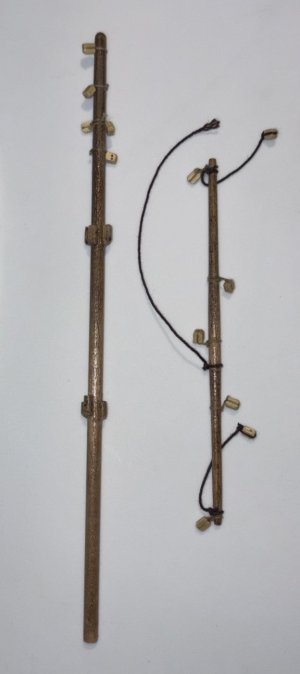
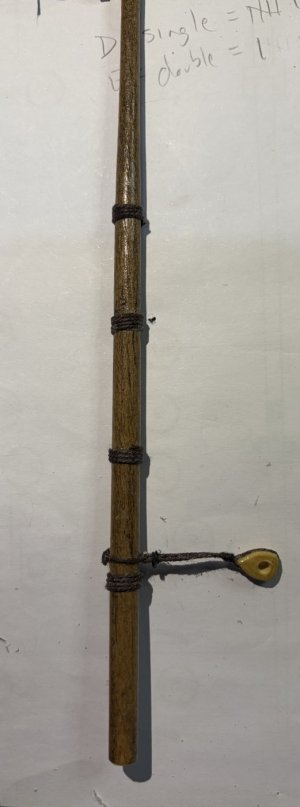
 , onto the yards.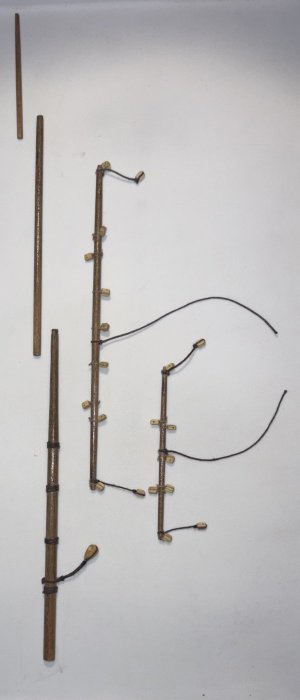
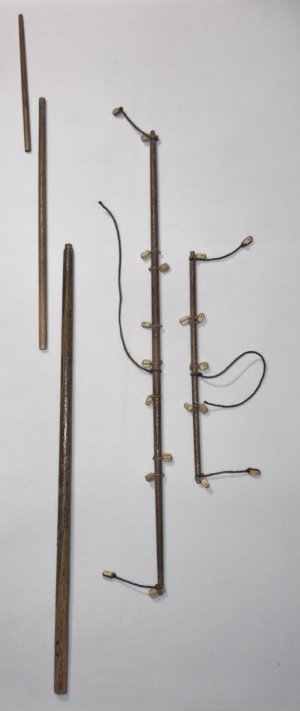
 , I have a plan.