

- Joined
- Sep 23, 2021
- Messages
- 381
- Points
- 238
Part 36: The Bumpkins
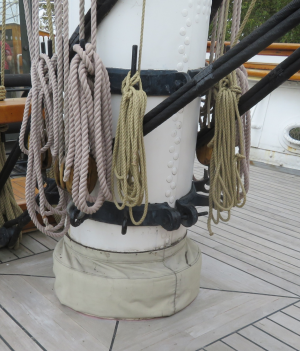
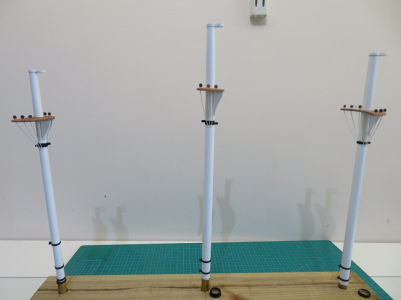
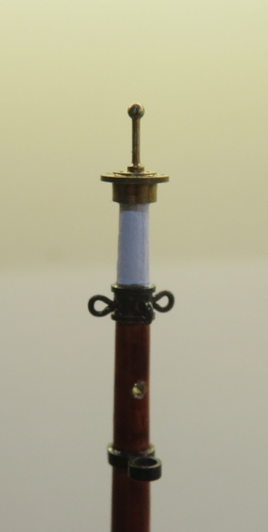
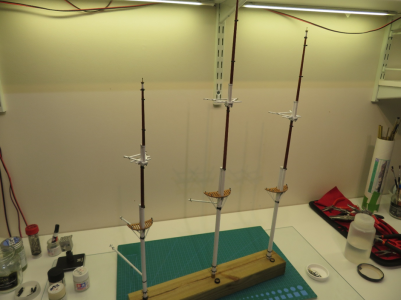
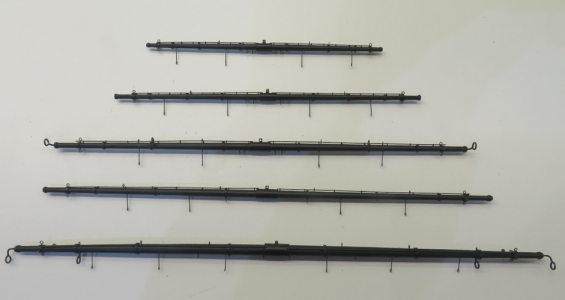
The masts and yards are a “work-in-progress” mainly because the space I use to do my spray painting is unheated and it’s been too cold to work in there! As soon as it warms up a little bit, I will finish painting and varnishing them and fit the iron works before I post an update.
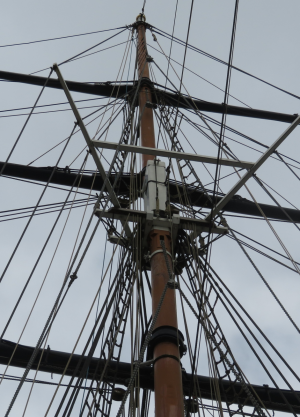
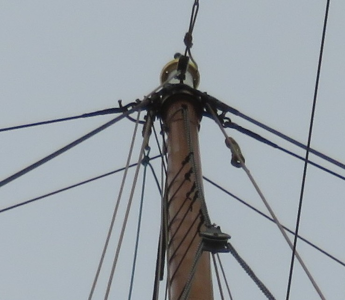
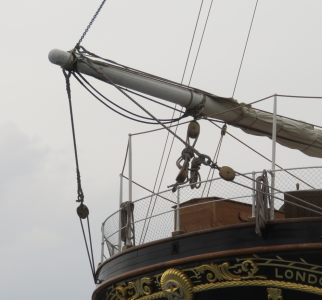
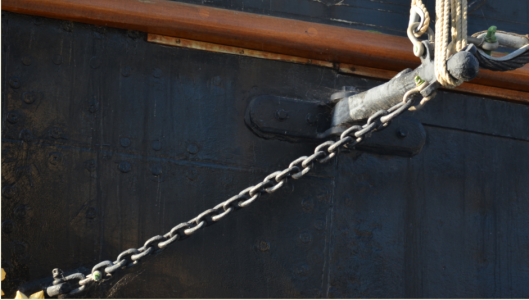
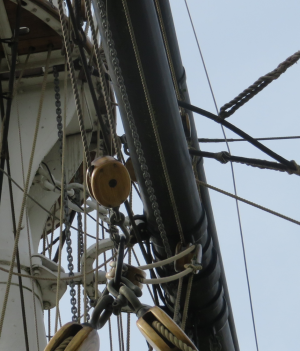
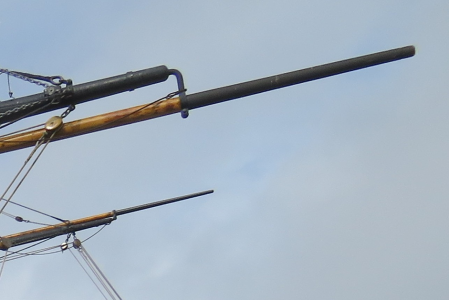
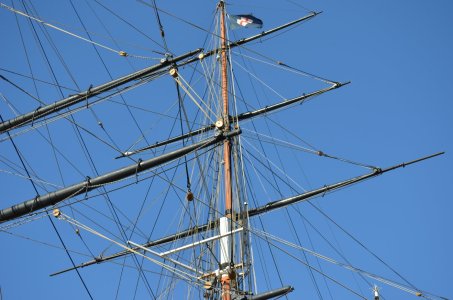
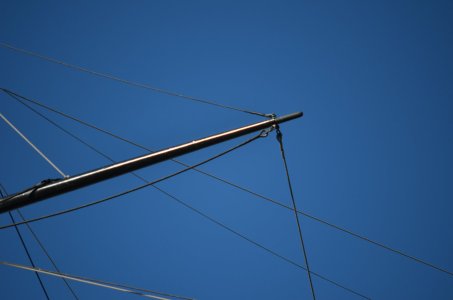
In the mean-time I have been working on some of the detail parts that I need to finish off the hull. One thing I was not decided on were the bumpkins. They are stout hinged rods that are used to secure the lower braces. There are two pairs, one set amid ships and one set on the rear quarter (see images for reference). A short chain guy attached to the hull takes some of the pull of the braces. They are hinged so that they can be folded against the hull when in harbour. The mid and rear bumpkins are not the same (Longridge says they are), the rear set being slightly longer and having more eyes. Kevin at KTL sent me some very nice, printed versions but, I decided that there was a 100% chance of me catching and snapping them or breaking the rings, so I decided to make some from brass using Kevin’s printed versions as a guide.
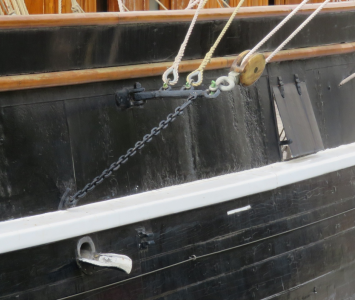
The mid-bumpkin
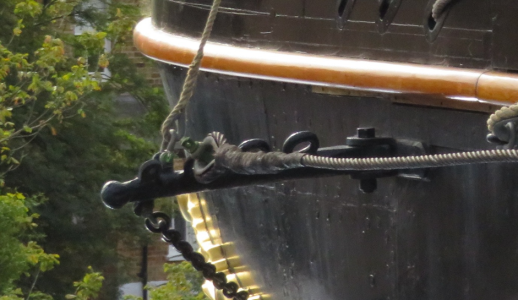
The rear quarter-bumpkin
The rings are roughly angled at 45° to be in line with the braces and guys so they are mirrored pairs port and starboard.
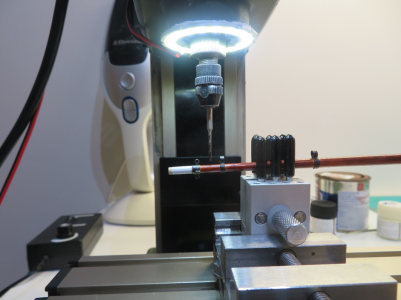
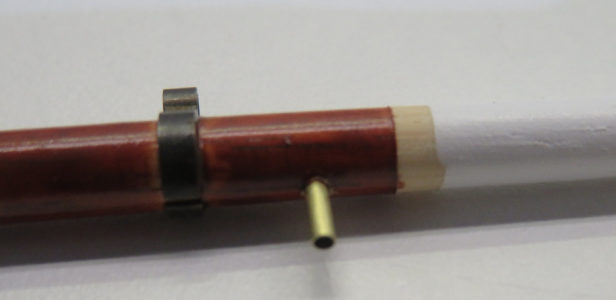
I used some 3mm x 3mm brass C channel for the bracket and 2mm brass rod for the bumpkin rods (the front bumpkin is 15mm long and the rear 16mm). I tried soldering a short rod to the back of the brackets for fixing them into the hull but had some trouble getting a strong enough joint so, I used a micro tap and die to create some threads and screwed the rod into the rear of the bracket, ran a small mill cutter down the channel to take off the protruding end and then locked it with some CA. I drilled out the holes for the hinge pins and eyes in the rod, cleaned and blackened everything up, fitted them together and gave them a coat of black paint. It was rather fiddly work, and several ended up in the bin but they came out OK in the end.
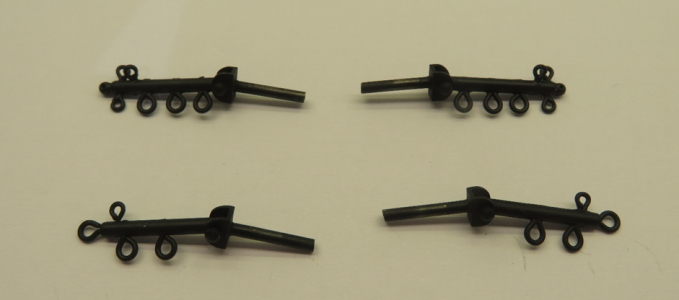
The completed bumpkins
Next up: Finish off the painting and iron work for the masts and yards.
The masts and yards are a “work-in-progress” mainly because the space I use to do my spray painting is unheated and it’s been too cold to work in there! As soon as it warms up a little bit, I will finish painting and varnishing them and fit the iron works before I post an update.
In the mean-time I have been working on some of the detail parts that I need to finish off the hull. One thing I was not decided on were the bumpkins. They are stout hinged rods that are used to secure the lower braces. There are two pairs, one set amid ships and one set on the rear quarter (see images for reference). A short chain guy attached to the hull takes some of the pull of the braces. They are hinged so that they can be folded against the hull when in harbour. The mid and rear bumpkins are not the same (Longridge says they are), the rear set being slightly longer and having more eyes. Kevin at KTL sent me some very nice, printed versions but, I decided that there was a 100% chance of me catching and snapping them or breaking the rings, so I decided to make some from brass using Kevin’s printed versions as a guide.
The mid-bumpkin
The rear quarter-bumpkin
The rings are roughly angled at 45° to be in line with the braces and guys so they are mirrored pairs port and starboard.
I used some 3mm x 3mm brass C channel for the bracket and 2mm brass rod for the bumpkin rods (the front bumpkin is 15mm long and the rear 16mm). I tried soldering a short rod to the back of the brackets for fixing them into the hull but had some trouble getting a strong enough joint so, I used a micro tap and die to create some threads and screwed the rod into the rear of the bracket, ran a small mill cutter down the channel to take off the protruding end and then locked it with some CA. I drilled out the holes for the hinge pins and eyes in the rod, cleaned and blackened everything up, fitted them together and gave them a coat of black paint. It was rather fiddly work, and several ended up in the bin but they came out OK in the end.
The completed bumpkins
Next up: Finish off the painting and iron work for the masts and yards.