
-

SUBSCRIBE TO SHIPS IN SCALE TODAY!
The beloved Ships in Scale Magazine is back and charting a new course for 2026!
Discover new skills, new techniques, and new inspirations in every issue.
NOTE THAT OUR NEXT ISSUE WILL BE July/August 2026 -

Win a Free Custom Engraved Brass Coin!!!
As a way to introduce our brass coins to the community, we will raffle off a free coin during the month of August. Follow link ABOVE for instructions for entering.


You are using an out of date browser. It may not display this or other websites correctly.
You should upgrade or use an alternative browser.
You should upgrade or use an alternative browser.
HMS AGAMEMNON 1781 from scratch - scale 1/75
- Thread starter William1961
- Start date
- Watchers 25


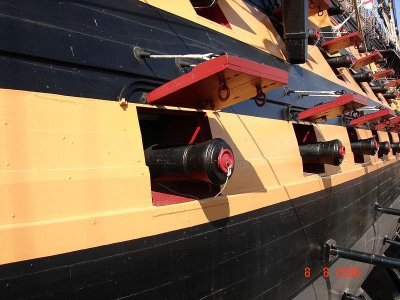
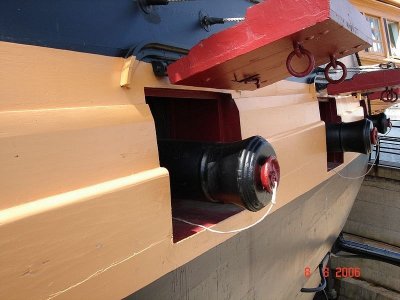
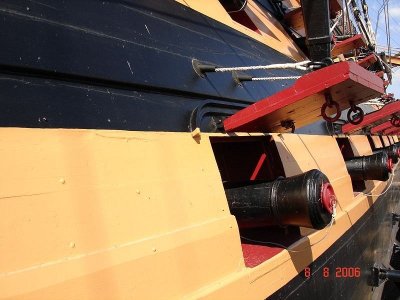
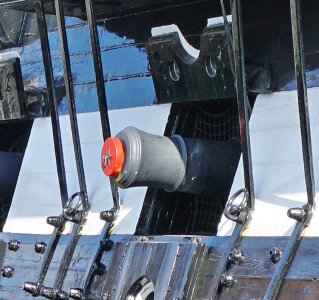
Gun ports on starboard are completed.
Now : the anchors are installation on model
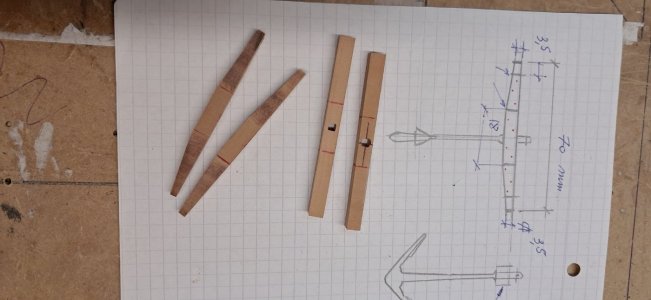
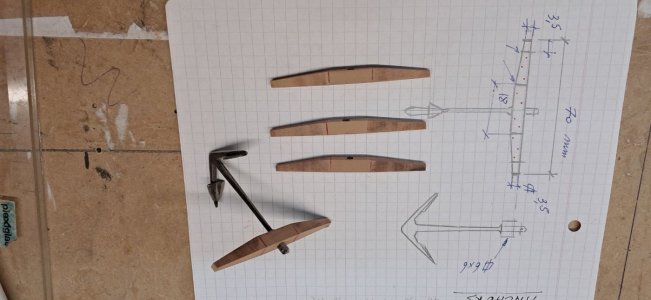
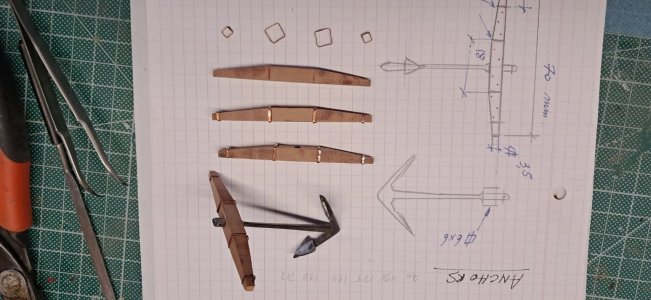
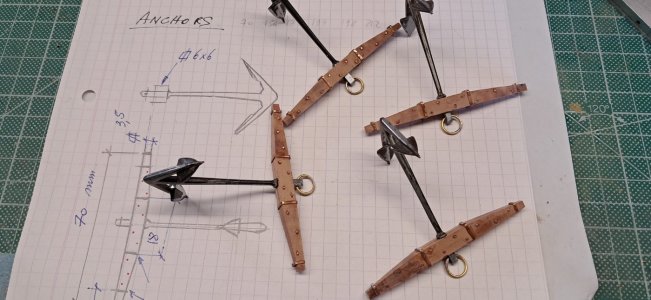
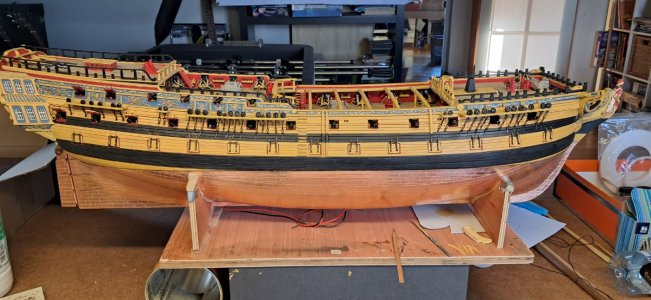
Now : the anchors are installation on model
Bow is now completed.
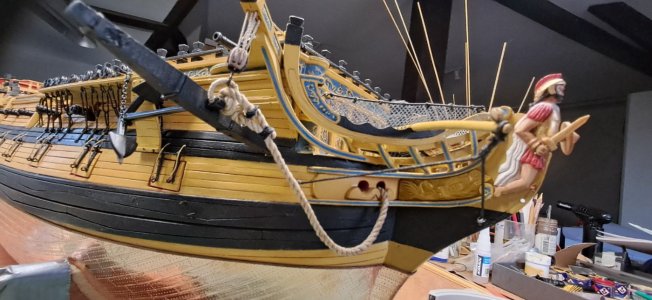
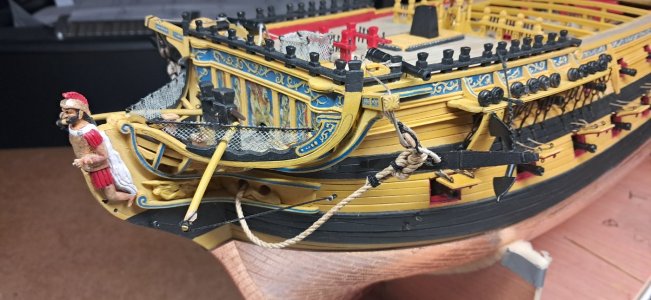


Very solid looking build. I can easily imagine this vessel crashing down and tearing it's way through the waves. Nice.
Beautiful work!! Hard to believe the scale is 1:75, as your work is so precise and colorful.
Thanks for sharing and I will continue to watch till you call it complete.
Thanks for sharing and I will continue to watch till you call it complete.

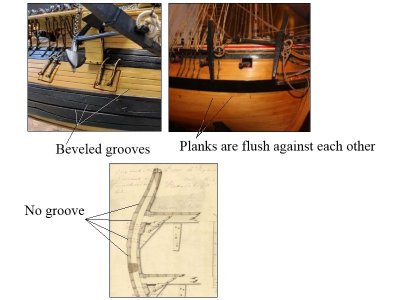
The model is a beauty! Can you or another member explain the purpose of what appears to be a beveled groove between each strake of hull planking? I have seen this a couple times on modern day builds in the past and have wondered why this was done, but no one could explain the purpose. I thought maybe it was so they could be caulked before being painted, but after scaling the photo the bevel is 2 inches wide which seems excessive. I could find no mention of this in any contracts, including the one written in 1782 for the 64 gun ship Nassau. Thanks for any input.
Allan
Comparison of the picture above, a contemporary model, and contemporary drawing.
Allan
Comparison of the picture above, a contemporary model, and contemporary drawing.
I placed a slight bevel (not nearly as deep as the photo you show above) on my Bonhomme Richard cross section. This was done in lieu of any caulking on both the planking and decking. In 1st photo below, the left are slightly rounded and the right square, for comparison.
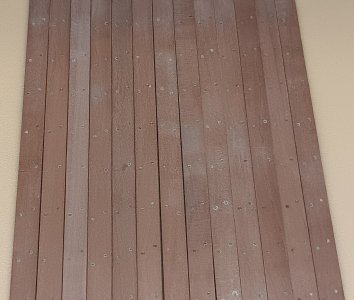
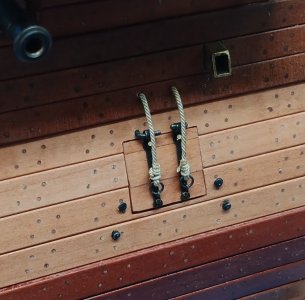
I like the visual effect.
PS. if you watch the video of the USS Constitution at this link and look carefully at the planking and decking, you will see the same visual effect.
Constitution video
I like the visual effect.
PS. if you watch the video of the USS Constitution at this link and look carefully at the planking and decking, you will see the same visual effect.
Constitution video
Last edited:
Thank you Allan for the comments,
I don't have a technical explanation to your question.
The planking do touch each other, but I just rounded the edges off a little so that the planking work can be appreciated after painting. The beveled groove is about the thickness of a sheet of paper. Sometimes more, sometimes less. Planking width is between 3,3 and 4 mm (the model is on scale 1/75)
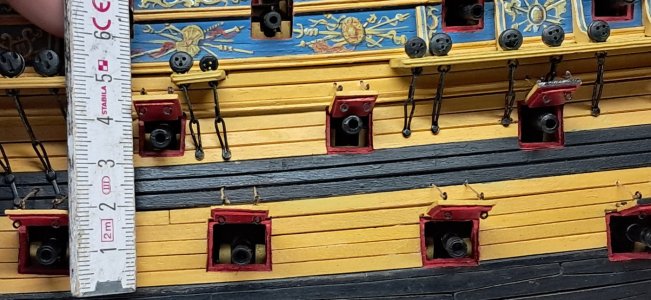
I don't have a technical explanation to your question.
The planking do touch each other, but I just rounded the edges off a little so that the planking work can be appreciated after painting. The beveled groove is about the thickness of a sheet of paper. Sometimes more, sometimes less. Planking width is between 3,3 and 4 mm (the model is on scale 1/75)

- Joined
- Apr 12, 2025
- Messages
- 305
- Points
- 158

If you consider the actual size of the bevels used for caulking, .250"-.375"... maybe even .500" (a stretch) on full scale vessels... the above displayed bevels would represent something quite large and way out of scale! I prefer to fit 'my' planks tightly together and glue them using 'dark' Titebond II. That stuff dries really dark and simulates caulked seams very well. If you divide the actual width of a real-world caulking seam by the scale of your model... you'll quickly see why lots of folks simply use a pencil to darken the edges of their tight-fitting planks prior to gluing them onto the hull. No bevels! Even a small bevel makes the caulking seem way too big! I don't like pencil, myself. It's just too 'black' and unnatural looking. Dark Titebond II looks much, much better to 'my' eye.
Last edited:
Thanks for the tip! Something to try. I've added a dot of brown acrylic to PVA to get this effect, but having glue that is always the same color would keep things consistent.'dark' Titebond II. That stuff dries really dark and simulates caulked seams very well.
Allan
The seams between the planks were carefully caulked. In other words, everything was done exactly the same as on the deck. But, unlike the deck, the sides were meticulously painted, along with oakum stuffed into the seams. In other words, they painted not only the planks but also the stuffing between them. Right over the oakum.
Therefore, on real ships, the seams on the sides would have been completely invisible.
Only if you get very close can you notice that what we are seeing is not the seams between the boards, but rather the protruding tow used to seal the seam.
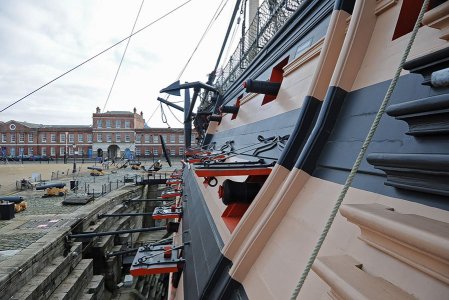
Therefore, on real ships, the seams on the sides would have been completely invisible.
Only if you get very close can you notice that what we are seeing is not the seams between the boards, but rather the protruding tow used to seal the seam.
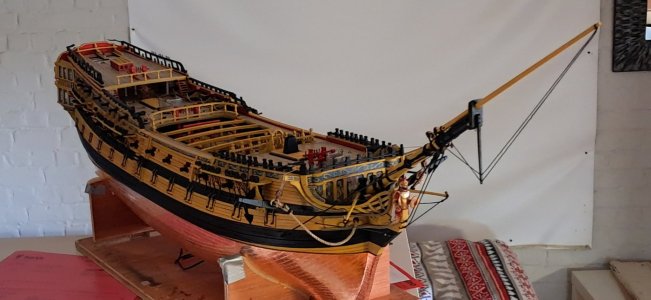
Hull is completed for more than 95 %, it's time to go slowly to the masting work


- Joined
- Dec 5, 2022
- Messages
- 1,159
- Points
- 443

Hey William,Hull is completed for more than 95 %, it's time to go slowly to the masting work
View attachment 563037
That looks really nice! Well done.


Hi Allan,Hi William,
How are you sizing the lengths, shapes and diameters of the various masts and yards?
Thanks
Allan
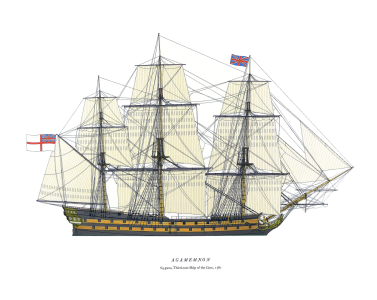
My main source of documentation is James Lee's book.. "masting and rigging...." and I compare the informations with the drawing below.
I also have de masting plan from Cadlercraft.
I compile all the information collected and choose what seems most rational to me. For some missing details I find in "The
Anatomy of Nelson's Ship"
For the ropes size, I found an Excel file from Radimir Beseda that seems well done.
Hopefully I'm on the right way ... Don't hesitate to help me if that's not the case

Last edited:
In the words of the Grail Knight in Indiana Jones and the Last Crusade, You have chosen ..... wisely!!! Best rigging book for English ships of war in the age of sail ever written.My main source of documentation is James Lee's book.. "masting and rigging...
Allan

The size tables of the mast, rigging, blocks, from David Steele. True in Russian.
 www.goldenhind.ru
Обобщенный обзор размеров наиболее распространенных кораблей всех классов в британском флоте. 1781
Обобщенный обзор размеров наиболее распространенных кораблей всех классов в британском флоте Дэвида Стиила. 1781 год
To all
Does anyone knows how / where I can find lines plans for the construction of the ship boats ? pinnace, cutter, launch ..
Many thanks
William
Does anyone knows how / where I can find lines plans for the construction of the ship boats ? pinnace, cutter, launch ..
Many thanks
William