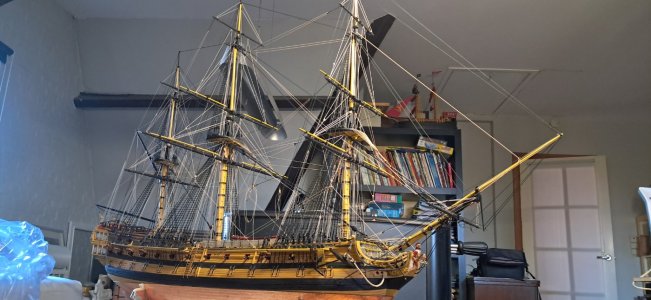
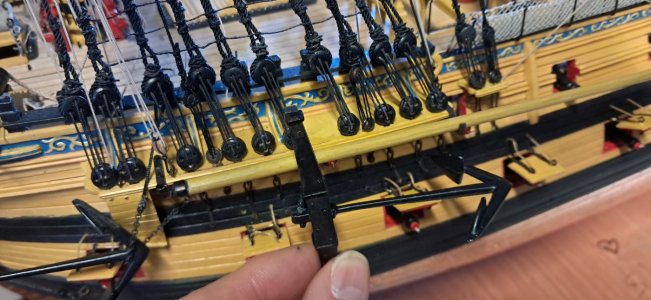
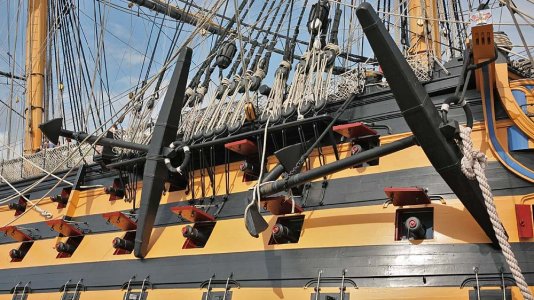
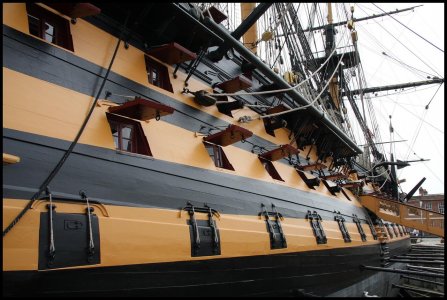
In all cases, yes. The point is that hammocks laid in nets were intended to protect against enemy fire. The hammocks provided excellent protection from rifle and pistol bullets, and also prevented the enemy from aiming. Hammock nets were always installed on the forecastle and quarterdeck to protect the gun crews. Nets were also installed on the poop-deck to protect officers. In addition, nets were always placed on the waist to protect people moving along the bridges.
In old paintings, you can always tell a merchant ship from a warship. The warship has hammock nets.
What was the advantage of hammock nets? They allowed for a lower bulwark, thereby reducing parasitic windage. The parasitic windage of high bulwarks impaired the seaworthiness of ships. In fact, hammock nets filled with hammocks were only most effective during combat. In normal times, the hammocks were removed from the nets, and the ship's bulwarks seemed to decrease in height, making the ship more resistant to the wind.
That's why nets were nets—to let the wind pass through them. Until the mid-18th century, painted cloth (usually red with a white stripe) was used instead of nets. The cloth was removed when a crosswind struck. But then they started to put up nets because it was easier and there was no need to constantly remove the fabric.
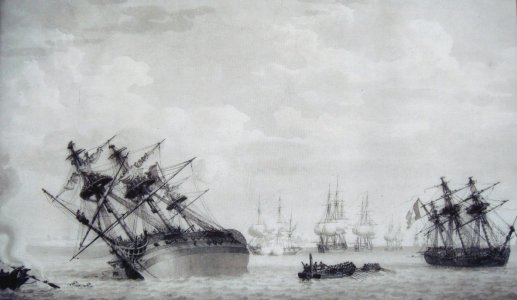
View attachment 591419









 thanks.