

- Joined
- Mar 1, 2022
- Messages
- 835
- Points
- 353

Scary operation... I don't even want to think what if you messed it up. Happy to know all went right!

 |
The beloved Ships in Scale Magazine is back and charting a new course for 2026! Discover new skills, new techniques, and new inspirations in every issue. NOTE THAT OUR NEXT ISSUE WILL BE July/August 2026 |
|
 |
As a way to introduce our brass coins to the community, we will raffle off a free coin during the month of August. Follow link ABOVE for instructions for entering. |
|





 www.boekwinkeltjes.nl
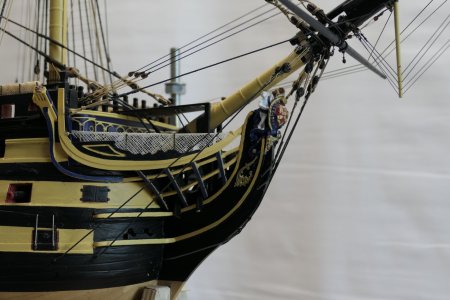
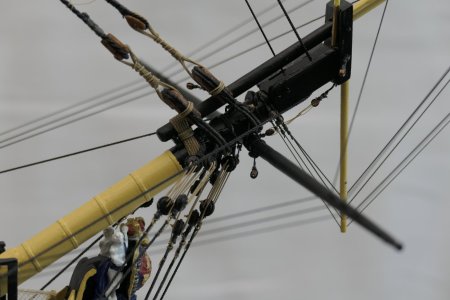
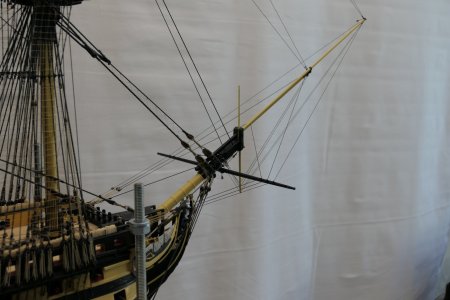
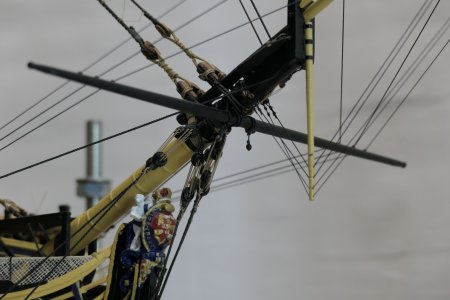
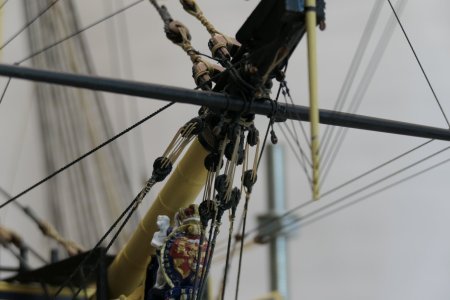
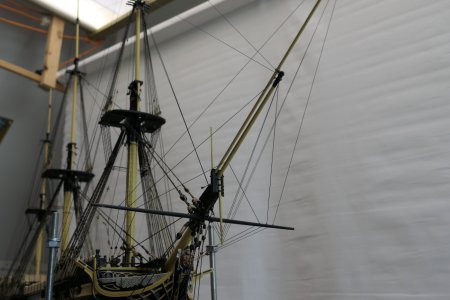

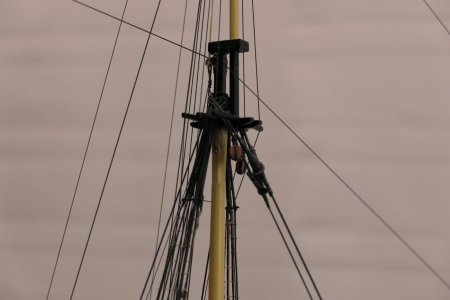
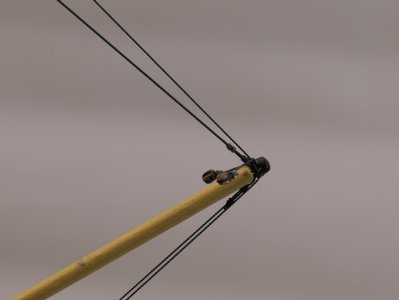
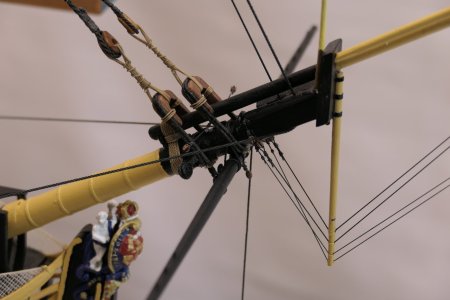
A very nice and impressive rigged bowsprit, Wil.49. The bowsprit
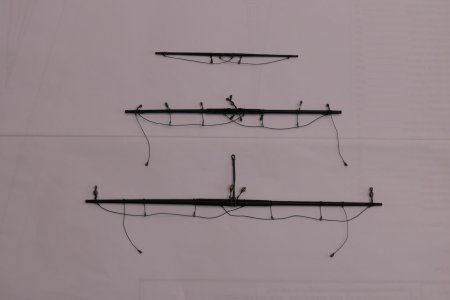
After the yards on all three masts and some blocks and lines of the running rigging, this week I focused on the rigging of the bowsprit.
This mainly involves a number of lines that hold the bowsprit in place at the bottom, namely:
These lines run from the bowsprit to a hole in the hull and go inside there. I solved this as follows:
- The bowsprit shrouds
- The bobstays
This holds firm and solid.
- Stiffened a couple of cm of the line with superglue
- Drilled a small hole in the hull
- Then glued the hardened line into the hole with superglue
View attachment 614743
Around the head of the bowsprit, just below the bees, it then becomes a tangle of all kinds of lines. We see, among other things:
Quite a busy spot, in other words.
- The gammoning of the jibboom
- The forestay and the fore preventer stay
- The sling of the spritsail yard
- Below that, 4 sets of deadeyes with lanyards for the bowsprit shrouds
- And between them, 3 sets of deadeyes with lanyards for the bobstays
View attachment 614744
Next came the question: what do I do with the spritsail yard?
I went with the latter, because after a trial placement of the yard it turned out there's no obstruction whatsoever to adding the sail later.
- Fully rig it first, including the sail?
- Or hang the bare yard and rig it later in the model?
An extra reason for this was that the spritsail yard has the guiding eyes for the guys. From inside to outside, these are:
Each of these lines is attached via a tackle with a single and a double block to the forward barricade. The guys aren't fixed to the yard but can slide through the eyes. This means the sail can always be turned somewhat, depending on the wind direction. I think this was probably the intent in practice as well.
- The traveling guy
- The guy pendant
- The flying jibboom guy
At the bottom of the jibboom and the flying jibboom, you can see the lines that, via the dolphin striker, must counterbalance the pulling forces of the jibstay, the jib halyard, the fore topgallant mast stay, and the fore topgallant flagstaff stay. These lines were already added at an earlier stage.
View attachment 614746
After adding a few more loose blocks here and there, this part of the ship was finished. I have to say it was a nice piece of varied detail work that, once again, gives a real sense of spatial depth to the bow of the ship.
Below are a few more atmospheric shots.
View attachment 614747
View attachment 614748
View attachment 614749

Magic Will.49. The bowsprit
After the yards on all three masts and some blocks and lines of the running rigging, this week I focused on the rigging of the bowsprit.
This mainly involves a number of lines that hold the bowsprit in place at the bottom, namely:
These lines run from the bowsprit to a hole in the hull and go inside there. I solved this as follows:
- The bowsprit shrouds
- The bobstays
This holds firm and solid.
- Stiffened a couple of cm of the line with superglue
- Drilled a small hole in the hull
- Then glued the hardened line into the hole with superglue
View attachment 614743
Around the head of the bowsprit, just below the bees, it then becomes a tangle of all kinds of lines. We see, among other things:
Quite a busy spot, in other words.
- The gammoning of the jibboom
- The forestay and the fore preventer stay
- The sling of the spritsail yard
- Below that, 4 sets of deadeyes with lanyards for the bowsprit shrouds
- And between them, 3 sets of deadeyes with lanyards for the bobstays
View attachment 614744
Next came the question: what do I do with the spritsail yard?
I went with the latter, because after a trial placement of the yard it turned out there's no obstruction whatsoever to adding the sail later.
- Fully rig it first, including the sail?
- Or hang the bare yard and rig it later in the model?
An extra reason for this was that the spritsail yard has the guiding eyes for the guys. From inside to outside, these are:
Each of these lines is attached via a tackle with a single and a double block to the forward barricade. The guys aren't fixed to the yard but can slide through the eyes. This means the sail can always be turned somewhat, depending on the wind direction. I think this was probably the intent in practice as well.
- The traveling guy
- The guy pendant
- The flying jibboom guy
At the bottom of the jibboom and the flying jibboom, you can see the lines that, via the dolphin striker, must counterbalance the pulling forces of the jibstay, the jib halyard, the fore topgallant mast stay, and the fore topgallant flagstaff stay. These lines were already added at an earlier stage.
View attachment 614746
After adding a few more loose blocks here and there, this part of the ship was finished. I have to say it was a nice piece of varied detail work that, once again, gives a real sense of spatial depth to the bow of the ship.
Below are a few more atmospheric shots.
View attachment 614747
View attachment 614748
View attachment 614749
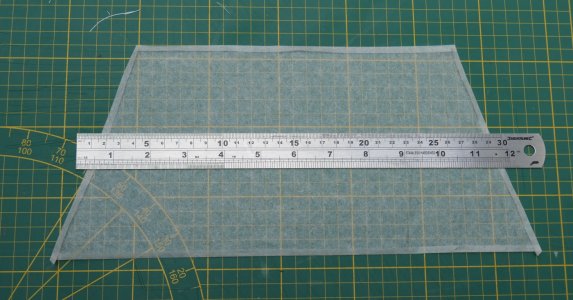
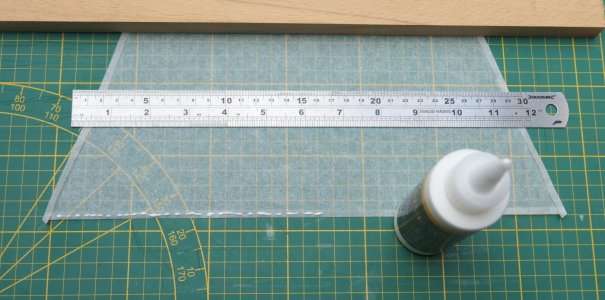
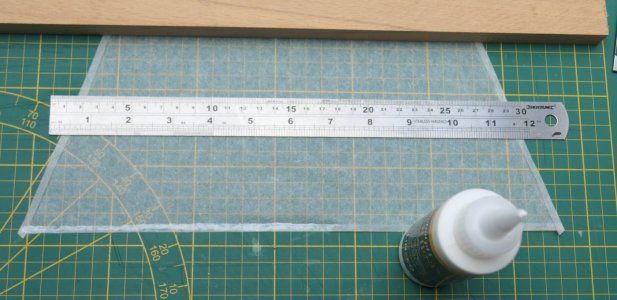
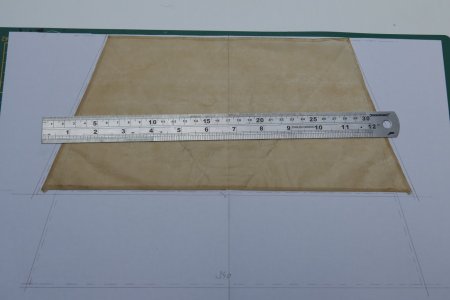
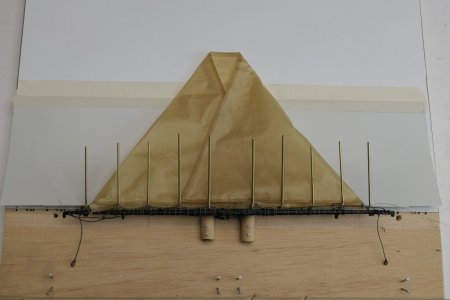
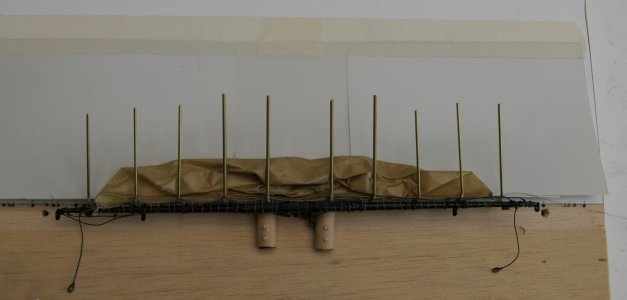
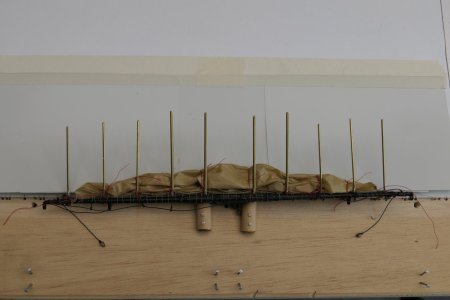
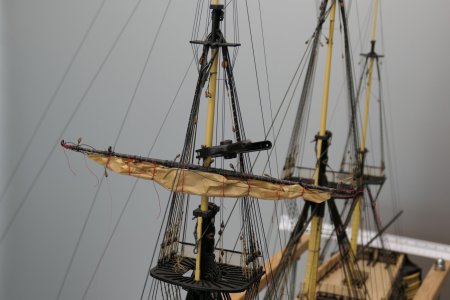
That indeed looks like a successful test, Wil. Especially on this scale. That board with the ‘fingers’ is a clever solution.50 The Sails
Over the past few weeks I've mainly been busy with the sails on my Victory. The idea for now remains to have the sails furled on the three masts and the bowsprit. How I'm going to do the mizzen sail, I haven't quite figured out yet, but that will come later.
Some time ago I received the necessary tips about the material to use and how things could be executed. A few weeks ago, following up on this, I visited Peter Voogt to admire the sails on his Blue Nose. Truly beautiful.
The conclusion was that for now I'll start working with paper. Fabric seems to me to quickly become too thick at this scale. On the Papier Royaal website I found the Japanese paper mentioned earlier. The choice there is huge, so there was nothing for it but to order several different sheets.
I started with Tengusho 9 grams. Peter used this paper on his Blue Nose, and it's also recommended by Stephan. After it arrived, I was shocked at how fragile this material is.
I've now ordered a second batch, consisting of: Kozo High 22 grams, Yama Kozo Hadaura S-1 and S-3. The latter two are 16 grams and are colored.
My idea is to first gain some experience with these materials and, depending on the end result, make a choice.
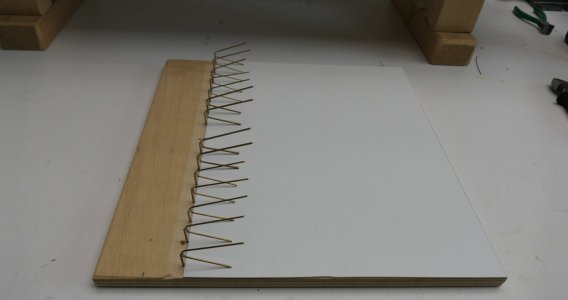
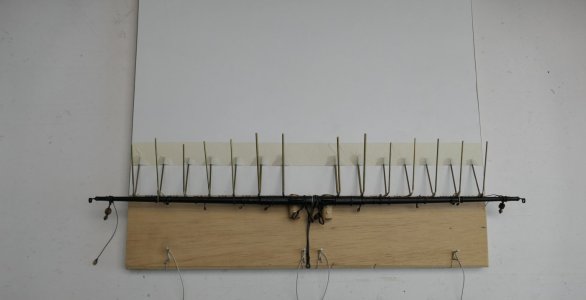
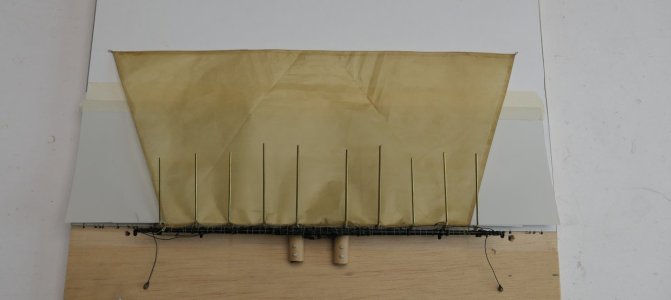
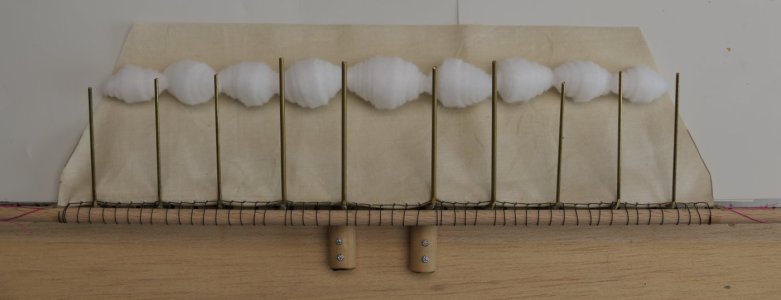
After my visit to Peter, I quickly had some ideas about the technique in my head. It comes down to this: I mount the yard in the lower fixture and pleat the cloth between the "fingers." Then, at regular intervals (next to the fingers), I can tie the bundle together, creating the characteristic bunt.
View attachment 620073
View attachment 620074
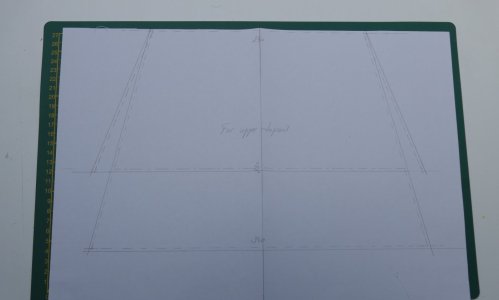
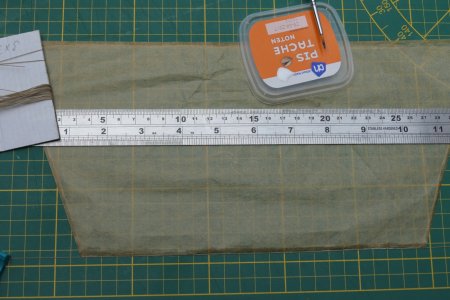
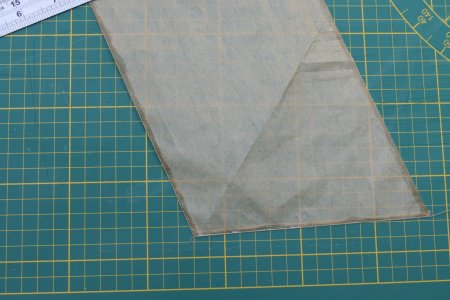
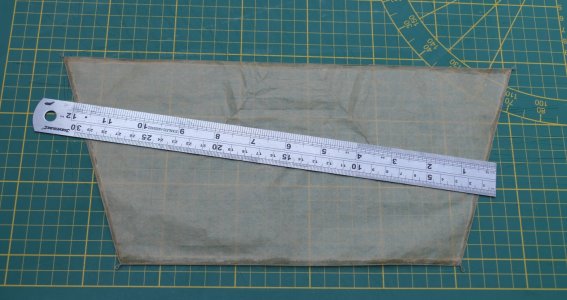
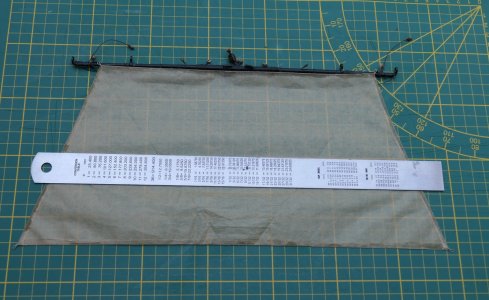
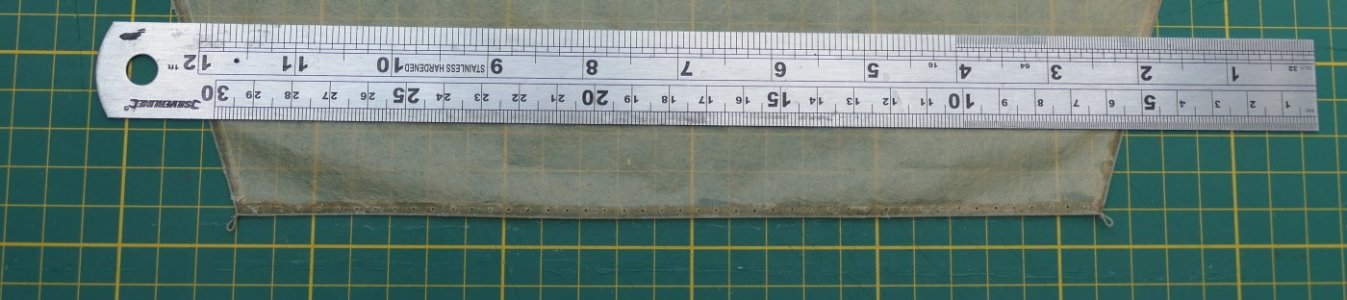
Meanwhile, I had started a search for the sail dimensions. That wasn't easy, but Claude.ai only partly provided the solution here. Longridge doesn't write anything about it either. But since the sails will be furled anyway, the height measurement in particular isn't that important. Eventually I managed to generate a complete cutting plan in which I can vary the height.
View attachment 620075
Initially I tried coating the hem of the sail with glue first and then folding it. This wasn't successful because the paper becomes soft and does all sorts of things you don't want. The solution is to fold the hem dry, which works very well, and then coat it with glue using a brush. The glue I use is Lineco Neutral pH.
View attachment 620076
View attachment 620077
View attachment 620078
Once that's done, carefully pick it up and hang it on a line with a couple of clothespins. This first test I did with the thinnest paper, 9 grams/m².
Next I did a test with Yama Kozo Hadaura S-3. Here too, the hem was folded first and then coated with glue afterward. The glue soaks through the hem and reaches the bottom layer as well.
View attachment 620079
Once the hem had dried somewhat, I immediately made a first attempt at applying the boltrope, the rope attached around the edges of the sail. In reality this rope is sewn to the sail, with the sewing thread passed through the middle of the rope. Aside from this painstaking work, almost nothing of this detail can be seen at this scale. So in my case I glued the rope against the edge of the sail. I left a loop at the corners for the clews. I applied the glue with a small brush. That actually went fine.
View attachment 620080
View attachment 620081
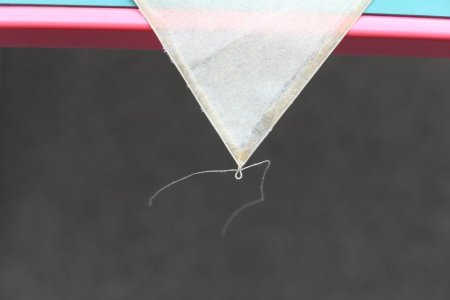
I finished off the clews with a small whipping, sealed with a small drop of superglue. Then I finally got the yard out.
View attachment 620082
View attachment 620083
View attachment 620084
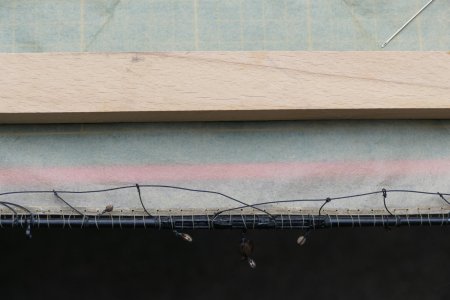
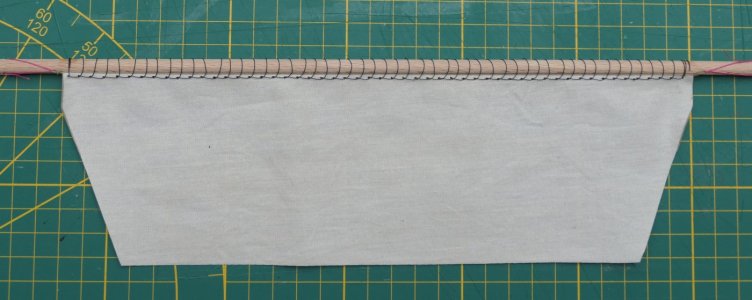
To be able to bend the sail to the yard, I drilled a 1 mm hole every 5 mm in the hem and then threaded a thread through these holes with a needle and around the yard. The way it's laced isn't quite proper, but it's sufficient for now. It is, after all, just a test.
View attachment 620085
View attachment 620086
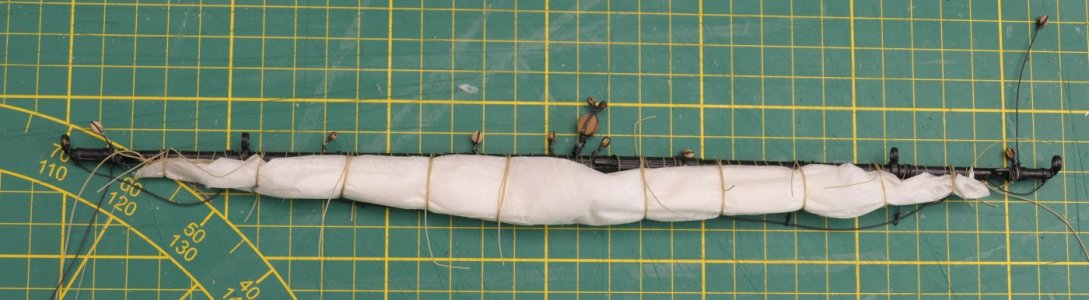
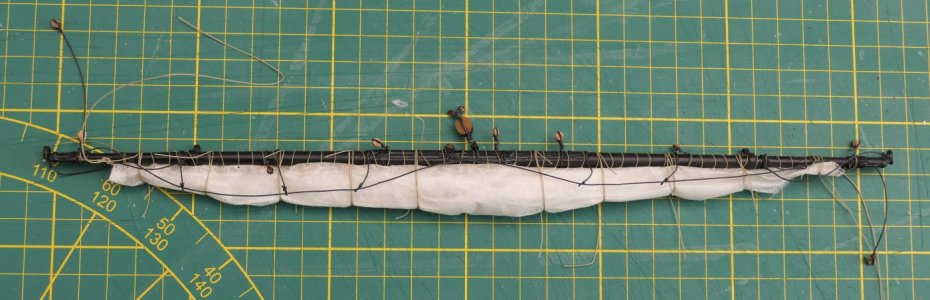
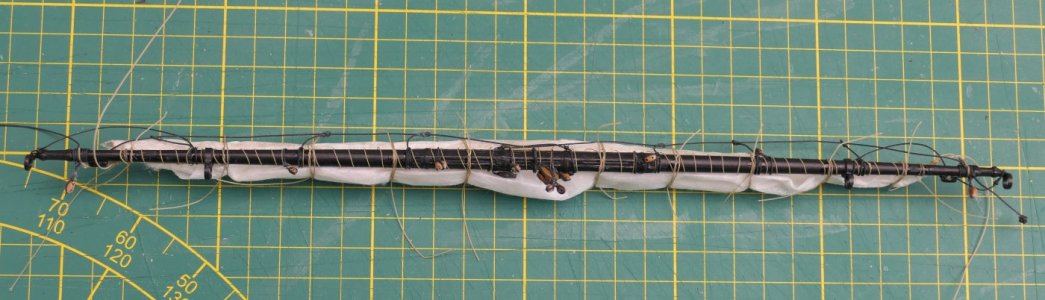
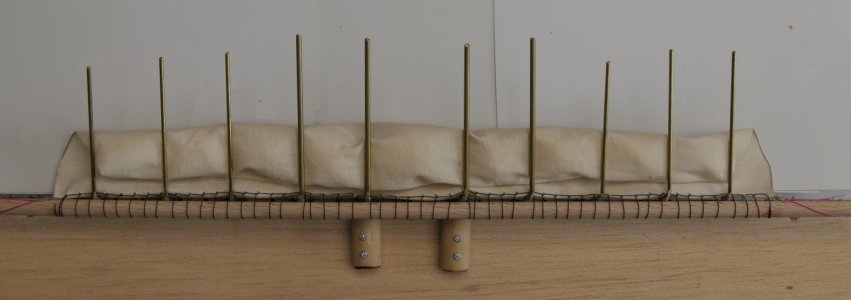
Next I placed the yard with the sail in the fixture with the fingers, folded the bottom corners inward, and crumpled the sail up a bit.
View attachment 620087
View attachment 620088
View attachment 620089
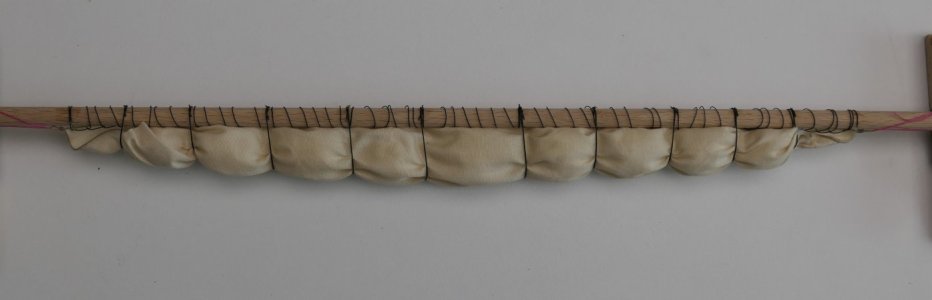
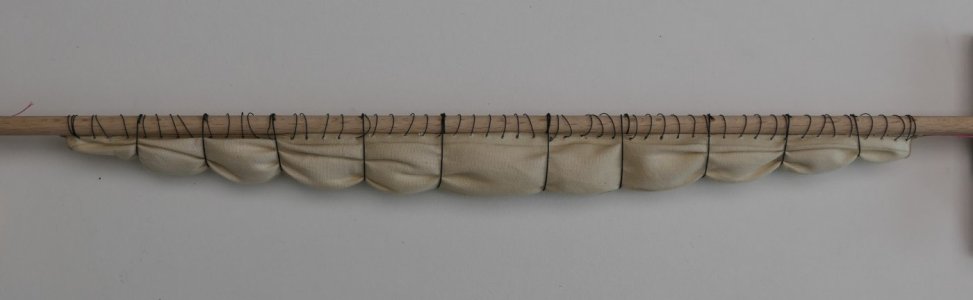
Then, using some red thread at regular intervals, I gathered the bundle together a bit to approximate the characteristic shape. These red gathers will later be hidden by the final ropes in the correct color.
View attachment 620090
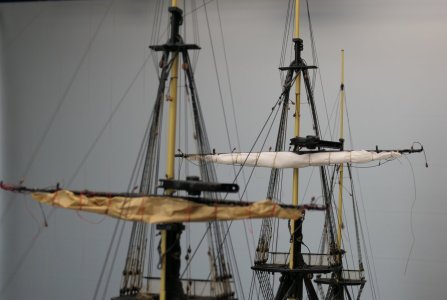
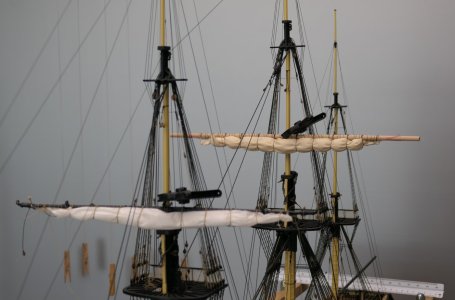
In the model this looks as follows.
View attachment 620091
Conclusion:
The next test will be with the 9-gram paper. I have a feeling this will turn out better.
- A good first test
- The chosen method isn't difficult and is quite manageable
- The dark paper used is too dark and shines like paper, not suitable
To be continued

very well doneMy adventure continues, though. After yesterday's idea about the cotton wool filling, I had a clear moment last night about how to solve this. The filling shouldn't be too firm, so it can move along a bit. In addition, the shape of the filling needs to be pre-formed a bit toward the desired end result, meaning wide here and narrow there.
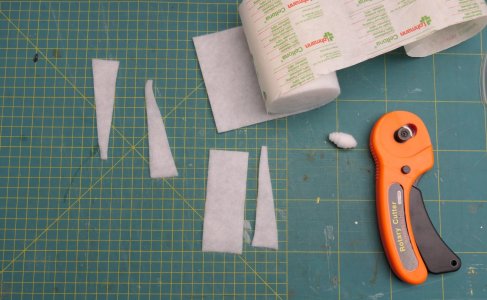
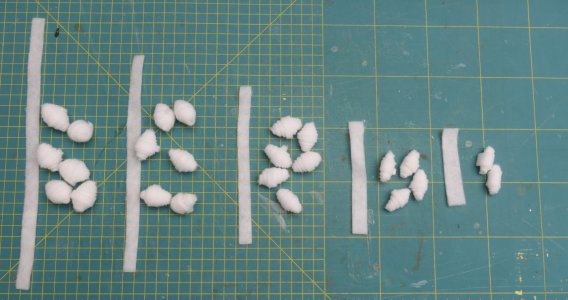
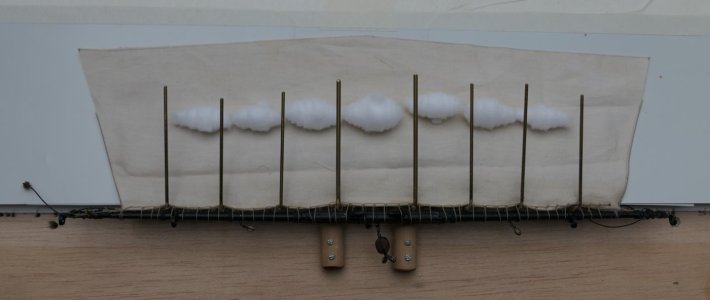
That's when I came up with the idea of using the cotton wool from a pressure bandage. From this I cut a number of tapering strips in various lengths. The widest measurement is 25 mm, which is the distance between the robands used to attach the sail to the yard. The narrowest measurement is 5 mm. The lengths of the strips vary from 75, 100, 150, 200, 250 to 300 mm. You roll these strips up, giving you a set of fillings of varying thickness. I fixed the thin end with a very small amount of glue, so the little roll stays in one piece.
View attachment 621238
View attachment 621239
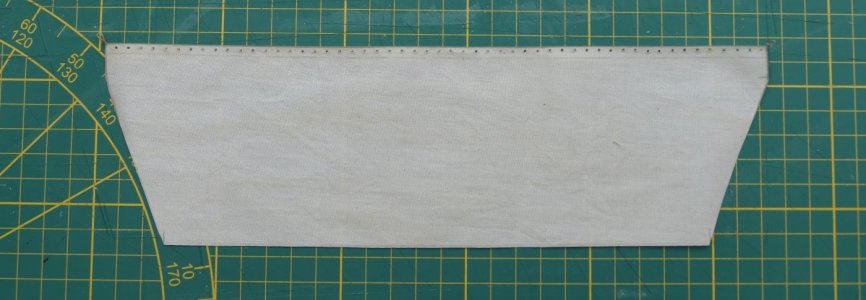
Quite a while ago now I bought cotton sailcloth in Dordrecht, which Hans colored using oak (I believe) through some secret process (?!). During the expo in Amsterdam last year I had a choice of different color schemes for it. Naturally I chose the one that suited my ship best at the time, a bit faded and mottled. I wanted to give this material a chance before making the definitive switch to the thin, fragile paper that I still had to color. To avoid getting too much cloth onto the yard, the sails ended up 8 cm in length.
Unlike the trials with paper, I haven't applied any hems here, fearing this would become too stiff. I traced the sails onto the cloth and coated the cutting lines with a bit of glue (Lineco Neutral pH), just wide enough to prevent fraying after cutting. I kept the side that comes against the yard a good 5 mm wide, to leave room for the holes through which the rope needs to be threaded. I kept the bottom edge a bit shorter, more on that later.
The approach and continuation of this process were the same as with the paper sails, including applying the boltrope.
View attachment 621240
Next, as a trial, I took a piece of 6 mm dowel and mounted the sail onto it. Then the threading could begin.
View attachment 621241
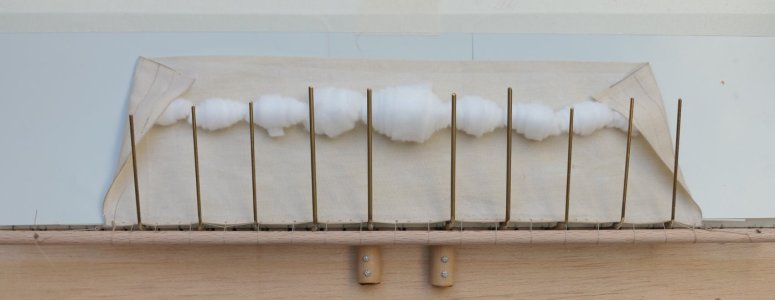
Once the rod with the sail was placed in the finger-held fixture, I fixed a series of fillings to the cloth with a small amount of glue, increasing in thickness from outside to inside.
View attachment 621242
And then tucked the filling in nicely, so nothing of it is visible anymore.
View attachment 621243
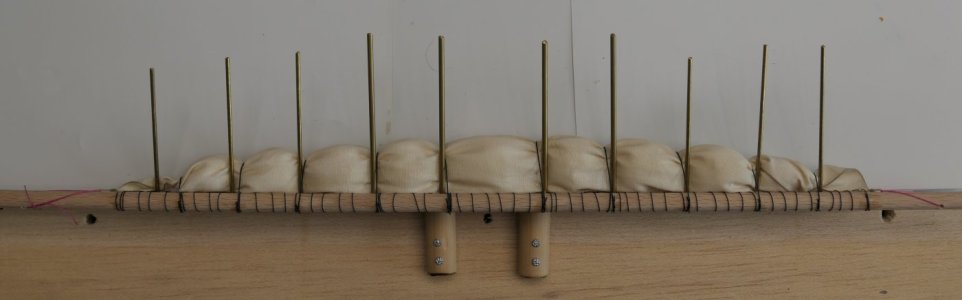
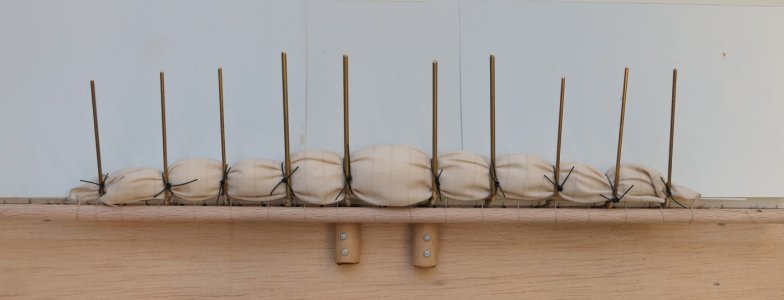
Then the tying-off at the narrowings begins. I did this from inside to outside, pulling each roband tight one by one in such a way that a natural roll forms. I noticed a nice resistance from the little rolls here, and a good opportunity to pinch the sail at the robands. What I also discovered is that I run short of sail material at the end to properly close the bundle. Next time, then, I should make the sail wider toward the bottom instead of narrower. Lesson learned.
View attachment 621244
The result then looks like this:
View attachment 621245
View attachment 621246
View attachment 621247
Conclusion:
Points of attention for next time:
- A successful third trial
- The cotton used drapes better than expected and looks more natural than the paper used earlier
- The filling idea worked out well
This was another one of those delightful Victory adventures, of which I've had quite a few. As far as I'm concerned, the trial succeeded, and I'll continue with my sails this way. I'm very curious to hear what you all think.
- Let the bottom points of the sails taper outward rather than inward, so there's a bit more material to close the bundle
- In my previous trials (directly on the yard) I had quite a bit of trouble with the horses and blocks present. This requires extra attention, and a mistake is easily made here. I want to try replacing the robands with new ones that go only around the sail and not around the yard. Then I can cut the bundle loose and thread it onto the yard separately afterward. Maybe that's worth trying.
What the night, with a moment of clarity and the necessary tests, is good for, Wil. You have now been able to build up experience and have great material for comparison. Step by step, you now have a finished sail that you (especially yourself) can be very satisfied with.My adventure continues, though. After yesterday's idea about the cotton wool filling, I had a clear moment last night about how to solve this. The filling shouldn't be too firm, so it can move along a bit. In addition, the shape of the filling needs to be pre-formed a bit toward the desired end result, meaning wide here and narrow there.
That's when I came up with the idea of using the cotton wool from a pressure bandage. From this I cut a number of tapering strips in various lengths. The widest measurement is 25 mm, which is the distance between the robands used to attach the sail to the yard. The narrowest measurement is 5 mm. The lengths of the strips vary from 75, 100, 150, 200, 250 to 300 mm. You roll these strips up, giving you a set of fillings of varying thickness. I fixed the thin end with a very small amount of glue, so the little roll stays in one piece.
View attachment 621238
View attachment 621239
Quite a while ago now I bought cotton sailcloth in Dordrecht, which Hans colored using oak (I believe) through some secret process (?!). During the expo in Amsterdam last year I had a choice of different color schemes for it. Naturally I chose the one that suited my ship best at the time, a bit faded and mottled. I wanted to give this material a chance before making the definitive switch to the thin, fragile paper that I still had to color. To avoid getting too much cloth onto the yard, the sails ended up 8 cm in length.
Unlike the trials with paper, I haven't applied any hems here, fearing this would become too stiff. I traced the sails onto the cloth and coated the cutting lines with a bit of glue (Lineco Neutral pH), just wide enough to prevent fraying after cutting. I kept the side that comes against the yard a good 5 mm wide, to leave room for the holes through which the rope needs to be threaded. I kept the bottom edge a bit shorter, more on that later.
The approach and continuation of this process were the same as with the paper sails, including applying the boltrope.
View attachment 621240
Next, as a trial, I took a piece of 6 mm dowel and mounted the sail onto it. Then the threading could begin.
View attachment 621241
Once the rod with the sail was placed in the finger-held fixture, I fixed a series of fillings to the cloth with a small amount of glue, increasing in thickness from outside to inside.
View attachment 621242
And then tucked the filling in nicely, so nothing of it is visible anymore.
View attachment 621243
Then the tying-off at the narrowings begins. I did this from inside to outside, pulling each roband tight one by one in such a way that a natural roll forms. I noticed a nice resistance from the little rolls here, and a good opportunity to pinch the sail at the robands. What I also discovered is that I run short of sail material at the end to properly close the bundle. Next time, then, I should make the sail wider toward the bottom instead of narrower. Lesson learned.
View attachment 621244
The result then looks like this:
View attachment 621245
View attachment 621246
View attachment 621247
Conclusion:
Points of attention for next time:
- A successful third trial
- The cotton used drapes better than expected and looks more natural than the paper used earlier
- The filling idea worked out well
This was another one of those delightful Victory adventures, of which I've had quite a few. As far as I'm concerned, the trial succeeded, and I'll continue with my sails this way. I'm very curious to hear what you all think.
- Let the bottom points of the sails taper outward rather than inward, so there's a bit more material to close the bundle
- In my previous trials (directly on the yard) I had quite a bit of trouble with the horses and blocks present. This requires extra attention, and a mistake is easily made here. I want to try replacing the robands with new ones that go only around the sail and not around the yard. Then I can cut the bundle loose and thread it onto the yard separately afterward. Maybe that's worth trying.
Great progress, Wil. Those sails are looking very natural!In my previous post I mentioned a few points that might be worth improving. Over the past week I tried out some things, and I'm slowly getting to where I want to be. Below are my experiences from the last few days and the final result of this adventure.
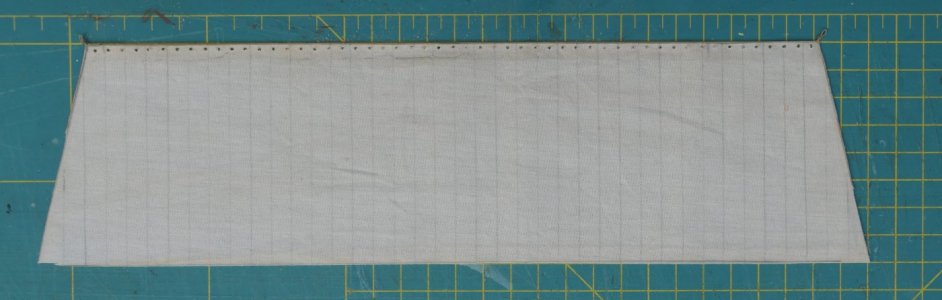
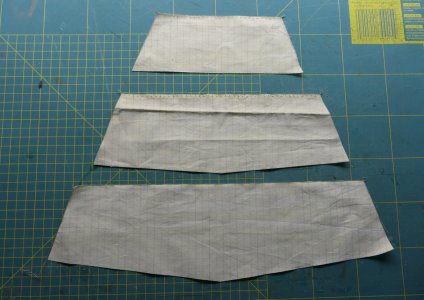
First I made a sail whose bottom edge is wider than the top, so that at the end I'd have more material to close the folded package. As a test, I also drew the stitching seams on the sail with a pencil, which I later erased lightly with an eraser, leaving just a faint fake seam.
View attachment 624407
Then I added a bit more filling material in the middle and closed the sail.
View attachment 624408
View attachment 624409
On the model it looks like this:
View attachment 624410
My conclusion here is that the sail is too puffed up and therefore doesn't fall naturally. The reason: too little sailcloth relative to too much filling.
Solution: to make the sailcloth fall nicely, there needs to be a bit more cloth in the middle, and the filling should be reduced somewhat.
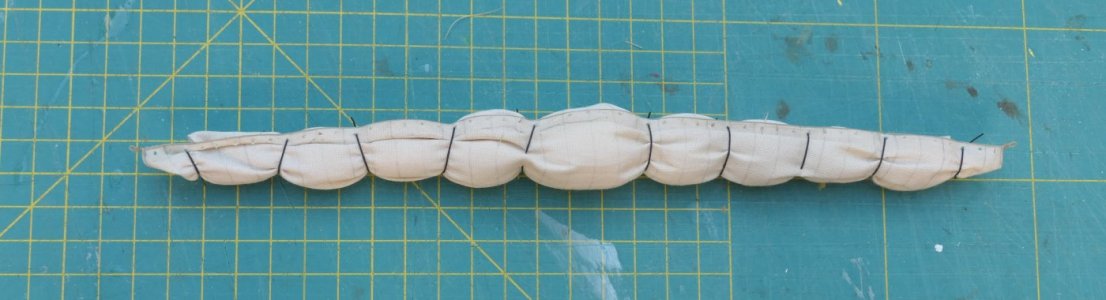
What did work was detaching the whole package from the yard. This way the sail can be made separately and later attached completely to the yard. On my model, for example, this needs to happen at the staysail yard, which is already mounted on the model. Here it becomes a matter of finding the holes in the sail and threading a lacing line through them.
View attachment 624411
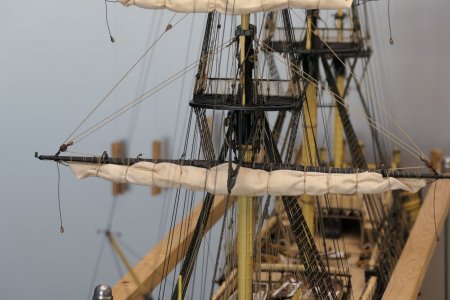
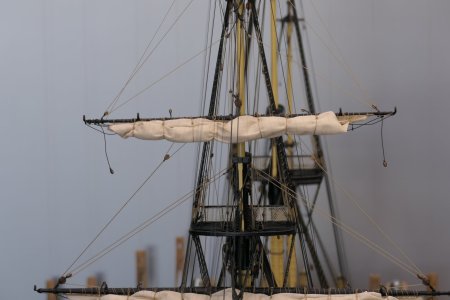
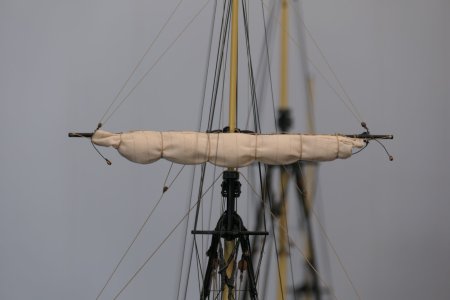
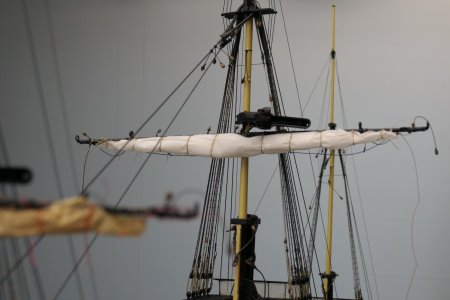
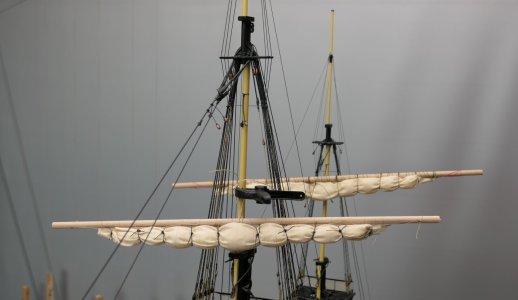
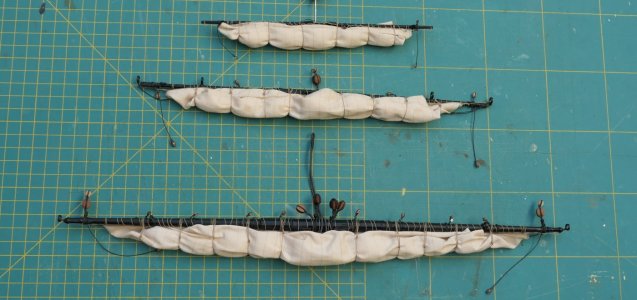
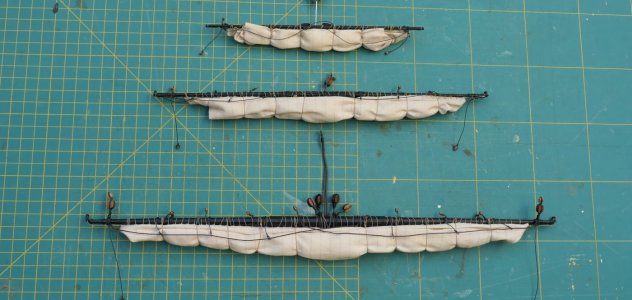
I feel like this is more or less the end of the trial period. I've now made 4 trial sails and think I've reached the final result. I think the photos below speak for themselves.
View attachment 624412
View attachment 624413
View attachment 624414
View attachment 624415
You can clearly see here that I have a bit more cloth available to allow for more pleating. The nice thing is that later you can still make small corrections here and there with tweezers. The end result doesn't look too tight and has a slightly playful appearance. That's what I was looking for.
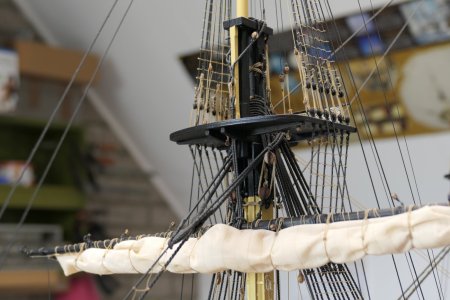
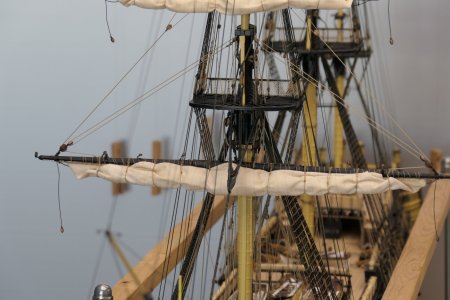
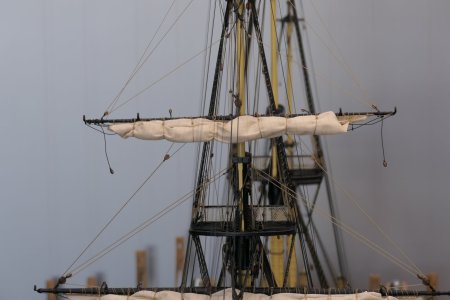
With that, the three sails of the foremast are done. I'll be hanging them in place over the coming weeks, so I can show up in Amsterdam properly "dressed."
By the way, I got a little seamanship lesson from Jan Zwart this week.
I had always assumed that when furling the sails, the yard stayed in place and the sail was pulled up. A logical thought for a landlubber like me, but Jan set me straight again.
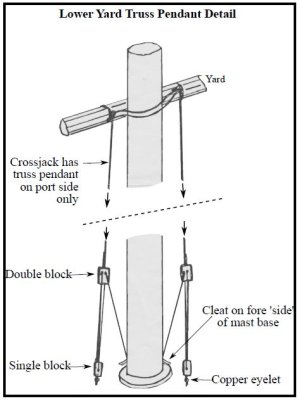
It turns out that the bottom edge of the sail is held in place, and the yard is lowered while the sail is being furled. So in this lowest position, the yard stays hanging with the furled sail, not at the top. Learned something again, if I understood it correctly. Thanks, Jan.