



• Win a Free Custom Engraved Brass Coin!!!
    As a way to introduce our brass coins to the community, we will raffle off a free coin during the month of August. Follow link ABOVE for instructions for entering.
  • SUBSCRIBE TO SHIPS IN SCALE TODAY!

    The beloved Ships in Scale Magazine is back and charting a new course for 2026!
    Discover new skills, new techniques, and new inspirations in every issue.

    NOTE THAT OUR NEXT ISSUE WILL BE MARCH/APRIL 2026

Juan Sebastian Elcano / The Moshulu Build Log

19. Esmeralda Build Log

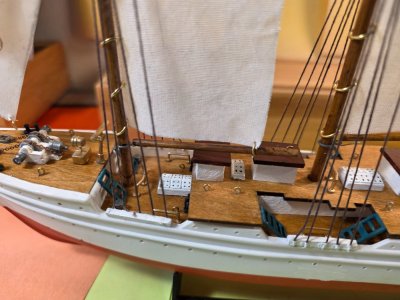
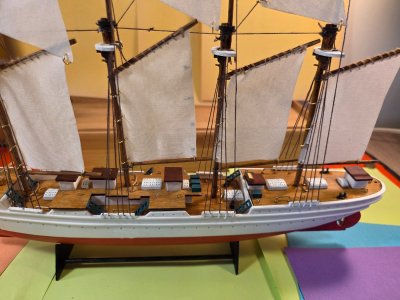
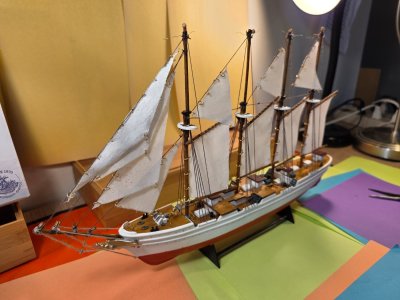
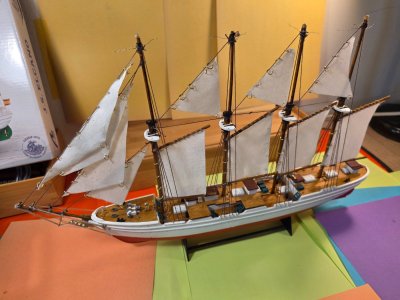
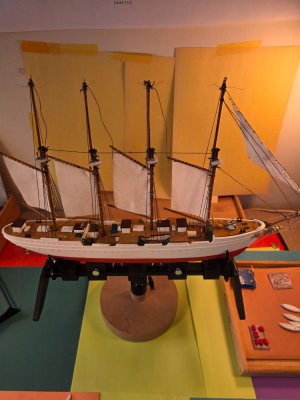
The rigging continues.

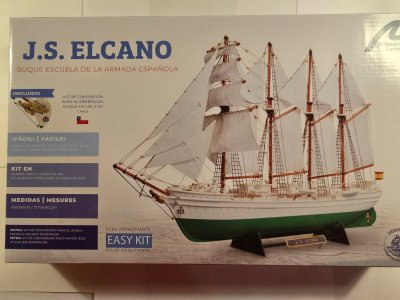
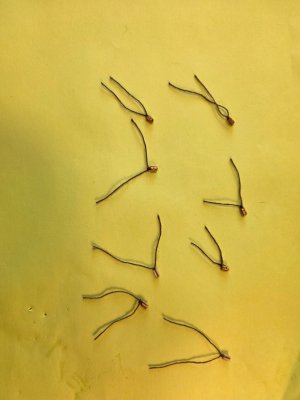
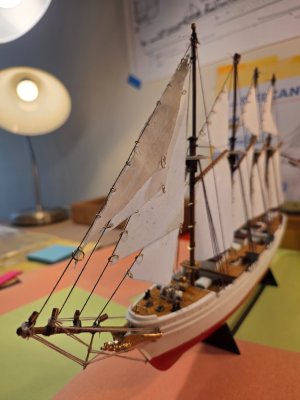
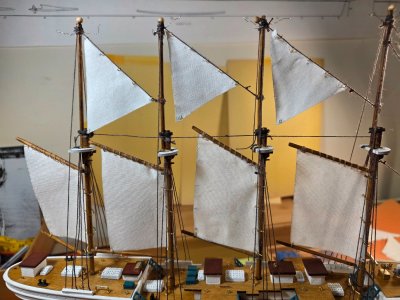
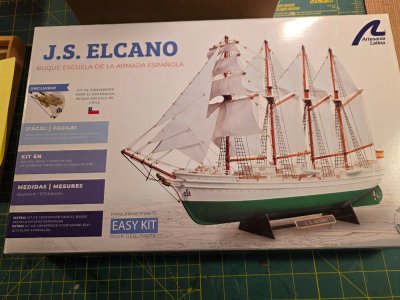
SoS member Jacques Cousteau discovered that I installed 12 blocks and tackles (on the masts and bowsprit) incorrectly. Without printed instructions, these Artesiana Latina kit videos really stink at fine detail. One has to consult the box top to see how the blocks attach to the overall rigging, but it is still not clear. And I got them backwards.

There are also a few knots that are used to attach sails to masts that I cant figure out because the videos go fast through that part of the build. Will have to check the George Biddlecombe book on rigging to see how these knots are tied.

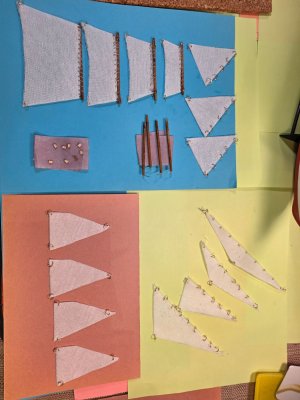
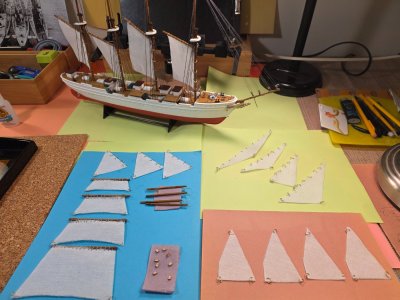
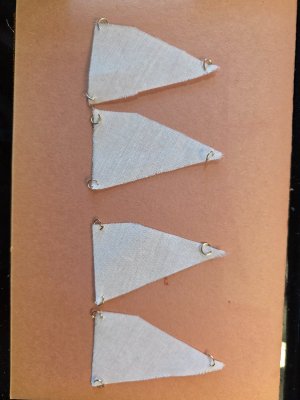
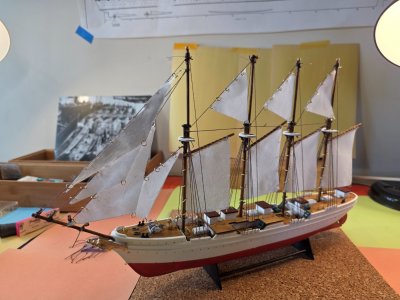
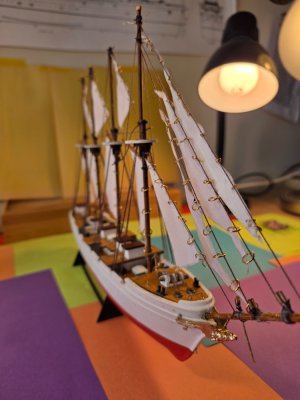
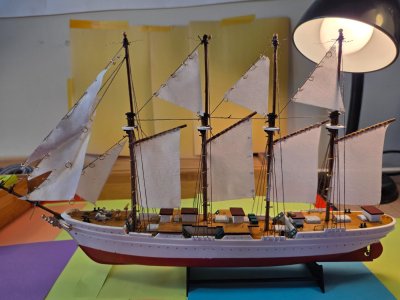
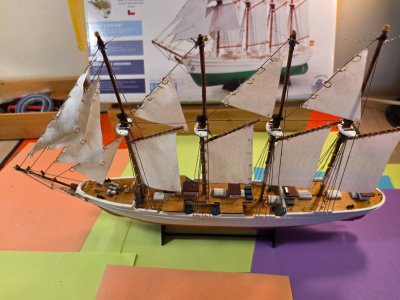
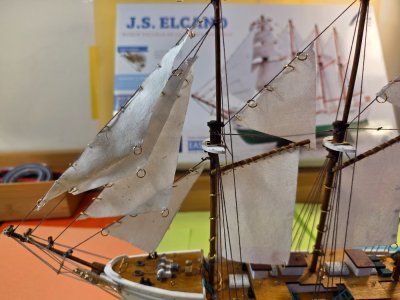
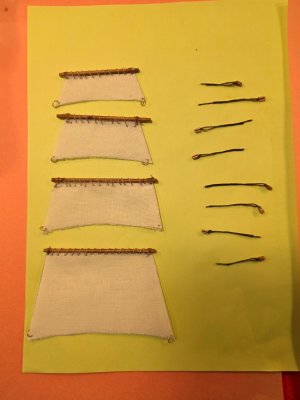
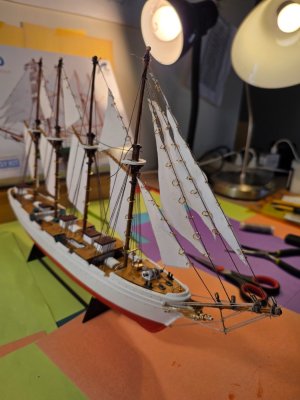
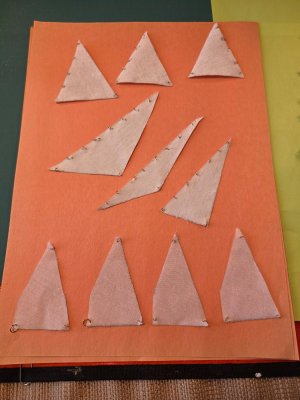
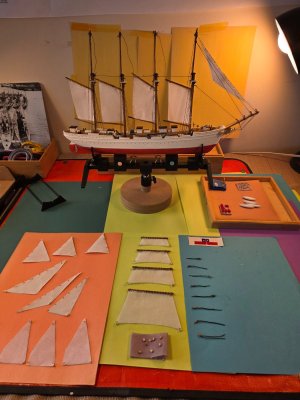
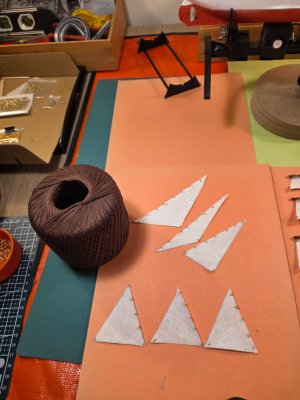
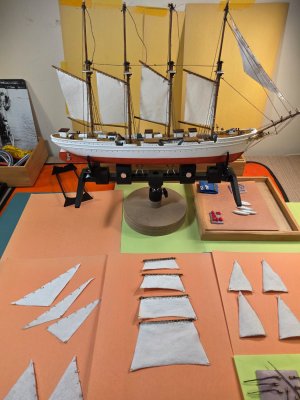
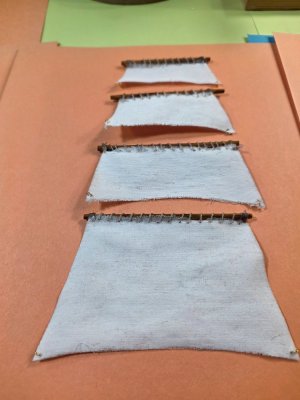
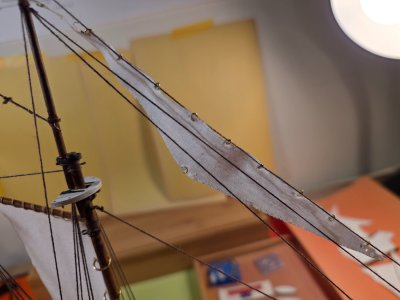
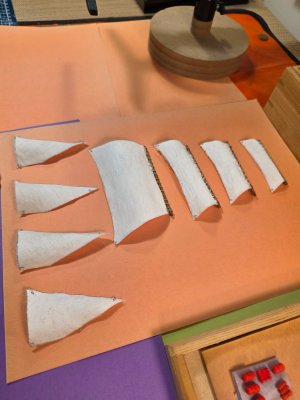
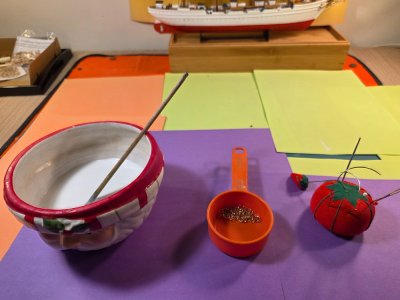
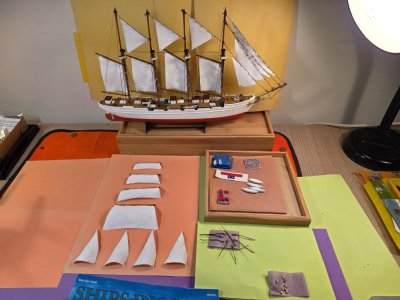
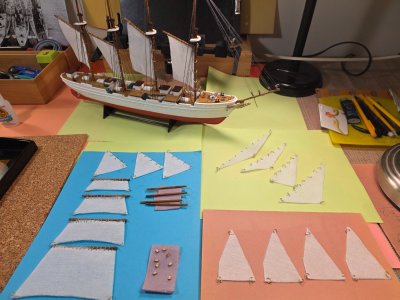
And now every sail that need brass rings have them. I only put the tiny brass rings on the top jib ("flying jib"?) because it is visible. I put larger 4mm rings every where else on the 19 sails in all because I could twist them open with my fingers. There were a total of a 108 brass rings attached before sail rigging can happen.

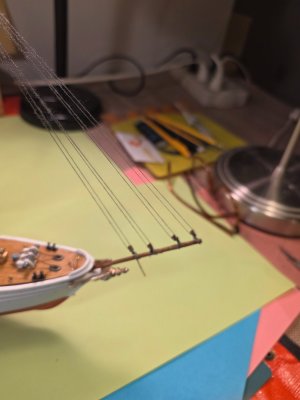
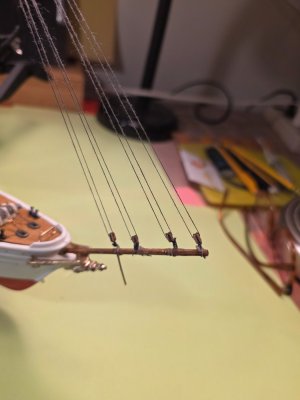
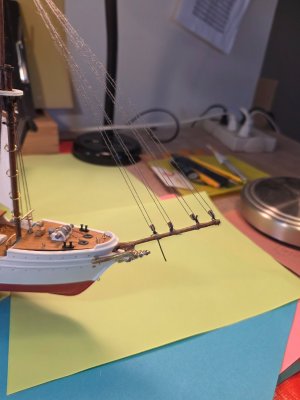
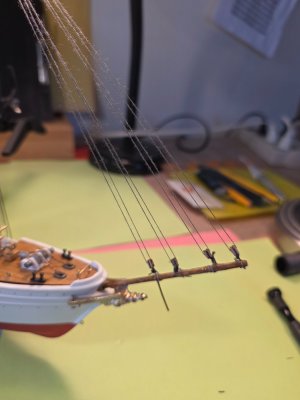
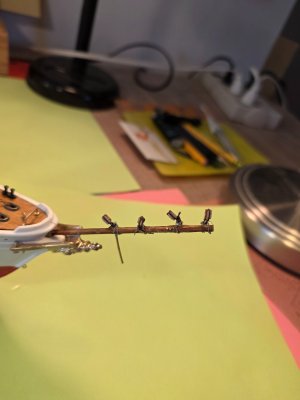
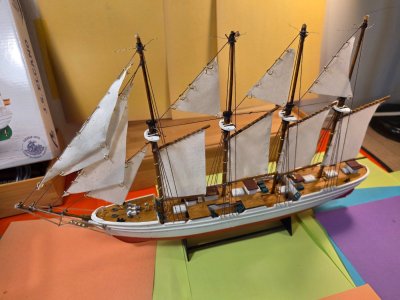
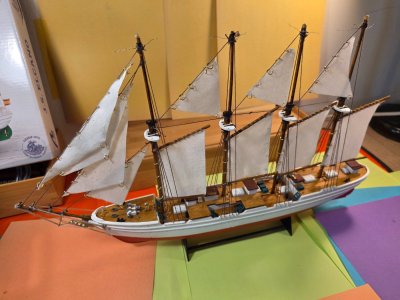
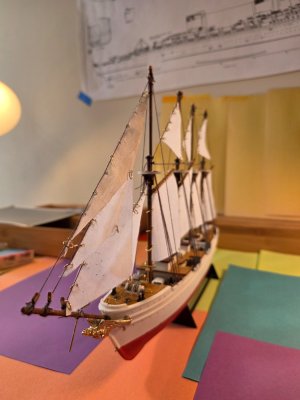
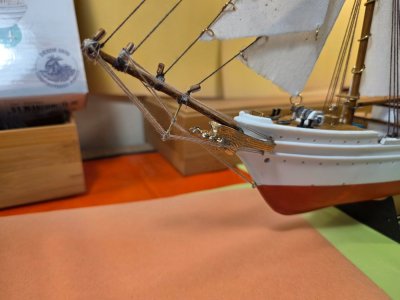
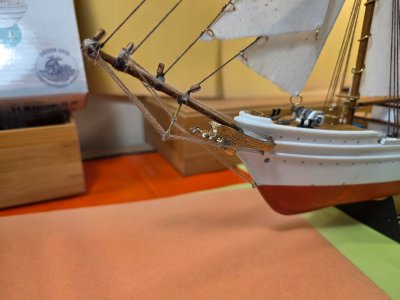
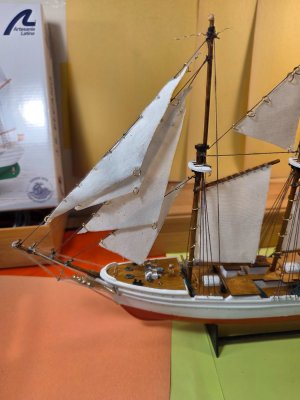
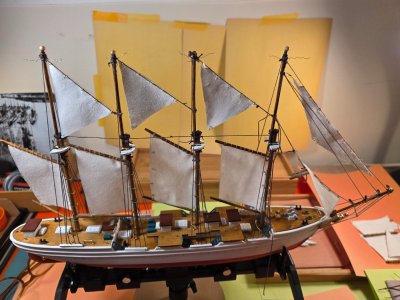
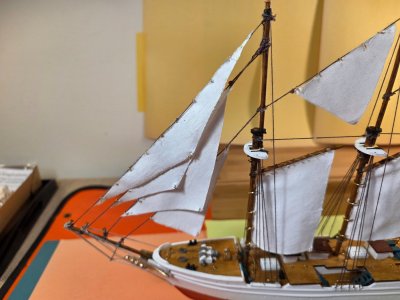
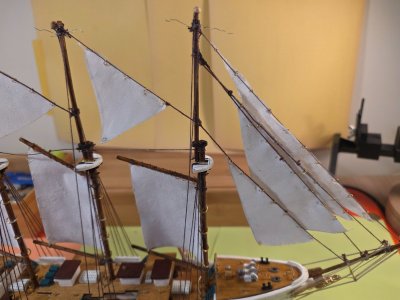
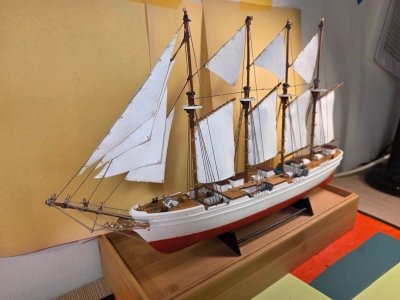
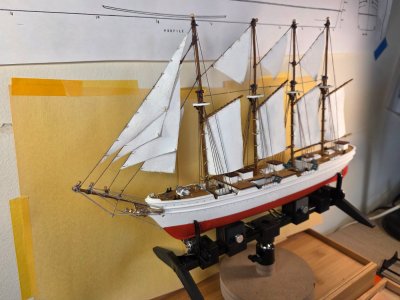
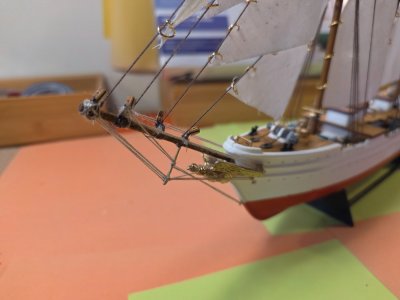
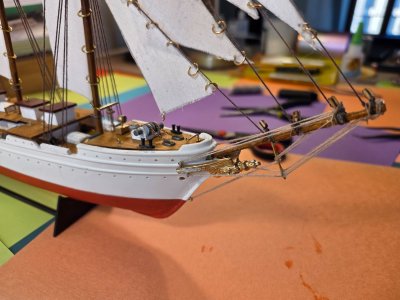
I fixed the bowsprit blocks first to see whether they can accept a line from each of the jibs and the foremast stay sail. Lots of work, and it still looks a bit of a mess. I plan to sand the bowsprit down and re-stain it because it is accumulating too much glue. But really looking forward to rigging the jibs and the dolphin spike next.

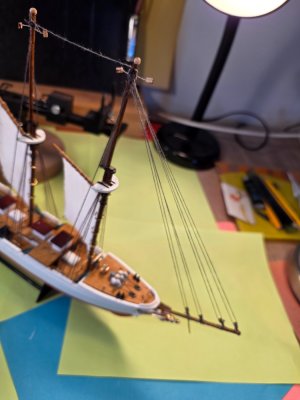
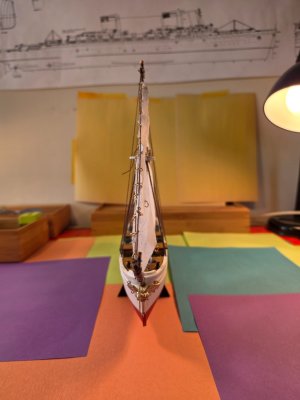
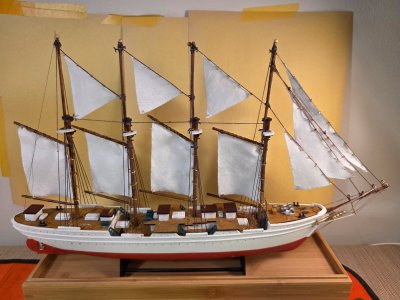
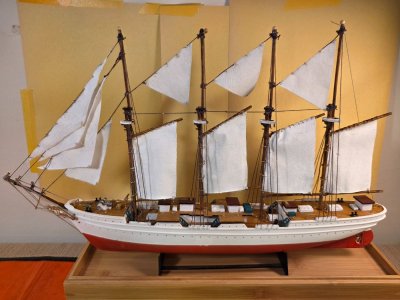
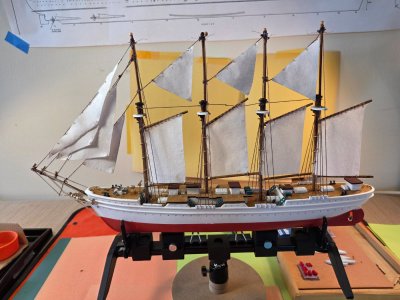
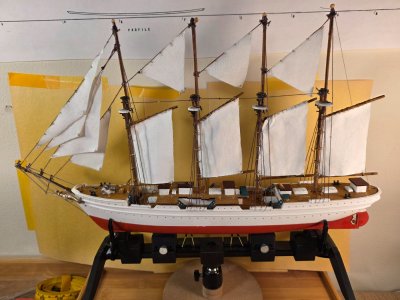
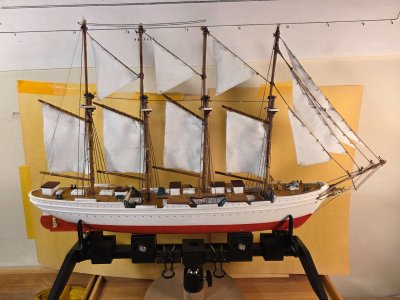
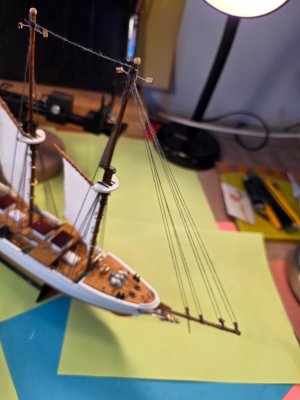
I did this test rigging in the picture to make sure the blocks work the way they are supposed to. Check.

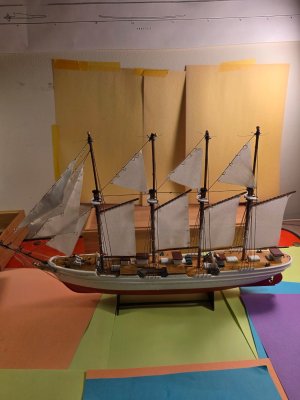
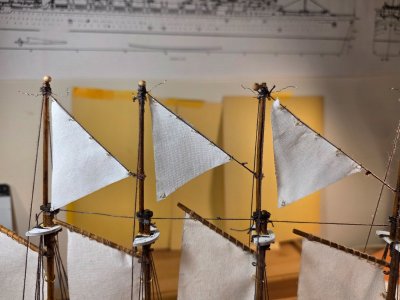
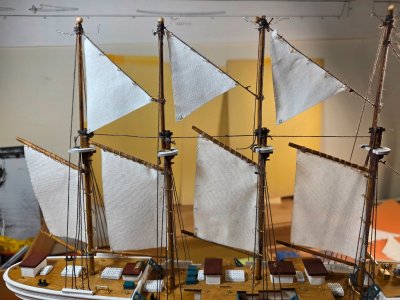
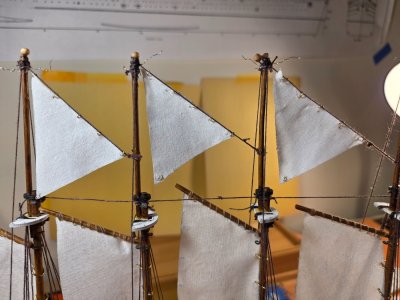
Now I have to re-do the 8 blocks atop the 4 masts so they can accept the 3 staysails. Outside chance I can hang the 4 gaff sails (fore-and-aft sails) tomorrow, but the Masters is on...
20260411_182655.jpg

20260411_211954.jpg

20260411_211926.jpg

20260411_211210.jpg

20260411_211149.jpg

20260411_182646.jpg

20260411_182610.jpg

20260411_181223.jpg
 
Last edited:
Nice work, the bowsprit blocks look a lot better! If it were me, I personally would redo the mast head blocks, as it doesn't seem like it would be too difficult at this stage. That's frustrating that Artesania Latina doesn't include more detailed info on how to do it. For stropping blocks with wire, the instructions for the Model Shipways Muscongus Bay Lobster Smack include pretty clear instructions on how to do them, and are downloadable at the ModelExpo site. (Or it may be the Norwegian Pram kit, I forget.) I haven't used wire, but I have stropped blocks with scale rope and fly-tying thread, following the instructions Chuck Passaro has provided (I think it's downloadable on his Syren Ship Model Co. site). It's not 100% accurate, but is relatively easy to do and looks quite good. I have yet to model internally-stropped blocks, which I assume are what the real Esmeralda uses.
 
Nice work, the bowsprit blocks look a lot better! If it were me, I personally would redo the mast head blocks, as it doesn't seem like it would be too difficult at this stage. That's frustrating that Artesania Latina doesn't include more detailed info on how to do it. For stropping blocks with wire, the instructions for the Model Shipways Muscongus Bay Lobster Smack include pretty clear instructions on how to do them, and are downloadable at the ModelExpo site. (Or it may be the Norwegian Pram kit, I forget.) I haven't used wire, but I have stropped blocks with scale rope and fly-tying thread, following the instructions Chuck Passaro has provided (I think it's downloadable on his Syren Ship Model Co. site). It's not 100% accurate, but is relatively easy to do and looks quite good. I have yet to model internally-stropped blocks, which I assume are what the real Esmeralda uses.
Yep, I'm going to unwind all the blocks above the 4 masts to reorient them like the bowsprit blocks. That way I can start tying the main sails and gaff sails up near the mast platforms and pin drill another pinhole about a cm from the mast top to guide rigging through. I may even apply white water-based paint to brighten the sails somewhat.

20260411_182655.jpg

20260411_211954.jpg
 
Nice work, the bowsprit blocks look a lot better! If it were me, I personally would redo the mast head blocks, as it doesn't seem like it would be too difficult at this stage. That's frustrating that Artesania Latina doesn't include more detailed info on how to do it. For stropping blocks with wire, the instructions for the Model Shipways Muscongus Bay Lobster Smack include pretty clear instructions on how to do them, and are downloadable at the ModelExpo site. (Or it may be the Norwegian Pram kit, I forget.) I haven't used wire, but I have stropped blocks with scale rope and fly-tying thread, following the instructions Chuck Passaro has provided (I think it's downloadable on his Syren Ship Model Co. site). It's not 100% accurate, but is relatively easy to do and looks quite good. I have yet to model internally-stropped blocks, which I assume are what the real Esmeralda uses.
Agreed. There really is no point to work with wire when it comes setting up blocks and tackles.
 
Not to nitpick, but looking again at the model, I'm a bit confused by the rigging through the blocks on the bowsprit running to and from the masthead at both ends of the rope. My apologies for not noticing earlier. From AL's photos, it looks like there are supposed to be separate stays for each (permanent "standing rigging") affixed to the mast and bowsprit. The jibs and staysails should be threaded onto the stays. Then moveable lines ("running rigging") are attached to the tips of the sails. The lower one runs through the bowsprit block and runs back to a pin rail on the bowsprit, where it's tied off. The upper one runs through the block on the mast and then down to be tied off somewhere on deck (AL's photos aren't very clear). I'm not sure if that description makes sense, but you basically want the stays to hold the jibs/staysails, and the running rigging through the blocks to allow the sails to be raised and lowered.

Rigging is a very tricky task, and with 4 masts, this model has much more complex rigging than anything I've done. I feel that AL should at least include a rigging diagram instead of a bunch of videos, it really makes me think less of them as a company. If the kit doesn't clearly explain the rigging, looking at other sources would probably be helpful. Other build logs can be useful for getting a sense of how people approach rigging (usually standing rigging is completed before running, for instance). Harold Underhill's book "Masting and Rigging the Ocean Carrier" would include a lot of detail and explain how everything works.
 
Not to nitpick, but looking again at the model, I'm a bit confused by the rigging through the blocks on the bowsprit running to and from the masthead at both ends of the rope. My apologies for not noticing earlier. From AL's photos, it looks like there are supposed to be separate stays for each (permanent "standing rigging") affixed to the mast and bowsprit. The jibs and staysails should be threaded onto the stays. Then moveable lines ("running rigging") are attached to the tips of the sails. The lower one runs through the bowsprit block and runs back to a pin rail on the bowsprit, where it's tied off. The upper one runs through the block on the mast and then down to be tied off somewhere on deck (AL's photos aren't very clear). I'm not sure if that description makes sense, but you basically want the stays to hold the jibs/staysails, and the running rigging through the blocks to allow the sails to be raised and lowered.

Rigging is a very tricky task, and with 4 masts, this model has much more complex rigging than anything I've done. I feel that AL should at least include a rigging diagram instead of a bunch of videos, it really makes me think less of them as a company. If the kit doesn't clearly explain the rigging, looking at other sources would probably be helpful. Other build logs can be useful for getting a sense of how people approach rigging (usually standing rigging is completed before running, for instance). Harold Underhill's book "Masting and Rigging the Ocean Carrier" would include a lot of detail and explain how everything works.
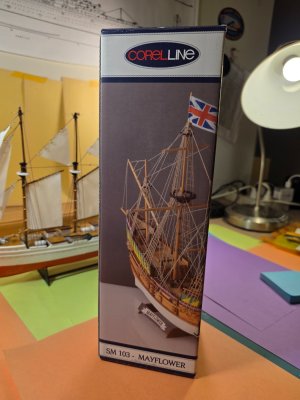
Jacques Cousteau - I agree that this rigging job is alot more complex than an "Easy, Level 1" build. The Artesiana Latina videos are pretty useless and, since you mentioned it, the kit box top for the Esmeralda has the 3 mast stay sails reversed than the A/L rigging videos. On the video the brass ring side of the stay sail is attached on the stern side, while on the box top they are attached on the bow side.

I'm going to try and power through, despite the awful lack of clear rigging instructions. I am going to checkout some build logs for frame of reference vessels, like the Gorch Fock, the Nippon Maru, and the Star of India (all windjammers, with steel hulls and sail power) to see how they are rigged up.

Thanks for seeing that issue with the rigging, you probably saved me 3 days work on the build.

20260217_212312.jpg
 
20. Esmeralda / JS de Elcano Build Log

Esmeralda sail rigging videos from Artesania Latina's YouTube channel.

For those wanting to see how A/L presents how to do the rigging on their instructional videos, you can check out "Sails II" and "Sails I"...

As some have said, a single rigging diagram or drawing would be nice, because this is not an "Easy" rigging job by any means. In other words, the videos are only marginally helpful and a lot of the rigging of this kit is guesswork.

This will probably be my last A/L kit. If they can't get the "Easy" kits right, it doesn't bode well for more complex builds.

Sails II - Attaching jibs and foremast stay sail to the bowsprit (does not show how to rig the 4 bowsprit blocks):

Sails I - Attaching the 3 stay sails to all 4 masts (attached backwards from picture on box top):
 
Last edited:
Back
Top