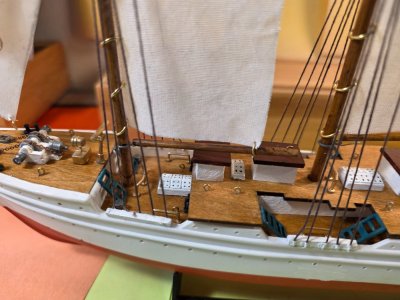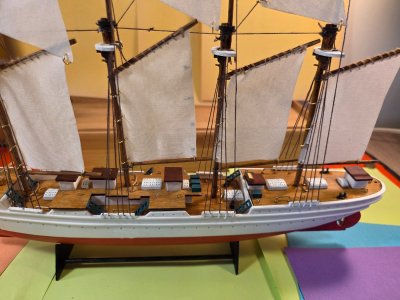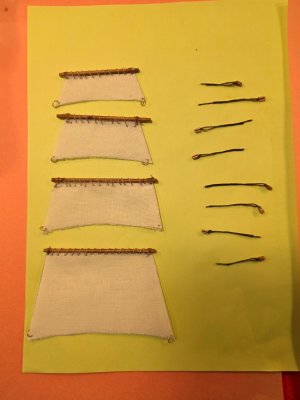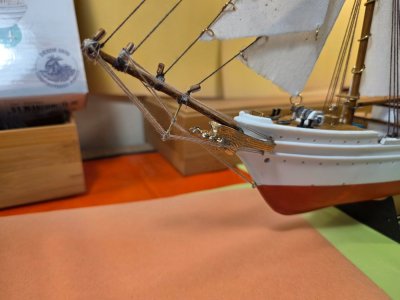




• Win a Free Custom Engraved Brass Coin!!!
    As a way to introduce our brass coins to the community, we will raffle off a free coin during the month of August. Follow link ABOVE for instructions for entering.
  • SUBSCRIBE TO SHIPS IN SCALE TODAY!

    The beloved Ships in Scale Magazine is back and charting a new course for 2026!
    Discover new skills, new techniques, and new inspirations in every issue.

    NOTE THAT OUR NEXT ISSUE WILL BE MARCH/APRIL 2026

Juan Sebastian Elcano / The Moshulu Build Log

19. Esmeralda Build Log

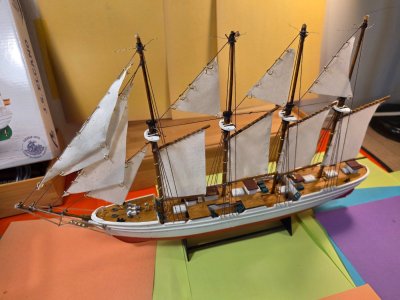
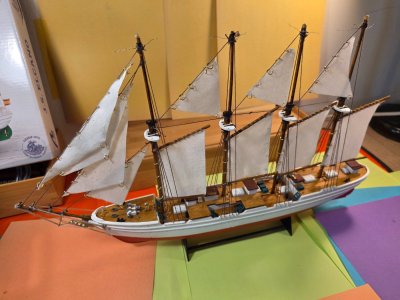
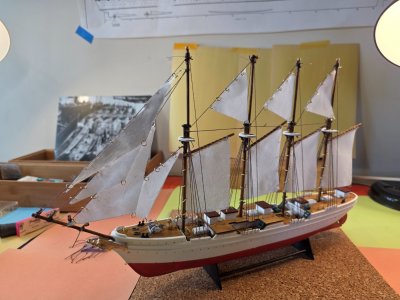
The rigging continues.

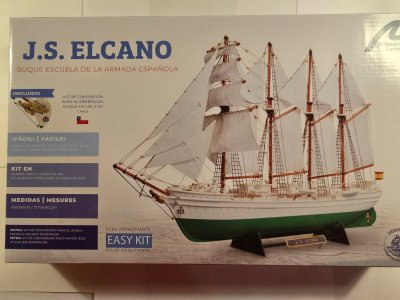
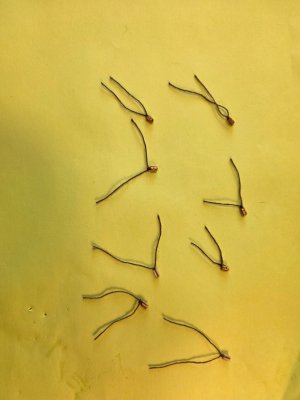
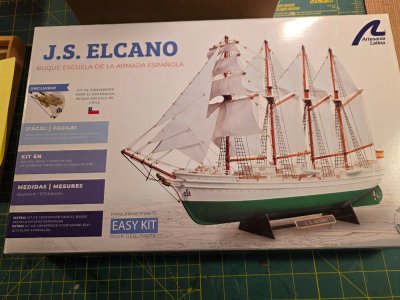
SoS member Jacques Cousteau discovered that I installed 12 blocks and tackles (on the masts and bowsprit) incorrectly. Without printed instructions, these Artesiana Latina kit videos really stink at fine detail. One has to consult the box top to see how the blocks attach to the overall rigging, but it is still not clear. And I got them backwards.

There are also a few knots that are used to attach sails to masts that I cant figure out because the videos go fast through that part of the build. Will have to check the George Biddlecombe book on rigging to see how these knots are tied.

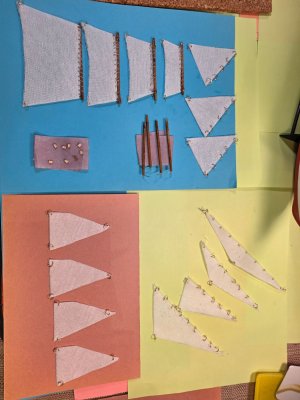
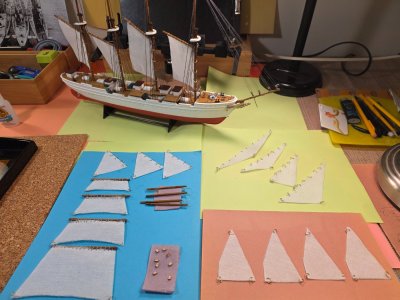
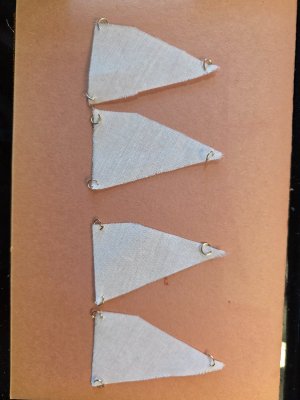
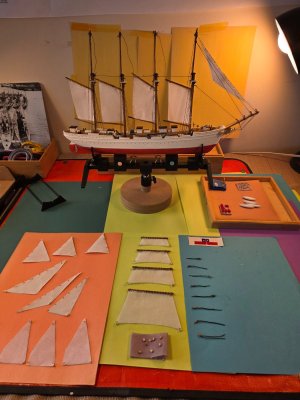
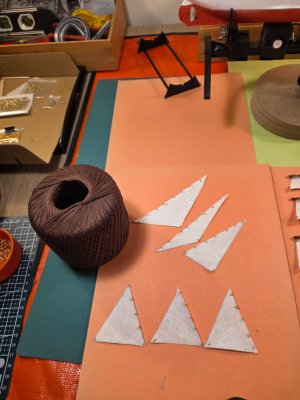
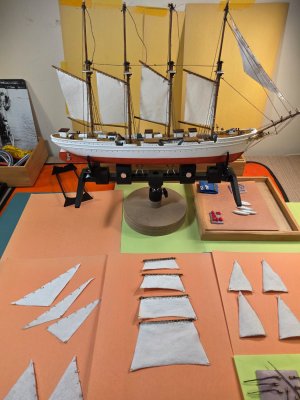
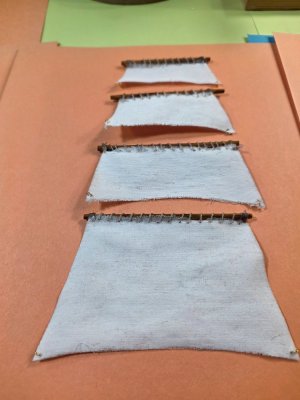
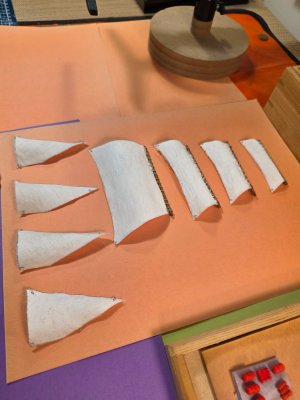
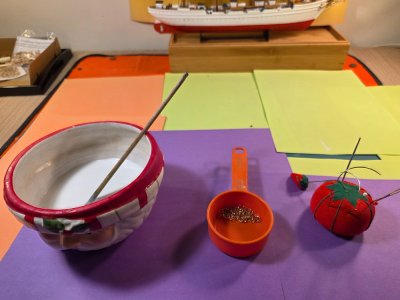
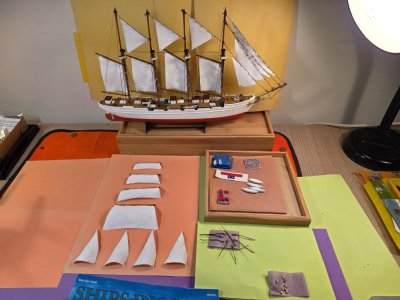
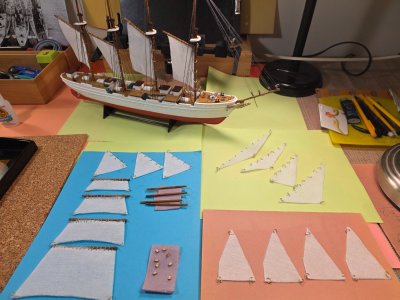
And now every sail that need brass rings have them. I only put the tiny brass rings on the top jib ("flying jib"?) because it is visible. I put larger 4mm rings every where else on the 19 sails in all because I could twist them open with my fingers. There were a total of a 108 brass rings attached before sail rigging can happen.

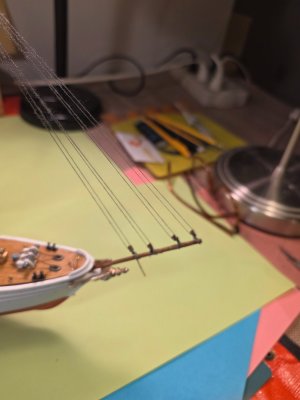
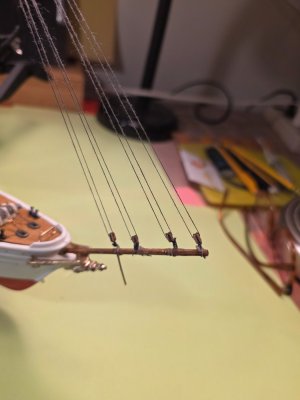
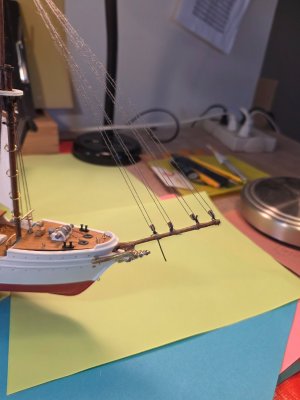
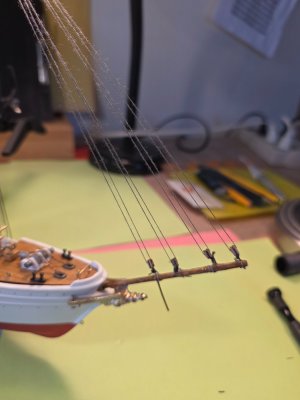
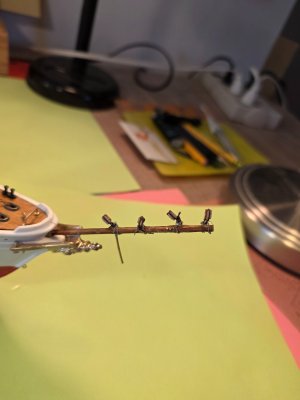
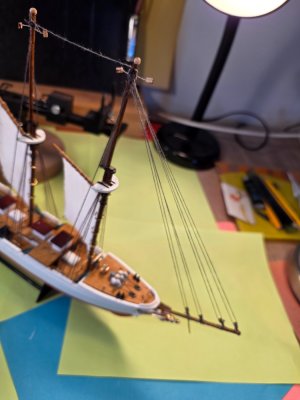
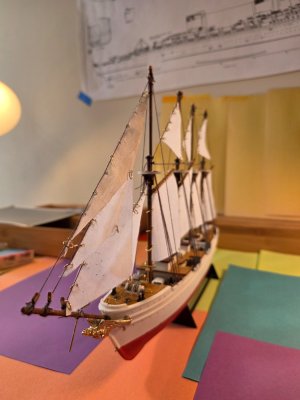
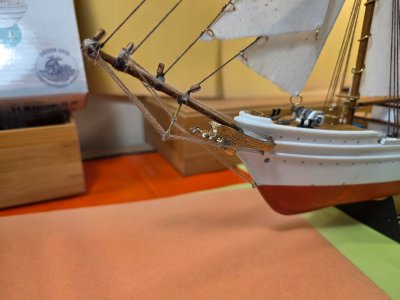
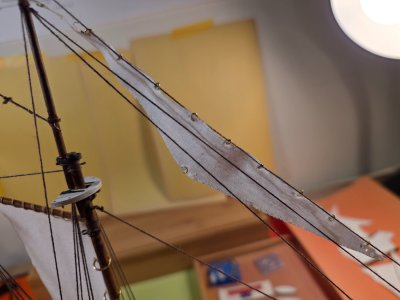
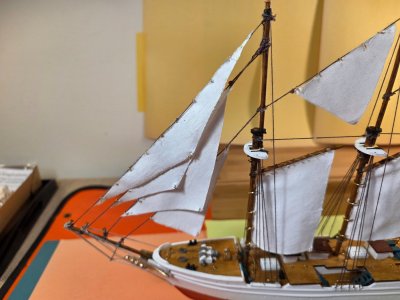
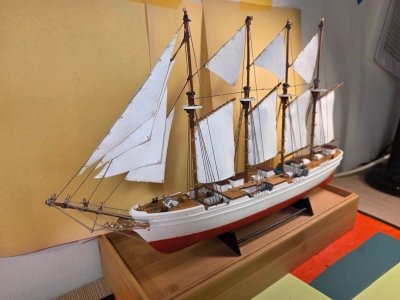
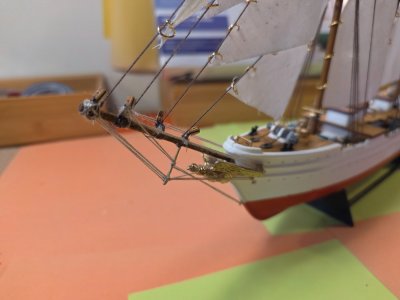
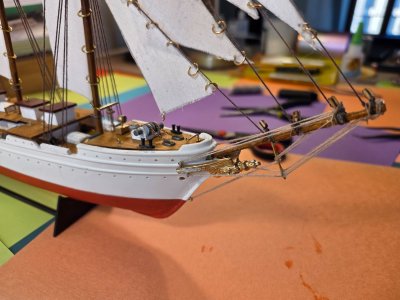
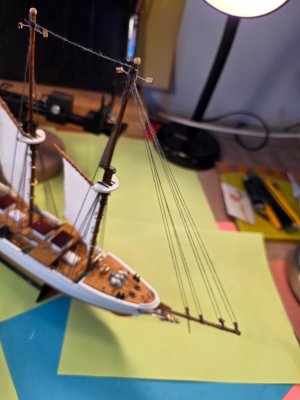
I fixed the bowsprit blocks first to see whether they can accept a line from each of the jibs and the foremast stay sail. Lots of work, and it still looks a bit of a mess. I plan to sand the bowsprit down and re-stain it because it is accumulating too much glue. But really looking forward to rigging the jibs and the dolphin spike next.

I did this test rigging in the picture to make sure the blocks work the way they are supposed to. Check.

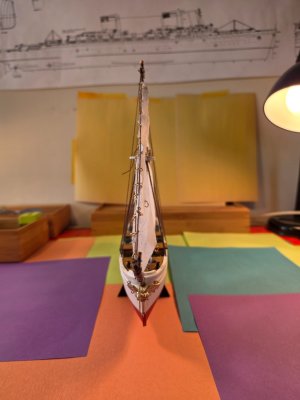
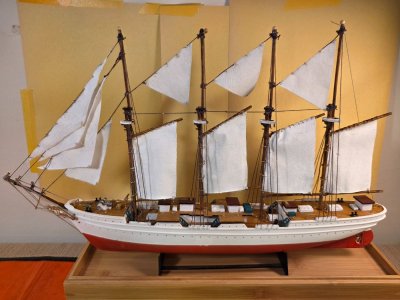
Now I have to re-do the 8 blocks atop the 4 masts so they can accept the 3 staysails. Outside chance I can hang the 4 gaff sails (fore-and-aft sails) tomorrow, but the Masters is on...
20260411_182655.jpg

20260411_211954.jpg

20260411_211926.jpg

20260411_211210.jpg

20260411_211149.jpg

20260411_182646.jpg

20260411_182610.jpg

20260411_181223.jpg
 
Last edited:
Nice work, the bowsprit blocks look a lot better! If it were me, I personally would redo the mast head blocks, as it doesn't seem like it would be too difficult at this stage. That's frustrating that Artesania Latina doesn't include more detailed info on how to do it. For stropping blocks with wire, the instructions for the Model Shipways Muscongus Bay Lobster Smack include pretty clear instructions on how to do them, and are downloadable at the ModelExpo site. (Or it may be the Norwegian Pram kit, I forget.) I haven't used wire, but I have stropped blocks with scale rope and fly-tying thread, following the instructions Chuck Passaro has provided (I think it's downloadable on his Syren Ship Model Co. site). It's not 100% accurate, but is relatively easy to do and looks quite good. I have yet to model internally-stropped blocks, which I assume are what the real Esmeralda uses.
 
Nice work, the bowsprit blocks look a lot better! If it were me, I personally would redo the mast head blocks, as it doesn't seem like it would be too difficult at this stage. That's frustrating that Artesania Latina doesn't include more detailed info on how to do it. For stropping blocks with wire, the instructions for the Model Shipways Muscongus Bay Lobster Smack include pretty clear instructions on how to do them, and are downloadable at the ModelExpo site. (Or it may be the Norwegian Pram kit, I forget.) I haven't used wire, but I have stropped blocks with scale rope and fly-tying thread, following the instructions Chuck Passaro has provided (I think it's downloadable on his Syren Ship Model Co. site). It's not 100% accurate, but is relatively easy to do and looks quite good. I have yet to model internally-stropped blocks, which I assume are what the real Esmeralda uses.
Yep, I'm going to unwind all the blocks above the 4 masts to reorient them like the bowsprit blocks. That way I can start tying the main sails and gaff sails up near the mast platforms and pin drill another pinhole about a cm from the mast top to guide rigging through. I may even apply white water-based paint to brighten the sails somewhat.

20260411_182655.jpg

20260411_211954.jpg
 
Nice work, the bowsprit blocks look a lot better! If it were me, I personally would redo the mast head blocks, as it doesn't seem like it would be too difficult at this stage. That's frustrating that Artesania Latina doesn't include more detailed info on how to do it. For stropping blocks with wire, the instructions for the Model Shipways Muscongus Bay Lobster Smack include pretty clear instructions on how to do them, and are downloadable at the ModelExpo site. (Or it may be the Norwegian Pram kit, I forget.) I haven't used wire, but I have stropped blocks with scale rope and fly-tying thread, following the instructions Chuck Passaro has provided (I think it's downloadable on his Syren Ship Model Co. site). It's not 100% accurate, but is relatively easy to do and looks quite good. I have yet to model internally-stropped blocks, which I assume are what the real Esmeralda uses.
Agreed. There really is no point to work with wire when it comes setting up blocks and tackles.
 
Not to nitpick, but looking again at the model, I'm a bit confused by the rigging through the blocks on the bowsprit running to and from the masthead at both ends of the rope. My apologies for not noticing earlier. From AL's photos, it looks like there are supposed to be separate stays for each (permanent "standing rigging") affixed to the mast and bowsprit. The jibs and staysails should be threaded onto the stays. Then moveable lines ("running rigging") are attached to the tips of the sails. The lower one runs through the bowsprit block and runs back to a pin rail on the bowsprit, where it's tied off. The upper one runs through the block on the mast and then down to be tied off somewhere on deck (AL's photos aren't very clear). I'm not sure if that description makes sense, but you basically want the stays to hold the jibs/staysails, and the running rigging through the blocks to allow the sails to be raised and lowered.

Rigging is a very tricky task, and with 4 masts, this model has much more complex rigging than anything I've done. I feel that AL should at least include a rigging diagram instead of a bunch of videos, it really makes me think less of them as a company. If the kit doesn't clearly explain the rigging, looking at other sources would probably be helpful. Other build logs can be useful for getting a sense of how people approach rigging (usually standing rigging is completed before running, for instance). Harold Underhill's book "Masting and Rigging the Ocean Carrier" would include a lot of detail and explain how everything works.
 
Not to nitpick, but looking again at the model, I'm a bit confused by the rigging through the blocks on the bowsprit running to and from the masthead at both ends of the rope. My apologies for not noticing earlier. From AL's photos, it looks like there are supposed to be separate stays for each (permanent "standing rigging") affixed to the mast and bowsprit. The jibs and staysails should be threaded onto the stays. Then moveable lines ("running rigging") are attached to the tips of the sails. The lower one runs through the bowsprit block and runs back to a pin rail on the bowsprit, where it's tied off. The upper one runs through the block on the mast and then down to be tied off somewhere on deck (AL's photos aren't very clear). I'm not sure if that description makes sense, but you basically want the stays to hold the jibs/staysails, and the running rigging through the blocks to allow the sails to be raised and lowered.

Rigging is a very tricky task, and with 4 masts, this model has much more complex rigging than anything I've done. I feel that AL should at least include a rigging diagram instead of a bunch of videos, it really makes me think less of them as a company. If the kit doesn't clearly explain the rigging, looking at other sources would probably be helpful. Other build logs can be useful for getting a sense of how people approach rigging (usually standing rigging is completed before running, for instance). Harold Underhill's book "Masting and Rigging the Ocean Carrier" would include a lot of detail and explain how everything works.
Jacques Cousteau - I agree that this rigging job is alot more complex than an "Easy, Level 1" build. The Artesiana Latina videos are pretty useless and, since you mentioned it, the kit box top for the Esmeralda has the 3 mast stay sails reversed than the A/L rigging videos. On the video the brass ring side of the stay sail is attached on the stern side, while on the box top they are attached on the bow side.

I'm going to try and power through, despite the awful lack of clear rigging instructions. I am going to checkout some build logs for frame of reference vessels, like the Gorch Fock, the Nippon Maru, and the Star of India (all windjammers, with steel hulls and sail power) to see how they are rigged up.

Thanks for seeing that issue with the rigging, you probably saved me 3 days work on the build.

20260217_212312.jpg
 
20. Esmeralda / JS de Elcano Build Log

Esmeralda sail rigging videos from Artesania Latina's YouTube channel.

For those wanting to see how A/L presents how to do the rigging on their instructional videos, you can check out "Sails II" and "Sails I"...

As some have said, a single rigging diagram or drawing would be nice, because this is not an "Easy" rigging job by any means. Information in the videos is different from the way the rigging looks on the box top of the Esmeralda A/L kit, and plenty of information (e.g., how to rig the bowsprit blocks) is just plain missing.

In other words, the videos are only marginally helpful and a lot of the rigging of this kit is guesswork.

This will probably be my last A/L kit. If they can't get the "Easy" kits right, it doesn't bode well for more complex builds.

Sails II - Attaching jibs and foremast stay sail to the bowsprit (does not show how to rig the 4 bowsprit blocks):

Sails I - Attaching the 3 stay sails to all 4 masts (attached backwards from picture on box top):
 
Last edited:
21. Esmeralda / JS de Elcano Build Log

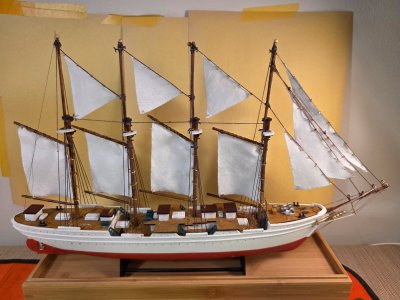
Day 5 of Rigging the masts, sails, booms, gaffs, stays, bowsprit, halyards, blocks, rings, dolphin spike, and everything else that can be rigged on the Esmeralda. I'm exhausted!

I can't say I'm super happy with this build. I've been going on about how the "instructional" videos stink, are incomplete, and just plain wrong compared to the model kit and the only picture of the fully-rigged Esmeralda -- the box top of the Artesania Latina model kit box (which has key mistakes that differ from the videos). There are no other design drawings or diagrams and there is NO rigging plan. The videos lack several key rigging sequences, like the full bowsprit rigging, rigging of the gaff sails, and tying off all the square sails to 3 eyehooks each on top decks.

Someone suggested doing the research to see how frame of reference vessels are rigged up, and I found 3 or 4 build logs and there is plenty of relevant rigging information from ships like the Gorch Fock, the Star of India, and the Nippon Maru on this site. Pictures of these 3 beautiful windjammers at full sail attached. I also went back to the source and found some pictures of the real Juan Sebastian de Elcano that show how the rigging blocks are used to run sails up and down the masts / halyards. The last picture is of the J.S. de Elcano under full sail. A beautiful ship.

I ran out of dark mahogany thread after rigging the stay sails and the 4 booms, so I did the bowsprit in gray thread and did a double-wind for the bowsprit rigging just because. I toyed with the idea of coloring over the gray thread with a black stain marker, but I don't want to get stain on the hull. Maybe I will color the gray thread when I do a sand / restain of the bowsprit now that everything that should be rigged to the bowsprit is.

Still have to replace the wooden blocks at the tops of each mast and then do the running rigging by attaching the blocks to the tip ends of the square sails and the gaff sails.

And then do all 4 sails on the foremast -- mainsail, topsail, topgallant, and royal sails (if I have the terminology right). Run the rigging lines to tighten through all 19 sails and tie off the foremast sails to present the ship under full sail, if possible. Need to shape the sails, especially the foremast sails, the fore-and-aft sails (jiggermasts), and the 3 stay sails atop the 4 masts. Doing any work at the top of the masts is particularly treacherous because any rigging above the gaff sails can simultaneously make the whole rigging job go from taut to limp and back again with each added line tied.

Needless to say, I won't go on about how wicked hard the last 2 days of rigging has been. Is there such a thing as "Rigging Angry"?

I'm pretty much had it with the Artesania Latina's instructional (useless) videos, lack of design drawings, lack of rigging plans. Pretty much can't wait to finish this one off so I can move on to my next build (and you know what that is). I learned some things about rigging that I will take with me to the next build. Mostly about how model kits stray from reality and use mass production methods to give us model kits like this "Easy, Level 1" build. But I won't look fondly on this ship when I put her in the cabinet.

Suffice it to say that my first foray into rigging a sailing vessel by doing this particular A/L kit was frustrating. I was hoping to learn more about rigging IRL but the kit really gets in the way of the build. I literally did and undid the rigging for the stay sails 3 different times: first, I had them backwards because the video has them going in backwards...thanks A/L. Second, I lost tension in the mizzen mast and the fourth mast and it took me a while to get everything to tighten up at the same time. And finally, when I did it right, it looked pretty good.

Since I've gotten this far, I'm planning on finishing the Esmeralda. But I don't plan on spending more than 2-3 more days on this build.

1776123807047.png

1776124045139.png

20260413_190748 (2).jpg

20260413_190748.jpg

1000015058.jpg

1000015059.jpg

1000015062.jpg

1000015068.jpg

1000015071.jpg

1000015072.jpg

1000015074.jpg

1000015115.jpg

1000015116.jpg

1000015118.jpg

1000015122.jpg

1000015125.jpg

1000015126.jpg

Full Sail Esmeralda.jpg
 
Last edited:
Kudos to you for sticking with it! What's the next model you have lined up? Hopefully something that includes at least a set of plan drawings?
 
Kudos to you for sticking with it! What's the next model you have lined up? Hopefully something that includes at least a set of plan drawings?
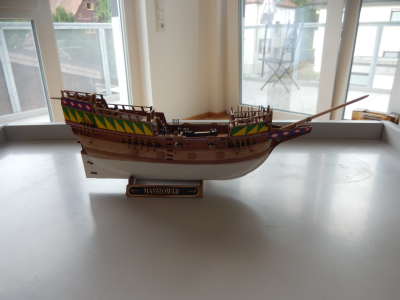
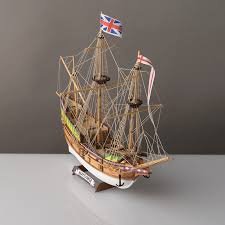
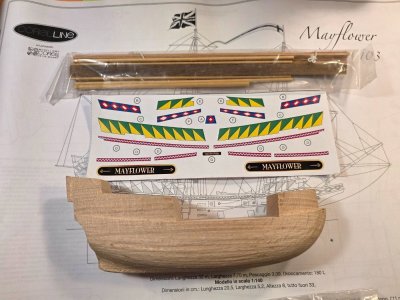
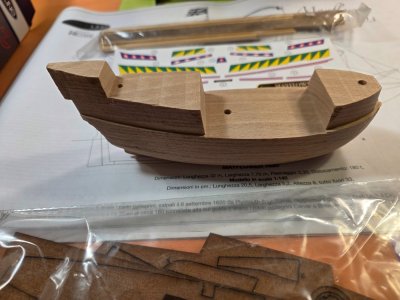
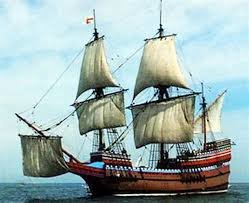
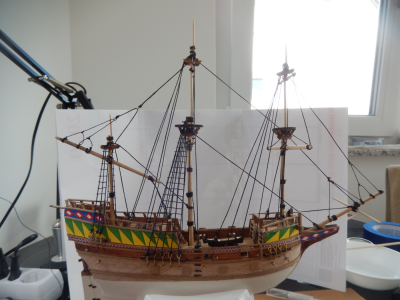
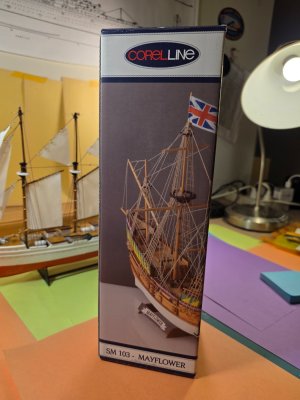
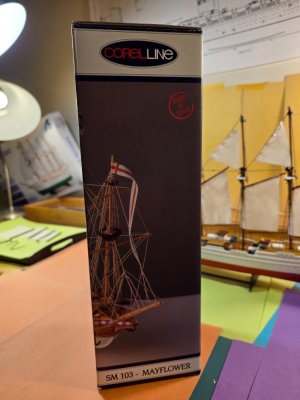
JacquesCousteau -- Yes, indeed! My next build is the Mayflower 1620 kit 1/140 scale from Corel.

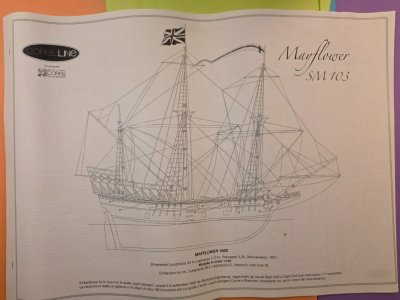
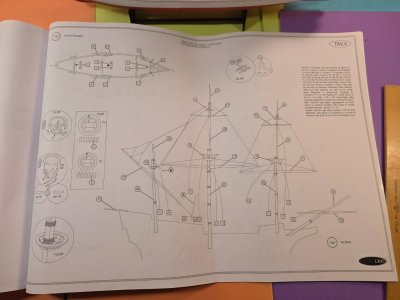
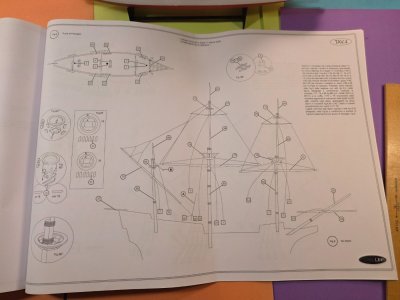
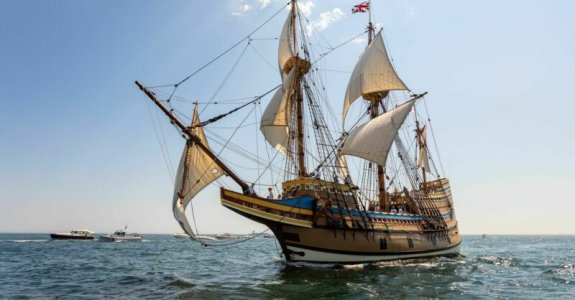
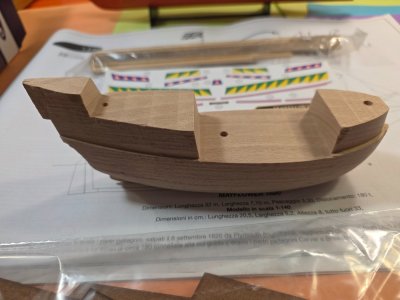
While the build is small scale, the rigging is for real, as you can see from the 3-pages of Rigging Plans that come with the 16-page set of drawings for the Mayflower. The kit looks like higher quality than Artesania Latina, so kudos to Corel there. It is also my first attempt at a solid hull with laser-cut planking and decking. I'm not necessarily a "Mayflower" fan (my people came later on the S.S. President Lines to Los Angeles) and I just picked this kit because I wanted to try Corel, having heard good things and seeing good build logs of Corel kits on this site (and it was ON SALE for under $100).

My original plan was to "step up" from the intro rigging job of the Esmeralda / J.S. de Elcano, to the more sophisticated / realistic rigging job of the Mayflower 1620 kit -- but we all know how that turned out! It's a nice looking model and presents a micro-fine rigging challenge.

Has anyone out there done this kit? There are a couple of resources for this kit on SoS, but no build logs for this specific kit (there is a decent build log for this kit on MSW). I think I will skip doing a Build Log for the Mayflower 1620 1/140 scale (because a good one already exists). This time out I will just build it.

1776130171261.png


images.jpg

20260413_203117(0).jpg

1000015135.jpg

1000015136.jpg

1000015138.jpg

1000015139.jpg

1000015140.jpg

1000015142.jpg

1000015143.jpg

Mayflower 1.jpg

mayflower-ocean-sail-restoration-plymouth.jpg

1776129967634.png
 
Last edited:
21. Esmeralda / JS de Elcano Build Log

Day 5 of Rigging the masts, sails, booms, gaffs, stays, bowsprit, halyards, blocks, rings, dolphin spike, and everything else that can be rigged on the Esmeralda. I'm exhausted!

I can't say I'm super happy with this build. I've been going on about how the "instructional" videos stink, are incomplete, and just plain wrong compared to the model kit and the only picture of the fully-rigged Esmeralda -- the box top of the Artesania Latina model kit box (which has key mistakes that differ from the videos). There are no other design drawings or diagrams and there is NO rigging plan. The videos lack several key rigging sequences, like the full bowsprit rigging, rigging of the gaff sails, and tying off all the square sails to 3 eyehooks each on top decks.

Someone suggested doing the research to see how frame of reference vessels are rigged up, and I found 3 or 4 build logs and there is plenty of relevant rigging information from ships like the Gorch Fock, the Star of India, and the Nippon Maru on this site. Pictures of these 3 beautiful windjammers at full sail attached. I also went back to the source and found some pictures of the real Juan Sebastian de Elcano that show how the rigging blocks are used to run sails up and down the masts / halyards. The last picture is of the J.S. de Elcano under full sail. A beautiful ship.

I ran out of dark mahogany thread after rigging the stay sails and the 4 booms, so I did the bowsprit in gray thread and did a double-wind for the bowsprit rigging just because. I toyed with the idea of coloring over the gray thread with a black stain marker, but I don't want to get stain on the hull. Maybe I will color the gray thread when I do a sand / restain of the bowsprit now that everything that should be rigged to the bowsprit is.

Still have to replace the wooden blocks at the tops of each mast and then do the running rigging by attaching the blocks to the tip ends of the square sails and the gaff sails.

And then do all 4 sails on the foremast -- mainsail, topsail, topgallant, and royal sails (if I have the terminology right). Run the rigging lines to tighten through all 19 sails and tie off the foremast sails to present the ship under full sail, if possible. Need to shape the sails, especially the foremast sails, the fore-and-aft sails (jiggermasts), and the 3 stay sails atop the 4 masts. Doing any work at the top of the masts is particularly treacherous because any rigging above the gaff sails can simultaneously make the whole rigging job go from taut to limp and back again with each added line tied.

Needless to say, I won't go on about how wicked hard the last 2 days of rigging has been. Is there such a thing as "Rigging Angry"?

I'm pretty much had it with the Artesania Latina's instructional (useless) videos, lack of design drawings, lack of rigging plans. Pretty much can't wait to finish this one off so I can move on to my next build (and you know what that is). I learned some things about rigging that I will take with me to the next build. Mostly about how model kits stray from reality and use mass production methods to give us model kits like this "Easy, Level 1" build. But I won't look fondly on this ship when I put her in the cabinet.

Suffice it to say that my first foray into rigging a sailing vessel by doing this particular A/L kit was frustrating. I was hoping to learn more about rigging IRL but the kit really gets in the way of the build. I literally did and undid the rigging for the stay sails 3 different times: first, I had them backwards because the video has them going in backwards...thanks A/L. Second, I lost tension in the mizzen mast and the fourth mast and it took me a while to get everything to tighten up at the same time. And finally, when I did it right, it looked pretty good.

Since I've gotten this far, I'm planning on finishing the Esmeralda. But I don't plan on spending more than 2-3 more days on this build.

View attachment 592178

View attachment 592179

View attachment 592180

View attachment 592181

View attachment 592182

View attachment 592183

View attachment 592184

View attachment 592185

View attachment 592186

View attachment 592187

View attachment 592188

View attachment 592189

View attachment 592190

View attachment 592191

View attachment 592192

View attachment 592193

View attachment 592194

View attachment 592195

More progress pics on the Esmeralda rigging project. I know that the Brass rings are way out of scale, but the prospect of attaching 108 of the 2 mm Brass rings (after it took me over an hour to do one sail) was not happening. And this build is not about reality, it's kind of like a Lego build.

Also, the tension on all of the rigging lines so far is pretty good. I'm losing tension mostly in the two aft masts, but once I moor each of the mast booms to the 3 eyehooks on top decks, the tension should be set.

I have pretty much decided not to complete fabrication of the shrouds. My strategy of pre-wetting the cross pieces for the shrouds did not work and the work to put just one shroud crosspiece on the shroud vertical lines is ridiculous. I'll have another chance to do shrouds on the Mayflower 1620 kit from Corel.

The rigging job will be done once I attach the 4 gaff sails to each of the 4 masts and attach every sail to a wooden block that gets moored down by tying to the eyeholes on top decks.

The blocks for the 3 jibs and foremast stay sail will throw the line to a brass cleat at the bow. I will then add the 6 red personal flotation devices, the 2 water pump guns, and the 4 tenders / jollyboats (will drill holes for the 8 davits, 2 for each tender). Oh, and the brass anchors, which are a bit small for this scale. The real anchors on the J.S. de Elcano are black.

20260413_190747.jpg

1000015110.jpg

1000015113.jpg

1000015126.jpg

1000015128.jpg

1000015130.jpg

1000015131.jpg

1000015133.jpg
 
Last edited:
I think I will skip doing a Build Log for the Mayflower 1620 1/140 scale (because a good one already exists). This time out I will just build it.
That definitely looks like a much more useful set of plans! (Although I suppose that's a very low bar to cross, pretty much anything is better than nothing). There still will likely be things left unclear in the instructions, so it may be helpful to consult sources like the book linked to below to get a sense of how to handle certain aspects of the build and rigging. I would also still suggest making a build log, if you're up for it. They can be useful of questions come up during the build.

 
That definitely looks like a much more useful set of plans! (Although I suppose that's a very low bar to cross, pretty much anything is better than nothing). There still will likely be things left unclear in the instructions, so it may be helpful to consult sources like the book linked to below to get a sense of how to handle certain aspects of the build and rigging. I would also still suggest making a build log, if you're up for it. They can be useful of questions come up during the build.

Thanks for the reference, Jacques Cousteau. I already have "American Sailing Ships: Their Plans and History' and "The Built-Up Ship Model" both by Charles G. Davis. I think most everything he wrote holds up 80-90 years later, because he wrote with great knowledge towards the end of the golden age of sailing ships. I will read this text (new to me) especially the 5 chapters on masting, standing rigging, and running rigging with great interest.
 
Last edited:
If you don’t mind me suggesting that you should consider swapping out the rings holding the sails to smaller ones, it would be a big improvement.
Bryian - I took your advice and switched out the 6 mm brass rings for the smaller 2.5 mm brass rings. You are right, the rigging will look much better with the running rig going through smaller channels. The proportions were way off with the larger rings.

I ran out of 2.5 mm rings after switching 98 of them, I still need 10 more to switch the rings on the mainsail, topsail, topgallent, and royal sails. So off to the hobby shop.

I will redo the top mast rigging again (for like the 4th time) and the jibs once I have every ring switched over.

Thanks for the heads up!

20260414_165538.jpg

20260414_165241.jpg

20260414_165235(0).jpg
 
22. Esmeralda Build Log

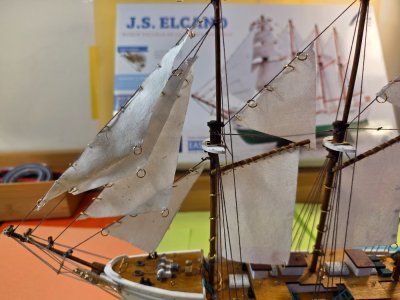
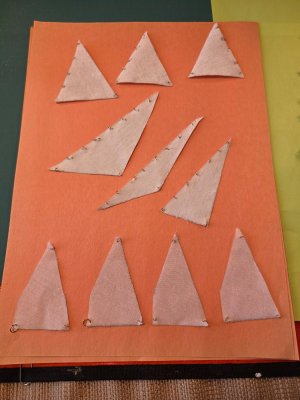
I switched out 108 6mm brass rings in exchange for 2.5mm brass rings. The larger rings were easier to put on the sails, but they were out of proportion to the rest of the Esmeralda. The easy build is not always the best build.

I ran out of 2.5mm rings part way through. Luckily, they had 2.5mm brass rings at my local hobby store. 200 for $2.49.

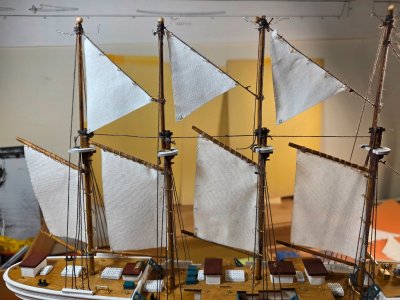
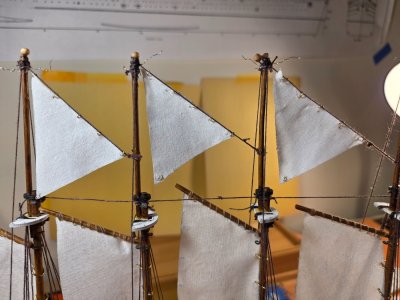
I had a chance to re-rig the top stay sails with the smaller rings and they look great. It took all day to get this far and it was alot of work, but the ship looks much better. So it was worth the effort.

All the sails got a fresh cost of 50/50 Elmer's Glue-All and water and acrylic white marker to show a consistent white sheen and bendability throughout.

Tomorrow, re-rigging the jibs and the foremast stay sail to the bowsprit. Then attaching about 24 wood blocks to the sail spars and tying off the booms and gaffs to eye loops on top deck. Then running all the rigging through the wood blocks. I got rid of all the silly wire that was part of the original video rigging plan.

And if I'm lucky, I will have time to trim the mainsail, topsail, topgallent sail and royal sails, but the wooden blocks will need to be on by then. Also, the 4 gaff (fore-and-aft) sails need to be tied up (they are not sewn on to a mast, gaff or boom).

Trying to finish before I go out of town on Thursday, but I need to take my time. The slower you build the better the results.

20260414_223031.jpg

20260414_215529.jpg

20260414_215524.jpg

20260414_210418.jpg

20260414_210128.jpg

20260414_210041.jpg

20260414_215535.jpg
 
Last edited:
23. Esmeralda Build Log

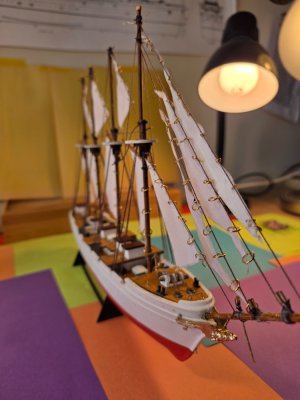
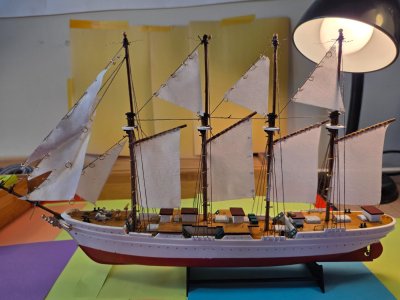
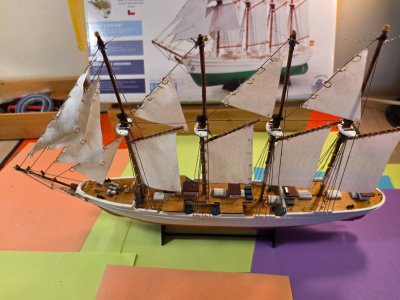
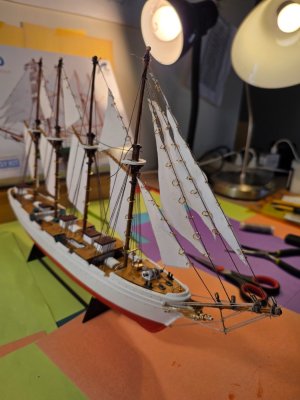
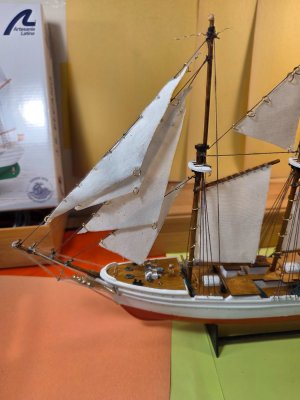
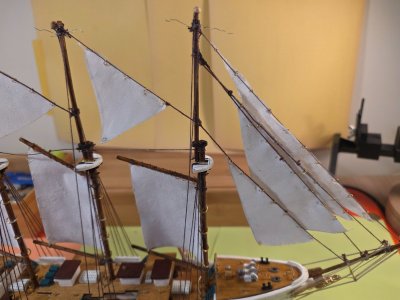
UPDATE: I saw the rigging mistake caused by a misaligned corner ring on the fore corner (leech?) of the flying jib and I fixed it. I tried to delete the old pictures but they were only moved to the end of the post.

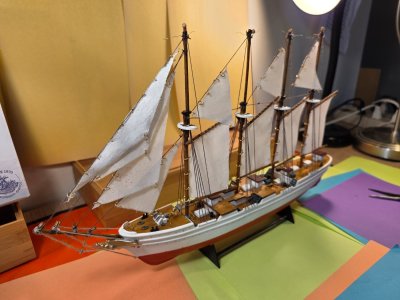
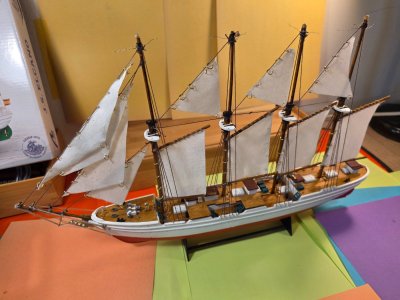
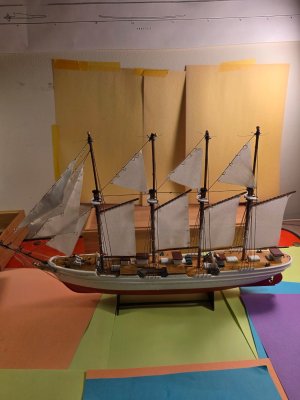
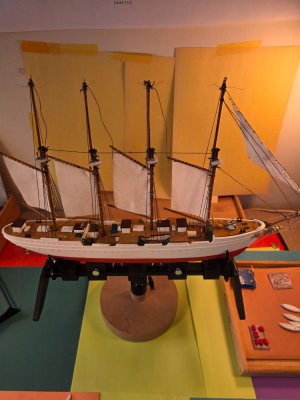
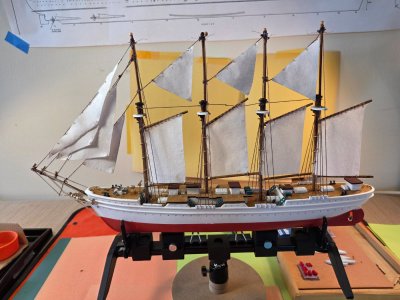
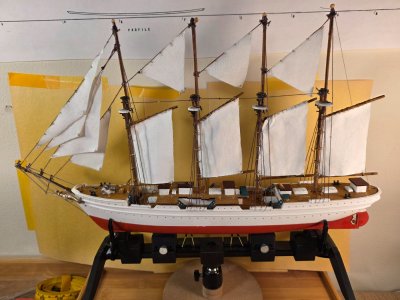
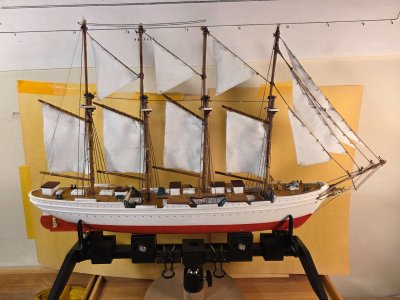
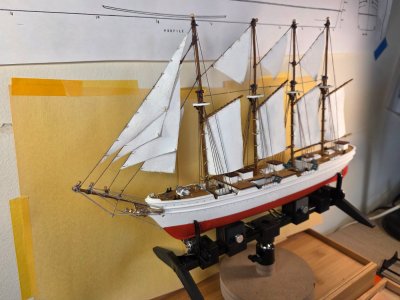
This is as far as I'm going to get before I leave for my 5-day trip tomorrow. It doesn't look like much progress, but in the last 2 bench sessions I managed to:

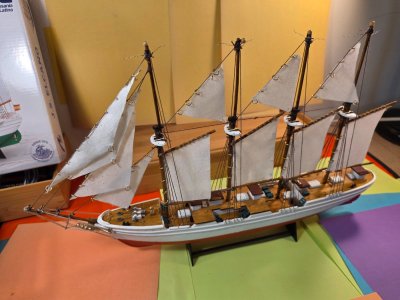
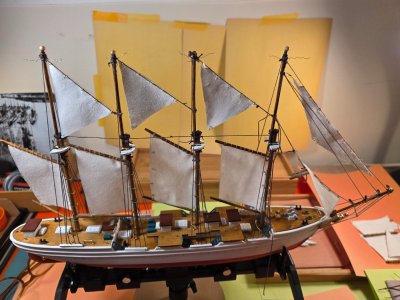
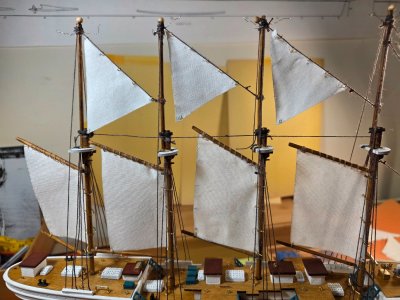
1. Give all the sails another coating of glue solution to make all 19 sails consistently sheened and bright white (like the kit). They are now bendy and pliable and I'm starting to introduce billows into the mainsail set of 4 square sails and the gaff (fore-and-aft) sails.

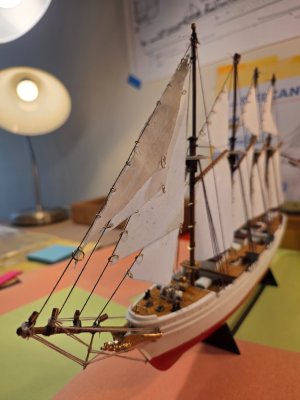
2. Locked down the jibs and foremast stay sail rigging to the bowsprit. It took a long time to get the jibs to lay right atop the bow. Had to do some extra knots to get all the jibs lined up correctly. I'm happy how the jibs came out. Next, I need to attach wood blocks and running rigging to 12 of 19 sails. That's going to be at least a 2-3 day job. I will be using the Biddlecome book on rigging throughout.

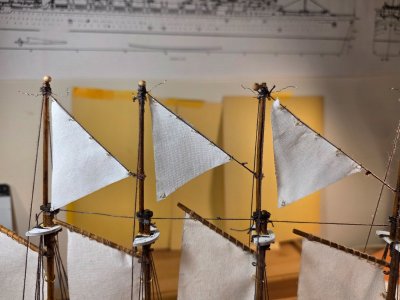
3. Re-stained all my booms, gaffs and masts where exposed to get consistent teak colored masts. Cut off the cheesy wire rigging atop all 4 masts. The wood blocks for the gaff sails and square sails are now going to be tied in with rope yarn instead of attached with wire.

Still trying to decide whether to re-do the bowsprit rigging underneath the figurehead now that I have black rope yarn. The double lines running through the bowsprit rigging look off to me because of the gray thread I used. Now that I have black rope yarn I can rig with a single thread instead of the double.

Lots more to do, and I'm going to take my time.

QUESTION FOR SoS:

The portholes on the Esmeralda are cut into the plastic ABS hull, so they look pale and lifeless if color is not added. The box top picture has the port holes in their raw state. I want to color them in.

Based on some build logs of ships like Star of India and Gorch Fock (similar windjammer like the Esmeralda) it looks like there are 2 ways to color the port holes -- black paint or colored (black or dark brown) pencil. I might try coloring some of the holes with a dark art pencil to see how it looks. I am less inclined to paint the port holes because my painting skills at that small level (<1mm) are not very good. I think I would make a mess of painting.

See pictures of her hull. The last picture is the real Esmeralda under way. The portholes are pronounced and visible in real life.

Any advice on coloring the Esmeralda's port holes?

20260415_193913.jpg

20260415_193327.jpg

20260415_192831.jpg

20260415_192042.jpg

20260415_190653.jpg

20260414_215529.jpg

20260414_215520.jpg

20260415_194018.jpg

20260415_194027.jpg

20260405_205107.jpg

FB_IMG_1774579926764.jpg

20260415_192224.jpg

20260415_192101.jpg

20260415_144055.jpg
 
Last edited:
Looking at the recent pictures of the Esmeralda, I just noticed that the foremast is leaning / canting forward by about 3-5 degrees, most likely as a result of my rigging the jibs and foremast staysail a bit too tight to the bowsprit.

I will have to fix this when I get back in a few days. There's always something!

20260415_220216(0).jpg

20260415_220139.jpg

20260416_072842.jpg
 
Back
Top