

• Win a Free Custom Engraved Brass Coin!!!
    As a way to introduce our brass coins to the community, we will raffle off a free coin during the month of August. Follow link ABOVE for instructions for entering.
  • PRE-ORDER SHIPS IN SCALE TODAY!

    The beloved Ships in Scale Magazine is back and charting a new course for 2026!
    Discover new skills, new techniques, and new inspirations in every issue.

    NOTE THAT OUR FIRST ISSUE WILL BE JAN/FEB 2026

Royal William, Euromodel, a retro log

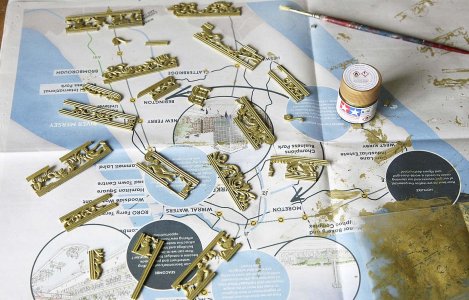
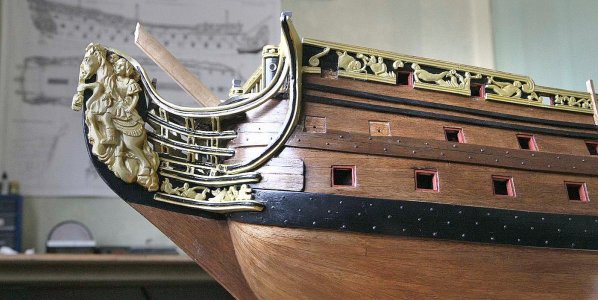
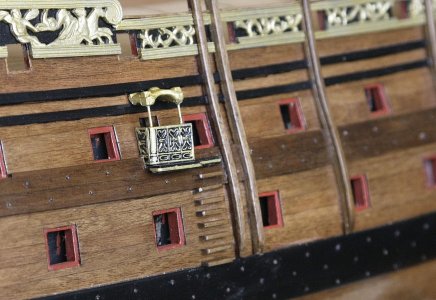
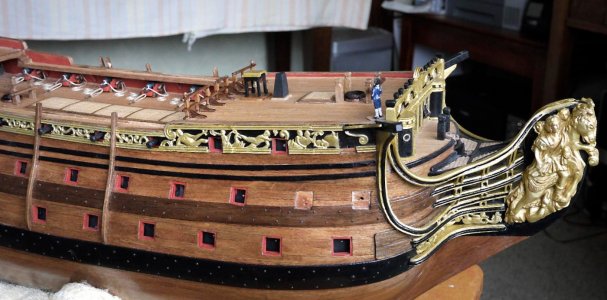
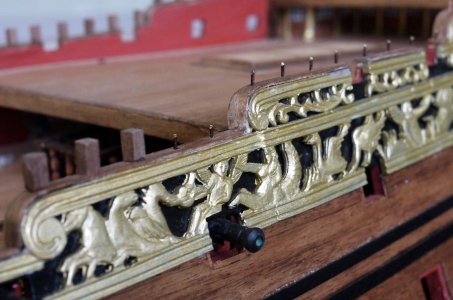
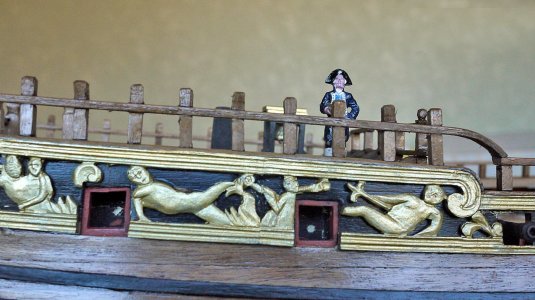
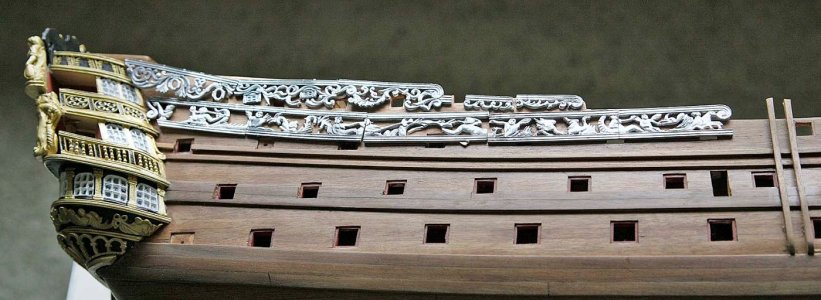
This part is about my experience with the castings along the side of the hull, this is a standout feature on this model. They eventually ended up looking very impressive, better than I’d first expected and once again I was pleased with what Euromodel had done here especially with old technology.

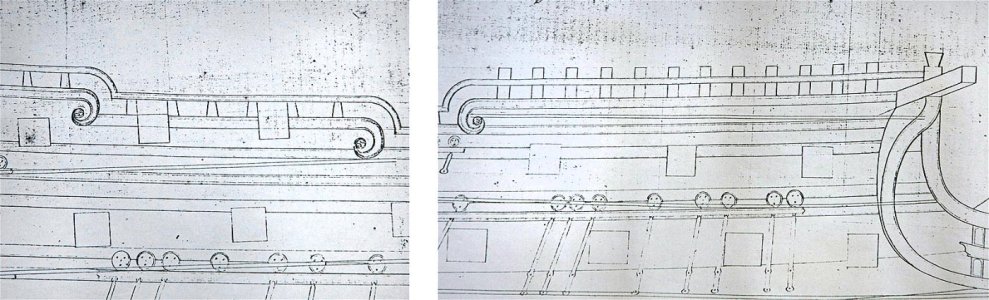
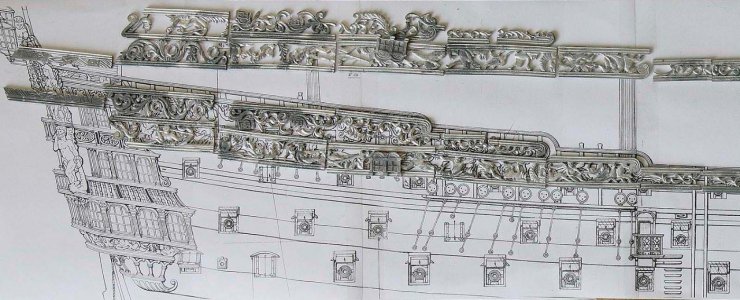
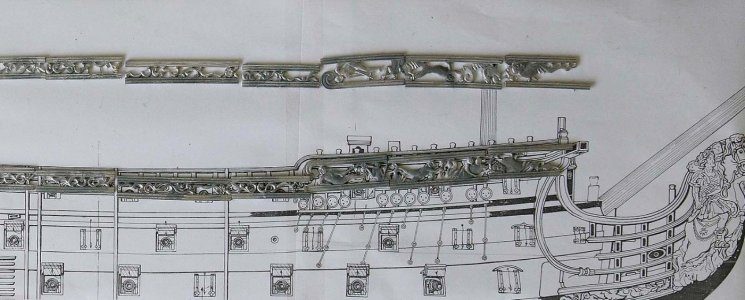
I first copied the relevant part of the plans to help identify and make sense of the many cast parts. The casting was crisp and very good indeed needing little cleaning. Most of the pieces needed some modification to make them a good fit, on some I needed to cut out the figures from within the casting and fixed them into position separately. Once the fit was established I cut out the necessary gun ports. I found doing all this difficult as the many parts needed to be accurately held in place without glue so that the cutting and filing resulted in a good fit.

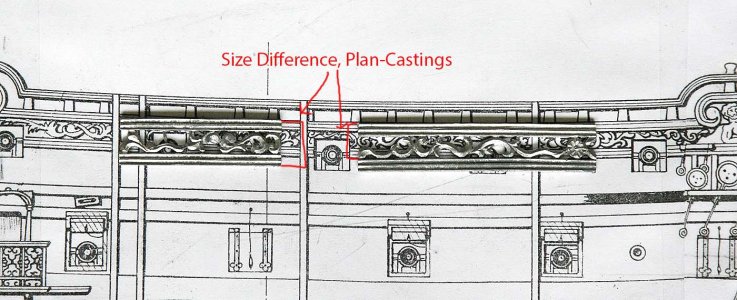
That's the good part, now the not so good. I had made the hull as near to the plan as possible, however when I offered up the castings along the waist I saw that they did not match up with the plan by a fair amount! The lower trim of the casting should have lined up with the centre of the gun ports, my castings were not the same as the plans but were too deep by about 5mm and ended up level with the lower edge of the gun ports. It wasn’t possible to reduce their height, I had the choice of putting them on as they were or adding to the height of the hull sides which would really have been a none starter. I prepared and painted them ready to mount, you will see the result in my next post.
295.jpg


296.jpg


298.jpg


294.jpg


297.jpg
 
Hello. Thanks visiting my log and a big thank you for the likes that I’ve been given, once again they are very much appreciated.

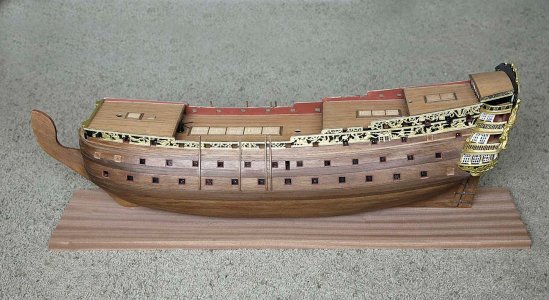
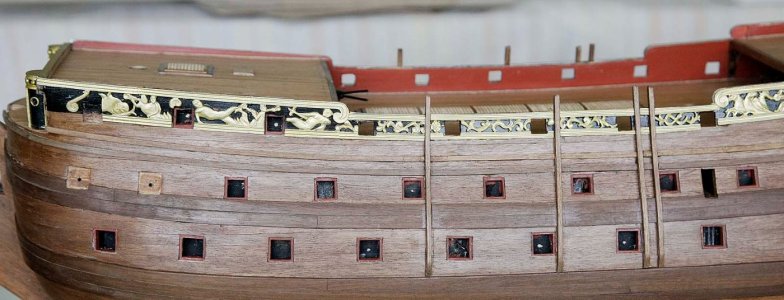
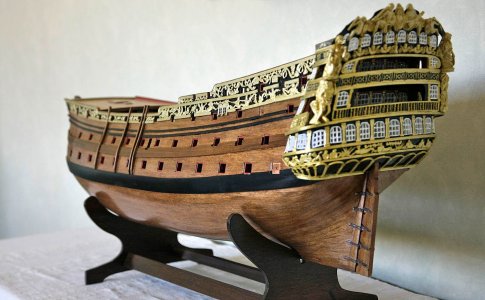
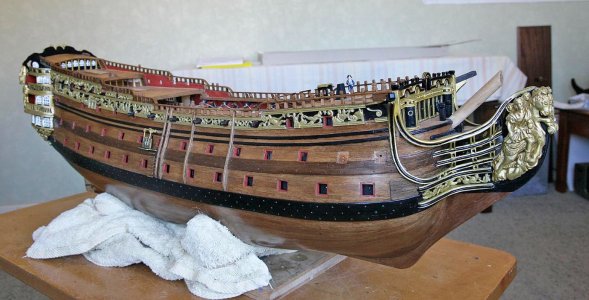
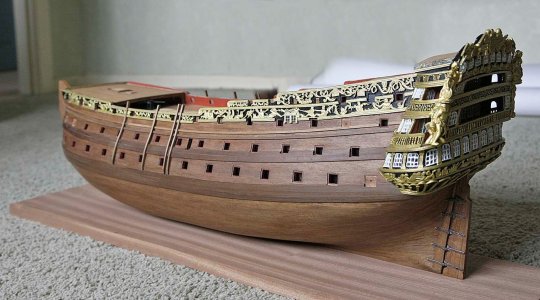
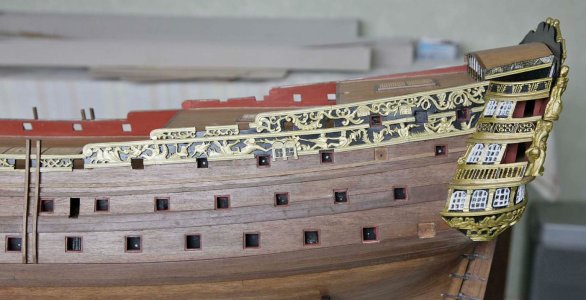
As I mentioned in my last post today will be just photos of the hull castings having been fitted, a little filler was needed to disguise the joins but other than that and a bit of a touch up it went well. The castings I think look far better than any PE. that I’ve seen, although not as finely detailed they have great relief and look like genuine carvings which give it real presence.

299.jpg


300.jpg


301.jpg


302.jpg


303.jpg
 
Hello. Thanks visiting my log and a big thank you for the likes that I’ve been given, once again they are very much appreciated.

As I mentioned in my last post today will be just photos of the hull castings having been fitted, a little filler was needed to disguise the joins but other than that and a bit of a touch up it went well. The castings I think look far better than any PE. that I’ve seen, although not as finely detailed they have great relief and look like genuine carvings which give it real presence.

View attachment 565234


View attachment 565240


View attachment 565241


View attachment 565242


View attachment 565243
A beautiful job, Ken. She is looking great.
Regards, Peter
 
Hello, and again thanks for your likes.

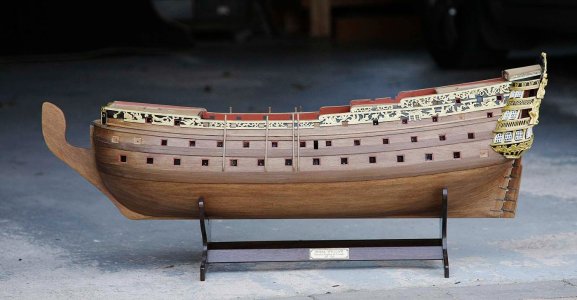
Continuing, I fitted the rail capping using 4 x 1 mm strip, using my soldering iron to get the curved ends, again it worked well.

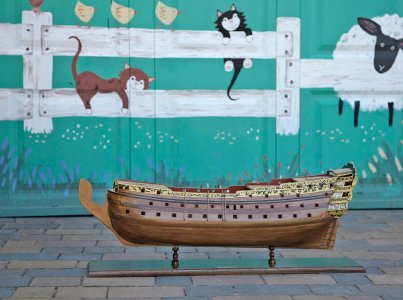
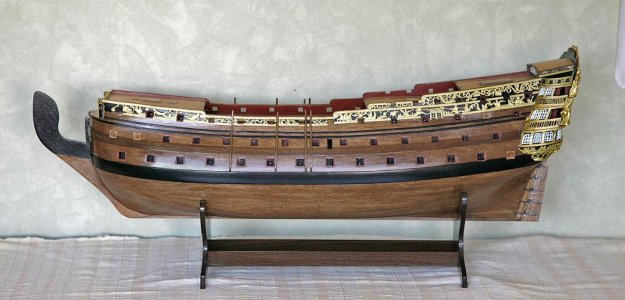
I also touched up the red port linings as they were looking a bit jaded and cleaned up the hull. I also couldn't resist putting on a first coat of diluted poly. I wanted to see how it would take after all the glue that had been spilt on it before deciding whether to paint bellow the water line or not. The good news is that it went on perfectly with no staining issues, just a lovely even colour of the wood, it looked great so the decision was made to leave it a natural wood finish.

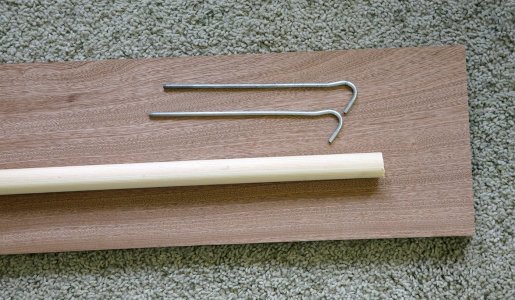
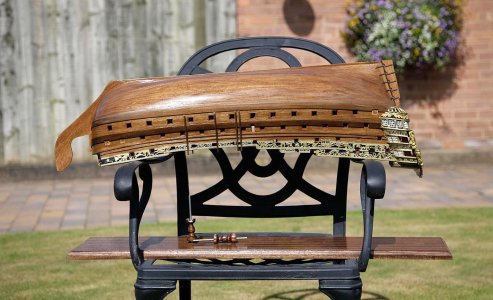
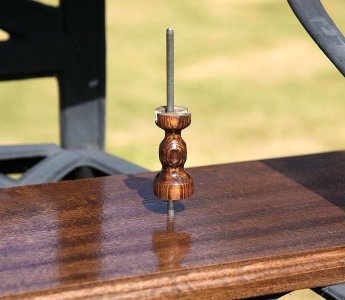
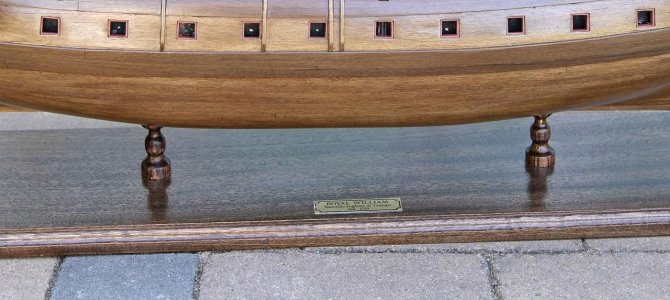
I decided not to use the stand provided so got I nice piece of mahogany to use as a plinth and routed it, I used an old broom handle for the columns which I turned and some tent pegs. I stained and varnished it, I think that the pictures are self explanatory.

A happy Xmas to you all.


305.jpg


306.jpg


307.jpg


308.jpg


309.jpg
 
Hello Everyone and thanks for following.

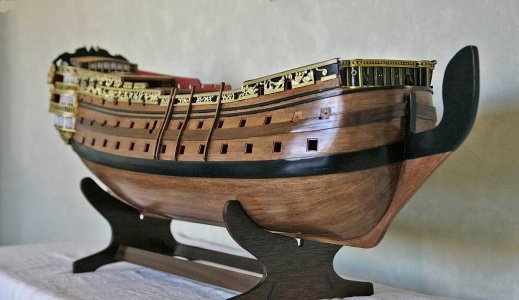
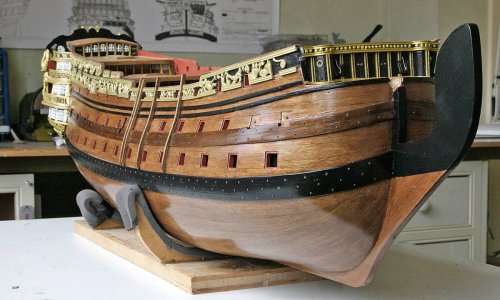
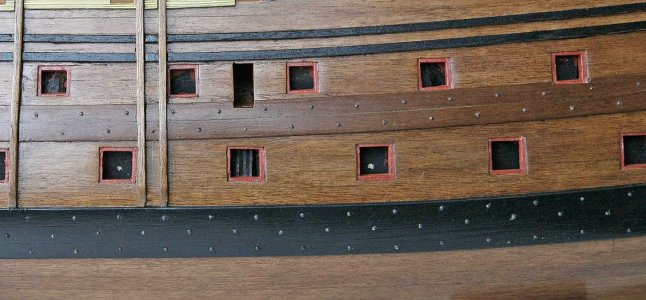
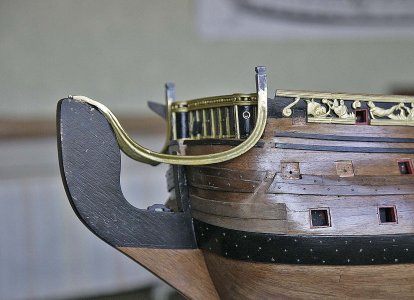
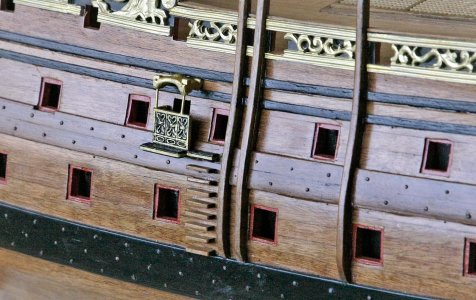
Next I painted the main wale and prow black just to add a bit of contrast. I then put into the wales some dome headed nails which I first blackened. These were only to add a bit of character and were never meant to be representative of any historical accuracy, I just liked the way that they looked.

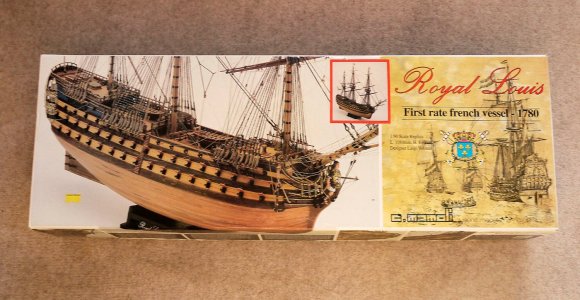
Hey look at what Santa dropped into my stocking, another old school kit. More when I start it’s build log.


311.jpg

+
312.jpg


313.jpg


314.jpg


315.jpg

Happy Xmas Ken!

001.jpg
 
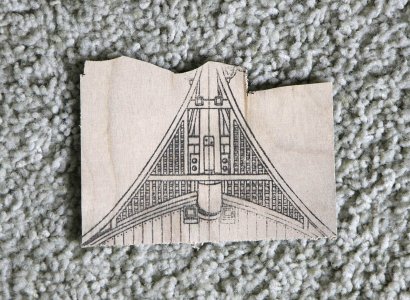
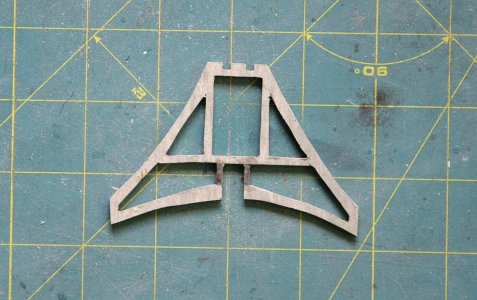
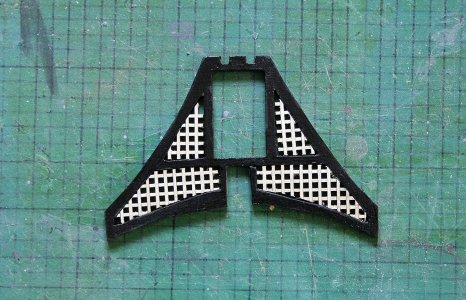
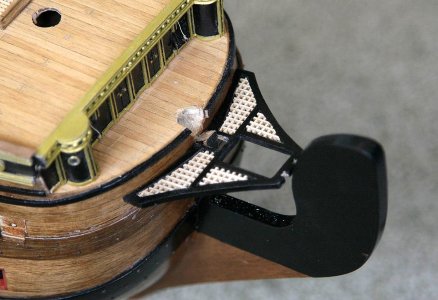
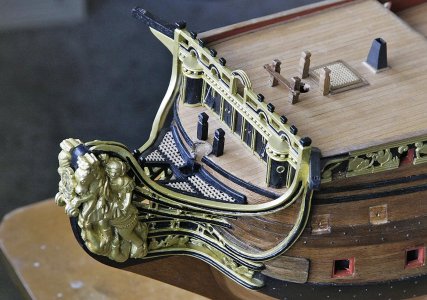
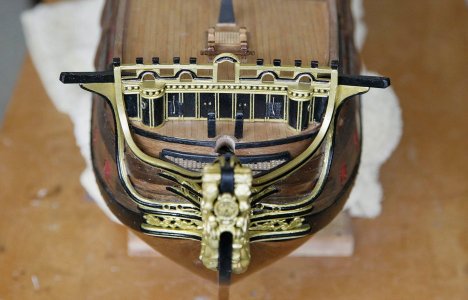
Todays short update is how I made the head gratings. Again I looked for an easy way. I decided to cut it out from ply and paint it. I transferred the image from the plans onto a piece of 2mm ply and cut it out. I made up the gratings and cut them to shape. I sealed and painted the frame before fitting the gratings. I know it was a sort of cheats way of doing it but I think it looks ok and is probably better than I could have managed by building it up in a traditional way, it was certainly much quicker.


317.jpg


318.jpg


319.jpg


340.jpg
 
Hello Everyone and thanks for following.

Next I painted the main wale and prow black just to add a bit of contrast. I then put into the wales some dome headed nails which I first blackened. These were only to add a bit of character and were never meant to be representative of any historical accuracy, I just liked the way that they looked.

Hey look at what Santa dropped into my stocking, another old school kit. More when I start it’s build log.


View attachment 566170

+
View attachment 566171


View attachment 566172


View attachment 566173


View attachment 566174

Happy Xmas Ken!

View attachment 566175
Bravo Ken. Beautiful. Cheers Grant
 
Next job is the head rails.

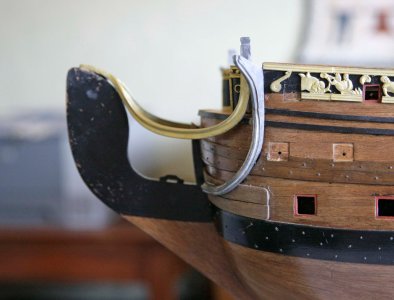
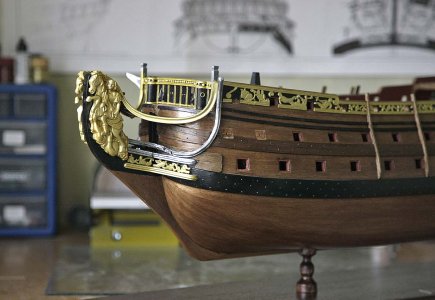
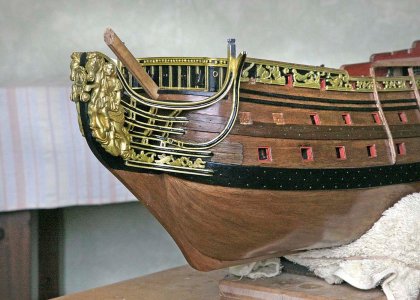
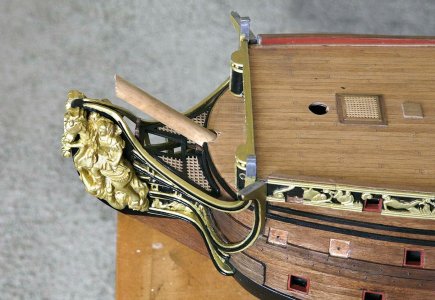
The rails were far more difficult to build up than they first appeared. The cast pieces needed to be bent forming what were three dimensional curves and each in some sort of relation to the others so that they eventually fit together forming the structure, this was done by eye as there was only a 2D plan. I tried heating the castings with my solder iron, the heat it gave was too localised and I managed to snap the first top rail which caused me quite a problem. I ended up using a gas BBQ lighter to heat the casting, it was trial and error, too hot and they quickly melted, not hot enough and they snapped.

I eventually ended up with an acceptable structure. The uprights are made up from cast strips which needed to be cut and angled to fit between each rail, I think that they would have been easier to cut and sand by using 4x4 wood strip instead. I painted them and then fitted that beautifully cast figurehead.

It's like everything else on this build I managed but felt that if I were able to do each section again I could easily have improve now them knowing what was needed and how it should have been done, I think it's called a learning curve.

The attached photos show how I built this part up.

Thanks for looking


341.jpg


343 - Copy.jpg


344 - Copy.jpg


345 - Copy.jpg


346 - Copy.jpg


347.jpg


349.jpg
 
Next job is the head rails.

The rails were far more difficult to build up than they first appeared. The cast pieces needed to be bent forming what were three dimensional curves and each in some sort of relation to the others so that they eventually fit together forming the structure, this was done by eye as there was only a 2D plan. I tried heating the castings with my solder iron, the heat it gave was too localised and I managed to snap the first top rail which caused me quite a problem. I ended up using a gas BBQ lighter to heat the casting, it was trial and error, too hot and they quickly melted, not hot enough and they snapped.

I eventually ended up with an acceptable structure. The uprights are made up from cast strips which needed to be cut and angled to fit between each rail, I think that they would have been easier to cut and sand by using 4x4 wood strip instead. I painted them and then fitted that beautifully cast figurehead.

It's like everything else on this build I managed but felt that if I were able to do each section again I could easily have improve now them knowing what was needed and how it should have been done, I think it's called a learning curve.

The attached photos show how I built this part up.

Thanks for looking


View attachment 566713


View attachment 566714


View attachment 566715


View attachment 566716


View attachment 566717


View attachment 566718


View attachment 566719
Those headrails and figurehead give her such a better view, Ken. You did a nice job!
Regards, Peter
 
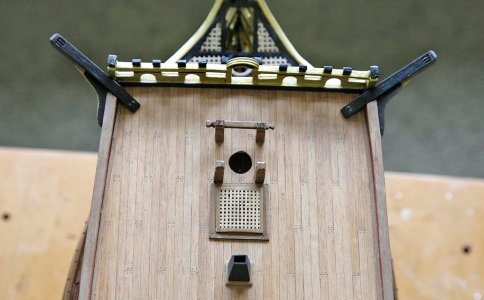
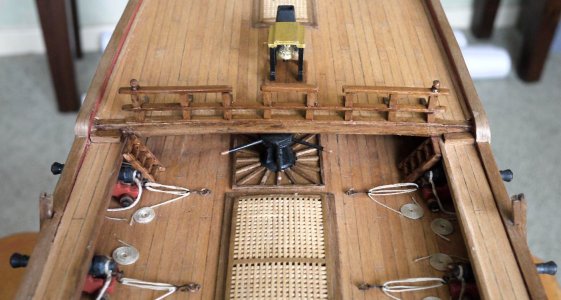
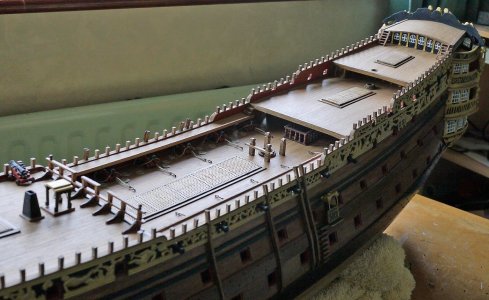
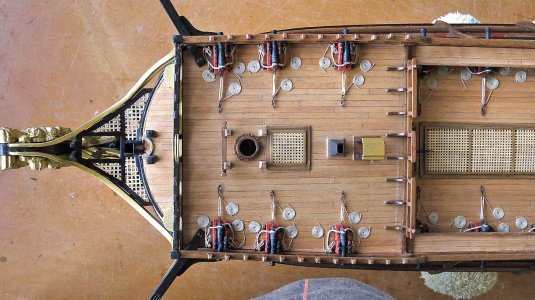
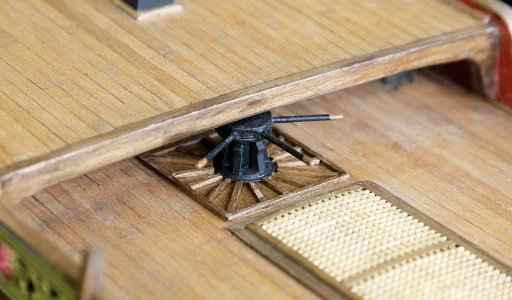
Hello, again thanks for those likes. Today I’m showing the foredeck made up. Knights head, collar for bowsprit, forward rails, catheads, gratings, chimney, bitts, capstan, side entry ports and ladders.

It sounds easy when I put it down on paper but these took quite some time to complete often with a remake.

Thanks for watching


351.jpg

352.jpg

354.jpg

355.jpg

356.jpg

357.jpg
 
This part is about my experience with the castings along the side of the hull, this is a standout feature on this model. They eventually ended up looking very impressive, better than I’d first expected and once again I was pleased with what Euromodel had done here especially with old technology.

I first copied the relevant part of the plans to help identify and make sense of the many cast parts. The casting was crisp and very good indeed needing little cleaning. Most of the pieces needed some modification to make them a good fit, on some I needed to cut out the figures from within the casting and fixed them into position separately. Once the fit was established I cut out the necessary gun ports. I found doing all this difficult as the many parts needed to be accurately held in place without glue so that the cutting and filing resulted in a good fit.

That's the good part, now the not so good. I had made the hull as near to the plan as possible, however when I offered up the castings along the waist I saw that they did not match up with the plan by a fair amount! The lower trim of the casting should have lined up with the centre of the gun ports, my castings were not the same as the plans but were too deep by about 5mm and ended up level with the lower edge of the gun ports. It wasn’t possible to reduce their height, I had the choice of putting them on as they were or adding to bitlife play the height of the hull sides which would really have been a none starter. I prepared and painted them ready to mount, you will see the result in my next post.
View attachment 564982


View attachment 564983


View attachment 564985


View attachment 564986


View attachment 564987
Based on the historic Royal Navy warship, this model reflects traditional craftsmanship with detailed wooden components, ornate carvings, and historically inspired fittings
 
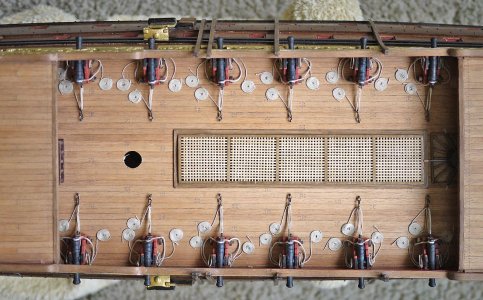
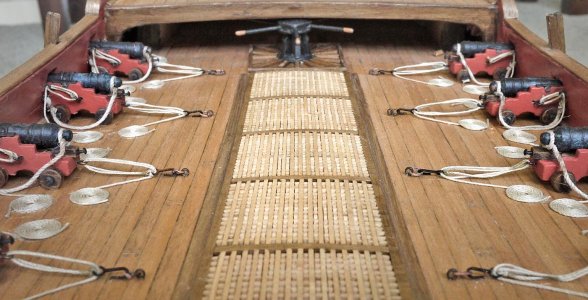
I’d been making up the canons a few at a time so that I didn't end up with a load to do at once, I only rigged them simply and quite basic.

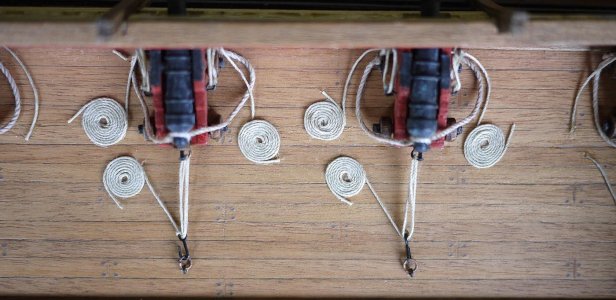
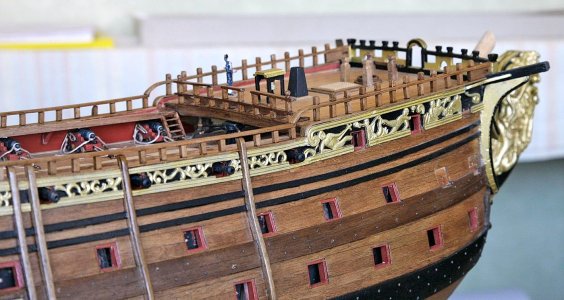
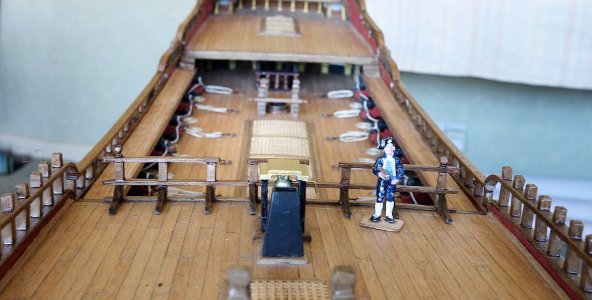
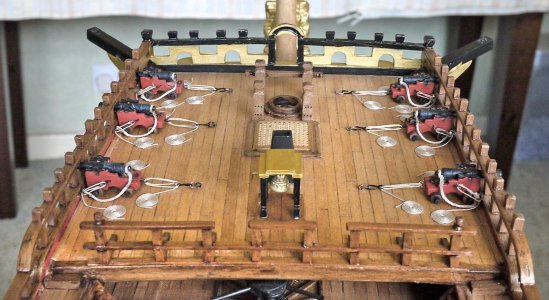
I completed the 12 canons on the main deck. I painted, mounted and rigged them.

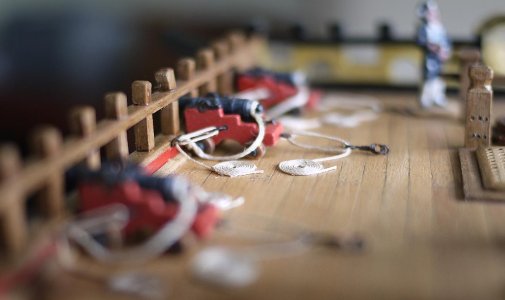
Those of you who've followed my other logs will know of the problem I have with my hands, handling the small blocks needed for full rigging was going to cause me a great deal of frustration, 72 of them needed! I decided to rig the canons as best as I could without using blocks, a few different methods were tried and the one that you see I thought was the most effective, I think that unless you are actually looking for the blocks you wouldn't know that they weren't there. There will also be the overhead walkway and the boat in the waist to distract the eye so I'm happy with my compromise.

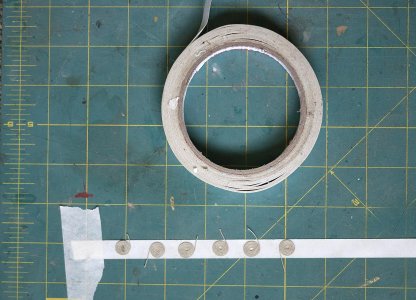
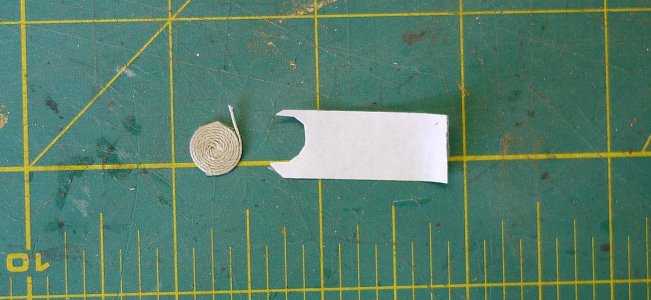
The method that I adopted for making the rope coils was with double sided sticky tape. I run out a length of tape sticky side up, leaving the backing on and held it down in place with masking tape. It was quite easy to start and make up the coil using tweezers, this tape is very sticky and when the backing is removed is invisible. I cut the coil out, removed the backing and then pressed into place. In the end I was making a coil in about a minute and it's so sticky you can't get the cord off it when coiled.

Thanks for visiting my build

358.jpg

360.jpg

361.jpg

362.jpg

363.jpg
 
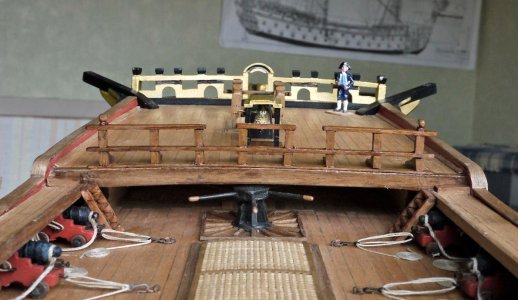
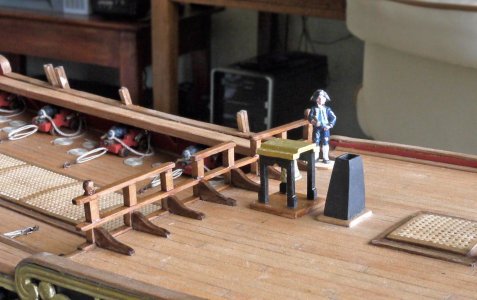
Today's post tells of the completion of the waist gangway, ladders, waist bitts, belfry and I think they're called breast rails.

The bitts and ladders were pretty standard fare. The belfry was built from the kits cast parts. I put a plinth under the belfry, it wasn't called for but it just looked more complete with one.

The rails are a feature of the foredeck so I was very disappointed that Euromodel didn’t show it on any of the plans or refer to it other than to show a plan view from above which only really showed the top rail. I had to search online for pictures of how it looked. I made it up from 31 pieces ( uprights, crosspieces and braces ) cut from supplied strip material, I had to guess the sizes to cut pieces pieces, it wasn't really difficult and looked okay when it was done, I was now getting use to making things for this model as I went along, it just seemed to be a normal feature of the kit and wasn’t causing me any insurmountable problems, YET.


364.jpg

365.jpg

366.jpg

367.jpg
 
Last edited:
Hello, Thanks for viewing and your very welcome likes.

Today I am showing you the side rails and how I made them up. I’ve shown a picture of the plan which shows what the rails look like, this is the only guide that is given and there was no mention of how to make them.

I used 4x4 walnut strip for the uprights cut to the correct length. I used pins and glue to attach them, then when in place I fitted the hand rails finishing off by putting on the top of the columns again using pins. I think the photos will explain.


370.jpg


368.jpg


369.jpg


371.jpg


372.jpg


374.jpg


375.jpg
 
Beautiful model,must be one the more difficult kit and most heavy with all its casting details?
Hi Henslow, Thanks for your compliment. At first I thought that it would be a difficult model to make but once I got started it didn’t seem to be any harder than most of the large three deck boat kits on the market, just a bit more work making parts that are normally ready made, but it gave me more satisfaction making those parts. Yes it’s a heavy model, I find it a bit difficult carrying it to my garage when it needs cleaning. Ken
 
Back
Top