• At some point from current UTC of 19:40:30 Thursday up to UTC 19:40:30 Friday, it is possible the forum might be disabled for a short period of time for updates and upgrades. Another notice will be posted for status. Note: Central Standard US time would be 14:40:30 Wednesday up to 14:40:30 Thursday
  • SUBSCRIBE TO SHIPS IN SCALE TODAY!

    The beloved Ships in Scale Magazine is back and charting a new course for 2026!
    Discover new skills, new techniques, and new inspirations in every issue.

    NOTE THAT OUR NEXT ISSUE WILL BE MARCH/APRIL 2026
  • Win a Free Custom Engraved Brass Coin!!!
    As a way to introduce our brass coins to the community, we will raffle off a free coin during the month of August. Follow link ABOVE for instructions for entering.

School for Shipmodel Building School for model ship building

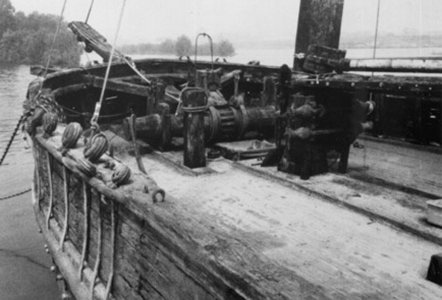
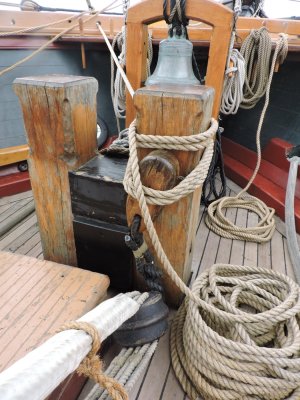
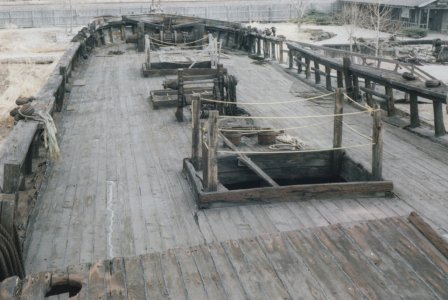
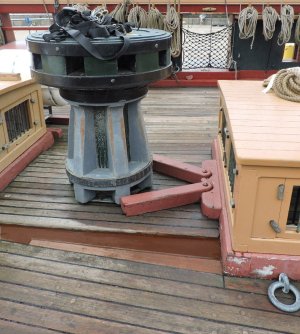
I’m sure that all of these replicas, Niagara included, have electric powered bilge pumps to actually pump the bilges. The one in your photo if it actually works is probably to give passengers a taste of what being a crew member in 1813 was like.

Roger
 
Another factor that may be germane starting about 1815 - small companies utilizing rivers as a power source start manufacturing ship components and furniture as early mass production. The price would probably be below what it cost an individual yard to make their own version. The quality would be known and predictable. My money is on almost every yard - private or Navy jumping on the opportunity to avoid having to self manufacture parts that were a bother and inefficient for them to make themselves. By 1850 there were ads for wooden knees! The iron work stuff is so specialized that any shipyard would probably take every opportunity use an outside source.
I wonder if there are archives of the earliest newspapers with engravings in ads and catalogs of early 19thC. companies that our field has not been explored and reproduced for us.

I would expect that conclusions about the Lake Erie fleet which are based upon on our extrapolations from customary practices at the time would be best tempered by the facts we do know for certain about the pressing circumstances of their construction.

From Wikipedia:

The construction of the fleet was largely supervised by Noah Brown, a shipwright brought in from New York City. The keels of two brigs were each constructed out of a single 14-by-18-inch (360 mm × 460 mm) black oak log. Due to a lack of iron, the timbers that made up the hulls were joined using wooden pins called treenails. In place of the oakum and pitch normally used to caulk ships, lead was used. The timbers used in the brigs were still green, as the builders did not have the luxury of time to allow the wood to dry properly. A total of 65 cannons were shipped to Erie to arm the fleet; Hamilton approved the production of 37 cannons by a foundry in Washington, D.C., and the rest were moved from Sackets Harbor. Tigress and Porcupine were launched in April 1813, Scorpion in May, and the brig Lawrence on 25 June. Niagara was launched on 4 July along with Ariel.

Wikipedia cites Knoll, Denys W (1979). Battle of Lake Erie: Building the Fleet in the Wilderness. Washington, DC: Naval Historical Foundation.

While there may have been some specialized manufacturing concerns making "generic" ships' parts as early as 1815 in active seaports and shipbuilding areas on the Atlantic Coast and certainly we know that the large naval yards had shops turning out an entire range of standardized parts for their ships (and, of course, they had armories making their armament,) the ships built at Erie PA at that time were built "in the field" as it were. Erie, PA was something of an outpost at the time with what they called a "naval station." As they imported a master builder from New York, I don't expect there was a large number of skilled shipwrights available in the local population. From all indications, the ships built at Erie to form the U.S. Lake Erie fleet were "quick and dirty." Notably, they were built of green wood. I have no idea how they managed to caulk a ship with lead. I expect what they did was to sheath the hull with lead plate over something like pitch-soaked felt or something which was an established practice for stopping leaks at that time. Given these facts, I would expect that all of these vessels were equipped with as much pumping capacity as they could be because their builders had to expect they would be heavy "leakers."

Interestingly, the mentioned shortage of Iron is significant. If they didn't have enough for spikes and drifts, to secure the planking, I would expect that while at that time in history, blacksmithing was a very common skilled trade so there was likely little shortage of the skilled labor needed, there would not be enough iron to fabricate any but the most essential items aboard that were at that time customarily made of wrought iron. Perhaps anchors were made of iron, but I would expect that the block strops, eyebolts, goosenecks, and other usually metal items would have been of a much earlier type which did not require iron if at all possible. Those options would be known to any shipwright or rigger back then.
On the other hand, the author of the Wikipedia article may have mistakenly concluded that the use of treenails was due to a shortage of iron. That said, if they were building a ship of green timber, which must be expected to shrink, treenails wouldn't have been my first choice for a fastening! :D
 
There is an old water route between Pittsburgh PA and Erie PA. Up the Allegheny River watershed across a portage and down a small river that could be navigated by bateaux. Pittsburgh is an old settlement dating from the 1750’s and by 1812 was an iron working center. I don’t believe that there was a shortage of iron.

From my Navy Nuclear days, I remember that lead wool was used to caulk joints in lead shielding.

Roger
 
Back
Top