• Win a Free Custom Engraved Brass Coin!!!
    As a way to introduce our brass coins to the community, we will raffle off a free coin during the month of August. Follow link ABOVE for instructions for entering.
  • SUBSCRIBE TO SHIPS IN SCALE TODAY!

    The beloved Ships in Scale Magazine is back and charting a new course for 2026!
    Discover new skills, new techniques, and new inspirations in every issue.

    NOTE THAT OUR NEXT ISSUE WILL BE MARCH/APRIL 2026

School for Shipmodel Building School for model ship building

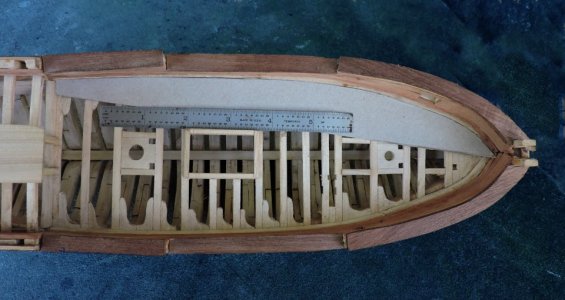
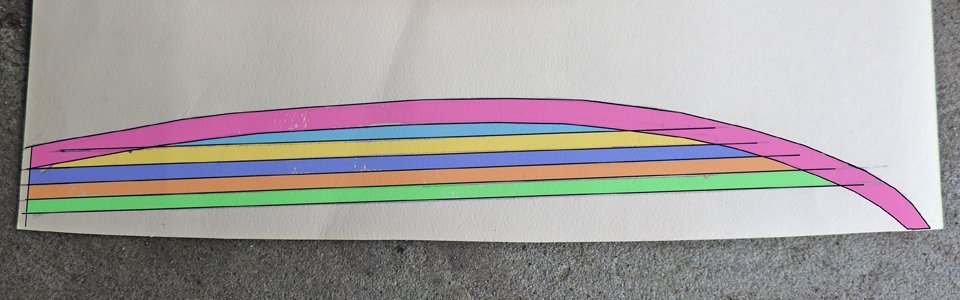
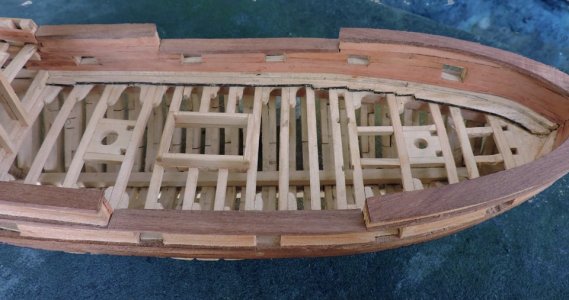
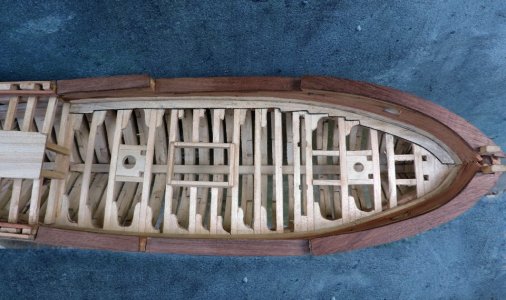
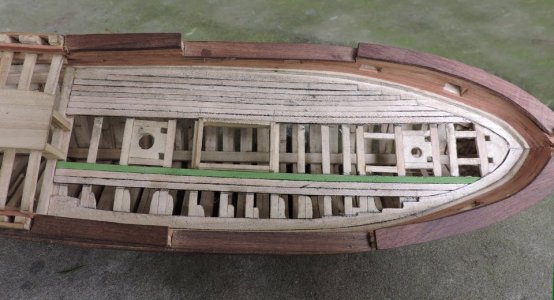
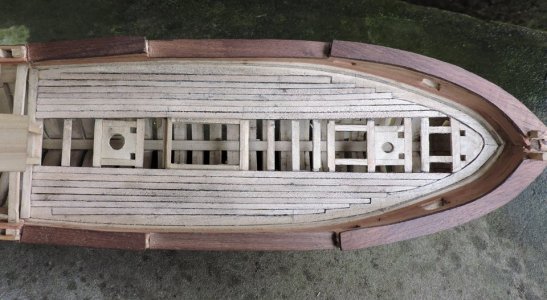
Decking on the Hawke model will be 7 inch wide so to begin the margin plank has to be shaped. Using cardboard the edge is cut and fit to the waterway. I am using a ruler to keep the planking running parallel to the hatch coamings.

deck planking1.jpg
 
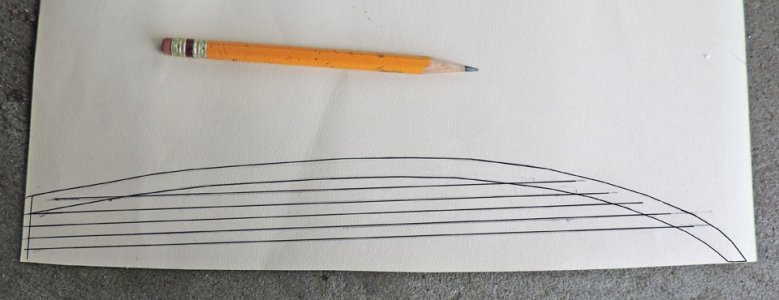
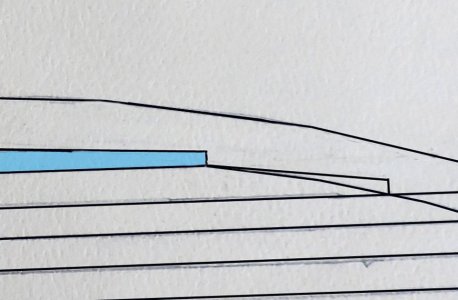
Taking the cardboard pattern i traced in on paper then drew the inside edge and the planking width

deck planking2.jpg

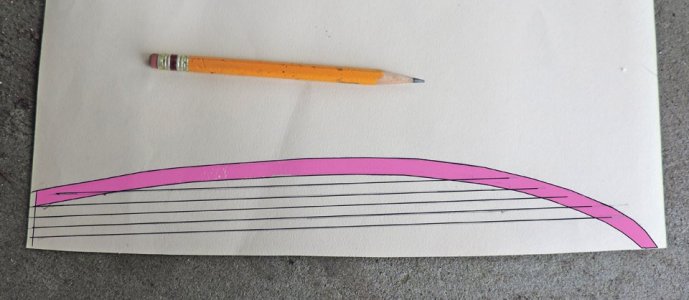
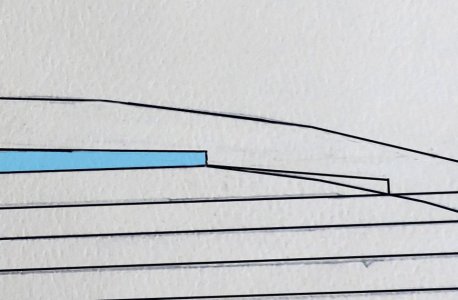
You can see the planking ends in a sharp point so they have to nib into the margin plank

deck planking3.jpg

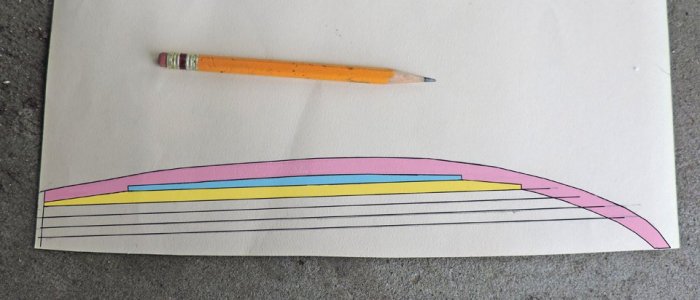
starting with the first plank

deck planking6.jpg

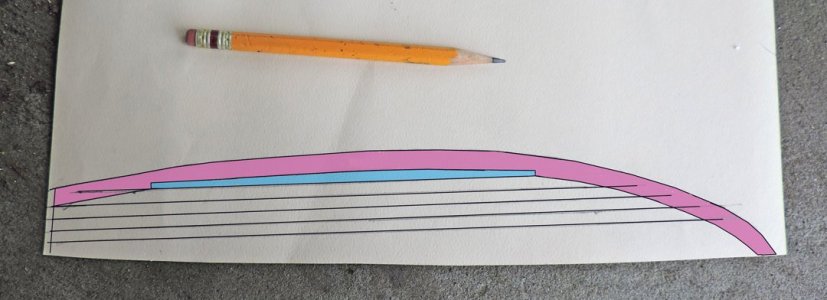
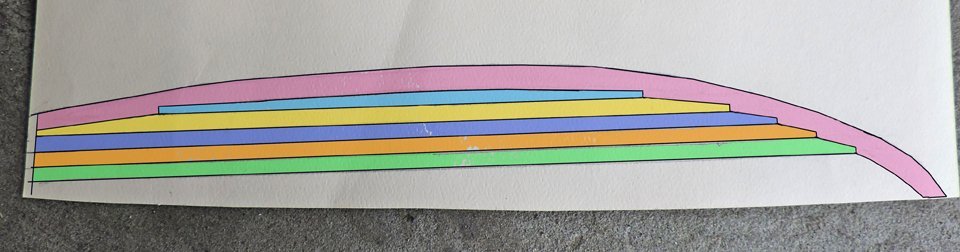
as the planks get closer to the bow the point gets less and less

deck planking4.jpg

the end of the planks start where they meet the margin plank and go back to point of the last plank

deck planking5.jpgdeck planking7.jpg

deck planking8.jpg
 
Taking the cardboard pattern i traced in on paper then drew the inside edge and the planking width

View attachment 594625

You can see the planking ends in a sharp point so they have to nib into the margin plank

View attachment 594626

starting with the first plank

View attachment 594629

as the planks get closer to the bow the point gets less and less

View attachment 594627

the end of the planks start where they meet the margin plank and go back to point of the last plank

View attachment 594628View attachment 594630

View attachment 594631
Thanks for that, Dave. That makes a lot of sense. One thing, though, how deep is the nip, around one third the width of the plank? Or make it the same nip each time?
 
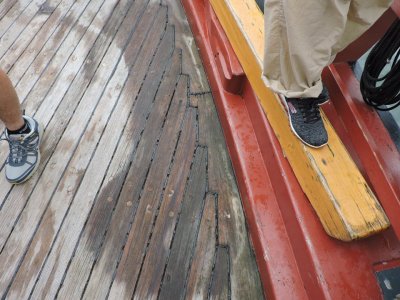
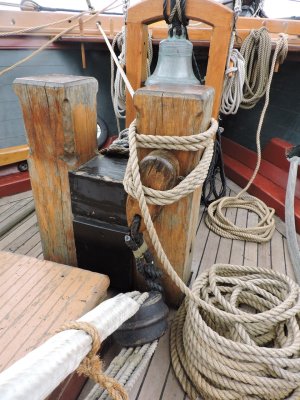
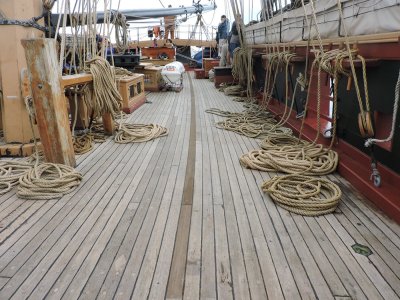
the number of planks you want to nib into the margin plank is up to you. Historically accurate is only up to a point unless you have actual documentation and archaeological evidence. Here is the Niagara

DSCN6869.JPG

but the nibbing stops as it approaches the center of the bow


DSCN6988.JPGDSCN7005.JPG

So all in all historical accuracy has a point where it goes into a best guess
 
Last edited:
Thanks for that, Dave. That makes a lot of sense. One thing, though, how deep is the nip, around one third the width of the plank? Or make it the same nip each time?

Because of the arc around the bow the nib is getting shorter and shorter until it is not needed. the actual nib depends on the width of the plank. its length is determined at the point where it crosses the margin plank. As far as the width i do not know if there was a standard but it looks like 1/3 the width of the plank. Laying the planking and nibbing it into the margin plank is a cut to fit.

deck planking5.jpg
 
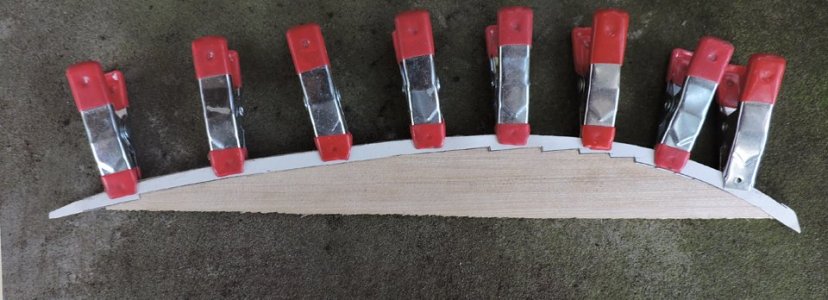
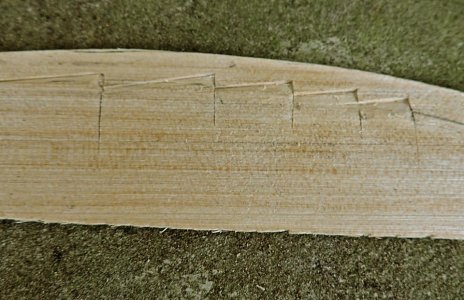
After you lay out the shape of the margin plank and you have a cardboard pattern it is time to cut wood. The cardboard pattern is now clamped to a sheet of wood

deck planking9.jpg

Those nibs have to be accurate and a clean straight cut so what i did was using a new sharp blade i cut along the pattern then made a slice at an angle to the cut. This is giving me that sharp edge. Best to always use a new and sharp blade so it cuts where you want and does not tend to follow the wood grain
.

deck planking10.jpg

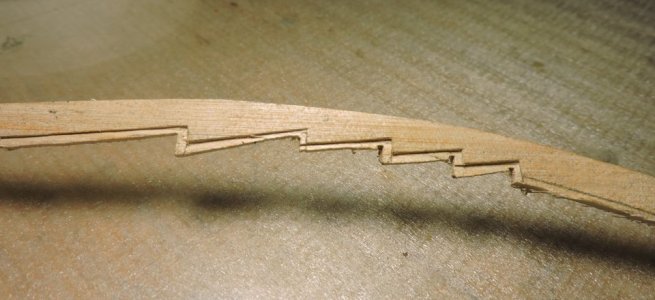
Having that edge now i cut away the wood with my scroll saw.

deck planking11.jpg

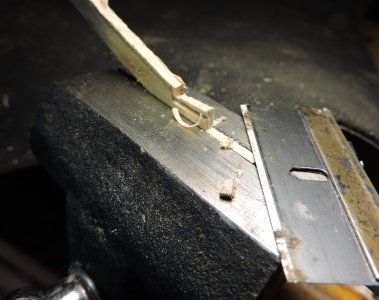
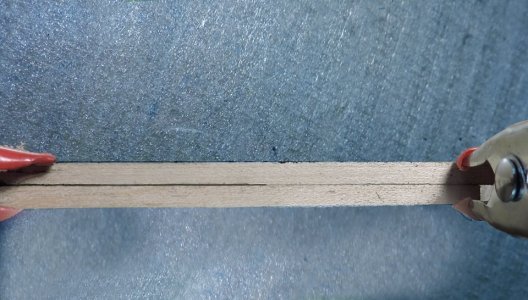
The final finish cut is done by hand in a vice by placing the edge at the top of the vice and slicing it clean to the top of the vice with a razor blade or knife. This ensures the edge is flat.

deck planking13.jpg

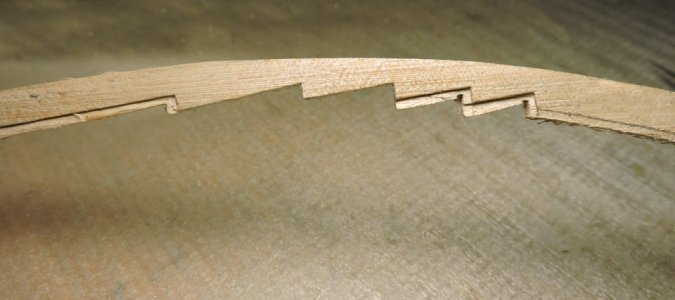
As you can see the final nib is a perfect cut. It is common the edge of a cut is not at a perfect 90 degree to the surface thus the use of a vice to make sure your cut is a perfect 90 degrees and flat. If you cut the nib with a saw you will have saw marks but cutting the final edge it is smooth and clean.

deck planking12.jpg

Installing the margin plank. Now i have to repeat the process for the other side. i would have just made two but both sides may not be a perfect match.

deck planking14.jpgdeck planking15.jpg
 
Back
Top