• Win a Free Custom Engraved Brass Coin!!!
    As a way to introduce our brass coins to the community, we will raffle off a free coin during the month of August. Follow link ABOVE for instructions for entering.
  • SUBSCRIBE TO SHIPS IN SCALE TODAY!

    The beloved Ships in Scale Magazine is back and charting a new course for 2026!
    Discover new skills, new techniques, and new inspirations in every issue.

    NOTE THAT OUR NEXT ISSUE WILL BE MARCH/APRIL 2026

School for Shipmodel Building School for model ship building

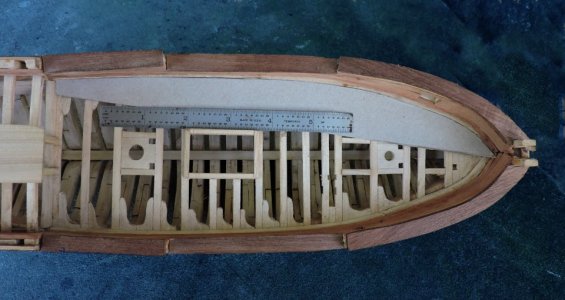
Decking on the Hawke model will be 7 inch wide so to begin the margin plank has to be shaped. Using cardboard the edge is cut and fit to the waterway. I am using a ruler to keep the planking running parallel to the hatch coamings.

deck planking1.jpg
 
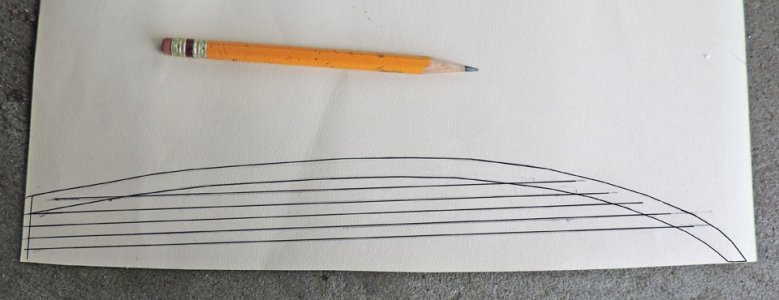
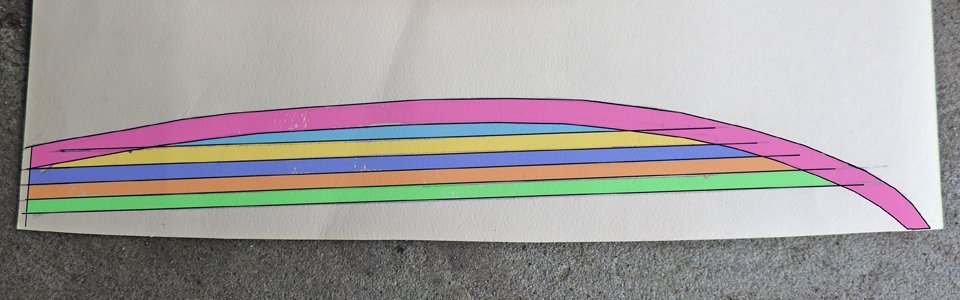
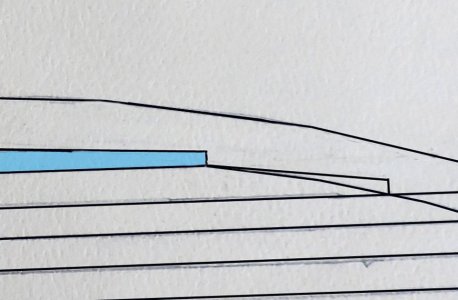
Taking the cardboard pattern i traced in on paper then drew the inside edge and the planking width

deck planking2.jpg

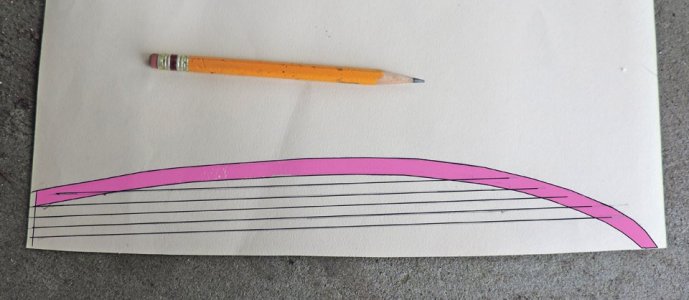
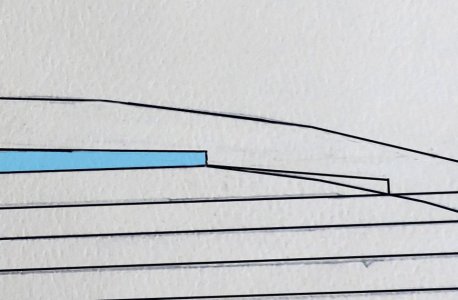
You can see the planking ends in a sharp point so they have to nib into the margin plank

deck planking3.jpg

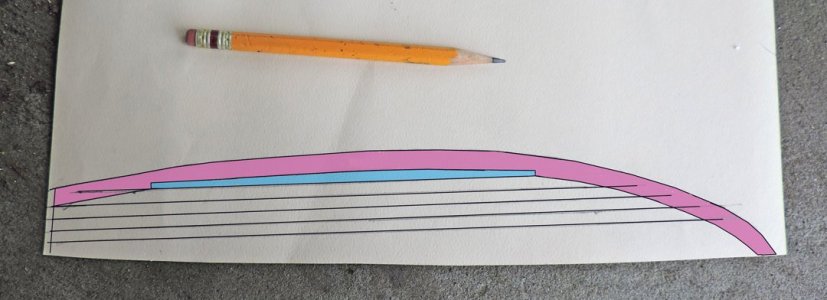
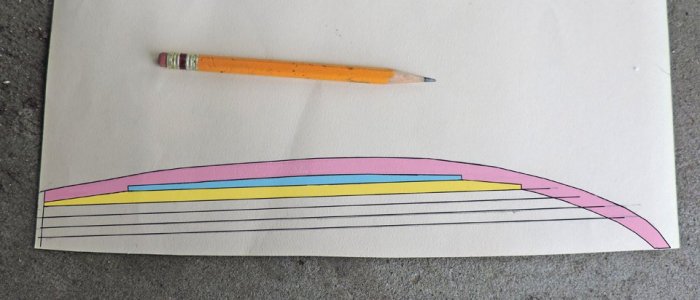
starting with the first plank

deck planking6.jpg

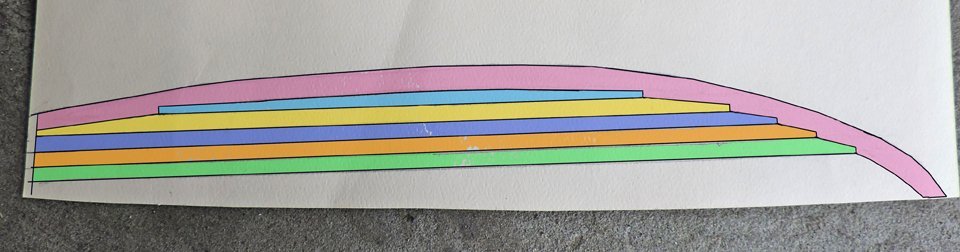
as the planks get closer to the bow the point gets less and less

deck planking4.jpg

the end of the planks start where they meet the margin plank and go back to point of the last plank

deck planking5.jpgdeck planking7.jpg

deck planking8.jpg
 
Taking the cardboard pattern i traced in on paper then drew the inside edge and the planking width

View attachment 594625

You can see the planking ends in a sharp point so they have to nib into the margin plank

View attachment 594626

starting with the first plank

View attachment 594629

as the planks get closer to the bow the point gets less and less

View attachment 594627

the end of the planks start where they meet the margin plank and go back to point of the last plank

View attachment 594628View attachment 594630

View attachment 594631
Thanks for that, Dave. That makes a lot of sense. One thing, though, how deep is the nip, around one third the width of the plank? Or make it the same nip each time?
 
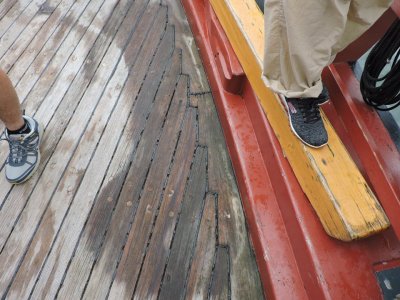
the number of planks you want to nib into the margin plank is up to you. Historically accurate is only up to a point unless you have actual documentation and archaeological evidence. Here is the Niagara

DSCN6869.JPG

but the nibbing stops as it approaches the center of the bow


DSCN6988.JPGDSCN7005.JPG

So all in all historical accuracy has a point where it goes into a best guess
 
Last edited:
Thanks for that, Dave. That makes a lot of sense. One thing, though, how deep is the nip, around one third the width of the plank? Or make it the same nip each time?

Because of the arc around the bow the nib is getting shorter and shorter until it is not needed. the actual nib depends on the width of the plank. its length is determined at the point where it crosses the margin plank. As far as the width i do not know if there was a standard but it looks like 1/3 the width of the plank. Laying the planking and nibbing it into the margin plank is a cut to fit.

deck planking5.jpg
 
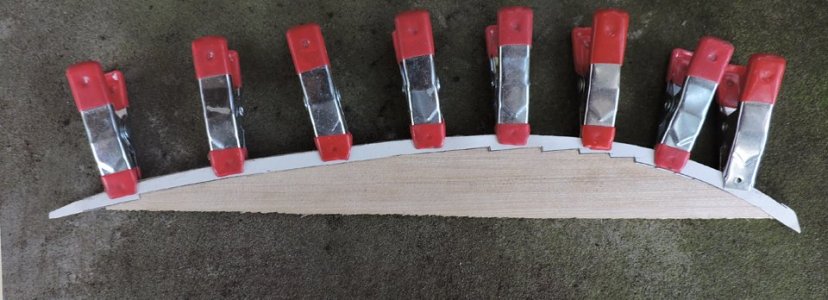
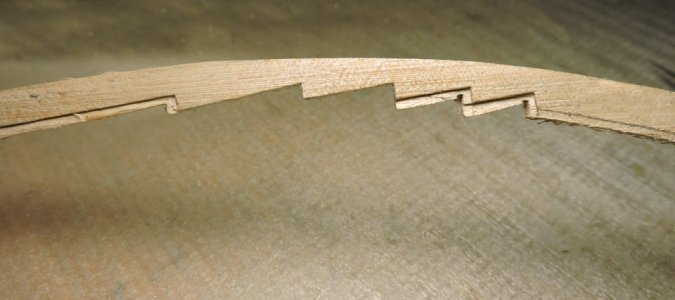
After you lay out the shape of the margin plank and you have a cardboard pattern it is time to cut wood. The cardboard pattern is now clamped to a sheet of wood

deck planking9.jpg

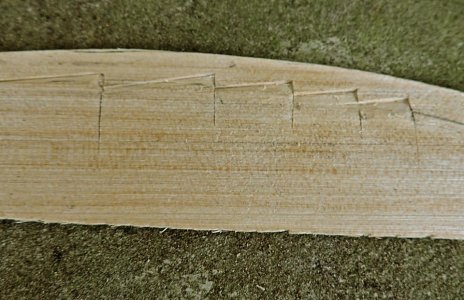
Those nibs have to be accurate and a clean straight cut so what i did was using a new sharp blade i cut along the pattern then made a slice at an angle to the cut. This is giving me that sharp edge. Best to always use a new and sharp blade so it cuts where you want and does not tend to follow the wood grain
.

deck planking10.jpg

Having that edge now i cut away the wood with my scroll saw.

deck planking11.jpg

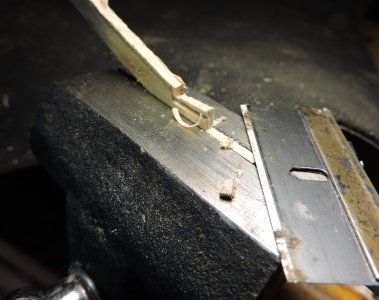
The final finish cut is done by hand in a vice by placing the edge at the top of the vice and slicing it clean to the top of the vice with a razor blade or knife. This ensures the edge is flat.

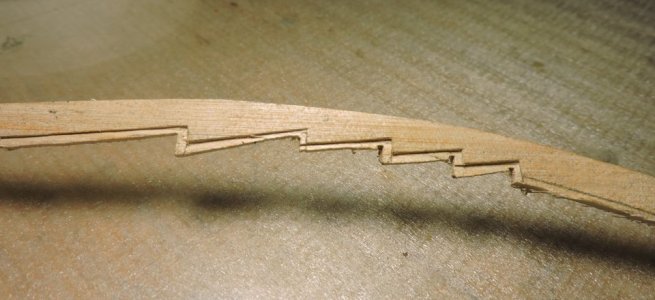
deck planking13.jpg

As you can see the final nib is a perfect cut. It is common the edge of a cut is not at a perfect 90 degree to the surface thus the use of a vice to make sure your cut is a perfect 90 degrees and flat. If you cut the nib with a saw you will have saw marks but cutting the final edge it is smooth and clean.

deck planking12.jpg

Installing the margin plank. Now i have to repeat the process for the other side. i would have just made two but both sides may not be a perfect match.

deck planking14.jpgdeck planking15.jpg
 
Before i started the deck i tested different types of caulking and the best results was to use a China Marker

deck planking16.jpg


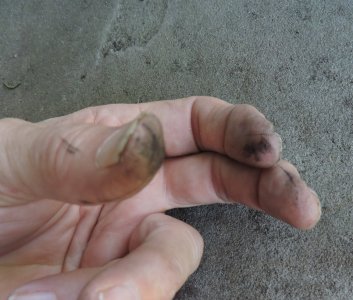
A China marker is a soft waxy marker and when two planks are presses together it fills in nice and even. The drawback is because it is soft it gets on your fingers.

deck planking17.jpg
 
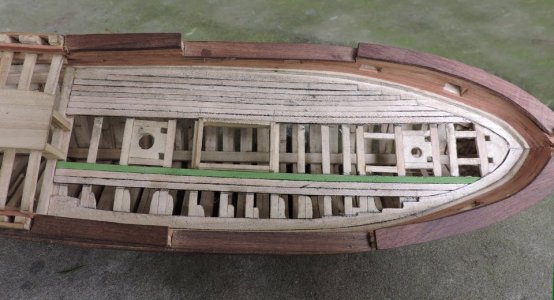
Laying out the decking i started with the plank tinted green. I did this because i wanted to run the plank against the main hatch coaming and straight from the bow to the cabin. You may notice there are no butt joints just one long plank. As was mentioned in an earlier post deck planks can run up to 40 feet long. I did wonder about that but i live in an area there are still massive trees and it is very possible to get a plank as long as 50 feet even today. This deck falls within the 40 foot range so i did not break the decking into smaller lengths.

deck planking18a.jpg
by running the plank straight from the main hatch coaming it falls right on the edge of the notches for the windlass posts.

deck planking20.jpg

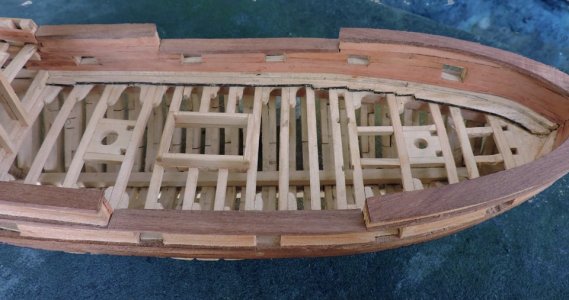
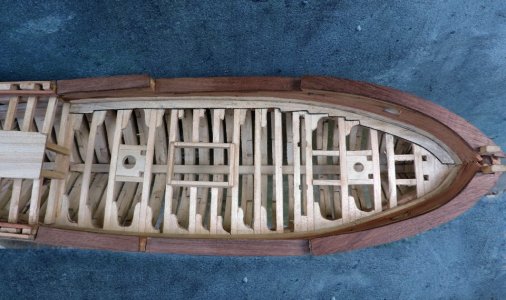
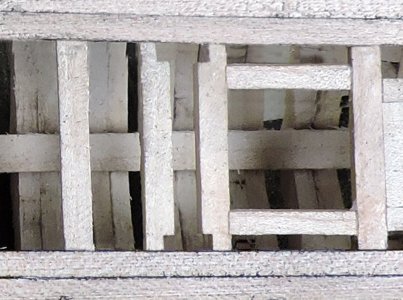
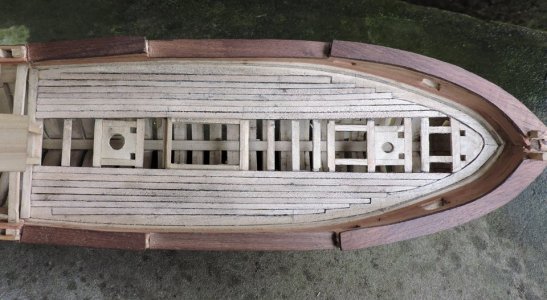
The deck was planked on both sides so now it is time to put in the gratings, windlass braces and posts. Then the center of the deck will be planked. Down the center planking will need to be adjusted around the posts.
At this stage the caulking makes the deck look messy, but when it is finished i will scrape the deck clean and smooth.

Some builders like to keep part of the deck open to show the beams and knees. I planked over all the structural work so you may wonder why bother if it is going to be hidden? Well, it was not hidden you saw the deck being built early on in the build, so you know what is under the planking. Because this is a class on building it was necessary to show how a deck is built and planked. It is not about the finished model.

deck planking19.jpg
 
Last edited:
On some decks the planking it bent to matchup with the shape of the hull. The main deck on the Hawke is short so running the planks straight works out.
I will not pepper the model deck with little treenail dots. Do you see the treenail plugs here? On the model they would be so tiny they would not be visible. To add treenail plugs is a builders choice.

deck10.jpg
 
Last edited:
The wood used for the decking is Red Maple also called Soft Maple which is not really soft it is like the hardness of Cherry. I personally like Red Maple because it has some subtle shaded of color and it will turn a light honey color with a very slight tint of gray. Poplar also makes a nice looking deck.
 
Laying out the decking i started with the plank tinted green. I did this because i wanted to run the plank against the main hatch coaming and straight from the bow to the cabin. You may notice there are no butt joints just one long plank. As was mentioned in an earlier post deck planks can run up to 40 feet long. I did wonder about that but i live in an area there are still massive trees and it is very possible to get a plank as long as 50 feet even today. This deck falls within the 40 foot range so i did not break the decking into smaller lengths.

View attachment 596124
by running the plank straight from the main hatch coaming it falls right on the edge of the notches for the windlass posts.

View attachment 596123

The deck was planked on both sides so now it is time to put in the gratings, windlass braces and posts. Then the center of the deck will be planked. Down the center planking will need to be adjusted around the posts.
At this stage the caulking makes the deck look messy, but when it is finished i will scrape the deck clean and smooth.

Some builders like to keep part of the deck open to show the beams and knees. I planked over all the structural work so you may wonder why bother if it is going to be hidden? Well, it was not hidden you saw the deck being built early on in the build, so you know what is under the planking. Because this is a class on building it was necessary to show how a deck is built and planked. It is not about the finished model.

View attachment 596122

Incredible to think there were Travellers at a wood mill capable of making timber that long in the day. Just imagine tailoring out the 40-foot length of the planks.
 
Back
Top