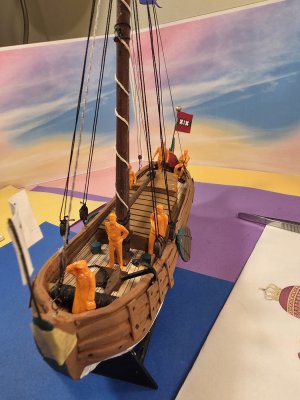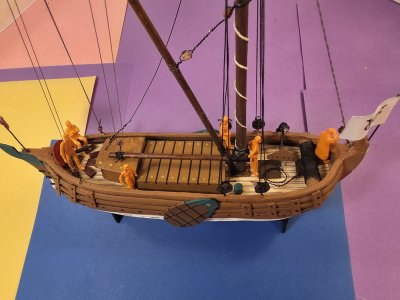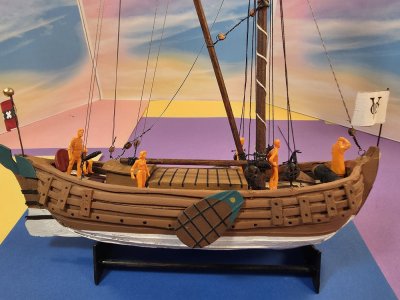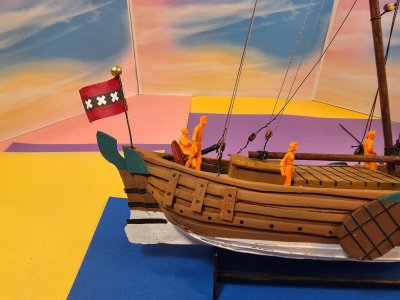


• SUBSCRIBE TO SHIPS IN SCALE TODAY!

    The beloved Ships in Scale Magazine is back and charting a new course for 2026!
    Discover new skills, new techniques, and new inspirations in every issue.

    NOTE THAT OUR NEXT ISSUE WILL BE MARCH/APRIL 2026
  • Win a Free Custom Engraved Brass Coin!!!
    As a way to introduce our brass coins to the community, we will raffle off a free coin during the month of August. Follow link ABOVE for instructions for entering.

"Smalschip" 17th-century Dutch inland cargo ship from plans by Ab Hoving - Build Log

Joined
Dec 26, 2025
Messages
328
Points
128

Location
Bryn Mawr PA US
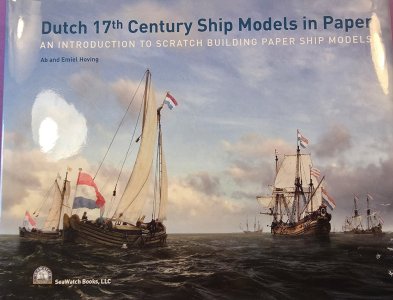
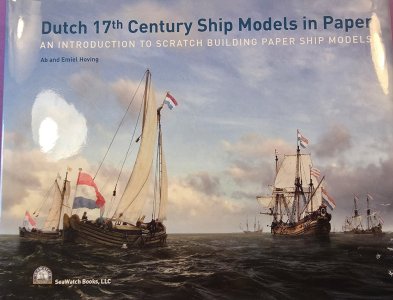
1. Build Log - "Smalschip" 17th-century Dutch inland cargo ship 1/48 scale, in paper cardstock from plans by Ab Hoving in his book "Dutch 17th Century Ship Models in Paper: An Introduction to Scratch Building Paper Ship Models," from SeaWatch Books.

I started this build because I wanted to learn the Ab Hoving method of building scale ship models in paper and cardstock. Mr. Hoving has been very helpful to me (and many others on SoS) in my pursuit of building 17th-century Dutch vessels, like the Jaght Heemskerck, the Kalmar Nyckel, and the Statenjaght Utrecht.

He has also been generous with his time and with his sharing of his ship designs and tips on his building method. His book about Dutch ship models in paper is beautiful (thanks to Emiel Hoving's book design and graphics), enlightening about 16th and 17th century Dutch ship building practices, and the book makes a great case for using paper and cardstock to build ship models in scale. As Ab Hoving has said on this forum when speaking about his paper cardstock building method, "It's so easy." I totally agree.
1000021552.jpg

All my previous attempts at building model paper kits (mostly from Eastern Europe) came up short because I found that any mistaken fold, incorrectly glued fold, or mis-cut paper parts could rarely be fixed and the traditional paper builds were very frustrating. I started and did not complete paper models of the Graf Goetzen armed cargo ship, the Centaur ocean tugboat, and the Cyclon II tugboat. I vowed not to go back to paper building until I heard of the "Ab Hoving Method" of building in paper and cardstock.

Once I saw how beautiful Ab's models were and how apparently easy the method was, I dove right in and started building the 17th-century Dutch "Smalschip." The book also has plans for "Witsen's Pinas" another 17th century merchant/naval vessel.
1000019535 (2).jpg


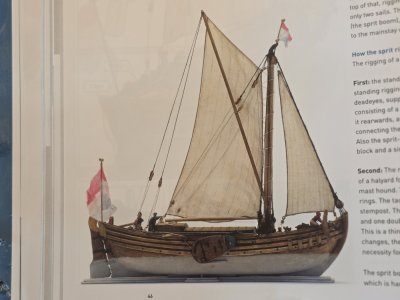
Here is a picture from Ab's book of his model "Smalschip," a 60-foot long utility ship that could work far inland because it's 16-foot width could pass through standard locks that extend far into the Dutch provinces:
1000019557.jpg

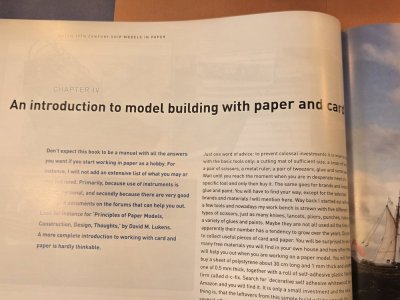
I do not want to go into too much detail about Mr. Hoving's build method, because people who are interested should read some of the build logs using the method and should purchase this book from SeaWatch Books. I will also only make sparing use of pictures from the book because I want to respect Mr. Hoving's copyrights.

As to this method of building, basically using enforced cardboard, chip board, and heavy paper cardstock, I'll just say:

1. This method of building is easy, forgiving of mistakes, and if you messed up a part or component, you just have to take 5 minutes to fabricate another one.
2. The method does not require any special tools, adhesives, or substrate materials. Everything you need (except maybe EVA foam) is probably already in your shop.
3. The method allows for an incredible amount of creativity and modeler's choice - If you want to build a vessel from Amsterdam, research and use the flag of Amsterdam, you just have to fabricate the flag and paint it yourself. You can depart from the drawings and still have a good build...you are only limited by your imagination.
4. Since there is a minimal investment to get into this build method, if you don't like the outcome, just build another one.
5. The method lends itself to scratch building from plans, especially in the 1/48 and 1/96 scales.
6. Because most structural components in paper or cardstock can be soaked or impregnated with glue (CA or PVA) to make them strong (use CA) or flexible (use Elmer's glue). Cardboard soaked in CA glue is as hard as wood and can be sanded, cut and painted.


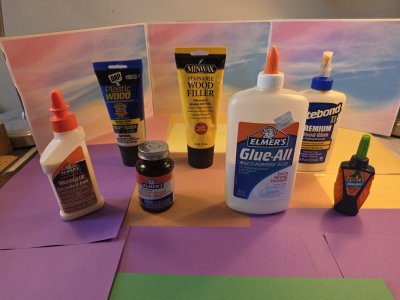
As for materials, here is what I used in building my Smalschip:

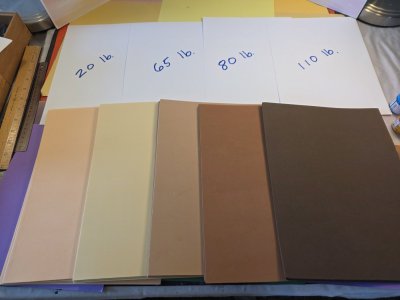
1. Paper stock in 20 lb., 65 lb., 80 lb. and 110 lb. & plastic foam (I use EVA foam because it keeps its shape when painted).
1000021866.jpg

2. Adhesives

20260621_161904.jpg

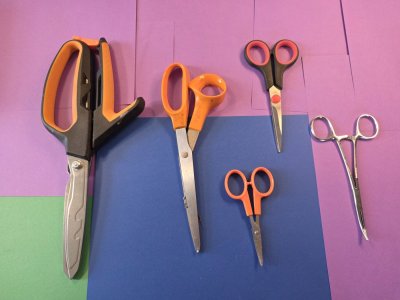
3. Cutting tools (shears cut cardboard very easily).
1000021885.jpg

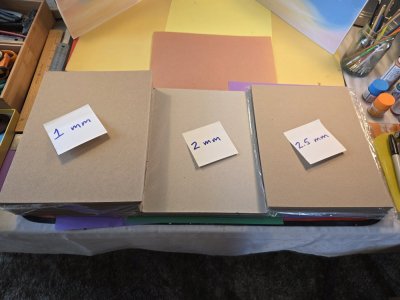
4. Cardboard, chip board, Foamcore, or hardcover book covers, in 1mm, 2mm and 2.5 mm. When needed, the paper cardstock can be combined to thicknesses of 4 mm to 8 mm. Above 8 mm and you may want to use balsa wood.
1000021863.jpg -

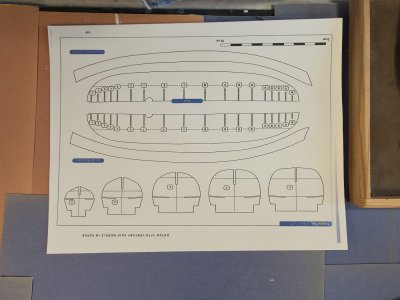
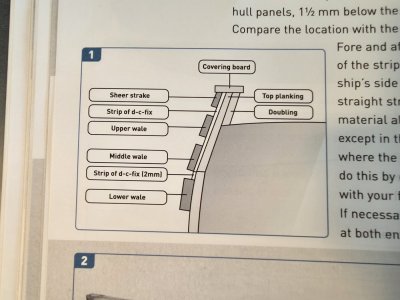
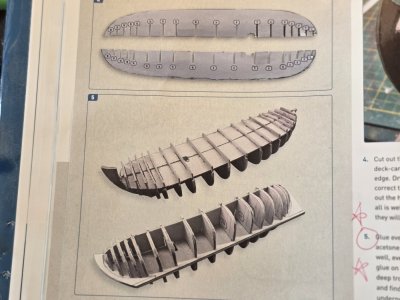
5. Plans -- Here are some of Ab Hoving's design drawings from the book.
1000019545 (2).jpg
20260525_165136.jpg
1000019909.jpg

I am now almost done with my Smalschip build, but I want to spend a few build log entries showing my step-by-step build process using the Ab Hoving method.

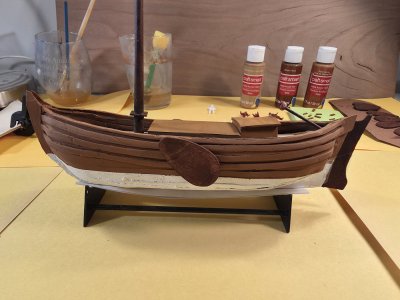
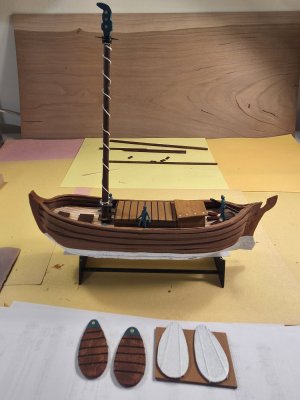
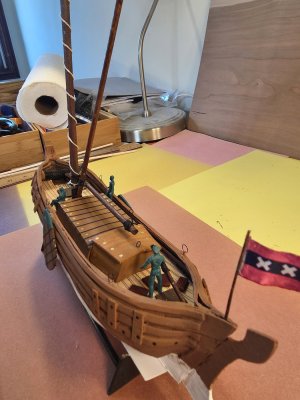
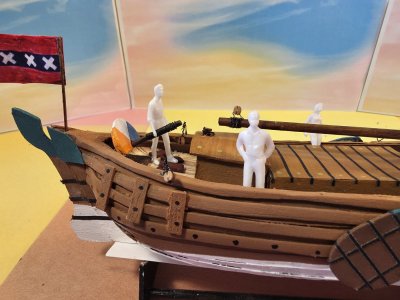
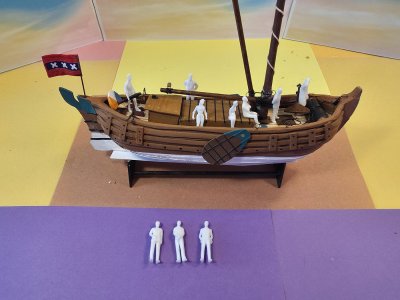
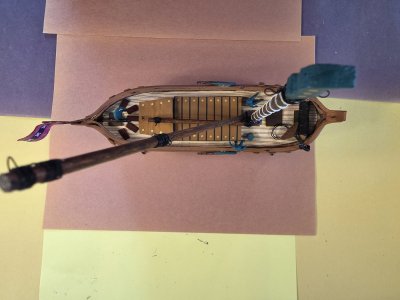
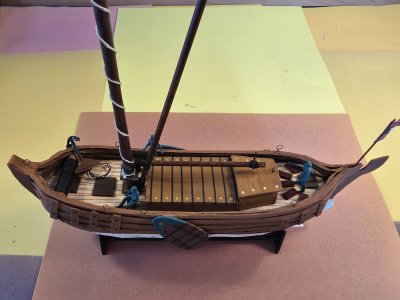
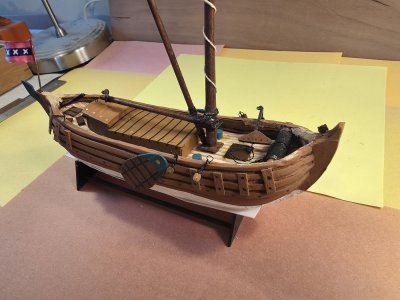
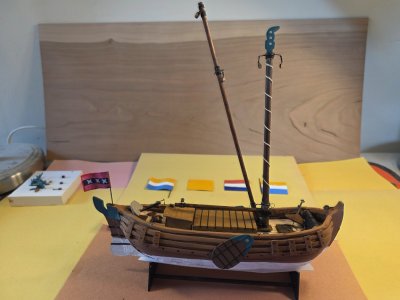
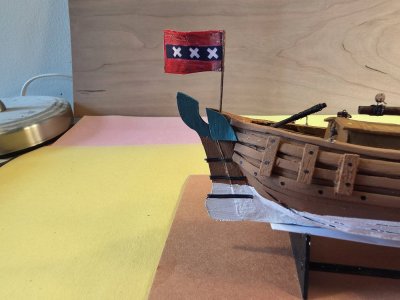
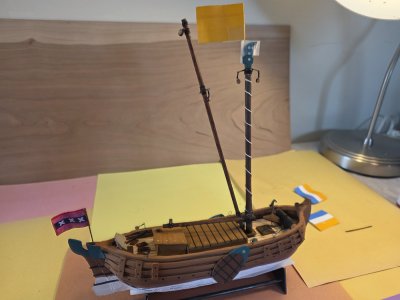
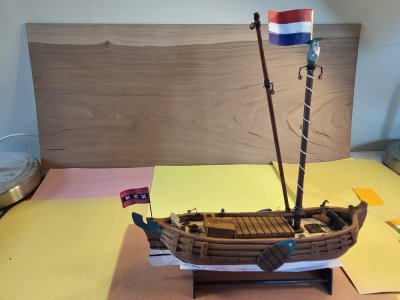
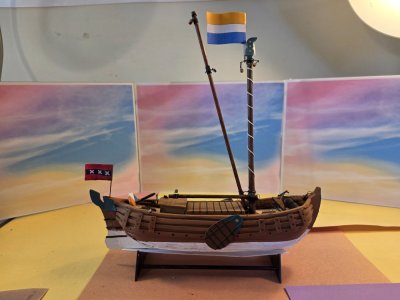
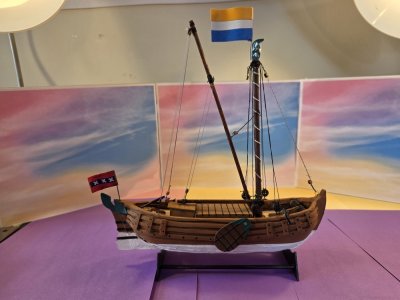
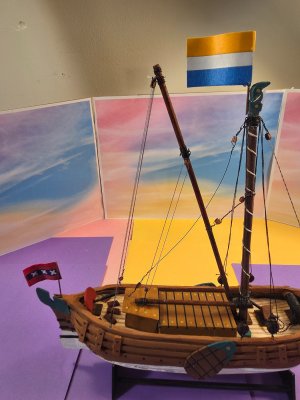
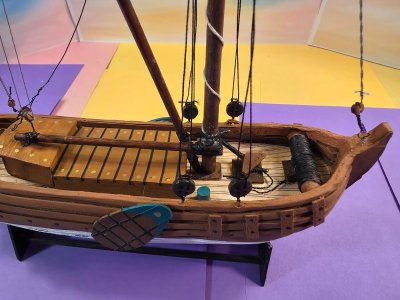
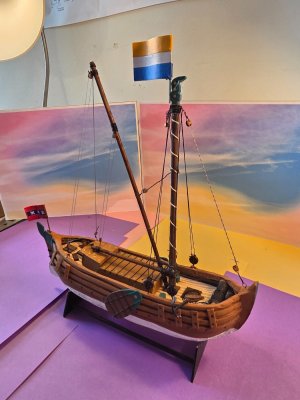
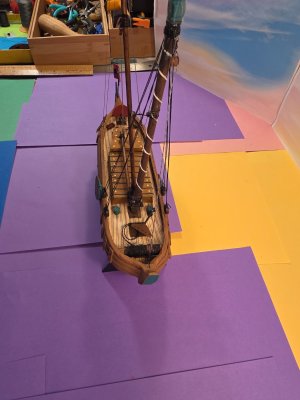
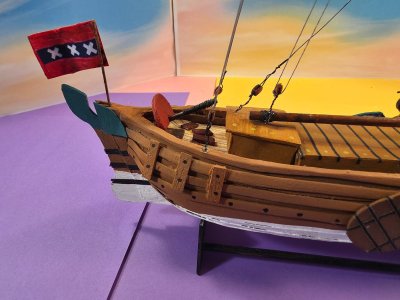
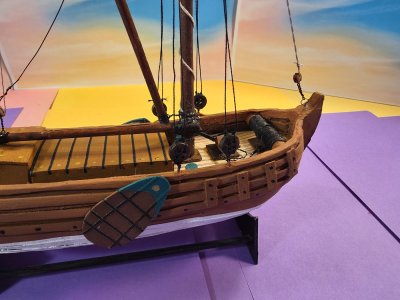
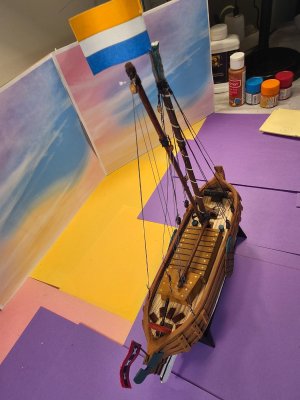
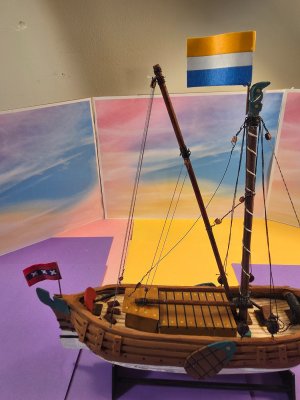
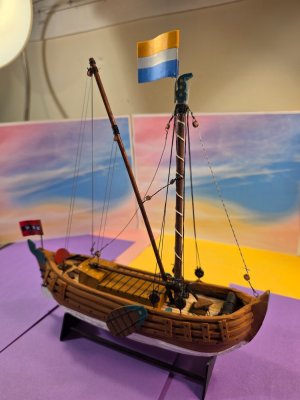
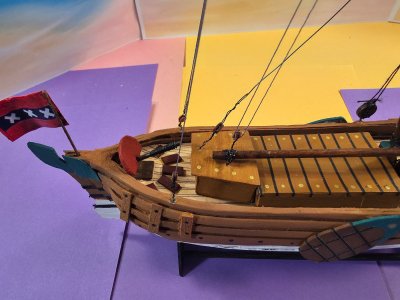
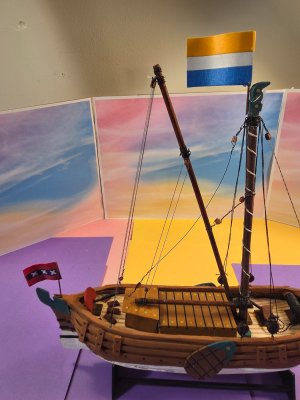
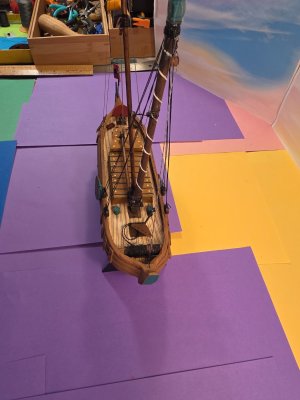
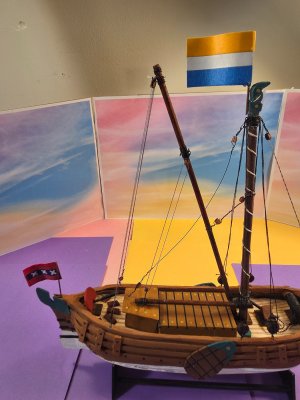
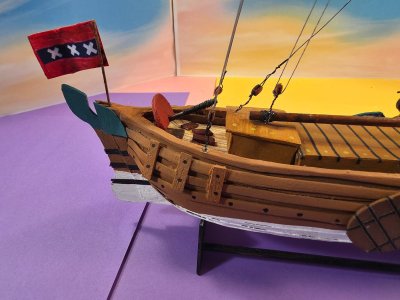
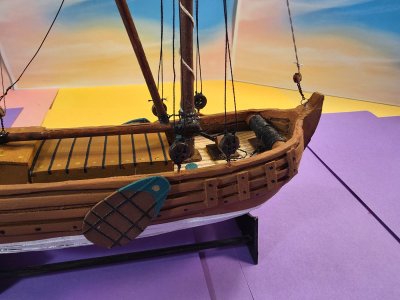
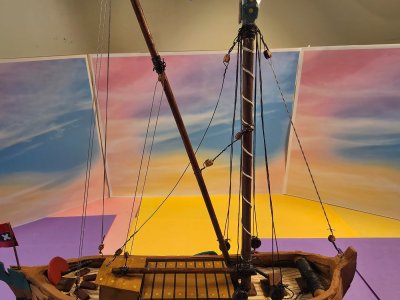
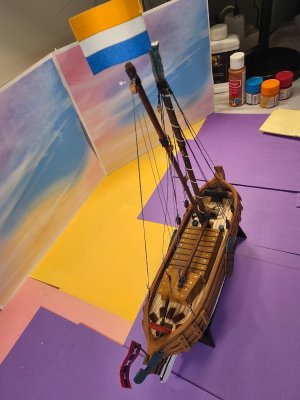
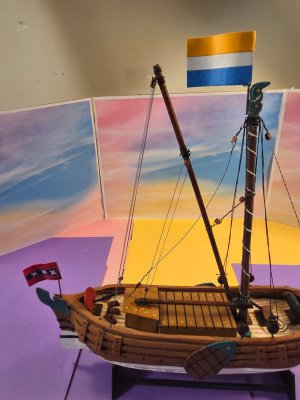
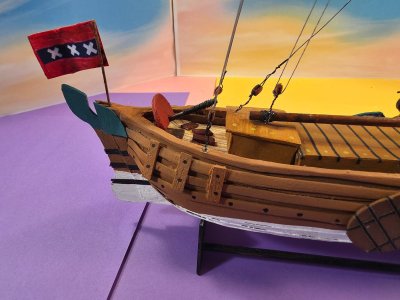
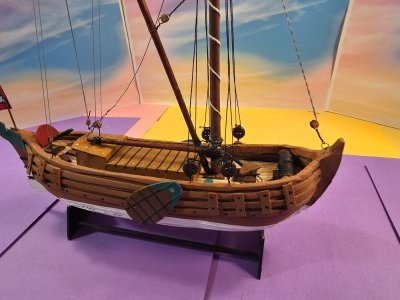
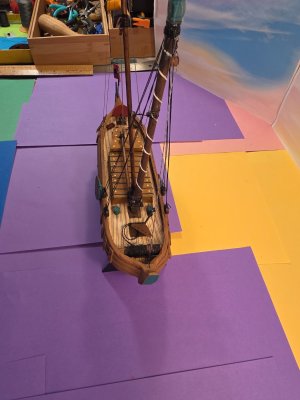
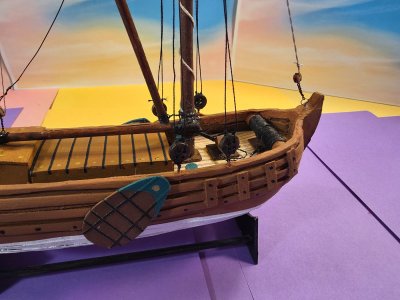
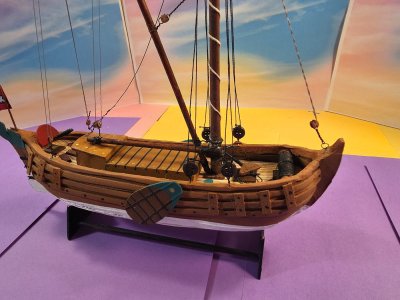
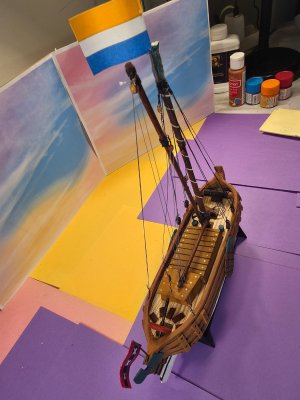
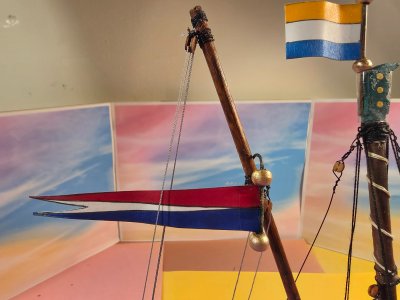
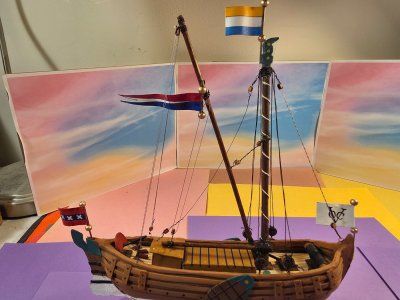
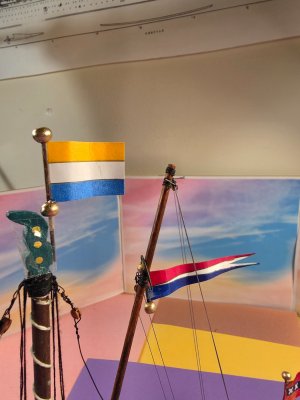
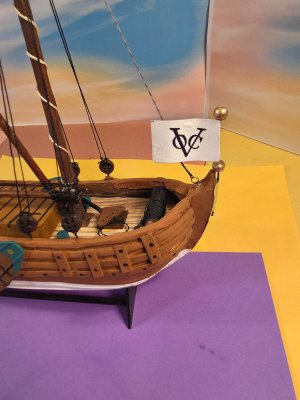
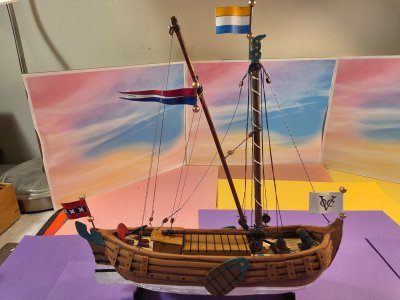
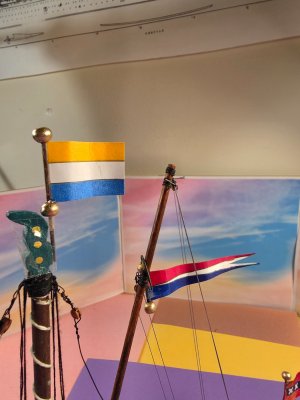
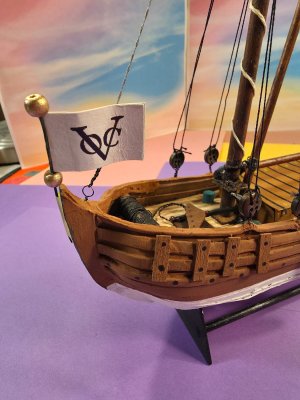
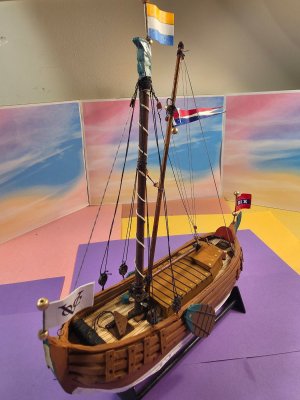
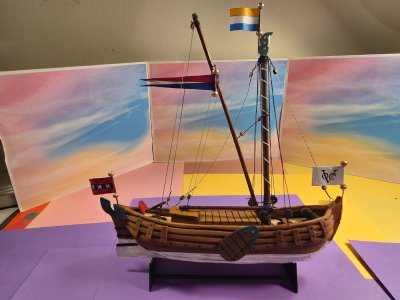
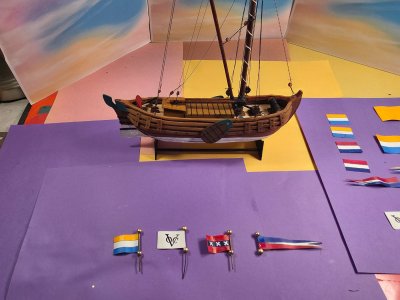
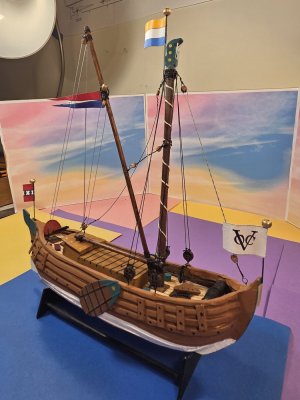
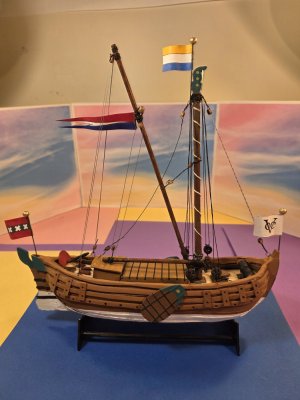
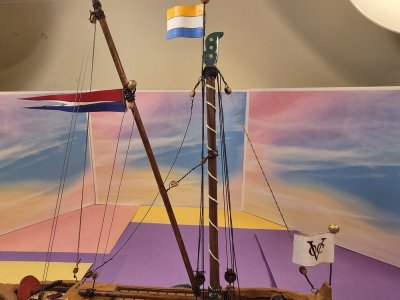
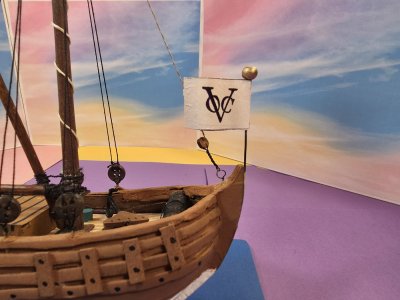
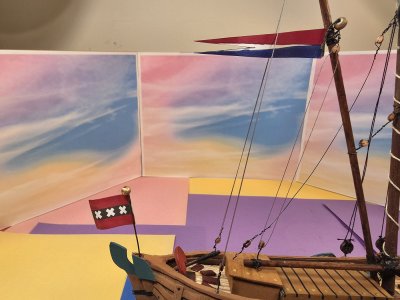
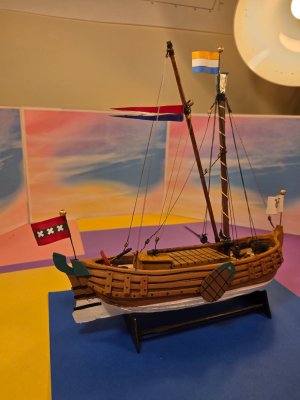
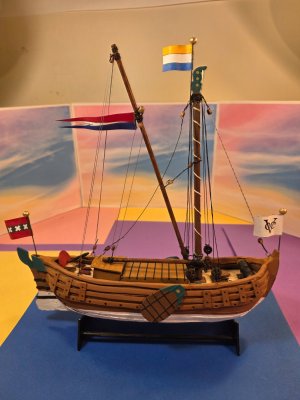
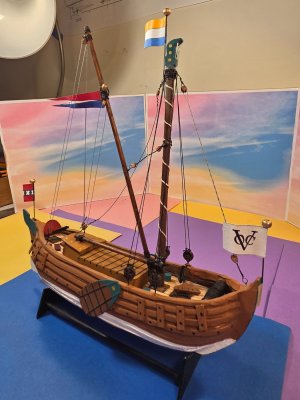
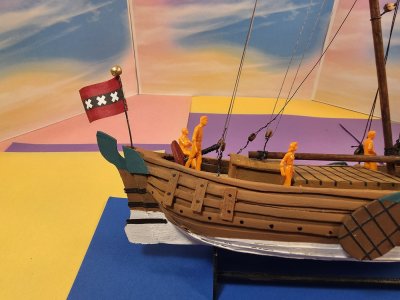
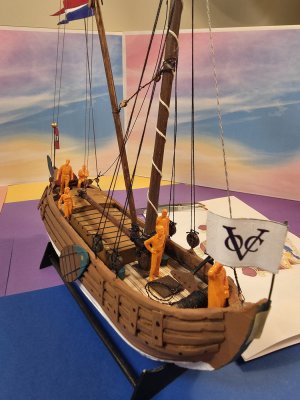
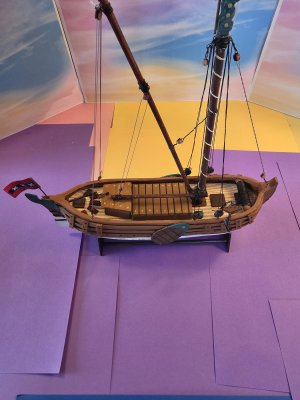
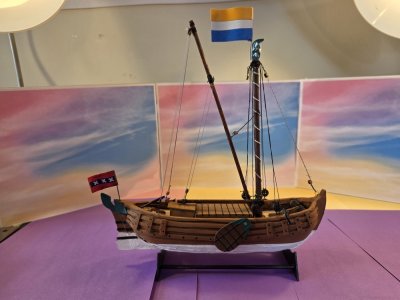
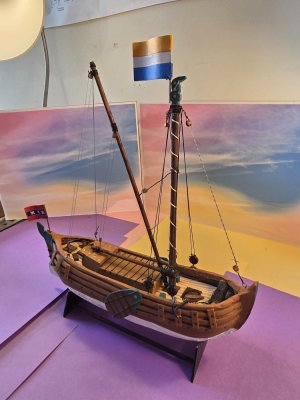
Here are a few pics of where I am now. I am building my Smalschip before 1700 when the Prinzenvlag (House of Orange) would have been used. She is also sailing out of Amsterdam, so she flies the flag of Amsterdam. I just have to finish the skeleton rigging and add some scale figurines and then I should be done.
1000021888.jpg


1000021882.jpg


20260622_114513.jpg
 
Last edited:
2. Build Log - "Smalschip" 17th-century Dutch inland cargo ship 1/48 scale, in paper cardstock from plans by Ab Hoving.

Building Hoving's "Smalschip" from scratch, here are some early build pictures.

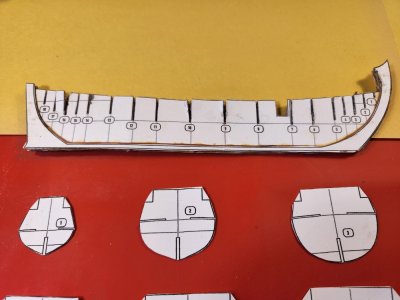
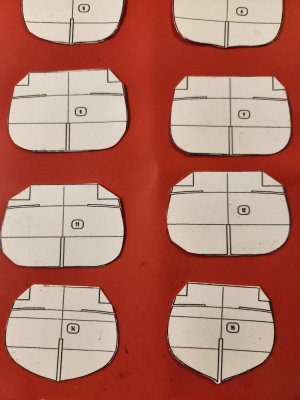
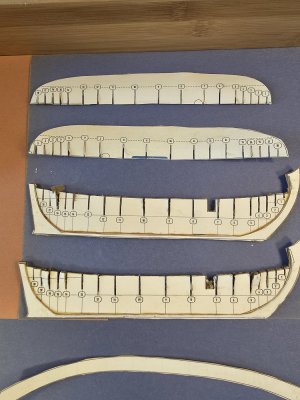
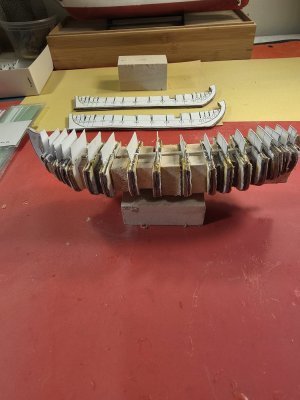
The build begins as a typical plank-on-frame model with bulkheads, keel and rabbet. The bulkheads are fabricated out of 2mm cardboard. The keel and planking slots are also 2mm cardboard, but supplemented by a 1-2 mm keel frame.

7cc6a8e1-bc4d-4391-ba3c-0b44fad69879-1_all_25081.jpg

7cc6a8e1-bc4d-4391-ba3c-0b44fad69879-1_all_25085 (3).jpg
1000019436.jpg

Ab Hoving's method gives the builder the liberty to frame the hull as a plank-on-frame build, as a sold-hull build, or any other way you choose. I started out trying to build as plank-on-frame, but since it was my first time in this build method I had trouble keeping the frames in alignment. So after a few tries at plank-on-frame, I decided to build the hull as a solid hull. Again, so easy to make this transition to paper building once you get used to using cardboard instead of wood.

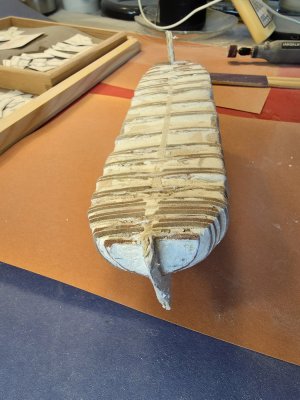
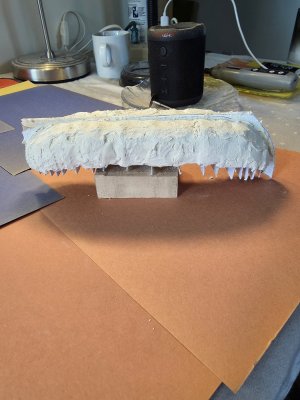
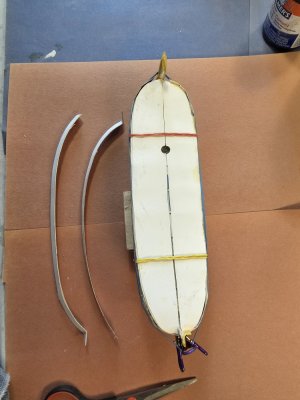
Next, putting the hull together as a solid-hull.

1000019383 (2).jpg
1000019481 (2).jpg
1000019441.jpg

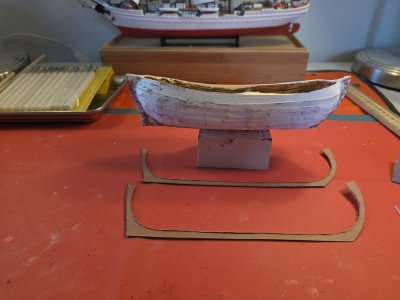
Once I had my solid hull together, I spent time fairing the raw hull to ensure that the top deck reflects the cambered deck from port to starboard, and the saddleback deck from stem to stern. It took a couple of times to get both cambers right, but it is needed so the decking material can lay flat atop decks.

1000019526.jpg
1000019474 (3).jpg

1000019530.jpg

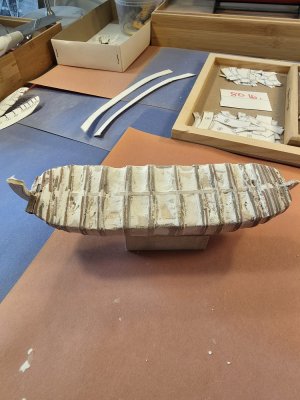
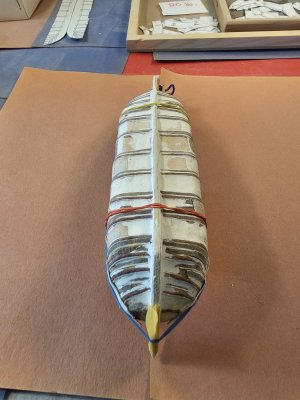
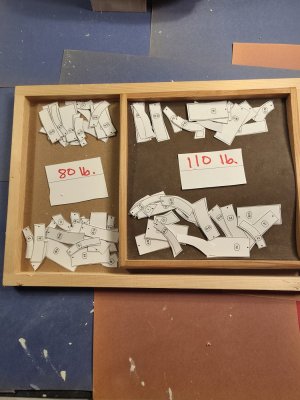
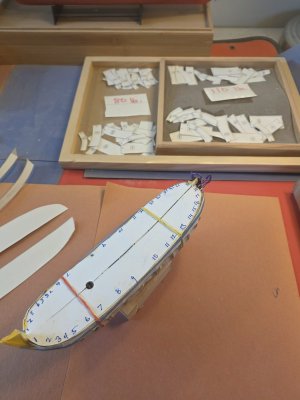
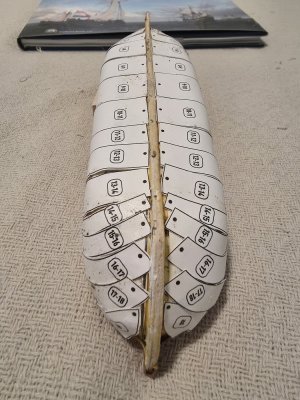
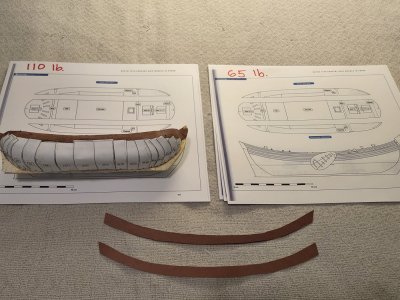
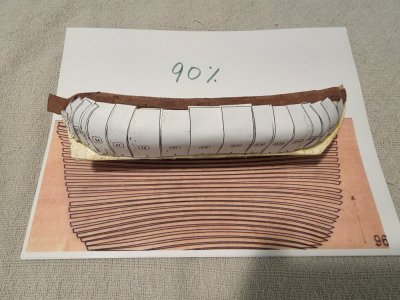
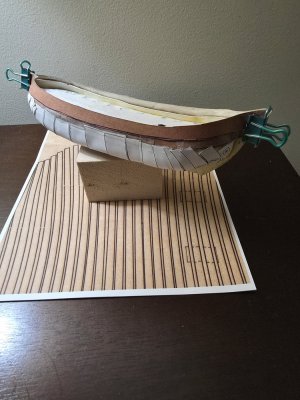
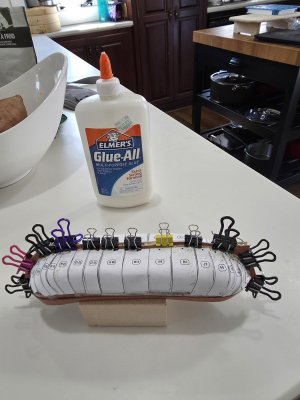
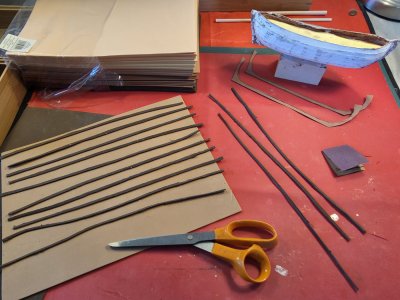
Ab Hoving's ship design includes a double-planked hull. So I had to test different strengths of paper cardstock to find the right stock to use for both the under layer of planking, and then thinner paper cardstock for the outer layer of planking.

1000019461 (2).jpg

1000019570.jpg

1000019683 (2).jpg

I did alot of trial and error to find the right paper stock and the right planking diagram to create proper sized outer planks. I used a planking diagram from another model kit and just copied it onto paper cardstock. I ended up using 110 lb. paper stock for the inner planking and a 65 lb. paper stock for the outer planking.

1000019706 (2).jpg

1000019698 (3).jpg
1000019757.jpg

1000019864.jpg
1000019880 (2).jpg

Top wales and keel support are cut from legal file folders, which usually have a perfect 1.5 mm thickness. If you use this method, you will always need to think, "how thick must this component be in order for it to be stable, to fit with other members, and to stay rigid. I infused diluted Elmer's glue and CA glue into some bulkheads to add stability to the build.

1000019910 (2).jpg

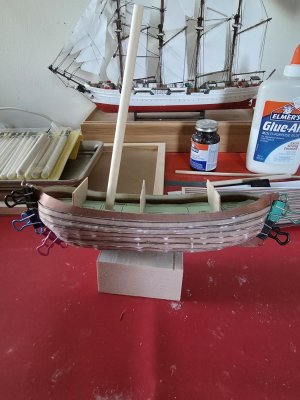
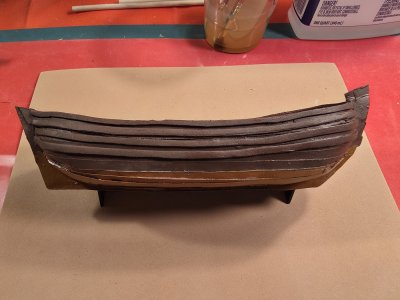
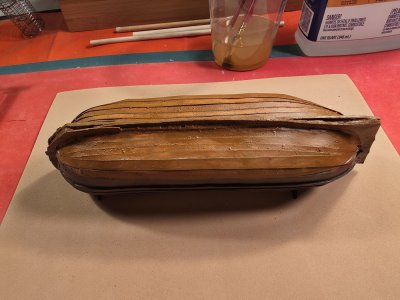
Once the planking is complete (I redid the outer planking 4 or 5 times to find the correct width of the planks for a 1/48 scale model), next step is to build the upper, middle, and lower wales in strips of foam. I am using EVA foams because it keeps it's form even when painted.
1000020699.jpg

1000020700.jpg
 
Last edited:
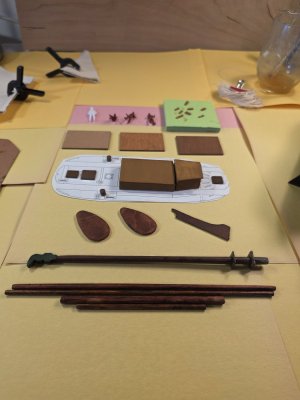
3. Build Log - "Smalschip" 17th-century Dutch inland cargo ship 1/48 scale, in paper cardstock from plans by Ab Hoving.

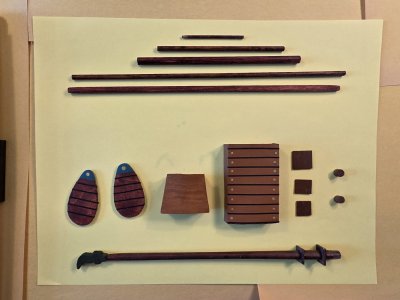
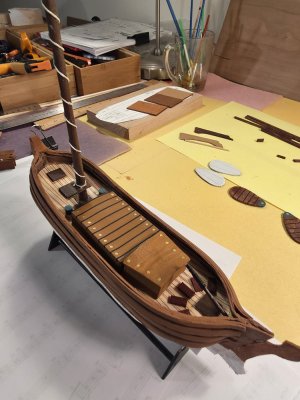
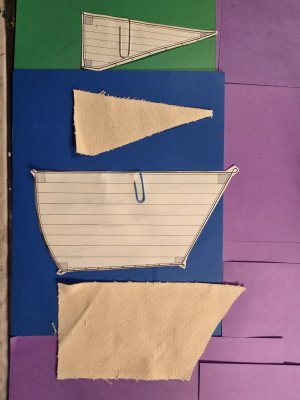
At this point in the build, I am experimenting with different materials, different thicknesses of card paperstock, and different adhesives. Each step seems so rational and sensible -- finding ways to solve problems and using common sense to make a beautiful model. After planking, I am focusing on the deck furnishings (windlass, horses, hatches, main hatch, cabin, bilge pumps, and leeboard). Then focusing on shoring up the keel, stempost and sternpost, with additional 1.5 mm layers of legal file cardboard.

20260615_145609.jpg

1000019900 (2).jpg

1000020913.jpg
1000020922.jpg
1000020939.jpg

The leeboards gave me a bit of a problem because I kept going back and forth between fabricating them from card stock or using 1-2mm bass wood for a grained look. In the end, I decided to build the leeboards from 3 sheets of 1 mm card stock washed with diluted Elmer's glue for strength.

1000020943.jpg
20260615_235921.jpg

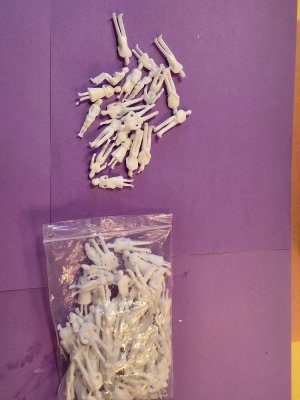
Mr. Hoving advises that all scale models should be populated with scale human figures to show off the dimensions of the ship and to give it a realistic look and feel. In his book he writes, "One of the advantages of adding figures is that the scale of the model suddenly becomes clear to the viewer, The human size works as a reference." "17th Century Dutch Ship Models," page 51.

It took a while to find miniature human figures in 1/48 or 1/50 scale. I tried different figures in 1/64, 1/50, 1/48 and 1/32 scales and am still waiting on another set of figurines in 1/48.

1000021101.jpg
1000021536.jpg
1000021543.jpg
1000021534.jpg
 
4. Build Log - "Smalschip" 17th-century Dutch inland cargo ship 1/48 scale, in paper cardstock from plans by Ab Hoving.

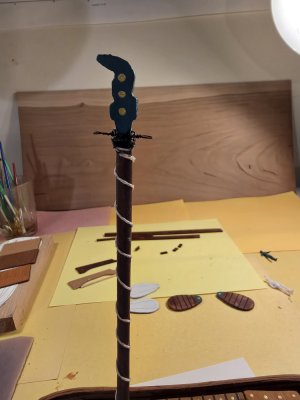
Not going to say much here. Just putting out pictures from the vast middle part of this build, in between planking and rigging.

1000021008.jpg

1000021010.jpg

1000021018.jpg

1000021113.jpg

20260617_085053.jpg

1000021210.jpg

1000021350.jpg

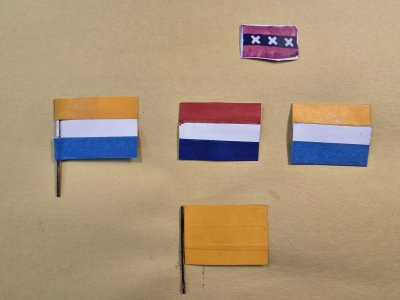
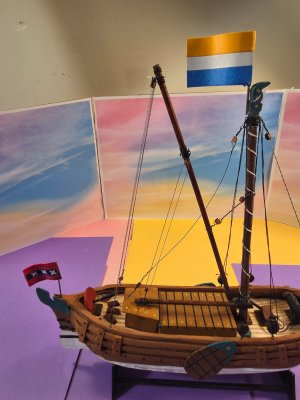
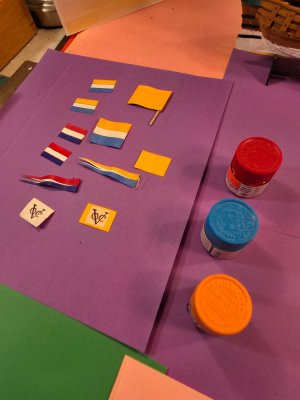
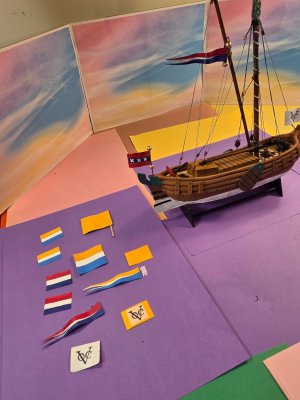
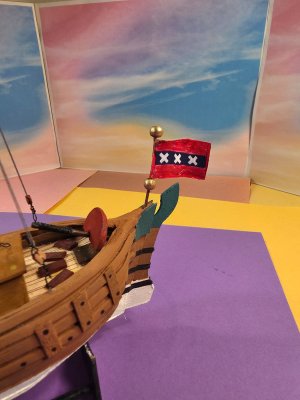
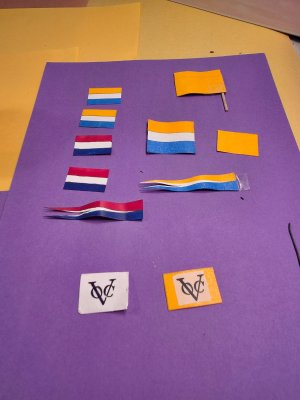
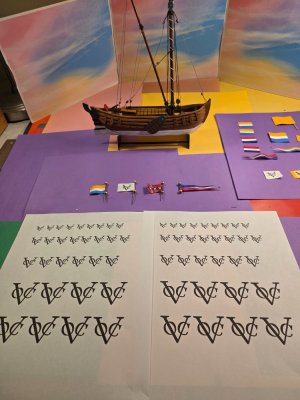
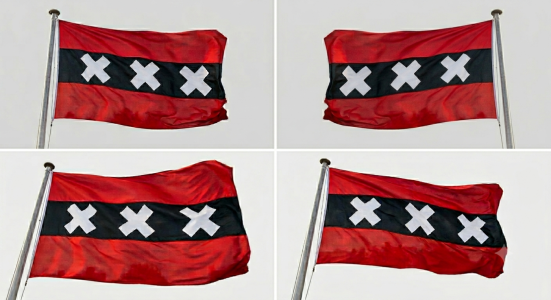
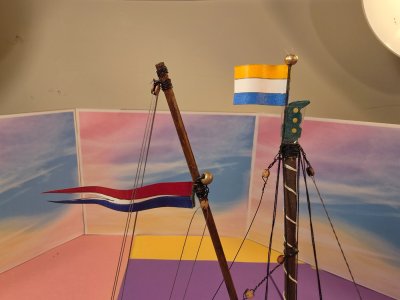
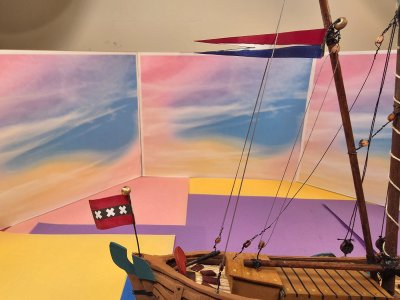
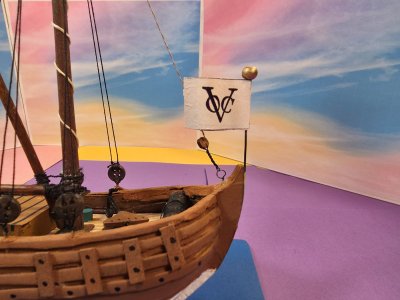
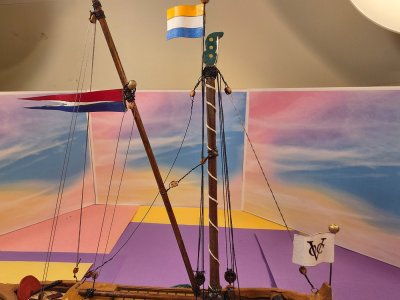
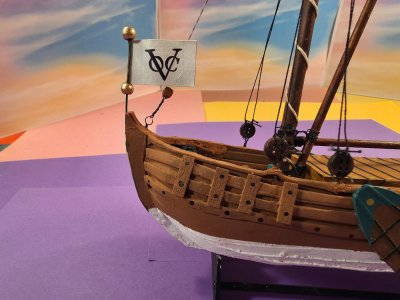
And at this point, I started to think about what flags I would like to use. I did my research into the history of the flags of the Netherlands. If this ship were operating before 1765, it would have flown either the orange/white/blue flag of the Princes of Orange (the "Prinzenvlag") or the flag of the Seven Provinces, which would become a republic around 1800 (the red/white/blue "Statenvlag"). Another option is the complete orange standard of the House of Orange. I also wanted to represent her as allied with a particular province or city, so I chose to fly the flag of Amsterdam at the stern. I do like that the color orange is associated deeply in the hearts of Nederlanders, so I went with the Prinzenvlag and the triple-X flag of Amsterdam. I fabricated the Amsterdam flag using water-slide decals on 65 lb. cardstock. I fabricated the Prinzenvlag, Statenvlag, and Orange standard using 80 lb. cardstock and orange and blue painters' tape.

20260618_180826.jpg

7cc6a8e1-bc4d-4391-ba3c-0b44fad69879-1_all_25973.jpg

1000021387.jpg

1000021382.jpg

1000021498.jpg
 
Last edited:
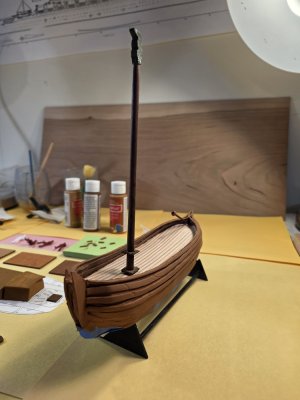
5. Build Log - "Smalschip" 17th-century Dutch inland cargo ship 1/48 scale, in paper cardstock from plans by Ab Hoving.

An interlude about the Dutch Smalschip.

The story of the 17th century Dutch Smalschip:

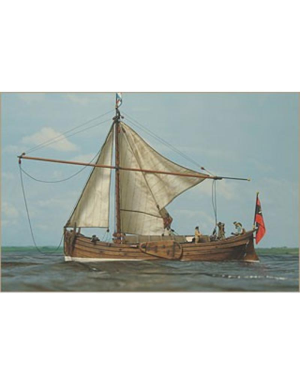
The smalschip ("narrow ship") was one of the most important working vessels of the Dutch Golden Age. Developed during the seventeenth century, it was designed specifically for the Netherlands' extensive network of canals, rivers, and inland waterways. The vessel's defining characteristic was its narrow beam, which allowed it to pass through restricted locks such as the important lock at Gouda. Contemporary descriptions indicate that the smalschip was closely related to the larger wijdschip ("wide ship"), but was built to narrower dimensions so it could reach inland markets inaccessible to larger craft. These vessels typically carried grain, peat, timber, bricks, agricultural products, and other bulk cargoes between Dutch towns and ports. Their shallow draft and relatively simple rig made them economical and well suited to the sheltered waters of the Dutch Republic.

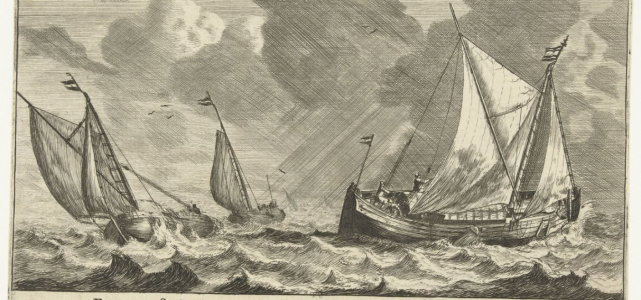
Smalschips were a common sight in Dutch art and maritime records. The marine artist and seaman Reinier Nooms depicted smalschips in several engravings during the 1650s, showing how familiar these vessels were in everyday Dutch commerce. Surviving references suggest that the type was not associated with a single famous individual vessel in the way that large East Indiamen or warships were. Instead, the smalschip's importance came from the thousands of ordinary cargo voyages that supported Dutch trade and urban growth. Drawings and studies preserved by the Royal Museums Greenwich and the Rijksmuseum provide valuable visual evidence of the type.

Although no original seventeenth-century smalschip survives intact, several museum-quality reconstruction models have been produced. Maritime historian Ab Hoving and colleagues created digital and physical reconstructions based on the measurements published by shipbuilding author Nicolaes Witsen in 1671. These reconstructions have appeared in museum exhibitions, scholarly publications, and modern model kits, allowing visitors to examine the vessel's hull form and construction in detail. By the nineteenth century, the smalschip gradually disappeared as Dutch waterways were enlarged, canal infrastructure improved, and newer cargo vessels—including larger barges and mechanically powered craft—offered greater carrying capacity and efficiency. The smalschip's legacy, however, remains significant because it represents the practical inland transportation system that helped make the Dutch Republic one of the world's leading commercial powers.

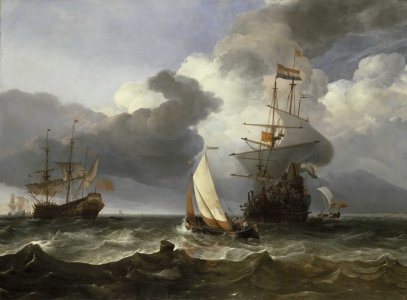
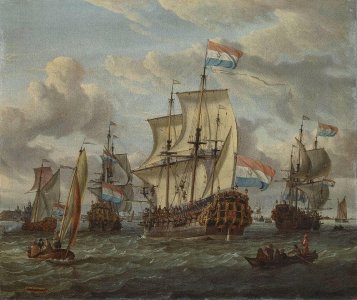
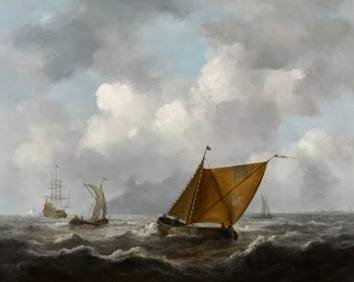
Here are some Dutch paintings that include one or more Smalschips.

1000021489.jpg

1000021494.jpg

1000021492.jpg

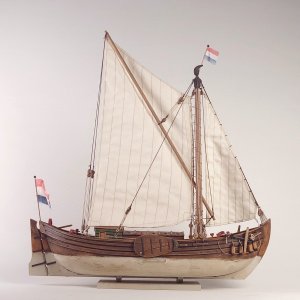
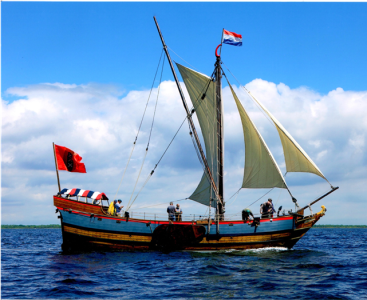
Here are some pictures of Smalschips:

1782170106565.png

1782169956967.png

And here is a new model kit from Noback Ship Models of the Smalschip based on Ab Hoving's designs in "17th Century Dutch Ship Models in Paper."

thumbnail_hu_9e498057eb49ad6b.jpg

I must say, that I have been very impressed so far with the Ab Hoving method of building ships with paper cardstock. I look forward to building more scratch built ships designed by Ab Hoving, and I have the following Hoving-designed ships in my build queue:

1. "Witsen's Pinas" - 17th century Dutch pinas / pinnace merchant vessel / warship. From Mr. Hoving's plans in "17th Century Dutch Ships in Paper Modeling". Paper cardstock build.

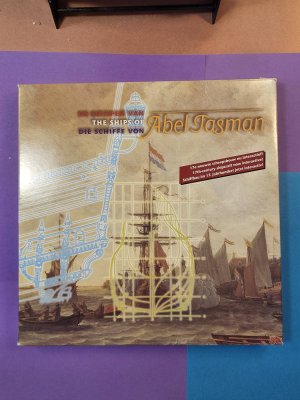
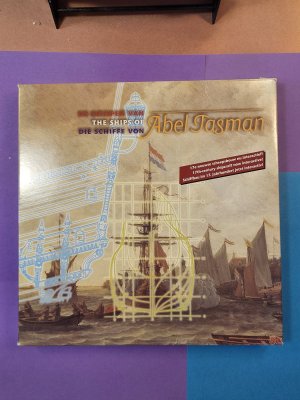
2. "Jaght Heemskerck" - 17th century Dutch oorlog (war) jaght from Mr. Hoving's plans in "The Ships of Abel Tasman." Also considering building the "Fluyt Zeehaen," the companion ship to the Jaght Heemskerck under Abel Tasman; from plans from Mr. Hoving in "The Ships of Abel Tasman." Published by SeaWatch Books.

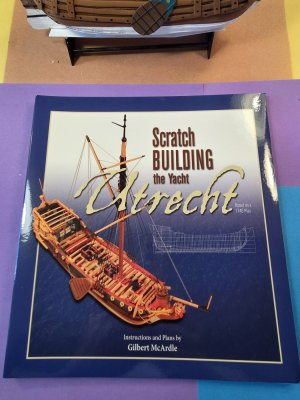
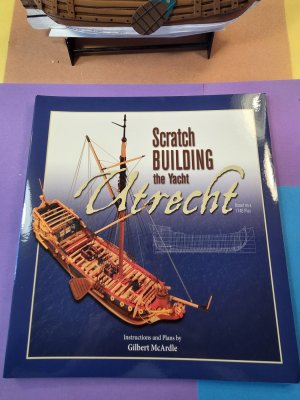
3. "Statenjaght Utrecht" - 17th century Dutch staten jaght as Admiralty-style / Navy board-style scratch wooden model from plans by Mr. Hoving in "The Statenjaght Utrecht" and "Scratch Building the Statenjaght Utrecht," by Gilbert McArdle. Published by SeaWatch Books. Scratch wooden build.

4. The "Onrust (Restless)" - Dutch speeljaght built by Adriaen Block in 1614 near Manhattan Island and 2009 museum ship re-build on the Connecticut River. Kit-bash from plans for the Jaght Leida by Corel and plans for the Jaght Hollanda. Scratch paper card build from plans.

1000021546.jpg

1000021550.jpg

1000021552.jpg

The Onrust 1614 as 2009 replica ship.

1782172249953.png
 
Last edited:
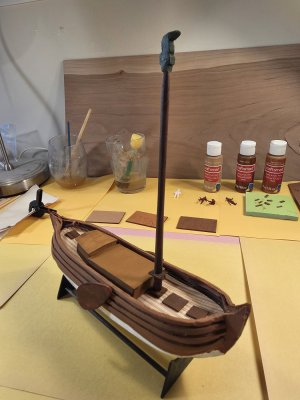
Congratulations with your build!
Great ad too. ;)
Ab
Ab -- I know you have said that the 17th century Dutch loved to fly their flags...in my Smalschip build, would the combination of the Prinzenvlag and the 3X Amsterdam flag be realistic before 1765? I know you also said that the 17th century Dutch enjoyed flying BIG flags, is my Prinzenvlag atop the mainmast in reasonable proportion? I'm thinking that I might also change the Prinzenvlag to a banner or pennant instead. Thank you again for all your guidance and inspiration!

1000021882.jpg
 
6. Build Log - "Smalschip" 17th-century Dutch inland cargo ship 1/48 scale, in paper cardstock from plans by Ab Hoving.

Rigging the Smalschip.,,

I had a couple of choices when it came to rigging the Smalschip. Ab Hoving's complete design plans have a fully rigged Smalschip with both a square mainsail and a gaff sail or jigger sail aft. He sews sails beautifully, but rigging is really one of my weak spots. My last fully rigged build, the Esmeralda, Chilean training ship had 19 sails 30 blocks and 4 staysails, damn near killed me!

So I also didn't want to leave a bare mast and boom, especially where the Dutch have turned rigging into an art form. But I don't think I need to get rigging skills out of this build. My main goal is to master the Ab Hoving paper cardstock building method.

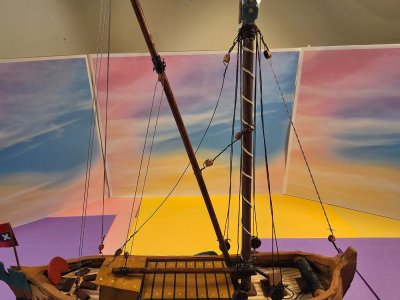
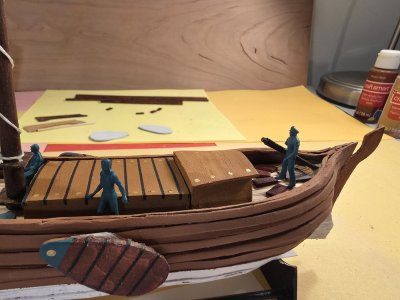
I decided to do a "skeleton rigging" which is basically to attach every block that the vessel calls for, and run a standing rigging line through every block. I chose that route. I think a skeleton rigging can look realistic, give the ship some scale, and when the human figures are put back in the rigging will look in scale with the human figures.

So here are my rigging pics (more to come):
20260622_201003.jpg

20260622_201849.jpg

1000021887.jpg

1000022223.jpg

1000022227.jpg

1000022228.jpg

1000022233.jpg

1000022236.jpg

1000022240.jpg

1000022241.jpg

1000022243.jpg

1000022246.jpg

20260622_201003.jpg
 
Well @Ignatius27, thanks again for promoting my book. I hope you inspired more people to give the method a try.
This is what it is all about: simply taking some easy to use material and find a way in building an attractive model. I never suggested the reader should follow the instructions in the book up to the letter, creativity is what is needed and what makes the build interesting. You clearly showed it!
By the way, in all modesty, the described method is in no way an 'Ab Hoving method'. Many builders used it before me and with much better results. I only described it in the book to inspire other builders and looking at this thread it seemed to have worked. I am sure that our book and threads such as yours will add to the accessibility of model shipbuilding in general, and even as an introduction to more complicated projects, like building with wood.

As for flags: I don't think a big flag like the one you put on top of the mast was much used in those days. What you may consider is to make a smaller one and add another one to the top of the sprit. Keep searching for 17th century pictures like painted by Willem van de Velde, Reinier Nooms, Ludolf Bakhuizen, de Vlieger, Abraham Storck and many others. There is a treasure trove of information in these paintings.

Good luck!
Ab
 
Back
Top