• SUBSCRIBE TO SHIPS IN SCALE TODAY!

    The beloved Ships in Scale Magazine is back and charting a new course for 2026!
    Discover new skills, new techniques, and new inspirations in every issue.

    NOTE THAT OUR NEXT ISSUE WILL BE MARCH/APRIL 2026
  • Win a Free Custom Engraved Brass Coin!!!
    As a way to introduce our brass coins to the community, we will raffle off a free coin during the month of August. Follow link ABOVE for instructions for entering.

USS Constitution - Model Shipway’s 5/32” = 1 ft. (1:76.8) Kit No.: MS2040

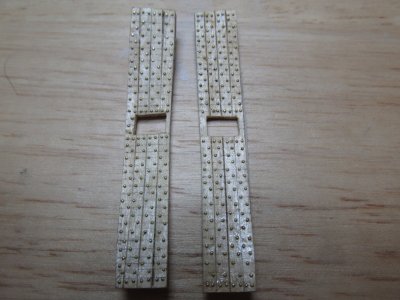
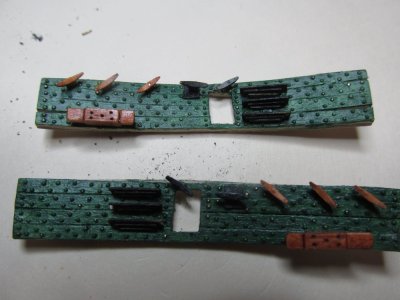
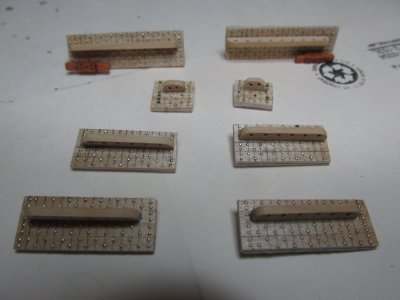
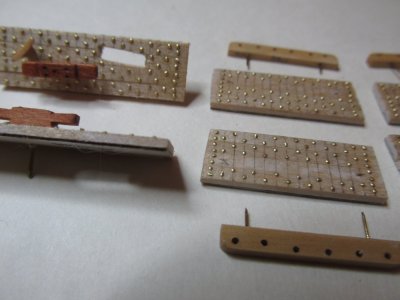
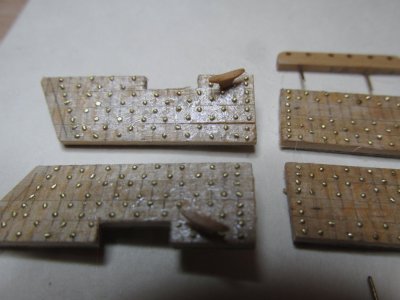
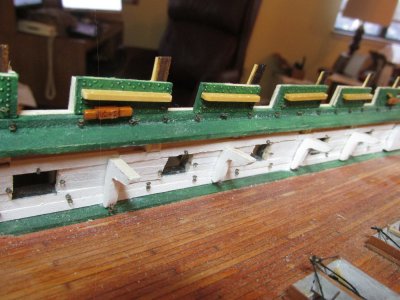
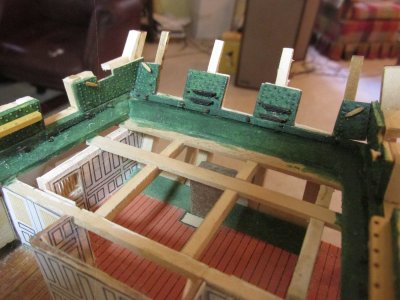
When I started these bulwarks, in order to install the cap rail, then I could work on the quarter galleys and the planking at the wales and gun ports. It’s going to be a bit longer before I get there. Because my bulwarks are constructed off the model, I have the opportunity to install all the bulwark accoutrements such as pin rails, cleats, eyebolts, etc. now while it’s easier. It appears I’ll be building my model from the inside out instead of outside in like everyone else. We’ll see how well that goes. Here is the pair of bulwarks with all the simulated bolt heads.

Note: RP Toolz emailed me stating that they would send me two, not one punch. Also, they gave me a link to their Hungarian site where spare parts were available for sale. Still waiting for the package.

IMG_1500.JPG
 
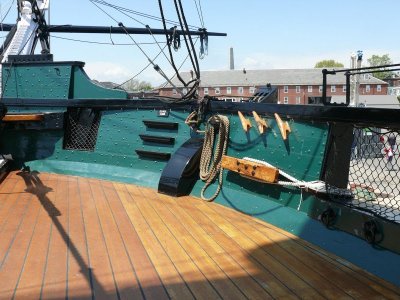
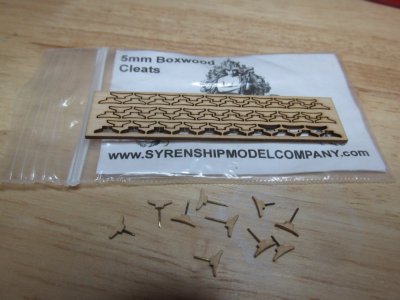
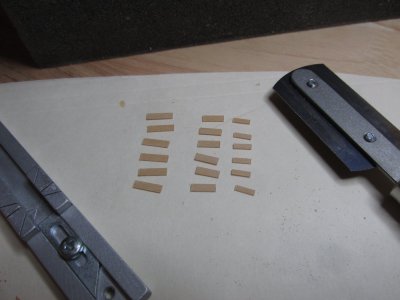
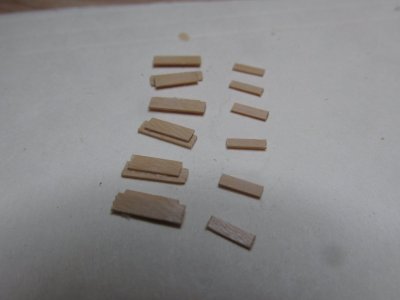
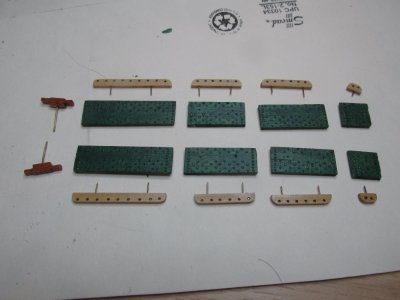
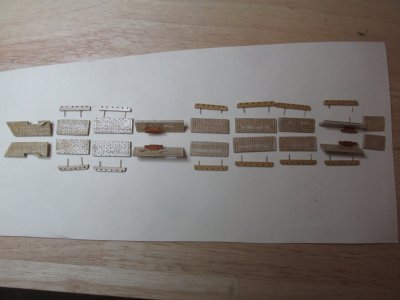
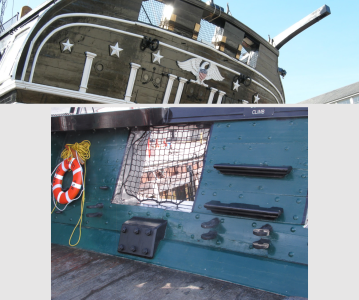
For each bulwark, there are three small wooden cleats, two small metal ones, and one large wooden one. The small cleats are not supplied with the kit, so I am using Syren Ship Model Company’s 5mm cleats. The large one, made from Britannia metal, the kit does supply– I think I can do better than that.

L1090138.jpg
 
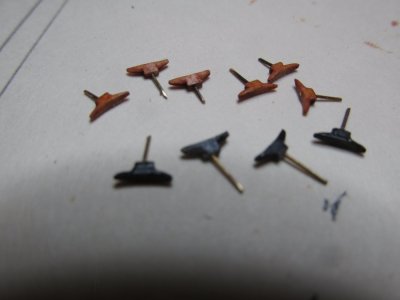
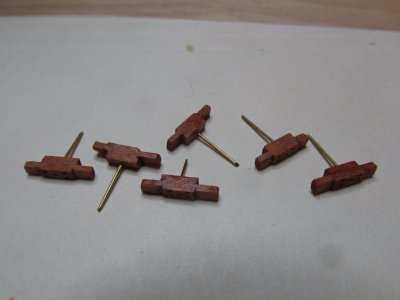
The Syren cleats are really blanks and must be carve to their final shape. For each side, the three wooden ones were stained with Minwax Wood Finish Gunstock 231. The other two Syren cleats were painted black to simulate metal with one cleat to have a base plate made from painted cardstock when installed. Installation posts were added to provide connection and rigging strength. They also act as a fabrication handle. The posts will be trimmed just before installation.

IMG_1502.JPG

IMG_1508.JPG
 
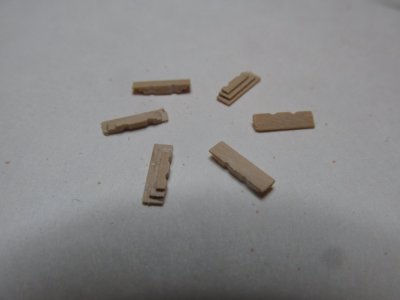
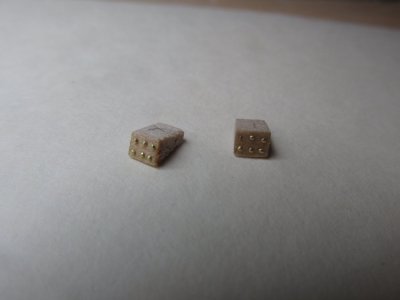
The large wooden cleat was made following the lead of xken’s Constitution build log which meant I made the two required (one for each side) plus four more to be used later. For these I used 1/8” x 3/32” boxwood. Boxwood holds its edge much better, giving a sharper result, plus it going to be left as natural wood.

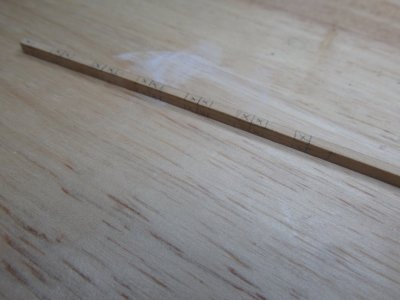
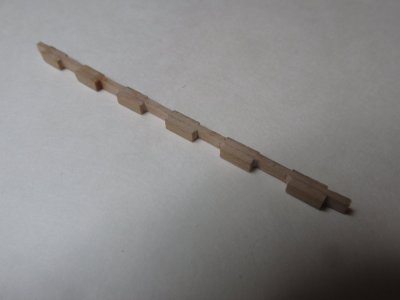
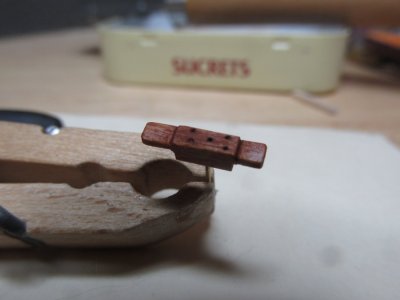
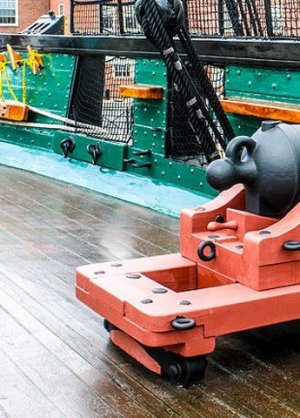
I marked off the required vertical cuts for all six cleats on the one piece of wood which were cut with the razor saw save for the cuts which would have separated the six pieces. The horizontal cuts were made carving out the wood with an X-actor knife. As seen in the image above of the actual bulwark, the large cleat has five bolt heads recessed on its face. Xken simulated the bolts by drilling holes and filling them in with “black” glue. I’ve not heard or seen “black” glue except as epoxy which I was not going to use for such tiny fills. I initially thought I would use bamboo tree nails stained black. As normal, I used a pin to make a starter hole for the drill. Then I thought, why make tree nails, a fine spot of black paint should do the trick, but I didn’t want the paint to soak into wood surrounding the bolt holes. To remedy that, I sealed the wood with the Minwax first. However, I noticed the stain accentuated the bolt holes and made them look black. My job was done. To the naked eye, you can’t tell the pinholes weren’t filled in due to the dark color. They looked perfect.

The cleats were then separated with the razor saw with final filing, trimming, sanding, and staining completing the cleats. The last touch was the addition of a metal installation post to provide added strength for potential rigging.

IMG_1501.JPG

IMG_1503.JPG

IMG_1509.JPG

IMG_1511.JPG
 
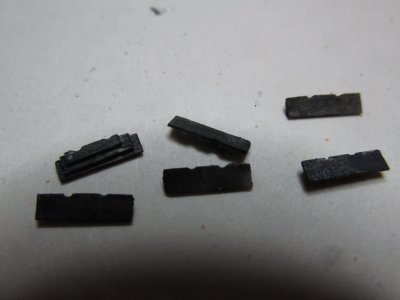
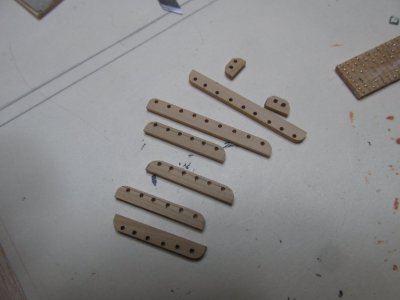
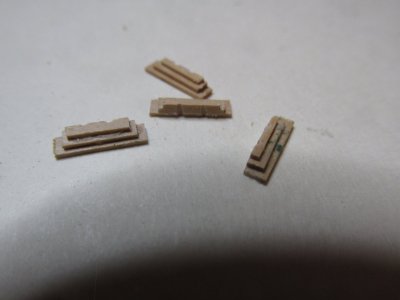
The last items to be fabricated were the three bulwark steps for each side. Close examination of the actual steps shows they are not simple pieces of wood but have three layers in descending lengths and widths stacked upon each other pyramid style. One step is about one half the width of a bulwark plank. This works out to 3/64” total thickness

Using my Byrne saw, I cut a strip of 1/32” x 3/32” boxwood down to 1/64” x 3/32”. Great saw, that Byrne saw. BTW, all these pieces of boxwood are leftovers from my Rattlesnake kitbash which didn’t use any basswood.

Using the razor saw and its miter box, three different lengths of boxwood were cut for each step. The first two pieces to be stacked upon one another were offset to create the first stepback. The third piece, which was a bit narrower was the third stepback. Then, with a sanding block, the excess wood from the back of the step was removed. Finally, two vertical channels were filed at the back of the step. What the purpose of these opening was, I don’t know, but they are there, so I made them. No metal installation post was needed as these pieces are not intended to take any load.

Now it’s a matter of attaching all this stuff to the bulwarks and the bulwarks to the hull frame.

IMG_1505.JPG

IMG_1506.JPG

IMG_1507.JPG

IMG_1512.JPG
 
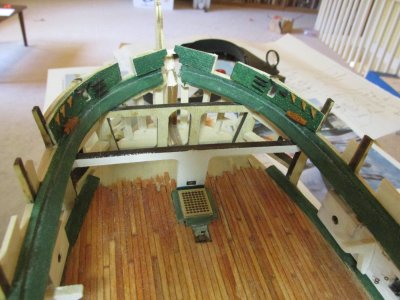
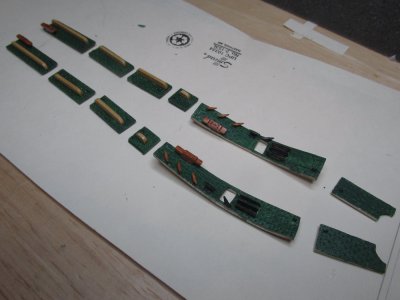
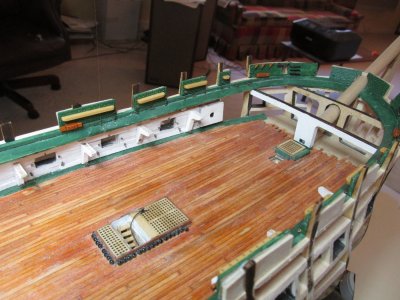
Finally, I attached all the bits and pieces to the bulwarks after removing some strategic bolt heads that were interfering. The second image shows the dry fitted bulwarks in place. For the most part, the remaining bulwarks will need the pin rails and like the gun deck, rigging eye bolts attached.

IMG_1513.JPG

IMG_1514.JPG
 
Yes, I am slowly (what else is new?) continuing to make the spar deck bulwarks. I also had personal business, as well as visiting Mom in Florida who turned 101 early this month of June.

Most of the remaining bulwarks required pin rails. Continuing with my use of boxwood for any bare wood fabrication, the pin rails were made from 1/8” x 1/16” strips of boxwood. Because I know where the pin rails are going to be attached on the bulwarks, I left gaps devoid of simulated bolt heads where the pin rails were to be installed. Notice that the belay pin holes are close to the edge and not centered on the board. That is the way they are supposed to be as shown on the plans and as pointed out in Robert Hunt’s practicum.

IMG_1515.JPG

IMG_1516.JPG
 
Just as a matter of note, when I purchased the MS model kit and the associated practicum by Bob Hunt, some years past, Jeff Hayes’ HobbyMills was Bob’s wood supplier of choice, but Bill has since retired and closed shop. He had supplied the supplemental wood required or suggested by Bob’s many practicums. In this case, Bob Hunt did not kit-bash the Constitution, but he did modify it a bit by substituting boxwood for certain basswood and laser cut constructs, which I am trying to follow. Bob felt the laser cut parts were too fragile.

At that time, Jeff Hayes offered a wood supplement package for those substitutions, which I purchased. That is where I’m getting my pre-sized boxwood substitutions from. Anything I initiated, like the gun deck and all its associated accoutrements, the supplemental wood package did not cover. Whether some other wood supplier is selling those wood supplement packages today, you will have to check with Bob Hunt, I don’t know.

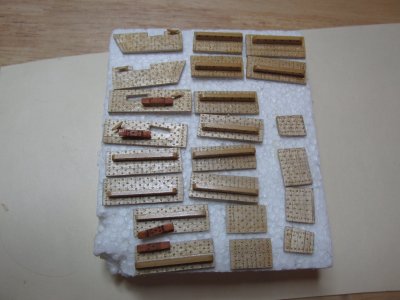
I’ve completed the remaining bulwarks forward of the waist and shown here unpainted and dry fitted with the pin rails. I then painted the bulwarks and assembled and glued their associated parts. All the fabricated bulwarks are shown in the last image.

IMG_1517.JPG

IMG_1518.JPG

IMG_1521.JPG
 
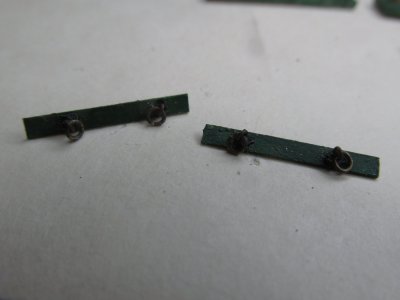
Additional to the hardware and pin rails on the bulwarks, the opening for the bow anchors had a couple of eyebolts and rings fastened underneath opening. The kit plans show those bolts but not the board they are fastened to nor the fact that the eyebolts have a base plate, and that they are at opposing 45-degree angles as well. My attempt at duplicating them is shown below. Compare mine against the actual ship. Sorry for the poor image, but that was the best my camera would do.

Bow Anchor Hardware.jpg

IMG_1523.JPG
 
Finally, before I fastened the bulwarks to the hull, I needed to add the cannon rigging eye bolts to both the bulwarks and the planking just above the waterway. I thought doing that now would be easier rather do doing it later. The blackened eyebolt openings are 3/32” dia. So, they may be difficult to see. Here are all the bulwarks so far (about 1/3) glued into place. The construct continues.

IMG_1524.JPG
 
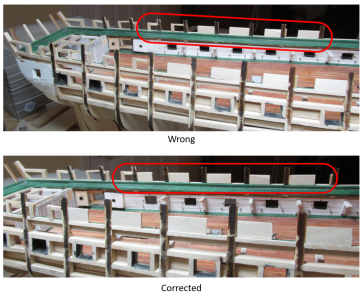
Well, I hit a near disastrous “oops.” If you go back into my log where I’m framing the spar deck gun ports, you will remember I switched from creating post and header frames to using solid pieces of wood. Unfortunately, On the last port before I made the switch, I got confused as to which side of the vertical post was to be the gun port and placed the horizontal header on the wrong side of the post. This moved the port to the wrong position. Then I created the remaining ports with the solid wood based on that last port. So, all the ports forward of the third gun port from the transom were wrong and those must be re-positioned. Since I was working both sides of the model at the same time, both sides were affected.

I say a “near disaster” because I hadn’t finished the creating the bulwarks. I only made the plywood pieces with the glued-on planks. I could have punched out all the hundreds of bolt heads, applied them to the bulwark surface, painted them and glued them into position on the model. Or I could have been planking the hull wale like other builders at this stage. Hey, you must look at the bright side.

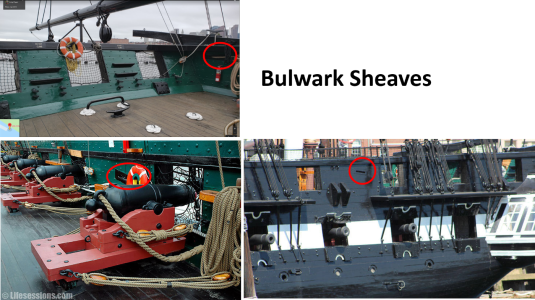
This error was discovered when I was trying to figure which bulwarks required the bulwark sheaves. The plans showed a wide bulwark and my model indicated it was a relatively narrow one. I’ll show the before and after images once I fix and make the “after.”

Luckily the fix wasn’t too hard at all. Due to the thin gluing surfaces, removing one frame and the solid wood pieces from each side was fairly quick and simple. A few delicate “wiggles” and the PVC glued parts came off. As rule, I’ve been using PVC glue on the framing so far to allow me the luxury of being able to fine tune the positioning before the glue set. That gave the joint a little flexibility which led to its ease of removal.

The only part I had to remake was the first piece to the far left inside the red elongated circle of the “corrected” image below. The others came off the model so cleanly I was able to reuse them with a little fine tuning with a file. All I had to do was shift them aft. Note, I only circled the far side as it is easier to see. I now have to check all the plywood backed planking dimensions before I can proceed.

Spar Gun Ports Corrected.png
 
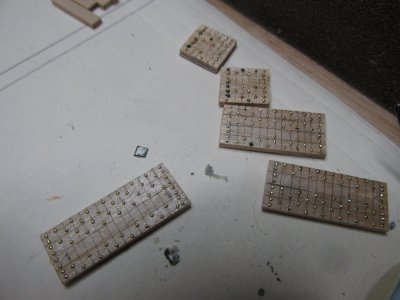
Almost a month has gone by. Where does the time fly???!!! I’ve completed adding the simulated bolt heads to the remaining starboard and port bulwarks. On average, each panel takes at most two hours of intense concentration due to the itsy-bitsy teeny weeny (that’s a technical term) size of the brass punched elements to punch, position, and attach them to the bulwarks. I still need to make the panels for the stern. I must have made about a thousand of them including mis-shaped or lost pieces. I also wore out another punch, but because I got two replacement punches (no cost) for the one that broke earlier, I had a spare.

In the images below, you will notice that I have dry fitted the large and small cleats. Their mounting pins have yet to be trimmed. You will also notice that four bulwark panels have a rectangular hole cut into them. These will become bulwark sheaves.
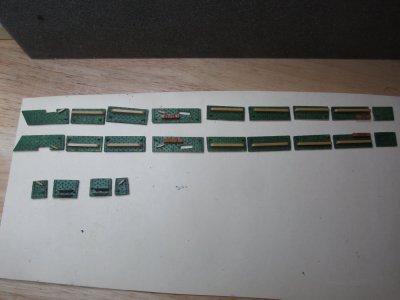
There is still a bit of work left such as fitting the pin rails, painting the bulwarks green and mounting them onto the model. Then of course there is the work on the stern bulwarks. All this will have to wait as I will be closing the shipyard for a couple of weeks for other personal activities.

IMG_1528.JPG

IMG_1529.JPG

IMG_1530.JPG
 
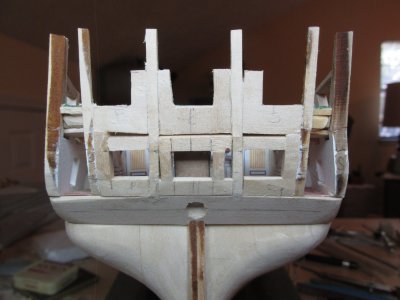
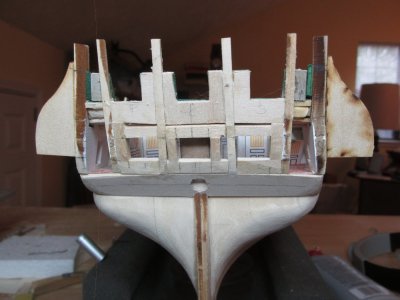
I wanted to finally add the bolt heads to the transom bulwarks. This required that I first build the framework for the stern windows and ports for the gun and spar decks. This took a couple of tries as it required critical precise measurements. It may not look precise, but the ports and windows are measured from the center line. All the structural elements will be covered by the bulwarks and planking.

IMG_1531.JPG
 
Once that was completed, the transom bulwark panels were constructed, and the pseudo bolt heads were added. At this point, all the bulwark panels were painted green like those forward. Finally, I fabricated two small wooden transom cleats and four transom bulwark steps. Once I painted all the bulwark panels green and the transom steps black, the remaining cleats and steps were installed. This left the cannonade rigging eyebolts to be installed. Those eyebolts which I could install onto the bulwark panels were done, which left 66 or so odd eyebolts need to be stalled just below the gun port openings on the planks just above the waterways, plus about 14 double eyebolts.
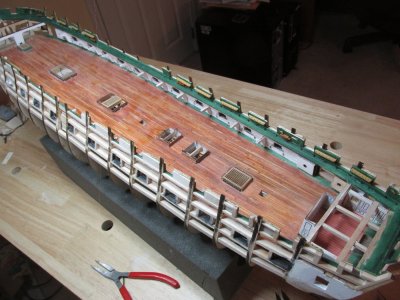
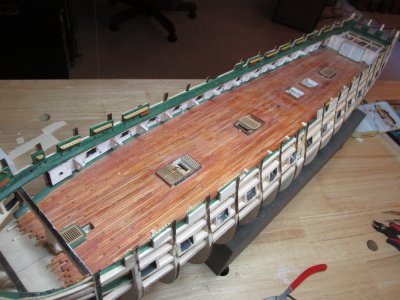
IMG_1533.JPG

IMG_1534.JPG

IMG_1535.JPG
 
Well for the most part, the bulwarks are done…finally. They bulwark panels were glued into place and the eyebolts were installed. There still are some odds and ends that still need to be fabricated and installed, but the most tedious part is completed.

IMG_1536.JPG

IMG_1537.JPG

IMG_1538.JPG

IMG_1539.JPG
 
One of the odds and ends I mentioned earlier are the two “backing plates” for the “towing bridle ring bolts” located just below the two outer port openings in the transom. The other item I decided to wait on are the four hull sheaves. Those will be done once the hull planking is installed around the gun ports.

Bridle Ring and Backing Plate.png

IMG_1540.JPG

IMG_1542.JPG
 
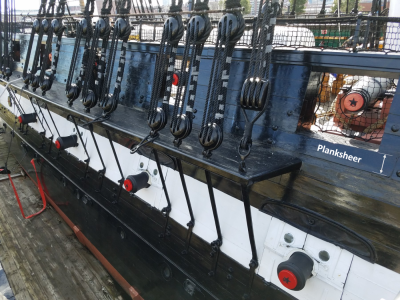
Planksheer

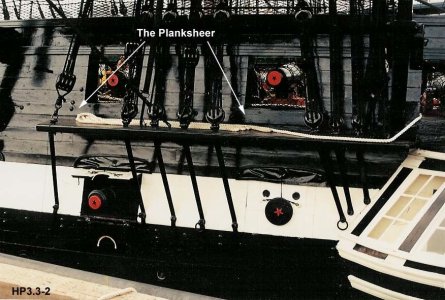
I thought it might be a good time to finish up the gun ports. This meant that I would now have to plank the hull from the gun deck to the cap rail, so I went back to the Robert Hunt practicum for some guidance. He started with the planksheer.

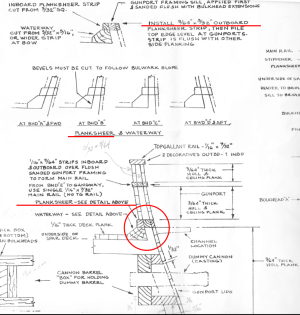
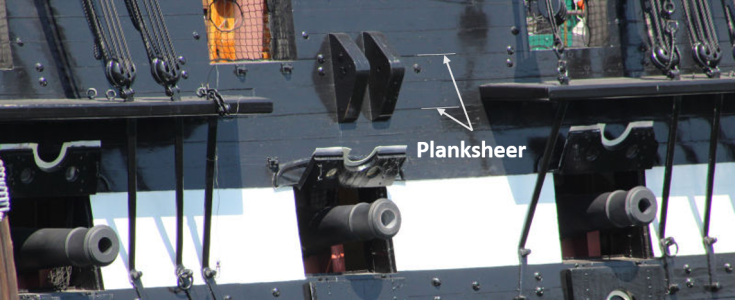
First thing he stated was that the planksheer was “slightly thicker than the planks above” the planksheer. He also stated “…if you look at sheet 3 of your plans, Hull Planking Layout, it also clearly shows the planksheer on the outside to be thicker than the other planking.” He provided a photograph to illustrate it. Now I may need cataract surgery, but I’m not blind…yet. For the life of me, I could not find on the plans where the planksheer is shown or indicated as being thicker. The image he provided (HP3.3-2), as near as I could determine, did not provide proof of the extra thickness at least to me. I even checked all my reference images and rechecked the images online. They all confirmed my observations, the planksheer is no thicker than the other planks. Shown below is the referenced plan, Mr. Hunt’s photo, and my two photos.

HP3.3-2.jpg

Planksheer Plans.png

Planksheer Image 01.png

Planksheer Image 02.png
 
The only place I could find where Mr. Hunt may have thought the thickness was thicker was at the “waist.” On plan #3, there is a note that states: “Molding Strip. On real ship this was originally installed at a time when ship did not have a bulwark in this area. The bulwark was installed during the 1927 restoration. And the molding retained.” The molding strip is shown on top of the planksheer. However, all the photos I could find where the waist was later restored, that molding has since been removed. So, unless someone can show me otherwise, my planksheer will be flush with the planking.

Well, I wasn’t “shown otherwise” but a comment made by another builder made me realize I interpreted Mr. Hunt’s terminology wrong. When he stated “the planksheer on the outside to be thicker than the other planking” I interpreted the term “thicker” to mean thickness of the plank, expecting the planksheer to be proud of the hull like the wale. He was using the term to mean the width of the plank which, after I realized that, was definitely shown on the plans as wider.

Still no actual work on the model as my left eye still does not see well after cataract surgery which it definitely needed. A day after the surgery (Oct 1) I could barely make out the big letter “E” on the eye chart. My cornea clouded up due to the non-routine procedure that was required. It might be a month before the eye settles down.

My left eye still is not up to par although I’ve improved a bit. My eyesight went from 20-400 to 20-200. But the call of the shipyard was strong so I’m at it again albeit proceeding with caution. I still have 4 stitches to be removed after I get back from NRG Conference.

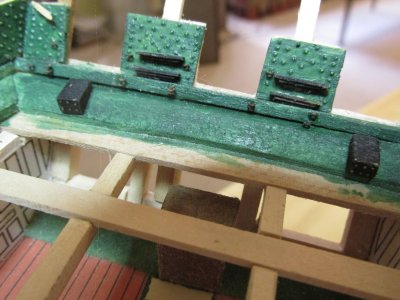
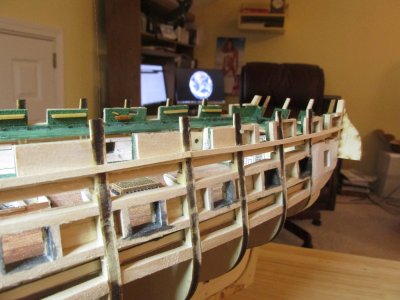
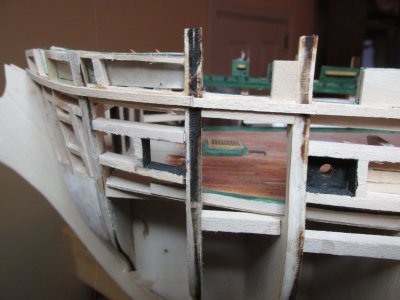
I’ve managed to install the planksheer without too much effort and added the first transom extensions for the quarter galleries’

IMG_1547.JPG

IMG_1545.JPG

IMG_1546.JPG
 
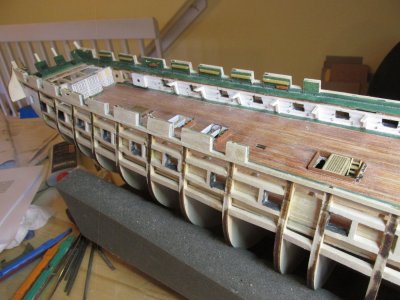
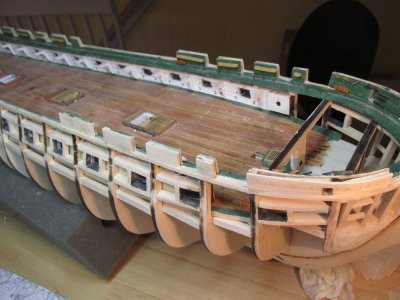
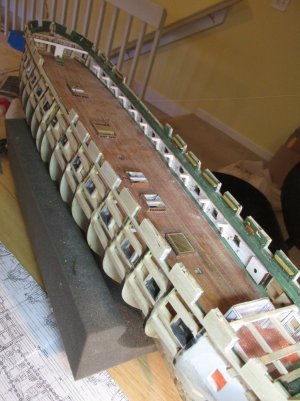
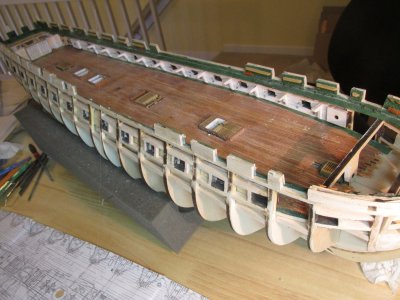
I was able plank the remainder of the hull between the side spar deck gun ports.

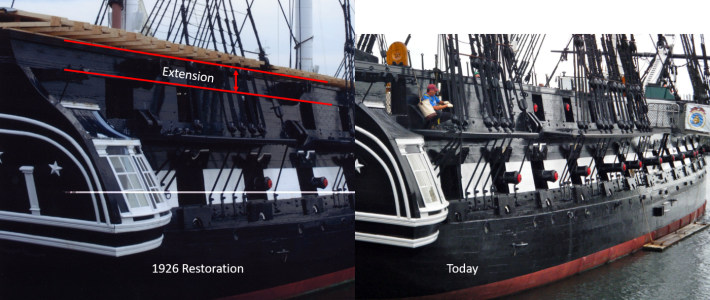
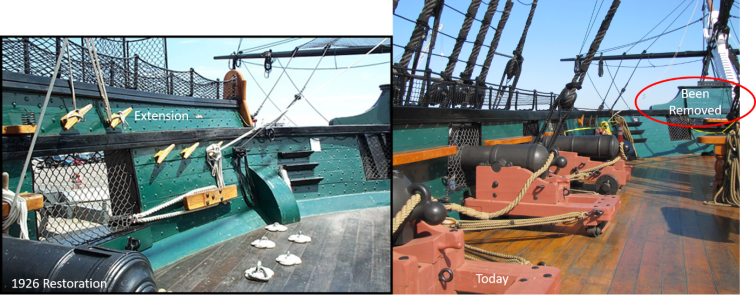
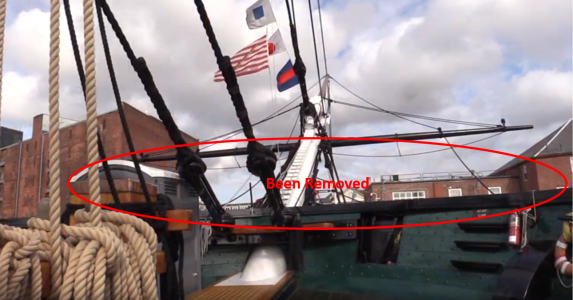
You may also notice that I have trimmed the bulkhead extensions that stick up above where the cap rail will go. They extended to support the Topgallant Rail. This was the “Cap Rail” of the added hull and bulwarks on top of the actual Cap Rail. This extension was added in 1926 and subsequently removed in later restorations. Since my model is trying to reflect what the ship looks like today, it will not be built as shown in the kit plans which is based on the 1926 restoration.

IMG_1548.JPG

IMG_1549.JPG

IMG_1551.JPG

IMG_1552.JPG

Hull Extension 01.png

Hull Extension 02.png

Hull Extension 03.png
 
Back
Top